
You crack the tart with a fork and expect silk. Instead you meet rubber, onions, and a snowdrift of cheese. That is not Lorraine. That is brunch auditioning for a casserole.
The original is quiet. A baked shortcrust, smoky lardons, and the custard locals call migaine, eggs loosened with thick cream. No onion. No pile of Gruyère. No spinach, no mushrooms, no “clean out the fridge.”
Real Quiche Lorraine is about restraint that rewards you at the table. The texture is satin, not squeaky. The slice stands without weeping. The bacon reads as perfume, not ballast. Make it once the right way and the American instinct to add something dies on contact.
Below is the map: what “Lorraine” actually means, why American versions collapse, the only ratios you need, a true recipe sized for a home tart tin, fixes for the usual messes, and how to spin variations without pretending they are Lorraine.
What “Lorraine” Actually Means
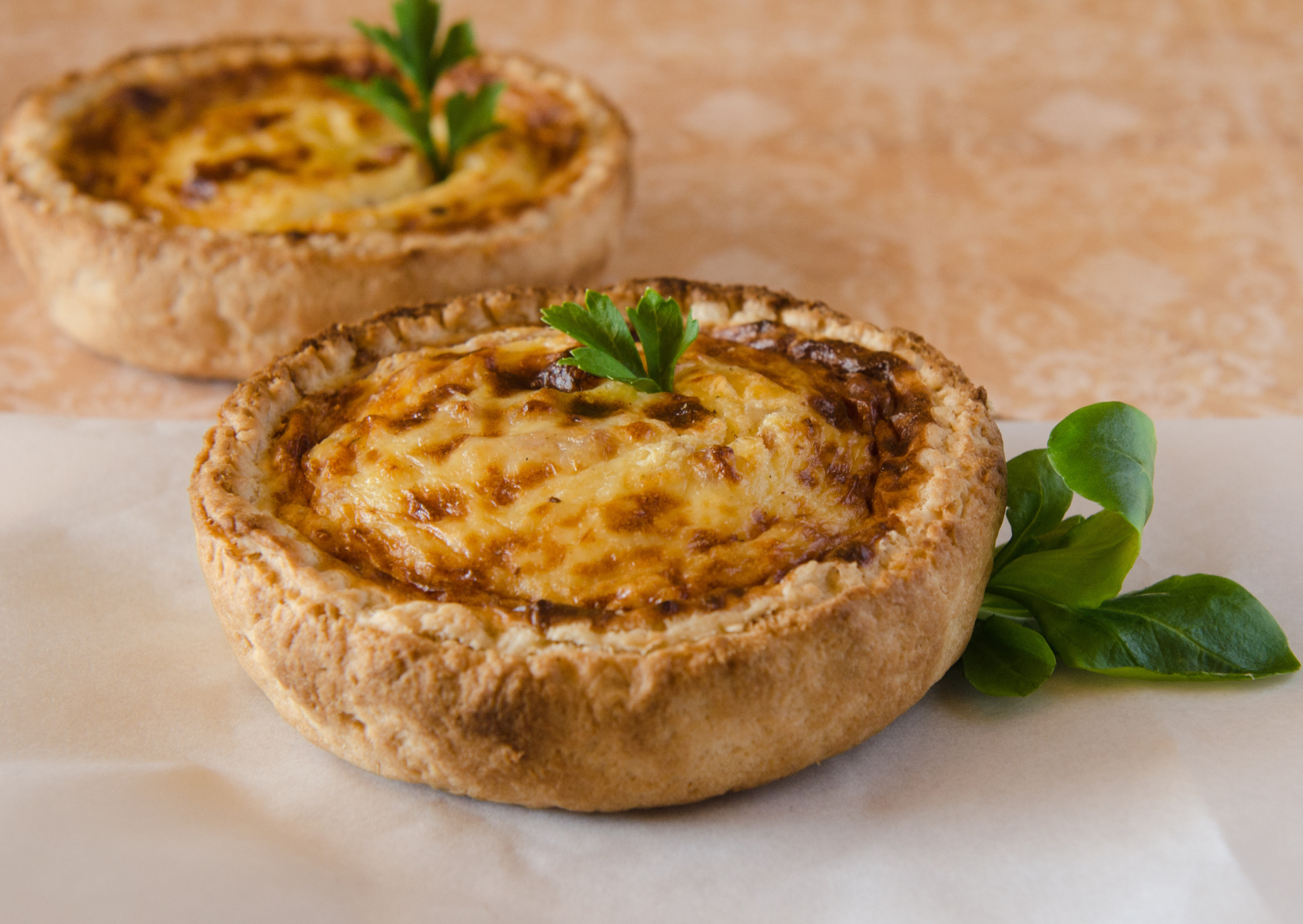
Lorraine is a place and a style, not a dumping ground. In the canonical version the filling is eggs and cream over lardons, set in a shortcrust shell. The family of quiches in eastern France has branches, and naming matters. Lorraine means no cheese, Vosgienne is the one with cheese, Alsacienne is the onion path. If you grate Gruyère into the custard, you just crossed the border.
The no-cheese point is not internet pedantry, it is how the region itself frames the dish. French sources repeat it plainly, and the Lorraine confraternity that defends the authentic quiche says the ingredient list is a short one. Short list, big discipline, cream dominates egg, lardons supply salt and smoke.
The crust has drifted through history. Early versions rode on bread dough, then shortcrust and puff became normal house choices. What never changed was the idea: a shallow tart baked hot, custard set tender, eaten warm with wine. Bread dough then brisée, hot bake for satin custard, serve warm, not blazing.
Why American Quiche Goes Loud And Wrong
If your quiche breaks, leaks, or eats heavy, the causes are not mysterious. They are common habits you can drop.
The first is gratuitous cheese. A handful seems harmless until you realize it tightens the custard and masks the bacon. In Lorraine the cream leads, the egg follows, and the lardons season. Cheese pulls the balance toward chew and away from silk. Cheese stiffens the bite, flavor balance tilts, silk turns to squeak.
The second is wet extras. Onions, spinach, mushrooms, and peppers dump water into the custard unless they are cooked dry. That water lowers bake temperature at the core, stretches the set time, and leaves a weep at the slice. Wet add-ins leak, longer bakes toughen eggs, you trade silk for soup.
The third is weak ratios. A Lorraine custard is richer than the American default. The cream should dominate the egg so the gel is tender. When you flip the ratio, the set becomes rubbery, the top domes, and the slice springs. Cream over egg, low dome, no squeak, cut lines stay clean.
Finally, underbaked shells kill texture. Custard poured into raw pastry soaks the base and never recovers. Blind-bake the shell to golden, cool it briefly, then fill. Blind-bake to gold, seal the crumb, custard stays pristine.
The Only Ratios You Need
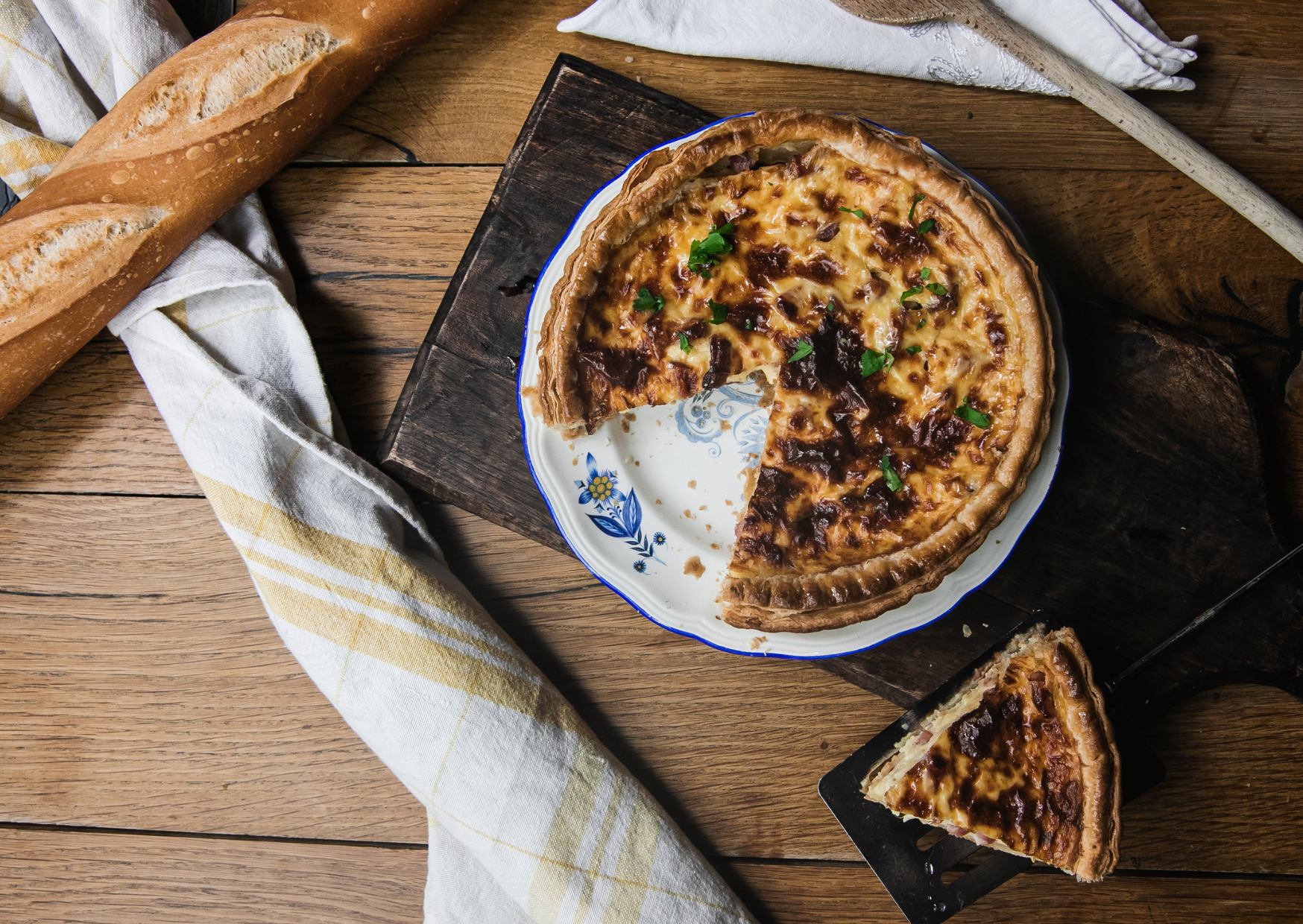
You can skip most recipes if you remember three numbers and two decisions.
For a 24 to 26 cm tart tin, plan on 500 ml of dairy to 4 large eggs. Make that dairy mostly crème fraîche or heavy cream, with a little whole milk if you want a slightly lighter set. This puts you near a 1 egg to 120–130 ml dairy rhythm, which bakes to custard that quivers, not rubber that springs. Four eggs, half-liter dairy, cream forward, quiver wins.
Salt the lardons, not the custard. Bacon seasons the mix through contact while it bakes. Add a pinch of nutmeg and black pepper to the migaine and stop. If you taste the spice as a note, you added too much. Lardons carry the salt, nutmeg whispers, pepper is background.
For pastry, pâte brisée is the house choice. You can use puff if you like a laminated rim, but shortcrust makes a sturdier base and slices cleaner. Roll to 3 mm, chill in the tin, dock, line with paper and beans, blind-bake to blond, remove the paper, then bake to deep gold. Seal with a faint brush of beaten egg if you want a belt-and-suspenders layer. Shortcrust for structure, golden shell before filling, egg seal if you worry.
Bacon, Heat, And The Silence Between Ingredients
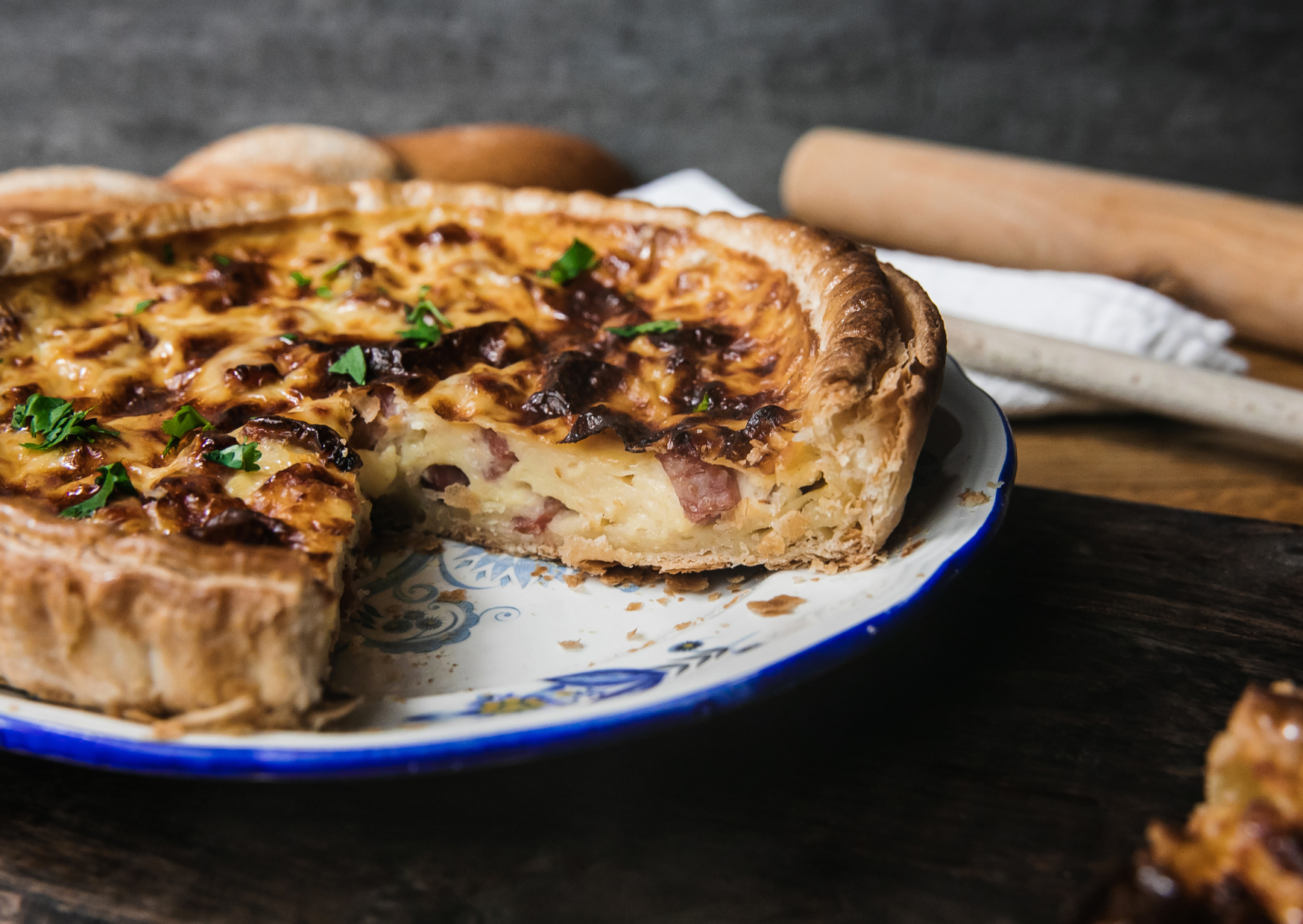
Quiche Lorraine is a conversation between bacon and cream. To keep the talk clear, manage two things well.
First, the lardons. Use slab bacon or pancetta cut into small batons. Render them slowly until edges are golden and fat clear. Drain on paper, then reserve a spoon of the fat to polish the blind-baked shell for more perfume. You want smoke without puddle, edges browned, centers tender, fat used like a seasoning.
Second, the bake. Fill a warm shell with warm custard, scatter lardons evenly, and bake at a moderate heat so the center sets as the rim browns. Too hot and you balloon the custard, too cool and you dry the rim while the heart jitters. Pull the quiche when the center wobbles like set jelly and the top shows deep gold freckles of fat. Let it rest fifteen minutes before slicing. Even heat, no dome, truly set wobble, short rest for perfect slices.
And the silence. Do not add onions. That makes it Alsacienne, which is good, just not Lorraine. Do not add cheese. That makes it Vosgienne, also good, also not Lorraine. Keeping silence between ingredients is the point. No onion, no cheese, Lorraine is restraint, quiet tart, loud pleasure.
The Recipe: Quiche Lorraine, The Way Lorrainers Recognize It
Yield: one 24–26 cm tart, 6 to 8 slices
Time: 25 minutes prep, 55 minutes baking, plus resting
Ingredients
Shortcrust shell
- 250 g all-purpose flour
- 150 g cold unsalted butter, diced
- 1 tsp fine salt
- 60–70 ml ice-cold water
Filling
- 200 g slab bacon or pancetta, cut into 1 cm lardons
- 350 ml crème fraîche or heavy cream
- 150 ml whole milk
- 4 large eggs (200 g out of shell)
- ¼ tsp freshly grated nutmeg
- ½ tsp black pepper
- Fine salt to taste, usually none or a pinch
Method
1) Make and bake the shell.
Rub flour, salt, and butter to sandy crumbs with a few pea-sized pieces. Add cold water until the dough just holds. Press into a disk, wrap, and chill 30 minutes. Roll to 3 mm, line the tin, trim, chill 20 minutes. Heat the oven to 200 C. Dock the base, line with parchment and beans, bake 15 minutes, remove paper, bake 8 to 10 minutes more to deep blond. Brush the hot base lightly with a beaten egg to seal, optional. Cool 10 minutes. Cold dough, hot oven, blind-bake to gold, sealed crumb stays crisp.
2) Render the lardons.
Cook lardons over low heat until golden at the edges and most fat is out, 8 to 10 minutes. Drain on paper. Brush a teaspoon of the fat very lightly over the warm shell. Slow render, no hard sizzle, perfume the crust, skip grease.
3) Mix the migaine.
Whisk cream, milk, eggs, nutmeg, and pepper until smooth. Taste a drop. Salt only if needed. The bacon will season the custard in the oven. Cream leads the mix, spice barely there, salt is cautious.
4) Fill and bake.
Lower oven to 180 C. Scatter lardons in the shell. Pour in the custard, stopping just short of the rim. Bake 30 to 35 minutes until the edge is puffed, the top has deep gold freckles, and the center wobbles when you nudge the tin. If the rim colors too fast, tent loosely with foil. Moderate heat sets silk, wobble beats dryness, color is flavor.
5) Rest and serve.
Cool 15 minutes. Serve warm with a green salad and wine. The slice should stand clean, the custard should show tiny bubbles only at the very edge, not through the center.
Why this works
- Cream dominates egg, so the gel is tender.
- Blind-baked crust resists soak and stays flaky.
- No cheese, no onion, so bacon and cream can do their job.
If You Want Cheese Or Onions, Call It By Its Name
There is an easy way to have everything and still respect the map. Name the branch you cooked.
If you lace the custard with Gruyère or Emmental, you are in Quiche Vosgienne country. Same pastry, same custard ratio, add grated cheese, usually with lardons. Cheese belongs here, custard will tighten, flavor slides toward nutty.
If you sweat onions and fold them in with lardons, you are making Quiche Alsacienne. Cook onions to sweet and dry, cool, then add. Keep the dairy-to-egg ratio, and season a touch firmer, because onions carry sweetness. Onions change the name, sweetness needs salt, dry the pan to avoid leaks.
You can also go modern and skip meat. That stops being Lorraine, which is fine, just keep the ratio discipline and the short ingredient list. One vegetable, cooked dry, cream-forward custard, and enough salt.
Troubleshooting The Common Wrecks
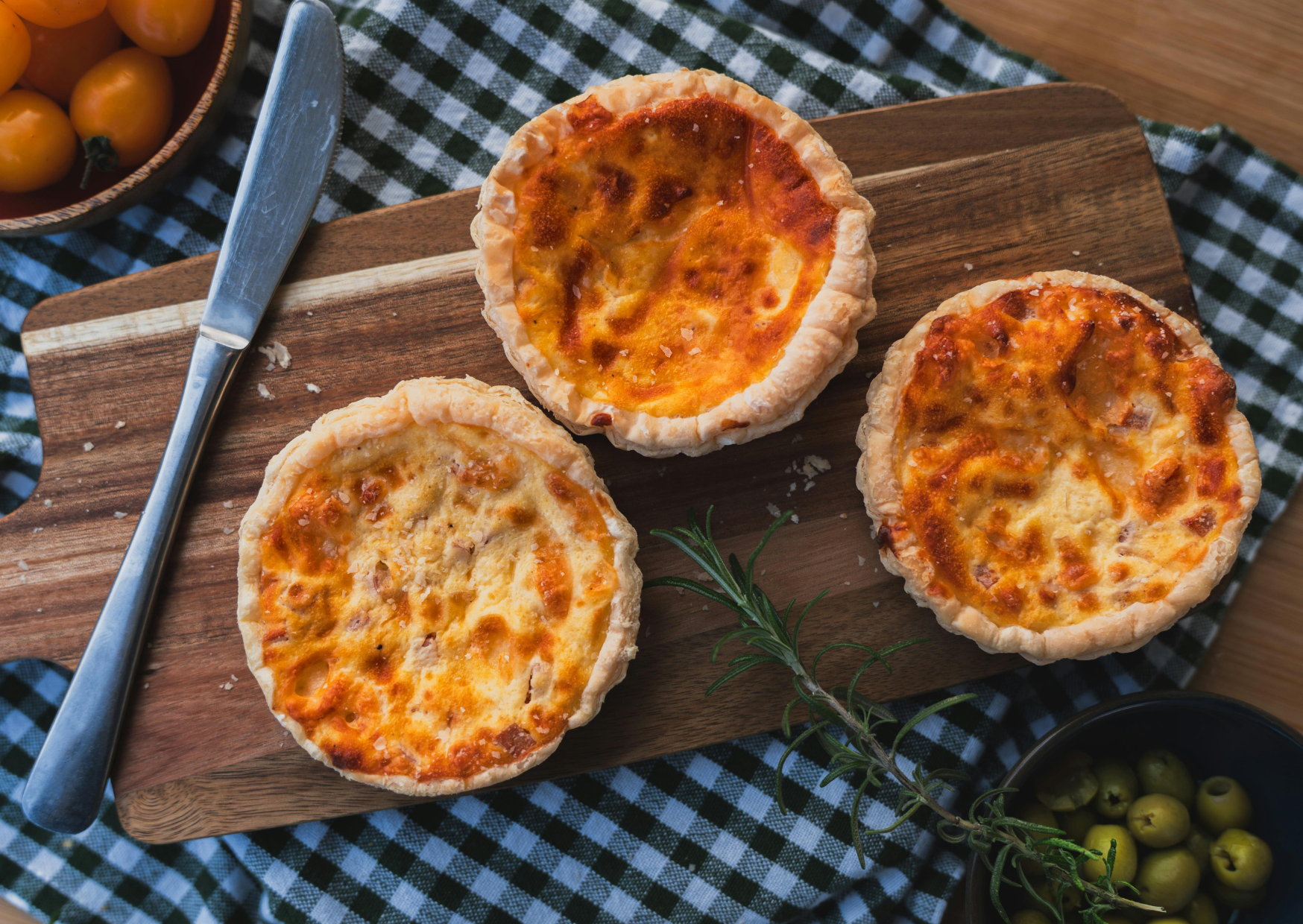
You can see most failures coming. Here is the fast fix for each.
Soggy bottom.
You did not blind-bake long enough or you poured hot custard into a cold raw shell. Bake the shell to deep gold, seal with a whisper of egg, and fill while both shell and custard are warm. Gold first, warm meets warm, seal if anxious.
Rubbery, bouncy set.
Too many eggs, too much milk, or an oven too hot. Return to 4 eggs per 500 ml dairy, bias toward cream, and bake at 180 C until just wobbly. Ratio first, lower heat, pull on wobble.
Grease puddles on top.
Your bacon was under-rendered or your dairy was thin. Render lardons fully, drain them, and use cream over milk. A few fat freckles are flavor, a sheen is fine, a puddle means you rushed the pan.
Collapsed dome and broken custard.
You baked too hot, then opened the door too fast. Moderate the heat, do not slam doors, and rest the tart. The center falls to level on its own if you leave it alone.
It tastes like a frittata in a shell.
That is the egg ratio again, and often cheese creep. Remove the cheese and bring cream back to the front. Lorraine is custard in pastry, not omelet in pastry.
A Short History That Explains The Restraint
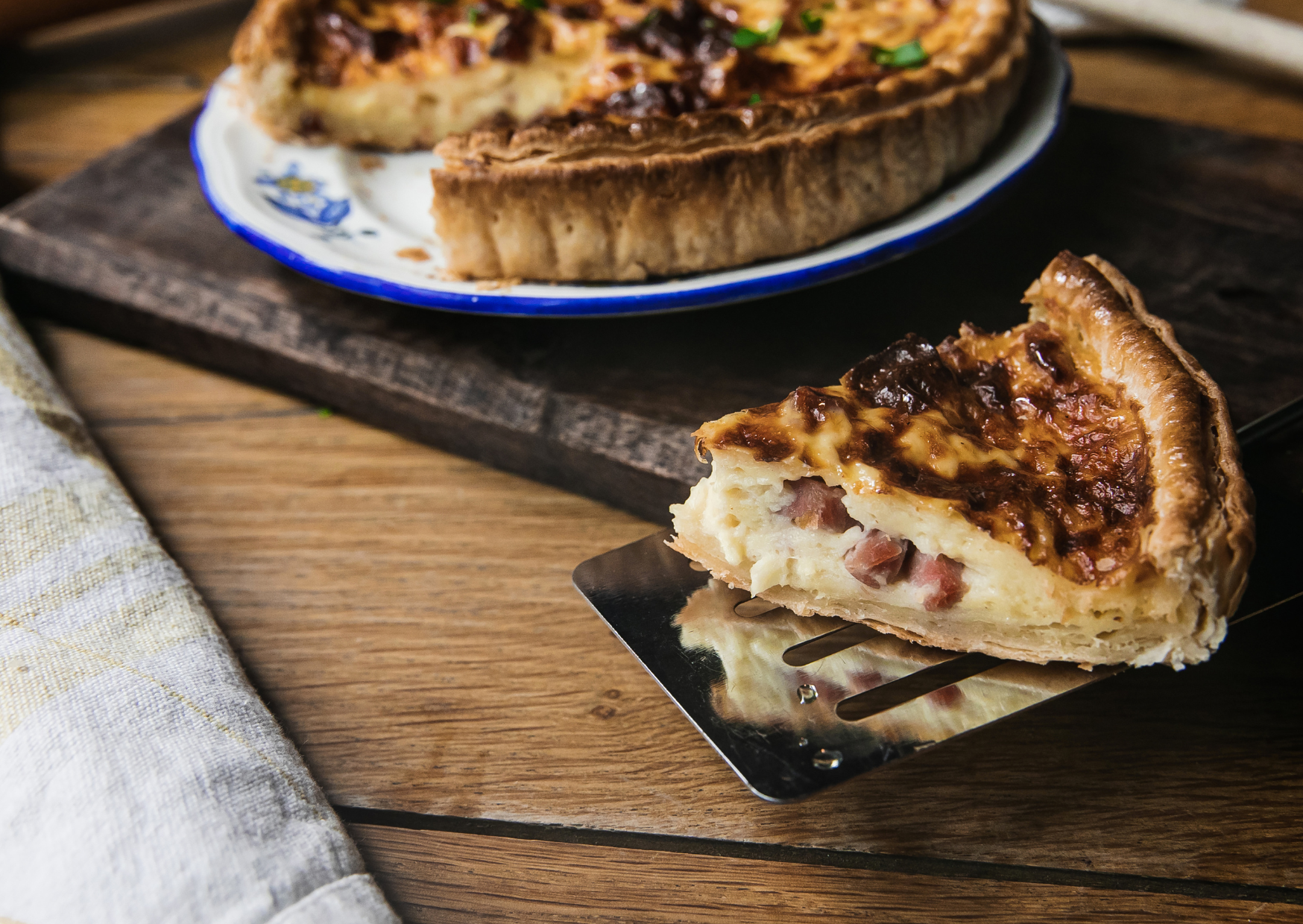
Understanding where the dish came from helps you cook it without anxiety.
The earliest quiches in Lorraine were baker’s tarts baked in bread ovens, often on bread dough rather than pastry. The filling changed across towns and decades, but when Quiche Lorraine crystallized into a modern classic, it did so as a custard of cream and eggs with lardons, served hot, simple, and regional. The cheese-heavy versions took off later as quiche globalized, especially in English-language cookbooks and brunch culture. Baker’s tart to classic, bread dough to brisée, cheese is a later detour.
French references go further and codify what locals have always said. The migaine should be mostly crème fraîche, with egg as the supporting player, and in an authentic Lorraine there is never cheese. It is not a test, it is a taste choice that yields a better slice. Migaine is cream-led, never cheese in Lorraine, texture is the whole point.
When you want cheese, France already gave it a name, Vosgienne. When you want onion, you have Alsacienne. Respecting names is not fussy, it is practical. It keeps you from throwing the pantry at a tart that gets better the less you interfere. Names map the branches, pick the branch you want, leave Lorraine alone.
Variations That Stay Honest, And Still Slice Like A Dream
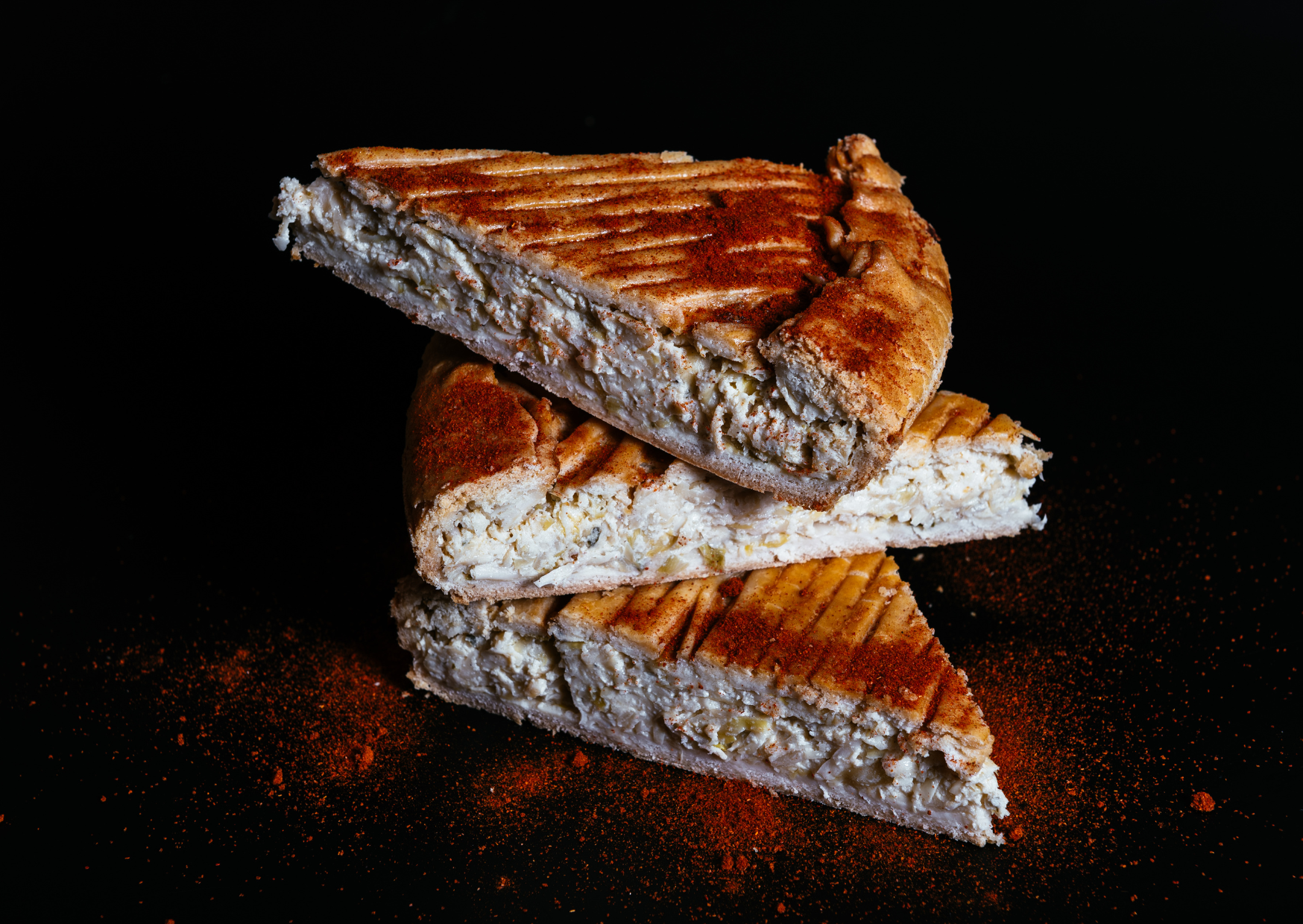
Here are three ways to move without breaking the idea. Keep two rules, one new idea at a time and dry ingredients.
Peppery Lorraine.
Stir a teaspoon of whole-grain mustard into the custard. It lifts the cream without reading as a new flavor family. Keep lardons, keep ratios.
Smoke-plus.
Swap half the lardons for smoked ham, cut to match. Render lightly to dry the edges. Season even more carefully to avoid oversalting.
Brown-butter crust.
Brown half the butter for the crust and chill it solid again before cutting in. The shell eats nutty and helps a no-cheese Lorraine feel complete.
If you need to feed vegetarians, do not fake Lorraine. Make a leek and goat cheese quiche, or an onion quiche in the Alsatian style. Nobody at the table is keeping score. They just want slices that hold.
What This Means For Your Table
You can make a Lorraine in a small kitchen on a Tuesday and it will eat like a restaurant piece because restraint behaves in the oven. Keep the list short. Blind-bake to gold. Render bacon slow. Mix cream forward, egg back. Bake on wobble, rest, then slice.
If you want more, choose a branch with a name rather than throwing everything into one tin. That is how a quiet provincial tart became an international workhorse, and how yours will stop tasting like a brunch bin.
Origin and History
Quiche Lorraine did not begin as the rich, overloaded dish many people recognize today. Its roots trace back to the Lorraine region of northeastern France, where it originated as a simple, practical meal made from pantry staples. Early versions consisted of an open pastry crust filled with eggs and cream, designed to be filling, economical, and easy to prepare.
The name itself comes from the German word kuchen, meaning cake, reflecting the region’s historical ties to Germany. At the time, cheese was not part of the recipe. Dairy was used sparingly, and cream served to enrich the eggs without overpowering them. This balance was central to the dish’s identity.
Bacon was later added, becoming the defining ingredient of Quiche Lorraine. Smoked lardons provided saltiness and depth, transforming the dish from a simple custard tart into something heartier. Even then, the focus remained on restraint rather than excess.
It was only as the dish spread beyond France that alterations began to appear. As Quiche Lorraine crossed borders, particularly to the United States, the original simplicity gave way to reinterpretations that slowly drifted away from its roots.
One of the most persistent misunderstandings about Quiche Lorraine is the assumption that it must contain cheese. In traditional French cooking, adding cheese changes the dish entirely, turning it into a different type of quiche rather than a true Lorraine. This distinction is often ignored outside France.
American versions frequently include Swiss, cheddar, or Gruyère, along with vegetables, meats, and herbs. While these combinations may be tasty, they fundamentally alter the texture and flavor profile. The delicate egg custard becomes dense, heavy, and dominated by competing ingredients.
Another point of controversy lies in authenticity versus adaptation. Some argue that recipes evolve and that strict definitions are unnecessary. Others maintain that naming a dish carries responsibility, and altering core components while keeping the original name creates confusion rather than creativity.
This debate highlights a broader issue in global cuisine: when everything is added, the original purpose of the dish is lost. Quiche Lorraine is meant to showcase eggs, cream, and bacon in harmony, not to serve as a catch-all for leftovers.
How Long You Take to Prepare
A traditional Quiche Lorraine is deceptively simple but requires patience. Preparing the pastry dough takes time, especially if made from scratch. The dough must rest and chill to ensure a flaky crust that can support the custard filling.
The filling itself comes together quickly, but precision matters. Eggs and cream must be gently combined without overmixing, which can introduce air and compromise the smooth texture. The bacon needs to be cooked just enough to release fat and flavor without becoming overly crisp.
Baking is where time plays a crucial role. Quiche Lorraine requires slow, even heat to set the custard properly. Rushing this step can result in a rubbery interior or a cracked surface, both signs of poor technique.
From start to finish, a traditional quiche can take a few hours when accounting for preparation, resting, baking, and cooling. This time investment is part of what makes the dish refined rather than rustic.
Serving Suggestions
Quiche Lorraine is traditionally served warm or at room temperature, never piping hot. Allowing it to rest after baking helps the custard fully set and enhances its creamy texture. Cutting too soon can cause the filling to lose its structure.
In France, it is often paired with a simple green salad dressed lightly with vinaigrette. The acidity of the dressing contrasts with the richness of the quiche, creating balance without distraction. Heavy sides are unnecessary and discouraged.
Portion size also matters. Quiche Lorraine is rich by design, so modest slices are more appropriate than oversized servings. This encourages appreciation of flavor rather than overwhelming the palate.
It can be served as a light lunch, a starter, or part of a casual meal, but it does not need embellishment. The strength of the dish lies in its restraint and clarity.
Final Thoughts
Quiche Lorraine without cheese is not a stripped-down version of the dish; it is the original. Removing added ingredients reveals the intention behind the recipe and highlights the quality of its core components.
The tendency to add everything often reflects misunderstanding rather than improvement. While creative variations have their place, calling them Quiche Lorraine blurs the line between tradition and reinvention.
Learning the history and technique behind the dish encourages respect for its simplicity. When fewer ingredients are used, each one matters more, demanding better execution and attention to detail.
Ultimately, appreciating Quiche Lorraine as it was meant to be changes how it is cooked and enjoyed. It becomes less about customization and more about understanding why restraint can be more powerful than excess.

About the Author: Ruben, co-founder of Gamintraveler.com since 2014, is a seasoned traveler from Spain who has explored over 100 countries since 2009. Known for his extensive travel adventures across South America, Europe, the US, Australia, New Zealand, Asia, and Africa, Ruben combines his passion for adventurous yet sustainable living with his love for cycling, highlighted by his remarkable 5-month bicycle journey from Spain to Norway. He currently resides in Spain, where he continues sharing his travel experiences with his partner, Rachel, and their son, Han.