

Few dishes capture the heart of Indonesian cuisine quite like nasi goreng, the country’s beloved take on fried rice. Rich with bold flavors, slightly smoky, and always satisfying, this national staple is far more than just rice and sauce—it’s a celebration of Indonesia’s culinary diversity. From street stalls to high-end restaurants, nasi goreng is a dish you’ll find everywhere, each version offering a slightly different twist depending on region, family tradition, or the chef’s creativity.
What sets nasi goreng apart from other fried rice dishes around the world is its signature seasoning: a blend of sweet soy sauce (kecap manis), garlic, shallots, chili, and often shrimp paste, giving it a deep umami punch. Topped with a fried egg, crispy shallots, or slices of cucumber and tomato, it’s a meal that balances savory, sweet, and spicy in every bite. It’s simple enough to make at home with leftover rice, yet flavorful enough to crave on a regular basis.
In this post, we’ll walk you through how to recreate an authentic nasi goreng using ingredients you can find at most international grocery stores. Whether you’re new to Indonesian cuisine or looking to spice up your weekly meal rotation, this recipe will transport your kitchen straight to the streets of Jakarta, Bali, or Yogyakarta—with just one pan.
Read here best Indonesia sim card for tourist and best Indonesian Breakfast
BOOK YOUR TRAVEL INSURANCE
Two of our favorite travel insurance: Heymondo Vs Safetwing cheapest travel Insurance. You can get for $135 USD your Heymondo Travel Insurance with Heymondo discount code valid for 90 days. Read our full comparison of Genki vs Safetywing Travel Insurance Review and the comparison Heymondo vs Genki
How to Eat Nasi Goreng
Nasi Goreng is often eaten as a complete meal on its own, but the experience is elevated when topped with a fried egg. The soft yolk drizzles into the rice, creating an indulgent contrast that makes each bite even more satisfying.
Traditionally, it’s eaten with a spoon and fork, using the fork to help push food onto the spoon. This ensures you get the perfect combination of rice, toppings, and garnishes in every mouthful. The method highlights how Indonesian dining emphasizes comfort and practicality.
Nasi Goreng is also commonly accompanied by condiments like sambal (chili paste) for extra heat or pickled vegetables for a refreshing balance. These additions let diners adjust the dish to their personal preferences, making it as mild or fiery as they wish.
How to Partner Nasi Goreng
Pairing Nasi Goreng with satay skewers creates a classic Indonesian meal. The smoky, char-grilled flavor of the meat complements the savory-sweet fried rice perfectly, turning it into a feast that feels celebratory.
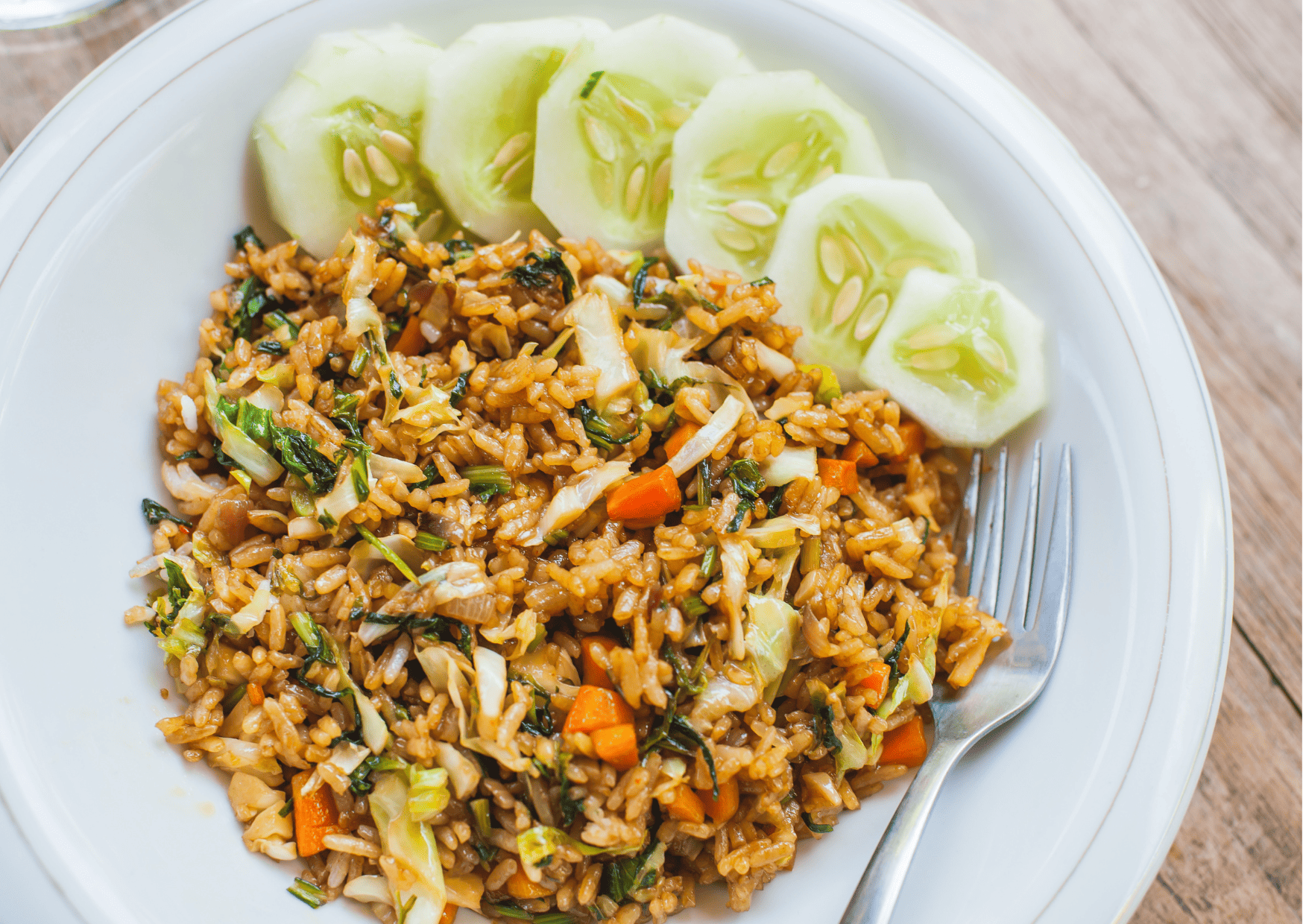
For a lighter partner, serve it with a fresh cucumber and tomato salad. The crisp vegetables cut through the richness of the rice, providing contrast while keeping the meal refreshing and balanced.
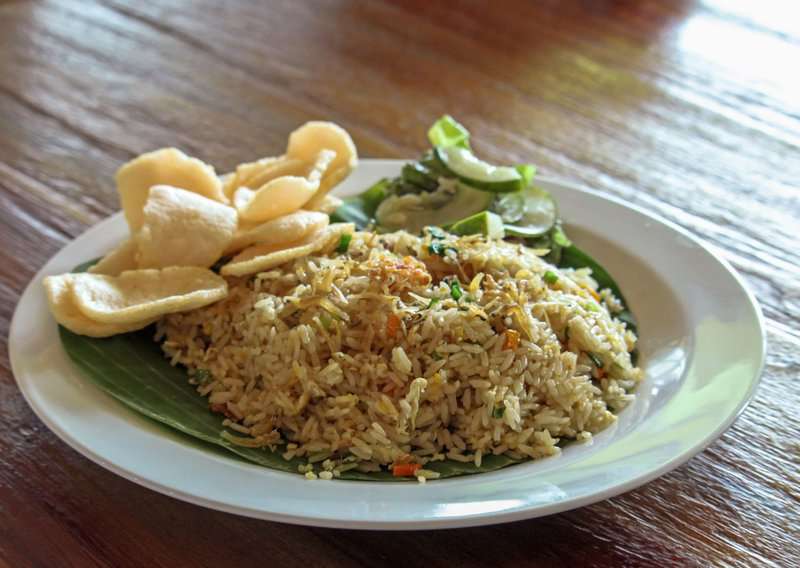
If you want to go more traditional, Nasi Goreng is often served with prawn crackers on the side. These crunchy bites add texture to the dish and are a favorite among locals who see them as a necessary finishing touch.
One controversial point is whether Nasi Goreng should always include shrimp paste. Some argue that it’s essential for authenticity, while others leave it out for dietary or taste preferences. This debate highlights the tension between tradition and adaptation in globalized food culture.
Another debate involves protein. While many versions feature chicken, shrimp, or beef, purists maintain that Nasi Goreng should remain simple, with rice and egg at the core. Others argue that the dish’s strength lies in its flexibility and ability to absorb whatever ingredients are available.
Finally, there’s the global adaptation of Nasi Goreng. International restaurants often modify it heavily to suit local palates, sometimes stripping away its unique flavors. While this spreads its popularity, critics claim it dilutes the dish’s true essence, sparking questions about authenticity versus accessibility.
How to Make Nasi Goreng
Nasi Goreng Recipe Ingredients
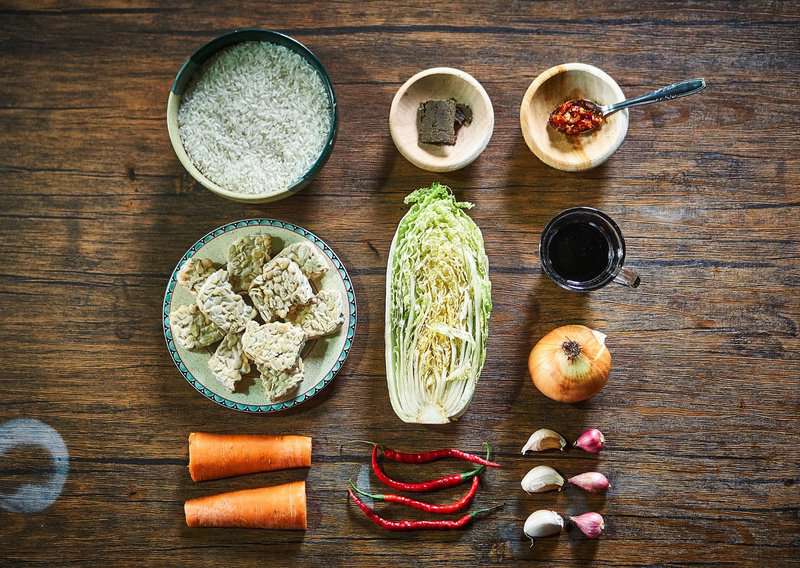
2 cups of cooked jasmine rice
2 tablespoons of cooking oil
2 garlic cloves
1 small onion
2 eggs
200 grams of chicken breast
100 grams of shrimp
1 carrot, diced
1 small bell pepper
2 green onions
2 tablespoons of kecap manis (sweet soy sauce)
1 tablespoon of soy sauce
1 tablespoon of oyster sauce (optional)
1 teaspoon of sambal oelek or more to taste (Indonesian chili paste)
Salt and pepper
Fried shallots
Cucumber slices and tomato wedges
Get the best deals for your home and kitchen needs
Step By Step How to Make Nasi Goreng
Step 1 – Prepare Ingredients
Ensure your rice is cold and clumpy. Cold rice fries are better and won’t turn mushy. If using chicken and shrimp, make sure they are cleaned, properly prepared, and set aside.
Step 2 – Fry the Eggs
Heat a little oil in the wok over medium-high heat. Beat the eggs and pour them into the wok. Scramble until fully cooked, then remove and set aside.
Step 3 – Sauté Ingredients
In the same wok, add a bit more oil if needed. Add the chicken and shrimp (if using) and stir-fry until they are nearly cooked through. Add the garlic and onions, frying until aromatic and the onions begin to soften.
Step 4 – Add Vegetables
Add the diced carrots and bell peppers, stir-frying until just tender.
Step 5 – Add Rice and Sauces
Add the cold rice to the wok along with the scrambled eggs, breaking up any clumps. Pour in kecap manis, soy sauce, oyster sauce (if using), and sambal oelek. Stir everything thoroughly to ensure the rice is evenly coated with the sauces and with salt and pepper.
Step 6 – Final Touches
Add the sliced green onions, stir to mix throughout the rice. Serve the Nasi Goreng garnished with fried shallots, cucumber slices, and tomato wedges.
Tips To Make Nasi Goreng
Kecap Manis is a key ingredient that gives Nasi Goreng its unique flavor and slight sweetness. It’s thicker and sweeter than regular soy sauce. The amount of sambal oelek can be adjusted according to how spicy you like your food.
Nasi Goreng can be customized in many ways. You can use different proteins like beef, tofu, or just keep it vegetarian.
How Many Calories Has A Nasi Goreng
Cooked Jasmine Rice (2 cups) is approximately 416 calories. Vegetable Oil is about 240 calories (120 calories per tablespoon). Chicken Breast is around 330 calories and Shrimp (100 grams) is about 85 calories.
Eggs (2 medium) is around 144 calories, Carrot 25 calories, Bell Pepper 20 calories, Onion 30 calories and Garlic is around 10 calories.
Kecap Manis (2 tablespoons) is around 80 calories, Soy Sauce is about 10 calories, Oyster Sauce is 10 calories and Sambal Oelek is round 5 calories.
Nasi Goreng has around 1405 calories, if you divide into four servings, each serving would contain roughly 351 calories.
Origin and History
Nasi goreng is deeply rooted in Indonesian daily life, long before it became an international menu staple. Its origins are tied to practicality rather than ceremony. In tropical climates where refrigeration was limited, leftover rice was never wasted. Frying it the next day with aromatics was a reliable way to make it safe, flavorful, and filling.
Chinese culinary influence played a major role in shaping nasi goreng. Techniques like stir-frying rice in a hot pan and seasoning it with soy-based sauces were introduced through centuries of trade and migration. Over time, Indonesians adapted these methods using local ingredients and tastes.
What distinguishes nasi goreng from other fried rice dishes is the use of sweet soy sauce, or kecap manis. This thick, molasses-like condiment gives the dish its signature color and caramelized depth. Combined with shallots, garlic, and chili, it creates a flavor profile unique to Indonesia.
As the dish spread across the archipelago, regional variations emerged. From seafood-heavy coastal versions to spicy village-style preparations, nasi goreng became less of a fixed recipe and more of a shared national identity built on simple techniques.
One of the biggest misconceptions about nasi goreng is that it is just Indonesian fried rice. While the concept is similar, the execution and flavor balance are entirely different. Without kecap manis and proper aromatics, the dish loses its defining character.
Another misunderstanding involves ingredient overload. Outside Indonesia, nasi goreng is often filled with vegetables, proteins, and sauces that dilute its essence. Traditional versions rely on restraint, allowing rice and seasoning to remain the focus rather than competing elements.
There is also debate around authenticity and customization. While nasi goreng is flexible, certain shortcuts, such as using freshly cooked rice or omitting sambal, compromise texture and depth. Authenticity lies in technique, not rigid ingredient lists.
Perhaps the most controversial practice is serving nasi goreng as a heavy, saucy dish. Proper nasi goreng should be dry, smoky, and slightly crisp in places. Excess oil or sauce turns it into something closer to a rice stew than a fried dish.
How Long You Take to Prepare
Nasi goreng is fast, but it is not careless. The most important preparation step happens before cooking begins: using day-old rice. Cold, dried rice grains separate easily and fry cleanly, preventing clumping and sogginess.
Ingredient preparation is quick but deliberate. Shallots, garlic, and chili must be finely chopped to release flavor evenly. Any protein should be cooked beforehand or cut small enough to finish quickly in the pan.
The cooking itself takes only minutes. High heat and constant movement ensure the rice absorbs flavor without steaming. Timing matters, as overcooking can dry the rice while undercooking leaves it bland.
From start to finish, authentic nasi goreng can be prepared in under 30 minutes, including prep time. Its speed reflects its origins as everyday food, not a rushed shortcut.
Serving Suggestions
Nasi goreng is traditionally served hot and fresh, often topped with a fried egg whose runny yolk enriches the rice. This addition is not decorative but functional, adding richness without overpowering the dish.
Common accompaniments include sliced cucumbers, tomatoes, and crispy shallots. These provide contrast in texture and freshness, balancing the deep, savory notes of the rice.
In Indonesia, nasi goreng is frequently paired with prawn crackers or emping. These crunchy sides add a light, salty element that complements the dish without competing for attention.
Portions are modest but satisfying. Nasi goreng is meant to be complete on its own, not buried under sauces or side dishes. Its appeal lies in balance rather than abundance.
Final Thoughts
Nasi goreng’s popularity comes from its simplicity, adaptability, and deep cultural roots. It is not a showpiece dish but a reflection of daily life and resourcefulness.
Understanding its origins helps clarify why shortcuts often fail. Authentic nasi goreng depends less on ingredients and more on technique, timing, and restraint.
Cooking it at home offers a chance to experience Indonesian flavors in their most honest form. When done correctly, the dish feels both comforting and complex.
Ultimately, nasi goreng proves that great food does not need to be complicated. Respecting its fundamentals transforms a familiar fried rice into a dish that truly represents Indonesia’s culinary identity.

About the Author: Ruben, co-founder of Gamintraveler.com since 2014, is a seasoned traveler from Spain who has explored over 100 countries since 2009. Known for his extensive travel adventures across South America, Europe, the US, Australia, New Zealand, Asia, and Africa, Ruben combines his passion for adventurous yet sustainable living with his love for cycling, highlighted by his remarkable 5-month bicycle journey from Spain to Norway. He currently resides in Spain, where he continues sharing his travel experiences with his partner, Rachel, and their son, Han.