
The grapes are the public ritual. The lentils are the quiet household move. One is pure chaos management, the other is a cheap little reset that makes January 1 feel less stupid.
In Spain, midnight on New Year’s Eve is not a romantic moment. It’s a televised event with a countdown, a specific clock, and a national agreement that everyone will briefly panic in sync.
You can be in a fancy party, a tiny apartment, a bar, or a village living room with plastic cups. It doesn’t matter. When the campanadas start, you stop pretending you’re chill and you focus like you’re defusing something.
Twelve chimes. Twelve grapes. One minute to not choke, not laugh, and not fall behind.
And then, almost immediately, there’s a second tradition that gets less attention online because it’s not as funny on camera. Lentils. Supposedly for wealth. Practically for survival. A warm pot on January 1 that makes you feel like a functioning adult again.
If you’ve ever watched Americans do New Year’s like it’s a wedding reception, then wake up the next day and try to start a new life with a hangover, this Spanish setup is going to feel… smarter. Not perfect. Just better designed.
Midnight in Spain is a TV event, not a private moment

The first thing to understand is that the grapes are built around the clock chimes broadcast from Madrid’s Puerta del Sol. People treat it like a shared reference point even when they’re nowhere near Madrid. The clock runs the country for one minute.
That shared timing creates a weird form of calm. Everyone knows what’s coming. Everyone knows the rules. Nobody is asking what to do next. You do the grapes, you toast, you kiss, you scream “Feliz Año,” and then you move on.
Compare that to the American midnight, which is often unstructured chaos. People are half-watching a TV countdown, half-yelling, half-refilling drinks, and someone is always trying to start a singalong nobody asked for. Spain still parties, obviously, but the midnight ritual has a script.
The script matters because it stops the night from being only consumption. There’s a moment of coordination. There’s a shared goal. It turns the room into a team sport for sixty seconds.
Also, it’s mildly humiliating in a way that bonds people fast. You can’t look elegant while trying to swallow grapes to a clock. Dignity is optional. That’s part of why it works.
The other cultural detail Americans miss is that dinner happens first and it tends to be late. You’re not rolling into midnight starving. You’re rolling into midnight with a full stomach and a little buzz, which is exactly why the grapes are harder than they look.
So yes, it’s festive. But it’s also engineered. The country agreed on a shared countdown ritual that creates a clean transition into the new year.
Then everyone goes back to eating and drinking like normal.
How to survive the grapes without choking

Here’s the part nobody tells you until you learn the hard way. The grapes are not about flavor. They are about mechanics.
If you try to eat twelve normal, juicy, seeded grapes in one minute while laughing, you’re going to have a dramatic moment that becomes a family story forever. Choose the right grapes and you’ll look like you’ve done this before.
Practical rules that work every time:
- Use small grapes
You want small, firm, seedless if possible. Big grapes are a trap. This is not a farm-to-table flex. - Peel them if you’re nervous
In a lot of Spanish households, someone peels grapes like it’s a craft project. The skin is what makes people cough. If you’re doing this with kids or older relatives, peeled grapes are kinder. - Pre-portion them
Put twelve grapes in a bowl per person. Not a pile on a plate. Twelve, counted, ready. No counting at midnight. - Know the pace
It’s one grape per chime. You don’t inhale all twelve at once. You follow the chimes. The chimes are faster than your confidence. - Do not talk during the chimes
This is how people choke. They try to make a joke mid-grape. Don’t. You will have time to be funny at 12:01.
Two common mistakes Americans make right away:
Mistake one is treating it like a cute snack. It’s not a snack. It’s a timed ritual. Mistake two is pouring cava before the grapes. If you’re already bubbly-drunk and then you start swallowing grapes to a clock, you’re asking for chaos.
The smartest move is boring: water nearby, grapes ready, no distractions.
And if you miss one grape, nothing happens. Nobody arrests you. You just laugh and keep going. The point is the moment, not perfection.
The lentil thing is real, but it’s not universal
Now the second half, the one people argue about online because it’s less standardized.
Lentils for wealth is a widespread European superstition, often associated with Italy, because lentils look like little coins. In Spain, you’ll absolutely find families who eat lentils on January 1 for luck and money, especially as a simple lunch that fixes the body after New Year’s Eve. You’ll also find families who do nothing of the sort and think it’s a bit silly.
Both can be true.
Here’s what matters: even when people don’t believe in the superstition, they still understand the logic of the meal. January 1 is a day when you want something warm, easy, cheap, and forgiving. Lentils deliver all of that.
So the “wealth” story works like a little mental trick. It makes the pot feel intentional. It turns a practical reset meal into a ritual. Ritual makes habits stick.
And unlike a resolution, this ritual doesn’t require you to become a different person. You just eat lunch.
If you’re American, this is the kind of tradition that’s worth stealing because it’s low effort and high payoff. Instead of waking up on January 1 and trying to cleanse your sins with a sad smoothie, you eat a real meal and then you take a walk like a person who plans to live another year.
That is a better start.
The lentil dish that “brings wealth”

This is the version that fits Spanish life, uses normal ingredients, and doesn’t pretend you have endless energy on January 1. It’s a classic Spanish lentil stew shape, flexible enough to be vegetarian, rich enough to feel satisfying, and cheap enough that you don’t resent it.
Serves: 6
Prep time: 20 minutes
Active time: 20 minutes
Cook time: 55 to 70 minutes
Rest time: 10 minutes (helps the texture)
Total: about 1 hour 30 minutes
Storage:
Fridge 4 days, gets better on day 2.
Freezer up to 3 months, portioned.
Equipment:
Large pot with lid
Knife and board
Wooden spoon
Small pan for optional quick sofrito boost (optional)
Short shopping list
Dry lentils (pardina if you can)
Onion, garlic
Carrot, potato
Bell pepper
Crushed tomato
Bay leaf
Smoked paprika
Olive oil
Chorizo or jamón (optional)
Lemon or sherry vinegar for finishing
Ingredients
Base stew (vegetarian-friendly)
- Dry brown lentils (pardina preferred): 350 g (about 1 3/4 cups)
- Olive oil: 30 ml (2 tbsp)
- Onion: 200 g (1 large), diced
- Garlic: 3 cloves, minced
- Carrots: 200 g (2 medium), diced
- Green bell pepper: 120 g (1 medium), diced
- Potato: 250 g (1 large), diced
- Crushed tomato: 200 g (about 3/4 cup)
- Bay leaf: 1
- Smoked paprika (pimentón): 2 tsp
- Ground cumin: 1 tsp (optional but great)
- Salt: start with 1 1/2 tsp, adjust late
- Black pepper: 1/2 tsp
- Water or broth: 1.4 L (about 6 cups)
Optional “wealthy” version (still normal Spanish)
- Cooking chorizo: 150 g (about 5 oz), sliced
- Or jamón serrano pieces: 80 g (about 3 oz)
Finish
- Sherry vinegar or lemon juice: 1 to 2 tsp
- Extra olive oil: 1 tbsp
Substitutions that keep it real
- No potato: add more carrots or a handful of spinach at the end
- No bell pepper: use celery or skip it
- No smoked paprika: use sweet paprika plus a pinch of chili
- Vegetarian: skip chorizo, add 1 tsp miso or a splash of soy sauce at the end for depth
- Using canned lentils: you can, but the texture is softer. Add them late and reduce liquid.
Method and timing so it lands perfectly on January 1
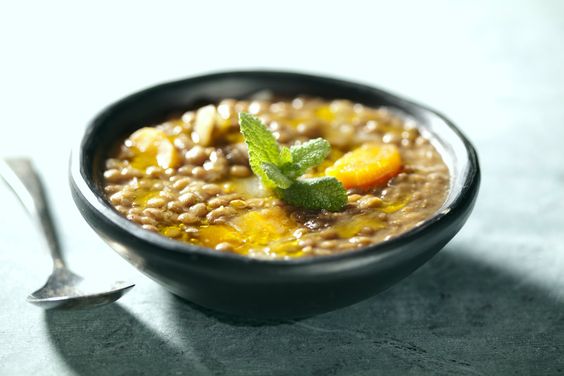
This is the part that saves you. You don’t want to cook this while you’re half asleep on January 1 unless you enjoy suffering.
Best option: cook it on December 30 or December 31 afternoon. Reheat January 1. Timing beats willpower every year.
Step-by-step
- Rinse lentils
Rinse the dry lentils under cold water. Pardina lentils usually don’t need soaking. - Build the base
In a large pot, warm olive oil over medium heat. Add onion, carrots, and pepper. Cook 8 to 10 minutes until softened. - Add garlic, tomato, spices
Add garlic and cook 30 seconds. Add crushed tomato, smoked paprika, cumin if using, and stir for 1 minute. Keep the heat moderate so the paprika doesn’t burn. - Add lentils, potato, bay, liquid
Add lentils, potato, bay leaf, and water or broth. Bring to a boil, then reduce to a gentle simmer. - Add chorizo if using
If using chorizo, add it now. If using jamón, add it now or near the end depending on how intense you want the flavor. - Simmer
Cover partially and simmer 55 to 70 minutes, stirring occasionally. Add a splash more water if it thickens too much. You want stew, not soup, but you also don’t want lentil paste. - Finish
Taste, salt properly at the end, add black pepper, then add a teaspoon of sherry vinegar or lemon juice. That tiny acid hit is what makes the pot taste alive. - Rest
Rest 10 minutes off heat. Lentils settle, broth thickens, everyone calms down.
Why this works
You’re building flavor from a slow vegetable base, then letting lentils thicken the pot naturally. Smoked paprika gives you that Spanish depth without needing complicated technique. The finishing acid makes it taste like you meant it. Cheap ingredients, expensive comfort.
The money math that makes this tradition worth stealing
Let’s be blunt. A lot of American New Year’s spending is not “celebration.” It’s panic spending. You spend because you feel like you should, then you wake up and feel slightly robbed.
The grapes tradition costs almost nothing. A kilo of grapes is not a luxury item. The lentil pot is also cheap, especially in Spain, and it feeds six adults like it’s trying to prove a point.
A realistic pot cost in Spain, depending on city and whether you use chorizo, often lands somewhere like:
- Lentils: €1.20 to €2.50
- Onion, garlic, carrots, pepper, potato: €3 to €5
- Tomato, spices, bay: €1 to €2
- Chorizo or jamón: €2.50 to €5 (optional)
- Total: roughly €6 to €14 for 6 portions
That’s €1 to €2.50 a serving for a meal that actually stabilizes your body on January 1.
In the U.S., people often spend more than that on one miserable delivery fee because they can’t face cooking and they don’t want to eat leftover party food again.
So yes, the superstition is cute. The real value is that this tradition gives January 1 a default meal. Default meals prevent dumb spending.
If you’re the kind of person who wants “European lifestyle” but keeps trying to purchase it, this is the opposite approach. You build it through one pot and a predictable rhythm.
Grapes at midnight, lentils at lunch, walk in the afternoon, early night.
That’s not a fantasy life. That’s a sustainable one.
Common American misreads that turn Nochevieja into a stress test
You don’t have to become Spanish to enjoy this, but you do have to stop importing American intensity into it.
Misread 1: Treating midnight as the main party moment
In Spain, midnight is ritual, then the night continues. If you arrive at 11:55 with no grapes, no plan, and high chaos energy, you will feel behind immediately. Prepare, then party.
Misread 2: Going too hard at dinner
A heavy dinner plus endless drinking plus grapes is a rough combination. Locals can do it because they’ve trained for it since childhood, and even then, half the room is still struggling with grape number nine.
Misread 3: Thinking the lentil thing is a law
It’s not. Plenty of households do not do lentils at all. The point is not to cosplay. The point is to use the idea to create a sane January 1 meal.
Misread 4: Making it a health project
If you label the January 1 lentils as “detox,” you ruin it. It’s not detox. It’s lunch. It’s a warm, balanced meal that makes you feel normal again. Normal beats purity.
Misread 5: Forgetting the season ends later in Spain
Spain drags the holiday season out. January 6 is part of the emotional calendar. If you try to flip into January grind mode on January 1, you’ll feel out of sync with the country around you.
If you want to borrow the Spanish vibe, borrow the pacing. The whole point is not to restart life violently at midnight.
It’s to cross the line into the new year and then eat lunch like a human.
Your first seven days of January without the usual whiplash
If you want this to actually change your life and not just entertain you, run this plan.
Day 1 (New Year’s Day)
Eat the lentils for lunch. Not a tiny bowl. A real bowl. Then take a walk. You’re not “burning it off,” you’re ending the meal properly. Endings matter.
Day 2
Freeze two portions of lentils immediately. Portion them first, label them, and make future-you grateful instead of annoyed.
Day 3
Use lentils as a base, not as a rerun. Put them over rice, add a fried egg, add chopped greens, add a squeeze of lemon. Same pot, new meal.
Day 4
Do one calm money check. Not a full budget overhaul. Just a simple look at what you spent in December and what bills hit in early January. The Spanish trick is not denial, it’s small maintenance.
Day 5
Cook one simple vegetable dinner. Soup, tortilla, roasted veg, whatever. You’re rebalancing without punishing yourself.
Day 6
Choose three default lunches for the week. Write them down. Default lunches are the difference between a good January and a chaotic one.
Day 7
Pick one social plan that does not involve a huge meal. Coffee, walk, a short visit. Keep it light. Keep it repeatable.
This is how the Spanish holiday season stays livable. It’s not discipline. It’s rhythm.
Grapes for a minute, lentils for lunch, walking for sanity.
Then you keep going.

About the Author: Ruben, co-founder of Gamintraveler.com since 2014, is a seasoned traveler from Spain who has explored over 100 countries since 2009. Known for his extensive travel adventures across South America, Europe, the US, Australia, New Zealand, Asia, and Africa, Ruben combines his passion for adventurous yet sustainable living with his love for cycling, highlighted by his remarkable 5-month bicycle journey from Spain to Norway. He currently resides in Spain, where he continues sharing his travel experiences with his partner, Rachel, and their son, Han.