
You reach for a jalapeño because the store is out of Scotch bonnets. The stew is fine, technically edible, but the flavor you wanted never shows up.
You did not just miss a heat level. You changed the entire architecture of the dish. A Scotch bonnet is not a jalapeño with extra fire. It is a different species, with different aromas, different capsaicin concentration, and a different way of sitting in a pot. When you trade it for a jalapeño, you do more than tone things down. You flatten the fruit notes the recipe was built around, you lose the perfume that floats over the dish, and you end up compensating with salt and sugar until everything tastes muddled.
This is the quiet reason people say their first jerk marinade was disappointing, why a Trinidad-style pepper sauce tasted green instead of bright, and why a curry goat simmered for hours and still felt sleepy. The swap is not neutral. The fix is simple: understand what the Scotch bonnet brings, learn how its heat behaves, and stop pretending that “any chili” will do.
Below is a clean map. Why the jalapeño substitution fails, how to manage Scotch bonnet heat without blowing out your palate, the flavor science that makes these peppers taste so different, the handling tricks Caribbean cooks use to control burn and perfume, the faithful substitutes that actually work when you cannot find the real thing, and a set of small, weekday-ready formulas you can cook without a panic.
The Swap That Breaks Your Dish
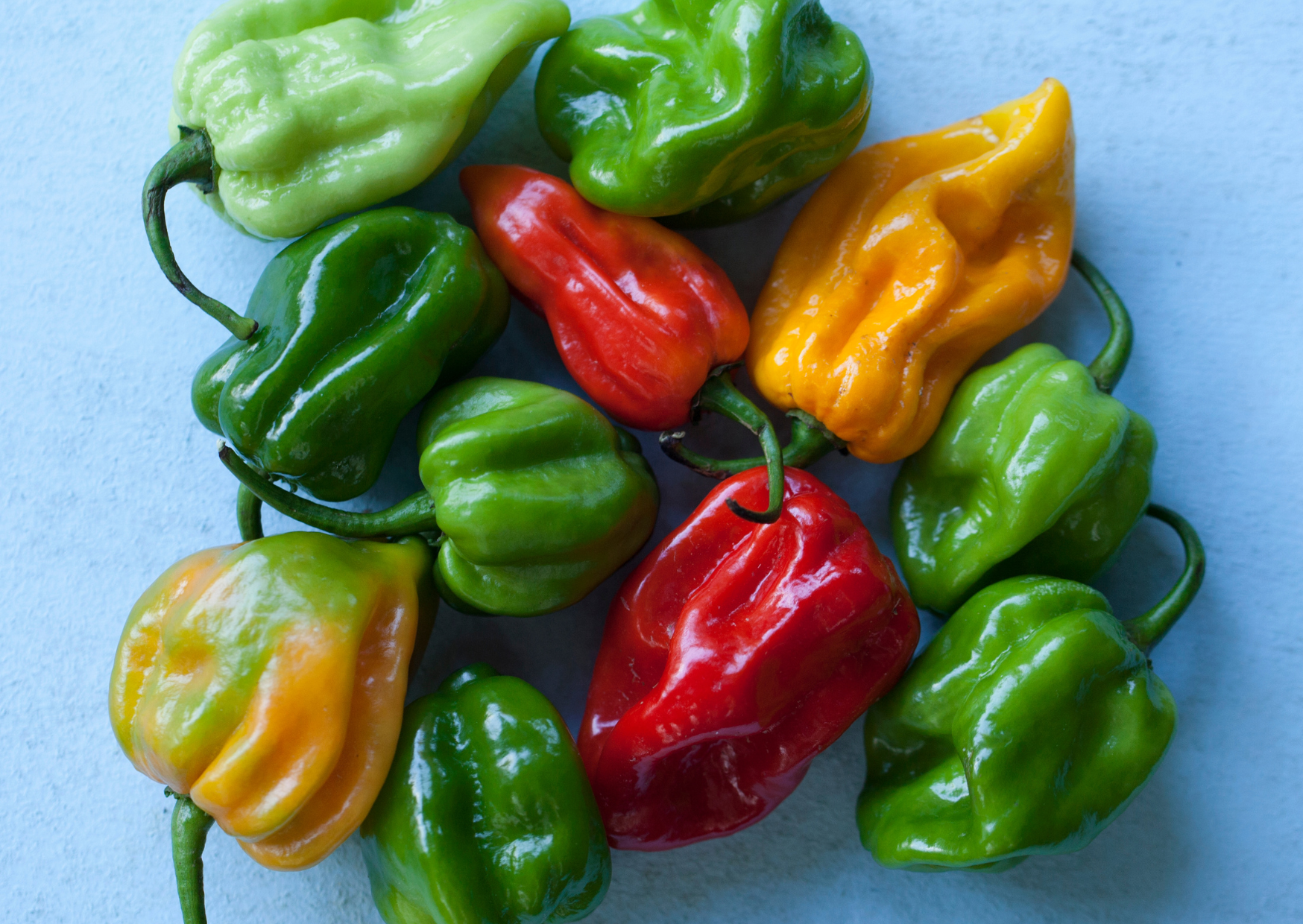
The fastest way to ruin a Caribbean recipe is to treat heat like a volume knob. Scotch bonnet heat is not just stronger, it rides in a pepper that tastes sweet, tropical, and floral while it burns. Jalapeño heat is milder, and the pepper itself tastes green and grassy. When a recipe calls for Scotch bonnet, it is aiming for fruity top notes plus depth, not simply a Scoville number.
The two peppers do not even live on the same branch of the chili family tree. Scotch bonnet is Capsicum chinense, kin to habanero. Jalapeño is Capsicum annuum, kin to serrano and poblanos. That species split shows up on your tongue. With bonnets you get aroma first, then heat, with jalapeños you get green pepper notes and a small burn. If you plug a jalapeño into a bonnet recipe, you remove the perfume the rest of the ingredients expected to meet. The result tastes thin, so you start chasing flavor in the pot, and the dish gets heavy.
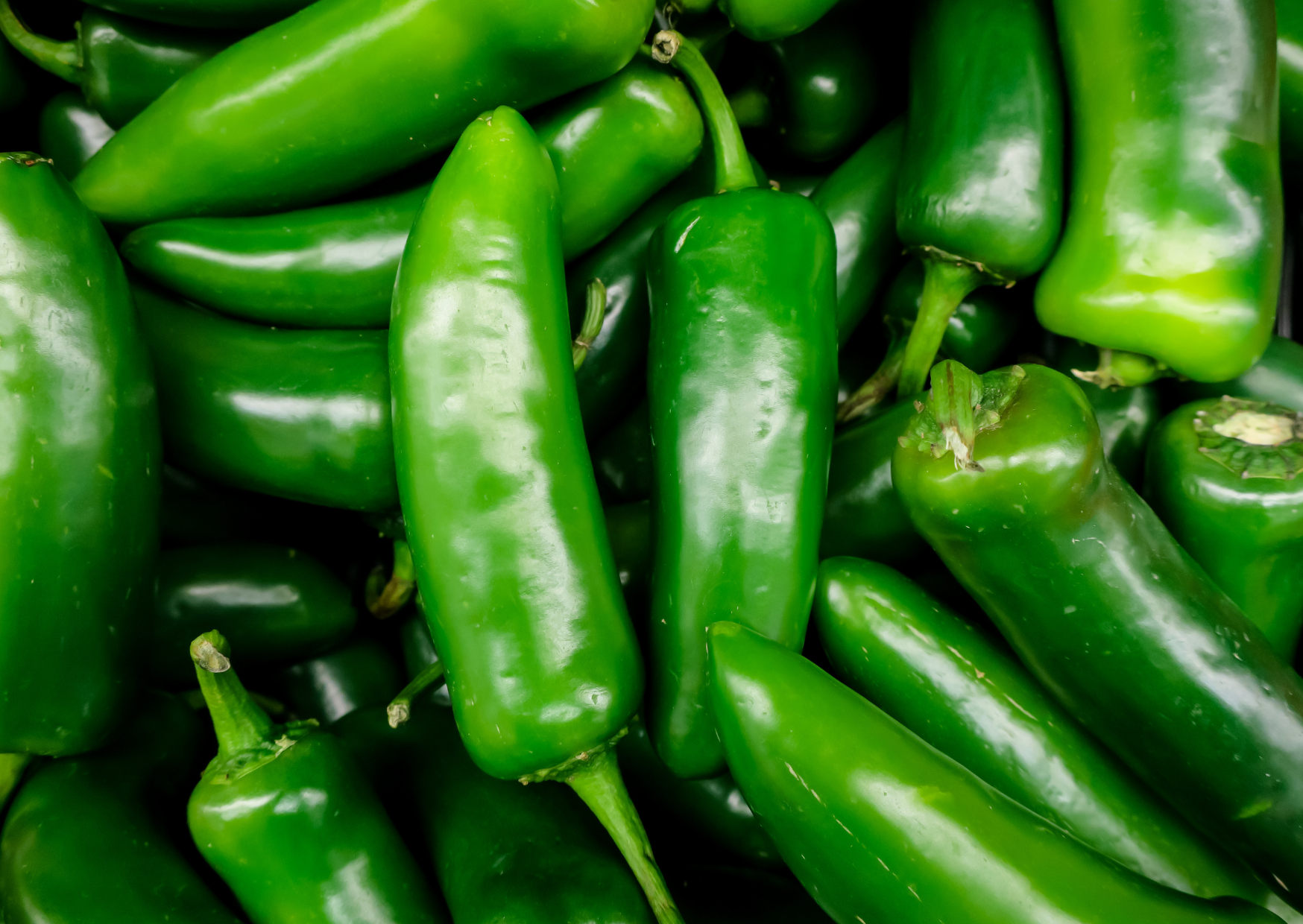
Could a jalapeño work in a salsa where you wanted green snap. Yes. In jerk, pepper sauces, or curries built on Scotch bonnet, a jalapeño is a different dish. Species matters, aroma matters, heat shape matters.
Quick truths: Scotch bonnet is fruity and floral, jalapeño is green and grassy, they are different species with different jobs.
Heat Is Not Just a Number
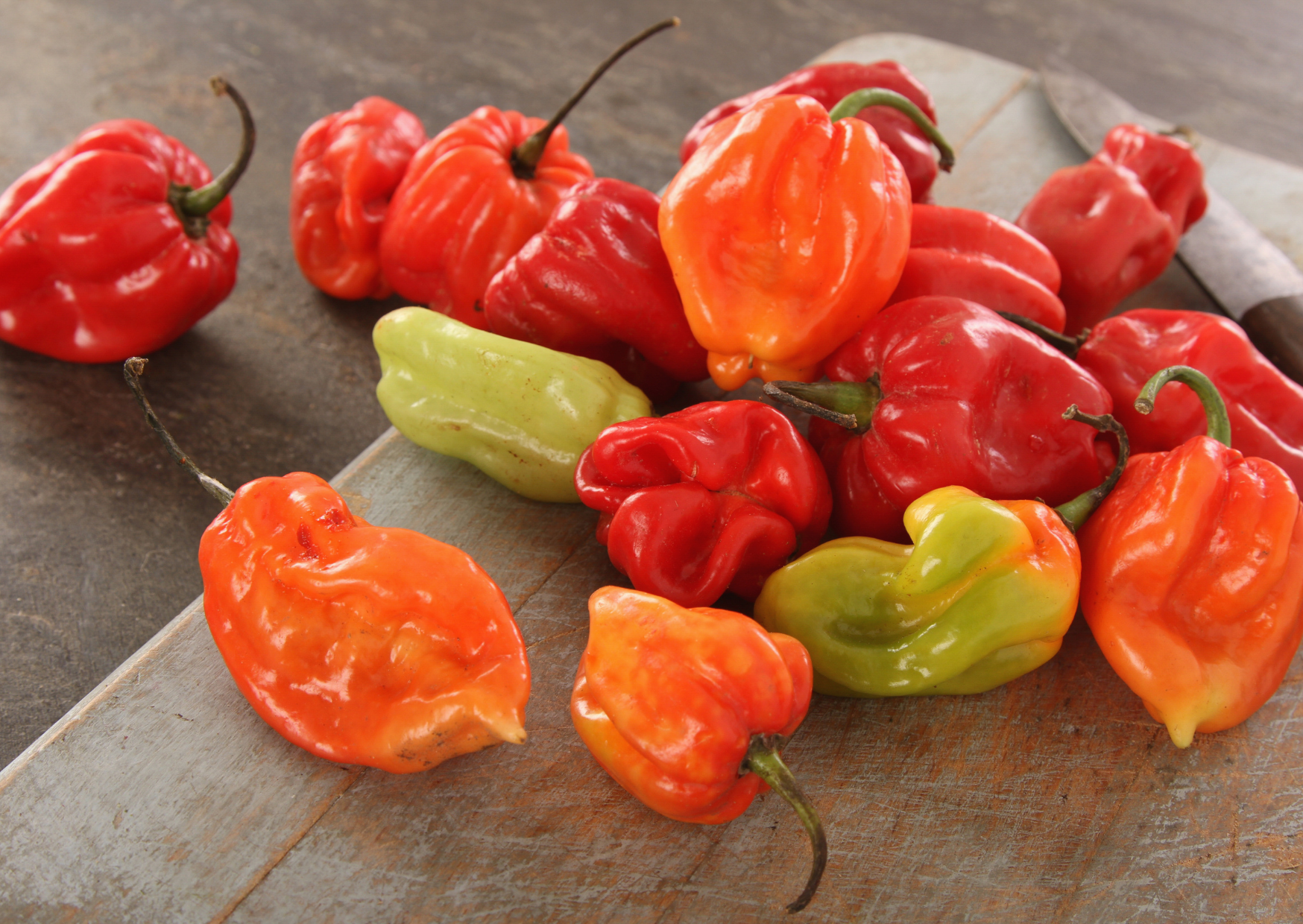
Cooks fixate on the Scoville scale because it is tidy. Jalapeños sit around 2,500 to 8,000 SHU. Scotch bonnets live near 100,000 to 350,000 SHU, in the same band as habaneros. That gap is real, but what your mouth experiences is more than a number. Where the capsaicin lives, how you cut the pepper, and how you cook it change the ride.
Most of the capsaicinoids are concentrated in the pithy white placenta, not the seeds. Seeds hitch a ride and get smeared with heat, which is why they taste hot, but the organ that makes the burn is that pale internal web. If you mince a Scotch bonnet finely and include the placenta, you are designing a fast, full extraction. If you drop a whole bonnet into a pot, prick it once, and fish it out at the end, you get perfume plus measured heat. Same pepper, different outcomes.
Capsaicin loves fat and alcohol, it ignores water. A little oil in a marinade or a coconut base in a curry solubilizes the burn and spreads it smoothly. Boiling in plain water does not wash heat away, it just moves it around. This is why jerk pastes bloom on meat that has oil and allspice, and why a shot of rum in a hot sauce is not only for swagger. Fat carries heat, alcohol helps, water does not save you.
Flavor Architecture: Tropical Esters vs Green Pyrazines
You can taste this section before you read it. Take a whiff of a diced jalapeño and you get the smell of fresh cut green pepper. That aroma comes from methoxypyrazines, a family of extremely potent compounds that shout green and vegetal at vanishingly small concentrations. Sow those into a jerk paste and they fight with thyme and allspice. Put them in a mango pepper sauce and they turn the tropical fruit muddy.
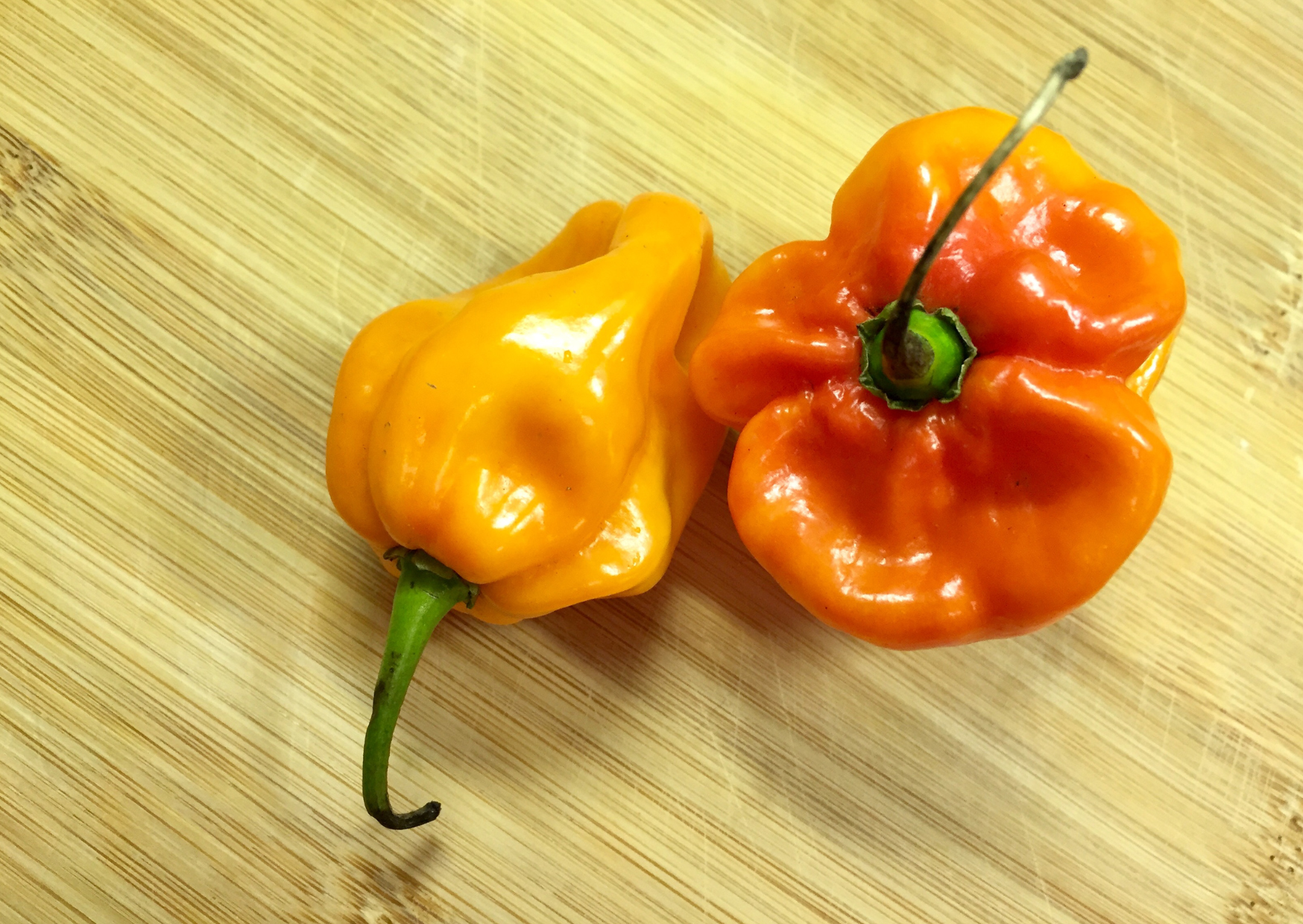
Scotch bonnets live in a different perfume cloud. Being Capsicum chinense, they share a volatile profile with habaneros heavy in fruity esters and floral terpenes. That is why people describe them as apricot, papaya, melon, citrus even as they scorch. In practice this matters more than the heat. Those bright aromas bond with thyme, scallion, garlic, allspice, and citrus in a jerk paste, and they make a simple pepper sauce taste complete before you add sugar. Swap in jalapeño and you lose the perfume the whole dish was built to frame.
This is the real reason Scotch bonnets feel forgiving when used right. The fruit notes round the edges of the burn. The jalapeño’s methoxypyrazines do the opposite in Caribbean food, they pull the dish toward green and away from the ripeness that defines the region’s sauces and stews. Your tongue is telling you chemistry, not opinions.
How To Use Scotch Bonnets Without Blowing Dinner
You do not need to fear the pepper. You need control. Caribbean cooks have a handful of low-drama moves that let you steer heat and keep the aroma intact.
Work whole for perfume, chopped for power. A whole Scotch bonnet dropped into a pot and pierced once or twice will perfume a stew without detonating it. A roughly chopped bonnet, pith removed, gives medium burn and flavor. A finely minced bonnet with pith in the mix gives fast, hard extraction and should be measured by the teaspoon, not the pepper. The same fruit does three jobs if you pick the cut on purpose. Whole gives aroma, big pieces give balance, mince gives fire.
Use fat to smooth the ride. A tablespoon of oil in a marinade or the coconut milk already in a curry spreads capsaicin. If you are new to bonnets, start with a paste that includes oil, scallion, thyme, allspice, and citrus juice, taste a dab on cooked meat, and adjust by the teaspoon. Fat tames burn, acid brightens perfume, taste on cooked food, not raw.
Respect timing. Add a whole bonnet early for background and fish it out. Stir minced bonnet in late if you want sharper heat and top-note aroma. Capsaicin is heat stable, long simmering does not kill it, it just integrates the burn into the sauce. If a pot is already where you want it, a last minute raw splash of hot sauce can lift the nose without raising the burn too much in the liquid.
Know your guests. Casein in dairy binds capsaicin, sugar smooths perception, starch buffers. Put rice, avocado, yogurt, or a sweet relish on the table so people can modulate. None of these fix a pot that is five peppers past sane, but they make a properly hot dinner friendlier. Serve buffers, let people tune, do not rebuild the stew at the table.
Control keys: pick the cut, bloom in fat, add late for lift, set out buffers.
When You Cannot Find Scotch Bonnets: Substitutions That Actually Work
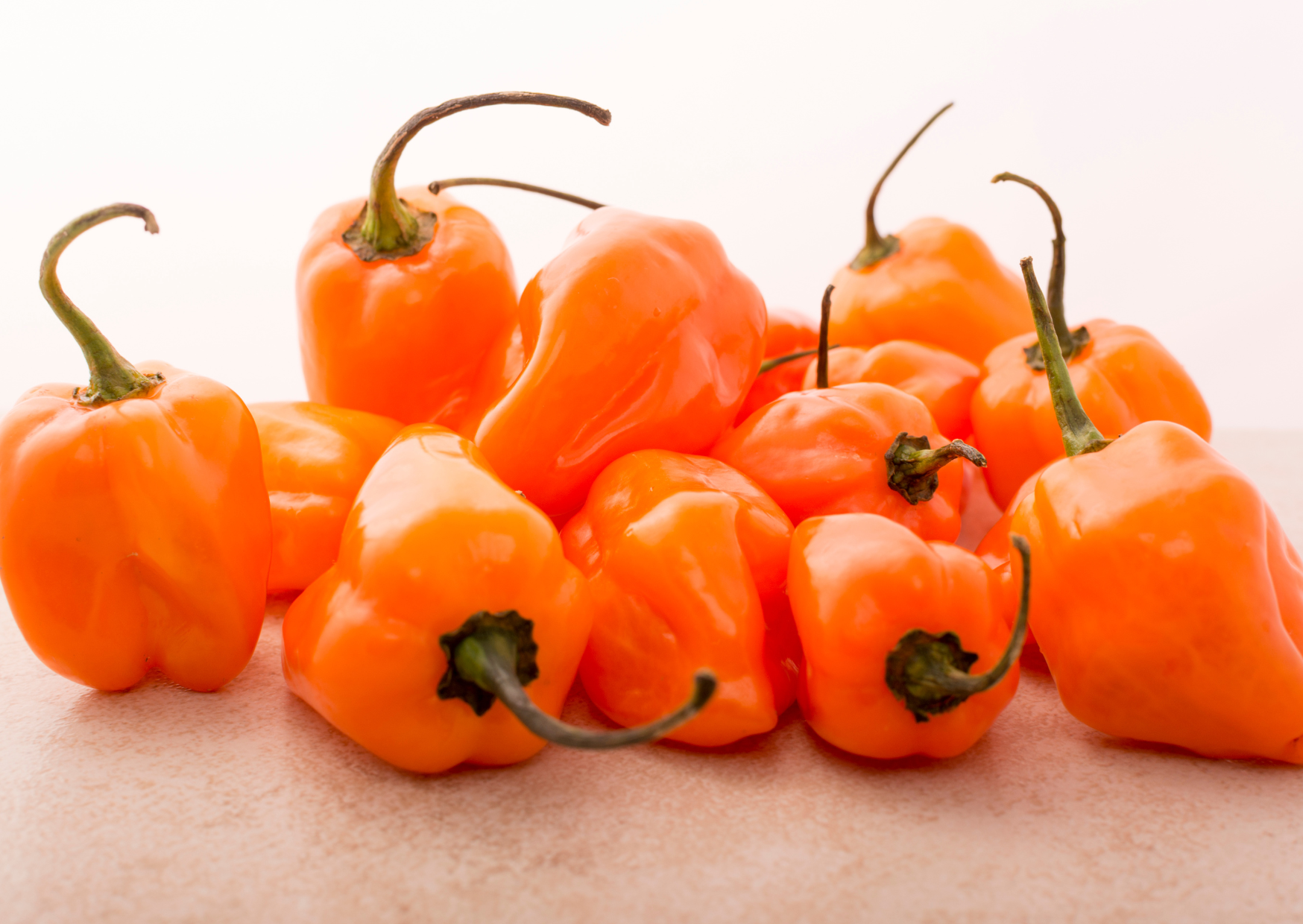
There are honest stand-ins that preserve the fruit first, fire second personality of a Scotch bonnet. None are perfect. They are better than turning your dish green.
Habanero is your first call. It is the same species, Capsicum chinense, with a similar heat band and a fruity nose. It lacks some of the peachy roundness of a true bonnet, so add a small piece of ripe mango, papaya, or apricot to your paste or sauce, the way some island cooks do when fruit is lying around. That gets you close enough that only a homesick auntie will object. Habanero plus a little fruit is the swap that saves dinner.
Use a real Caribbean pepper mash if you can find one. Many West Indian groceries sell small jars of crushed Scotch bonnet preserved in salt and vinegar. A teaspoon of mash delivers the aroma and heat of a pepper with precision and keeps for months. Start with half a teaspoon, blend into your paste, and creep up. Pepper mashes are how small kitchens build repeatable heat without playing roulette with fresh chilies.
Blend a jalapeño with something fruity only if you must. A practical fix is one jalapeño plus a few rings of habanero and one tablespoon of ripe mango in the blender. It will not trick a Jamaican, but it will pull the aroma toward the bonnets’ profile and away from lawn clippings. Add thyme, scallion, allspice, and a squeeze of lime to keep the Caribbean signals loud.
Last, do not chase Scotch bonnets with Thai bird’s eye or cayenne flakes unless you are after raw heat. Those chilies are sharp and high pitched. They can make a fine hot sauce, they will not give you that round, tropical perfume jerk and island curries expect.
Weeknight Blueprints That Get You The Right Flavor
You do not need to cook all day to let a Scotch bonnet be itself. Here are tight, tested blueprints you can learn once and ride all winter.
Jerk paste for anything. In a blender, combine 3 chopped scallions, 1 small onion, 4 garlic cloves, 1 to 2 Scotch bonnets seeded to taste, 1 tablespoon fresh thyme leaves, 2 teaspoons ground allspice, 1 teaspoon black pepper, 1 teaspoon salt, 1 tablespoon brown sugar, 2 tablespoons neutral oil, and juice of 1 lime. Blend smooth, taste a dab on cooked meat to calibrate heat, then marinate chicken parts or pork for 4 to 12 hours. Roast hot or grill, baste with any leftover paste thinned with a little oil. If you used a habanero, add half a ripe mango to the blender to mimic the bonnet’s round fruit. Allspice plus thyme define jerk, bonnet adds fruit and burn, oil spreads the heat.
Island pepper sauce in ten minutes. In a small blender, buzz 2 Scotch bonnets, 1 clove garlic, 2 tablespoons white vinegar, 1 tablespoon lime juice, 1 teaspoon salt, and 1 teaspoon sugar until smooth. Thin with water to a loose pour. Keep refrigerated. For a softer profile, swap a bonnet for a habanero and add a piece of ripe papaya. This goes on fish, eggs, rice, everything. Vinegar for brightness, lime for lift, tiny sugar to round the edges.
Curry goat heat control. Sweat 1 onion in oil, add 2 tablespoons curry powder and thyme, bloom 30 seconds, add 2 pounds goat or lamb, brown, add water to barely cover, and drop in one whole Scotch bonnet pierced once. Simmer covered until tender, remove the pepper, and finish with a splash of coconut milk if you like. If you want more heat, mince a half bonnet and stir it in for the last 10 minutes. Whole pepper perfumes, minced pepper stings, coconut smooths the ride.
Rice and peas that taste like the islands. Simmer 1 can of coconut milk with 1 cup water, 2 smashed scallions, 2 thyme sprigs, 1 clove garlic, a good pinch of allspice, 1 teaspoon salt, and one whole Scotch bonnet for 5 minutes. Add 1 cup rinsed long grain rice and 1 cup cooked kidney beans, simmer covered until tender, then remove the pepper and herbs. Fragrant, lightly spicy, deeply Caribbean. Perfume without fire, bonnet as a sachet, thyme ties it together.
Blueprint habits: blend oil and herbs, use whole peppers like a tea bag, finish with acid, store a small jar of pepper sauce.
Troubleshooting: What Went Wrong And How To Fix It
Your jerk tastes like green bell pepper. You used jalapeño, or you used too much green herb without enough allspice and bonnet. Fix the paste with a tablespoon of pepper mash or a few rings of habanero and a piece of ripe mango, reblend, and brush on during the last minutes of cooking.
Your stew is hot but flat. Capsaicin is there, the perfume is not. Drop in a whole Scotch bonnet for 5 to 10 minutes, add a splash of lime and a teaspoon of brown sugar, and recheck salt. Heat without aroma needs acid and a little sweet to wake up.
Your sauce is screaming hot. Do not dilute with water. Stir in a spoon of yogurt, coconut milk, or butter depending on the dish, add a pinch of sugar, then hold off the heat and let it sit five minutes. Serve with rice or bread. Capsaicin binds to fat and casein, not to water, so give it something to cling to and move on.
You added seeds to keep it authentic. Seeds are not the source, the placenta is. If you want less heat, remove the pith. If you want a cleaner aroma in sauces, blend the flesh only and steep the placenta separately like a tea bag. You will get higher perfume with gentler burn.
What This Means For You
Stop treating chilies as interchangeable. A Scotch bonnet is the center of gravity in the dishes that name it, not a garnish you can replace with anything red or green. If you can buy the real thing, buy it, then control it with cut size, fat, and timing. If you cannot find it, pick a habanero plus a little fruit or a Caribbean pepper mash before you ever reach for a jalapeño. Your jerk will taste like jerk, your pepper sauce will sing instead of shout, and your curry will carry that sweet tropical perfume that makes the whole kitchen smell like it should.
Do this once and you stop apologizing for every island recipe you cook. You will know why that small orange pepper matters, and you will stop writing “any chili” at the top of your shopping list.

About the Author: Ruben, co-founder of Gamintraveler.com since 2014, is a seasoned traveler from Spain who has explored over 100 countries since 2009. Known for his extensive travel adventures across South America, Europe, the US, Australia, New Zealand, Asia, and Africa, Ruben combines his passion for adventurous yet sustainable living with his love for cycling, highlighted by his remarkable 5-month bicycle journey from Spain to Norway. He currently resides in Spain, where he continues sharing his travel experiences with his partner, Rachel, and their son, Han.