
It isn’t a “lost week.” It’s a built-in slowdown with rules, and once you see the rules, a lot of Europe suddenly makes sense.
December 26 in the U.S. feels like the party ended and you’re standing in the kitchen holding a paper plate. Christmas is done, the house is messy, the food is everywhere, and the next thing on the calendar is work, guilt, and some aggressive New Year reinvention.
Here in Spain, December 26 feels like… we’re still in it.
Not in a nonstop festive way. More like the country collectively agrees to lower the volume. Streets are quieter. Shops run odd hours. People still meet up, but it’s casual. Meals happen, but they don’t keep escalating into chaos. And nobody is pretending this is the week to “get back on track.”
So I started paying attention in the simplest way possible: I kept notes. What’s open, what’s closed, when people eat, when they leave the house, when families disappear into parks, when WhatsApp groups suddenly light up for coffee at 5 instead of dinner at 9. The week has a pattern, and the pattern explains a lot.
If you’re an American reading this, the big reveal is not “Europeans have more self-control.” The reveal is that the calendar, the city design, and the social defaults do half the work.
Americans think this week is dead, Europeans treat it as the point
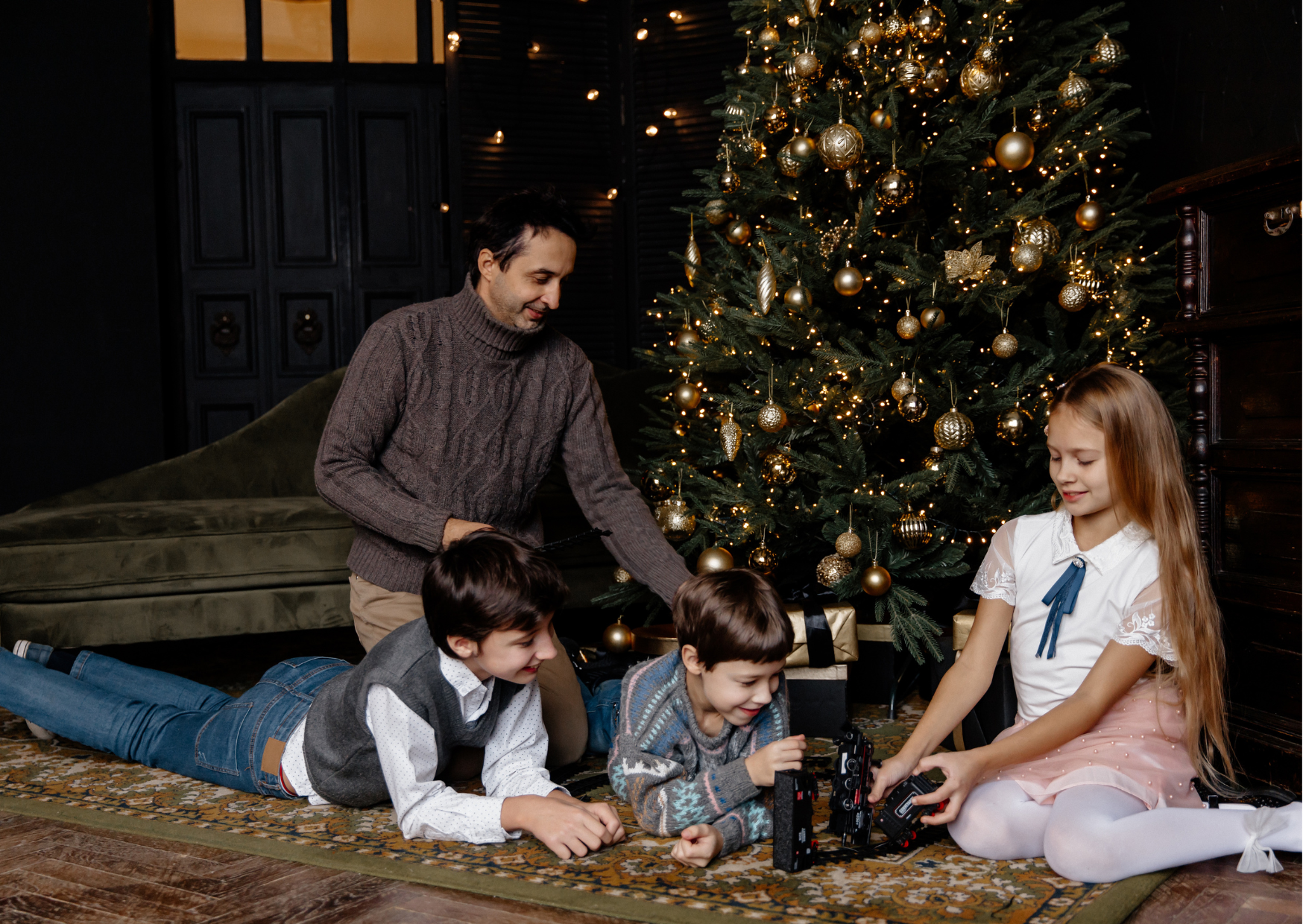
The American lens is productivity-first. If nothing “important” happens, it’s wasted time. That’s why the week between Christmas and New Year gets framed as the dead zone. People are half-working, half-not, eating randomly, and vaguely annoyed that time is slipping away.
In a lot of Europe, this week is not a glitch. It’s the landing.
Christmas Day is big, yes. But the days after are where the season becomes livable. People see the relatives they didn’t see on the main day. Kids keep playing with their gifts without getting dragged to five different obligations. Couples take long walks and talk like humans again. Grocery shopping becomes normal. The home resets.
And that reset is not “go hard in the gym.” It’s: tidy the house, eat real meals, get outside once a day, and stop acting like every evening needs to be an event.
If you think about it, this is exactly what Americans say they want: less frantic consumption, less pressure, less perfection. But the U.S. structure pushes you toward the opposite. One huge holiday day, then straight back into a normal work machine. So the landing never happens. It’s feast, crash, and then a New Year identity crisis.
Meanwhile, in Spain, even now on December 26, the dominant energy is slow continuation, not abrupt endings.
That’s why Americans feel like Europeans are “better” at holidays. Europeans are often just better at tapering. The week doesn’t drop off a cliff.
And when the week doesn’t drop off a cliff, you don’t need a dramatic restart on January 1.
The calendar is doing more than your willpower ever could

Here’s the uncomfortable truth: a lot of European calm is paperwork. It’s the calendar.
In Britain, December 26 is Boxing Day, a bank holiday. In Italy, December 26 is Santo Stefano, a public holiday. In Spain, the season doesn’t really feel “finished” until Three Kings Day on January 6, and in many places that date matters more for kids than December 25.
So the week is padded with official or semi-official permission to be a little slower. That permission changes everything. People aren’t squeezing joy into one day. They’re spreading it across a week and a half.
Even when December 26 is not a formal holiday where you live, the social expectation can still be “don’t schedule anything serious.” That means fewer work emails, fewer meetings, fewer obligations that force you to eat in a rushed, chaotic way.
The other calendar piece is school break. Families don’t have to perform a normal weekday rhythm for a few days, which means they can build their own rhythm. In Spain, that rhythm often looks like late breakfasts, a proper lunch, a walk, and then something light at night. The day has edges even when it’s relaxed.
Compare this to the American version. December 26 is often a normal workday. Some people are off, some people are not, and everyone’s schedule is mismatched. That makes plans harder, movement harder, and meals more chaotic. You end up grazing because you don’t have a clean “meal time” anymore, you just have food everywhere and a vague sense of fatigue.
So when Americans ask, “How do Europeans stay calmer?” one real answer is: they are literally given more calendar room to taper out of the holiday. It’s not magic, it’s design.
If you’re trying to copy Europe from the U.S., this is the first thing to steal. Not a recipe. Not a workout. A protected block of time where you stop pretending you can do everything.
The food pattern is not lighter, it’s more contained

Europeans do not eat small on holidays. Let’s kill that myth properly.
What they do differently is contain the eating to actual meals. That sounds minor until you live inside it.
In American holiday weeks, food becomes ambient. Cookies are on the counter all day. Leftovers are eaten standing up. Everyone is “just having a little something” every time they walk past the kitchen. That creates a full day of eating without a single moment that feels like a satisfying meal.
In Spain, Italy, Portugal, and France, you still see sweets everywhere, but you also see meals that end. People sit down. They eat. They finish. Then they move on to conversation, coffee, a walk, errands, or visiting someone.
The leftover strategy is also different. In a lot of European households, leftovers get upgraded fast. Not on day four when everyone is resentful. On day one or day two, when the food is still good and the household still has holiday energy. That’s why you see things like Catalan canelons on December 26, or Italian leftover dishes designed specifically to turn cooked meat into something new.
That upgrade habit matters because it prevents the “leftover decay” that drives Americans to takeout by December 28. It also turns leftovers into portionable meals instead of endless fridge grazing. Leftovers become dinner, not a snack table.
A practical example you can copy anywhere:
- One big holiday meal.
- Two planned leftover meals that feel intentional.
- One simple soup or legume pot that resets the week.
That’s enough to keep the week from turning into a sugar-and-snack blur.
Also, Europeans don’t do “penance eating” the next day. They don’t usually punish themselves with celery sticks and misery. They just return to normal meals sooner. Normal meals are the reset, not restriction.
That one difference is why January feels less explosive here. You don’t need to “start over” because you never fully left reality.
The movement pattern is not gym culture, it’s a daily exit from the house
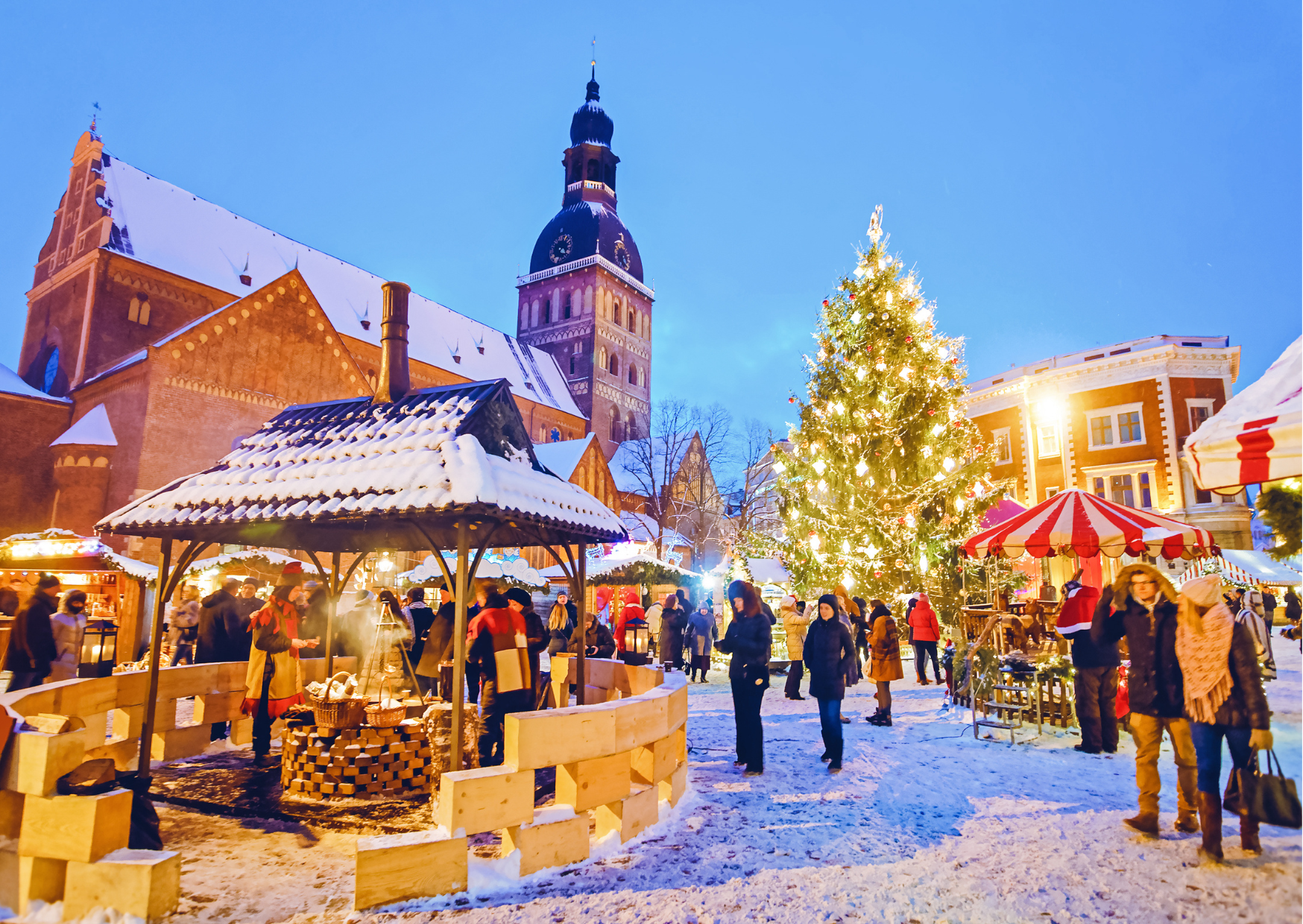
If you watch this week closely, you see the same thing again and again: after the big meal, people leave the house.
Not for fitness theater. For a walk that has a social purpose. Lights, plazas, parks, church displays, a loop through the neighborhood, a quick stop to see someone.
That walk does three quiet things:
- It ends the meal.
- It changes the mood of the day.
- It breaks the constant-access-to-food loop.
In Italy, it’s the passeggiata vibe. In Spain, it’s the paseo. In Portugal, it’s the same idea with different streets. The point is not steps. The point is that a family’s default activity is not “collapse onto the sofa with food within reach.”
Americans often think Europeans are thinner because they eat different bread. The more boring answer is that Europeans often move a little more by default, especially in cities, and they do it at the exact times Americans tend to sit still, after meals and in the evening.
Even on rainy days, you still see people doing the quick loop. Umbrellas out, collar up, still walking. Because the habit isn’t attached to motivation. It’s attached to social normalcy. Movement is ordinary.
This is also why the week between Christmas and New Year looks different. In the U.S., this week is peak couch gravity. In Europe, you still get couch time, but you also get daily outside time, and that stops the week from turning into a full-body shutdown.
If you want a simple American adaptation: pick one daily walk window this week, after the biggest meal. Twenty minutes counts. Thirty is better. Make it about “seeing something,” not “burning something off.” The framing is the habit.
The money pattern is quieter, and it’s not because people are richer
This week taught me something about European money that Americans rarely see: the calm is partly a spending ceiling.
In the U.S., the week after Christmas often becomes a second spending event. Returns. Exchanges. Target runs. “Treat yourself” purchases. Post-holiday sales. You’re still consuming, just in a different mood.
In Europe, there are sales too, and in some countries they’re a big deal. But the everyday, household-level pattern is more restrained. People still meet friends, still go out, still buy things, but there’s a stronger sense of “enough.” The week is not an excuse to keep escalating.
Part of that is cultural. Part of it is also structural. Many Europeans already live with higher ongoing costs baked into life, whether it’s VAT, energy prices, or rent, so households get good at not letting random weeks blow up the month.
You can see it in small things:
- meeting for one coffee, not turning it into a full brunch every time
- walking to see lights instead of paying for entertainment
- making leftovers into a meal instead of ordering in
- keeping “going out” casual, not a three-hour production
It’s not that nobody spends money. It’s that spending is less tied to identity. The week’s status symbol is not “we went big.” It’s we had a nice time.
If you want numbers that feel real in Spain, the between-years week can be surprisingly cheap if you let it be. A coffee and pastry might be a few euros. A simple menu del día on an open day can still be good value in many places. A family walk is free. A homemade leftover dish is basically paid for already.
Americans often assume that “living well” requires constant spending. Europeans often prove, especially this week, that living well can look like time, not transactions.
The social pattern is lower-stakes, and that’s why it’s sustainable
This might be the most underrated difference.
In the U.S., hosting is stressful because it’s performance. Big house, big spread, big “we did it.” And once you’ve done it, you’re empty.
In Europe, a lot of social life is smaller and more casual, especially in this in-between week. People drop by. People meet outside. People do a merienda-style meet-up. People do a quick drink. People keep it light.
That lightness matters because it keeps you from going into full recovery mode. If social life is easier, you don’t need two days to recover from it. You also don’t need to use food and alcohol as emotional anesthesia to survive it.
The best example is how often the social plan includes movement. “Let’s walk and talk.” “Let’s see the lights.” “Let’s loop the park.” In the U.S., social plans often revolve around sitting, eating, and drinking. In Europe, there’s more of a mix. Socializing has motion.
This week also reveals how families manage kids. Kids are not expected to sit still for eight hours while adults talk. Kids get taken outside. Kids run. Parents rotate. Grandparents shuffle along. The day is broken into chapters instead of one long indoor marathon.
So when Americans romanticize “European family life,” this is what they’re seeing without naming it: the social life is designed to be repeatable, not heroic.
That repeatability is what makes the week between Christmas and New Year feel calmer. It’s not a string of events. It’s a string of small, doable moments.
The American mistakes that make this week feel miserable
If you’re trying to borrow the European version of this week, a few mistakes will sabotage you immediately.
Mistake 1: Treating December 26 like punishment day.
If you wake up and decide you’re “being good” now, you create a pendulum. You will swing back.
Mistake 2: Leaving the kitchen open all day.
Put the sweets away. Portion the leftovers. Make one planned leftover meal. If food is ambient, you will eat all day and feel weirdly unsatisfied.
Mistake 3: Planning social time only at night.
Night plans tend to be heavier, later, and more expensive. This week works better when you meet in daylight, for coffee, for a walk, for something short.
Mistake 4: Trying to recreate the U.S. “event” model.
Europe doesn’t need an event every day. It needs a rhythm. Rhythm beats novelty.
Mistake 5: Ignoring movement because it’s “not a workout.”
The daily walk matters because it interrupts eating and sitting. You don’t need a gym plan. You need an exit from the house.
Mistake 6: Saving all reflection for January 1.
Europe uses this week for small resets, cleaning, sorting, planning, not a dramatic “new me” moment. If you wait for January 1, you create pressure and then freeze.
If you fix only one thing: make meals real and contained, and leave the house every day. The rest gets easier fast.
The next 7 days, run it like Europe

This is the simple version, and it works whether you’re in Spain, in the U.S., or anywhere in between.
Day 1
Pick one “anchor meal” time and protect it. Lunch works best. Eat a real meal, seated. Then put food away. No ambient snacking.
Day 2
Do one leftover transformation. Not reheating slices. A soup, a stew, a pasta bake, meatballs, a curry, anything that turns leftovers into a new dinner.
Day 3
Take a daylight walk after your biggest meal. Twenty minutes is enough to change the day. Make it about lights, parks, a loop, something you can see.
Day 4
Schedule one small social plan in the afternoon. Coffee, a walk, a quick drink. Keep it light, keep it short, keep it doable.
Day 5
Do one household reset task that makes January easier. Not an “everything” clean. One drawer, one shelf, one paperwork pile. Europeans do small maintenance, not dramatic overhauls.
Day 6
Choose three default meals for next week. Literally write them down. Default meals prevent tired-night chaos.
Day 7
Do a quiet money check. One page. What came in, what went out, what bills are coming, and one simple decision about January. Nothing fancy, just clarity.
If you do this, you’ll feel the core European benefit of this week: the year doesn’t end with a crash. It ends with a taper.
And tapering is why January feels less like war over here.

About the Author: Ruben, co-founder of Gamintraveler.com since 2014, is a seasoned traveler from Spain who has explored over 100 countries since 2009. Known for his extensive travel adventures across South America, Europe, the US, Australia, New Zealand, Asia, and Africa, Ruben combines his passion for adventurous yet sustainable living with his love for cycling, highlighted by his remarkable 5-month bicycle journey from Spain to Norway. He currently resides in Spain, where he continues sharing his travel experiences with his partner, Rachel, and their son, Han.