
You shred cabbage, pack a jar, and wait. As of September 2025, there is a clear moment when your sauerkraut stops being salty cabbage and starts generating the bioactive chemistry people want from cruciferous vegetables. Around day 7, spontaneous fermentation reliably shifts, antioxidant activity jumps, and the cabbage’s own plant compounds begin transforming into metabolites that research links with cancer defense.
You do not need a lab. You need salt by weight, the right temperature, and a method that keeps oxygen off while lactic acid bacteria do the work. Day 7 is not magic, it is a practical signal. Flavor brightens, brine clears, and in controlled tests the measurable chemistry starts tilting upward. Let it run a little longer for fuller sour, or move it to cold storage to lock texture and taste where you like it. Either way, the win is baked in by the time you pass that first week.
This guide gives you a German-style, caraway-forward sauerkraut, a step-by-step you can run this afternoon, the science behind day 7, a cost breakdown per serving, a health timeline in plain English, and fixes for every common mistake.
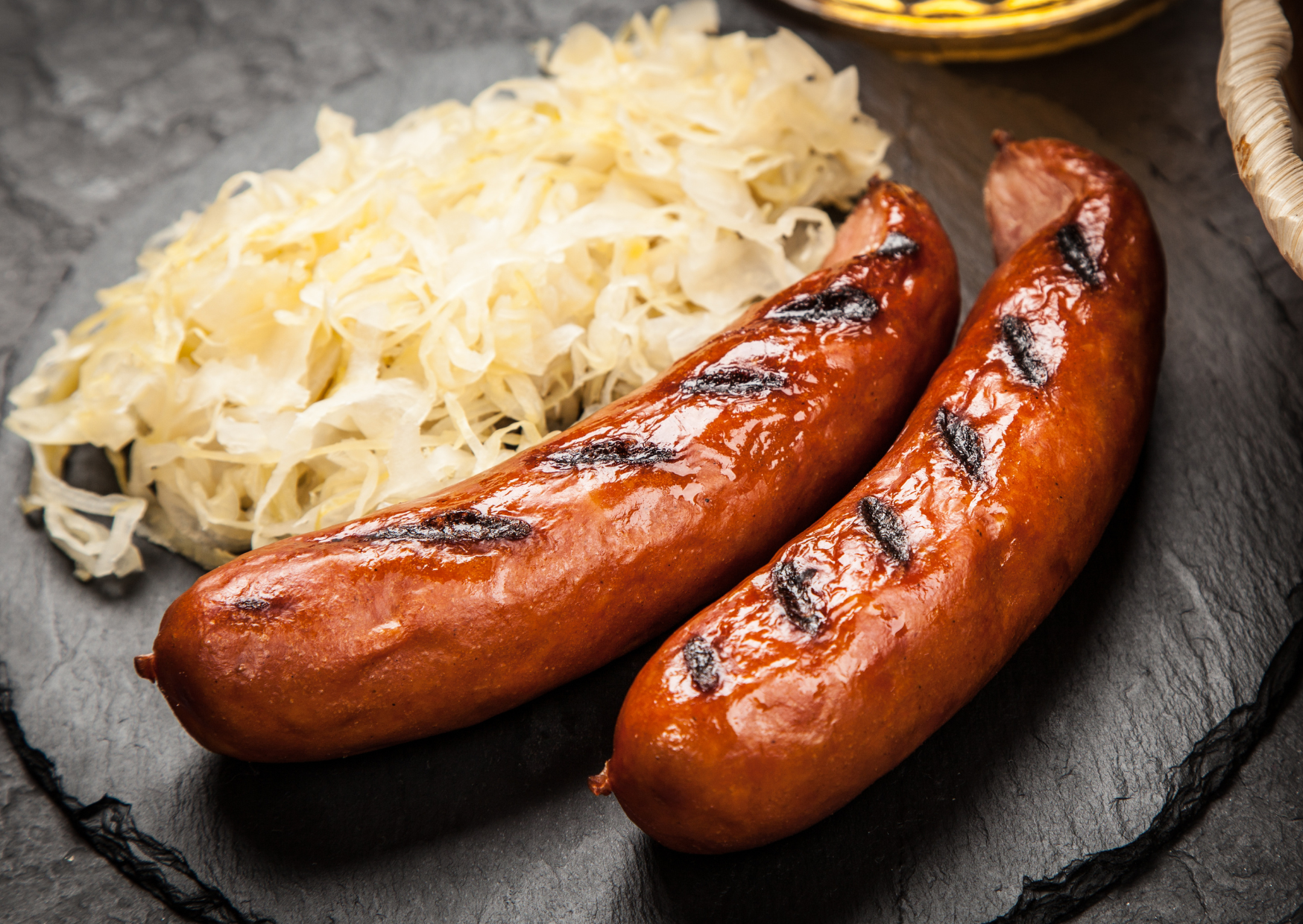
What Actually Happens In That Jar
Fermentation is simple mechanics and complex chemistry. You add salt to cabbage so it releases juice. You keep the mixture submerged and oxygen out. A community of lactic acid bacteria that live on the leaves wakes up, eats sugars, and produces lactic acid. The pH falls, the jar gets safe, and flavors develop from grassy to bright to complex.
Cabbage also contains glucosinolates, a family of sulfur compounds that are part of why crucifers are studied for anti-cancer effects. When plant cells are cut and later acted on by bacteria and the plant’s own enzyme myrosinase, glucosinolates break down into isothiocyanates and indole compounds. Those metabolites, including sulforaphane, indole-3-carbinol, and its dimer DIM, are the ones that show up over and over in the research. Fermentation does not create nutrients out of nowhere. It rearranges what is there and increases the fraction your body can use.
In controlled kraut ferments and related crucifer studies, scientists see a pattern. Early days are mostly salt and acid formation. Around a week in, a new balance of microbes takes over, antioxidant activity rises, and glucosinolate breakdown products begin to accumulate in meaningful amounts. Texture stays crisp if your temperature is right. From there, flavor and metabolites continue to develop, but day 7 is the first dependable waypoint you can taste and, if you like, target.
The Recipe, Built For Results
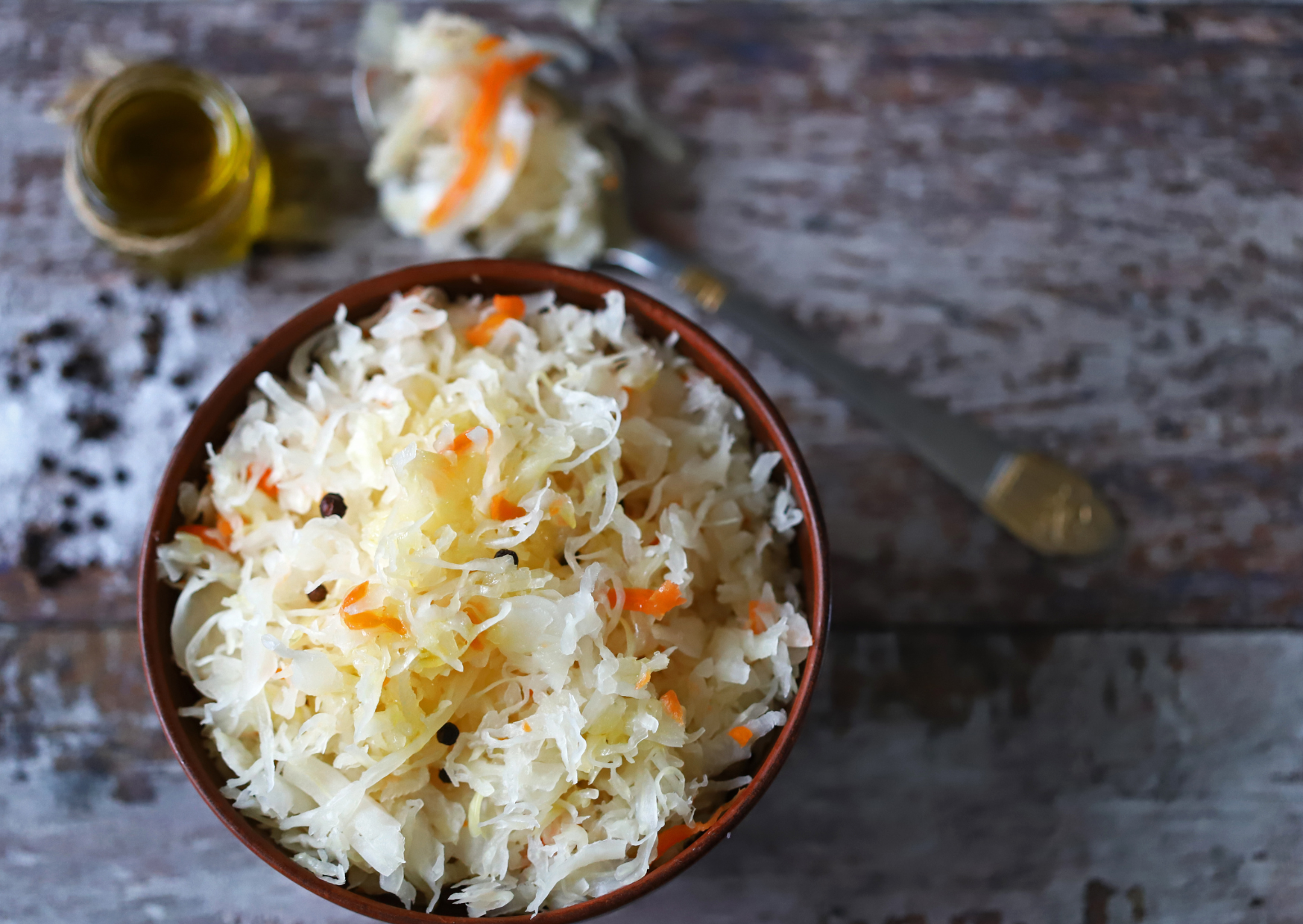
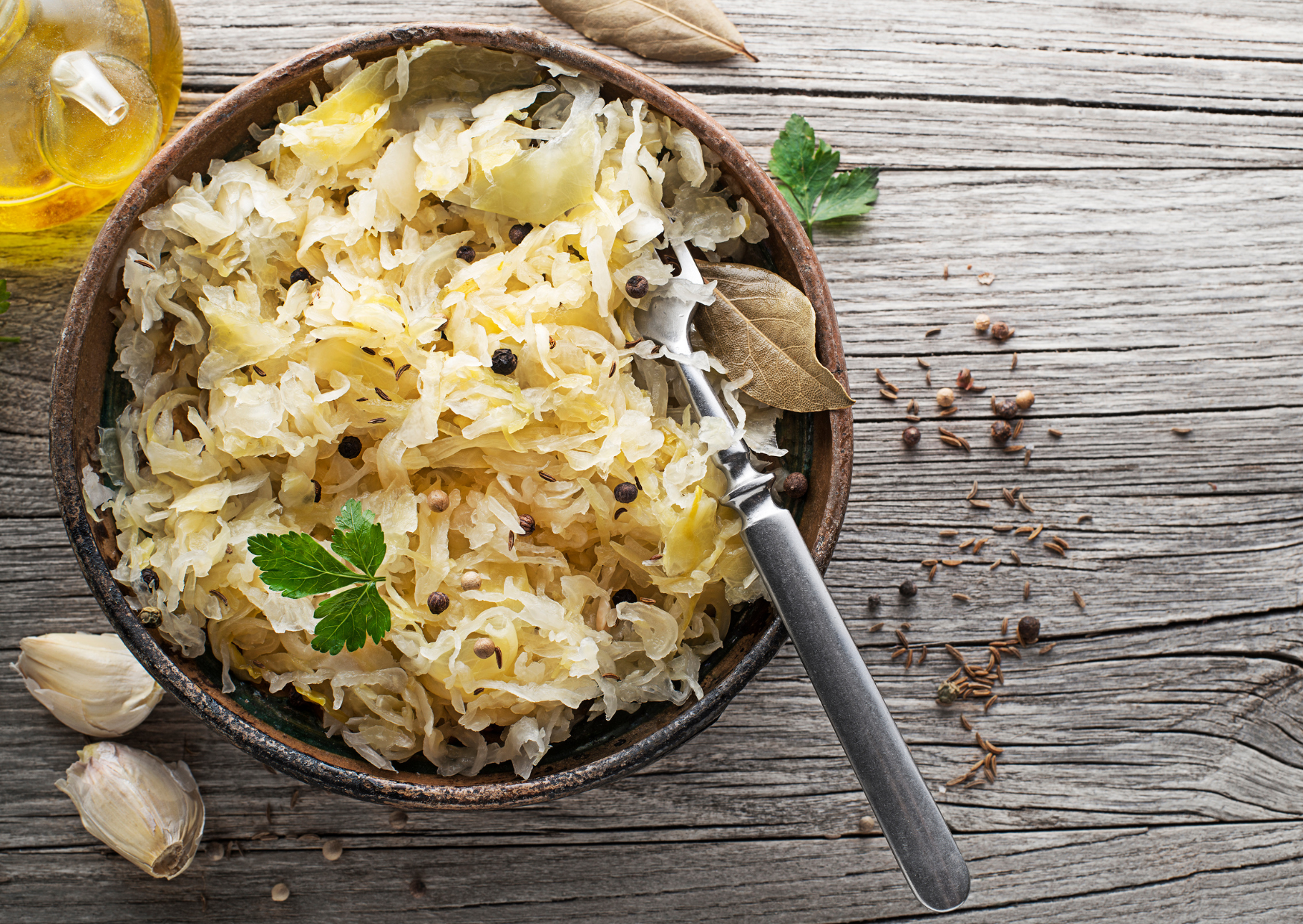
This German-style sauerkraut is classic: white cabbage, salt, a little caraway, optional juniper. The method uses salting by weight so you never guess.
Ingredients (makes about 2 liters)
- 1 large white cabbage, 1.8 to 2.2 kg trimmed weight
- Non-iodized fine sea salt, 2 percent by weight of trimmed cabbage, about 36 to 44 g
- 1 to 2 teaspoons caraway seeds
- Optional: 6 to 10 juniper berries, lightly crushed
- Optional: 1 small firm apple, peeled and grated, for a softer aroma without added sugar
Equipment
- A large bowl and chef’s knife or mandoline
- A 2-liter fermentation jar or two 1-liter jars with airlocks or loose-fitting lids
- A clean weight to keep cabbage submerged, such as a glass weight or a small jar filled with water
- Kitchen scale for salt by weight
- Clean cloth and plate for any open-crock method
Method
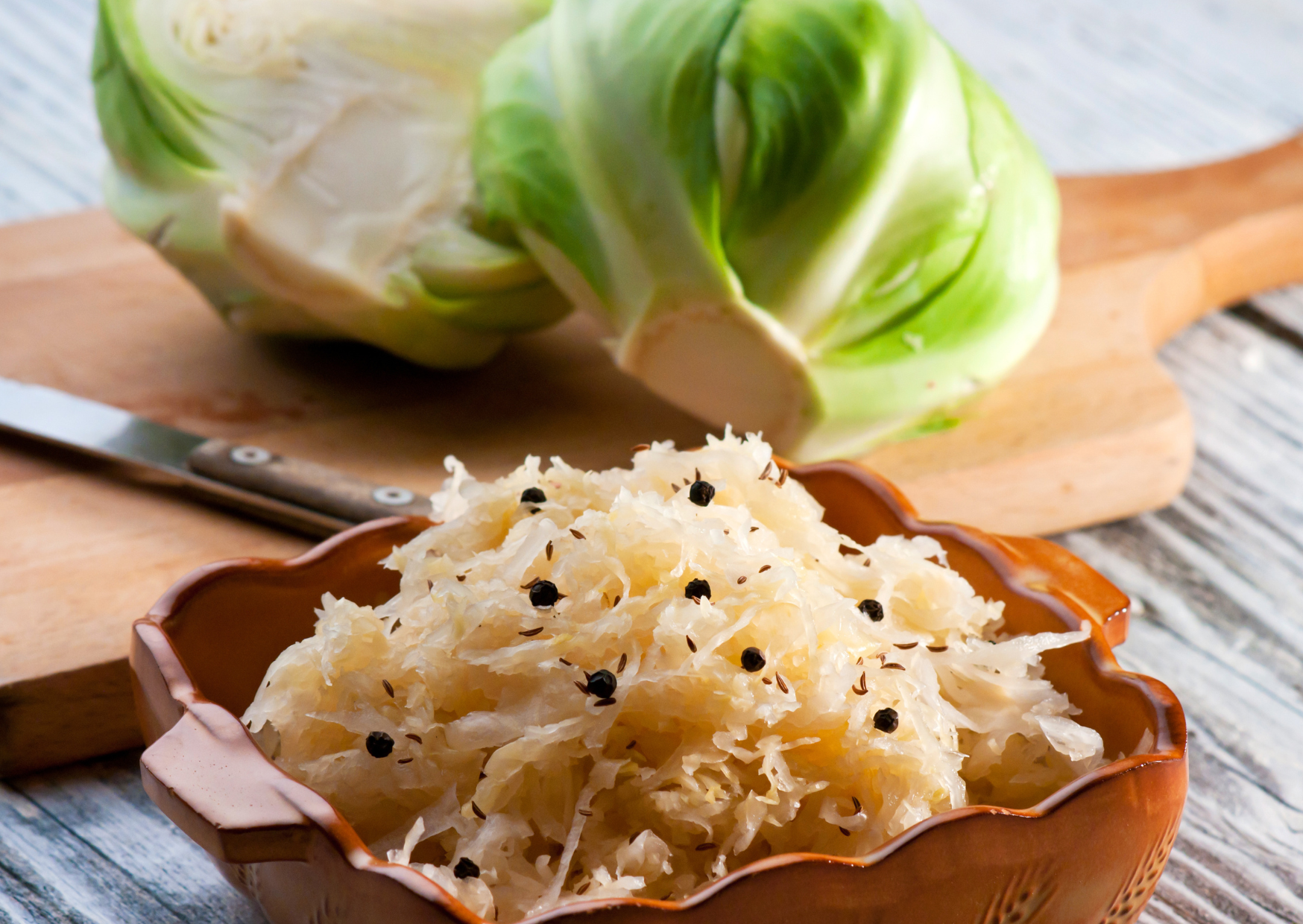
- Trim and weigh. Remove dirty outer leaves, quarter the cabbage, remove the core. Weigh the trimmed cabbage so you can calculate salt accurately.
- Slice. Shred into thin ribbons, 2 to 3 mm thick. The thinner the cut, the faster the brine forms and the more evenly it ferments.
- Salt to 2 percent. Multiply the trimmed cabbage weight by 0.02. Sprinkle that much salt over the shreds in a large bowl. Add caraway and optional juniper. If using apple, add now.
- Massage. Work the salt in for 3 to 5 minutes until the cabbage looks wet and a puddle forms. Rest 5 minutes, then massage again for 1 to 2 minutes.
- Pack and submerge. Pack the cabbage into your jar in handfuls, pounding each layer with your fist to squeeze out air. Pour in any brine from the bowl. Leave a few centimeters of headspace. Place a weight on top so the cabbage stays under the brine.
- Seal for fermentation. Fit an airlock or set the lid on loosely. If using a simple jar, do not tighten fully. Gas must escape. Place the jar on a plate in case of overflow.
- Ferment at cool room temperature. Park the jar at 18 to 21 C. Avoid above 24 C if you can. In the first 24 hours, press the weight once or twice to keep cabbage submerged. After that, do not open unless you must.
- Day 3 check. You should see bubbles and a slightly cloudy brine. Aroma should be clean, lightly sour, never putrid.
- Day 7 taste. This is the turning point. The brine clears a bit. The cabbage tastes bright, lightly sour, still crunchy. If you like a gentler kraut with a snap, move the jar to the refrigerator. If you want deeper sour and softer texture, keep fermenting at room temperature to day 10, day 14, or even beyond.
- Cold storage. When it tastes right, press everything under brine, tighten the lid, and refrigerate. Flavor continues to meld slowly in the cold.
Safety and clarity
- The cabbage must stay under the brine. If a stray piece rises and discolors, remove it. Surface yeast looks like a thin film. Skim it, clean the rim, and keep going if the kraut under brine smells clean and tastes right.
- Typical household targets are a brine pH under about 4.2 by the time you are done at room temperature, then colder storage. You do not need a meter, but if you own one, it is a nice confirmation.
This process puts you where you want to be by day 7, with flexibility to ferment longer. The jar is doing the work. Your job is to keep it submerged, cool, and patient.
Why Day 7 Matters For The Good Stuff
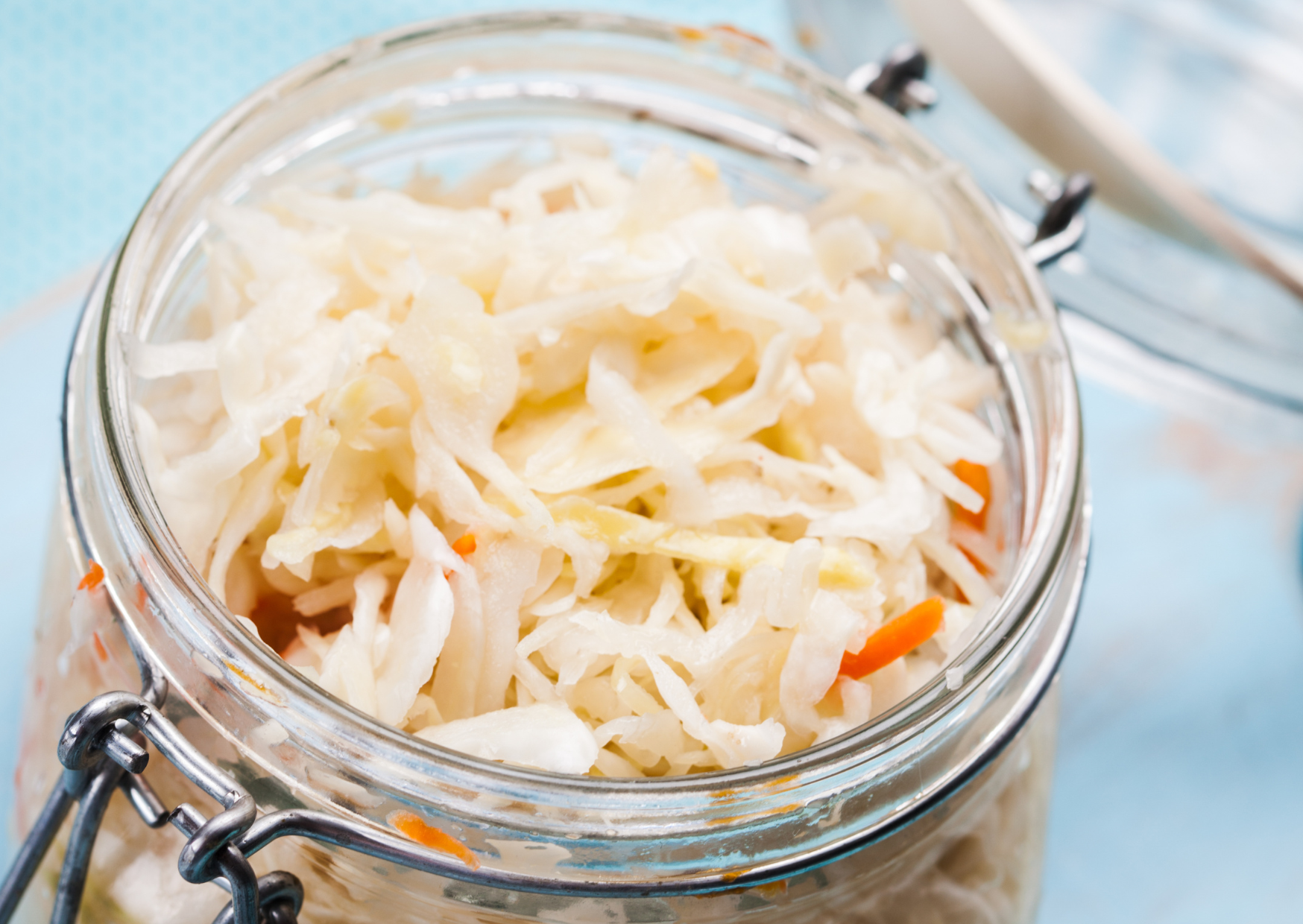
The day-7 signal is useful because it lines up with what scientists measure. In fresh cabbage, glucosinolates are locked in plant tissue. Cutting and salting start the process, but there is very little conversion in the first days. As lactic acid bacteria shift the environment and plant enzymes get access, glucosinolates degrade into indoles and isothiocyanates, compounds that show anti-cancer activity in lab and clinical studies. In new work tracking kraut fermentation, researchers report a clear rise in antioxidant activity beginning from day 7 onward during spontaneous fermentation at typical kitchen temperatures. Other groups following crucifers through fermentation and storage show glucosinolate disappearance paired with rising breakdown products that include indole-3-carbinol, ascorbigen, and isothiocyanates.
That is the science way of saying your jar is crossing a line you can taste. Before day 7 you mostly have salted cabbage and early acids. After day 7 you have a living food that is building more of the metabolites you want, with flavor that starts to make sense on a plate. If you prefer a crisper kraut, you can chill it right there. If you want a rounder sour and potentially more conversion, let it ride to day 10 or day 14. Crunch slowly yields to tang as acids accumulate.
Two practical details make day 7 work. Temperature control and salt by weight. Cooler ferments preserve crunch and prevent mush. Proper salt keeps the right bacteria in charge and helps the brine form. If your kitchen runs hot, aim for the coolest corner or use a water-bath crock to buffer temperature.
Cost Breakdown Per Serving
Sauerkraut is one of the cheapest high-impact foods you can make. These are typical supermarket prices in many EU cities as of autumn 2025.
- White cabbage: about 0.90 to 1.40 € per kg
- Fine sea salt: pennies per batch
- Caraway and juniper: a few cents per jar
- Total ingredient cost for a 2-liter batch: 2 to 3.50 €
A 2-liter batch yields roughly 12 to 16 servings of 120 to 150 g. That is 0.15 to 0.30 € per serving, far below store-bought kraut with similar quality. The highest cost is your patience for a week.
The Health Timeline In Plain English
What you can expect as the jar progresses, based on what researchers measure in fermented crucifers and in sauerkraut specifically.
- Days 1 to 3. Brine forms, bubbles start, pH begins to drop. Flavor is lightly salty, not yet sour. Antioxidant measures and glucosinolate breakdown are modest.
- Days 4 to 7. Active fermentation. Aroma gets tangy. Antioxidant activity begins to lift in spontaneous ferments. Plant compounds start converting. Texture stays crunchy at cool room temperatures.
- Days 7 to 14. Sour stabilizes and deepens, brine clears, and studies tracking crucifers and kraut show greater presence of breakdown products like indole-3-carbinol, DIM, and certain isothiocyanates. Some strains and conditions favor higher production than others.
- Cold storage. Fermentation slows in the refrigerator. Flavors meld for weeks. Bioactive compounds are more stable when kept cold and under brine. Use a clean fork to avoid introducing oxygen and enzymes that can degrade quality.
These compounds do not make sauerkraut a cure. They are part of why diets that include cruciferous vegetables are associated with lower cancer risk in population studies and why certain metabolites are being studied in clinical settings. Your jar is a way to put those molecules on the plate in a form that keeps well and tastes good.
How To Adjust For Flavor And Texture
Think of three knobs.
Salt. The 2 percent sweet spot gives you a steady, safe ferment with bright flavor. If you like it slightly punchier and firmer, 2.2 to 2.3 percent is still pleasant. Under 1.8 percent can get soft and invites the wrong microbes.
Temperature. Aim for 18 to 21 C. Cooler yields crisper kraut and a slower, more nuanced sour. Warmer speeds acid formation, softens more quickly, and risks off flavors, especially early in the ferment.
Time. Use day 7 as your first checkpoint. Chill there if you love crunch. Taste again on day 10 and day 14 if you want deeper sour and a softer bite. Most home kitchens find a preferred spot between those marks.
Spices are the fourth knob. Caraway and juniper are classic. Add fennel seed for sweetness or black pepper for a gentle lift. Avoid garlic and raw onion in your first batch until you know your baseline.
Serving Ideas That Respect The Crunch
- Pile next to grilled sausages, roasted pork, or mushrooms on toast.
- Toss with grated apple, a spoon of mustard, and a trickle of good oil for a sharp-sweet salad.
- Warm gently with a few juniper berries and a bay leaf to serve with potatoes. Do not boil or you will dull the fresh acids that make it sing.
- Pair with smoked fish and rye for a northern plate.
- Add a forkful to a lunch bowl. The sour does the work of a dressing.
A little goes a long way. Use 120 to 150 g per person as a side. The rest keeps cold for weeks.
Troubleshooting Without Panic
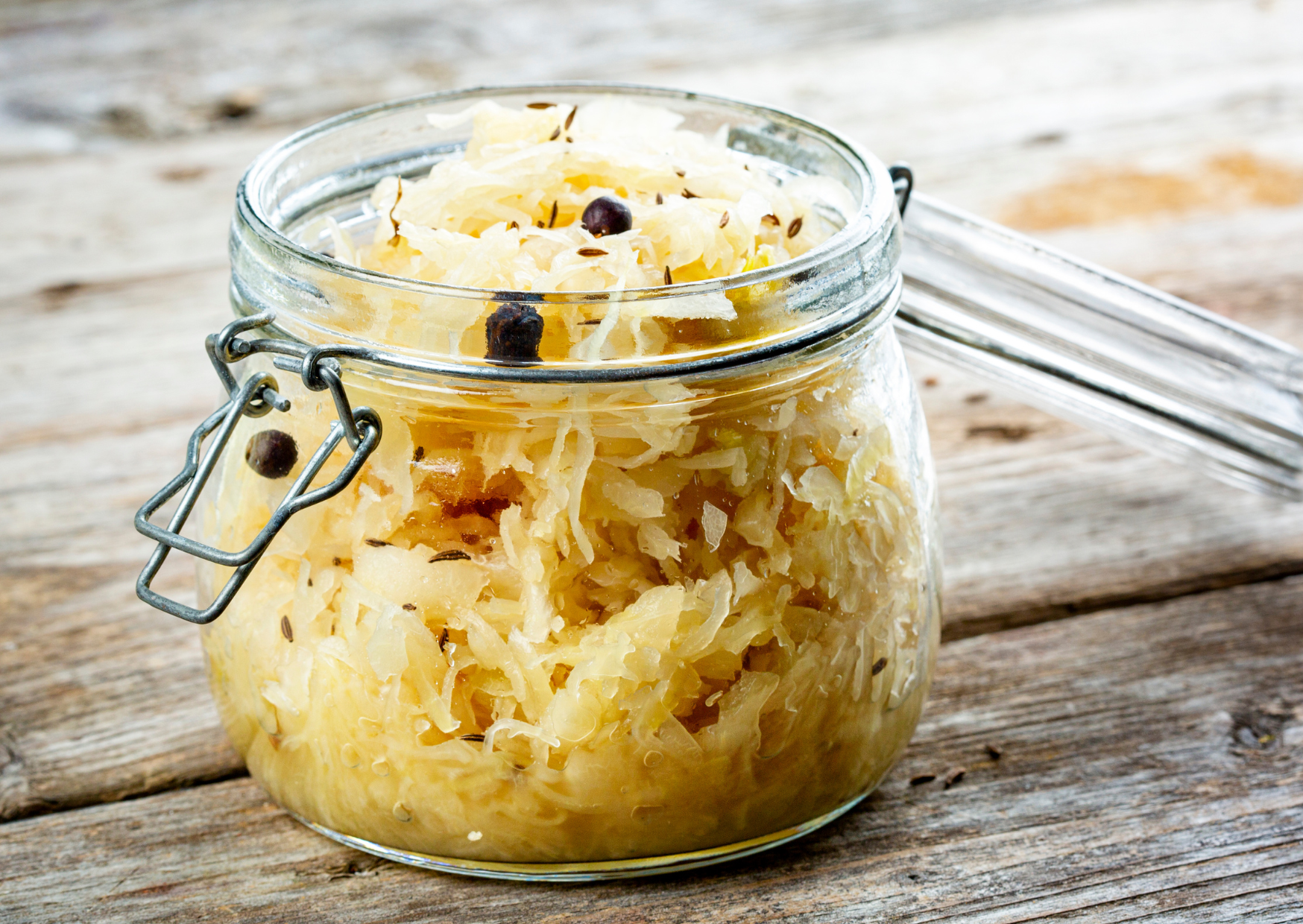
The brine looks cloudy. Normal in active fermentation. It will often clear by week two. Taste and smell are your guides. Clean, tangy, and cabbage-true is correct.
There is a white film on top. Likely a harmless yeast on exposed liquid. Skim, clean the rim, press the kraut under the brine, and carry on.
It smells off. If you get rotten, sulfury, or painty aromas, discard and start over. True kraut smells like a deli, not like a drain.
It is too soft. Likely too warm or too little salt. Next batch, aim for 18 to 21 C and 2 percent salt, and consider fermenting fewer days before moving to cold.
Pink patches. Discard. Pink or orange streaks can signal spoilage microbes.
It is too salty. Rinse a portion briefly before serving. For your next batch, weigh the cabbage and the salt precisely.
Give the process two tries. Once you hit your house rhythm, it becomes second nature.
Common Mistakes That Kill Crunch Or Chemistry
Guessing salt. Use a scale. Two percent by weight works every time.
Fermenting hot. Above 24 to 26 C, texture goes downhill fast and the wrong microbes can gain ground.
Using whole spices with oils that float. Heavy oil layers block gas, trap yeast, and can seed rancid notes. Keep it simple.
Leaving cabbage above the brine. Exposure invites surface growth. Keep it submerged with a weight.
Opening daily after day 3. Oxygen interrupts the conditions you want. Peek less, trust more.
Forgetting cold storage. Once it tastes right, a refrigerator slows changes and preserves both crunch and metabolites.
Why This Works Behind The Scenes
The German method leans on two design choices. First, a firm salt bracket that favors a specific cast of lactic acid bacteria. Second, a cool ferment that trades speed for crisp texture and cleaner aromas. Together they deliver a jar that is safe by the time you hit your first taste window and that continues to improve if you let it ride.
On the health side, fermentation and chopping unlock the cabbage’s potential. Raw crucifers contain the precursors. Cooking can reduce some compounds, though it has benefits of its own. Fermentation keeps temperatures low, preserves vitamin C well, and supports conversion into metabolites your body can use. That is why a simple food like kraut keeps showing up in both traditional diets and modern research.
If You Are Running The Numbers
A small head of cabbage around 1.2 kg trimmed plus salt makes about 1.2 liters of kraut. A larger 2 kg trimmed cabbage makes about 2 liters. At the prices listed earlier, your cost per 120 g side is under 30 cents. That is cheaper than a soda, keeps for weeks, and pairs with almost anything. The knife work is one coffee break. The rest is time passing while a jar sits on the counter.
Next Steps This Week
Today. Buy one head of white cabbage, a bag of fine sea salt, and a teaspoon of caraway.
This afternoon. Slice, salt to 2 percent, pack, and set a calendar reminder labeled “Taste kraut” for day 7.
Day 3. Check bubbles, press the weight to keep everything submerged, and stop peeking.
Day 7. Taste. If you like it bright, move to cold. If you want deeper sour, set a reminder for day 10.
Day 10 or 14. Taste again, move to cold, and start a second jar so you never run out.
A week from now you will have food that tastes like it belongs on your table and chemistry you normally only read about in studies. It is just cabbage and salt, with a little time and a lot of payoff.

About the Author: Ruben, co-founder of Gamintraveler.com since 2014, is a seasoned traveler from Spain who has explored over 100 countries since 2009. Known for his extensive travel adventures across South America, Europe, the US, Australia, New Zealand, Asia, and Africa, Ruben combines his passion for adventurous yet sustainable living with his love for cycling, highlighted by his remarkable 5-month bicycle journey from Spain to Norway. He currently resides in Spain, where he continues sharing his travel experiences with his partner, Rachel, and their son, Han.