
Step into a Paris apartment and open the wardrobe. You will not find rainbow racks or plastic bins. You will see space around hangers, leather that softens with age, and a short row of pieces that all work together. Cross the Atlantic and the closet groans, yet nothing seems right. The difference is not taste. It is method.
Parisian style is less a look than a system. It comes from small living spaces, a habit of repairs, and a ruthless edit that favors long life over impulse. The result is a closet that does the job every morning without a fight. Ten pieces, chosen well, can carry a woman through work, dinner, weekends, and weather shifts with fewer decisions and better outcomes than a bursting wardrobe. This is not theory. It is how Paris actually dresses when there is no camera around.
What follows is the operating manual: the philosophy that keeps numbers low and standards high, the short list of clothes that repeat without getting boring, the one week plan to build your own version, the care routine that makes pieces last, and the cultural reasons American closets swell until they break.
Want More Deep Dives into Other Cultures?
– 9 Italian Style Rules That Instantly Outshine American Fashion
– Why Europeans Walk Everywhere (And Americans Should Too)
– How Europeans Actually Afford Living in Cities Without Six-Figure Salaries
– 9 ‘Luxury’ Items in America That Europeans Consider Basic Necessities
Quick and Easy Tips
Identify three silhouettes that flatter you and stop buying anything outside them.
Invest in tailoring before buying new clothes; fit matters more than labels.
Build around neutrals you love wearing repeatedly, not colors you admire briefly.
Many Americans believe looking polished requires constant shopping. Parisian women believe the opposite: shopping too much signals uncertainty. Style is viewed as something you edit, not accumulate.
Another uncomfortable truth is that trends dilute identity. When wardrobes are built around what’s currently popular, personal style disappears. Parisian women resist trends unless they already fit their existing aesthetic.
There’s also resistance to repetition. In the U.S., wearing the same items frequently can feel embarrassing. In Paris, repetition signals confidence and discernment. Owning fewer pieces means each one earns its place.
What makes this controversial is that it challenges consumer culture directly. Looking better with less suggests that the problem isn’t taste or budget, but habits. Once that clicks, buying more stops feeling like the solution.
The French logic: fewer pieces, stronger rules

Fit first, always. Paris assumes tailoring is part of buying clothes. Sleeves get shortened, trousers are hemmed, waists are nipped, and shoulders are left alone if they do not sit right. This habit makes even mid priced pieces look expensive. A well cut jacket and trousers will outshine a designer label that does not fit. Boutique culture and local retouchers exist for this exact reason, which is why a modest wardrobe reads as polished in daily life.
Uniforms over outfits. Most Parisian women settle into a narrow silhouette that flatters them and repeat it with minor shifts. Straight leg jeans or tapered trousers, a trim blazer or trench, a knit that skims rather than clings, ankle boots or clean sneakers. The uniform protects you from the worst shopping impulses. When every new item must fit the silhouette, most items do not qualify. That rule alone keeps closets in check.
Price per wear wins. A trench that lasts for seven winters costs less per day than three disposable coats that fade and pill. The same math applies to shoes, bags, and cashmere. French policy nudges consumption in this direction. Manufacturers who sell in France must follow sorting and labeling rules for textiles, and unsold goods can no longer be casually destroyed. Ultra fast fashion is facing surcharges and limits on advertising. Culture and policy now push in the same direction: buy less, buy better, and keep it in service.
Small apartments make the rules practical. A studio of thirty square meters or a one bedroom of fifty does not hide a mountain of clothes. You live with what you own, so you edit. Space is not a lifestyle slogan in Paris. It is a constraint that disciplines the wardrobe.
The core ten: what survives trends and works all year

Materials over logos. A cotton poplin shirt beats a synthetic blouse that shines under office lights. Wool trousers hang better than polyester. Leather ages; plastic peels. When fabric quality rises, the number of pieces can drop without sacrificing options. Pick fibers that breathe and recover.
Neutrals before colors. Black, navy, charcoal, camel, white, and off white make it almost impossible to create a clash. They let texture speak and allow a single accent, like a red lip or a silk scarf, to carry the day. Color still appears, but it is chosen and repeated, not scattered.
Silhouette consistency. Ten pieces form a set because the shapes talk to each other. If your trousers are tapered and your jeans are straight, your coats and knits should skim rather than balloon. If your jackets are cropped, your trousers should sit higher on the waist. Consistency is why a small closet feels large.
What the list often looks like in practice: a structured blazer, a trench coat, a wool topcoat for winter, a white poplin shirt, a striped marinière tee, a lightweight cashmere or merino crew, straight leg jeans, tailored black trousers, ankle boots with a modest heel, white leather sneakers, and one leather bag that takes a beating. That is eleven if you count the coat for deep winter. Many Parisians rotate between trench and coat by season so the “ten” stays intact. The stripes are not a cliché; the marinière has been a French uniform since the nineteenth century and remains a quiet anchor in civilian closets.
A small box of accessories expands the set. A silk scarf changes a jacket, a narrow belt cleans up proportions, simple studs and a thin chain move from day to night. None of these count toward the ten because they do not get in the way. They just work.
Build your Paris set in seven days

Audit and cut. Pull everything out, try it on in daylight, and ask three questions: does it fit, does it flatter, does it work with the pieces I wear the most. Anything that fails two questions goes. Anything that fails one question gets a repair or a tailor ticket. If you end this step with twenty pieces you wear and fifty you do not, you have just found your missing budget.
Tailor and repair. Shorten three sleeves, hem two trousers, replace the heel tips on your boots, and resole the pair you reach for every day. A week of small fixes can make your existing closet look new. Paris relies on these services. You do not need a couture atelier. You need a practical retoucher and a cobbler who replaces soles before shoes die.
Set a budget, then divide. Allocate most of the money to the load bearing pieces: outerwear, footwear, and the bag. Put a small share into the quick wins: the white shirt that actually fits, the striped tee in real cotton, the knit that sits right at the hip. Make one purchase per day for a week, and stop. The point is to finish, not to shop in circles.

Day one: blazer that fits the shoulders.
Day two: trench that closes cleanly without pulling.
Day three: black trousers with a waist that sits where you bend.
Day four: straight leg jeans that skim the shoe.
Day five: white poplin shirt that is opaque and crisp.
Day six: ankle boots you can walk in for an hour.
Day seven: the bag you will carry daily without babying.
Test the system. Spend the next seven days dressing only from those pieces plus underwear, tights, and accessories. Photograph the outfits and note the one annoyance that repeats. Fix that single gap, then stop again. The closet is a tool. Tools get bought on purpose.
Care, rotation, and small styling moves that make ten feel like one hundred

Seasonal rotation, not storage units. Keep the current season in view and move the opposite season to a lidded box with cedar. Air pieces between wears and brush wool with a soft garment brush. Clothes last when they rest. Shoes, too. Alternate days and use cedar inserts so leather dries and holds its shape.
Maintenance beats replacement. Mend a popped button the same day. Shave pills with a proper sweater comb. Spot clean before stains set. When a hem loosens, fix it. When a sole wears thin, resole it. Parisian longevity does not come from miracles. It comes from attention. The smaller the closet, the easier this becomes.
A uniform gets personal. If your base is neutral, personality can come from proportion and texture. Roll a sleeve, tuck a shirt, cuff a jean, swap a belt, layer a silk scarf under a coat collar, switch to a suede boot in fall. None of this adds clutter. It adds variation. The uniform does not erase you. It frees you to show up without fuss.
Laundry is gentler, too. Wash shirts inside out in mesh bags, skip harsh cycles, hang knits flat, steam instead of iron when possible. A softer routine keeps fabric alive longer, which is why a Paris closet can stay small without feeling strict.
Why American closets swell and still fail the morning test

Trend churn sells you a new personality every month. The American market is expert at turning micro trends into macro piles. Ultra fast fashion has shortened cycles until you can barely wear a piece before the next drop lands. The price is low at the register and high when you add returns, storage, and the feeling that nothing fits together. France is pushing back at the policy level by banning the destruction of unsold goods and moving to penalize the fastest churn. The cultural pushback is older. Parisians already learned to say no.
Fit failures do not get fixed. American shopping culture treats tailoring as rare or luxury. If sleeves are long, you live with them. If the waist gapes, you try a belt. The result is a closet full of almost right. Paris treats tailoring as standard maintenance, the way you would shorten a curtain or adjust a bike seat. A small spend at the retoucher turns almost into always.
Decision fatigue ruins good taste. Hundreds of low quality options force you to re decide your style every morning. The Paris set removes decisions. Trousers or jeans, knit or shirt, blazer or trench, boots or sneakers. Four choices, all of them work. The day starts.
Space hides mistakes. American homes can absorb a lot of clothing before the problem feels urgent. Paris keeps storage tight, so mistakes show immediately and get corrected. When space is a teacher, the class is short.
The solution is not to mimic Parisian women piece for piece. It is to adopt their rules: protect fit, protect fabric, choose a narrow silhouette, and limit the number of items that enter. You will wear more of what you own and own a lot less.
The quiet luxury of enough
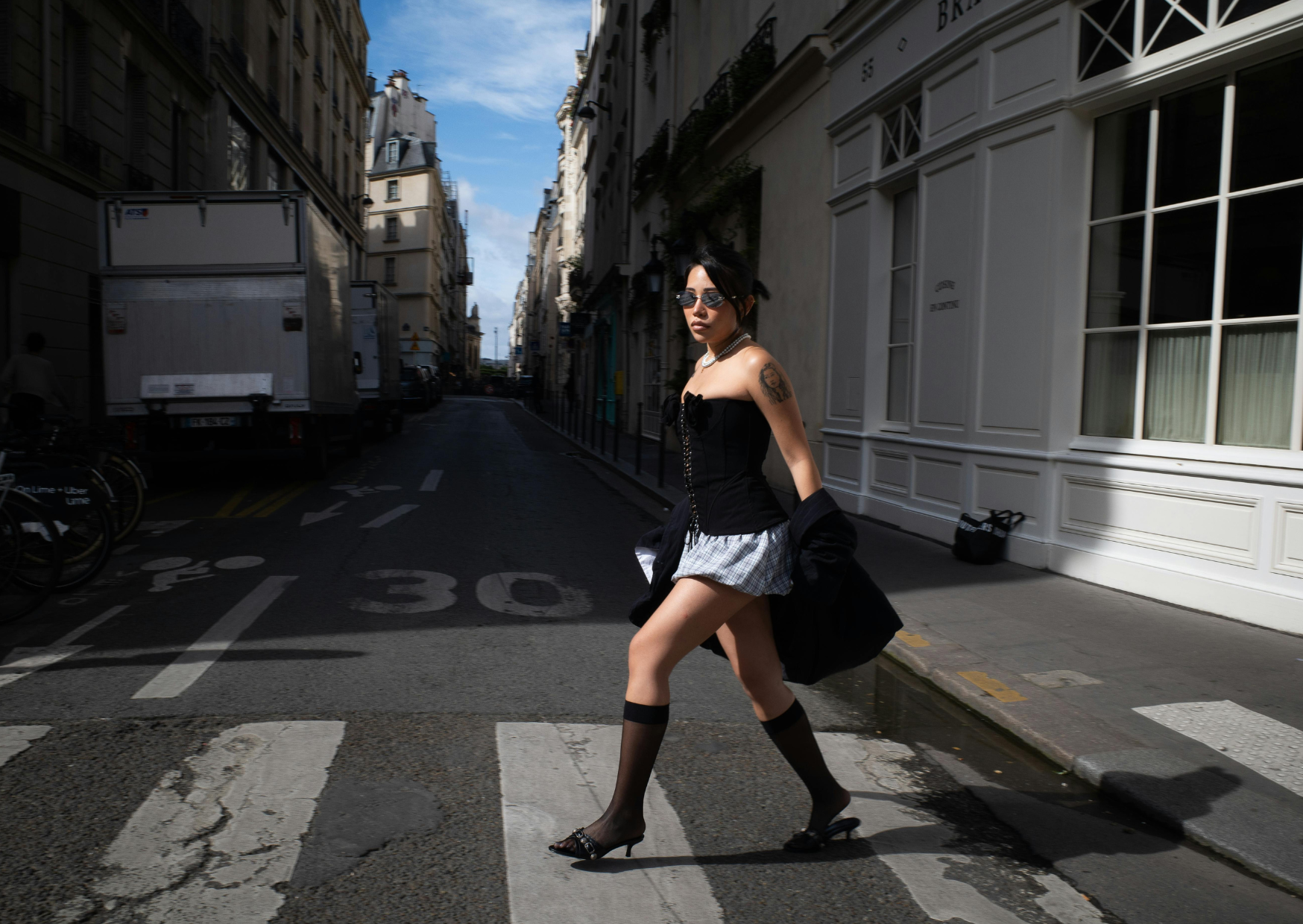
Paris does not worship minimalism for its own sake. It respects efficiency. Ten perfect pieces are not a dare. They are a comfortable number when the edit is honest and the maintenance is regular. Every item earns its spot. When something new enters, something old leaves. That rhythm keeps closets light and mornings simple. It is also kinder to your budget and the planet you live on.
If you want your closet to move in this direction, start with what you already have and strip the noise. Tailor the keepers, repair what can be repaired, and release the rest. Build your core ten in a week with a plan and be done. You will not miss the clutter. You will notice the calm.
Clothing should add energy to your day rather than drain it. Paris learned that lesson a long time ago, partly because the city had to. Small homes, repair culture, and a bias for quality built the habit. You can borrow the habit without moving. Set your rules, protect them, and watch your closet go quiet and effective at the same time.
Final Thoughts
Parisian style isn’t built on trends, hauls, or constant reinvention. It’s built on clarity. When women know exactly what works for their body, lifestyle, and personality, excess becomes unnecessary. Fewer pieces don’t limit choice; they eliminate confusion.
What makes the difference visible is consistency. Wearing the same core items repeatedly refines how they’re styled, altered, and combined. Over time, those pieces feel intentional rather than repetitive, which is why they photograph and age so well.
American wardrobes often chase novelty, mistaking variety for versatility. The result is overflowing closets and daily dissatisfaction. Parisian women avoid this trap by deciding once what defines their look and honoring that decision.
The real advantage isn’t fashion it’s mental space. Fewer clothes mean fewer decisions, less regret, and a stronger sense of self. That confidence is what people notice first.

About the Author: Ruben, co-founder of Gamintraveler.com since 2014, is a seasoned traveler from Spain who has explored over 100 countries since 2009. Known for his extensive travel adventures across South America, Europe, the US, Australia, New Zealand, Asia, and Africa, Ruben combines his passion for adventurous yet sustainable living with his love for cycling, highlighted by his remarkable 5-month bicycle journey from Spain to Norway. He currently resides in Spain, where he continues sharing his travel experiences with his partner, Rachel, and their son, Han.