

The conversation usually starts with a map. Someone points at France, someone else argues for Canada, the practical one mentions the UK because “at least they speak English.” They are all wrong, and the 2026 passport rankings prove it with numbers that will make your retirement spreadsheet weep.
Every year, analysts rank the world’s passports not on travel alone but on what citizenship actually means for your money, your taxes, and your freedom. The 2026 Nomad Passport Index just released its findings, and the results should rewrite every American’s retirement shortlist. Of the seven largest advanced economies in the world – the G7 – only one country offers American retirees a combination of favorable tax treatment, accessible residency, and a lifestyle worth the paperwork. That country is Italy.

This is not a love letter to pasta. It is a financial argument backed by data. I am going to show you exactly why France, Germany, the UK, Canada, Japan, and the United States itself all fail the retirement math, why Italy climbed to #6 globally while its G7 peers scattered across the rankings like dropped coins, and what specific programs make Italy the only serious option for Americans who want to keep more of their savings while living somewhere worth the move. You will get passport scores, tax comparisons, visa requirements, and the exact steps to make Italy work. If you still want Paris at the end, you can have it. You will just be paying more for the privilege.
A Quick Glossary (Because This Gets Technical)
Before we dive in, here are the terms you will see throughout this piece:
G7 (Group of Seven): The seven largest advanced economies in the world: United States, United Kingdom, Canada, France, Germany, Italy, and Japan. These countries hold annual summits and represent about 30% of global GDP. When Americans think “first world retirement,” they usually think G7.
Passport Index: A ranking system that scores passports on multiple factors beyond just visa-free travel. The Nomad Passport Index weighs travel freedom (50%), taxation of citizens (20%), global perception (10%), dual citizenship allowance (10%), and personal freedom (10%).
Elective Residency Visa (ERV): Italy’s retirement visa for non-EU citizens who can support themselves without working. Requires proof of passive income (approximately €31,000+ per year for a single person) and does not allow employment in Italy.
7% Flat Tax Regime: Italy’s special tax program for foreign retirees who move to qualifying municipalities in southern Italy or certain earthquake-affected central regions. Allows payment of just 7% on all foreign income for up to 10 years.
Non-Dom Regime: A tax arrangement (now abolished in the UK as of April 2025) that allowed foreign residents to avoid UK tax on income kept outside the country. Its elimination is why the UK dropped in passport rankings.
Worldwide Taxation: The practice of taxing citizens on all income regardless of where it is earned or where they live. The US does this to all citizens. Most other countries only tax residents.
Quick and Easy Tips

Italy ranks #6 globally in the 2026 Nomad Passport Index – the only G7 country in the top 10.
The US ranks #43, dragged down by citizenship-based worldwide taxation that follows Americans everywhere.
The UK dropped 14 spots after abolishing its non-dom regime in April 2025.
Italy’s 7% flat tax for retirees can save a couple with €60,000 in foreign pension income over €100,000 in taxes across 10 years compared to standard Italian rates.
France, Germany, Canada, and Japan offer no comparable tax incentives for foreign retirees.
1) The G7 Retirement Myth Americans Still Believe
Americans planning retirement abroad tend to think in familiar categories. The G7 countries feel safe. They are wealthy, stable, democratic, and culturally legible. The assumption is that moving to any of them represents a lateral move in quality of life with a potential bonus in cost savings or lifestyle.
The 2026 passport rankings destroy this assumption with a single table.
| Country | 2026 Rank | Travel Score | Tax Score | Total Score |
|---|---|---|---|---|
| Italy | #6 | 174 | 40 | 107 |
| France | #24 | 174 | 20 | 105 |
| Canada | #35 | 169 | 20 | 102.5 |
| United Kingdom | #35 | 169 | 20 | 102.5 |
| Japan | #41 | 173 | 20 | 101.5 |
| United States | #43 | 168 | 10 | 100 |
| Germany | #20 | 175 | 20 | 105.5 |
Italy is the only G7 country in the top 10. Germany sneaks into #20, but look at the tax scores. Italy earns a 40. Every other G7 country except the US earns a 20. The US earns a 10 – the lowest possible score.
These numbers are not arbitrary. They reflect what happens to your money when you become a resident or citizen of each country. And for American retirees, the differences are not academic. They are the difference between a comfortable decade and a spreadsheet nightmare.
2) Why the US Passport Ranks #43 (And What That Means for You)

Before we talk about where to go, we need to understand what you are escaping from.
The United States is one of only two countries on earth – the other is Eritrea – that taxes citizens on worldwide income regardless of where they live. Move to Portugal? The IRS still wants its cut. Retire in Spain? File your FBAR, report your foreign accounts, pay US tax on your Spanish rental income. Your American passport is not just a travel document. It is a financial leash.
This is why the US scores 10 out of 50 on taxation in the passport index. It is the floor. You cannot score lower. And it drags the overall ranking down to #43, behind Romania (#2), Bulgaria (#6), Hungary (#10), and 39 other countries Americans have never seriously considered.
The practical implications are brutal:
- You cannot escape US taxation by moving abroad. You can use foreign tax credits to avoid double taxation on the same income, but you still file, still report, and still pay the higher of the two rates in many cases.
- Your foreign bank accounts require annual reporting via FBAR if combined balances exceed $10,000 at any point during the year. Penalties for non-compliance start at $10,000 per violation.
- Some US brokerages will restrict or close your account when you declare a foreign residence. You may be forced to sell positions, realize gains, and pay taxes you did not plan for.
- Renouncing citizenship triggers an exit tax on unrealized gains if you meet certain net worth or tax liability thresholds. It is not a casual decision.
The American passport opens many borders. It also follows you through every one of them with a filing requirement. This is the baseline you are working from. Now let us see why the other G7 countries do not solve the problem.
3) France: Beautiful, Expensive, and Offers You Nothing Special

France ranks #24 in 2026. It scores 174 on travel – excellent – but only 20 on taxation. This is because France taxes residents on worldwide income at progressive rates that reach 45% on income above approximately €180,000, with additional social charges that can push effective rates higher.
France offers no special tax regime for foreign retirees. There is no flat tax option, no pension exemption, no welcome package for Americans with Social Security checks. You move to France, you become a French tax resident, and you pay French taxes on your worldwide income at the same rates as everyone else.
The Non-Habitual Resident program that made Portugal famous? France never had one. The 7% flat tax that Italy offers retirees? France has no equivalent. You are simply another taxpayer, paying full freight from day one.
For Americans, this creates a layered problem:
- You pay French tax on your worldwide income at progressive rates.
- You still owe US tax on the same income, with credits for taxes paid to France.
- Your effective tax burden depends on the interaction of two complex systems, requiring professional help to navigate.
- There is no finish line. No special rate. No relief.
The lifestyle is undeniably appealing. The baguettes are excellent. But financially, France is a lateral move at best and an expensive one at worst. If you are leaving America for tax efficiency, France does not make the list.
4) Germany: Strong Passport, Stronger Tax Authority

Germany ranks #20, with the highest travel score of any G7 country at 175. Germans can go almost anywhere visa-free. But for American retirees, Germany offers the same problem as France with an even more aggressive tax authority.
German income tax rates are progressive, reaching 45% on income above €277,826. Below that threshold, rates are still substantial – 42% kicks in at €66,761. There is no special regime for foreign retirees. You move to Germany, you pay German taxes.
Germany is also famously thorough about enforcement. The tax authority (Finanzamt) is well-funded, well-staffed, and well-motivated. Reporting requirements are detailed. Penalties for non-compliance are real. If you thought American tax bureaucracy was intimidating, German precision will make you nostalgic for the IRS.
The cost of living varies enormously by region. Munich runs approximately $48,800 annually for a comfortable retirement. Leipzig is closer to $32,640. But neither includes any tax advantage that would offset what you are giving up by leaving lower-tax American states.
Germany is an excellent place to live if you are already wealthy enough not to care about tax optimization. For retirees watching their savings, it solves nothing.
5) The United Kingdom: What Happens When They Take the Good Part Away

The UK tells the most dramatic story of any G7 country in 2026. It dropped 14 spots in one year, from #21 to #35. The reason is a single policy change: the abolition of the non-dom regime.
For over 200 years, the UK offered “non-domiciled” residents a special deal. If your permanent home was technically outside the UK, you could elect to be taxed only on income you actually brought into the country. Keep your foreign investments offshore, and the UK did not touch them. This made London a magnet for wealthy foreigners.
That regime ended on April 6, 2025. The new rules tax all UK residents on worldwide income after a four-year grace period for new arrivals. The grace period is shorter than what Portugal used to offer, shorter than what Italy still offers, and comes with no special rate – just a temporary delay before full taxation kicks in.
For American retirees, the UK now offers:
- Progressive tax rates reaching 45% on income above £125,140
- No special pension regime for foreign retirees
- A four-year window before worldwide taxation begins (if you have not been UK resident in the previous 10 years)
- Full US tax obligations on top of whatever you owe the UK
The UK also has a high cost of living. London runs approximately $63,460 annually. Even Southampton or Edinburgh cost $37,000-$38,000. You are paying more to live there and getting no tax advantage for doing so.
The language convenience is real. The cultural familiarity is real. But the financial case is gone. The UK eliminated the one feature that made it competitive for wealthy foreigners, and the passport rankings immediately reflected the loss.
6) Canada: The Lifestyle Choice That Costs You

Canada ranks #35, tied with the UK. It scores well on perception (40), freedom (50), and dual citizenship (50). Travel is decent at 169. Taxation is a 20, same as everyone else who offers no special treatment.
Canada taxes residents on worldwide income at progressive federal rates up to 33%, plus provincial rates that vary. Combined top rates can exceed 50% in some provinces. There is no special regime for foreign retirees. You move to Canada, you become a Canadian tax resident, you pay Canadian taxes.
The lifestyle appeal is obvious. Clean cities, functional healthcare, polite neighbors, and proximity to the US for family visits. Vancouver and Toronto are world-class cities. Smaller towns offer affordable alternatives.
But financially, Canada is a high-tax, residence-based system with no carve-outs for newcomers. You pay the same rates as everyone else from day one. And you still owe US taxes on top of that, with foreign tax credits creating complexity but not elimination.
The cost of living varies dramatically. Toronto runs approximately $53,040 annually. Smaller cities in the Maritime provinces can be half that. But the tax burden is consistent regardless of where you settle within the country.
Canada is the choice for people who prioritize proximity to the US and English-language comfort over tax efficiency. It is a fine choice. It is not a strategic choice.
7) Japan: The Beautiful Outlier You Cannot Afford

Japan ranks #41, just above the United States. It has a travel score of 173 – excellent – and a perception score of 50 – the highest possible. People respect Japanese passports. Japanese culture is admired globally.
But Japan forbids dual citizenship (score of 10), has limited personal freedom by Western standards (score of 50, but cultural expectations are restrictive), and taxes residents on worldwide income with no special treatment for foreigners.
Japanese income tax is progressive, reaching 45% on income above ¥40 million (approximately $267,000). Below that, rates are still meaningful – 33% kicks in at ¥9 million (approximately $60,000). There is no flat tax option, no pension exemption, no welcome program for retirees.
The visa situation is also challenging. Japan does not have a dedicated retirement visa. Long-term residence typically requires a job, a Japanese spouse, or significant assets proving you will not become a public charge. The bureaucracy is thorough and documentation-heavy.
Cost of living is high in major cities. Tokyo is among the most expensive cities on earth for housing. Smaller cities are more affordable but come with language barriers that most American retirees are not equipped to navigate.
Japan is a wonderful country to visit. For retirement, it is a beautiful outlier that makes no financial sense for Americans.
8) Italy: Why It Stands Alone in the G7

Italy ranks #6 globally in 2026. It scores 174 on travel, 40 on taxation, 40 on perception, 50 on dual citizenship, and 30 on freedom. The total of 107 places it alongside Malta, Ireland, and Romania at the top of the global rankings.
What makes Italy different from every other G7 country? Two programs that no other G7 nation offers:
The 7% Flat Tax for Foreign Retirees
Italy introduced this regime in 2019 to attract retirees to southern regions and earthquake-affected areas in central Italy. It allows qualifying individuals to pay just 7% tax on all foreign-sourced income for up to 10 years.
The requirements:
- You must receive foreign pension income (Social Security, 401(k) distributions, IRA withdrawals, and private pensions all qualify)
- You must not have been an Italian tax resident in any of the five years before your move
- You must establish residence in a qualifying municipality with fewer than 20,000 residents in southern Italy (Sicily, Calabria, Sardinia, Campania, Basilicata, Abruzzo, Molise, Puglia) or certain earthquake-affected areas in Marche, Umbria, and Lazio
What you get:
- 7% flat tax on all foreign income – not just pensions, but also foreign dividends, rental income from US property, and capital gains from foreign assets
- Exemption from Italian wealth taxes (IVIE and IVAFE) on foreign real estate and financial assets
- No social security payments required
- Duration of 10 years (extended from the original 5)
The math is transformative. A retiree with €60,000 in annual foreign pension income would pay €4,200 under the flat tax. Under Italy’s standard progressive rates (23% to 43%), the same income would generate roughly €15,000-17,000 in tax. Over 10 years, the savings exceed €100,000.
For American retirees, this creates a genuine advantage. Yes, you still owe US taxes. But the 7% Italian rate is low enough that foreign tax credits often cover most or all of your US liability on the same income. The interaction of the two systems actually works in your favor.
The €100,000 Lump-Sum Tax for High Net Worth Individuals
For wealthier retirees, Italy offers a separate program: a flat €100,000 annual tax covering all foreign income regardless of amount. This extends to 15 years and can include family members for an additional €25,000 each.
This program is designed for high-net-worth individuals with substantial foreign income – think multiple millions in annual earnings. For most American retirees, the 7% regime is more appropriate. But the existence of both programs shows Italy’s commitment to attracting foreign wealth.
The Elective Residency Visa
Italy’s pathway for non-EU retirees is the Elective Residency Visa (ERV). Requirements:
- Passive income of at least €31,000 per year for a single applicant (approximately €38,000 for a couple)
- Proof that income is stable and ongoing – pensions, Social Security, annuities, investment income all qualify
- Long-term accommodation in Italy – either owned property or a registered lease of at least one year
- Private health insurance valid in Italy
- You cannot work – this is strictly for retirees and financially independent individuals
The visa is initially valid for one year and renewable annually. After five years of continuous residence, you can apply for permanent residency. After ten years, Italian citizenship is possible.
Compared to other G7 countries, Italy’s pathway is clear, documented, and designed specifically for the retiree demographic. France, Germany, and Canada have no equivalent. The UK’s system is more restrictive. Japan does not have a retirement visa at all.
9) The Cost of Living Math That Makes Italy Work
Italy is not the cheapest country in Europe. But it is dramatically cheaper than the other G7 nations while offering comparable quality of life.
| Location | Annual Cost (Couple) | Notes |
|---|---|---|
| Southern Italy (qualifying for 7% tax) | €24,000-36,000 | Small towns, lower costs |
| Rome | €36,000-48,000 | Higher costs, not 7% eligible |
| Florence | €36,000-42,000 | Tourist prices, not 7% eligible |
| Sicily (qualifying towns) | €24,000-30,000 | Excellent value |
| London, UK | €72,000+ | No tax advantage |
| Paris, France | €48,000-60,000 | No tax advantage |
| Munich, Germany | €55,000+ | No tax advantage |
| Toronto, Canada | €60,000+ | No tax advantage |
The qualifying towns for Italy’s 7% regime are not hardship posts. They include charming locations in Sicily (Cefalù, Noto), Calabria (Tropea), Puglia (Ostuni, the Itria Valley), Sardinia (inland villages), and Abruzzo (mountain towns with easy access to Rome).
Real estate in these areas is remarkably affordable. Small homes in southern Italy can be purchased for €100,000-200,000. Rentals run €500-800 per month for comfortable apartments. The combination of low cost of living plus 7% taxation creates a financial profile no other G7 country can match.
10) The Healthcare Question Americans Always Ask

Medicare does not follow you abroad. This is true for Italy and every other country on this list. You need a plan before you move.
Italy’s approach for ERV holders:
- Private health insurance is required for the visa application and first year of residence. Policies that pay Italian providers directly are preferable to reimbursement models.
- After establishing residency, you can enroll in Italy’s national health system (SSN) by paying an annual contribution. As of 2024, this costs approximately €2,000 per person per year.
- The SSN provides comprehensive coverage including doctor visits, hospital care, and prescriptions. Wait times for specialists can be long, leading many expats to maintain supplementary private insurance.
- Italy’s healthcare quality is high. The WHO ranks it among the top systems globally. Italians have one of the highest life expectancies in Europe.
Compared to the other G7 options:
- UK: National Health Service is free for residents but faces capacity constraints and long wait times. Private insurance is common for expats.
- France: Excellent public system (PUMA) covering 70% of costs, with supplementary insurance (mutuelles) widely used.
- Germany: Mandatory insurance system with public and private options. Quality is high but costs can be significant.
- Canada: Public healthcare with long wait times. No private option for most services.
- Japan: Mandatory national insurance with good coverage but language barriers for non-Japanese speakers.
Italy’s healthcare is not the best in the G7 – France arguably holds that title – but it is more than adequate for retirees and comes with the tax advantages no other G7 country offers.
11) What You Actually Need to Do: The Step-by-Step
If Italy makes sense for your situation, here is the sequence:
Before You Apply
- Calculate your passive income in euros and document it for at least 12 months. You need approximately €31,000 for a single applicant, €38,000 for a couple. More is better – consulates like to see comfortable margins.
- Identify qualifying municipalities for the 7% regime if that is your target. Use ISTAT (Italy’s statistics institute) to verify population figures. The cutoff is 20,000 residents.
- Secure accommodation in your chosen location – either purchase property or sign a registered lease of at least one year. Hotels and short-term rentals do not count.
- Obtain private health insurance valid in Italy with adequate coverage.
- Gather documentation: passport valid for at least three months beyond your planned stay, proof of income (bank statements, Social Security letters, pension statements, tax returns for the past two years), proof of accommodation, health insurance certificate, and a motivation letter explaining why you want to live in Italy.
The Visa Application
- Book an appointment at your nearest Italian consulate. Processing can take up to 90 days – do not book flights until you have the visa in hand.
- Submit all required documents at your appointment. Expect the consular officer to ask questions about your financial situation and plans.
- Wait for approval. The ERV is valid for exactly 365 days.
Upon Arrival in Italy
- Apply for your permesso di soggiorno (residence permit) at the local Questura within 8 days of arrival. Bring copies of everything you submitted for the visa.
- Register your residence with the local Anagrafe (civil registry).
- Obtain a codice fiscale (tax identification number) if you do not already have one.
- Open an Italian bank account. You will need this for the 7% regime and for daily life.
- Enroll in the SSN (national health system) by paying the annual contribution at your local ASL (health authority office).
Tax Setup
- File for the 7% regime in your first Italian tax return (due the year after you become tax resident). You must elect into the program – it is not automatic.
- Work with a commercialista (Italian accountant) who understands US-Italy tax interaction. This is not optional. The complexity of coordinating two tax systems requires professional help.
- Continue filing US taxes and FBARs as required. Your commercialista should coordinate with a US-based CPA or tax attorney.
12) The Honest Comparison: What Italy Does Not Solve
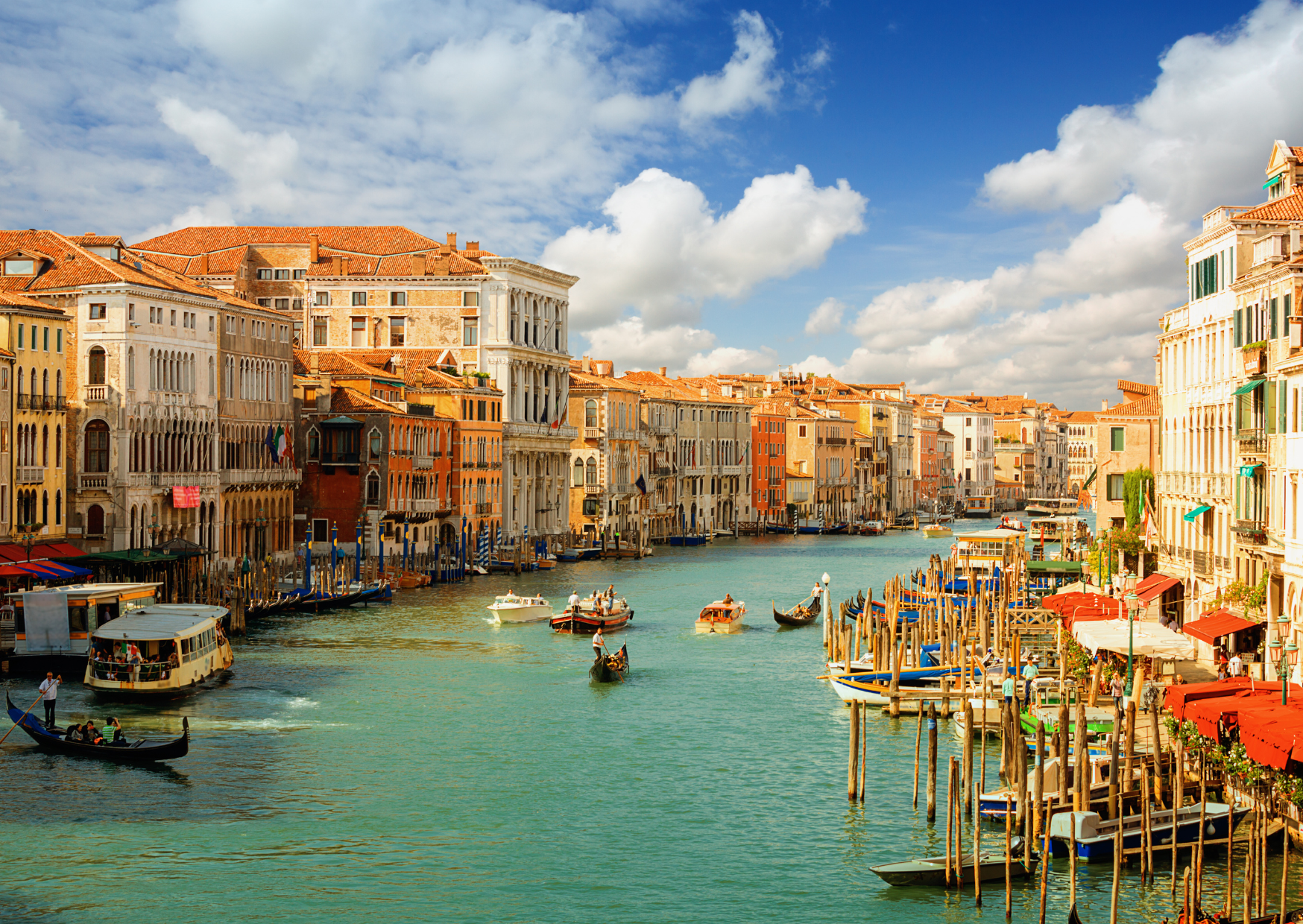
Italy is the best option among G7 countries. It is not a perfect option. Here is what it does not fix:
You still owe US taxes. Italy’s 7% rate is favorable, and foreign tax credits help, but you remain in the US tax system as long as you hold an American passport. Filing obligations continue. FBAR requirements continue. Complexity continues.
The 7% regime has geographic restrictions. You must live in qualifying municipalities, which are smaller towns in specific regions. If you want Rome, Florence, Milan, or Venice, you pay standard Italian rates (23% to 43%).
Italian bureaucracy is real. Visa applications, residence permits, tax filings, and health enrollment all require patience, documentation, and often multiple visits to various offices. The system works, but it works slowly.
Language matters. English is less widely spoken in southern Italy than in major cities. Learning at least basic Italian dramatically improves quality of life and administrative navigation.
The 7% regime is not permanent. It lasts 10 years. After that, you pay standard Italian rates unless you relocate or make other arrangements.
Inheritance and estate planning require attention. Italy has forced heirship rules that may conflict with American estate plans. Work with a cross-border attorney before major moves.
13) The Numbers That Close the Argument
Let us make this concrete. Consider a retired American couple with the following profile:
- Combined Social Security: $36,000/year
- IRA/401(k) distributions: $24,000/year
- Total income: $60,000/year (approximately €55,000)
Option A: Stay in the US (Florida, no state income tax)
- Federal tax: approximately $4,500 (after standard deduction)
- State tax: $0
- Total: $4,500/year
Option B: Move to France
- French tax: approximately €12,000-15,000 (progressive rates on worldwide income)
- US tax: reduced by foreign tax credits, but still requires filing
- Professional fees: €2,000-3,000/year for cross-border compliance
- Total: €14,000-18,000/year
Option C: Move to UK
- UK tax: approximately £10,000-12,000 after four-year grace period
- US tax: reduced by foreign tax credits
- Professional fees: £2,000-3,000/year
- Total: £12,000-15,000/year (and no grace period benefit for ongoing residents)
Option D: Move to Italy (qualifying 7% municipality)
- Italian tax: €3,850 (7% of €55,000)
- US tax: largely offset by foreign tax credits
- Professional fees: €1,500-2,500/year
- Total: approximately €5,500-6,500/year
Italy saves this couple €8,000-12,000 per year compared to France or the UK. Over 10 years of the flat tax regime, that is €80,000-120,000 in tax savings – enough to fund a decade of excellent Italian living or leave a meaningful legacy.
Even compared to staying in Florida, Italy is competitive once you factor in healthcare costs. American retirees pay thousands annually for Medicare supplements and out-of-pocket costs. Italy’s SSN contribution of €2,000 per person provides comprehensive coverage.
The Human Part No One Admits Until It Is Too Late
Passport rankings are spreadsheets. Life is not. The couple who moves to a Sicilian village for the tax rate might struggle with isolation if they expected Roman nightlife. The retiree who chose Puglia for the architecture might miss family more than they saved on taxes.
Italy works financially in ways no other G7 country can match. But it only works personally if you actually want to live there – in a small town, in a specific region, learning a new language, building a new community.
The G7 comparison is useful because it eliminates options Americans assume are equivalent. France is not Italy. The UK is not Italy. Canada is not Italy. Germany is not Italy. Japan is certainly not Italy. Each of these countries charges you full price for the privilege of retirement while Italy offers a discount.
But the discount requires commitment. You cannot dabble in the 7% regime. You must establish genuine residence in a qualifying municipality, file taxes, maintain documentation, and stay long enough to make it worthwhile. Italy rewards people who actually move there. It does not reward tourists who rent apartments.
If you have read this far and the idea of a small southern Italian town sounds like a gift rather than a sacrifice, then the numbers support your instincts. You can have the lemon tree and keep your savings. You can enjoy the espresso and reduce your tax burden. You can retire to one of the most beautiful countries on earth and pay less than you would in London, Paris, Toronto, or Munich.
Italy is the only G7 country that wants American retirees badly enough to offer them a deal. The other six assume you will come anyway and pay whatever they charge. Italy knows better. Italy knows that retirement is a financial decision dressed up as a lifestyle choice, and it has structured its programs accordingly.
The data proves it. The math confirms it. The only question is whether you are ready to do the paperwork.

About the Author: Ruben, co-founder of Gamintraveler.com since 2014, is a seasoned traveler from Spain who has explored over 100 countries since 2009. Known for his extensive travel adventures across South America, Europe, the US, Australia, New Zealand, Asia, and Africa, Ruben combines his passion for adventurous yet sustainable living with his love for cycling, highlighted by his remarkable 5-month bicycle journey from Spain to Norway. He currently resides in Spain, where he continues sharing his travel experiences with his partner, Rachel, and their son, Han.