
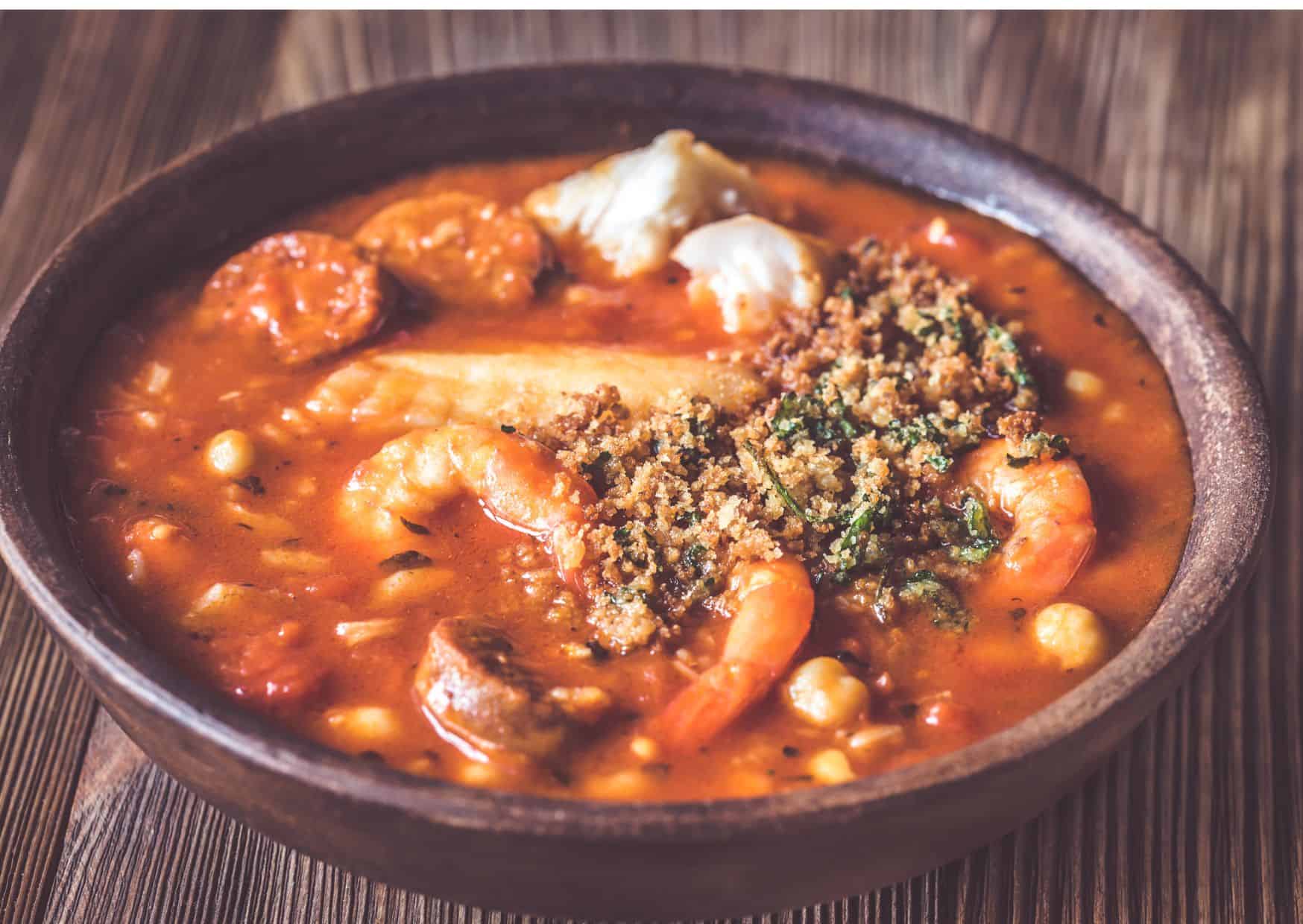
Our guide on the most 6 Popular Soups in Spain for you to try at home.
Spain has a rich culinary tradition, and its soups are an integral part of its gastronomic heritage. From cold, refreshing options like gazpacho to hearty stews like fabada asturiana, Spanish soups reflect the diversity of the country’s regional ingredients and cooking styles. Whether served as a starter or a main dish, Spanish soups are a must-try for anyone looking to experience authentic Spanish cuisine.
These Spanish soups showcase the diverse and rich flavors of Spanish cuisine, offering everything from light, refreshing options to hearty, comforting bowls. Enjoy experimenting with these recipes and tasting a bit of Spain in your own kitchen!
Here’s a guide to the most popular Spanish soups, complete with recipe suggestions, cooking tips, and calorie information.
Read here best things to know before visiting Spain, Planning an Itinerary in Spain: 3 Days Madrid Itinerary and 4 Days Barcelona Itinerary
BOOK YOUR TRAVEL INSURANCE
Two of our favorite travel insurance: Heymondo Vs Safetwing cheapest travel Insurance. You can get for $135 USD your Heymondo Travel Insurance with Heymondo discount code valid for 90 days. Read our full comparison of Genki vs Safetywing Travel Insurance Review and the comparison Heymondo vs Genki
Popular Soups in Spain
1. Gazpacho (Andalusian Cold Tomato Soup)
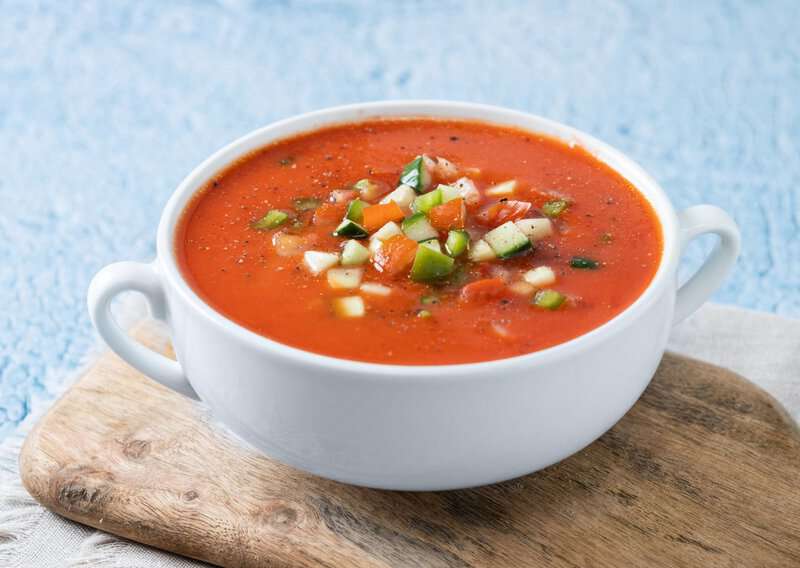
What It Is: Gazpacho is a classic cold soup originating from Andalusia, made primarily from raw, blended vegetables. This refreshing soup is typically served chilled and is perfect for hot summer days. It’s light, healthy, and packed with flavor.
Ingredients:
6 ripe tomatoes, chopped
1 cucumber, peeled and chopped
1 red bell pepper, chopped
1 small onion, chopped
2 garlic cloves, minced
1/4 cup extra-virgin olive oil
2 tbsp red wine vinegar
Salt and pepper to taste
1/2 cup cold water
Optional: Bread for thickening
Recipe Instructions:
In a blender, combine the tomatoes, cucumber, bell pepper, onion, and garlic. Add olive oil, vinegar, salt, and pepper.
Blend until smooth. For a thicker texture, add a slice of soaked bread. Adjust seasoning and add water if needed. Chill for at least 2 hours before serving.
Tips:
Use ripe, in-season tomatoes for the best flavor. Serve with a drizzle of olive oil and garnished with chopped vegetables or croutons.
Calories: Approximately 150-180 calories per serving (1 cup).
Read here how to make Gazpacho
2. Sopa de Ajo (Castilian Garlic Soup)
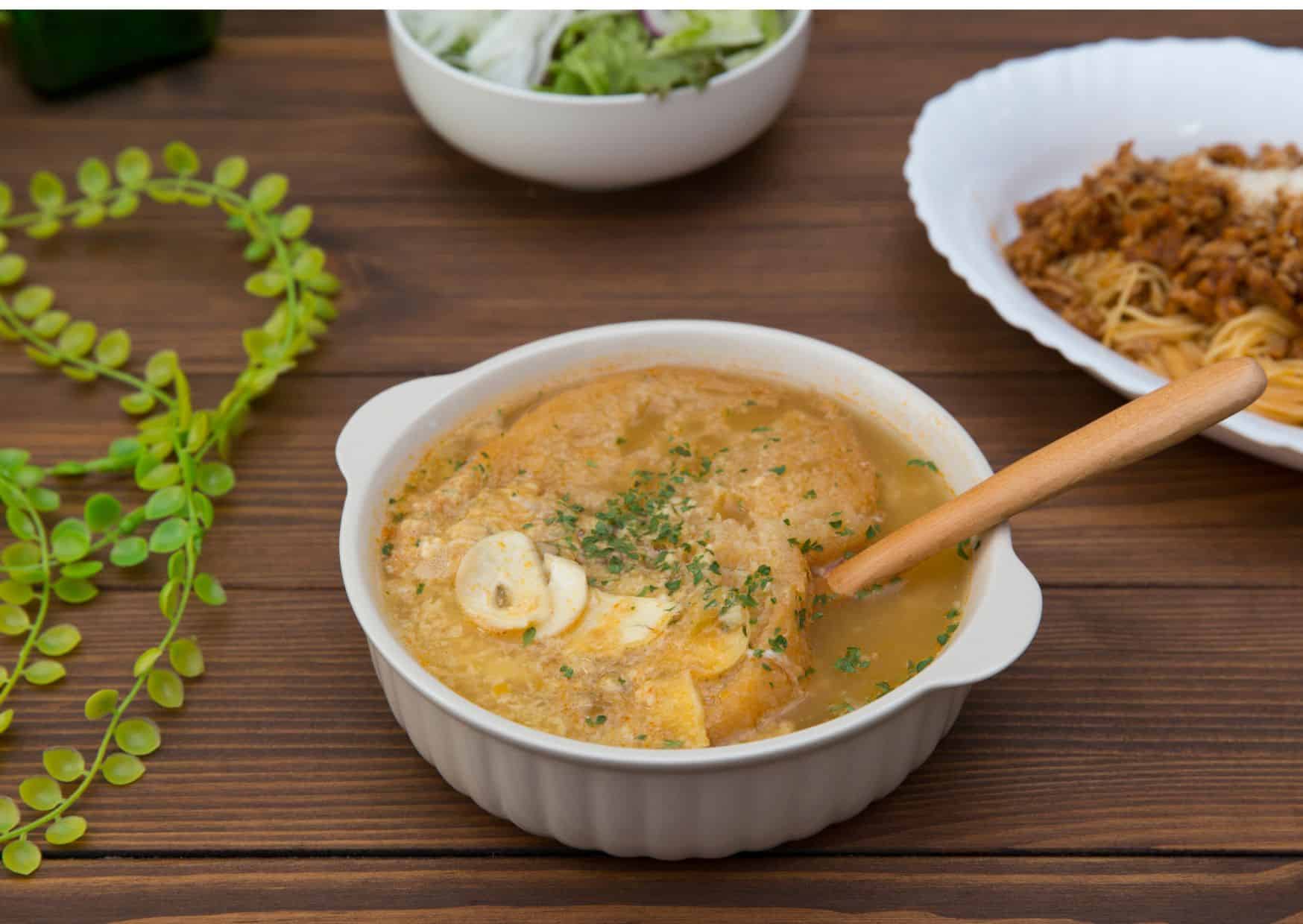
What It Is: Sopa de Ajo is a rustic, garlic-based soup from the Castile region. Made with just a few simple ingredients, this hearty soup has a comforting flavor, featuring garlic, paprika, and often topped with a poached egg. Traditionally, this soup was considered a peasant dish, but it has become a beloved comfort food in Spain.
Ingredients:
8 garlic cloves, thinly sliced
4 cups chicken or vegetable broth
4 slices day-old crusty bread, cut into cubes
2 tbsp olive oil
1 tbsp smoked paprika
4 eggs (optional)
Salt and pepper to taste
Recipe Instructions:
Heat olive oil in a large pot over medium heat. Add the garlic and sauté until golden, but not burnt. Add the bread cubes and cook until slightly toasted. Stir in the paprika and mix well.
Add the broth, bring to a boil, then simmer for 15 minutes. Crack the eggs into the simmering soup, one at a time, and poach for about 3 minutes until the whites are set. Serve hot, with a poached egg in each bowl.
Tips:
Use stale bread for better texture and absorption. Adjust the amount of garlic to your taste preference for a milder or stronger flavor.
Calories: Approximately 250-300 calories per serving (with an egg).
3. Fabada Asturiana (Asturian Bean and Sausage Stew)
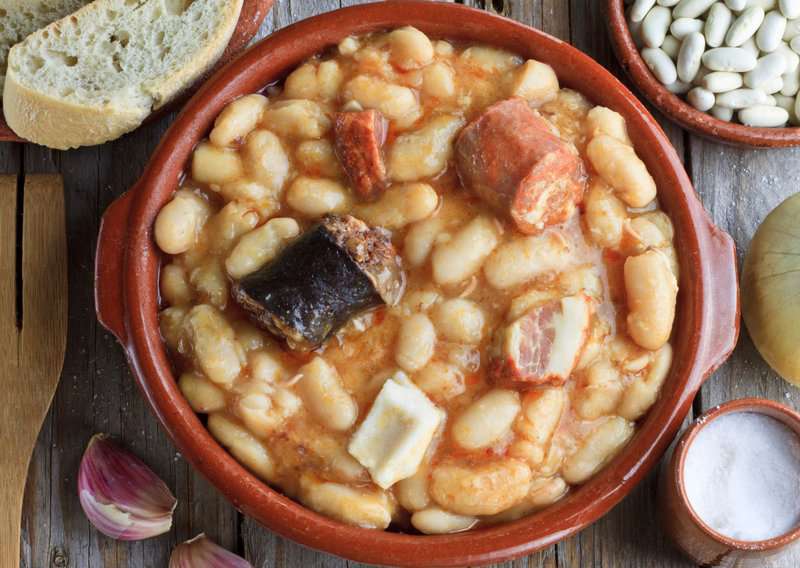
What It Is: Fabada Asturiana is a rich, hearty stew from the Asturias region in northern Spain. It features large white beans (fabes), chorizo, morcilla (blood sausage), and pork. Fabada is traditionally served as a main course, making it a filling and flavorful meal perfect for colder months.
Ingredients:
2 cups dried white beans (such as fabes or cannellini)
1 chorizo sausage, sliced
1 morcilla sausage (Spanish blood sausage), sliced
1/2 pound pork belly or ham hock
1 onion, quartered
4 garlic cloves, whole
1 tsp sweet paprika
2 bay leaves
6 cups water
Salt to taste
Recipe Instructions:
Soak the beans overnight in cold water. Drain and place the beans in a large pot with the pork belly, onion, garlic, paprika, bay leaves, and water.
Bring to a boil, then reduce heat and simmer for 1.5-2 hours until beans are tender. Add the chorizo and morcilla, and cook for an additional 30 minutes. Adjust seasoning and serve hot.
Tips:
Soak the beans overnight to reduce cooking time and ensure a creamy texture. Use authentic Asturian sausages for a traditional flavor.
Calories: Approximately 400-500 calories per serving.
Read here how to make Fabada
4. Caldo Gallego (Galician Broth)
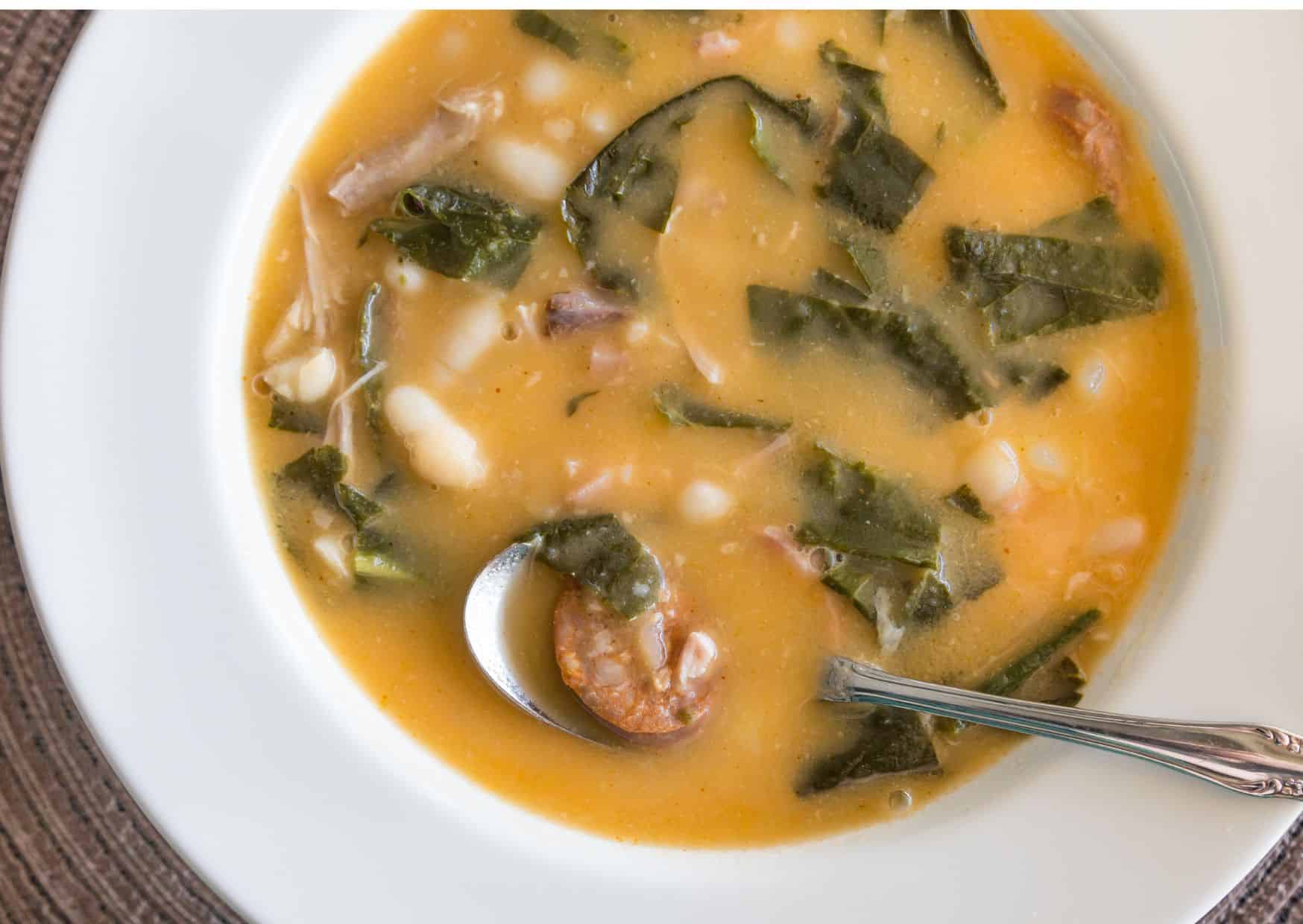
What It Is: Caldo Gallego is a traditional soup from the Galicia region of northwestern Spain. It’s a simple but hearty broth made with greens (turnip greens or kale), potatoes, chorizo, and white beans. This comforting soup is perfect for chilly days and is a staple in Galician households.
Ingredients:
2 cups white beans, soaked overnight
1/2 pound chorizo, sliced
1/2 pound pork shoulder or ham hock
4 large potatoes, peeled and diced
4 cups turnip greens or kale, chopped
6 cups water or chicken broth
Salt and pepper to taste
Recipe Instructions:
In a large pot, add the beans, pork, and water. Bring to a boil, then simmer for 1-2 hours until beans are tender.
Add the potatoes and cook for 20 minutes.
Add the chorizo and greens, and cook for another 15 minutes until potatoes are soft and the greens are wilted.
Adjust seasoning and serve hot.
Tips:
Use Galician chorizo for an authentic flavor. Add more or less greens depending on your preference.
Calories: Approximately 300-350 calories per serving.
5. Salmorejo (Thick Tomato and Bread Soup)
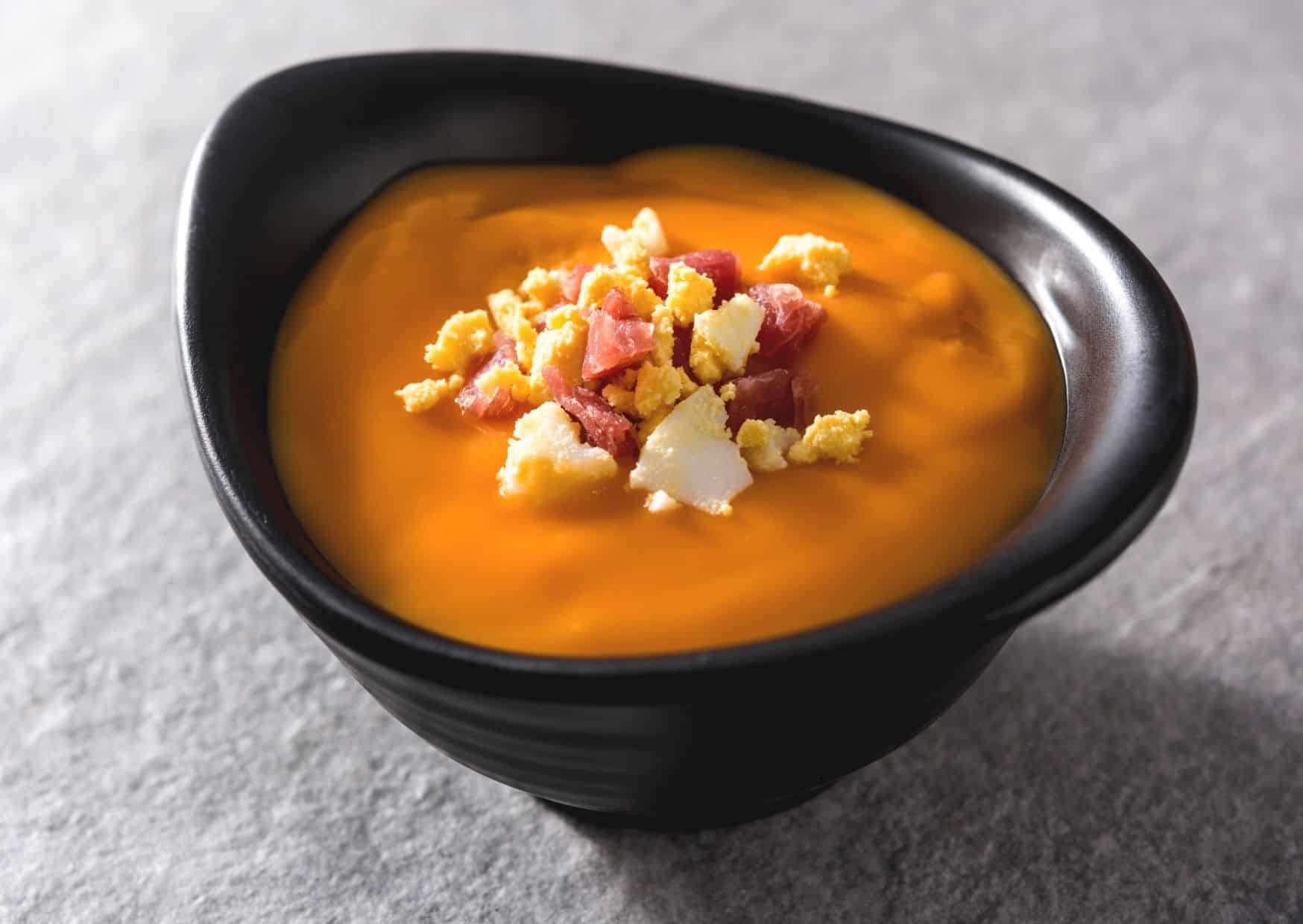
What It Is: Salmorejo is a thick, cold tomato soup that originated in Córdoba, Andalusia. Similar to gazpacho but richer, it is made with tomatoes, bread, garlic, and olive oil, and is often garnished with hard-boiled eggs and Serrano ham.
Ingredients:
6 ripe tomatoes, chopped
1 cup stale bread, crust removed
1 garlic clove
1/4 cup extra-virgin olive oil
1-2 tbsp sherry vinegar
Salt to taste
Optional toppings: Hard-boiled eggs, Serrano ham
Recipe Instructions:
Soak the bread in water until soft, then squeeze out excess water. In a blender, combine tomatoes, bread, garlic, olive oil, vinegar, and salt. Blend until smooth and creamy. Chill in the refrigerator for 2-3 hours before serving. Garnish with chopped hard-boiled eggs and diced Serrano ham.
Tips:
Use high-quality olive oil for a smooth, rich flavor. Adjust the amount of bread to reach your desired consistency.
Calories: Approximately 180-200 calories per serving (without toppings).
Read here how to make Salmorejo
6. Caldo de Pescado (Spanish Fish Soup)
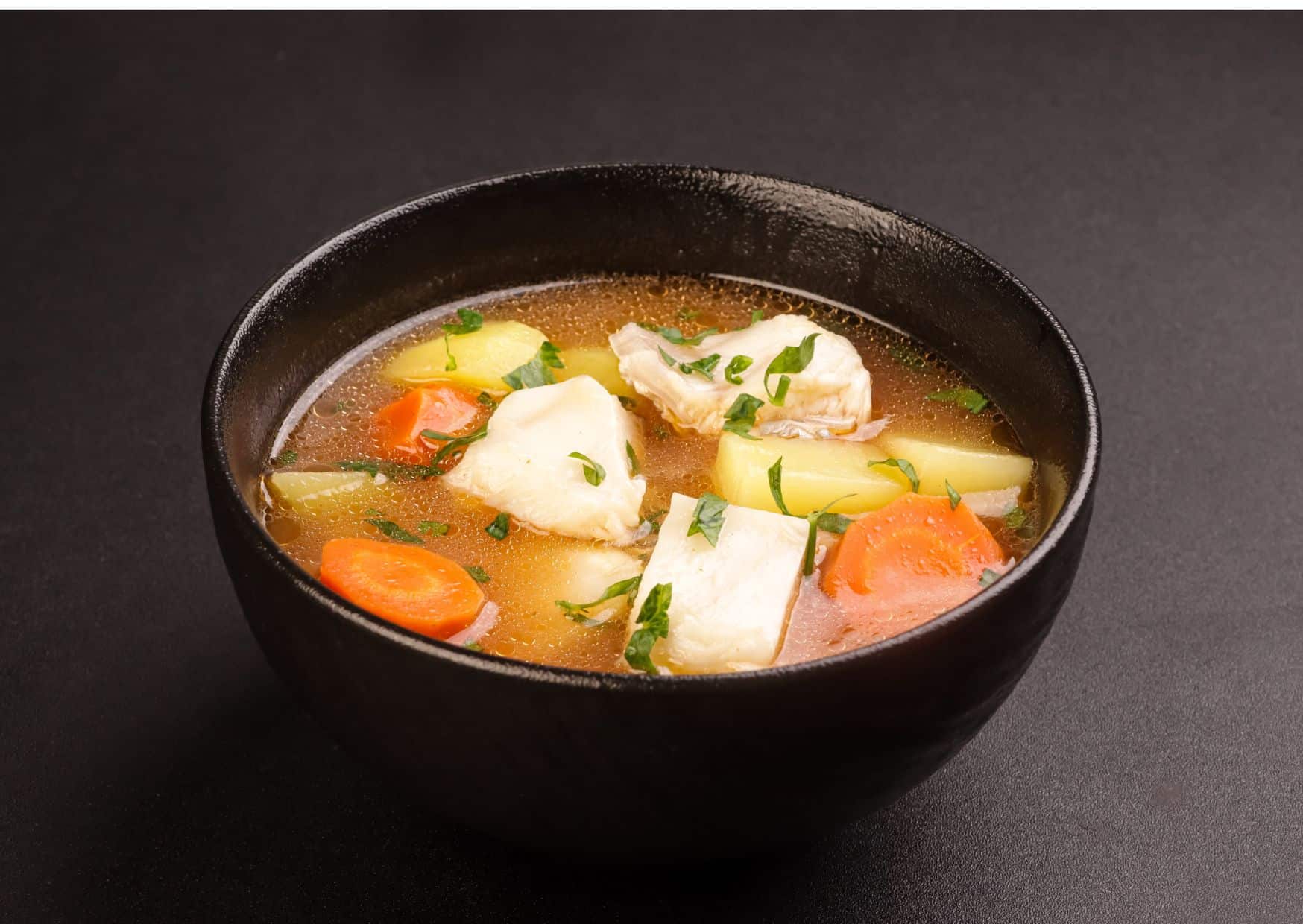
What It Is: Caldo de Pescado is a light yet flavorful fish soup made with a variety of seafood, vegetables, and aromatic herbs. This soup is popular along Spain’s coastal regions and showcases the country’s abundance of fresh seafood.
Ingredients:
1 pound white fish (hake or cod), cut into chunks
1/2 pound shrimp, peeled
1 onion, chopped
2 garlic cloves, minced
1 leek, sliced
2 carrots, sliced
4 cups fish stock
1/2 cup white wine
1 bay leaf
Salt and pepper to taste
Fresh parsley, for garnish
Recipe Instructions:
In a large pot, sauté the onion, garlic, leek, and carrots until softened. Add the white wine and cook for 2 minutes until slightly reduced. Pour in the fish stock, add the bay leaf, and simmer for 15 minutes.
Add the fish chunks and shrimp, and cook for another 5-7 minutes until the seafood is cooked through. Season with salt, pepper, and fresh parsley.
Tips:
Use a mix of white fish and shellfish for a more complex flavor. Serve with crusty bread to soak up the broth.
Calories: Approximately 250-300 calories per serving.
Origin and History
Spanish soups have a long history rooted in the country’s diverse landscapes, climate, and regional traditions. From the cold, refreshing gazpachos of Andalusia to the hearty broths of Galicia, each soup reflects the ingredients available in its local environment. Rural communities relied on vegetables, legumes, bread, and modest cuts of meat to create comforting dishes that stretched simple ingredients into satisfying meals.
As Spain evolved through centuries of cultural exchange Roman, Moorish, Jewish, and Christian influences its soups absorbed new spices, techniques, and ingredients. Olive oil, garlic, paprika, almonds, and fresh produce became essential components in the Spanish kitchen. These elements shaped iconic recipes like salmorejo, caldo gallego, and sopa de ajo, giving each one a distinct personality linked to its region.
Over time, Spanish soups became a meaningful part of home cooking and family tradition. Many recipes were passed down from generation to generation, each household adding small variations. Today, they remain beloved staples that showcase Spain’s culinary identity: rustic yet refined, simple yet deeply flavorful, and always built on fresh, honest ingredients.
One of the biggest debates in Spanish cuisine revolves around authenticity. Each region believes its version of a dish is the most accurate, creating lively disagreements over what a soup “should” taste like. For example, gazpacho recipes vary wildly depending on whether you’re in Seville, Málaga, or Córdoba. Some swear by chunky textures, while others insist gazpacho must be silky smooth.
Another point of contention is whether classic soups should evolve with modern tastes. Purists argue that Spanish soup recipes are perfect as they are and shouldn’t be altered with new ingredients or international influences. Meanwhile, contemporary chefs experiment with avocado gazpacho, seafood salmorejo, and vegan caldo variations, claiming that adaptation keeps the tradition alive and relevant.
There’s also tension around what is considered a soup versus a stew. Dishes like fabada asturiana or cocido madrileño sometimes blur the line. Some say they belong to the stew family; others insist they are soups because they begin as brothy dishes. These debates highlight how flexible and passionate Spanish food culture truly is.
How Long You Take to Prepare
Preparation time for Spanish soups varies widely depending on the recipe. Cold soups like gazpacho and salmorejo are surprisingly quick. Most can be made in under 20 minutes simply blend, chill, and serve. They’re ideal for hot summer days when you want something refreshing but low-effort.
Hearty soups, such as caldo gallego or lentejas, require more time to develop flavor. These recipes typically need one to two hours of simmering to soften legumes, blend flavors, and create a rich broth. While the cook time is longer, most of it is unattended, making these soups simple for weeknights or lazy weekends.
Mid-range soups, like sopa de ajo or traditional fish soups, take around 30 to 45 minutes. They involve sautéing aromatics, adding broth, and letting the ingredients meld together. Despite their modest prep time, these soups deliver deep, comforting flavors that taste like they simmered all day.
Serving Suggestions
Spanish soups are traditionally served with simple, rustic accompaniments that complement their flavors. Crusty bread is almost always present, whether for dipping into caldo or spreading with toppings like jamón or cheese. A drizzle of good olive oil can elevate even the simplest bowl.
Garnishes vary widely depending on the soup. Gazpacho benefits from diced vegetables or croutons, while salmorejo is classically topped with chopped egg and jamón serrano. A bowl of caldo gallego pairs beautifully with roasted peppers, olives, or a small salad, creating a balanced and nourishing meal.
For gatherings or tapas-style meals, serve small bowls of soup alongside other Spanish favorites like tortilla española, marinated olives, or grilled prawns. Soups in Spain are not just starters they can be light meals on their own or part of a larger spread that showcases the country’s culinary richness.
Final Thoughts
Spanish soups offer a window into the country’s history, culture, and regional pride. Whether you prefer refreshing cold blends or warm, hearty bowls, each recipe carries a story shaped by the land and the people who perfected it over centuries. These dishes prove that simple ingredients, when treated with care, can create unforgettable flavors.
What makes Spanish soups especially appealing is their versatility. You can prepare them quickly for busy weeknights or let them simmer slowly when you want something deeply comforting. Many recipes adapt easily to personal tastes, making them accessible to cooks around the world while still honoring their roots.
In the end, the six most popular Spanish soups deserve a place in every kitchen. They’re nourishing, flavorful, and endlessly satisfying true examples of how Spain transforms humble ingredients into dishes that feel both timeless and memorable. Once you try them, they’re sure to become regulars in your cooking rotation.

About the Author: Ruben, co-founder of Gamintraveler.com since 2014, is a seasoned traveler from Spain who has explored over 100 countries since 2009. Known for his extensive travel adventures across South America, Europe, the US, Australia, New Zealand, Asia, and Africa, Ruben combines his passion for adventurous yet sustainable living with his love for cycling, highlighted by his remarkable 5-month bicycle journey from Spain to Norway. He currently resides in Spain, where he continues sharing his travel experiences with his partner, Rachel, and their son, Han.