

By January, I’m already on a path that makes 15 pounds feel more like a calendar outcome than a willpower project.
December in Spain does not politely support an American “reset.” It’s the opposite. Your neighbors hand you sweets like it’s a civic duty. Your calendar fills up with meals that start late and end when someone remembers they have work tomorrow. And if you have family nearby, there’s always one more lunch, one more roscón situation, one more “just taste it.”
So I didn’t try to diet in December.
I did something quieter, and honestly more disruptive: I stopped eating American portions while still eating normal food.
Not “clean” food. Not diet food. Just smaller, more European portions, inside a day that actually has edges.
By the time January arrives, the big win is not a dramatic weight drop. The win is that the system is already running. My appetite is calmer, dinner is lighter without feeling sad, and the late-night snack spiral has less power.
That’s why I’m comfortable saying this out loud: if I keep this rhythm, 15 pounds becomes a timeline, not a battle.
The real problem is not holiday food, it’s portion distortion
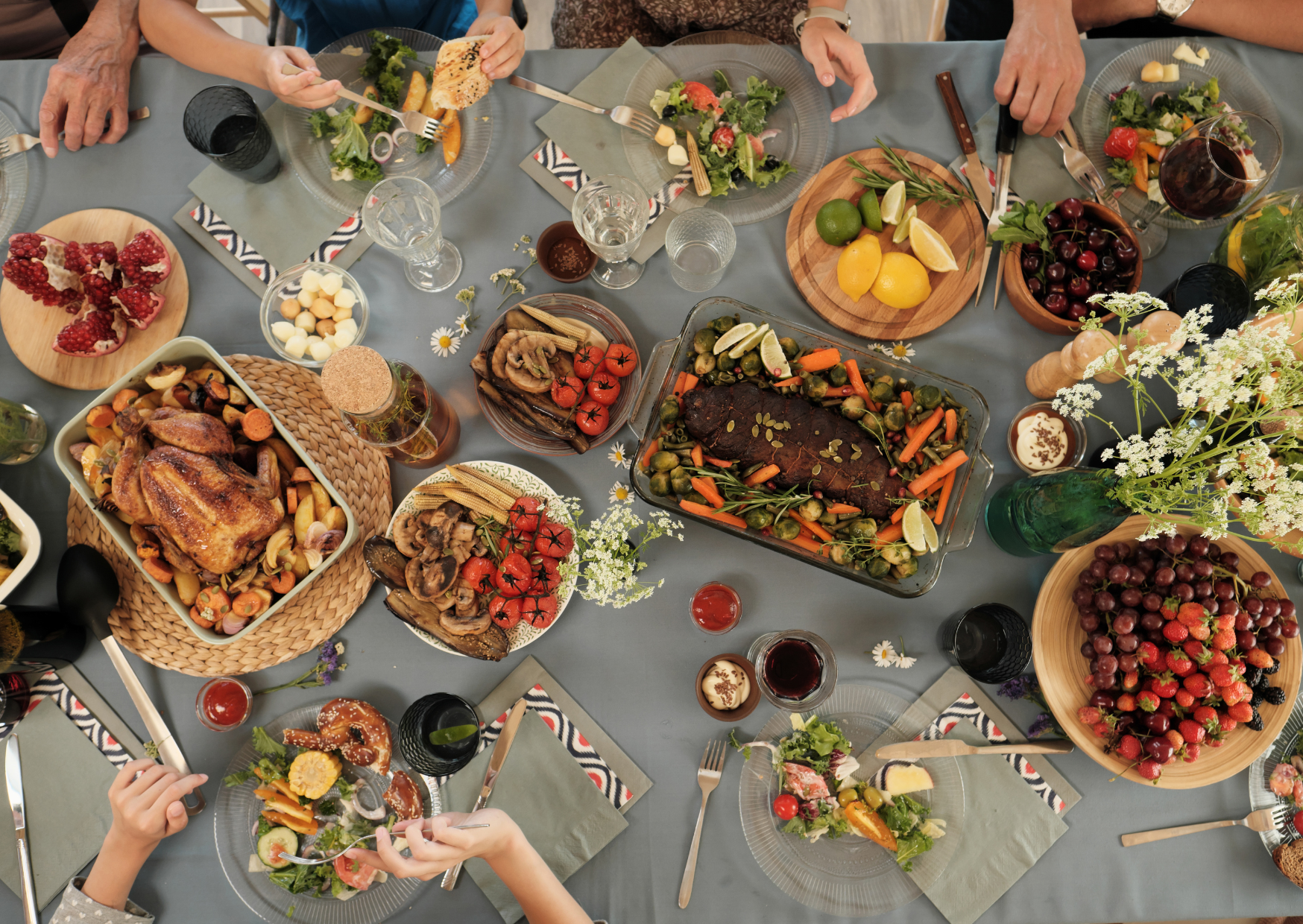
Americans don’t realize how much of their weight story is just portion normalization.
Not bingeing. Not lack of discipline. Normal portions that aren’t actually normal anymore.
The U.S. has spent decades turning “one serving” into “one unit,” and then selling bigger units as convenience. A bagel becomes a meal. A “single” cookie is basically a slice of cake. A coffee drink quietly becomes breakfast and dessert in the same cup. Then you do that five days a week and wonder why your jeans are negotiating.
What changed for me in December was noticing how automatic my American portion instincts still were, even living in Europe.
I’d cook pasta and pour what felt like “a normal amount,” which was actually a restaurant portion in Italy. I’d eat dinner and then wander back into the kitchen like dinner was an opening act, not the main event. I’d snack while cooking, which is basically a hidden extra meal that never makes it into anyone’s mental math.
That’s portion distortion. You feel like you’re eating normally because you’re eating what you’re used to.
Research has repeatedly found what most people know emotionally but hate admitting practically: when portions are bigger, people tend to eat more without intending to. It’s not a character flaw, it’s a predictable human response.
And once you accept that, you stop treating weight loss like a moral project. You start treating it like an environment project.
December was the perfect month to test this because it’s the month when Americans typically surrender to chaos and then plan to “fix it” in January.
I didn’t fix it. I adjusted it.
I kept the foods. I kept the social life. I just changed the portion and the number of times I ate.
That’s the part nobody glamorizes, and it’s the part that works.
The European trick is fewer eating moments, not “better ingredients”

People love blaming ingredients because it feels sophisticated. Europeans eat better bread, so they’re thinner. Europeans have better cheese, so they’re healthier. Fine.
But the bigger lever is simpler: fewer eating moments in a day.
In a lot of Mediterranean households, meals are meals. You sit down, you eat, you finish. You don’t spend the entire afternoon grazing through the kitchen like it’s a hobby.
That was my December shift. I stopped allowing “food browsing” to count as nothing.
Three meals most days. One planned snack only if I actually needed it. And a clear end to eating at night.
That last part is uncomfortable at first because Americans are trained to treat the evening as the real eating window. Dinner is big. Then dessert. Then snacks. Then “just something small.” Then bed.
In Spain, dinner can be late, but in many real households, dinner is not always a giant event. There’s a lot of soup, eggs, fish, vegetables, and smaller plates that don’t require a second round of eating afterward.
So I stole the logic, not the exact schedule.
Lunch became the anchor meal. If lunch was real, dinner didn’t need to compensate for a chaotic day. Lunch is value, dinner is theater is a funny line, but it’s also functional. When your calories show up earlier, your evening gets calmer.
I also stopped treating snacks like a personality. If I wanted something mid-afternoon, I ate something simple and finished. Yogurt and fruit. Nuts. A piece of bread with something. Not five little snacks in a row because I was tired and pretending it didn’t count.
The result was immediate and weirdly relieving: less mental noise about food.
When the day has edges, you stop negotiating all day. You stop “starting over” at 4 p.m. and again at 9 p.m.
That’s the real European advantage you can copy anywhere: structure replaces willpower.
The portion moves that changed everything without counting a single calorie

I didn’t weigh food. I didn’t track. I didn’t do that exhausting thing where you turn dinner into homework.
I used physical and behavioral portion controls that work even when you’re tired.
First, smaller plates and bowls. This sounds like a cliché until you realize how much your plate size controls your “normal.” If you serve dinner on a big plate, you will fill it. If you serve dinner on a smaller plate, you naturally serve less, and the meal still looks complete.
Second, one plate, one round. No family-style pot sitting on the table calling your name. I served the portion, put the rest away, and made “seconds” an intentional decision instead of an automatic reflex. Second servings became a choice.
Third, pasta got treated like a portion, not a base layer. For pasta dinners, I served a smaller amount of pasta and made the vegetables and protein do more of the volume work. Pasta stayed in my life, but it stopped being the entire life of the plate.
Fourth, restaurant portions got split. If I ordered something that arrived in a huge portion, I didn’t heroically finish it. I ate half and boxed the rest, even if it felt culturally awkward at first. That one habit alone removes a lot of accidental overeating.
Fifth, I stopped eating while cooking. This is the sneakiest American habit. You take a bite here, a bite there, taste the sauce, eat a chunk of bread, grab a piece of cheese, and then you sit down to “dinner” as if you haven’t already eaten 300 calories. Cooking bites count is an annoying truth, and it’s one of the fastest ways to shrink intake without changing the food.
Sixth, I got serious about drinks. Not in a puritan way. In a practical way. Liquid calories are the easiest calories to forget and the hardest to feel full from. I kept coffee. I kept the occasional wine. I just stopped letting drinks become a second dessert most days.
None of this requires motivation once it’s installed. It’s like rearranging furniture. After a week, you stop thinking about it.
And that’s why doing it in December was so powerful. In January, the habits already feel normal. There’s nothing to “start.” There’s only something to continue.
The hidden calorie cuts that don’t feel like dieting
If you want to lose weight without trying, you need to remove calories that don’t feel emotionally important.
That’s what portion changes do. You’re not deleting the foods you love. You’re deleting the automatic extras you barely notice.
A simple example: if you reduce your daily intake by about 500 calories, that often lines up with roughly a pound of weight loss per week for many people. It’s not a promise for everyone, but it’s a useful framework, and it’s one reason gradual loss is commonly described as the sustainable target range.
The American January cleanse usually tries to cut 1,200 calories a day and then acts shocked when people feel miserable and rebound.
The portion reset is smaller:
- a little less pasta
- a little less bread
- one fewer snack window
- fewer bites while cooking
- fewer liquid calories
- dinner that ends earlier more nights
Those are the “invisible” cuts.
And the best part is you don’t feel like you’re “on a diet.” You feel like you’re eating like a normal adult who isn’t constantly in snack mode.
This is also why it’s easier for women in midlife than the classic American approach. When hormones, stress, and sleep shift, hunger and cravings become louder. Starving yourself makes that louder. Stability makes it quieter.
A portion reset gives your body predictable meals and fewer spikes. You’re not triggering the “I’m deprived” alarm every day.
You also stop training your brain to expect constant stimulation from food. That’s a real addiction-like loop for a lot of Americans, not because they’re weak, but because the environment is designed that way.
If you want one unsexy truth: most weight gain comes from tiny daily surpluses that don’t feel like “overeating.” Portion changes target those surpluses without drama.
That’s why by January, you’re already on track. The daily math is already different.
Why this is easier to do in Spain than in the U.S.

I’m not going to pretend Spain is a health spa. There are pastries, fried foods, and late nights. You can absolutely gain weight here.
But the environment makes some habits easier.
Walking is built in. Even a normal week involves more steps than a lot of American suburban life, because errands are closer, public transit is more common, and daily life is less car-dependent in many places.
Meals are also more socially contained. You eat at a set time, with people, and then you move on. You don’t eat in your car. You don’t eat while driving between errands. You don’t snack in a Target aisle because you’re overwhelmed and hungry.
This doesn’t make Spaniards morally superior. It makes the week less porous.
Porous weeks are the American weight gain machine. You eat a little everywhere, all day, because the day is structured around movement by car and eating by convenience.
Here, even when life is busy, there’s more of a rhythm. And rhythm is what makes portion control feel less like discipline and more like default.
This is also why doing the shift in December worked. The holidays here are social, but they’re still built around meals, not constant food access.
So you can do a big family lunch, eat well, and then not eat again until dinner. You don’t need to fill every gap with snacks because the gaps aren’t designed for snacking.
It’s the same principle as always: timing beats willpower. If the day has structure, your brain doesn’t have to fight itself all day.
If you’re in the U.S., you can still copy this. You just have to create the edges intentionally:
- planned meal times
- planned snack or no snack
- kitchen closed after dinner
- walking after meals, even if it’s around the block
It’s not as automatic as Spain, but it’s possible.
What “15 pounds” actually means, and why January is when the trajectory is set
Let’s talk honestly about the number in the title.
Fifteen pounds is not a January result. It’s a trajectory.
A common public health guideline for sustainable weight loss is around 1 to 2 pounds per week. If you do the boring math, 15 pounds is often an 8 to 15 week project, depending on your body, your starting point, and how consistent you are.
That’s why December mattered.
December was the install month. The month where portion changes became normal. Where the day got edges. Where I stopped treating evening snacking as a harmless hobby. Where I stopped eating my way through the kitchen while cooking.
By January, I’m not “starting.” I’m continuing. That’s what makes the 15-pound path believable.
Because the biggest reason Americans fail in January is they start with intensity and no infrastructure. They try to lose 15 pounds with a cleanse, a new workout identity, and a strict set of rules that collapse when real life returns.
This approach flips it: build infrastructure first, then let time do the work.
Also, if you’ve ever lost weight before, you know the first few pounds can be water and inflammation shifts, especially if you reduce ultra-processed food, alcohol, and late-night eating. The point is not chasing early scale drama. The point is setting a weekly rhythm that can run for months without constant emotional negotiation.
That’s why I’m comfortable saying “en route.” The route is the win.
If I keep the portion changes and the reduced snacking, the trendline takes care of itself. If I go back to American portions in a European kitchen, I’ll get American results again.
It’s not mysterious. It’s boring cause and effect.
The mistakes that will ruin this, even if your food is “healthy”

This is where the American brain tries to sabotage you.
Mistake one: skipping meals and calling it discipline. If you skip lunch, you don’t become virtuous. You become snacky and unpredictable later. Predictable meals are what make smaller portions possible.
Mistake two: cutting an entire food group and then rebounding. If you ban carbs, you’ll spend your life thinking about carbs. The non-dramatic move is carbs in adult portions.
Mistake three: treating exercise like permission to eat. A hard workout does not cancel a day of grazing. It can even make people hungrier and looser with portions. Walking and routine movement are better partners for portion resets.
Mistake four: relying on “clean eating” products. Bars, shakes, snack packs, and all the expensive wellness packaging. If it makes you feel deprived, you will eventually overcorrect.
Mistake five: leaving the kitchen open all night. This is the big one. If you eat dinner and then keep nibbling until bed, you’re basically adding a second dinner in slow motion. Kitchen closed is not a cute rule. It’s a practical one.
Mistake six: expecting perfection during social life. Mediterranean eating is social. If you treat every dinner out like a test you must pass, you’ll eventually quit. The trick is to eat well at the meal, then return to normal the next day.
If you want one principle that keeps this stable: small misses are normal. Big spirals are optional.
Seven days to lock the portion shift in place
Here’s the clean, practical version of what I’d do if you told me you wanted the same “by January I’m on track” feeling.
Day 1: Change the plates. Use smaller plates and bowls for every meal this week. It’s the easiest way to reset “normal” without thinking.
Day 2: Pick three meal times. Not strict, just consistent windows. If you keep three meals, you reduce grazing automatically.
Day 3: Install the cooking rule. No eating while cooking. Taste, yes. Snacking, no. Cooking bites count and they add up fast.
Day 4: Fix lunch. Make lunch the anchor meal. Protein, vegetables, and a starch. If lunch is real, dinner stops being a rescue.
Day 5: Contain snacks. One planned snack if needed, seated, plated. Not a snack parade.
Day 6: Make dinner smaller and earlier most nights. You don’t have to eat at 6 p.m. like a retiree. Just avoid the “dinner at 9:30 plus snacks until midnight” routine. Dinner ends the day.
Day 7: Practice one social situation. Eat out or eat with friends, pick one indulgence, then return to normal the next day. The habit you’re building is not restriction. It’s recovery.
Do that for a week and you’ll feel the shift that matters: food stops being constant. Your appetite stops screaming. Your week becomes less porous.
And once the week is less porous, the scale usually follows, slowly and predictably.
That’s what “without trying” really means. You’re not trying every day. You’re living inside a structure that makes overeating less automatic.
The quiet choice you’re making before January 1
Most Americans treat January like a rescue mission.
They try to rescue themselves from December with intensity, and intensity eventually collapses.
The portion shift is less exciting, but it’s the kind of change that survives real life. It doesn’t require a new identity. It requires smaller plates, fewer eating moments, and a calmer dinner rhythm.
It also does something psychologically important: it removes the guilt narrative. You’re not “being good.” You’re just eating like an adult in a system that doesn’t reward constant snacking.
So yes, by January, I’m en route.
Not because I found a miracle trick.
Because I stopped eating American portions in December, and now the math is boring in the best way.

About the Author: Ruben, co-founder of Gamintraveler.com since 2014, is a seasoned traveler from Spain who has explored over 100 countries since 2009. Known for his extensive travel adventures across South America, Europe, the US, Australia, New Zealand, Asia, and Africa, Ruben combines his passion for adventurous yet sustainable living with his love for cycling, highlighted by his remarkable 5-month bicycle journey from Spain to Norway. He currently resides in Spain, where he continues sharing his travel experiences with his partner, Rachel, and their son, Han.