

You move for the long lunches and the quieter streets. Then you accidentally rebuild the same grind inside a prettier calendar.
On paper, it’s perfect.
You land in Europe, you start walking everywhere, you drink coffee in daylight, and suddenly life looks like it has space again. Friends back home say you sound calmer. Your photos look calmer. Even your face looks calmer.
Then, six weeks later, you’re taking a Zoom call at 9:00 p.m. because your team is in New York. You’re answering messages while waiting at an office that runs on appointment logic, not urgency logic. You’re “just knocking out a few things” on Sunday because Monday has a bank appointment and a landlord issue and a school form you forgot to print.
And that’s the twist nobody advertises: you moved for balance, but you brought the American operating system with you. Europe does not uninstall it for free.
Living in Spain, I see this pattern constantly. People arrive expecting the country to do the work-life balance for them. Instead, the move exposes how much of their old life was held together by infrastructure, convenience, and familiar support systems.
So they work more. Not always in official hours. Often in scattered, low-grade, all-day effort that feels even worse.
You moved for the calendar, but you kept the American job

The fastest way to work more in Europe is simple: keep U.S. work expectations and add European life on top.
If your paycheck is tied to U.S. time zones, you pay a daily time zone tax. Your mornings become “personal time” that slowly fills with errands, and your evenings become “real work” because that’s when your team is awake.
Even if you swear you’ll protect your nights, it starts sliding. One late call becomes a routine. One “quick sync” becomes a recurring meeting. One Slack message at 10:30 p.m. becomes the habit of always being available, because availability is how Americans prove they are good employees.
You also get the worst of both worlds: your daytime is fragmented and your evening is booked. You never get the clean psychological shutdown that comes from finishing work at 5:30 and being done.
A common schedule I see among Americans in Spain looks like this:
- 8:30 to 11:30: errands, gym, admin, “I’ll start work after lunch”
- 12:00 to 15:00: some work, some life, lunch stretches longer than expected
- 15:00 to 18:00: deep work, but people are offline locally
- 19:00 to 23:00: U.S. meetings, U.S. messages, “just one more thing”
That’s not balanced. That’s two lives stitched together badly.
And because the work feels scattered, people often compensate by working more. They don’t trust they did enough, so they keep going. Fragmented work creates more work, because your brain never believes the day is complete.
If you want European work-life balance while keeping a U.S. job, you need to treat it like a system design problem, not a vibe. Otherwise you’ll be in permanent “half-off” mode, half living, half working, fully tired.
The admin load in Europe is real, and couples often underestimate it
Americans don’t just move countries. They move into a different administrative rhythm.
In Spain, the basics of being an adult can include recurring appointments, document renewals, registrations, and small “come back next week” loops that don’t exist in the same way back home. Even when costs are reasonable, the time cost is real.
So what happens? Your freed-up European daylight gets consumed by life maintenance. Bureaucracy eats afternoons, and it does not care about your calendar.
A few examples of what quietly expands:
- Apartment stuff, utilities, meter readings, repairs, and the back-and-forth with landlords
- Banking and identity tasks that require in-person presence
- Healthcare logistics, even for simple things, because systems work differently
- Anything involving schools, children, or family paperwork
- Deliveries, technicians, and appointment windows that assume you can be home
In the U.S., a lot of that gets solved by apps, customer service, and speed. In Europe, you often solve it with time. The trade is worth it in many ways, but the time has to come from somewhere.
If you’re working remotely, that “somewhere” becomes your focus hours. So you push real work later. Then you’re working at night. Then you’re working on weekends. Then you’re working more.
This is where couples fight, too. One partner often becomes the project manager of life, especially if they speak the language better. That person ends up doing the calls, the appointments, the follow-ups. The other person keeps working like nothing changed. Resentment blooms, and suddenly you’re not only working more, you’re fighting more.
The fix is boring: schedule admin the same way you schedule work. Give it a lane. Don’t let it leak into every day.
Europe can absolutely reduce stress, but only if you stop treating admin like a surprise attack and start treating it like a weekly task.
“Slow life” creates gaps, and Americans fill gaps with work
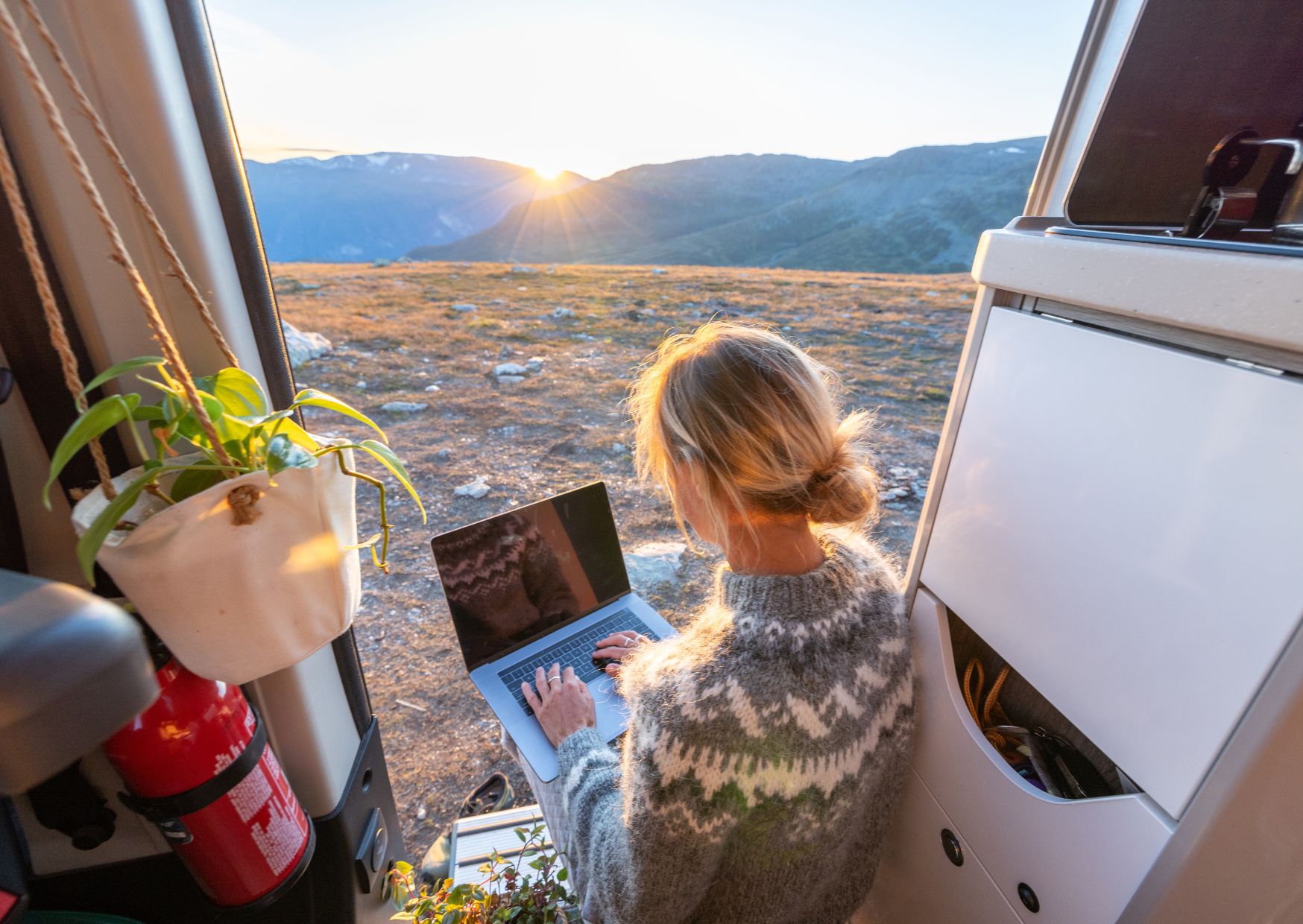
This is the part people don’t admit.
A lot of American work culture is built on constant stimulation. You’re always doing something. Even rest is optimized. Even hobbies become goals. The U.S. trains people to fear empty time because empty time feels like falling behind.
Then you move to Europe and suddenly you have gaps. Long lunch gaps. Evening gaps. Sunday gaps. The city is alive, but you’re not scheduled to death.
If you don’t have a plan for those gaps, work walks in and sits down.
You tell yourself you’re being responsible. You’re “using the extra time well.” You’re staying ahead. You’re making the move worth it. And because nobody is forcing you to stop, you keep going.
That’s how work-life balance moves turn into work intensification. Not because your boss demanded it, but because your identity did.
It also happens because European life can feel deceptively easy in the middle of the day. The café is open, the streets are full, you think you have time forever. Then you blink and it’s 19:30 and you didn’t actually do focused work.
So you push work into the evening to compensate.
If you moved to Spain, you can feel this even more because the day stretches. People are outside late. You can run errands later than you could in many American suburbs. That creates the illusion that there’s always more time.
And when there’s always more time, Americans often do more work.
The trick is learning to let gaps stay gaps. Not every open hour is a productivity opportunity. If you can’t tolerate unstructured time, you will recreate the grind wherever you live.
Your social reset makes work the easiest community
A lot of Americans move for balance without realizing that their old balance was supported by community, even if they didn’t call it that.
Coworkers you actually liked. Friends who lived nearby. Family routines. Familiar places where you felt normal. A sense of belonging that didn’t require effort.
When you move, that disappears overnight.
If you don’t build a new social structure quickly, work becomes your default social life. It becomes the place where you feel competent, seen, and connected. Even if you complain about it, it’s still the easiest place to feel like yourself.
So you work more. You volunteer for extra projects. You stay online later. You say yes to meetings you don’t need. Not because you love your job, but because your job is your main conversation.
In Spain, I see this most in remote workers who live in beautiful places but don’t speak much Spanish yet. Their daytime life feels slightly awkward. Their evening work calls feel fluent. So they choose the fluent world.
This is also why people become obsessive about productivity after moving. They’re trying to rebuild a sense of value. Work becomes comfort, and comfort becomes habit.
The fix is not forcing yourself into a loud social life. It’s building repetition. Same gym class weekly. Same market route. Same café at the same time. Same language exchange on Tuesdays. Repetition makes you visible, and visibility is how you stop feeling like a tourist in your own life.
If you don’t build that, you’ll keep using work to fill the void, and you’ll call it ambition.
The money pressure is different, and it makes people overwork for safety

Even when Europe is cheaper in some categories, the money story is rarely as simple as people expect.
Americans move for “lower cost of living,” then discover that the big line items don’t vanish, they shift:
- Housing in the popular cities can be brutal
- Moving costs and deposits hit hard upfront
- Travel back home becomes a recurring annual cost
- If you keep U.S. financial obligations, you’re paying two systems at once
- If your income is in dollars and your life is in euros, your brain starts tracking the exchange rate like it’s a sports score
What happens psychologically is predictable. People start chasing safety. And the easiest way to chase safety is to work more.
A lot of Americans in Europe end up in this loop:
“I moved for balance.”
“I’m spending more than I expected.”
“I should work harder to make this worth it.”
“I’m tired, so I spend more on convenience.”
“Now I really need to work harder.”
That’s how you rebuild American stress in a European city. Security becomes a number, and the number keeps moving.
If you want to avoid this, you need a boring buffer and a clear monthly ceiling. Not a perfect budget, just a truth budget. If you don’t know your real spending, you’ll feel financial anxiety even when you’re fine.
And financial anxiety is rocket fuel for overwork.
Europeans don’t have magic work-life balance, they have boundaries that look rude to Americans
This is where Americans misread what they’re seeing.
They see Europeans taking time off, leaving work behind, and prioritizing life. They assume the culture is softer, or the work is easier.
Often, the difference is not softness. It’s boundary enforcement.
A lot of European work environments have stronger norms around not answering after hours, not scheduling late calls, not making everything urgent. Even when people work hard, they often protect certain hours as personal time.
To Americans, that can look lazy or unambitious. It’s not. It’s a different definition of professionalism.
In Spain, you’ll see people take their evenings seriously. You’ll also see them tolerate friction that Americans would try to “solve” with overtime. They accept that some things happen tomorrow. They don’t treat every delay as a crisis.
The problem for Americans is that they often arrive with a deep belief that being reachable equals being responsible. So they answer. They keep the phone nearby. They stay available “just in case.”
Then they wonder why they’re working more than they did back home.
If you want the European benefit, you have to adopt the part that feels uncomfortable: saying no, not replying immediately, and allowing the world to wait.
Boundaries feel rude when you’re not used to them. They feel normal once you realize they protect your health and your relationship.
The local method for actually working less after you move
Here’s what I’d tell any American couple or solo mover in Spain who wants real balance, not the Instagram version.
Pick one model and commit to it. Do not try to blend everything.
Model A: European hours, U.S. outcomes
You work mostly local hours. You accept you’ll miss some U.S. meetings. You focus on asynchronous work. You set expectations early. You may earn less or grow slower. You gain life.
Model B: U.S. hours, European days
You work U.S. hours, but you treat your daytime as protected recovery time. Errands are scheduled, not scattered. Social life is planned, not improvised. You sleep on purpose. You do not pretend this is “easy.”
Model C: Split shift, but tightly controlled
You work a focused block in the morning, then a second focused block later, and you stop. No constant checking. No drifting. Protected deep work is the only way this model doesn’t become a 14-hour day.
Then you add three habits that actually change outcomes:
- Create an “admin day” or admin block weekly
If paperwork and errands leak into every day, work moves into every night. - Kill notification culture
If your phone is your boss, you’ll work forever. Turn off what you can. Put work apps in a folder. Make your home screen boring. - Build one non-work social anchor
A weekly class, a weekly walk with someone, a weekly hobby group. This stops work from becoming your only identity.
None of this is glamorous. That’s why it works.
Europe does not hand you balance. It gives you the conditions where balance is possible, then waits to see if you’ll protect it.
Your next 7 days: the reset that stops the “working more” slide

If you’ve already moved and you can feel the creep happening, do this in the next week.
Day 1: Write your work hours down and make them visible.
Not what you wish they were, what they are. If the day is leaking, you’ll see it immediately.
Day 2: Set one hard boundary and announce it.
No meetings after a certain hour. No Slack after dinner. One thing. One boundary beats ten intentions.
Day 3: Create a single admin block.
Two hours, one day. Appointments, bills, documents, calls. When it’s done, it’s done.
Day 4: Fix sleep like it’s part of the move.
If you’re on U.S. hours, treat sleep as infrastructure. If you’re not sleeping, everything else collapses.
Day 5: Decide your “outside time” daily minimum.
Walk, gym, errands, market, anything. Not for fitness, for sanity. If you’re indoors all day then working all night, you’ll burn out fast.

Day 6: Choose one local repetition.
Same café, same class, same route, same time. Do it twice. Belonging starts with repetition, not charisma.
Day 7: Do a money audit and add a buffer line.
Not because budgeting is fun. Because financial uncertainty makes people work more than they need to.
If you do those seven days, you won’t become European overnight. But you’ll stop the drift. And drift is what turns a dream move into a quiet grind.
The hard truth is simple: you can have Europe and still be exhausted. Or you can let the move change how you work, not just where you work.
The difference is not the country. It’s what you’re willing to stop doing.

About the Author: Ruben, co-founder of Gamintraveler.com since 2014, is a seasoned traveler from Spain who has explored over 100 countries since 2009. Known for his extensive travel adventures across South America, Europe, the US, Australia, New Zealand, Asia, and Africa, Ruben combines his passion for adventurous yet sustainable living with his love for cycling, highlighted by his remarkable 5-month bicycle journey from Spain to Norway. He currently resides in Spain, where he continues sharing his travel experiences with his partner, Rachel, and their son, Han.