
(Brodo di Pollo con Pastina — Nourishing, Comforting, and Full of Love)
There is no question in an Italian household about what to do when someone gets sick. You make brodo. Not broth from a box. Not a trendy bone broth. Real, homemade brodo di pollo—chicken broth made with care, simplicity, and time.
And for Italian grandmothers, this isn’t just a recipe. It is medicine. It is memory. It is warmth served in a bowl, meant to bring your appetite back, clear your head, and wrap your body in something familiar.
The most classic version? Brodo di Pollo con Pastina. Chicken broth with tiny pasta. Nothing more. Nothing less. It is what nonna makes when you sneeze, when you’re exhausted, or when you need comfort that no pharmacy can offer.
Want More Deep Dives into Everyday European Culture?
– Why Europeans Walk Everywhere (And Americans Should Too)
– How Europeans Actually Afford Living in Cities Without Six-Figure Salaries
– 9 ‘Luxury’ Items in America That Europeans Consider Basic Necessities
What Makes This Soup Special?
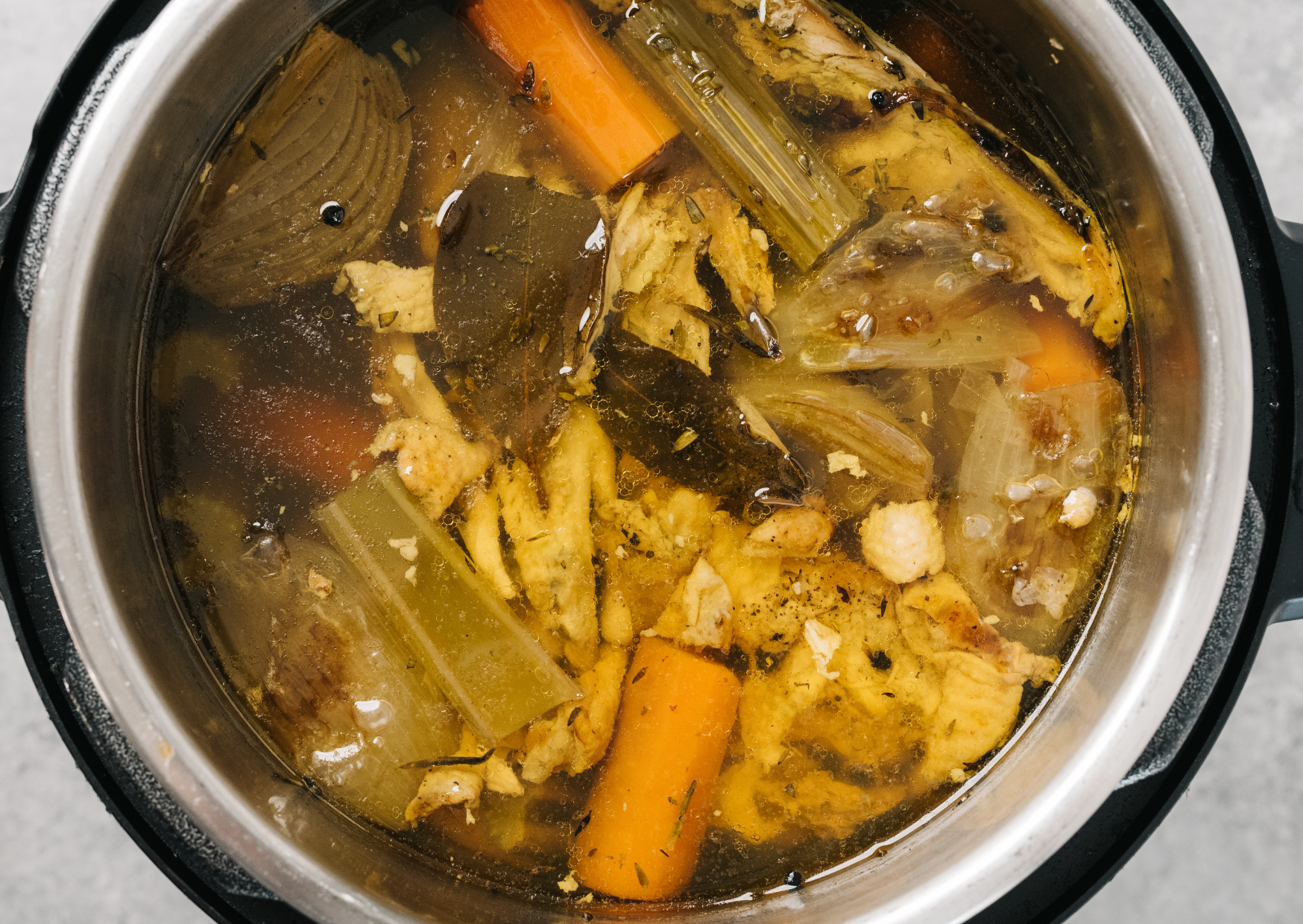
This soup is not about dramatic flavor or heavy ingredients. It is about gentleness.
- The broth is clear, golden, and nourishing, made from fresh chicken, vegetables, and time.
- The pastina—tiny star-shaped pasta or other miniature shapes—makes it comforting and easy to eat, especially for kids or anyone under the weather.
- There are no strong spices, cream, or acidity. Just subtle depth, sweetness from carrots, and the richness of long-simmered chicken.
It is not exciting. But it is perfect. And in Italy, everyone knows that when the body feels weak, this soup gives you what you need.
Ingredients (Serves 4–6)
For the broth:
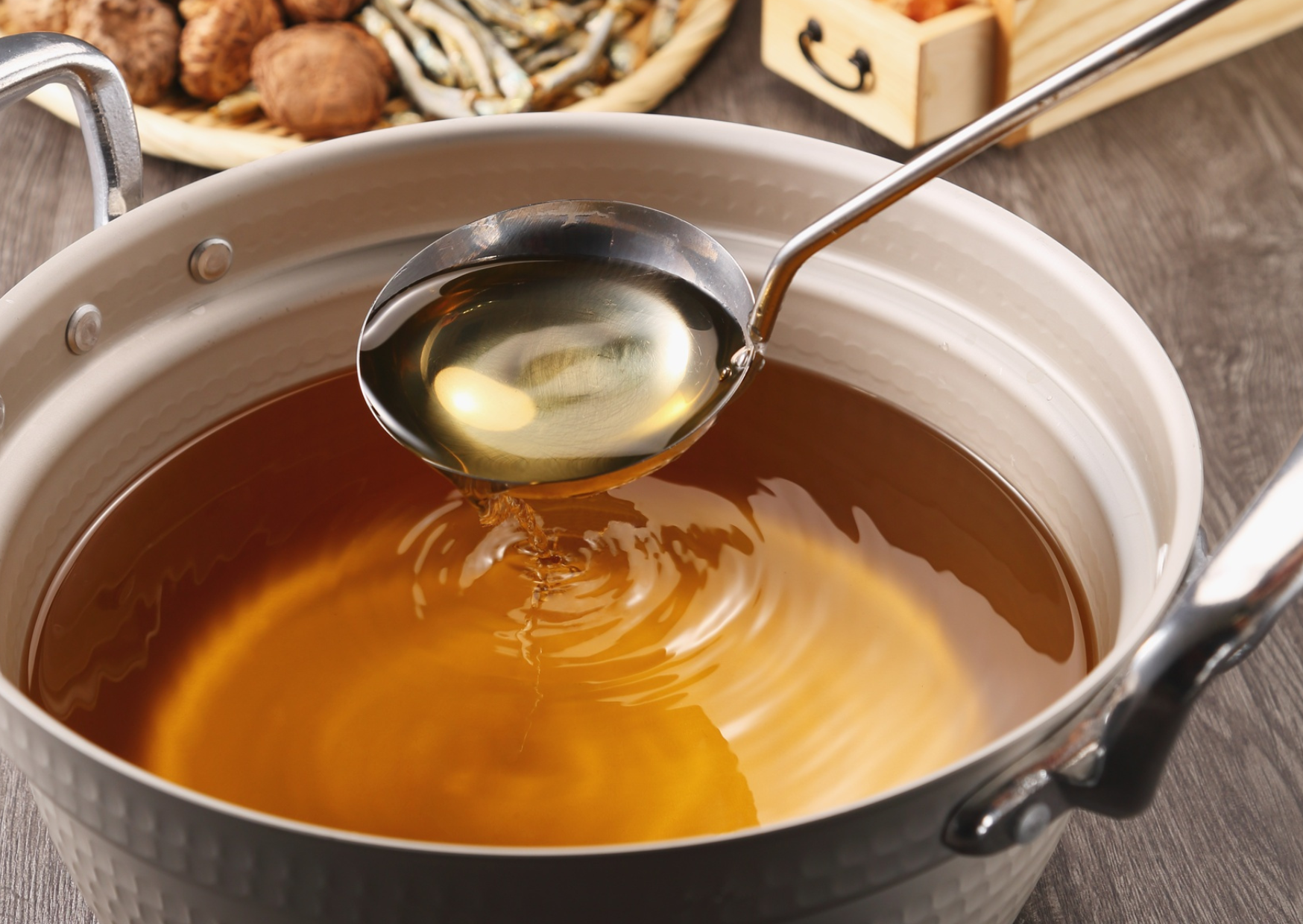
- 1 whole chicken (around 3.5 to 4 lbs), preferably organic
- 2 large carrots, peeled and cut into chunks
- 2 celery stalks, including leaves, cut into chunks
- 1 large yellow onion, peeled and halved
- 1 bay leaf
- A few black peppercorns (optional)
- Salt, to taste
- Water to cover (about 3.5 to 4 quarts)
For the soup:
- 1 cup of pastina (tiny pasta such as stelline, ditalini, or acini di pepe)
- Grated Parmigiano-Reggiano cheese (for serving)
- Optional: a drizzle of good-quality olive oil
Note: Some grandmothers use only the hen, some add a few beef bones for richness. The most classic sick-day version is made simply with chicken.
Tools You’ll Need
- Large stockpot (at least 6-quart capacity)
- Slotted spoon
- Fine mesh strainer or cheesecloth (for a clear broth)
- Small saucepan (for cooking pasta separately)
- Ladle for serving
Preparation Steps
- Rinse the chicken.
Remove any giblets, rinse the bird under cold water, and pat it dry with a paper towel. - Prepare the vegetables.
Peel and cut the carrots, celery, and onion. These will flavor the broth without overpowering it. - Fill the pot.
Place the whole chicken in your stockpot. Add the vegetables, bay leaf, and a few whole peppercorns if using. Cover with cold water by at least 2 inches.
Cooking Instructions
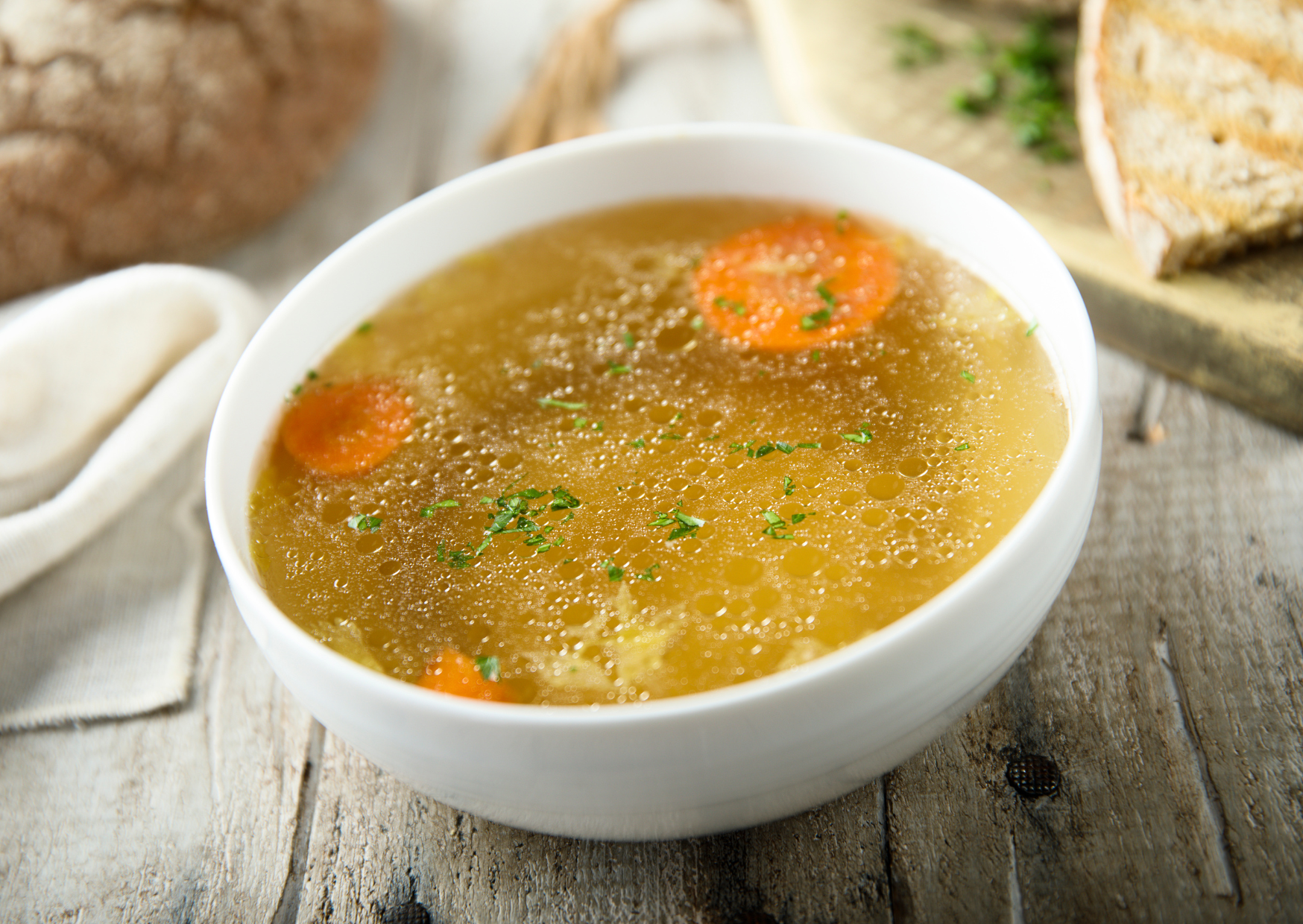
1. Start cold and heat slowly.
Bring the pot to a gentle simmer over medium heat. As it begins to warm, skim off any foam or impurities that rise to the surface with a spoon. This ensures your broth stays clear and clean.
Do not boil. A gentle simmer is the key to drawing out flavor slowly and keeping the liquid golden and soothing.
2. Let it simmer.
Lower the heat to maintain a gentle simmer. Partially cover the pot with a lid and let the broth cook for 2 to 3 hours.
The chicken should be falling apart. The vegetables should be soft. Your kitchen should smell like comfort itself.
3. Strain the broth.
Remove the chicken and vegetables with a slotted spoon. Strain the broth through a fine mesh strainer or cheesecloth into another pot or bowl to remove any lingering solids.
Taste the broth and add salt only after it has reduced and settled.
Optional: Shred some of the chicken meat and reserve it to add back into the soup.
Making the Final Soup
- Cook the pastina.
Bring a small pot of salted water to a boil. Add your pastina and cook according to the package directions. Drain and set aside.
(Cooking the pasta separately ensures the broth stays clear.) - Warm the broth.
Bring your strained broth to a gentle simmer again. Add in a handful of the cooked pastina. You can also add some shredded chicken if desired. - Serve immediately.
Ladle the soup into warm bowls. Top with freshly grated Parmigiano-Reggiano. For a little richness, some add a few drops of olive oil. Others crack a raw egg into the hot broth and stir until it cooks gently, but that’s another variation.
How It’s Served
In Italian homes, this soup is not just for illness. It appears after long trips, before big holidays, or when life has felt a little too chaotic.
It is always served:
- Hot but not scalding
- In wide, shallow bowls
- With simple bread or grissini on the side
- Sometimes with only a spoonful or two of pasta for children or the elderly
There is no show here. No garnish. Just warmth.
Why It Works
This soup is more than broth. It is:
- Hydrating, when the body is weak
- Easily digestible, when appetite is low
- Naturally rich in nutrients, from chicken bones and vegetables
- Comforting, thanks to its connection to home, care, and tradition
Modern medicine has validated what Italian grandmothers already knew. A clear chicken broth helps with inflammation, supports immune function, and soothes both body and spirit.
The Nonna Secret
Some Italian grandmothers would never write this down. Not because it is hard—but because they assume you already know.
You taste as you go. You skim carefully. You feel when the broth is ready. You choose which pasta to use based on what’s in the pantry. You serve it with hands that carry quiet care.
And if someone asks why you don’t just open a can or buy it pre-made, the answer is simple. This is not soup from a box. This is what you make when someone matters to you.
Origin and History
For generations, Italian grandmothers have turned to a humble chicken and vegetable soup, often known simply as brodo, whenever someone in the family falls ill. More than just nourishment, this dish is a symbol of care, comfort, and tradition. It represents the Italian belief that food can heal not only the body but also the spirit.
The roots of this soup go back to rural Italy, where families made the most of simple, seasonal ingredients. A pot of simmering broth was often kept on the stove, ready to be enriched with pasta, rice, or vegetables depending on what was available. Over time, it became a staple in every household, especially during the colder months or moments of illness.
Beyond nutrition, the soup holds cultural meaning. It is tied to the idea of la famiglia—the belief that families are bound together through shared meals. Italian grandmothers have passed down the recipe through generations not as a strict formula but as a ritual of love and protection.
Serving Suggestions
Traditionally, the soup is served clear with small pasta shapes such as stelline (tiny stars) or orzo. These delicate additions make the soup light yet satisfying, especially for those with low appetites when sick.
It’s common to sprinkle a touch of freshly grated Parmesan cheese over each bowl, adding depth and richness without overwhelming the delicate broth. A drizzle of good olive oil can also enhance both flavor and nutrition.
For heartier servings, especially for children or after recovery, the soup can be accompanied by crusty bread. The bread soaks up the broth, turning the meal into something both nourishing and comforting.
Final Thoughts
The simple soup Italian grandmothers make during illness is more than just a recipe—it is an act of care passed down through generations. Each pot represents patience, family love, and the belief that healing comes as much from the heart as it does from the kitchen.
Its long preparation time may feel old-fashioned in a modern world of quick meals, but that’s what makes it special. The slow simmering is part of the remedy, reminding us that sometimes health requires slowing down and nourishing ourselves deeply.
Ultimately, this soup is a timeless reminder that food is medicine, but it’s also memory. To cook it is to connect with centuries of tradition and to embody the spirit of comfort that Italian grandmothers have always shared with their families.

About the Author: Ruben, co-founder of Gamintraveler.com since 2014, is a seasoned traveler from Spain who has explored over 100 countries since 2009. Known for his extensive travel adventures across South America, Europe, the US, Australia, New Zealand, Asia, and Africa, Ruben combines his passion for adventurous yet sustainable living with his love for cycling, highlighted by his remarkable 5-month bicycle journey from Spain to Norway. He currently resides in Spain, where he continues sharing his travel experiences with his partner, Rachel, and their son, Han.