
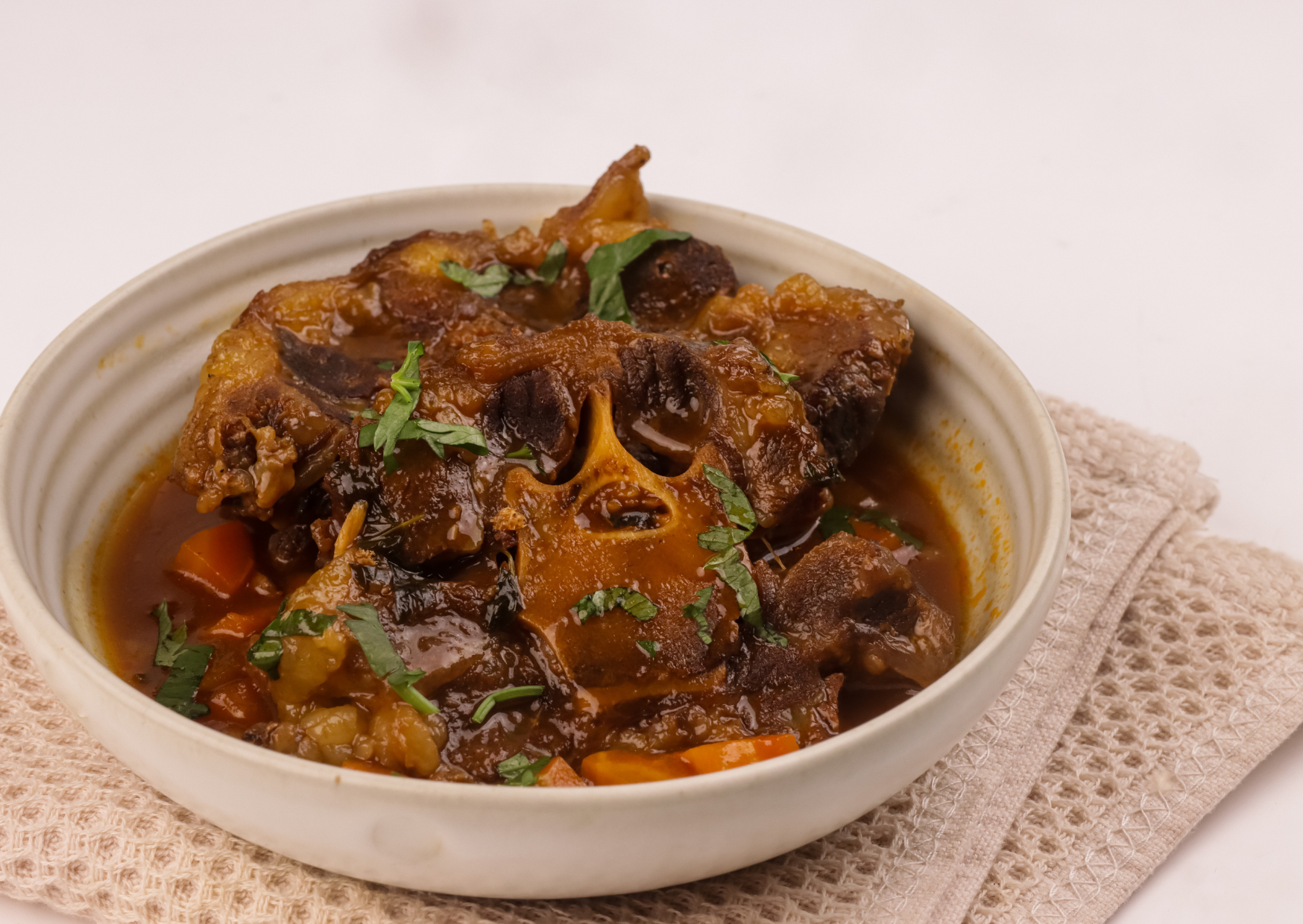
Four hours, one pot, and a cut that turns silky if you stop rushing it. Full recipe, exact shopping list, and a leftover plan that makes it worth the effort.
The first time my husband’s grandmother made oxtail for me, I thought it was going to be “nice.”
I did not understand what was coming.
The kitchen smelled like red wine, bay leaf, and onions that had given up on being separate ingredients. The sauce had that dark, glossy look that makes you slow down without knowing why. And the meat, which should have been stubborn, slid off the bone like it had been persuaded, not forced.
This is one of those Spanish dishes that tells you something about the culture without giving a speech. It’s not showy. It’s not fast. It’s not optimized for your calendar. It’s optimized for a specific kind of Sunday, the kind where you accept you’re staying home and you want the food to do something for your mood.
Also, it’s the kind of meal that makes people say Spain is affordable, and then you go to the butcher and realize oxtail isn’t the “cheap cut” it used to be.
Still worth it. Still one of the best things you can learn to cook if you want restaurant depth at home.
Why Spanish oxtail is a flex, even when nobody calls it that
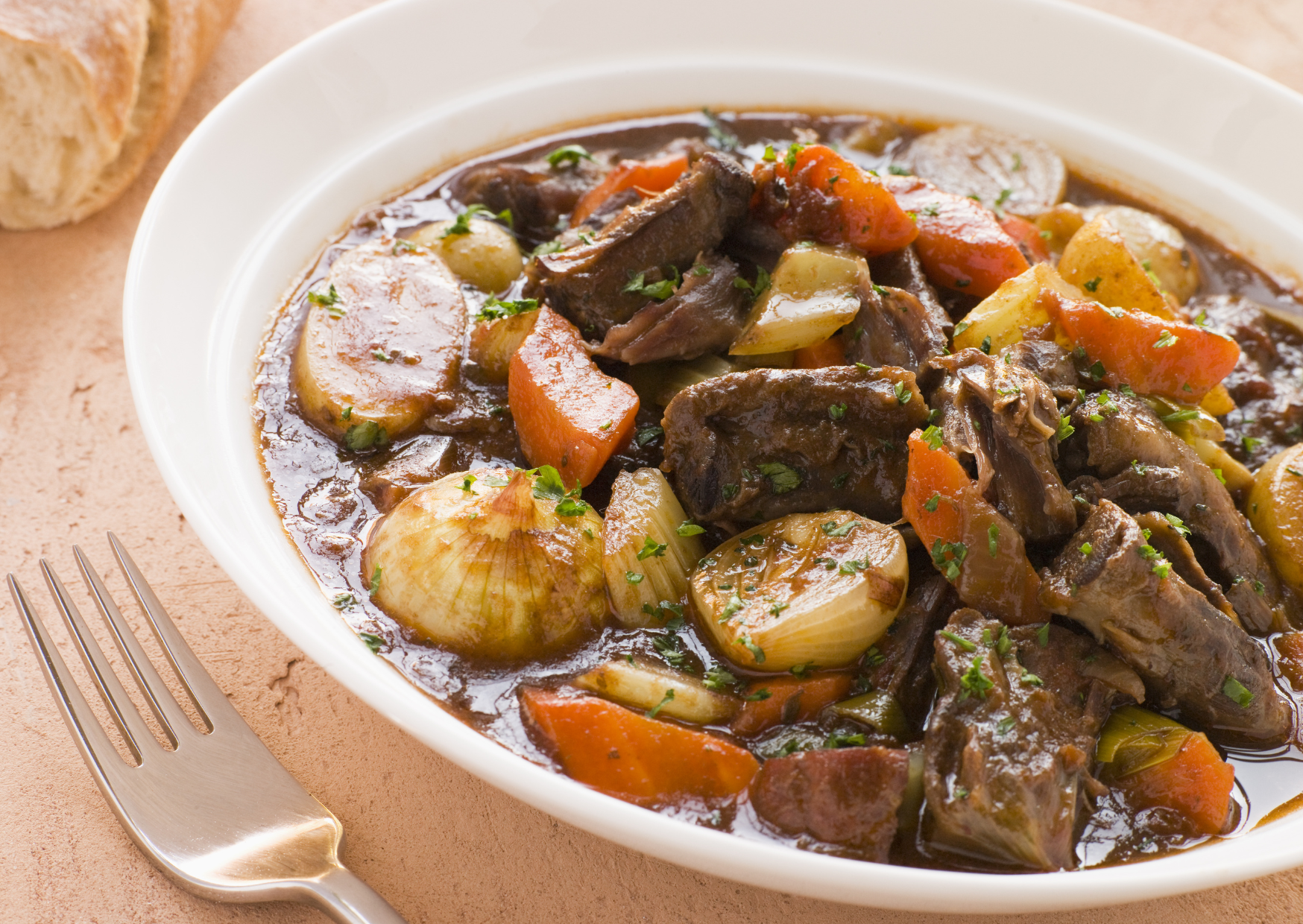
Oxtail is pure Spanish patience.
It’s not tender because it’s inherently tender. It’s tender because you give it time, and because the cut is full of connective tissue that turns into a silky sauce when it finally relaxes. That’s the whole appeal. The meat becomes soft, and the sauce gets naturally thick, almost sticky, without you adding cream or flour at the end like you’re trying to rescue it.
In Spain you’ll hear it called rabo de toro even when it’s not literally bull. It’s a stew that shows up in Andalusia and beyond, usually tied to long braises, red wine, and the kind of cooking that assumes you’re not sprinting through your life.
Here’s the American misunderstanding: people think slow cooking equals complicated.
It doesn’t. It’s mostly waiting. The work is front-loaded, then the pot takes over. Low heat is the method.
The other misunderstanding is that it’s “old-fashioned” so it must be cheap. It used to be cheap. Now it’s popular, and popularity has a way of turning humble cuts into expensive ones. Oxtail is not the bargain meat it once was, which is why you have to cook it like it deserves.
When you do it right, you get three things that make it feel unfair:
- A sauce that tastes like a restaurant reduction.
- A main dish that stretches into multiple meals.
- A house that smells like you have your life together, even if you don’t.
And yes, it’s a commitment. But it’s also the kind of commitment that pays you back all week.
Buying oxtail in Spain without getting emotionally robbed
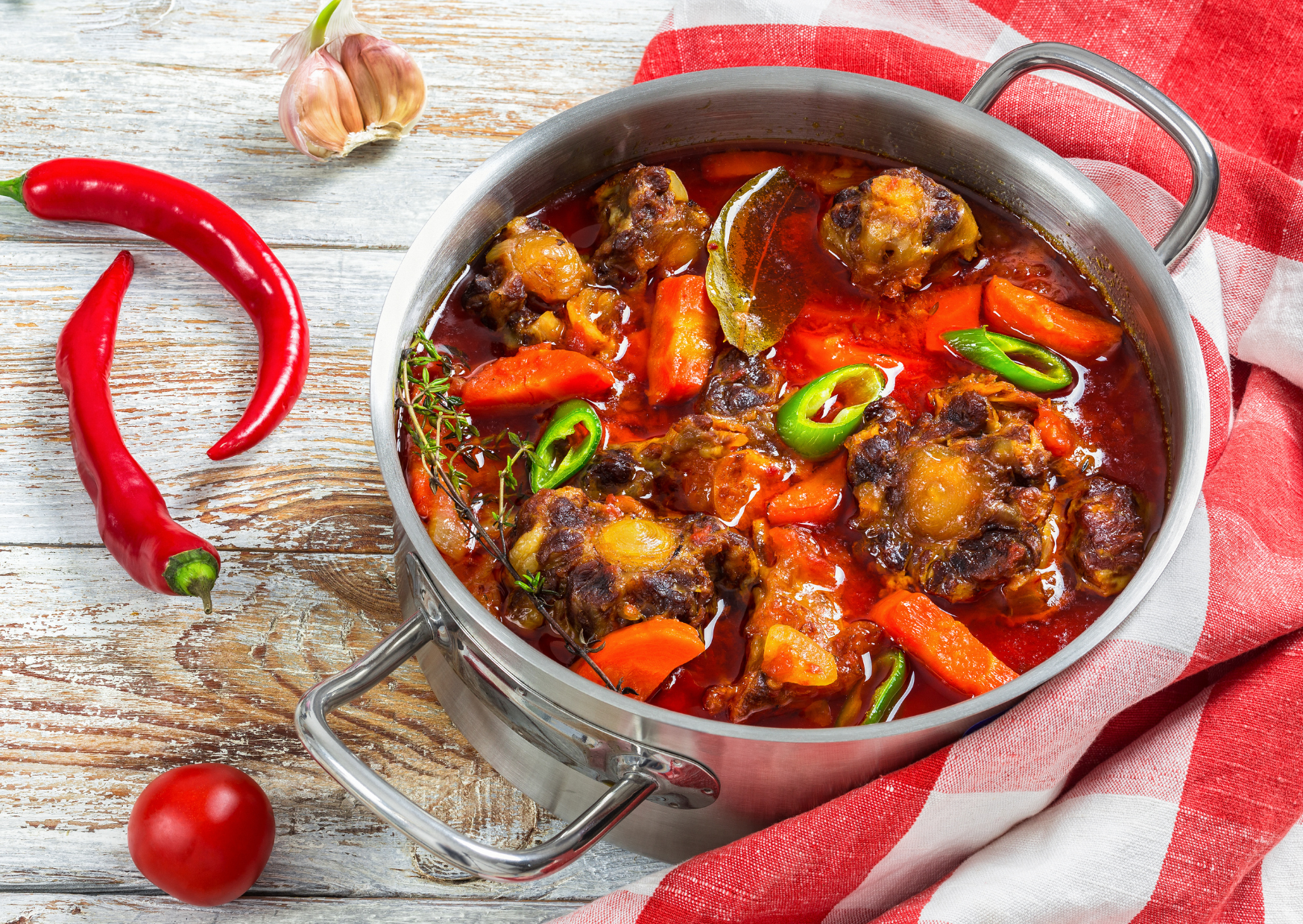
Let’s talk about the part nobody romanticizes: buying the tail.
In December 2025, supermarket prices in Spain for rabo de vaca/ternera were often sitting around the mid-teens per kilo, roughly €15.95 to €17.49 per kg depending on retailer and whether it’s fresh or frozen. That’s not a moral outrage, it’s just the reality of a cut that got trendy.
Two practical tips that save you money and disappointment:
First, don’t buy the tiniest pieces if you can avoid it. Oxtail is bone-heavy, and the little end pieces can leave you feeling like you paid for mostly bone. You want a mix, but you want enough meaty segments that the pot feels generous.
Second, ask for it cut into thick rounds if you’re buying at a butcher. You want pieces that can brown well and hold up through a long braise. If the pieces are too thin, they dry out and fall apart before the sauce is ready.
If you’re trying to keep cost controlled, you can also do a half-and-half approach:
- 1 kg oxtail for the flavor and collagen
- plus 500 to 700 g of beef shank, chuck, or cheek for more meat per euro
That keeps the dish rich while making the servings feel more “meaty,” especially if you’re feeding a family.
Short shopping list to take to the store:
- Oxtail, 1.6 kg (about 3.5 lb), cut into rounds
- Onion, 2 large
- Carrots, 2
- Celery, 2 sticks
- Garlic, 6 to 8 cloves
- Tomato paste, 2 tbsp
- Red wine, 500 ml (about 2 cups)
- Beef stock, 750 ml (about 3 cups)
- Bay leaves, 2
- Thyme, 1 tsp dried (or a few fresh sprigs)
- Paprika, 1 tsp
- Flour, 2 tbsp (optional, for browning)
- Olive oil, salt, black pepper
This list is boring on purpose. Boring ingredients, serious result.
The 4-hour oxtail recipe my husband’s grandmother actually trusts
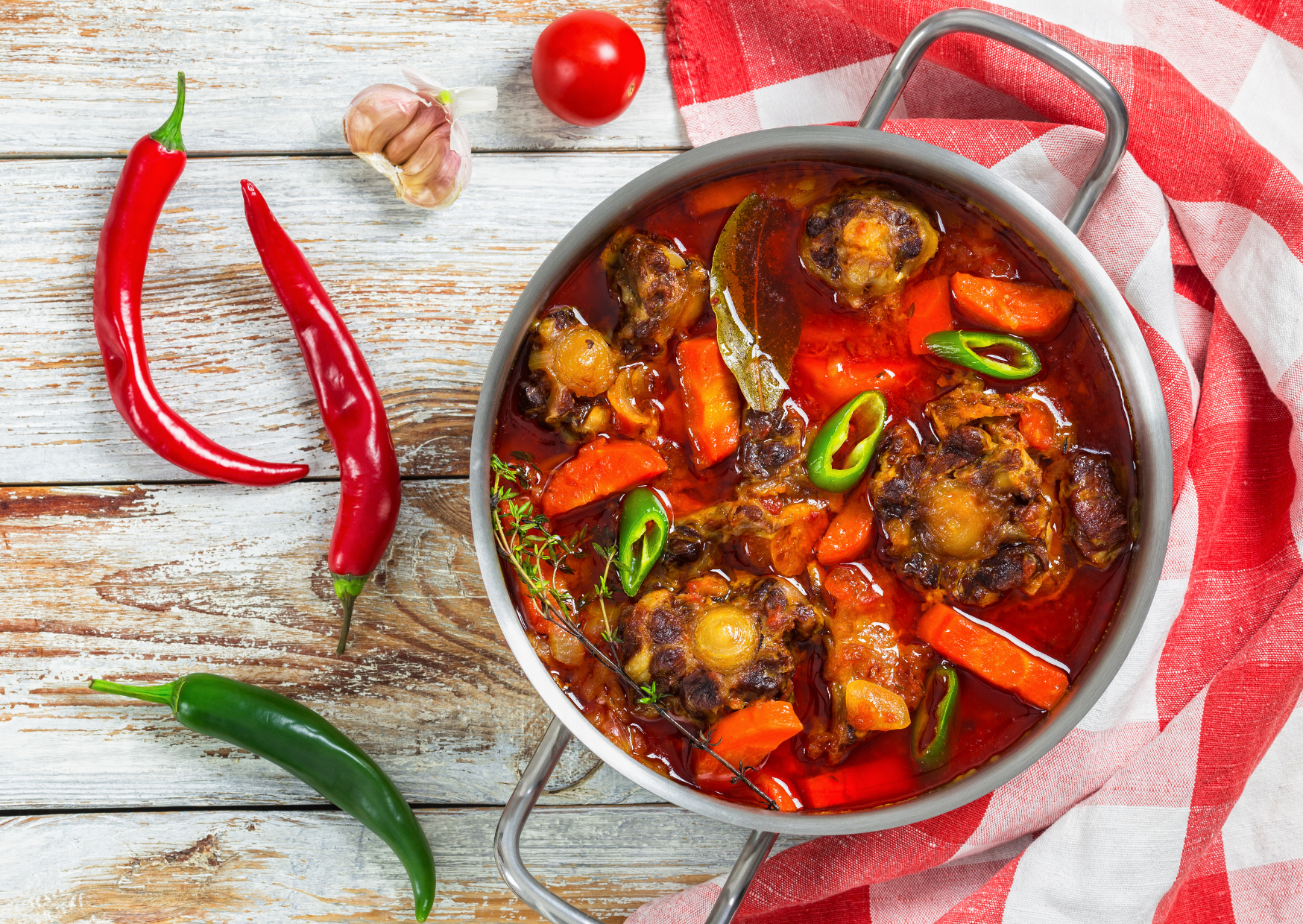
This is the version that works in a normal home kitchen. It’s not fussy, but it’s not rushed either.
Serves: 6
Prep time: 25 minutes
Active time: 45 to 55 minutes
Cook time: 3 hours 15 minutes to 3 hours 45 minutes
Rest time: 15 minutes
Total time: about 4 hours 30 minutes (most of it is hands-off)
Equipment: heavy pot or Dutch oven with lid, tongs, knife, chopping board, fine strainer (optional)
Oven option: 160°C (320°F)
Storage: 4 days in the fridge
Freezing: up to 3 months, sauce and meat together
Best side: potatoes, bread, or rice
Ingredients
- Oxtail, 1.6 kg (about 3.5 lb), cut into rounds
- Salt, 2 tsp (plus more to taste)
- Black pepper, 1 tsp
- Flour, 2 tbsp (about 16 g), optional
- Olive oil, 3 tbsp (45 ml)
- Onion, 2 large (about 400 g), diced
- Carrots, 2 (about 200 g), diced
- Celery, 2 sticks (about 120 g), diced
- Garlic, 6 to 8 cloves, smashed and chopped
- Tomato paste, 2 tbsp (30 g)
- Paprika, 1 tsp (sweet, or half sweet and half spicy)
- Red wine, 500 ml (2 cups)
- Beef stock, 750 ml (3 cups), plus extra splash if needed
- Bay leaves, 2
- Dried thyme, 1 tsp (or 3 fresh sprigs)
- Optional: 6 whole black peppercorns
- Optional: 1 small piece of dark chocolate (5 g) at the end for gloss, not sweetness
Method
- Season and prep the oxtail.
Pat the pieces dry. Season with salt and pepper. If using flour, dust lightly. You’re not breading it, you’re just helping browning. Dry meat browns better. - Brown in batches.
Heat olive oil in a heavy pot over medium-high. Brown oxtail in batches, 3 to 4 minutes per side. Don’t crowd the pot. Move browned pieces to a plate. - Build the base.
Lower heat to medium. Add onion, carrot, and celery with a pinch of salt. Cook 10 minutes until softened. Add garlic, cook 30 seconds. - Tomato and paprika.
Stir in tomato paste, cook 1 minute. Add paprika and stir quickly so it doesn’t burn. - Deglaze with wine.
Pour in the red wine and scrape the bottom. Simmer 8 to 10 minutes to reduce slightly. This is where the sauce starts tasting like itself. - Braise.
Return oxtail to the pot. Add stock, bay leaves, thyme, and peppercorns if using. Liquid should come about halfway up the meat. Bring to a gentle simmer. - Cook low and slow.
Cover and simmer on low for 3 hours, turning pieces once or twice. Or move to the oven at 160°C (320°F) for the same time. You want a lazy bubble, not a boil. Gentle heat wins. - Finish the sauce.
Remove lid for the last 20 to 30 minutes to thicken. Taste and adjust salt. If using the tiny chocolate trick, add it now and stir until melted. - Rest.
Turn off heat and let it rest 15 minutes. The sauce settles, the meat relaxes, and it gets better.
Why this works
Oxtail needs time for connective tissue to melt into the sauce. Browning gives depth, wine gives structure, and slow heat turns the whole pot into something cohesive. You are not “making sauce” at the end, the pot makes it for you.
The sauce is the real point, and you can make it smoother if you want
Some people think the star of oxtail is the meat.
It’s not. It’s the sauce. The meat is the excuse.
The sauce is what makes you reach for bread even when you planned potatoes. It’s what turns leftovers into something you look forward to. And it’s what separates “I simmered meat” from “this tastes like a proper Spanish Sunday.”
If you want the classic restaurant-style sauce, do this optional step after cooking:
- Lift the oxtail pieces out gently and keep them warm.
- Strain the sauce into a bowl, pressing the vegetables to get their flavor through.
- If you like a thicker sauce, blend the strained vegetables with a little of the liquid, then return it to the pot and simmer uncovered for 10 minutes.
This gives you a smoother, glossy finish without adding anything weird. It also makes the dish feel more “served” and less “rustic pot.”
What my husband’s grandmother does, most of the time, is even simpler: she reduces it and lets the vegetables stay in. She’s not trying to impress anyone. She’s trying to feed people well.
Two small choices that matter more than you’d think:
- Use a wine you would drink. Not expensive, just not awful. Bad wine makes bad sauce.
- Don’t rush the reduction at the end. If you boil it hard, you get sharpness. If you simmer it, you get roundness.
Also, this dish improves overnight. The sauce thickens, the flavors settle, and the whole thing becomes more coherent. If you can cook it a day ahead, you’re not being extra. You’re being smart.
What it costs at home versus ordering it out
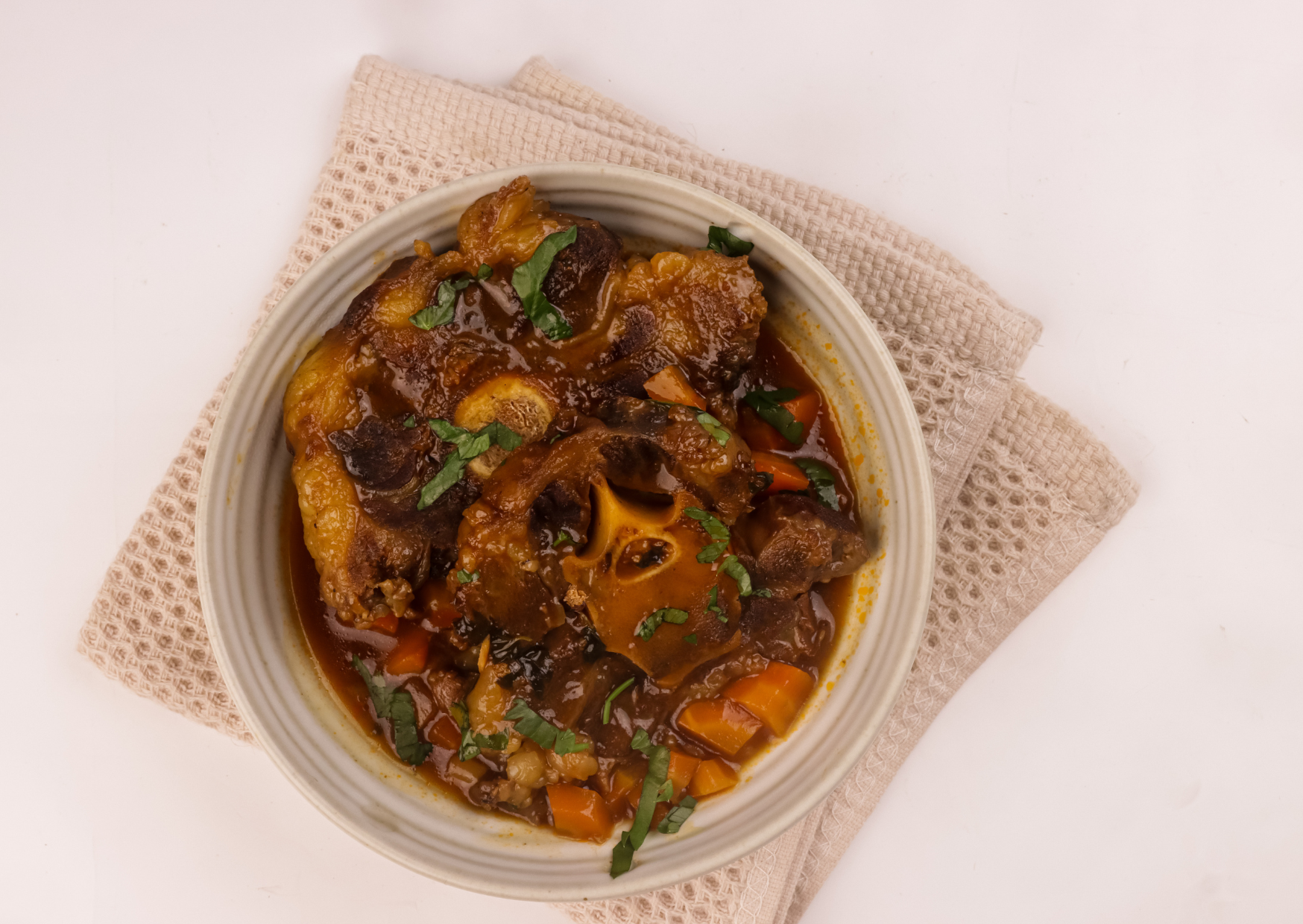
This is where the dish earns its reputation as “worth making.”
At home in Spain, even with oxtail prices being what they are, this pot is still one of the better deals in comfort cooking because it stretches.
A realistic home cost breakdown (depending on store and how much wine you already have):
- Oxtail 1.6 kg: roughly €25 to €30
- Vegetables, tomato paste, herbs: €3 to €5
- Wine and stock: €4 to €8 (less if pantry is stocked)
Total: roughly €32 to €43 for 6 servings
That’s about €5 to €7 per serving, and you get leftovers.
Now compare that to ordering it out. In 2025, menu listings in Málaga and Madrid show rabo de toro commonly priced around €21 to €24 as a main dish in many places, sometimes higher depending on location and style.
So if two people order it out with a drink each and a shared starter, you can easily drop €55 to €80 without trying.
At home, you get the opposite pattern: you pay more upfront, then you eat like a king for days. It’s the classic European home-cooking advantage. The pot is expensive, but the week is cheaper.
Also, if you’re feeding family, this dish does something that’s hard to price: it makes a normal night feel like an occasion without needing a restaurant. Home food becomes the treat.
The mistakes that make people swear oxtail is “overrated”
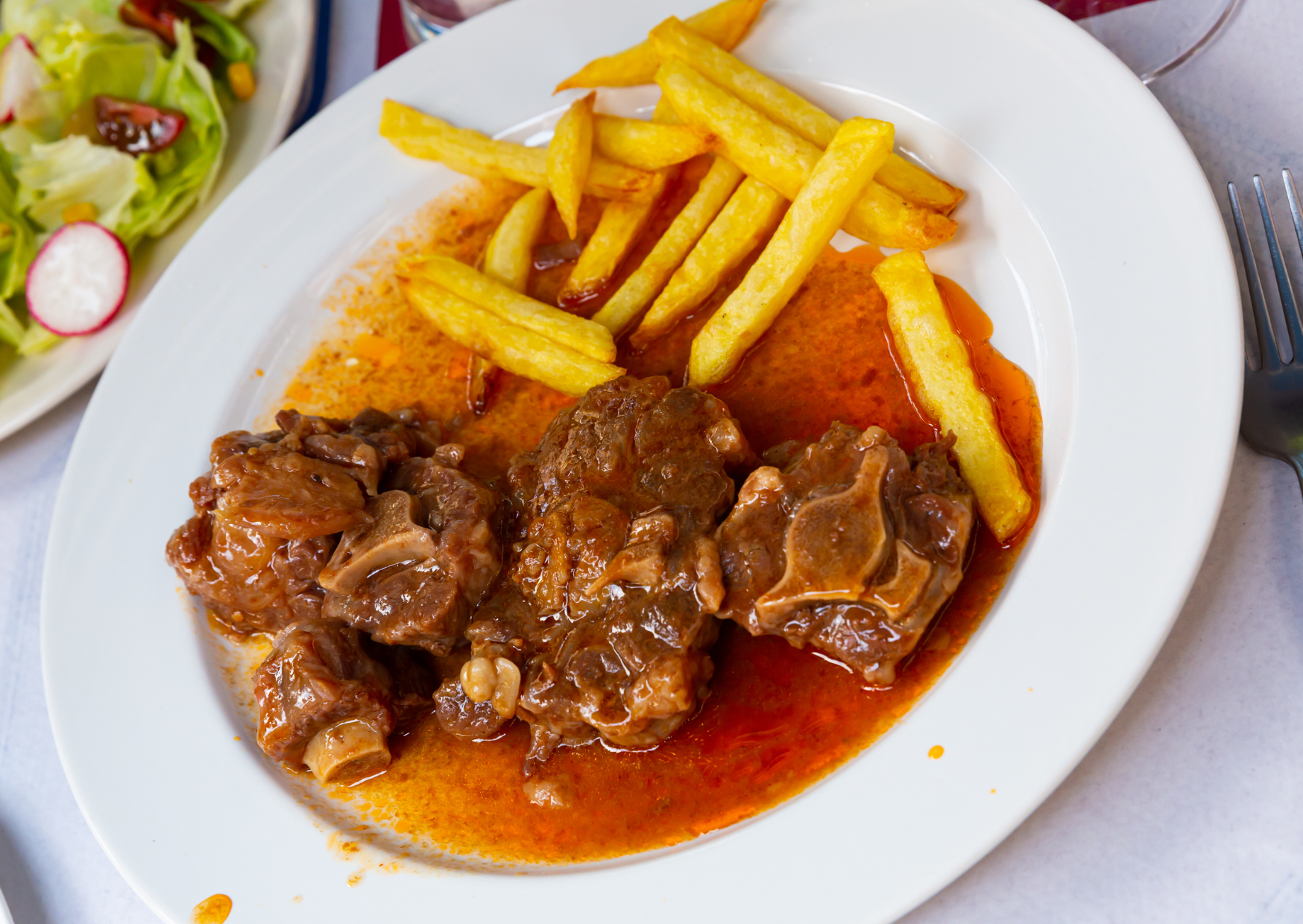
Oxtail only disappoints when you fight the method.
Mistake 1: Not browning properly
If you skip browning, the stew tastes like it’s missing a backbone. Browning is where depth starts. Color equals flavor.
Mistake 2: Cooking too hot
Boiling oxtail makes the sauce harsh and the meat stubborn. You want a gentle simmer, the kind that looks almost bored.
Mistake 3: Not reducing at the end
If you stop when it’s still watery, you’ll wonder why it doesn’t taste like what you had in a restaurant. Reduction is not garnish, it’s the finish.
Mistake 4: Under-salting
Long braises need final seasoning. Taste at the end and adjust. Salt is what makes the sauce feel complete.
Mistake 5: Expecting lots of meat per piece
Oxtail has bone. That’s the deal. If you want more meat, use the half-and-half method with another braising cut.
Mistake 6: Serving it without something that holds sauce
You need potatoes, bread, rice, polenta, something. Serving it with a delicate salad only is a sad choice. Sauce needs a partner.
Mistake 7: Eating it immediately and judging it harshly
It’s good right away, but it’s better after it rests. If you want the “wow,” eat it the next day.
A seven-day plan that makes the 4-hour pot worth it
If you’re going to commit to a long cook, cash it out properly. This is how we run it in a normal Spanish week.
Day 1: Classic bowl, proper dinner
Oxtail with potatoes (boiled, roasted, or mashed), and something acidic on the side, salad or pickled peppers. That acid makes the richness feel clean.
Day 2: The best lunch you didn’t pay for
Reheat gently in a small pot. Add a splash of water if the sauce is too thick. Eat with bread. This is where the dish becomes unfairly good.
Day 3: Rice day
Shred some meat off the bone, warm with sauce, serve over rice. Add a squeeze of lemon or a few chopped olives if you want brightness.
Day 4: Pasta that tastes like you cheated
Chop the meat, warm it in sauce, toss with pasta. Add parsley if you have it. Nobody needs to know it started as Sunday stew.
Day 5: Croquetas shortcut (lazy version)
If you’re not making real croquetas, don’t pretend. Just mix shredded meat into a simple béchamel, chill, pan-fry as patties. It scratches the itch without turning into a project.
Day 6: Soup base
Add stock to leftover sauce, throw in chickpeas or white beans, simmer 15 minutes. You get a rich soup with almost no work.
Day 7: Freeze what you didn’t finish
Portion with sauce so it reheats well. Future you will thank you on a night when cooking feels impossible. Freezer portions are peace.
This is the real reason Spanish long-cook dishes survive modern life. They are not just meals. They are a strategy for the week.

About the Author: Ruben, co-founder of Gamintraveler.com since 2014, is a seasoned traveler from Spain who has explored over 100 countries since 2009. Known for his extensive travel adventures across South America, Europe, the US, Australia, New Zealand, Asia, and Africa, Ruben combines his passion for adventurous yet sustainable living with his love for cycling, highlighted by his remarkable 5-month bicycle journey from Spain to Norway. He currently resides in Spain, where he continues sharing his travel experiences with his partner, Rachel, and their son, Han.