
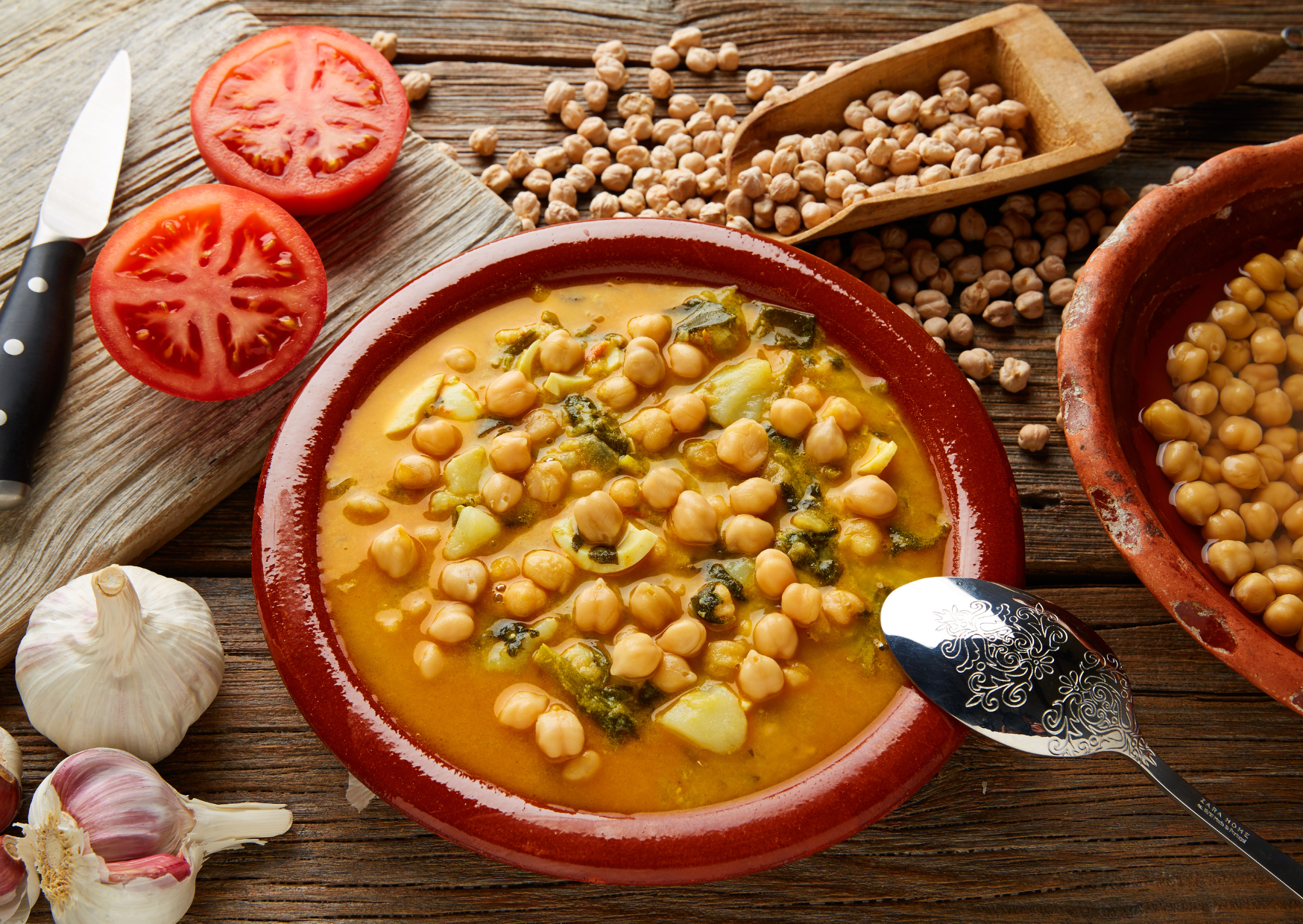
My suegra’s potaje is the opposite of trendy. It’s cheap, steady, and quietly fixes the week when everything else feels expensive.
The first time my suegra made this, it was one of those ordinary Spain days that turns into a lesson. Grey weather, the kind of damp chill that makes apartments feel colder than the thermometer says. The kitchen smelled like garlic and pimentón, and there was a pot doing that slow, confident simmer that says “we’re going to eat properly tonight.”
Nothing about it looked like a “recipe moment.” No camera. No special plating. Just a ladle, bread on the table, and a bowl that somehow made everyone calm down.
This is the dish that makes the Spain cost of living conversation feel less dramatic.
Not because Spain is magically cheap, it isn’t, especially in the bigger cities. But because there are still meals like this that sit at the center of how households actually function. One pot feeds six, the ingredients are ordinary, and the leftovers behave.
And yes, the €3 claim can be real, but only in the honest way. If you already have olive oil, salt, and spices in the kitchen, the rest can land around three euros in Spain when you build it around dried chickpeas and frozen spinach. If you treat every pinch of paprika like a new purchase, the number moves. That’s normal.
What matters is the bigger truth: this potaje is week insurance. It’s what you make when you want dinner handled for a few days without turning food into a financial decision every night.
What this stew actually is in a Spanish house
In Spain, “potaje” is not one recipe. It’s a category. A thick, practical stew built to stretch, warm, and hold together across multiple meals. Every family does it a little differently, and your neighborhood changes the default ingredients.
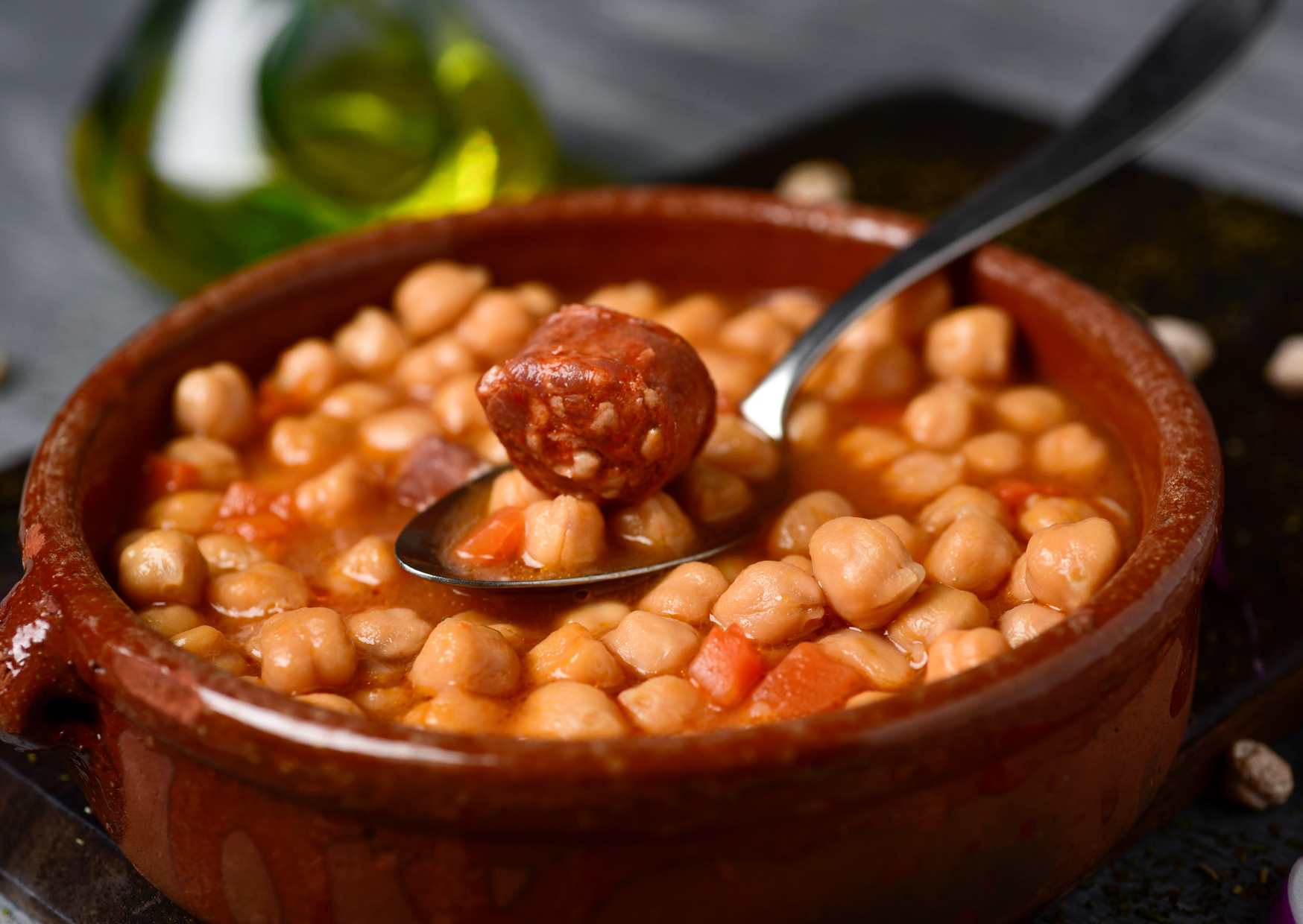
My suegra’s version sits in that classic lane of garbanzos with greens, often spinach, sometimes a bit of potato, and always a flavor base that makes it taste like something deeper than its ingredient list. The dish is humble, but it’s not bland. It’s designed to feel comforting without needing meat.
If you’re American, this is where expectations get weird. Americans often think “cheap stew” means “sad stew.” In Spain, cheap stew is often the most respected kind because it’s tied to competence. You fed people. You used what you had. You didn’t waste. You made it taste good anyway.
Also, this is lunch food more than dinner food in a lot of households. A big potaje at midday, bread, maybe fruit after, and the day feels anchored. Dinner can then be smaller, lighter, less expensive.
That rhythm is a quiet part of why food costs can feel manageable here. Not because groceries are always cheap, but because the system prefers repeatable meals. You cook once, you eat twice, you stop improvising every night.
And there’s a second layer. Potaje is also “weather cooking.” When it’s cold or rainy, nobody wants delicate food. They want something that holds. This stew holds. It gets better after a night in the fridge. It forgives you when you’re tired. It makes you feel like you have a home kitchen, not a constant food problem.
The €3 math and why it’s realistic in Spain
Here’s the clean version of the claim.
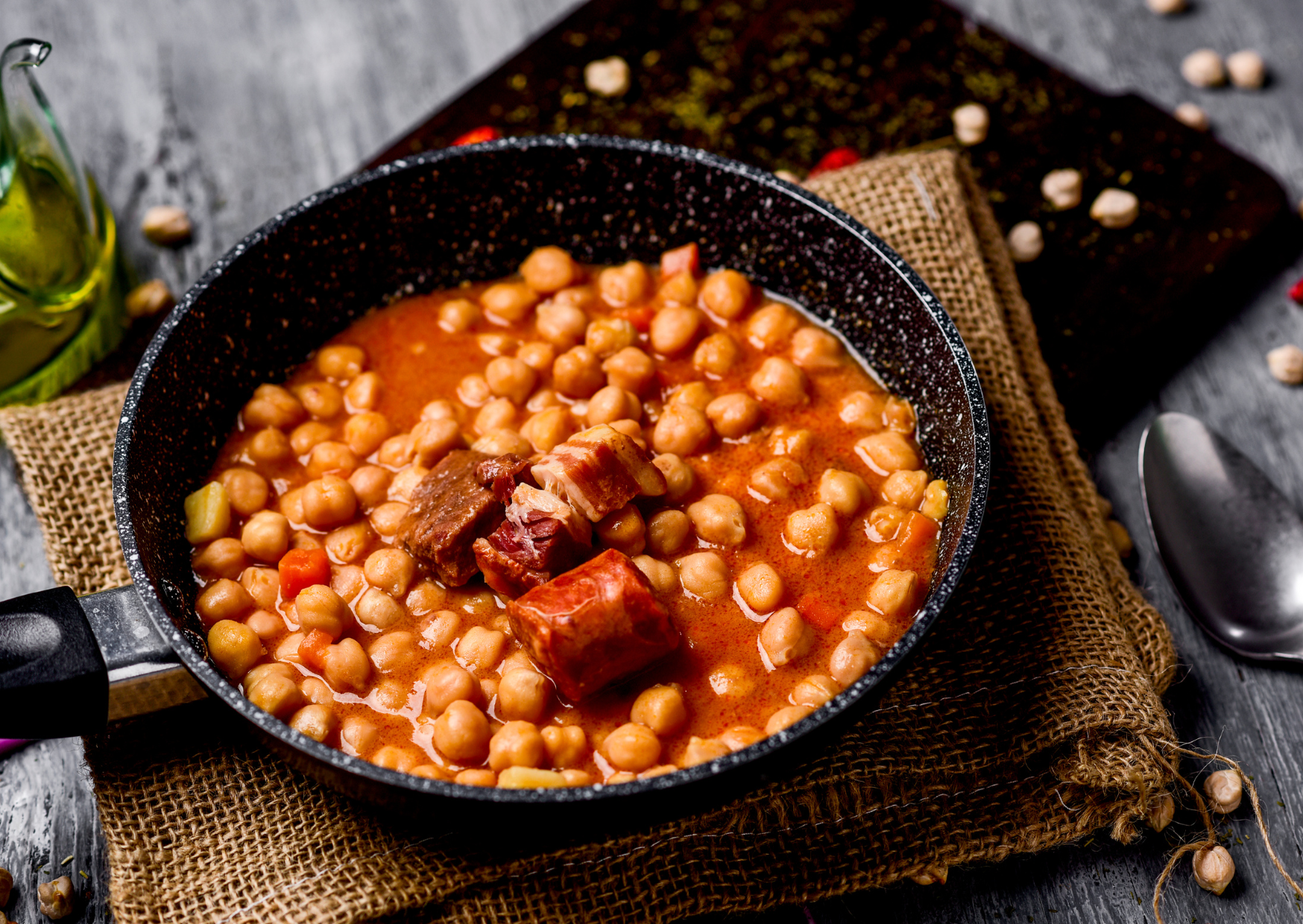
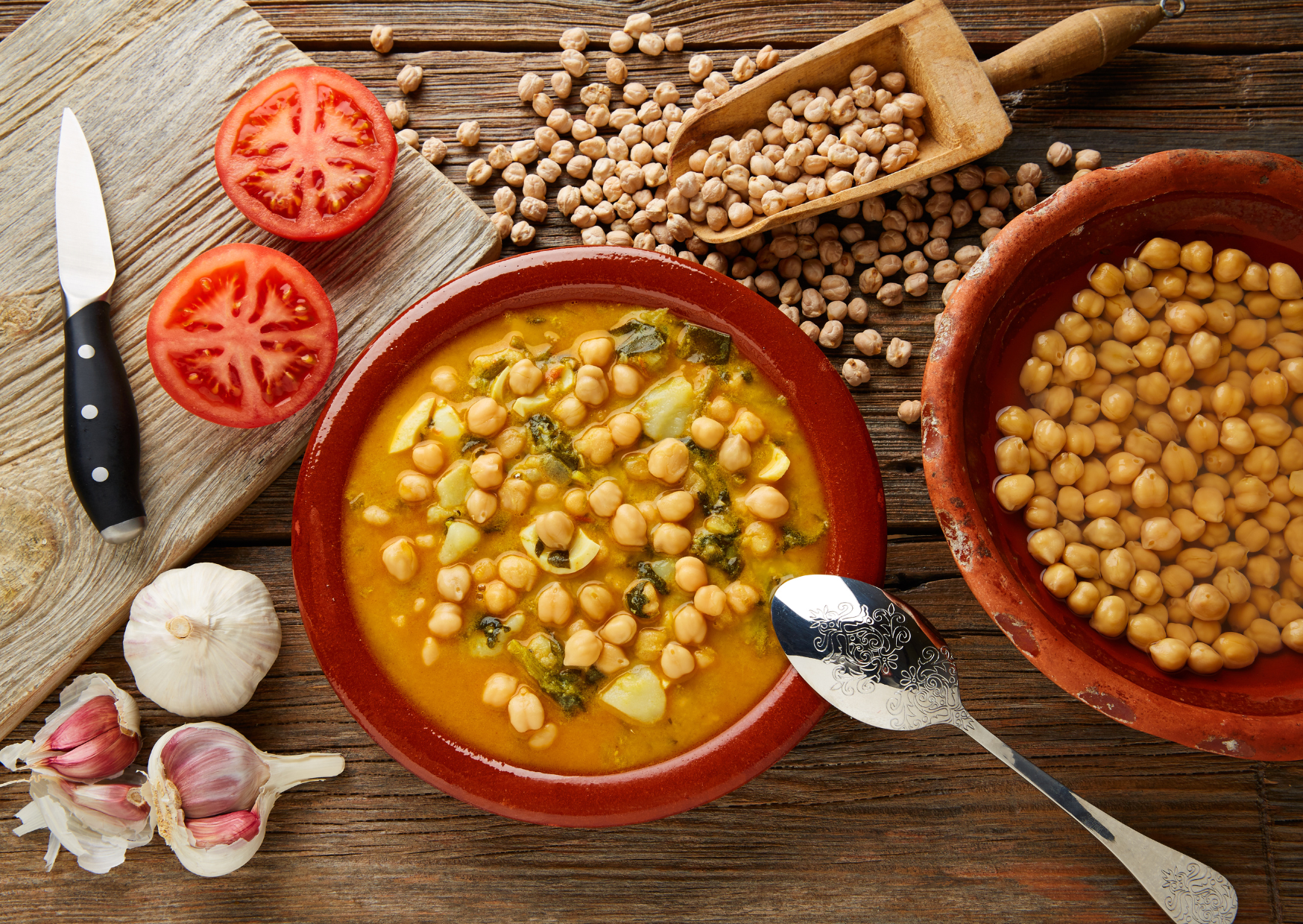
To feed six adults a real bowl of stew, you need bulk calories (chickpeas), something green (spinach), aromatics (onion, garlic), and a flavor base (paprika, cumin, bay, olive oil). If you already keep spices and olive oil in the kitchen, the shopping list can be tiny.
A typical build that lands close to €3 looks like this:
- Dried chickpeas, 500 g
- Frozen spinach, about 400 to 500 g
- 1 onion
- 3 to 4 cloves garlic
- 1 small potato (optional, but it helps texture)
In Spain, dried chickpeas in 1 kg bags are commonly a low-euro staple, and frozen spinach is one of those supermarket items that stays stubbornly affordable compared to fresh greens in winter. That’s how you get the number down. Frozen greens are the cheat code.
What pushes the cost up is not the stew itself, it’s the “nice add-ons.” Extra bread, eggs, good olive oil if you’re buying it this week, a bit of bacalao, or a smoked meat garnish. All delicious, not required.
So I’m going to give you two totals:
Bare-bones potaje total: about €3 to €4 for the whole pot, assuming pantry staples already exist.
Fuller Sunday version: €6 to €10 if you add eggs, better bread, or fish.
Both are still strong value for six servings, but the first one is the one people mean when they talk about survival cooking.
If you’re outside Spain, the exact euro number will shift, but the structure holds. It’s still one of the cheapest “feeds a crowd” meals you can make in a European kitchen.
And if you want the American comparison, do it per portion. At €3 for six bowls, that’s €0.50 a bowl. Even at €6, you’re still at €1 a bowl. That’s the kind of math that makes a weekly food budget feel less tense.
My suegra’s chickpea stew recipe
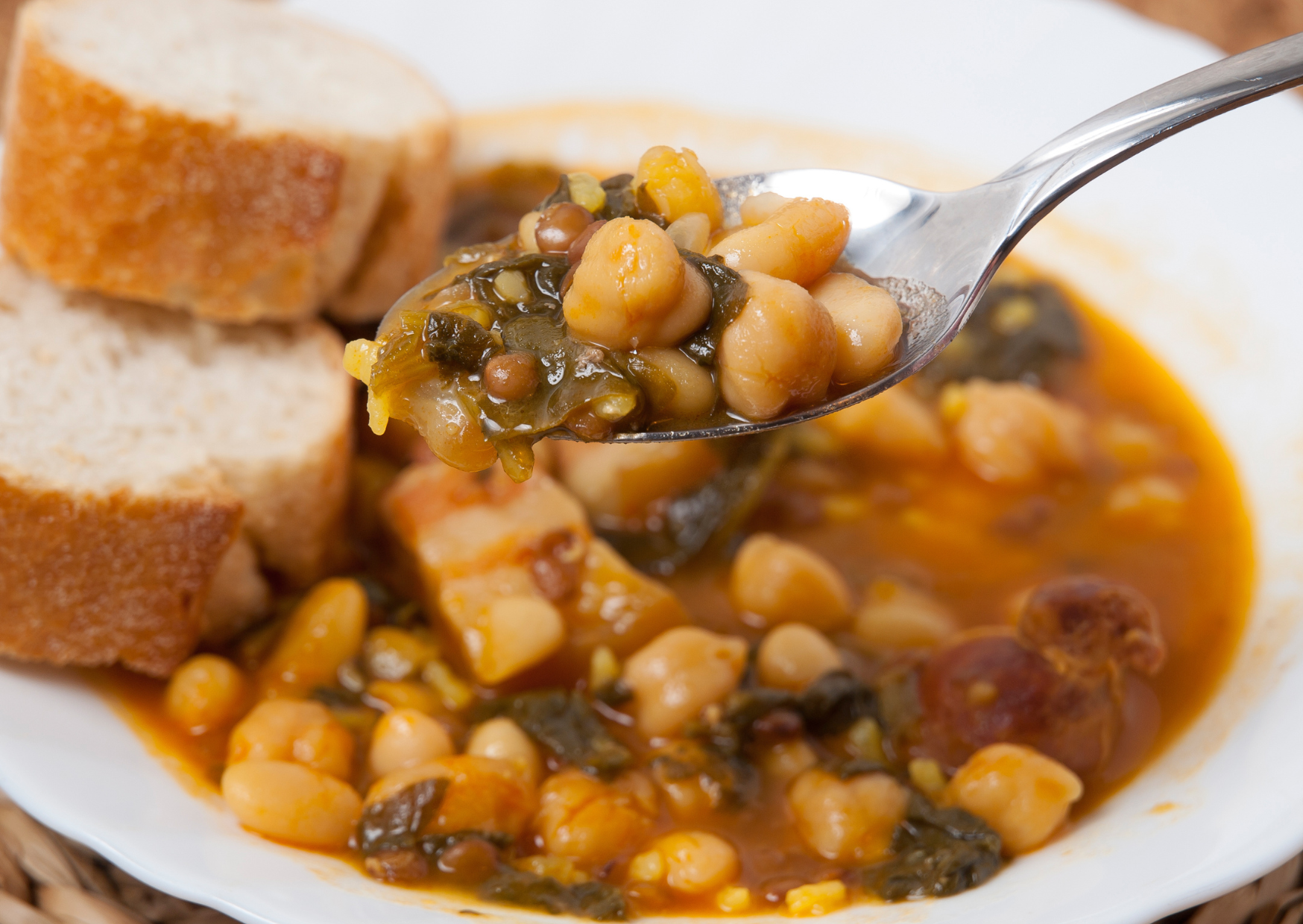
This is the version I learned by watching, which is how most Spanish home recipes are taught. You do it once, then your hands remember it.
Servings and timing
- Servings: 6 big bowls
- Prep time: 15 minutes
- Active time: 35 minutes
- Simmer time: 60 to 75 minutes
- Rest time: overnight soak (or use quick-soak)
- Total time: about 2 hours cooking time, plus soak
Equipment
- Large pot with lid (5 to 6 liters)
- Small pan for the majado (or a toaster and a mortar)
- Blender, mortar, or fork for mashing
- Knife and board
Ingredients
Core
- Dried chickpeas, 500 g (about 2 1/2 cups)
- Onion, 1 medium (about 150 g)
- Garlic, 4 cloves
- Frozen spinach, 450 g (about 4 to 5 cups once thawed)
- Potato, 1 small (about 200 g), optional but recommended
- Bay leaf, 1
- Smoked paprika (pimentón), 2 tsp
- Ground cumin, 1 tsp
- Salt, to taste
- Olive oil, 3 tbsp (45 ml)
- Water or light broth, about 2 liters (8 cups)
For the majado (thickener, optional but highly recommended)
- Bread, 1 thick slice (about 40 g)
- Garlic, 1 clove
- Smoked paprika, 1/2 tsp
- A splash of vinegar, 1 tsp (optional, but it wakes the pot up)
Short shopping list you can take to the store: dried chickpeas, frozen spinach, onion, garlic, one potato, bread.
Step 1: Soak the chickpeas
- Overnight: Cover chickpeas with plenty of water and a pinch of salt, 10 to 12 hours.
- Quick-soak: Boil chickpeas 2 minutes, turn off heat, cover 1 hour.
Drain and rinse.
Step 2: Start the pot
In a large pot, warm olive oil over medium heat. Add chopped onion and cook 8 to 10 minutes until soft. Add 4 chopped garlic cloves and cook 1 minute.
Add paprika and cumin, stir quickly so it doesn’t burn, then immediately add chickpeas and water or broth. Add bay leaf.
Bring to a boil, then reduce to a gentle simmer, partially covered.
Step 3: Simmer
Simmer 45 minutes, then add diced potato if using. Simmer another 25 to 30 minutes until chickpeas are tender.
Step 4: Make the majado
Toast the bread at 180°C (350°F) for 6 to 8 minutes, or toast in a dry pan. Mash toasted bread with 1 garlic clove, paprika, and a splash of vinegar. Add a ladle of broth to loosen it, then stir back into the pot. This is the thickening trick.
Step 5: Add spinach
Stir in frozen spinach and simmer 8 to 10 minutes. Taste and salt properly.
Storage
- Fridge: 4 days, it thickens as it sits
- Freezer: up to 3 months, freeze in portions
- Reheat: low heat with a splash of water, don’t boil hard
Substitutions
- Use canned chickpeas: 3 jars or cans (about 800 to 900 g drained). Simmer 25 minutes total, add potato earlier, and still do the majado.
- Swap spinach for Swiss chard or kale, chop fine and simmer a bit longer.
- Add protein: top each bowl with a soft-boiled egg, or add flaked cod if you want the classic Lent-style version.
Why this works
The onion and garlic base gives sweetness, the smoked paprika gives depth, and the cumin gives that warm backbone that makes chickpeas taste intentional. The majado thickens without cream and makes the broth cling to the chickpeas. Then the spinach goes in late so it stays green and doesn’t turn the whole pot bitter. Simple steps, big payoff.
How this fits into a Spanish weekly rhythm
This is where the stew stops being “a recipe” and becomes a tool.
Spanish households don’t always talk about meal prep, but they live it. The trick is making one thing that can be lunch, dinner, and backup food when life gets busy.
Potaje does that perfectly.
Day one, it’s a full meal with bread. Day two, it’s better, thicker, more integrated. Day three, it becomes something you can stretch with rice, pasta, or an egg without feeling like you’re eating leftovers out of obligation.
This is also why it’s such a good dish for single people and small households. You freeze it in portions and suddenly you have meals that feel homemade without cooking every day.
If you’re trying to live in Spain on a sane budget, this kind of food is the difference between “we’re fine” and “why are we spending so much on dinner.” The cheap part is not just the ingredients, it’s what it prevents. Delivery. Random snack dinners. A daily spiral of “what should we eat.” Boring food prevents expensive food.
It also matches how people actually eat here. A bowl of potaje at lunch can make dinner smaller and lighter, which helps sleep, mood, and spending. It’s a quiet chain reaction.
And if you’re American and used to dinner being the main event, this is one of the easiest shifts to copy without forcing anything. Make the big food earlier in the day when possible, then keep evenings simpler.
Even if you can’t change meal times, you can still steal the core idea: cook one sturdy thing that makes three future meals easier.
That’s what my suegra is doing. She’s not being trendy. She’s managing the week.
Seven days of meals from one pot
If you want this to actually change your life, treat it like a one-week food plan, not a one-night dinner.
Day 1: Classic bowl with bread and olive oil on the table.
Day 2: Bowl plus a soft-boiled egg on top. The yolk turns the broth silky. Egg makes it feel new.
Day 3: Potaje over rice. This is how you stretch it for hungry people without increasing cost much.
Day 4: “Thicker” version. Let it simmer uncovered 10 minutes, then serve almost like a chickpea ragù with crusty bread.
Day 5: Soup reset. Add water or broth, lemon, and black pepper, and you’re back to a lighter bowl.
Day 6: Pantry tapas night. Small bowl of potaje, olives, sliced tomato, maybe a tin of sardines. Dinner becomes a table, not a project. Small plates feel abundant.
Day 7: Freeze portions you haven’t eaten. Future you will be annoyingly grateful.
If you’re feeding kids, it’s even easier. This stew is naturally mild, and you can control spice by using sweet smoked paprika and keeping heat out of it. Serve it with bread, or mash some chickpeas and potato in the bowl to make it creamier.
Also, don’t underestimate how good this is as a “between seasons” meal. In Spain, those damp shoulder months can make you crave warming food without wanting heavy meat stews. Potaje lands right in the middle.
The mistakes that make potaje disappointing
This stew is forgiving, but there are a few ways to ruin it fast.
Mistake 1: Burning the paprika.
Paprika turns bitter if it hits hot oil too long. Stir it in, then add liquid immediately. Paprika needs protection.
Mistake 2: Under-soaking chickpeas.
You can cook them from dry, but you’ll spend more time and they can cook unevenly. If you want the 2-hour timeline, soak them.
Mistake 3: Adding spinach too early.
Spinach can go dull and slightly bitter if it cooks forever. Add it at the end.
Mistake 4: Skipping salt until the end, then panicking.
Salt in stages. Not aggressively, just enough so the chickpeas aren’t bland. Taste as you go.
Mistake 5: Making it watery and calling it “light.”
Potaje is meant to have body. If it’s thin, do the majado, or mash a ladle of chickpeas and potato and stir back in. That’s the home fix.
Mistake 6: Treating it like a one-night meal.
The best version is often day two. If you judge it too early, you miss what it becomes.
The goal is not perfection. The goal is that the pot tastes like you meant it. Chickpeas can taste flat without smoke, acid, and proper seasoning. The majado solves most of that in one move.
If you’re cooking this outside Spain, here’s how to keep the spirit
If you live somewhere with pricier groceries, the first instinct is to abandon “cheap meals” because they never look cheap on your receipt.
Don’t do that here. Just adjust the levers.
- Use dried chickpeas if you can. Canned is convenient, but dried is usually cheaper per serving and the texture is better. Dried beans are budget power.
- If spinach is expensive fresh, go frozen. If frozen is expensive, swap to kale or chard.
- If olive oil is wildly priced where you are, you can cut the amount slightly and still get a good pot, the majado carries texture.
- If smoked paprika is hard to find, use sweet paprika plus a tiny pinch of cumin and a drop of liquid smoke if you’re desperate, but smoked paprika is worth buying once because it lasts.
You can also scale this without changing the method. Double it for a crowd, or halve it for a smaller household, the steps stay the same.
And if you want the “Sunday version” my suegra sometimes does, add one more element that changes everything without making it expensive: a hard-boiled egg per person, sliced into the bowl. It makes the stew feel richer and more complete, and it’s still a household-level ingredient.
This is the kind of meal that makes you feel like you’re living in Spain even when you’re not. Not because it’s exotic, but because it’s functional.
When a dish costs very little and still feels like care, you stop arguing with dinner.
That’s why it earns a permanent place on the rotation.

About the Author: Ruben, co-founder of Gamintraveler.com since 2014, is a seasoned traveler from Spain who has explored over 100 countries since 2009. Known for his extensive travel adventures across South America, Europe, the US, Australia, New Zealand, Asia, and Africa, Ruben combines his passion for adventurous yet sustainable living with his love for cycling, highlighted by his remarkable 5-month bicycle journey from Spain to Norway. He currently resides in Spain, where he continues sharing his travel experiences with his partner, Rachel, and their son, Han.