
As of late 2025. The Portugal dream looks perfect on a long weekend in Cascais. Cheap lunches, sea air, polite people, wine that tastes like a secret. Then the year begins. By month nine many retirees are already pricing flights to Tampa or Fort Lauderdale. This is not about taste. It is about systems. Florida fits how American retirement actually works, from Medicare to property tax rules, while Portugal asks you to build a new life from the plumbing up.
Below are the four failure points that keep showing up in real budgets and real calendars. There are ways to fix some of them, and I will spell those out too, but the pattern is the pattern. If you see yourself here, Florida is not a capitulation, it is a rescue.
Quick and Easy Tips
Test long-term living before committing by renting for at least a full year.
Factor in healthcare navigation and language comfort, not just cost of living.
Be honest about how much bureaucracy and adaptation you’re willing to manage long-term.
Online narratives often frame Portugal as a perfect retirement solution, minimizing the challenges that come with foreign residency. This creates unrealistic expectations that collapse once day-to-day friction appears.
Another uncomfortable truth is that affordability alone doesn’t guarantee quality of life. Lower costs lose appeal when paired with administrative delays, cultural isolation, or healthcare confusion.
There’s also a reluctance to admit when a move didn’t deliver what was promised. Many retirees quietly leave rather than challenge the prevailing narrative, reinforcing the myth that everyone stays happily forever.
What makes this topic controversial is that it pushes back against a popular expat fantasy. Leaving Portugal doesn’t mean failure it means prioritizing comfort, familiarity, and ease over novelty. For many retirees, that choice feels less like retreat and more like relief.
1) Health care works on paper in Portugal, life happens in Florida

Most retirees who give up on Portugal tell the same story. They did not move for doctors, they moved for life. Then life needed doctors.
Medicare is the backbone of American retirement. Medicare does not travel, not in any broad, useful way. You can stitch together limited emergency coverage through specific Medigap plans or buy travel insurance, but Original Medicare generally does not pay for routine care outside the United States, and many Medicare Advantage plans offer only narrow or emergency benefits abroad. That means you are paying out of pocket or buying a private Portuguese policy, often both, while still paying your Medicare premiums to keep your U.S. safety net alive. Two systems means double admin and constant second guessing.
On the ground, Portugal’s public system is competent and humane, but access can be uneven. Millions cycle without a permanent family doctor, waits for routine specialties stretch, and big-city backlogs rise and fall with every staffing change. You can buy private insurance cheaply by U.S. standards and go to private clinics for speed, but preexisting conditions, age limits, and exclusions show up exactly when you need help. Florida, for all its flaws, snaps back to default. Every urgent care speaks Medicare, networks exist where you live, and no one needs a translation for your plan letter. Convenience is not vanity. It is how older bodies stay safe.
If you are determined to stay in Portugal, you can lower the pain. Keep a Portuguese GP relationship before you need it, maintain a modest private plan for faster specialist access, and schedule screenings and elective work in shoulder seasons. If you split your year, keep Medigap with foreign travel benefits or a Medicare Advantage plan that explicitly lists out-of-country emergency benefits, then layer a short policy before flights. The fix is planning, not hope.
2) The tax and paperwork promise changed, and the new math burns time

The Portugal pitch used to include four words that sealed many decisions: non habitual resident regime. That 10-year tax break created clean edges for foreign income and made pension planning predictable. That regime is closed to new applicants and has been replaced by a narrower incentive that targets specific professions and circumstances. If you moved in expecting the old rules, or if your advisors were slow to update their slides, your tax season felt like a trap. Retirement wants simplicity. The new framework is not simple.
Layer on immigration. Portugal replaced SEF with AIMA and promised faster processing. The reality has been mixed. Backlogs ran into the hundreds of thousands during the handover, renewal portals sputtered, and families spent months waiting for basic steps. If you are 68 and trying to manage medications, grandchildren visits, and annual paperwork in two countries, a missed appointment is not content, it is stress. Florida greets you with a driver license office and a pharmacy that knows your birthdate. Ease is not laziness, it is what makes a place stick.
And no matter where you live, the IRS never leaves. U.S. citizens owe worldwide tax reporting forever. That means FATCA forms, FBAR, and annual returns even when your Portuguese tax bill is zero. Many retirees can tolerate this in theory; in practice, the combination of two filing seasons, exchange-rate rules, and bank platforms that sometimes lock you out if your phone number changes is what pushes people over the edge. Florida strips all of that back to one set of rules plus no state income tax, and homestead protections most Europeans find generous bordering on unbelievable. Simple beats romantic when you are filling in forms in April.
What to do if you stay: hire a Portugal–U.S. specialist for year one, assume two to three thousand dollars of admin cost for dual filings, and map out the exact residence path and renewal dates on paper. If your numbers no longer work without the old tax regime, admit it now rather than next winter.
3) Housing and cost reality drifted, and the “cheap Europe” story aged out

Portugal is still affordable relative to San Diego or Boston. That sentence hides the operational truth. Your week is not a vacation. Rents in coastal regions and Lisbon–Porto corridors rose hard, short-term rental rules shifted twice, and energy costs are seasonal and real. A retiree couple looking for a quiet two-bed near services in Cascais or Lagos can easily see €1,200 to €1,800 per month before utilities. That may be fine. It is not the blog headline from 2019.
Meanwhile, short-term rental licensing changed under the Mais Habitação package, then parts of the approach were rolled back, then certain municipalities proposed their own restrictions. Even if you do not operate an Airbnb, those shifts changed local supply and made long leases unpredictable in some neighborhoods. Stability is the hidden cost retirees actually buy, and stability has a price.
Florida is not cheap either, and home insurance is a problem, but the rule set is familiar. There is no state income tax, homestead exemptions exist, and the Save Our Homes cap limits annual assessed value increases for your primary residence. Retirees returning to houses they already own often slot straight back into a known mortgage, a known tax rhythm, and a known pharmacy down the street. Predictable bills beat theoretically lower bills that move around under your feet.
If you plan to stay in Portugal, think like a local. Choose proximity over square meters, accept second-floor walk-ups in exchange for walkable errands, and budget €70 to €110 for electricity in peak months. The bargain is a schedule, not a postcard view.
4) The social fabric is soft, the bureaucracy is hard, and loneliness is expensive
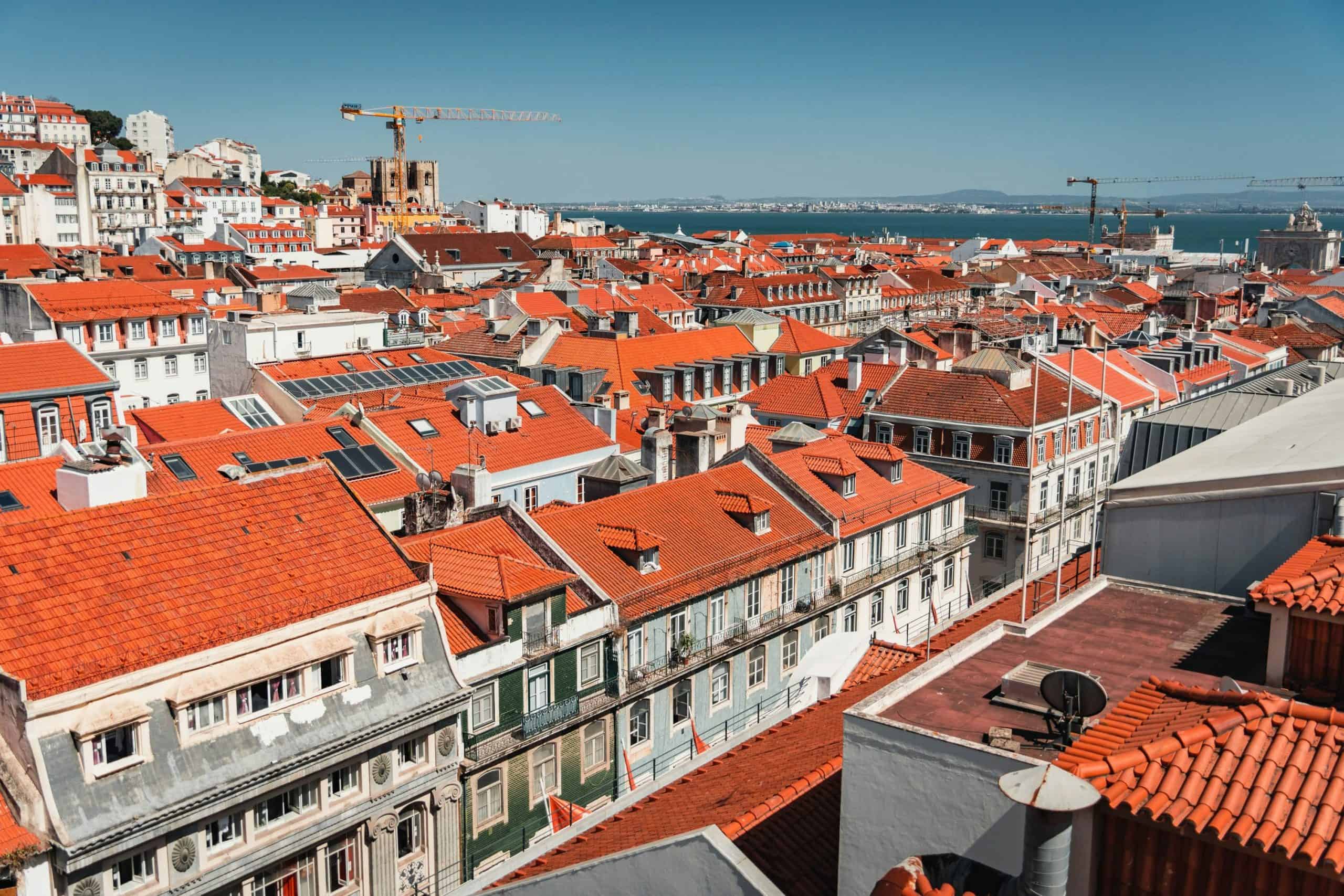
Portugal is kind. That does not mean it is easy. Language matters more in daily life than many retirees admit, especially once the bus is late, the pharmacist is busy, and the municipal office changes a form. If you do not join a club, show up weekly, and speak enough Portuguese to solve small problems, you live in a permanent tourist state that gets colder each month.
A second friction point is time. The system expects patience. Appointments appear on weekdays at awkward hours. Couriers call once. Voicemail is not a plan. If your retirement is built on fast fixes, this culture will feel like swimming in syrup. None of this is moral. It is mechanical. Florida is built for your reflexes. A valet cart appears, CVS prints a receipt that looks like a novella, and your doctor portal pings in English with eleven checkboxes. Familiarity is a health intervention.
Add in social weight. In Portugal, your friends come from repetition. Same café, same language class, same walking group, same church bench, same pickleball court. If you do not make those loops, the week gets quiet in a way that does not feel like peace. Many couples hold on. Single retirees tend to tap out first, especially after a winter of damp apartments, dark afternoons, and one more residency email from an address they cannot quite translate. Florida is full of people who know how to fold you back into a Tuesday. Sometimes you need to be ordinary again.
How to fight loneliness if you stay: choose one volunteer shift and one physical class within four weeks of landing, join one Portuguese class that meets twice weekly, and host lunch rather than waiting for dinner invitations. Consistency is your social visa.
The money math that tells the truth
Abstract talk is cheap. Here is a plain budget comparison for a modest, realistic life for two retirees who sold the big house years ago and want predictability. No new car, no luxury dining, no drama. These are round numbers, but the shape is the point.
Algarve coastal town, Portugal, renting a two-bed near services
- Rent: €1,400
- Electricity and water averaged across the year: €110
- Internet and mobiles: €45
- Groceries and household: €420
- Eating out, modest: €180
- Private health insurance for two, age dependent: €160
- Transport, no car, regional passes and taxis: €70
- Admin cushion for translations, renewals, courier: €40
Monthly: about €2,425
Tampa Bay area, Florida, owners with homestead and Medicare
- HOA or modest maintenance set-aside: $250
- Property tax after homestead and Save Our Homes cap, example: $275 average monthly equivalent
- Utilities and internet: $250
- Groceries and household: $600
- Eating out modest: $240
- Medicare Part B and D premiums after Social Security deductions, plus small Medigap: $420
- Transport, one used car paid off, fuel and insurance: $300
Monthly: about $2,335
Exchange rates and insurance realities will move these lines, and Florida’s property insurance can explode if you buy the wrong roof at the wrong address. The point is not to prove one place is cheaper. The point is how often the Florida line lands inside the Portugal line once you add taxes and admin. Cheap is not the headline. Cheap is how Tuesday feels.
Who leaves, who stays, and the timeline that keeps repeating
The ones who leave share three traits.
- They never installed Portuguese weekly loops. No class, no club, no standing lunch.
- They relied on Medicare reflexes and assumed private Portuguese clinics would feel the same. They do not.
- They moved under the old tax story, then woke up under the new one. The disappointment feels personal. It is not. It is policy drift.
The ones who stay share three different traits.
- They shrunk the frame. Smaller flats near services, no second car, lunch as the main meal, fruit last, early evenings.
- They treated Portuguese as a tool, not a test of identity, and spoke it badly, often, and cheerfully.
- They accepted paperwork as a hobby, did it early in the day, and paid a good accountant once rather than a cheap one twice.
If you are nine months in and exhausted, you are on the classic curve. Most returns to Florida happen between months 10 and 18, right after the first renewal stress collides with winter damp and the first real medical errand. Knowing that does not fix it. It can, however, stop you from calling yourself a failure. You did not fail Portugal. You discovered your operating system.
Can you make Portugal work without becoming a full-time project manager

Yes, if you adjust the three levers that change everything.
Health lever
Lock in one GP and one private clinic in the first month, book routine screenings for shoulder season, and keep a well-shaped travel policy if you bounce back to the U.S. often. If you take daily medications, confirm the exact Portuguese equivalents with a pharmacist and carry a two-month buffer so shipping delays do not become crises. You are not being paranoid. You are being older and smart.
Tax lever
Assume the old NHR is gone for you. If you are not eligible for the new incentive regime, plan for ordinary Portuguese rates on pensions and investment income, and keep a U.S. preparer who knows FBAR and FATCA inside out. Pay once to get the map rather than forever paying for corrections.
Housing lever
Pick boring, central, and well insulated over romantic, windy, and far. You will spend less on taxis, less on heat and air, and more on friends. If you want the sea, live near transit to the sea, not on it. Proximity is a pension.
Why Florida keeps winning the rebound
Florida is not a miracle. Insurance markets are unstable, summers are hot, and the politics are loud. Yet for retirees reconsidering Portugal the state offers four things that matter more than mood.
- Medicare plugs in instantly with dense networks and simple billing.
- No state income tax and homestead protections let pension math breathe.
- Social familiarity means the week does not require new scripts.
- Speed. Appointments, deliveries, fixes. The system is built for right-now.
For people in their seventies, right-now is not impatience. It is how you keep energy for the parts of life that matter.
A quiet way to decide without drama
Print two calendars. Run your next three months in Portugal as if you are staying for five years. Install one Portuguese class, one weekly group, one standing lunch, one volunteer shift, one GP visit for something small, and one tax meeting to map the year. If the month feels calmer by the third week, you have a path. If it feels like you are muscling the day, Florida is not defeat. It is a return to a system you already paid into for decades.
Remember, the goal of retirement is not to be interesting. The goal is to be well. Choose the place that makes that sentence true on a Tuesday.
What’s happening with American retirees in Portugal isn’t a mass failure of the country itself, but a recalibration of expectations. Portugal remains beautiful, affordable, and welcoming, yet daily realities don’t always match the fantasy sold online. When long-term living replaces vacation thinking, priorities shift quickly.
Many retirees underestimated how much familiarity matters. Healthcare systems, bureaucracy, language barriers, and social integration feel manageable at first, but over time they become exhausting rather than charming. Florida, for all its flaws, offers predictability and ease.
The return isn’t always permanent or dramatic. Some retirees split time, others quietly sell property and leave without announcing it. What they share is a realization that comfort often outweighs novelty in later life.
This trend isn’t about regret it’s about realism. Portugal didn’t fail these retirees. Their expectations simply evolved, and Florida aligned better with where they were in life.

About the Author: Ruben, co-founder of Gamintraveler.com since 2014, is a seasoned traveler from Spain who has explored over 100 countries since 2009. Known for his extensive travel adventures across South America, Europe, the US, Australia, New Zealand, Asia, and Africa, Ruben combines his passion for adventurous yet sustainable living with his love for cycling, highlighted by his remarkable 5-month bicycle journey from Spain to Norway. He currently resides in Spain, where he continues sharing his travel experiences with his partner, Rachel, and their son, Han.