
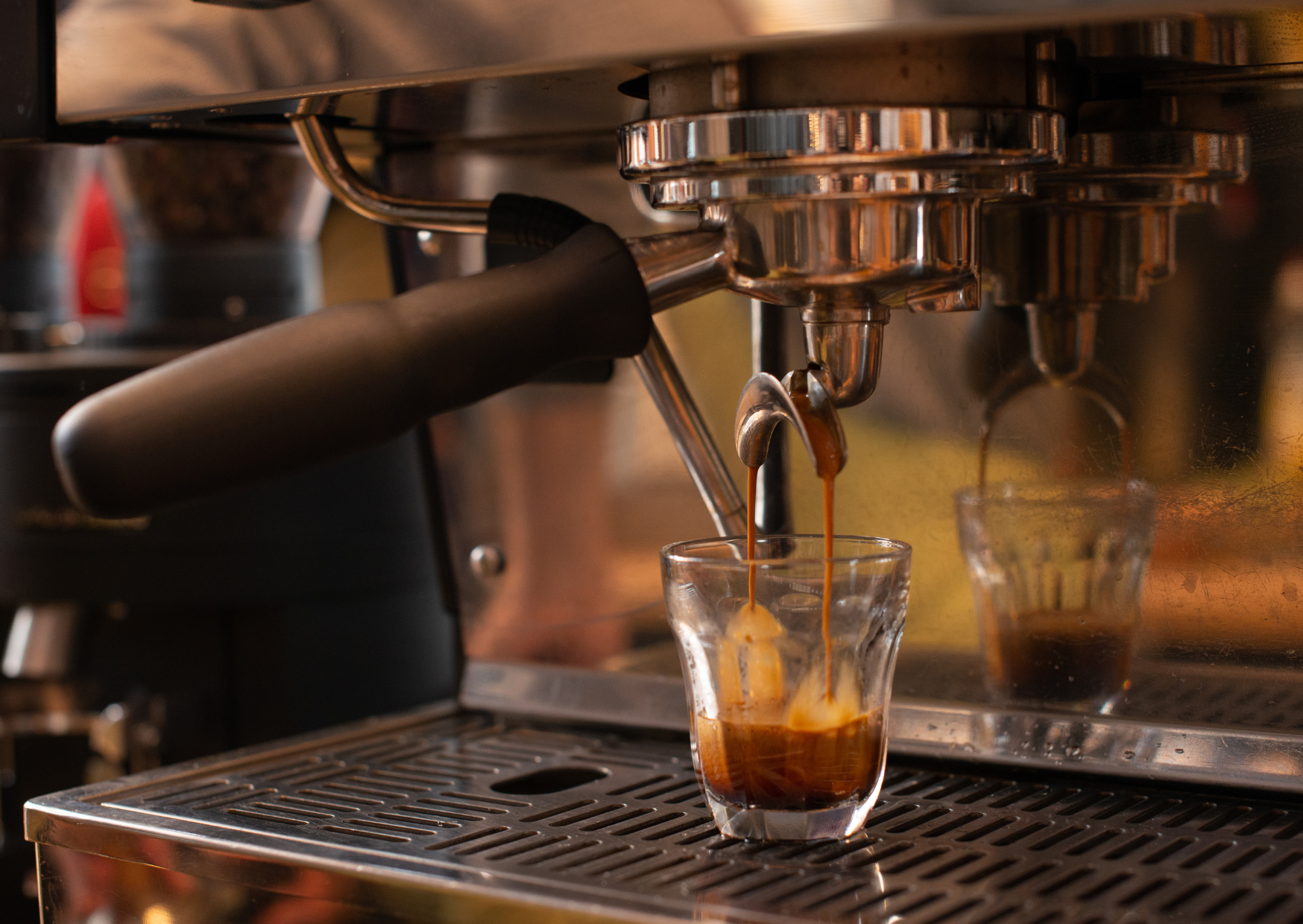
Not because espresso is magic, and not because I “healed my nervous system.” I stopped mainlining caffeine the U.S. way, my baseline got quieter, and my doctor was willing to adjust what we’d been maintaining for years.
I didn’t move to Europe and instantly become a calm, linen-wearing person who meditates and drinks tiny coffees with perfect posture.
I just stopped drinking American coffee.
Or more accurately, I stopped drinking coffee the American way: large, constant, portable, and socially encouraged like it’s hydration.
In Spain, coffee is everywhere, but it’s smaller and more bounded. You sit. You drink it. You leave. “Coffee” is not a 20-ounce companion you drag through your entire morning while your heart quietly auditions for a drumline.
For years, I told myself caffeine didn’t affect my anxiety because I “handled it fine.” What I really meant was: I had normalized a level of tension that felt like adulthood.
Then I ran a clean 60-day experiment: espresso-based drinks only, European portions, no giant mugs. Same job, same family rhythm, same life stressors. Just a different caffeine delivery system.
And I didn’t change any medication on my own. I tracked symptoms, talked to my clinician, and made adjustments the boring, supervised way.
By the end, the medication I’d been taking for anxiety wasn’t needed anymore.
That’s the headline. The reality is more useful.
The anxiety-coffee loop I pretended wasn’t happening
Here’s what American coffee culture does to a lot of people without announcing itself.
It builds a daily loop:
- You wake up tired, so you hit caffeine fast.
- Caffeine lifts you, but it also raises your physical “edge.”
- That edge feels like productivity, until it feels like anxious energy.
- You push through anyway because the day is moving.
- You crash later, so you top up again, or you snack, or you scroll.
- By night, your body is tired but your nervous system is still buzzing.
If you’ve ever said, “I’m exhausted but I can’t relax,” you know the feeling.
I was living with a low-grade hum that showed up as:
- faster speech when I didn’t need to be fast
- shallow breathing during normal tasks
- that tight chest feeling that’s not a panic attack, but it’s not nothing
- restlessness that I called “busy”
And because it was my normal, I thought it was just life.
The first time I noticed the difference in Spain wasn’t during a dramatic moment. It was on an ordinary weekday. Everyone around me had a coffee, then went back to being… normal. Not euphoric. Not frantic. Not wired.
It made me realize I wasn’t drinking coffee for coffee. I was drinking coffee to force my body into motion.
That’s a bad long-term strategy if you already have anxiety. Stimulation stacks. It doesn’t politely stay in one category.
Espresso isn’t weaker, it’s smaller, and the math matters
This is the part Americans get wrong and then argue about online.
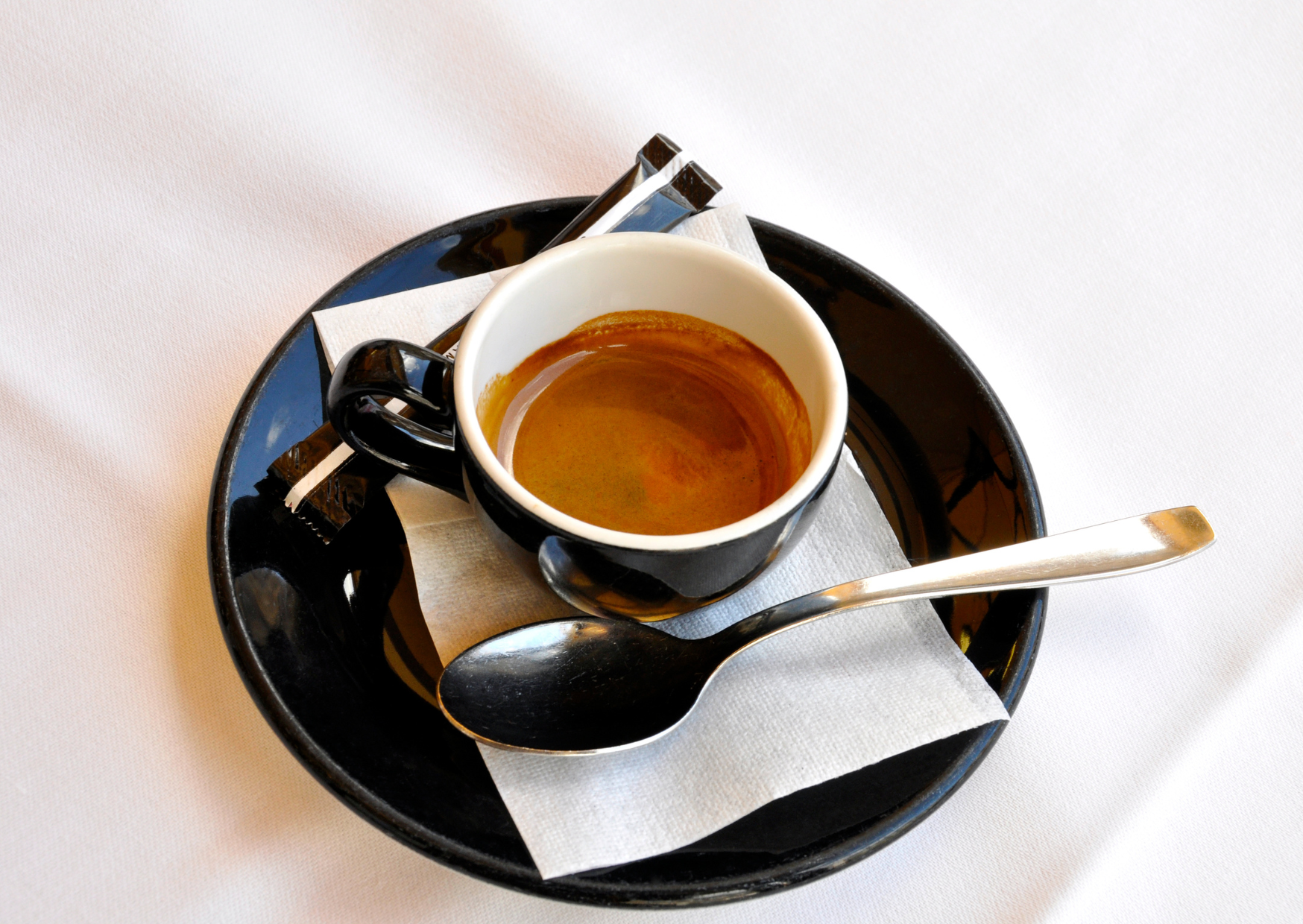
Espresso is concentrated, yes. But it’s also tiny.
A typical 30 ml (1 oz) espresso is often listed around 63 mg of caffeine. A standard 8 oz (237 ml) brewed coffee is often listed around 96 mg.
Now add American serving size reality.
Most Americans are not drinking 8 oz. They’re drinking 12, 16, sometimes 20 ounces. They might not even call it “a lot” because the cup looks normal in their hand.
So the real difference isn’t “espresso has less caffeine” or “espresso has more caffeine.” The difference is dose control.
In Spain, “coffee” is frequently built on espresso: café solo, cortado, café con leche. Even when it’s milky, the base is still a small shot. You can have more than one coffee in a day, but each one is a smaller unit.
American coffee culture tends to be fewer units, bigger units, and often faster consumption.
That changes everything for anxiety-prone people because anxiety loves spikes. It loves surges. It loves the feeling of being pushed.
Espresso, taken in smaller servings, reduces the spike problem. Volume is the hidden stimulant.
I wasn’t trying to become European. I was trying to stop hitting my nervous system with a blunt object every morning.
My 60-day rules

To make this a real experiment, I had to stop leaving loopholes.
So I gave myself rules that were strict enough to change behavior, but realistic enough to follow in a Spanish week.
Rule 1: Espresso-based drinks only.
No big American mugs of drip. No oversized cold brew. No “just this once” travel cup that’s secretly two coffees.
Rule 2: Two coffees a day max.
One morning coffee, one post-lunch coffee if needed. That’s it. Boundaries beat bargaining.
Rule 3: No caffeine after 15:00.
This mattered more than I expected. It stopped the “late afternoon top-up” that bleeds into sleep quality.
Rule 4: Drink it sitting down.
This sounds like a lifestyle influencer thing, but it’s actually a nervous system thing. When you drink caffeine while walking, commuting, answering emails, you’re pairing stimulant with stress cues. You’re training your body to associate caffeine with urgency.
Rule 5: Track symptoms, not vibes.
Daily notes: sleep quality, physical anxiety (tight chest, racing thoughts, restlessness), and whether I needed medication as rescue.
I did not change everything else at once. I kept meals, exercise, and work patterns mostly consistent because I wanted to know if the coffee change mattered.
And it did.
Weeks 1 and 2 felt worse, which is the part people don’t warn you about
If you’ve been drinking a lot of caffeine daily, changing your intake can come with withdrawal symptoms.
This isn’t weakness. It’s biology.
Withdrawal can show up within 12 to 24 hours, peak around 20 to 51 hours, and last 2 to 9 days depending on the person and the prior dose.
My first week was not elegant.
I had:
- headaches that felt stupidly personal
- irritability that made normal noises feel offensive
- a flat mood in the afternoon
- a weird brain fog that made me question my competence
And here’s the twist: that first week can look like “my anxiety is worse,” because your body is unsettled. If you’re not prepared, you interpret discomfort as danger.
What helped was treating week one like a weather event.
I didn’t try to win. I just tried to be consistent.
I also learned something uncomfortable: I had been using caffeine to cover fatigue that I should have addressed with sleep and pacing. When the caffeine blanket was removed, the underlying tiredness showed itself.
That was information, not a failure.
By the end of week two, the headaches were gone. The irritability settled. My energy wasn’t as “high,” but it was steadier.
And that steadiness was the first time I thought, quietly: oh, this is what calm feels like.
Weeks 3 and 4 were the real shift
Week three is when I stopped thinking about coffee and started noticing my body.
The biggest change was physical anxiety.
My thoughts weren’t suddenly perfect. Life was still life. But the body symptoms that used to ride along with normal stress got quieter:
- less tight chest
- less restless leg energy
- fewer “I need to do something right now” sensations when nothing urgent was happening
I also started sleeping better, and this mattered more than any daytime measurement.
Caffeine’s average half-life in healthy adults is often described as around 5 hours, and it can vary widely by person and circumstance. Translation: if you’re drinking caffeine late, it can still be hanging around when you’re trying to sleep, even if you think you “feel fine.”
When I cut caffeine after mid-afternoon, sleep got deeper. Not instantly, but enough that mornings stopped feeling like recovery.
And once sleep improved, anxiety symptoms dropped again. Not because I was “fixed,” but because sleep and anxiety are close friends in the worst way.
This is where espresso culture helped. In Spain, it’s normal to have a small coffee after lunch and then stop. Coffee isn’t an all-day drip. It has a place, then it ends.
That rhythm did more for my anxiety than any fancy supplement I’ve tried. Rhythm is medicine, in the least dramatic sense of the phrase.
Weeks 5 through 8: the medication conversation, and how it actually happened
Here’s the part people want to turn into a hack.
“Just switch to espresso and you’ll get off anxiety meds.”
No. Stop. That’s not how this works.
What happened in my case was quieter and more responsible.
By week five, I realized I had fewer anxiety spikes. My baseline was calmer. The “edge” that used to push me into needing extra support showed up less often.
So I did the unsexy thing: I brought data to my clinician.
Not a grand story. Actual notes:
- how often I felt symptoms
- how often I used rescue medication
- sleep quality trends
- what changed in my routine
We made a plan together. Gradual changes. Check-ins. No hero moves.
By the end of 60 days, the medication I’d been maintaining was no longer necessary.
That outcome was mine. It’s not a promise to you. But the mechanism is worth stealing: reduce stimulant spikes, improve sleep, stabilize baseline, then reassess with the person managing your care.
If you’ve never tracked your caffeine like a medication, try it once. For many people, caffeine is effectively a daily psychoactive dose that they treat like a beverage.
Caffeine also has evidence linking higher intake with increased anxiety risk in healthy individuals, especially at higher doses.
That doesn’t mean caffeine causes anxiety in everyone. It means if you’re anxious, you should at least stop pretending caffeine is irrelevant.
The less dramatic truth is the useful one: I stopped poking my nervous system all day, and it finally had room to settle.
The Spain money math nobody talks about
Americans often assume “European coffee” is expensive because it’s small and served in cafés.
Sometimes it is, especially in specialty shops. But daily life coffee in Spain is still often a relatively small purchase compared to U.S. café pricing.
The real money difference is behavioral.
In the U.S., the pattern looks like:
- a large coffee that becomes “breakfast”
- a second coffee because the first wasn’t enough
- sometimes an afternoon coffee because you’re fading
- plus the snack you buy with it because it’s right there
In Spain, the pattern is more often:
- one small coffee with breakfast or mid-morning
- maybe one after lunch
- no automatic food purchase attached, unless you choose it
My own spending dropped because the ritual changed. I stopped treating coffee as a constant companion and started treating it as a short stop.
Also, espresso drinks are easier to keep at home without turning into a caffeine waterfall. A small home espresso, even with milk, is still portioned. A drip pot invites refills.
If you’re doing this for anxiety, money is not the main goal, but it’s a nice side effect. The hidden cost of American coffee culture is not the beans. It’s the lifestyle attached to it.
When your stimulant intake drops, your “I need a little treat to survive this day” spending often drops too.
That surprised me more than the physical changes. Caffeine drives shopping more than people admit.
Common mistakes that make this backfire
If you want to try the espresso switch, here’s what tends to wreck it.
- You replace coffee with energy drinks
That’s not a swap, it’s a self-own. - You keep the same total caffeine, just in espresso form
If you drink five doubles a day, you’ve rebuilt the same system. - You drink espresso on an empty stomach and call the jitters “anxiety”
Espresso hits harder when there’s nothing in you. Pair it with food, even something small. - You keep caffeine late and blame espresso for sleep problems
The issue isn’t espresso, it’s the timing. - You change ten things at once and can’t tell what helped
If you want clean results, change one lever first. - You treat withdrawal discomfort as evidence the experiment failed
Week one can be messy. That doesn’t mean you were better off before.
This is why the European model works. It’s not perfect. It’s just bounded. Small portions, social pauses, and an unspoken acceptance that the day does not require a constant stimulant drip.
Your next 7 days: the espresso reset without making it weird
If you want to test whether coffee is pushing your anxiety, don’t start with a grand 60-day vow.
Start with a week. A controlled week.
Day 1: Measure your current intake.
How many ounces. What time. What type. Be honest. Reality first.
Day 2: Cut serving size, not pleasure.
Switch the big mug to a small espresso drink. Keep it enjoyable. Just reduce the volume.
Day 3: Put a hard stop time on caffeine.
Pick a cut-off you can actually follow. 15:00 is a good starting point. Earlier if sleep is a mess.
Day 4: One coffee becomes a sit-down ritual.
No walking coffee. No driving coffee. Sit. Drink. Leave. This breaks the stress-caffeine pairing.
Day 5: Add food with your first coffee.
Even a small breakfast. This reduces the jitters that get mislabeled as “anxiety.”
Day 6: One day with only one coffee.
See what happens. You’re not punishing yourself, you’re collecting data.
Day 7: Check your symptoms, not your motivation.
How was sleep. How was restlessness. How was that chest-tight feeling. That’s the verdict.
If nothing changes, fine. If things shift quickly, you’ve learned something important about your body.
The choice is not espresso versus coffee, it’s spike versus steadiness
This experiment didn’t make me a different person.
It made my days less jagged.
Espresso didn’t “cure” anxiety. It changed my caffeine delivery from a flood to a measured dose. It made my mornings less dramatic and my afternoons less desperate. It improved sleep. And once the baseline got calmer, medication could be reassessed responsibly.
That’s the real European lesson hiding in a tiny cup.
The continent is full of small constraints that create stability. Smaller coffees. More walking. Later dinners but often lighter. Less constant snacking. More routines that repeat.
You don’t have to romanticize it. You just have to copy the parts that work.
If you’re anxious and you’re drinking American-sized coffee like it’s water, the simplest experiment you can run is this: shrink the dose and stop the drip.
Not because espresso is magic.
Because your nervous system is not a trash can.

About the Author: Ruben, co-founder of Gamintraveler.com since 2014, is a seasoned traveler from Spain who has explored over 100 countries since 2009. Known for his extensive travel adventures across South America, Europe, the US, Australia, New Zealand, Asia, and Africa, Ruben combines his passion for adventurous yet sustainable living with his love for cycling, highlighted by his remarkable 5-month bicycle journey from Spain to Norway. He currently resides in Spain, where he continues sharing his travel experiences with his partner, Rachel, and their son, Han.