
It started with a pot and a rule. Two days on the stove at the gentlest simmer, no shortcuts, bones that smelled clean, and a broth that set like glass when cold. I drank a mug with breakfast, another at 4 p.m., and by week four my digestion felt calmer, my energy steadier, and meals stopped feeling like a gamble.
I did not discover a miracle. I adopted a French kitchen habit and gave it a real month. The method is classic: slow extraction, clear aromatics, and patience. No protein powders, no flavor tricks. Just white stock technique and a kettle schedule. Below is exactly how I did it, why the 48-hour simmer makes a difference, who should adjust the plan, and the parts you can copy tomorrow without turning your home into a restaurant.
This is not a promise. It is a repeatable process with reasons behind it: collagen turning to gelatin, amino acids like glycine dissolving into the pot, and a cooking rhythm that respects your gut as much as your taste buds.
Want More Deep Dives into Everyday European Culture?
– Why Europeans Walk Everywhere (And Americans Should Too)
– How Europeans Actually Afford Living in Cities Without Six-Figure Salaries
– 9 ‘Luxury’ Items in America That Europeans Consider Basic Necessities
Why Bone Broth, Why French, Why 30 Days
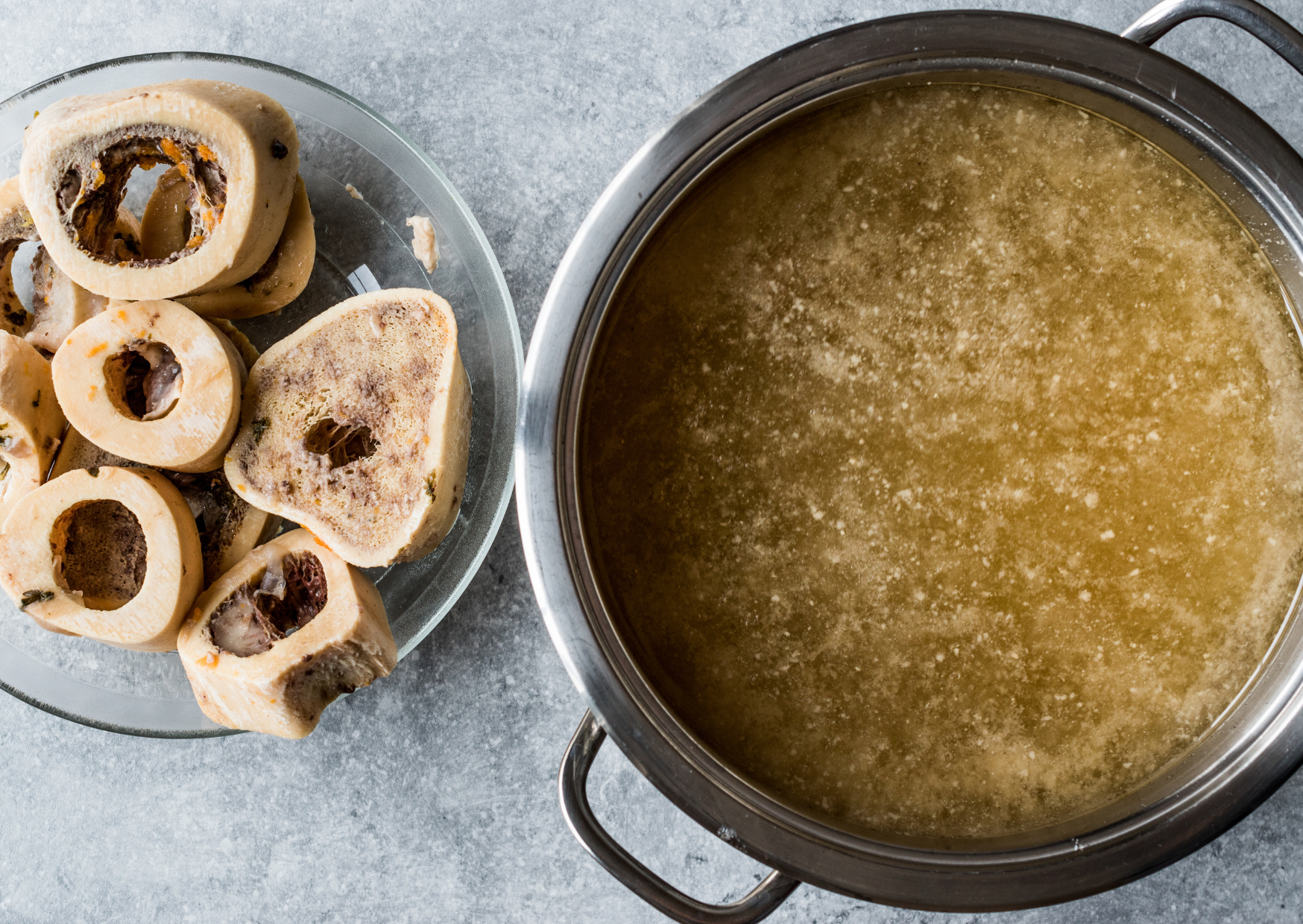
I tried bone broth in New York years ago and quit after a week. It was cloudy, salty, and more trend than food. The switch happened in France. Watching a chef build fonds blanc for sauces and pot-au-feu for Sunday lunch taught me what I had missed: very low heat, very clean inputs, and time.
French stock is not a soup. It is an ingredient. The goal is clarity and body, not spice fireworks. When you drink it straight for your gut, that restraint becomes the point. You want a broth that is quiet, gelatin-rich, and free of the bits and oils that shout at a sensitive stomach. Give it 30 days and you actually notice changes because you kept the variables stable.
The science is not hype. Long cooks dissolve collagen into gelatin and release amino acids including glycine, proline, glutamine, and arginine. Glycine in particular shows barrier-supporting and calming roles in the gut. Collagen-derived peptides can interact with the microbiota and connective tissues. The bowl tells you the same story without the Latin names: it gels cold, sips clean hot, and sits easy after. As a month-long routine, it works because it is simple, repeatable, and gentle. Gentle routine beats sporadic heroics.
The 48-Hour French Method, Step By Step
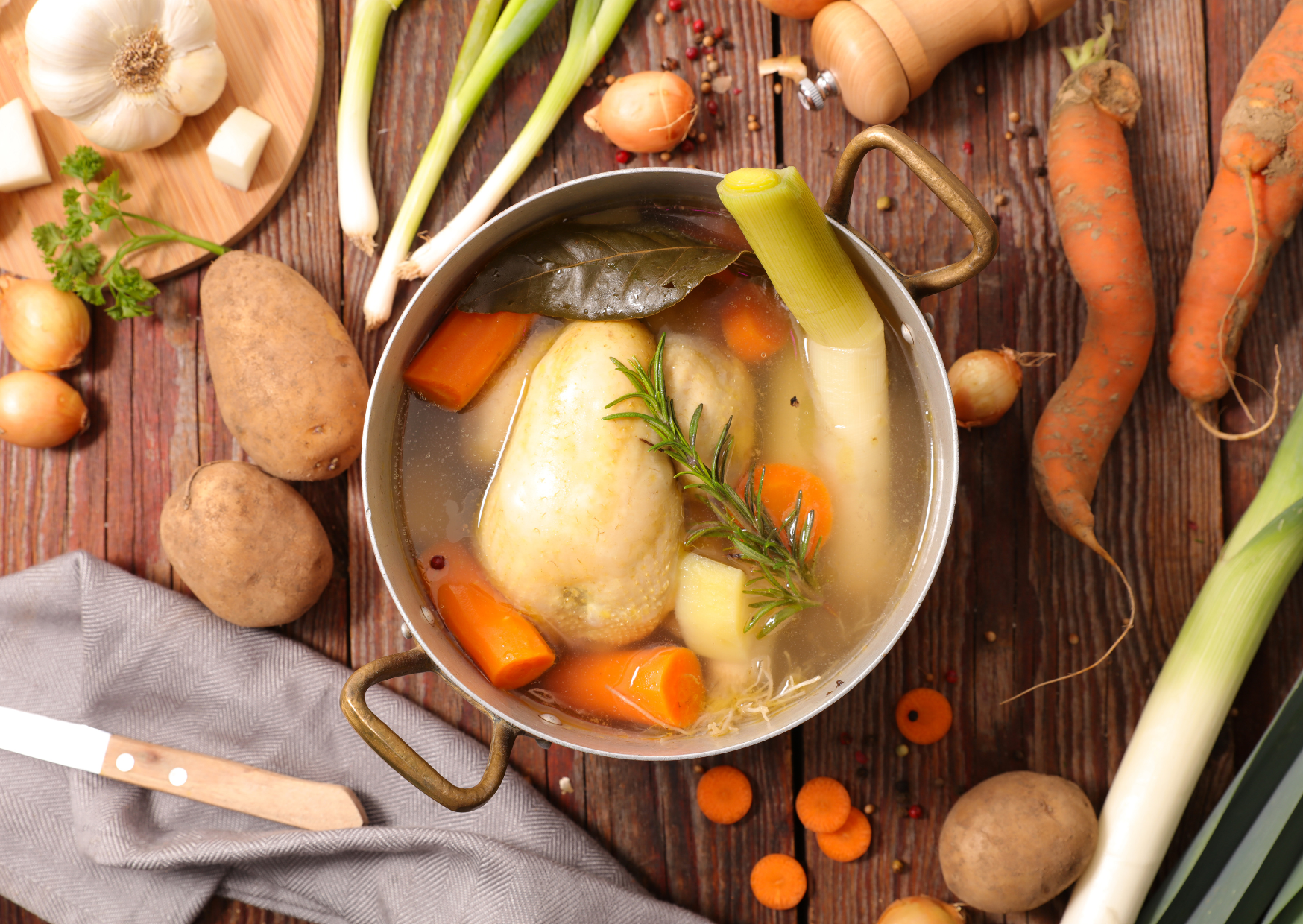
This is the exact build I used, with French white-stock discipline and a couple of tweaks for gut kindness. No roasting. No aggressive spices. Low and slow until the gelatin tells you to stop.
Bones and cuts (about 2.5–3 kg total):
- 2 kg mixed beef knuckles and marrow bones or veal knuckles for high collagen
- 500 g meaty beef shank or oxtail for flavor and a little body
- Optional 300 g chicken feet or wings for extra gel if your beef bones are lean
Aromatics:
- 2 leeks, white and light green parts, split and rinsed
- 2 carrots, scrubbed, in large chunks
- 2 celery ribs, in large chunks
- 1 onion, halved, unpeeled for a touch of color
- 6 parsley stems and 2 bay leaves
- 10 peppercorns and 2 whole cloves (leave out if you are very spice-sensitive)
- No salt during extraction
Water and acid:
- 6–7 liters cold water to start
- 2 tbsp wine vinegar or cider vinegar
Equipment:
- Heavy 12-quart stockpot or a slow cooker on low
- Fine mesh skimmer and cheesecloth for straining
- Probe thermometer and ice bath for safety
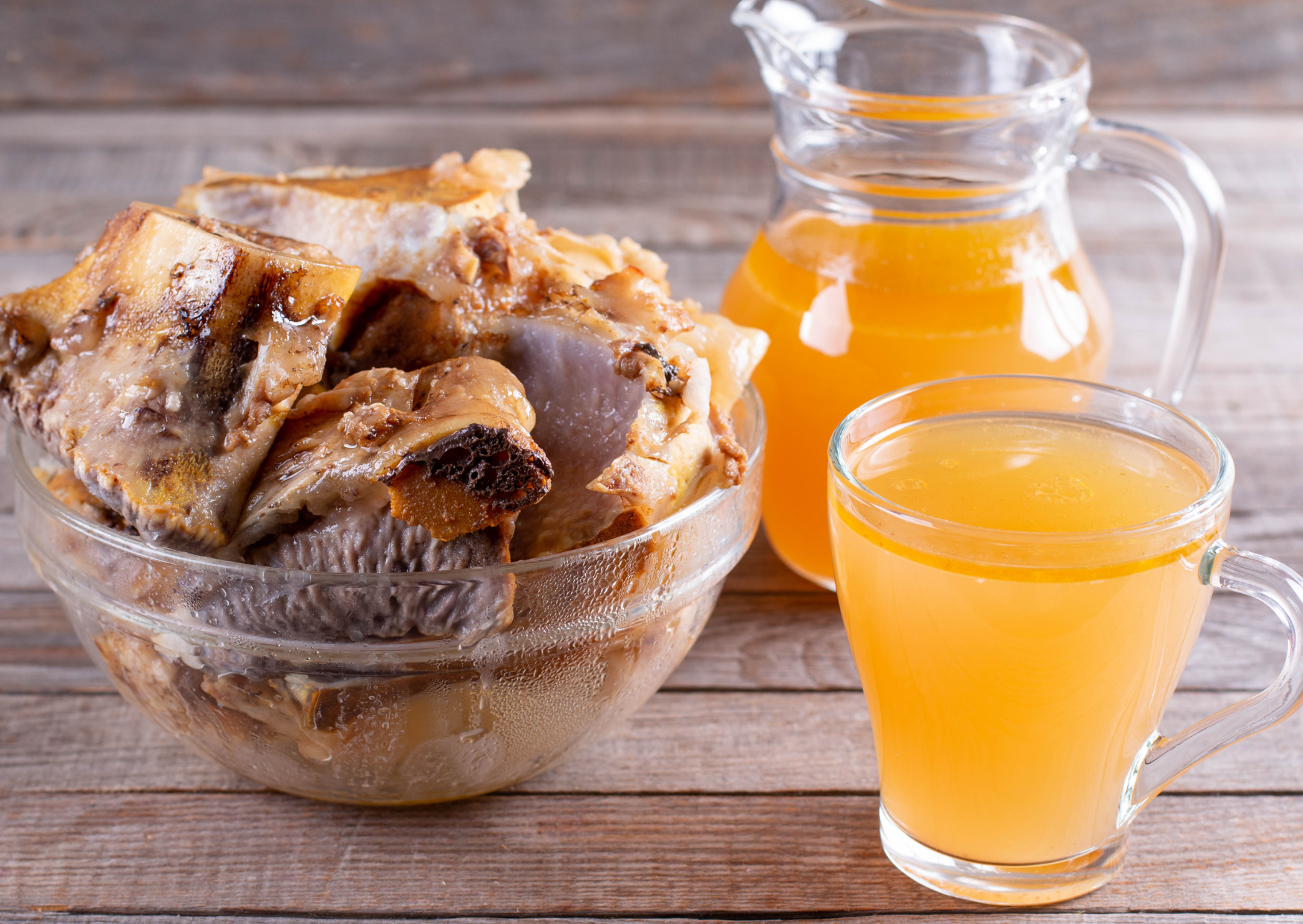
Day 1, Hour 0–1: Wash, soak, blanch
Rinse bones under cold water. Soak 30 minutes in fresh cold water to draw out blood. Blanch in a separate pot: cover with cold water, bring just to a strong simmer for 5 minutes, then drain and rinse. This strips scum that would cloud your broth and irritate sensitive stomachs. Clean bones make clean broth.
Hour 1–2: Start cold, then keep it barely moving
Return bones to the main pot. Add cold water and the vinegar. Bring slowly to a bare simmer so tiny bubbles nudge the surface. Skim diligently for 20–30 minutes until the foam subsides. Keep the surface at 80–85 °C with just a tremble. Low heat extracts gelatin without emulsifying fat.
Hour 2–12: Extraction, skimming, resting
Add aromatics. Maintain the lazy simmer. Skim any fat pools that collect, but do not chase perfection. Cover partially to limit evaporation. Overnight, reduce heat further or move to a slow cooker on low. Check waterline every few hours. Gentle and steady beats hot and splashy.
Day 2, Hour 12–36: The patience window
Top up with hot water to keep bones submerged. Resist vigorous boiling. If you see turbulence, lower the heat. Skim once or twice. This is where knuckles surrender gelatin. You do not win by speed. You win by stillness. Stillness builds clarity.
Hour 36–48: Finish and strain
Turn off heat. Let convection slow for 15 minutes so particles settle. Ladle the liquid through a fine strainer lined with cheesecloth into a clean pot. Do not press solids. Taste. If it is bland but silky, you did it right. If you want a touch more body, simmer the strained broth uncovered for 30–60 minutes to reduce. Strain, then reduce. Never the other way around.
Rapid cool and portion
Set the pot in an ice bath in your sink. Stir to drop temp quickly through the danger zone. When the pot is no warmer than room temperature, move it to the fridge. Chill within 2 hours of flame-off. Once cold, lift the fat cap in one piece and save for cooking, or discard if you are going low-fat. Portion into 500 ml jars. Safe cooling preserves flavor and your stomach.
Season when you sip
Reheat a mug at a time with a pinch of salt and a splash of hot water if the gel is very firm. Finish with chopped parsley or chervil. Avoid hot chiles and garlic in the mug if your gut is touchy. Season in the cup, not the pot. This keeps the base neutral for cooking.
Why The 48 Hours Matter
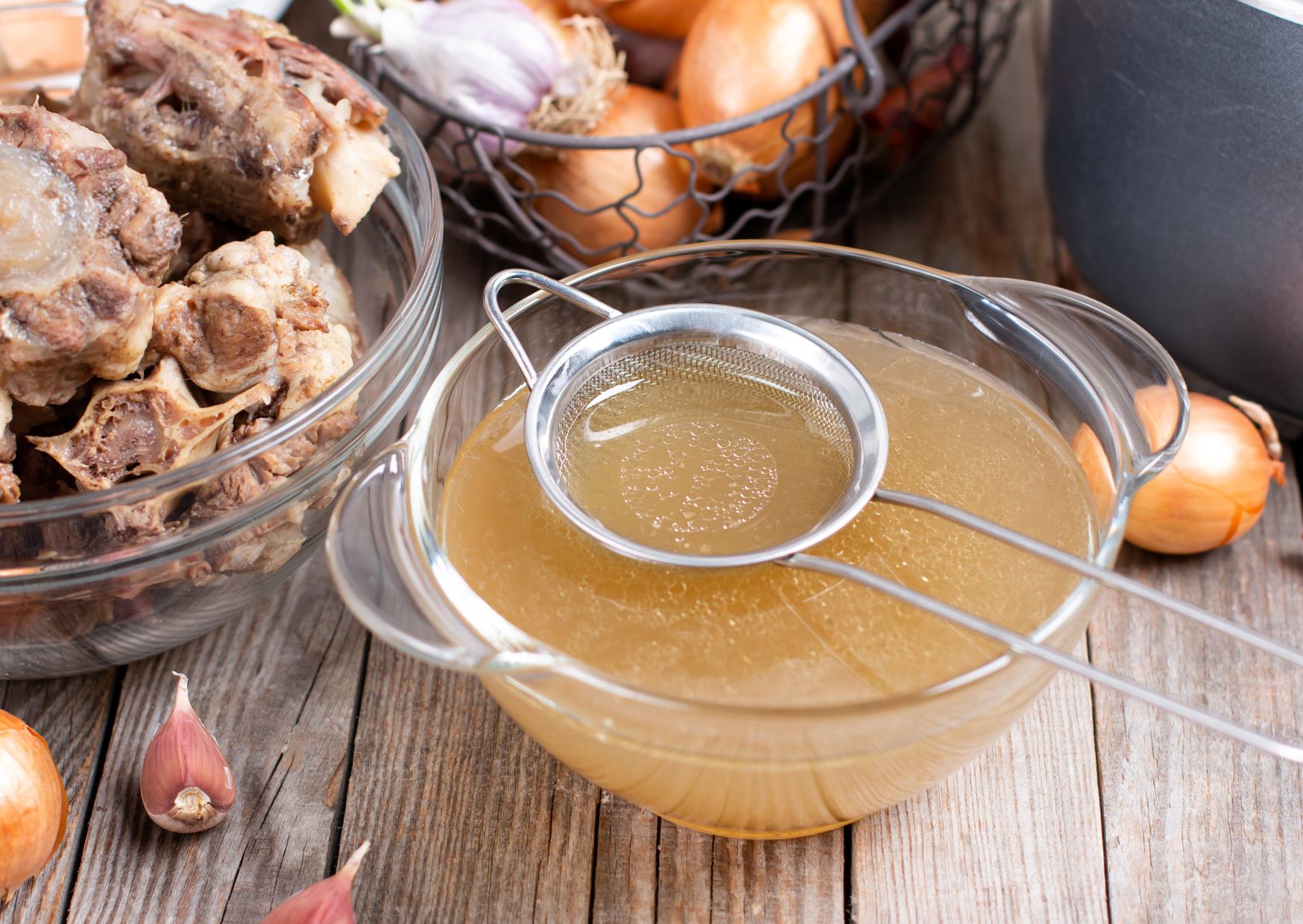
You can make decent stock in 6–8 hours. For gut-calm broth, I found 48 hours hits a sweeter spot.
More gelatin, same quiet flavor. The long window lets collagen unwind without pounding aromatics into the foreground. That gives you body without spices, which is useful when your stomach prefers simple.
Amino acids accumulate. Extended simmering increases soluble glycine and proline from connective tissue. Glycine has evidence for supporting gut barrier integrity and modulating inflammation in certain contexts. You do not need a lab readout to feel it, but the literature is there. Time extracts what quick cooks miss.
Clarity improves tolerance. The white-stock approach avoids roasted bits and aggressive fond. Fewer browned particles mean less emulsified fat and a cleaner sip. If coffee and heavy soups unsettle you, this quiet broth often does not.
It sets like glass. The fridge test tells the truth. After 12 hours cold, your broth should wobble. That gel equals gelatin, which most people find easier on the gut than a thin, salty, spice-heavy broth.
The 30-Day Protocol I Actually Followed
You do not need a spreadsheet. You need a routine.
Serving rhythm
- Morning mug on an empty stomach or with breakfast.
- Afternoon mug between lunch and dinner.
- Optional cooking use in place of water for rice, quinoa, or braises.
Volume
- 250–300 ml per serving.
- About 500–600 ml per day, so 3–4 liters a week covers one person.
Batch schedule
- Brew a 6–7 liter pot every 8–9 days.
- Keep 2 liters in the fridge for 3–4 days. Freeze the rest in flat bags or jars, labeled by date.
What changed in 30 days
Week 1: Less bloating after dinner. Better appetite signals.
Week 2: Mornings felt steadier without the 10 a.m. crash.
Week 3–4: Fewer unpredictable gut flares after normal meals. The ritual helped too. Routine calms the nervous system that talks to your gut.
What I did not change
I ate normally. No elimination diet. No supplement stack. The only rule was two quiet mugs a day.
Ingredient Sourcing, Safety, And The Lead Question
Good broth starts with good bones. It also stays good with basic safety.
Bones to buy
Ask for knuckles, joints, and shanks. Younger animals and joint bones tend to yield more gelatin per kilo than random mixed bones. A mix of beef knuckles plus some meaty shank gives flavor and gel. Add chicken feet if your butcher has them. Gelatin lives in joints.
Water and pots
Use filtered water if your tap tastes harsh. Heavy stainless or enameled cast iron beats thin pots that scorch at the sides. Even heat keeps extraction clean.
Lead and metals
A small 2013 study found higher lead in some bone broths compared with the cooking water, and later analyses measured both essential and trace metals in broths. The measured amounts varied widely by bone source and recipe. My takeaways: buy reputable bones, avoid long acid soaks beyond the 30-minute start, and keep diversity in your diet so broth is an addition, not a monopoly. If you are pregnant or concerned about heavy metals, talk to your clinician and consider shorter extractions or more poultry bones. Quality in, quality out.
Cooling and storage
Cool to room temp quickly and refrigerate within 2 hours. Store 3–4 days in the fridge, or freeze for 3–4 months. Reboil only what you will drink that day. Temperature control keeps broth friendly.
Histamine sensitivity
If slow-cooked foods bother you, try a shorter 6–8 hour batch and freeze in small portions immediately, since biogenic amines can accumulate with time and temperature abuse. Some evidence suggests boiling reduces histamine in meats compared with grilling. Your response matters most. Short and cold beats long and warm if you are sensitive.
Flavor Without Fallout: How To Keep It Gentle
You can make a broth that tastes French and treats your gut kindly by minding a few levers.
Salt at the end
Salt tightens perception and can mask subtle off-notes. Season in the mug so the base stays versatile for cooking and your palate stays calm.
Aromatics, not spices
Leeks, onion skin, carrot, celery do the heavy lifting. If you want variety, add a sprig of thyme or a few parsley stems. Skip garlic, chili, and heavy peppercorn loads for everyday sipping.
Acid restraint
A small splash of vinegar helps extraction. A heavy hand makes a sharper broth and can bother a sensitive stomach. Two tablespoons per large pot is plenty.
Defat for sipping
Fat is flavor. It also can be too rich when you drink broth hot. Chill, lift the fat cap, save it for cooking potatoes, and let the mug stay lean and clear most days.
The French Broth, The French Meal: Using It Beyond A Mug
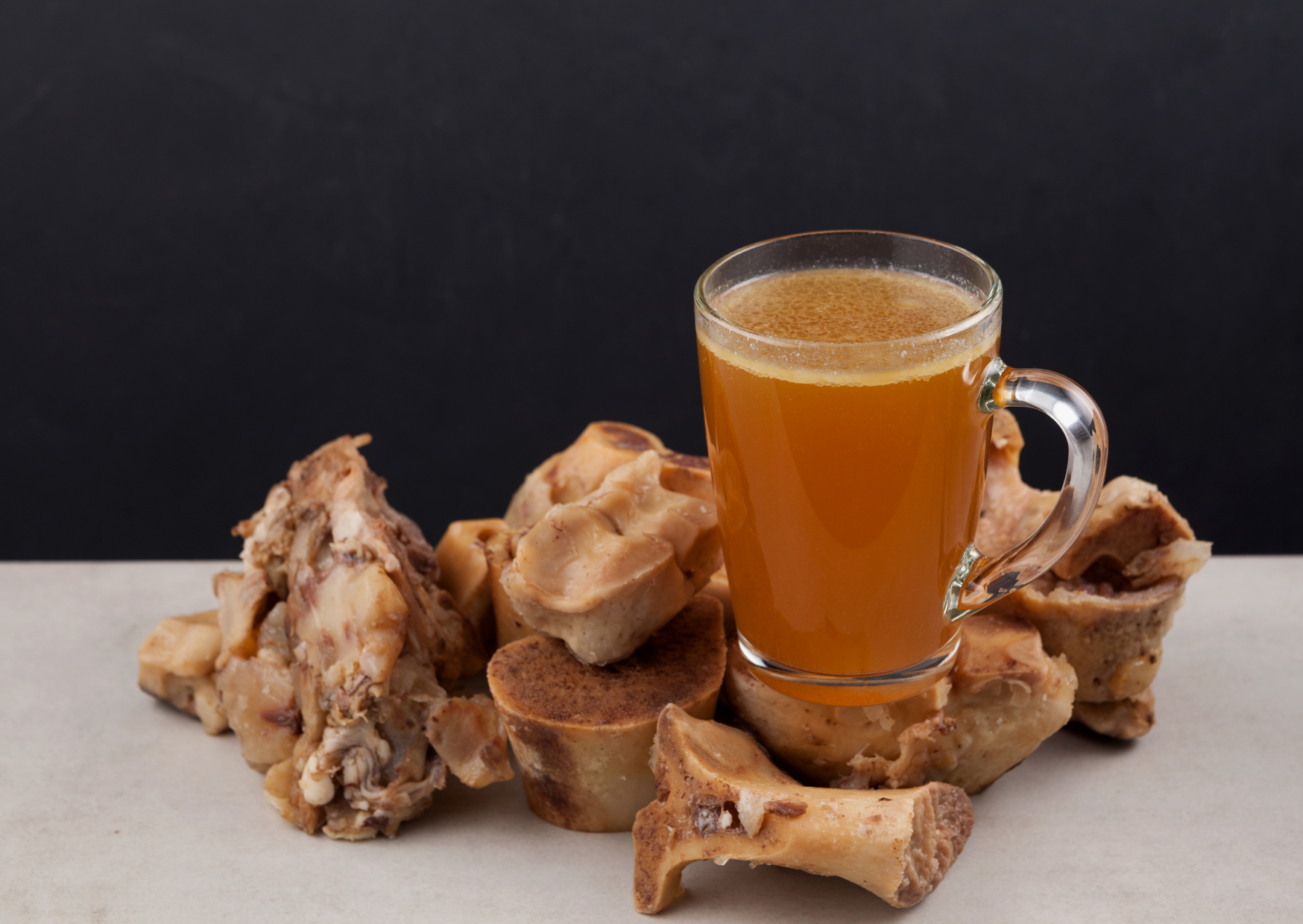
Thirty days of broth gets easier when the pot does double duty. Three ways to keep it moving.
Make a real pot-au-feu day
On a Sunday, turn your broth into a one-pot French feast by simmering fresh carrots, leeks, turnips, and meaty shank in the strained broth until tender. Serve broth first, then plate the meats and vegetables with coarse salt, mustard, and a little marrow on toast if you tolerate it. Monday’s fridge looks like a bistro mise en place. One pot, two meals, zero waste.
Cook grains with broth
Swap water for broth in rice or quinoa. The gelatin coats grains and makes them silkier without adding spice. Leftovers stay moist.
Quick pan sauces
After sautéing chicken or mushrooms, deglaze with 200 ml broth, reduce, and finish with a knob of butter if you tolerate it. You get restaurant flavor with no heavy cream.
If You Are Running The Numbers
Broth is cheap if you shop like a French grandmother.
Bones: 2.5–3 kg at €3–€5 per kg if you buy knuckles and shanks from a butcher.
Aromatics: about €3 for leeks, carrots, celery, onion.
Fuel: 48 hours on low roughly equals an oven’s gentle day or a slow cooker’s weekend. If power rates matter, use a slow cooker for the overnight stretch.
Yield: 5–6 liters of finished broth.
Cost per mug: €0.50–€0.80, far below bottled versions. Kitchen economy meets daily ritual.
Troubleshooting: Clear, Gelled, And Gut-Friendly
Things that go wrong and the fix that worked for me.
Cloudy broth
Cause: hard boiling, dirty bones, or over-stirring.
Fix: blanch bones, keep heat minimal, do not stir, and ladle gently when straining. Clarity returns next batch.
No gel
Cause: not enough collagen-rich bones or too much water.
Fix: increase knuckles, feet, wings, or reduce the strained broth by 15–20 percent.
Too rich
Cause: emulsified fat from hot boils or marrow overload.
Fix: skim more, chill and lift the fat, and dilute with hot water when serving.
Tummy pushback
Cause: long cook plus slow cooling could raise amine load, or aromatics too aggressive.
Fix: shorter cook, fast chill, fewer spices, and smaller sips with ginger tea chaser if you tolerate it.
Substitutions: U.S. And EU Pantry Swaps
Make it with what your market carries.
Bones
- If you cannot find beef knuckles, use veal knuckles or turkey wings plus chicken feet.
- If your butcher only sells marrow bones, grab oxtail or shank for flavor and gel.
Aromatics
- No leeks. Use more onion and a piece of fennel for sweetness.
- No celery. Use celeriac chunks or lovage stems for the same herbal bass note.
Acid
- No wine vinegar. Use cider vinegar or a squeeze of lemon at the start.
Time
- No weekend. Make a 12-hour batch in the slow cooker overnight and a second the next night. Two short cooks beat no cook.
What I Would Do Differently Next Month
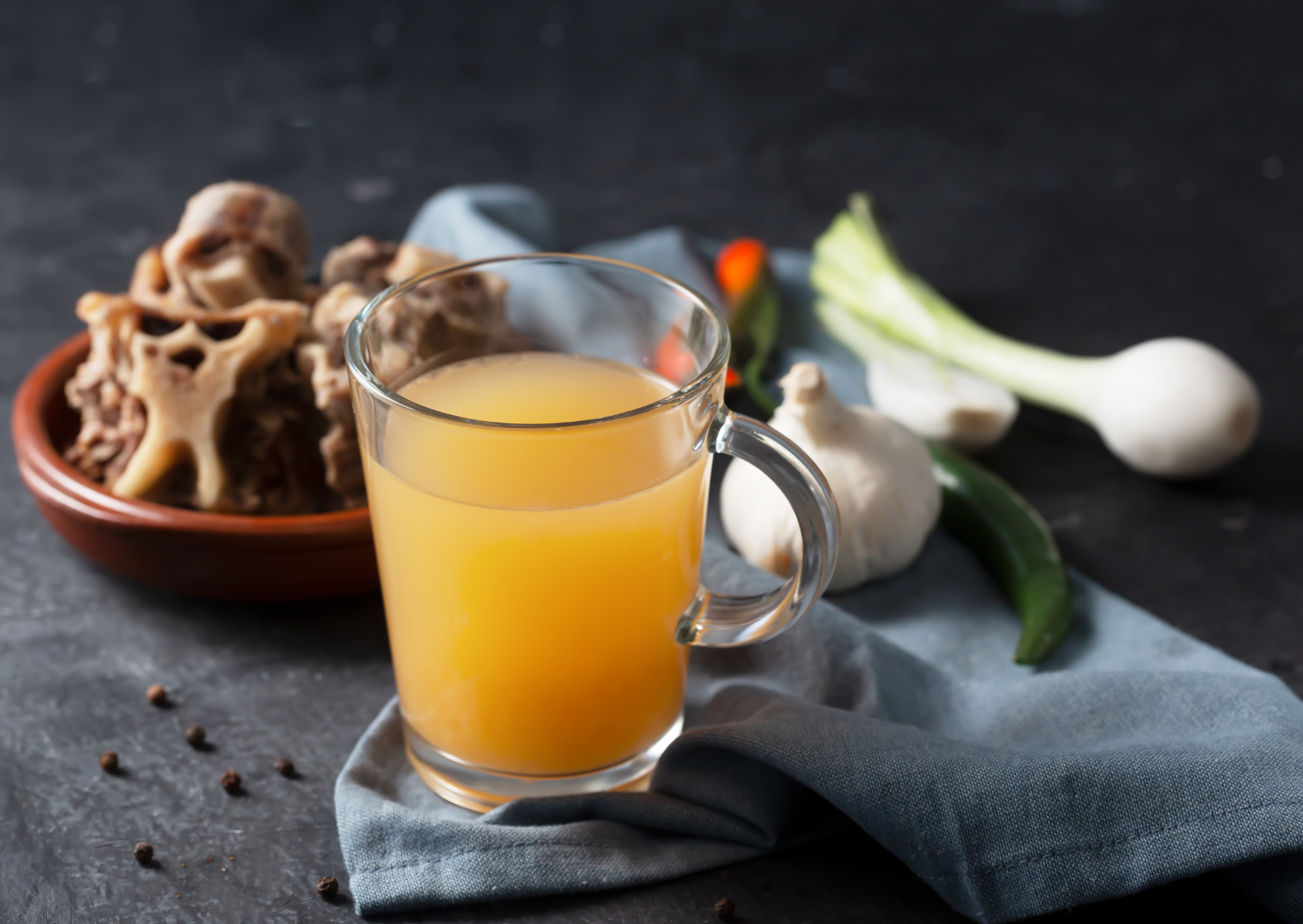
The second month taught me what the first hid.
Rotate bones
Week 1 beef, week 2 poultry, week 3 mixed. Variety spreads micronutrient exposure and keeps flavor interest high.
Freeze in mugs
Fill ceramic mugs with broth, freeze, then pop out and bag the mug-shaped blocks. Drop one back into the same mug to reheat. Zero ladling on workdays.
Try a clarified batch
Set aside 2 liters, whisk in one egg white per liter with crushed shells, bring to a bare simmer, and let the raft clarify the broth. Strain. The result is consommé-clear for special days.
Introduce gentle herbs
A sprig of tarragon or thyme in the cup adds lift without heat. Keep the base neutral. Season in the mug.
What This Actually Means For You
If your gut has been loud, you do not need a 20-point protocol. You need one repeatable habit that is kind and nutrient-dense. A French-style 48-hour broth gave me that. It was not exciting. It was quietly effective.
Make one pot this weekend. Drink two mugs a day for four weeks. Keep the rest of your meals normal. If you feel calmer, keep it. If you do not, you learned something useful about your body for the price of bones and leeks.
Broth is not a cure-all. It is good kitchen pointed at a problem. Sometimes that is enough.

About the Author: Ruben, co-founder of Gamintraveler.com since 2014, is a seasoned traveler from Spain who has explored over 100 countries since 2009. Known for his extensive travel adventures across South America, Europe, the US, Australia, New Zealand, Asia, and Africa, Ruben combines his passion for adventurous yet sustainable living with his love for cycling, highlighted by his remarkable 5-month bicycle journey from Spain to Norway. He currently resides in Spain, where he continues sharing his travel experiences with his partner, Rachel, and their son, Han.