
I didn’t “fix my gut” with a miracle trick. I removed one habit that made every meal feel heavier than it needed to, and the ripple effects were bigger than I expected.
I used to drink water the American way.
Big glass. Refill. Another refill. Sometimes sparkling because it felt fancy. I’d eat fast, drink fast, and then wonder why I felt like I’d swallowed a wet brick.
It got especially annoying at night. Dinner, water, then that familiar burn and fullness that makes you negotiate with your pillow. I wasn’t on some dramatic prescription situation, but I was in the pattern of grabbing antacids and saying, “My stomach just does this.”
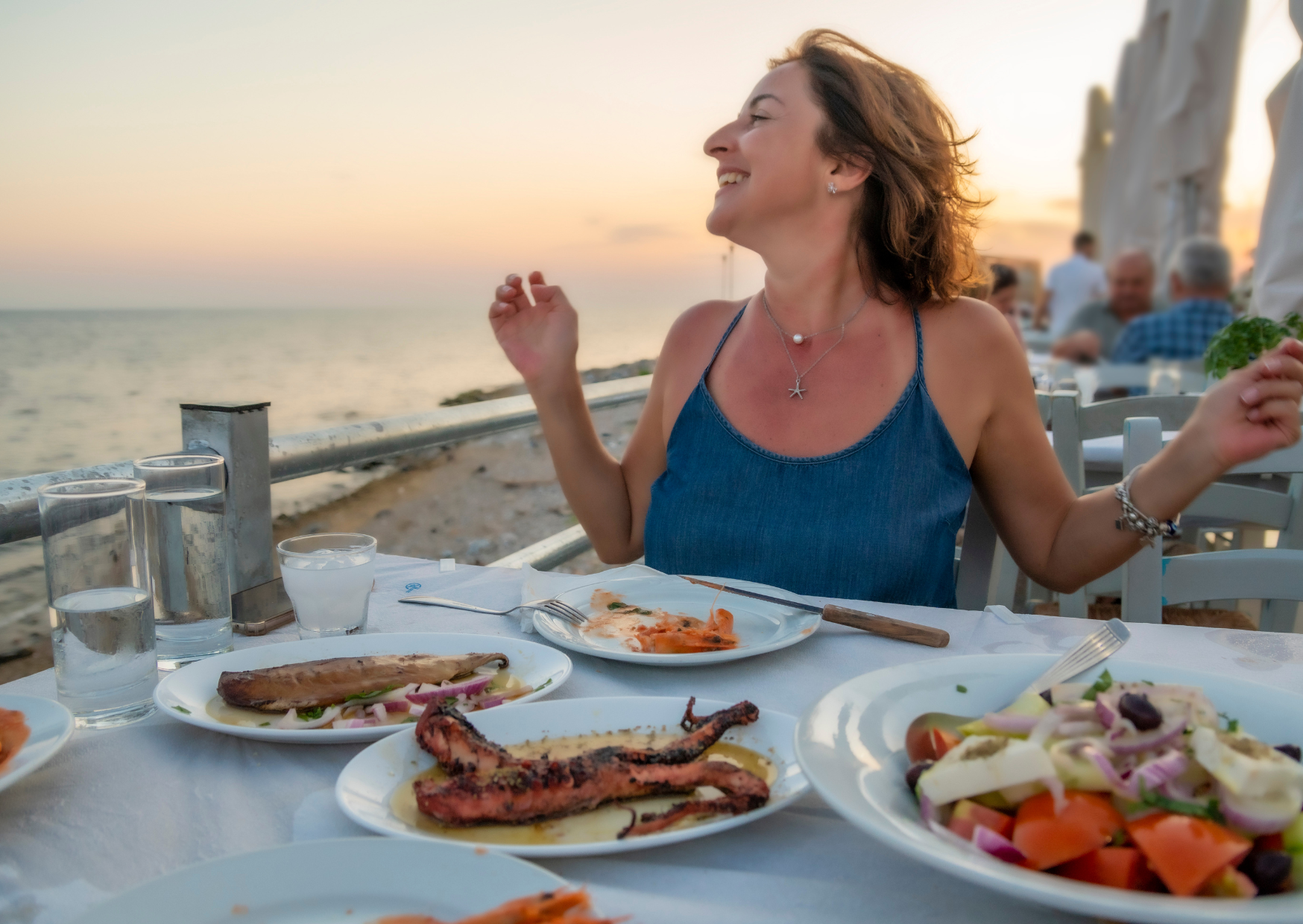
Then I spent time around Greek friends and noticed something that looks small until you copy it.
They don’t treat water like a side dish. They treat it like something you drink around meals, not through them. Small sips at the table, sure, but not the constant wash-it-down reflex.
So I tried it for 30 days in our Spanish routine.
Not as a detox. Not as a purity thing. Just as a clean experiment.
The real problem was not water, it was the way I used it

Water is not the villain. The way I was using it was.
I used water to speed things up. To push bites down faster. To make meals feel “lighter” while eating heavier. To cover for salty food. To deal with anxiety at the table. To stay busy while talking.
In other words, I treated water like a tool to override my own body signals.
When I stopped drinking big amounts during meals, two things happened immediately:
First, I slowed down without trying. You can’t inhale dinner the same way when you’re not constantly taking gulps.
Second, I started noticing fullness earlier. Not the painful, stuffed fullness. The quiet “you’re good” feeling that I used to bulldoze right past.
That’s the part nobody says out loud. A lot of digestion misery is not mysterious. It’s mechanical. Too fast, too much, too late in the day, and then you chase relief.
My rule for 30 days was simple: no chugging at the table. Small sips were allowed. The goal was to break the rinse-and-repeat habit.
And yes, the first few days felt strange. I kept reaching for the glass out of muscle memory. The urge wasn’t thirst. It was reflex.
Once I saw that, it got easier.
What I mean by “Greek-style” drinking
This is not some official Greek law. It’s just a pattern I’ve seen repeatedly in Greek households and around Greek friends.
Meals are social and slower. People aren’t trying to finish and escape. Drinks happen, but the table isn’t dominated by a giant ice water habit the way it often is in the U.S.
The biggest difference is the rhythm.
In the American version, water is constant. You eat, you drink, you eat, you drink, like you’re trying to keep the whole thing moving.
In the Greek-style rhythm I copied, water is more like punctuation. A sip here and there, but most of the real drinking happens before the meal and after, not as a conveyor belt through it.
So my working definition for this experiment was:
- Drink most of my water between meals, not during.
- At meals, stick to small sips, especially if I felt I was using water to rush.
- Avoid sparkling water at dinner, because carbonation plus late eating is a predictable stomach bully for me.
- If I was truly thirsty at the table, drink, but keep it modest.
This is what changed the feel of meals. Dinner stopped being a hydration event and became just dinner.
And because we’re in Spain, the timing matters. Our lunches can run late, and dinners can drift later than most American routines. When you’re eating at 9:00 p.m., the margin for error is smaller. Late meals magnify bad habits.
What the science actually says about water with meals
This is where the internet gets silly fast.
There’s a popular claim that drinking water with meals “dilutes stomach acid” and ruins digestion. Mainstream medical sources generally don’t support that idea. The digestive system adjusts secretions, and normal water intake around meals isn’t considered harmful for most people. Mayo Clinic, for example, has addressed this directly and notes that water doesn’t cause problems with digestion. Mayo Clinic
So why did changing this help me?
Because “water doesn’t ruin digestion” and “my specific pattern made me feel worse” can both be true.
A few plausible mechanisms that are less dramatic and more realistic:
- If you drink a lot while eating, you can increase stomach volume and pressure. For some people, that can nudge reflux and that heavy, sloshy feeling.
- If you use water to eat faster, you end up swallowing more air, chewing less, and overshooting fullness.
- If your “water with meals” is actually carbonated, the gas can make bloating and reflux worse. That’s not about water, that’s about bubbles.
- If you’re already sensitive to reflux, meal size and meal timing often matter more than any one ingredient. Water becomes part of the overall load.
There’s also research on gastric emptying and how liquids behave in the stomach. The takeaway is not “never drink water.” It’s that liquids and solids move differently, and timing and volume can influence what you feel. ScienceDirect
So I’m not selling a myth. I’m describing a behavior change that altered my meal mechanics.
Bottom line: water with meals is not inherently harmful for most people, but the way you drink, the amount, and what else you’re doing at the table can matter a lot.
The 30-day setup I actually used in Spain
I made this stupidly simple so I couldn’t argue my way out of it.
I didn’t track a hundred variables. I tracked a few that would tell me quickly if the habit mattered.
Here were my rules:
- Front-load water earlier.
I drank a decent amount in the morning and early afternoon, and I didn’t wait until dinner to “catch up.” - Cut the big glass during meals.
At lunch and dinner, I poured a small glass and allowed only small sips. If I finished it, I didn’t auto-refill. - Pause water for 45 to 60 minutes after eating.
Not as a strict punishment. More as a boundary so I could notice whether fullness and reflux changed. - No sparkling water with dinner.
This alone can change everything for people who bloat easily. - Keep everything else mostly the same.
Same foods, same meal times, same coffee habit, same Spanish rhythm.
What I tracked daily:
- Bloating after meals (0 to 10)
- Reflux at night (yes or no)
- Antacid use (yes or no)
- Sleep disruption from stomach discomfort (yes or no)
That’s it.
The first week was mostly annoyance. I didn’t feel magically different. I just noticed how often I reached for water when I wasn’t thirsty.
And then the second week, the “heavy after dinner” feeling started fading.
By week three, I realized I hadn’t taken an antacid in a while.
By week four, the habit felt normal.
The phrase that kept showing up was timing beats willpower. Not because I’m trying to be inspirational. Because changing the timing removed the need to fight cravings and reflexes at the table.
What changed, week by week
Week 1: I got bored at the table.
That sounds silly, but it matters. I was using water to do something with my hands and mouth between bites. Once that crutch was gone, I ate slower. I chewed more. Meals stretched naturally. Slower eating happened by accident.
Week 2: Less bloating, especially at night.
This is where I noticed the clearest shift. The “tight stomach” feeling after dinner dropped. Not to zero, but down enough that it stopped being a nightly expectation.
Week 3: Reflux stopped being predictable.
I still had a spicy meal one night and felt it. I’m not pretending food triggers vanished. But the baseline nightly burn was no longer automatic. This was also the week I realized the habit was connected to bedtime. When dinner sits heavy and you lie down, your body complains. When dinner feels lighter, sleep becomes easier. Nighttime comfort is the prize.
Week 4: The craving to sip constantly disappeared.
This was the real win. I stopped thinking about it. The table glass became normal, not a bottomless pit.
A weird side effect: I snacked less at night.
Not because I was trying. Because I wasn’t doing that post-dinner “I still feel unsettled” eating. Sometimes what feels like hunger is actually discomfort, and you try to fix discomfort with more food. This habit reduced that loop.
The most honest summary is this: I didn’t cure my digestion with one trick. I removed one behavior that amplified my worst meal habits, and my body responded quickly.
The mistakes Americans make when they try this

This is where people sabotage themselves and then declare the whole idea stupid.
Mistake 1: Going “dry” and under-hydrating
The goal is not to stop drinking water. The goal is to stop using water as a meal accelerator. Hydration still matters.
Mistake 2: Replacing water with something worse
If you swap meal water for soda, sparkling water, or endless coffee, you’ve missed the point. For sensitive digestion, carbonation plus food can be brutal.
Mistake 3: Eating faster because you feel impatient
Some people drink less water and then eat faster to compensate. That defeats the whole mechanical benefit. If you do this, focus on chewing, not restriction.
Mistake 4: Making dinner later and heavier
If you’re eating late and big, you’re already setting yourself up for discomfort. Late meals plus lots of liquid is a common combo that feels awful. In Spain, you have to be honest about the dinner hour. Late dinner requires lighter habits.
Mistake 5: Trying it for three days and quitting
This is a habit-change experiment, not a quick hack. Your body and your reflexes need time to adjust.
Mistake 6: Ignoring portion size
A lot of what I called “digestive issues” was also portion size and pace. Less water at meals often reveals that you were eating more than you thought.
If you want a simple rule that keeps you sane: drink plenty earlier in the day, sip modestly at meals, and stop treating the glass as a conveyor belt.
The first week plan that makes it stick
If you want to try this, run it like a small experiment, not a personality makeover.
Day 1: Move water earlier
Aim to drink a solid amount in the morning and early afternoon so dinner is not your hydration catch-up moment. Front-load hydration.
Day 2: Shrink the meal glass
Use a smaller glass at lunch and dinner. Allow sips, but remove the automatic refill.
Day 3: Cut sparkling water at dinner
If you love bubbles, keep them earlier. Dinner is the easiest time to calm the gut, not poke it.
Day 4: Add a post-meal pause
Wait 45 minutes after eating before drinking a full glass. If you’re truly thirsty, sip, but don’t turn it into a second drink session.
Day 5: Watch pace, not rules
Chew more. Put the fork down sometimes. Notice if the urge to drink is actually the urge to hurry.
Day 6: Keep dinner slightly smaller
Not dieting. Just a little lighter. Especially if dinner is late.
Day 7: Check your own data
Did bloating drop. Did reflux change. Did you sleep better. That’s the whole point.
If you get no change after a full two weeks, fine. You learned something. If you get a change quickly, you’ll understand why so many European eating habits are really timing habits disguised as culture.
The choice hidden inside this habit
If you’re an American reading this, the temptation is to treat it like a rule you either follow perfectly or ignore forever.
That’s the wrong frame.
The real choice is whether you want meals to feel calm or chaotic.
In my case, drinking a lot with meals was part of a bigger pattern: eating fast, chasing comfort at night, and then treating antacids like a normal tool.
When I changed the water behavior, I changed the pacing, the portions, and the way dinner sat in my body.
That’s why it worked.
If you want the European lifestyle feel, a lot of it is exactly this: small boundaries that remove the need for daily willpower. You don’t get healthier by becoming heroic. You get healthier by building routines that make the best choice the easiest choice.
And the most annoying truth is also the most useful one: your gut likes boring. Consistent meals, calmer pacing, fewer late-night shocks.
So no, water with meals is not inherently bad. But if you’re using it to bulldoze dinner, your body might be quietly begging you to stop.

About the Author: Ruben, co-founder of Gamintraveler.com since 2014, is a seasoned traveler from Spain who has explored over 100 countries since 2009. Known for his extensive travel adventures across South America, Europe, the US, Australia, New Zealand, Asia, and Africa, Ruben combines his passion for adventurous yet sustainable living with his love for cycling, highlighted by his remarkable 5-month bicycle journey from Spain to Norway. He currently resides in Spain, where he continues sharing his travel experiences with his partner, Rachel, and their son, Han.