
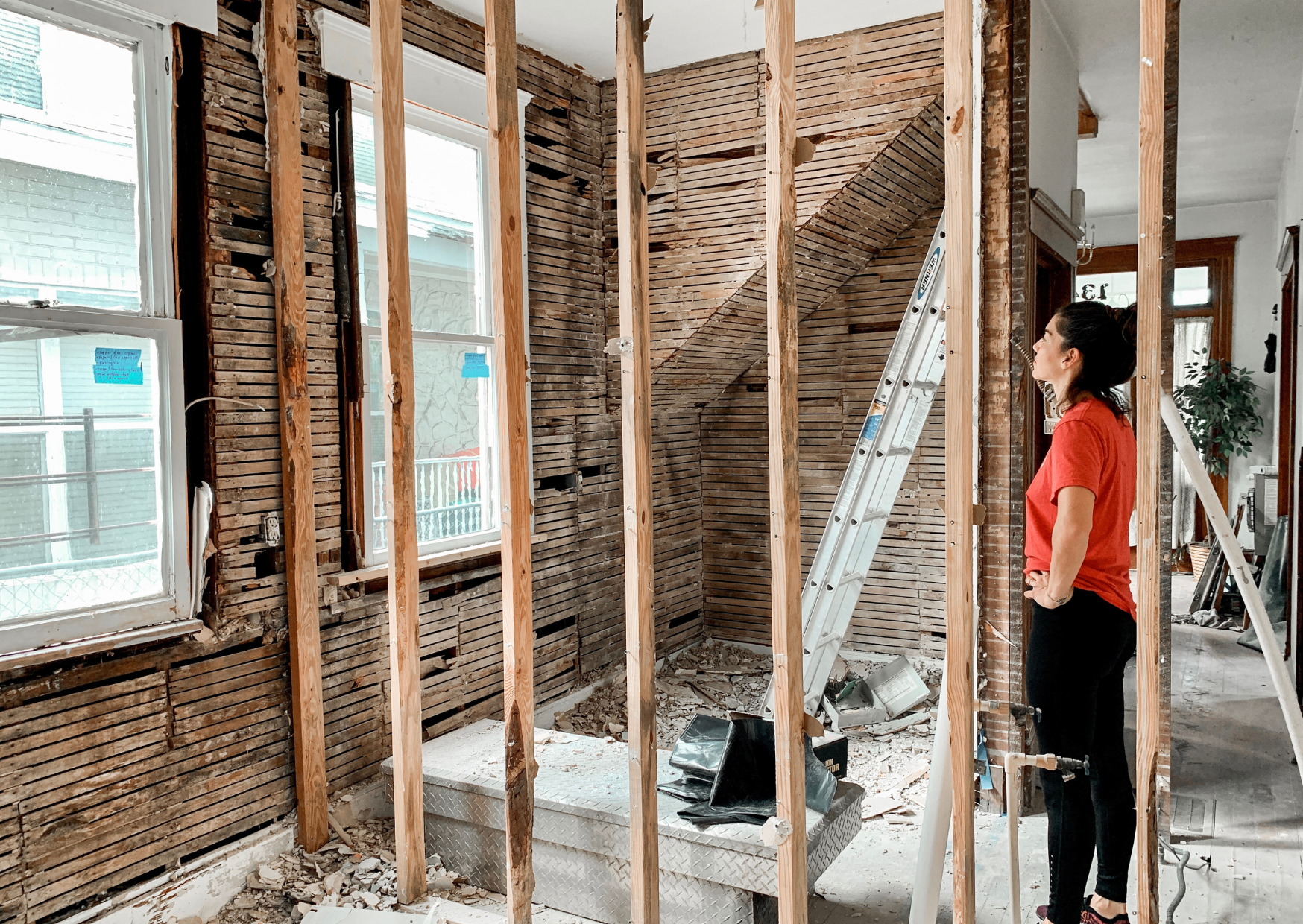
Europe isn’t “harder.” It’s just built around permits, older buildings, and trades that don’t exist to match your weekend timeline.
American DIY optimism dies in Europe in a very specific moment.
It’s not when you see the charming tile. It’s not when you realize the walls aren’t straight. It’s not even when the kitchen quote comes back higher than expected.
It’s when you discover that “I’ll just start demo” is not a plan here. It’s a legal question, a building-community question, and sometimes a safety question that comes with paperwork.
In the U.S., a lot of renovation culture is built around speed and autonomy. Big box stores. Endless YouTube. Contractors who expect you to push. A baseline assumption that if you own it, you can change it.
In much of Europe, renovation is more like joining a system. You can absolutely do it, and locals do it every day. But the system expects you to move in a different order, with different constraints, and often with a lot more respect for the building’s age.
We live in Spain, so this is written from the “I’ve watched foreigners melt down over an apartment” point of view, not from a fantasy of renovating a château. The pattern is similar across countries, even if the forms and terms change.
Here are the five reasons Americans give up, and the fixes that stop a renovation from turning into an expensive rage hobby.
Reason 1: “It’s my house” meets permits, the town hall, and your neighbors

The first American instinct is to treat renovation like a private decision.
In many European places, it’s not private. It’s municipal. It’s communal. It’s sometimes historical.
In Spain, a lot of work runs through the local town hall, and the category matters. There’s a minor works permit concept (often referred to as obra menor) and a major works permit concept (often obra mayor), and the timelines can be measured in weeks or months depending on what you’re doing and where. If your project touches structure, façades, or anything that changes the building’s exterior, you are no longer in “weekend DIY” territory.
In France, the trap is similar but the vocabulary changes. Plenty of exterior changes and modest expansions can trigger a déclaration préalable process. Again, it’s not about punishing you. It’s about planning rules and protected areas, which are much more common than Americans expect.
In the UK, electrics are the classic DIY confidence-killer. Part P applies to electrical work in dwellings, and some work is notifiable and expects building control involvement unless done by a registered electrician.
This is where Americans burn out: they start work, then discover they should have asked first, and then everything gets slower and more expensive.
The fix is boring and powerful: treat the permit path as Step Zero. Before you buy materials, you learn what category your project is in, and what the building community expects. And yes, in apartments, the community of owners can matter. You’re not just renovating a box. You’re renovating inside a shared machine.
Reason 2: European buildings are older, and they fight you in invisible ways
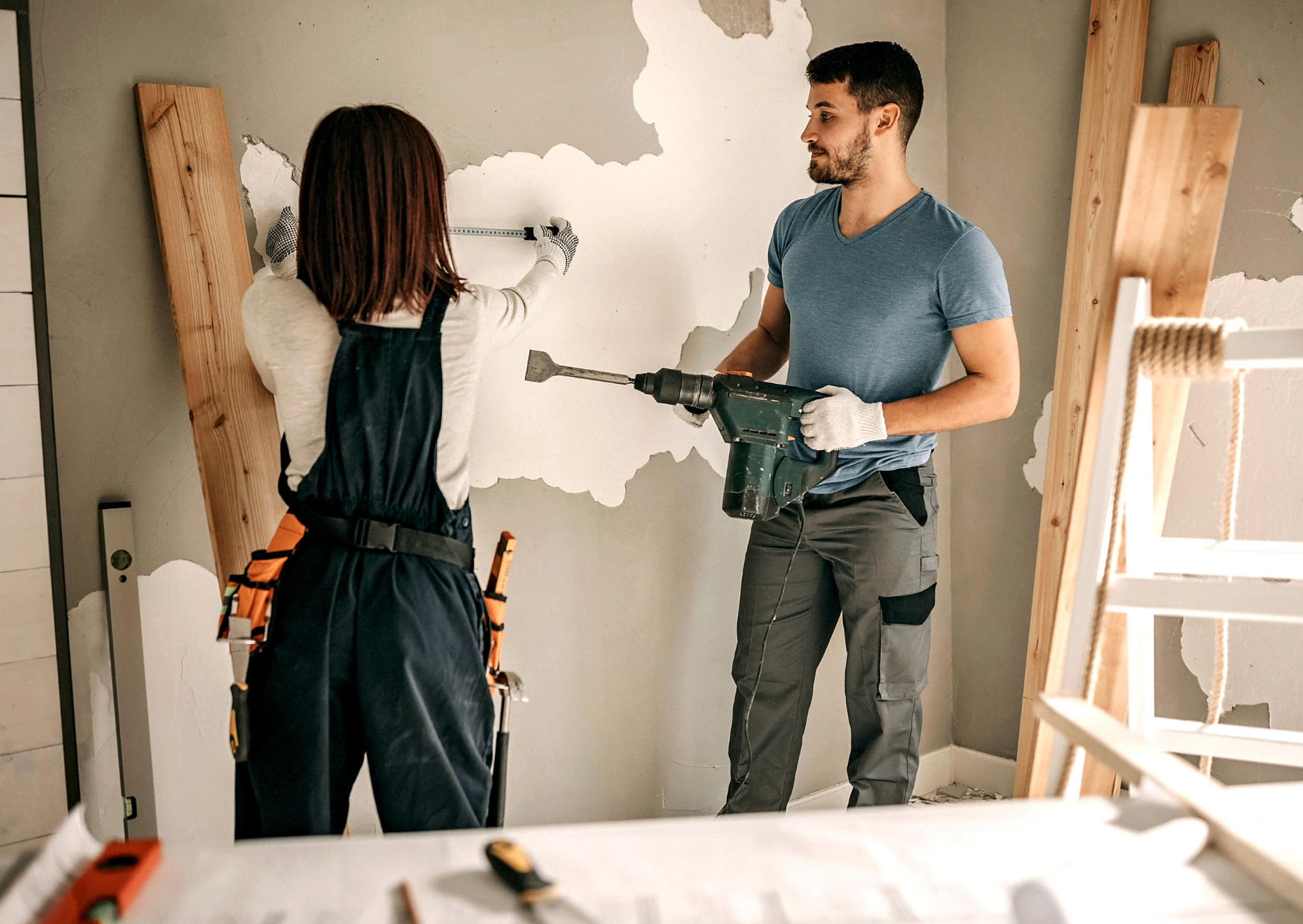
The second reason Americans quit is not cultural. It’s physical.
European building stock is often older, and “older” doesn’t just mean charming. It means surprises. Layers. Past repairs done by someone’s cousin. Wiring that was updated halfway. Plumbing that looks fine until you touch it.
An American DIY mindset expects standardized cavities, predictable framing, and materials that behave the same from one house to the next. In older European buildings, you can find walls that are stone, brick, hollow clay, or a patchwork of all three. You open one section and discover the previous owner solved a problem with whatever was available in 1997.
Then there’s the stuff people do not want to talk about: hazardous materials. The EU banned asbestos use in 2005, but the Commission has noted that many older buildings still contain asbestos because so much stock was built before the ban. Renovation can expose it, and suddenly your “DIY weekend” becomes a specialist job with safety rules and real costs.
Even without asbestos, you get the everyday European traps:
- Moisture issues that don’t show until you repaint.
- Floors that are not level, which makes modern cabinetry a nightmare.
- Electrical layouts that feel illogical if you expect American circuits and box standards.
- Window replacements that trigger building-wide rules.
Americans often interpret this as “Europe is backwards.” It’s not. It’s old building reality. The building has lived longer than you have, and it’s going to make you earn your clean lines.
The practical fix is to budget for discovery. You assume there will be something behind the wall. You build a contingency both in time and money. And you choose early wins that are reversible: paint, lighting that doesn’t require major rewiring, flooring overlays where appropriate, and improvements that don’t trigger structural questions.
Reason 3: Trades culture is not “fast, flexible, and text me anytime”
This is the one Americans take personally.
In many places, trades aren’t trying to win your business like a service industry. They’re busy. They have their own rhythms. They are not built around instant replies.
You’ll see patterns that feel shocking if you’re used to U.S. contractor culture:
- Quotes take longer, and sometimes never arrive.
- Schedules are fluid, especially around holidays and summer.
- Work is segmented. One person does demolition, another does plumbing, another does electrical, and you are the reluctant project manager.
- A small job might be unattractive because it interrupts larger, steadier work.
There’s also a cultural difference in what a “good client” looks like. In the U.S., pushing can sometimes get you priority. In Europe, pushing can get you quietly deprioritized. People want a client who is clear, patient, and pays on time. Calm is currency.
This is why American DIYers give up. They think, “I’ll just hire people for the hard parts,” and then they can’t line up the hard parts in the right order.
The fix is to renovate like locals do: slower, more planned, and in phases.
You also need to change your communication expectations. Instead of chasing five trades at once, you find one reliable person, ask who they work with, and build a small network. In a lot of European places, work moves through relationships, not through Yelp-style shopping.
And you plan around the calendar. If you try to run a renovation during peak holiday periods, you will suffer. Timing beats willpower, and it also beats your desire to be finished by June.
Reason 4: The money math looks cheaper until VAT, invoices, and “one more thing” arrive

Americans love the headline: “Renovation costs less in Europe.”
Sometimes it does. Sometimes it doesn’t. The real difference is how the costs show up.
First, VAT is baked in. Prices often include it, which feels clean, but it also means the baseline number can be higher than Americans expect when comparing to U.S. pre-tax pricing. Second, renovation is full of small purchases that are easy to ignore: extra adhesives, extra trim, delivery fees, disposal, special tools in metric sizes, and the “we need a dehumidifier right now” moment.
Third, energy standards are increasingly part of the renovation conversation in Europe. EU policy has been pushing renovation and building performance improvements for years, through efforts like the Renovation Wave and updates to building performance rules. Even if you’re not personally chasing an energy upgrade, the market is moving that direction, and the costs show up in windows, insulation decisions, and heating and cooling choices.
The most common American budget error is building a spreadsheet that assumes the first quote is the full cost. It rarely is. Not because people are dishonest, but because the building reveals more as you go.
A sane European renovation budget usually has:
- The planned costs.
- A contingency of 10 to 20 percent minimum.
- A “pause fund” for delays and temporary living costs if something takes longer.
The emotional difference is important too. Americans often feel calm when the renovation is moving fast, even if it’s expensive. Europeans often feel calm when the renovation is controlled, even if it’s slower. Control is the luxury, not speed.
Reason 5: “Done” means something different, and the finishing gap can break you
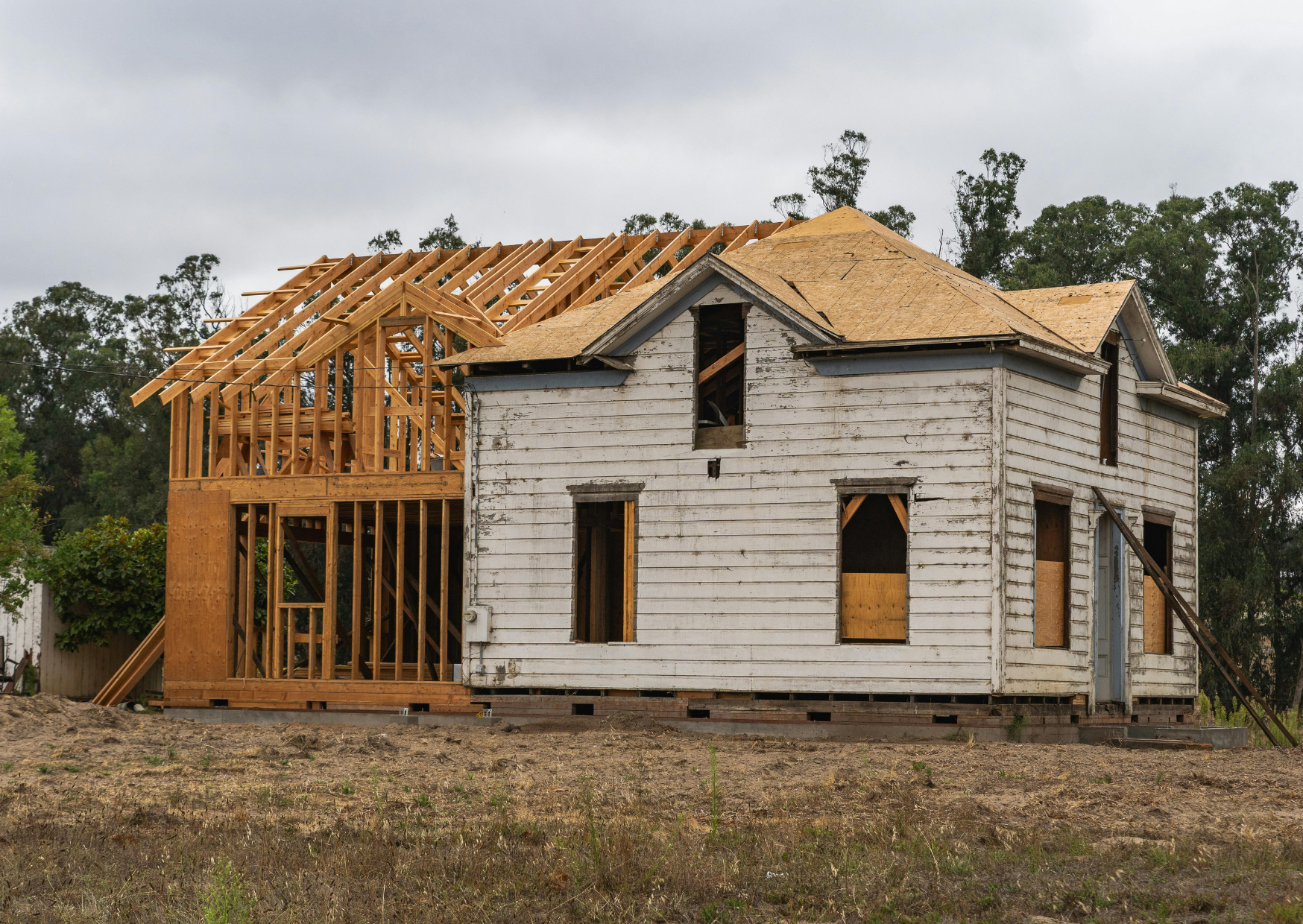
This is the quiet killer. People survive permits. People survive trades. People survive surprise costs.
Then they hit the finishing stage and realize the project isn’t matching the picture in their head.
Some of this is taste. European interiors often prioritize durability and practicality over the American obsession with perfectly aligned drywall and giant open-plan everything.
Some of it is technical. Old walls aren’t square, so your cabinet line won’t be perfect unless you spend money on correction work. Tile work can be excellent, but the standards you’re used to might not be the standards your installer assumes. Paint finishes vary. Doors might be slightly off. Grout lines might be thicker than you imagined.
There’s also a material mismatch. A lot of American DIY plans assume products that are easy in the U.S.: standard-size cabinets, endless big box choice, and familiar fittings. In Europe, you can absolutely get good materials, but the catalog is different, and the sizes are different, and the supply chain is different. You learn quickly that metric is not a suggestion.
This is where Americans quit. They hit the stage where 80 percent is finished and the last 20 percent is all fiddly decisions. That last 20 percent is where time disappears and relationships get tested.
The fix is to define “done” early in a way that matches Europe. Decide what matters and what doesn’t. Spend your perfection budget on two or three visible wins: good lighting, clean paint, solid floors, and a kitchen layout that functions. Let the rest be human. A European renovation that works is often one that feels lived in, not showroom-perfect.
The first week that decides whether your renovation survives
If you want a European renovation to work, the first week is not demolition week. It’s planning week.
Here’s the order that saves people.
Day 1: Write the project in one sentence.
Not a Pinterest board. A sentence. “We are updating the bathroom without moving plumbing.” Or “We are improving insulation and windows, not changing layout.” That sentence becomes your boundary. Scope is safety.
Day 2: Identify what triggers permissions.
Exterior changes, structure, plumbing relocations, electrical changes, anything that touches common areas. In Spain, learn whether your work falls under obra menor or obra mayor logic. In France, learn whether a déclaration préalable is involved for what you want. In the UK, treat electrics like a compliance category, not a hobby.
Day 3: Do a “hidden problems” inspection.
Moisture, wiring age, plumbing access, and any suspicious materials. If the building is old, assume surprises and plan for them. The EU’s own guidance acknowledges asbestos is still present in older stock.
Day 4: Get one reliable person, not five flaky ones.
Find one trade or project manager figure who actually shows up, then ask who they work with. Network beats shopping.
Day 5: Build a contingency line that hurts slightly.
If it doesn’t hurt, it’s not real. Put 10 to 20 percent aside. If you’re living elsewhere during work, budget that too.
Day 6: Choose two “finish standards” and let the rest go.
Lighting and floors, or windows and heating, or kitchen function and paint. Pick two. Protect them.
Day 7: Schedule around the calendar.
If you’re pushing against holidays and summer slowdowns, adjust now. A renovation loses momentum fast when you’re waiting three weeks for one person.
If you do this week properly, you stop renovating like an American influencer and start renovating like someone who wants to live there.

About the Author: Ruben, co-founder of Gamintraveler.com since 2014, is a seasoned traveler from Spain who has explored over 100 countries since 2009. Known for his extensive travel adventures across South America, Europe, the US, Australia, New Zealand, Asia, and Africa, Ruben combines his passion for adventurous yet sustainable living with his love for cycling, highlighted by his remarkable 5-month bicycle journey from Spain to Norway. He currently resides in Spain, where he continues sharing his travel experiences with his partner, Rachel, and their son, Han.