
Comfortable is not luxury. It is a private place, predictable bills, food that is not panic-food, and enough breathing room that one surprise expense does not wreck your month.
If you want the honest version, $1,500 a month in Europe is not a magic spell. It is a rent problem disguised as a lifestyle dream.
In some cities, $1,500 means you can live alone, eat well, go out a bit, and still build a buffer. In others, the same $1,500 means you are “comfortable” only if you treat comfort like a strict routine and not a vibe.
For the currency math: on 17 December 2025, the ECB reference rate was EUR 1 = USD 1.1722, so $1,500 is about €1,280.
The $1,500 number that sounds generous until rent shows up

Americans hear $1,500 and imagine a clean, calm life because in many US cities that number barely covers a studio plus parking sadness.
In Europe, $1,500 can absolutely work, but the deal is different. You are not buying “cheap Europe.” You are buying a specific housing choice and a specific weekly rhythm.
Here is the blunt test.
If your one-bedroom rent (with building fees if applicable) lands around:
- €350 to €500, you have room to live like a person.
- €500 to €700, you can be comfortable, but you need a system.
- €700 to €900, you can still do it in some places, but you are living on the edge of “why am I doing this.”
- €900+, $1,500 stops being comfortable unless you are splitting costs.
That is why Madrid, Barcelona, Lisbon, and most of coastal “everyone wants to move here” Europe do not belong in this list. You can love them. You just cannot pretend they obey the $1,500 rule.
Also, this post is aimed at one adult living alone. For couples, $1,500 total is not the benchmark. For couples, the conversation becomes $3,000 combined, or one person earning and one person not spending like they are still in the US.
The template budget that keeps $1,500 from vanishing

You do not need a perfect spreadsheet. You need budget gravity, meaning money falls into the same buckets every month before you get cute with lifestyle.
A planning template that works across most of Europe on about €1,280 looks like this:
- Rent: €450 to €700
- Utilities (electric, gas if any, water): €80 to €160
- Internet and mobile: €25 to €50
- Groceries: €220 to €320
- Transport: €25 to €60
- Eating out and coffees: €90 to €180
- Pharmacy and small health costs: €20 to €60
- Household basics: €25 to €60
- Buffer: €80 to €200
That buffer is the difference between “comfortable” and “one bad week away from spiraling.” Buffer is comfort.
The other thing Americans miss is the calendar. Europe rewards repetition. Your life gets cheaper when you stop improvising meals, errands, and nights out. It is not moral. It is mechanical.
Now, the cities.
Spain on $1,500: Murcia and Valladolid

Spain is where a lot of people get emotionally overconfident. They visit, they see €2.50 coffee, and they assume everything else must be similarly cute.
Then rent arrives.
Murcia works because you can still find rents that do not eat your whole month. Numbeo lists a one-bedroom outside the center around €463 and in the center around €646.
Spain-wide, Numbeo’s estimated monthly costs for a single person (excluding rent) are about €706.
If you land Murcia with a €500 to €600 rent, your month can look like:
- Rent €550
- Life costs €650 to €700
- Leaves roughly €30 to €80 for extra buffer, or you create buffer by cooking at home and staying off delivery
It is tight-but-real, especially if you live like locals do: shorter grocery runs, repeat lunches, and public transit instead of “I guess we need a car.”
Valladolid is quieter, colder, and way less internet-famous, which is exactly why the math can work. Numbeo shows one-bedroom outside center around €426 and estimated single-person costs excluding rent around €816.
That adds up to roughly €1,242 before you build much cushion. So the Valladolid version of comfortable is not luxury. It is low-drama stability, meaning you cook, you walk, and you do not try to recreate an American “treat yourself” schedule.
If you want Spain on $1,500, think “regional city, not headline city,” and accept that housing selection is the whole game.
Portugal on $1,500: Coimbra
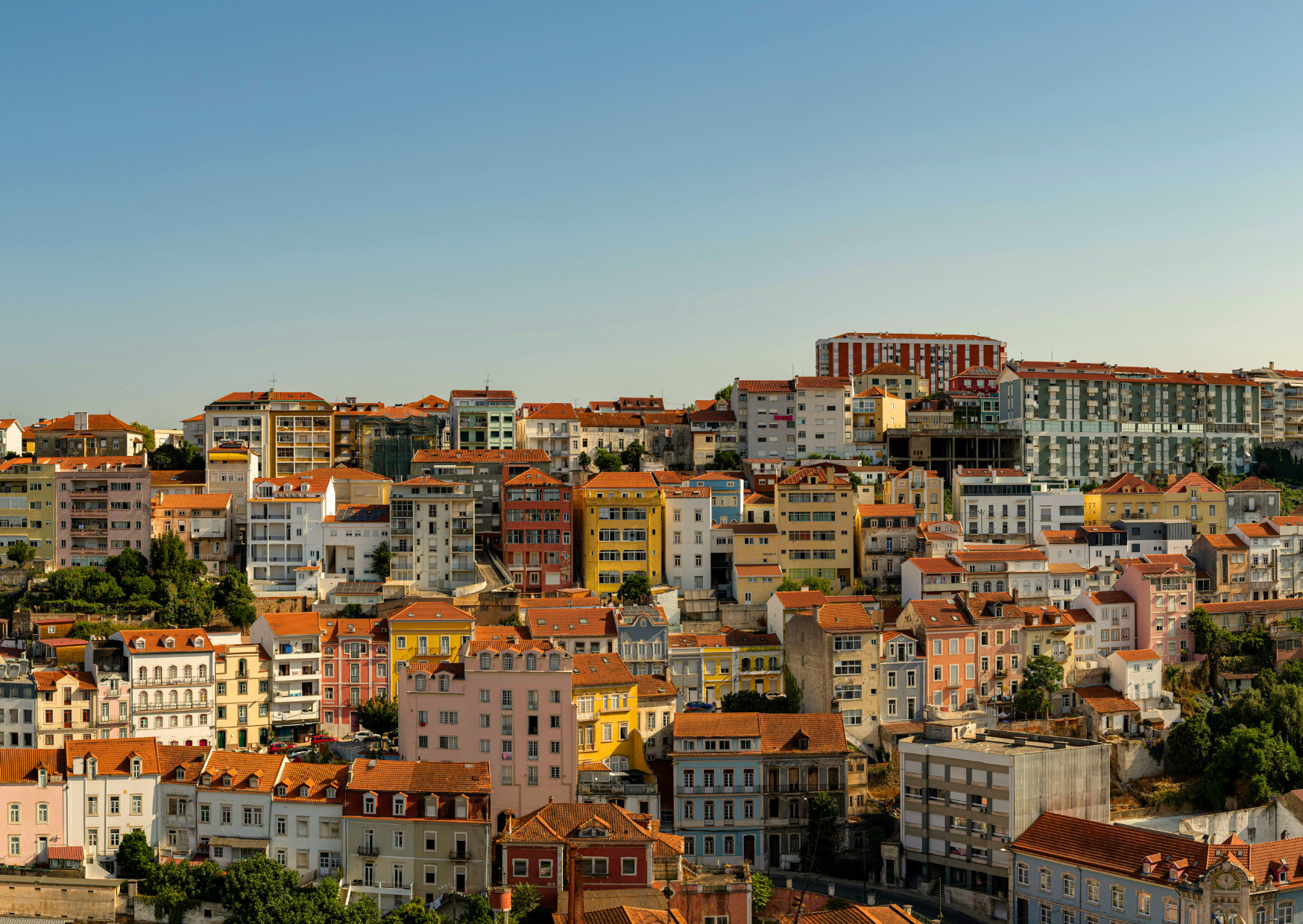
Portugal is the country people romanticize hardest and then act surprised when the bill is real.
Coimbra is one of the few places where the $1,500 plan can still survive, but it is not effortless. Numbeo shows one-bedroom outside the center around €573 and estimated single-person costs excluding rent around €650.
That puts you around €1,223 before your buffer.
So what makes it work?
- You aim for outside-center rent and do not chase the prettiest apartment you saw on social media.
- You keep eating out modest. Coimbra has students. The city is built for affordable daily life if you do not turn every meal into a performance.
- You budget one “Portugal tax,” which is the cost of being a foreigner for a while: deposits, paperwork fees, translation moments, small mistakes you pay to fix.
If you are the kind of person who needs weekly restaurant dinners to feel alive, Coimbra on $1,500 will feel restrictive. If you like routine, markets, and a walkable life, it can feel genuinely good.
The trick is to treat the budget as a shape, not a punishment. Rent ceiling first, everything else follows.
Greece on $1,500: Thessaloniki

Thessaloniki is one of the best answers for “I want a real city, not a tiny town, and I still want my budget to behave.”
Numbeo lists a one-bedroom outside the center around €397, and estimated single-person costs excluding rent around €768.
That totals roughly €1,165, leaving about €115 for buffer.
That buffer matters because Greece can have seasonal swings in utilities, and you want room for the occasional taxi, train ticket, or a month where you do more social life than planned.
Why Thessaloniki works on this budget:
- It is walkable and transit-friendly, meaning you are not forced into car spending.
- Food culture supports “normal life” spending. You can eat well without turning it into a constant splurge.
- Rent-to-life-cost balance is simply better than the Greek islands fantasy.
If you want “Mediterranean vibe” without island pricing, Thessaloniki is a practical choice that still feels like a city with energy, not a retirement holding pen.
Eastern Europe on $1,500: Plovdiv and Timișoara
This is where Americans start thinking the numbers are fake, because the buffer finally becomes real.
Plovdiv is the kind of city where you can live a normal European life and still save, not just survive. Numbeo shows a one-bedroom in the city center around 853 BGN, and comparisons put that around €422.
Estimated single-person costs excluding rent are listed around 1,128 BGN.
Even with a decent apartment, you are often landing well under €1,200 total. That means you can fund travel, build an emergency cushion, or just stop obsessing over every grocery receipt. Savings becomes normal.
A Bulgaria note that matters for planning: Bulgaria is set to adopt the euro on 1 January 2026, with the conversion rate fixed at 1.95583 BGN per EUR.
That does not automatically make life expensive, but it does affect how you think about currency and pricing psychology.
Timișoara is another strong “live well, spend less” city, with enough culture and university energy to keep it from feeling sleepy. Numbeo lists one-bedroom outside the center around 1,672 RON and in the center around 2,331 RON.
Comparisons put the city-center one-bedroom around €458.
If you are living on €1,280, Timișoara gives you something rare: room for mistakes. You can over-spend one month and not ruin your year.
Outside the euro bubble: Tirana and Tbilisi

These are the “yes it’s cheaper, but be honest about the trade-offs” cities.
Tirana is popular because it can feel Mediterranean-adjacent, energetic, and much less expensive than western capitals. Numbeo lists a one-bedroom outside center around 45,517 ALL and in the center around 70,496 ALL.
Comparisons put a center one-bedroom around €732.
The budget can work, especially if you rent outside the center and keep your routine simple. The trade-off is that you are navigating a different institutional environment than Spain or Germany. Things can be more manual. You may spend more time solving basics. Comfort is not only money. It is friction level.
Tbilisi can be a shock in a good way. Numbeo lists one-bedroom outside center around 1,253 GEL and in the center around 1,932 GEL.
Comparisons put the center rent around €612.
Estimated single-person costs excluding rent are listed around 1,700 GEL.
So yes, the math can be excellent. The trade-off is that your planning has to include currency swings, bureaucracy differences, and the reality that not every “European city” operates with the same safety nets or consumer protections people assume in the EU.
If you want the cheapest possible comfortable life, these cities can deliver. If you want the easiest possible life, “cheap” is not the whole story.
Pitfalls most movers miss
This is where $1,500 falls apart for people who swear they are “good with money.”
- Paying landing-phase rent forever
Short-term rentals, Airbnb months, and foreigner-friendly setups can quietly double your housing cost. - Treating eating out as a default setting
In most of Europe, the affordable lifestyle assumes you cook often. You can still enjoy restaurants, but you cannot outsource your basic calories to cafés and call it budget-friendly. - Building an American subscription lifestyle in Europe
Streaming, delivery memberships, random “productivity” apps, and subscriptions you forget. They are small until they are not. - Ignoring deposits and setup costs
First month, last month, deposits, basic household stuff, transit cards, document fees. Your monthly budget needs a one-time landing buffer. - Trying to live in the postcard neighborhood
The pretty center is not a moral victory. It is a cost choice. On $1,500, the winning move is often “one neighborhood out” with better rent and still-good access. - Not budgeting for admin friction
Appointments, translations, document renewals, and the occasional paid help when you are stuck. It is not always expensive, but it is real.
If you want comfort, stop thinking like a tourist. Tourists spend for convenience. Residents spend for repeatability. Repeatability is affordability.
Your next 7 days: price-test a city like a local before you commit
Do this before you fall in love with a place and start defending it online.
Day 1: Pick your hard rent number
Write the maximum rent you will pay. Not what you hope. Your actual ceiling. Rent sets the entire month.
Day 2: Choose the two neighborhoods you can actually afford
One slightly central, one practical and residential. Only those.
Day 3: Build a real grocery week
Plan five dinners you would actually eat. Price them with local supermarkets, not expat specialty shops.
Day 4: Run the transit life
Map your “normal week” without a car. Work, gym, errands, one social night. If the city forces taxis, your budget will bleed.
Day 5: Price the boring setup costs
Deposits, basic household items, SIM plan, transit card, and the first month of admin tasks.
Day 6: Stress-test the buffer
Assume one surprise cost this month. Medical, home repair, a flight, a document mistake. If you cannot absorb it, you are not comfortable.
Day 7: Make the decision nobody wants to make
Either accept the lifestyle constraints that keep $1,500 workable, or raise your budget target. That is the honest fork.
A comfortable life on $1,500 exists in Europe, but it is not evenly distributed. In Western Europe, you win by controlling rent and living simply. In parts of Eastern Europe and the Balkans, you win by finally having breathing room.
Pick which version you actually want, then build your month around it.

About the Author: Ruben, co-founder of Gamintraveler.com since 2014, is a seasoned traveler from Spain who has explored over 100 countries since 2009. Known for his extensive travel adventures across South America, Europe, the US, Australia, New Zealand, Asia, and Africa, Ruben combines his passion for adventurous yet sustainable living with his love for cycling, highlighted by his remarkable 5-month bicycle journey from Spain to Norway. He currently resides in Spain, where he continues sharing his travel experiences with his partner, Rachel, and their son, Han.