
If your feed says kimchi is ready after a long weekend, your palate is being short-changed. The magic needs time, cold, and patient bubbles.
Walk through a Seoul market in late autumn and you will see cabbage pyramids, salted leaves draining in nets, and families packing jars for winter. That scene is not theater. It is a timetable. Traditional kimchi is built to ripen slowly at low temperature until its acidity, aroma, and crunch line up. Quick jars can be tasty for a few days, but they stop short of the point where lactic acid bacteria reshape cabbage into something deeper, brighter, and longer-keeping. There is a reason many Korean sources call a batch well ripened only after about three weeks at fridge-like temperatures. That window is where the microbes, the brine, and the texture agree.
Below is the plain-language science of why three weeks matters, the temperatures that make it work, and a step-by-step method you can use at home to make a clean, safe, fully developed kimchi without guessing.
What “real” fermentation does that three days cannot
Kimchi is not just spicy salad. It is a controlled souring that moves through stages, each with a different dominant microbe and flavor. In the early days, Leuconostoc mesenteroides leads and makes a little carbonation and mannitol sweetness that softens the heat. As the brine acidifies, hardier Lactobacillus species take over and drive the pH lower. That second act delivers the rounded, complex tang people chase in mature kimchi, the kind that stands up in jjigae or pancake batter without turning flat. Short ferments never let that hand-off complete, so you taste spice and salt, but less depth. Controlled studies and reviews describe exactly this succession and tie the best eating to a target acidity and pH that usually arrive after more than a few days, especially when you hold the jar cool.
Key idea: time, temperature, and acidity move together. When you run the clock at the right cold, you get complexity with crunch instead of a quick, sharp sour that collapses the leaf.
The temperature window that builds flavor instead of mush
Fermentation speed is not a virtue by itself. At room temperature, acidity can spike in three to four days, which is why fast recipes say you are done. At cold-cellar or refrigerator temperatures, around 4 to 5 degrees Celsius, the same acidity and the preferred flavor compounds develop more slowly, typically two to three weeks. That slower path lines up with the point many Korean sources label as optimally ripened: pH about 4.2 to 4.5 with titratable acidity around 0.6 to 0.9 percent. Consumer and lab studies repeat the same pattern. Warm goes fast and tastes simple. Cool goes slow and tastes complete.
Memorize this: 4 to 5 Celsius, 2 to 3 weeks, pH near 4.2. Those three numbers describe ripe kimchi more reliably than any calendar alone.
Why the winter tradition points to the same timetable
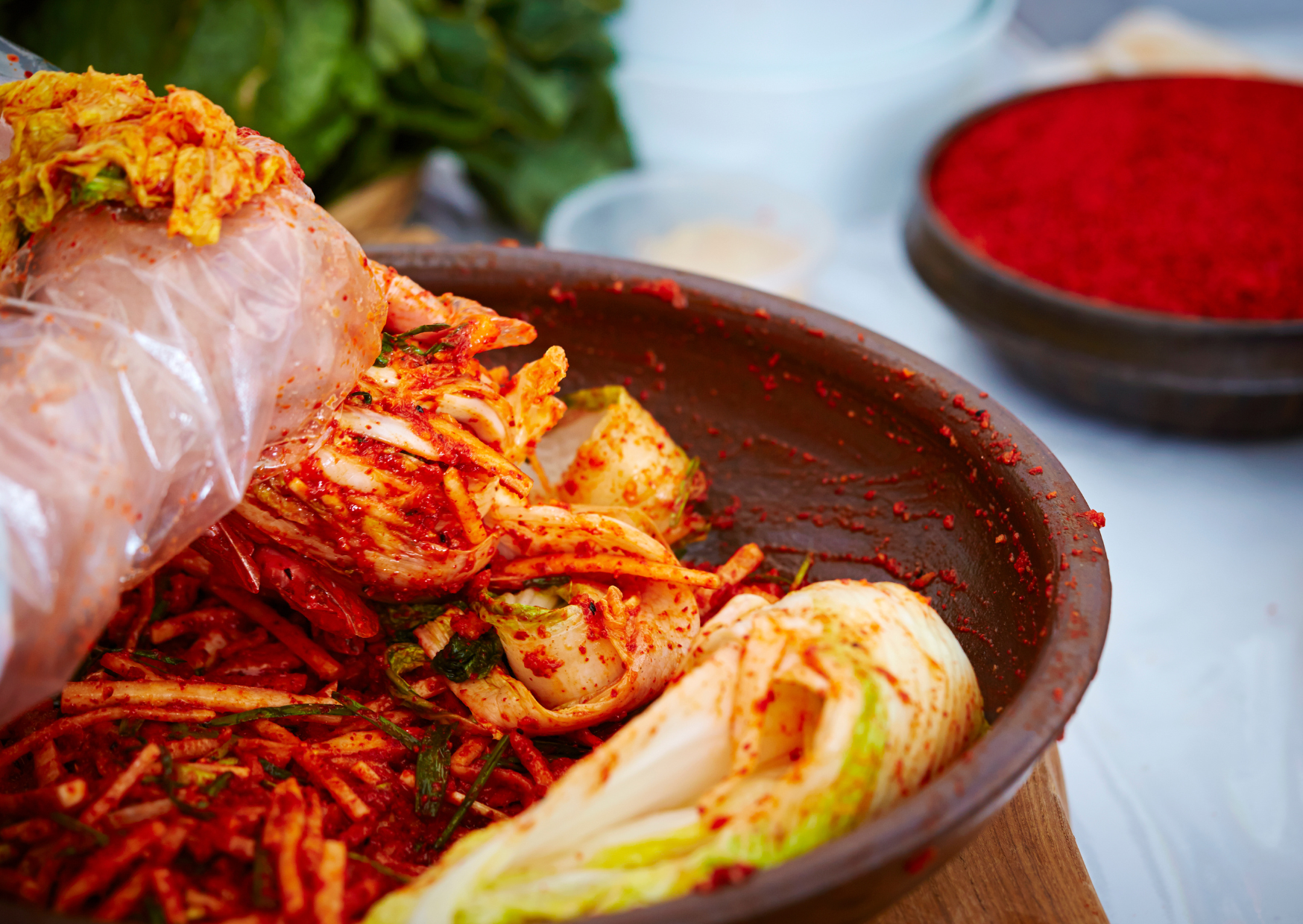
Kimjang, the autumn ritual of making jars to last the winter, is cultural proof of the schedule. Families salted cabbage, packed jars, then kept them cool so the souring could happen slowly through early winter. Cold air, earth cellars, and clay jars made the thermometer decisions for them. Modern home cooks use refrigerators and dedicated kimchi units to mimic the same curve. The idea has not changed: start the jar, move it to the cold, wait for the bubble rhythm to slow, and eat when the brine tastes bright and round. Kimjang, winter storage, and slow ripening are three parts of one habit.
Bottom line: tradition is not nostalgia. It is a temperature program you can reproduce with your fridge today.
Safety is flavor: salt, submersion, and a pH that protects
Good kimchi tastes better because it is safer. You are aiming for a salt level that favors lactic acid bacteria, a tight pack so all leaves stay under brine, and enough time for those bacteria to pull the pH under 4.2, which keeps spoilers in check. Public food safety guides treat that pH threshold as the definition of a successful ferment. If a batch does not acidify on schedule, you do not try to rescue it. You discard and correct your salt, temperature, and packing on the next run. Salt around two percent, full submersion, and clean containers make most problems disappear.
Remember: submerge, seal, sour. Those three conditions are the safety rails for every jar you make.
A three-week, low-temperature method you can trust
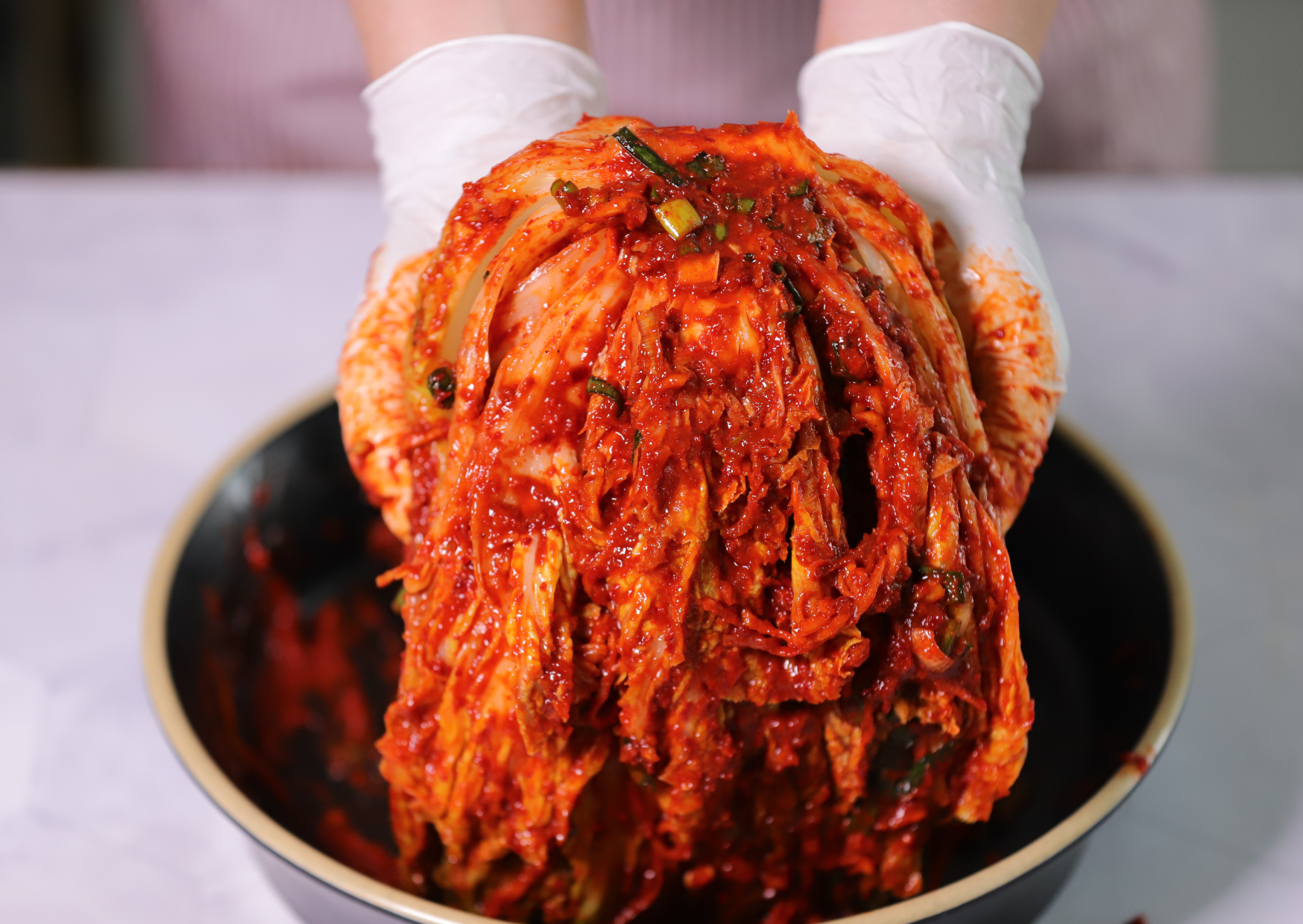
This is a classic baechu kimchi built for a cool, slow ripening. The amounts fit two standard 1-liter jars.
Ingredients
• 2 medium Napa cabbages, about 2.5 kilograms trimmed
• 60 to 70 grams fine sea salt for dry salting, plus 1 tablespoon dissolved in water to top up brine if needed
• 300 grams Korean daikon, peeled and cut in matchsticks
• 6 to 8 scallions, cut into 3-centimeter pieces
• 50 to 70 grams Korean chili flakes, gochugaru, to taste
• 30 grams minced garlic
• 20 grams minced ginger
• 50 grams fish sauce, or a mix of fish sauce and salted shrimp jeot if you use it
• 10 grams sugar or 1 small grated Asian pear for gentle sweetness
• Optional 1 small onion, grated, for body
Step 1. Salt the cabbage
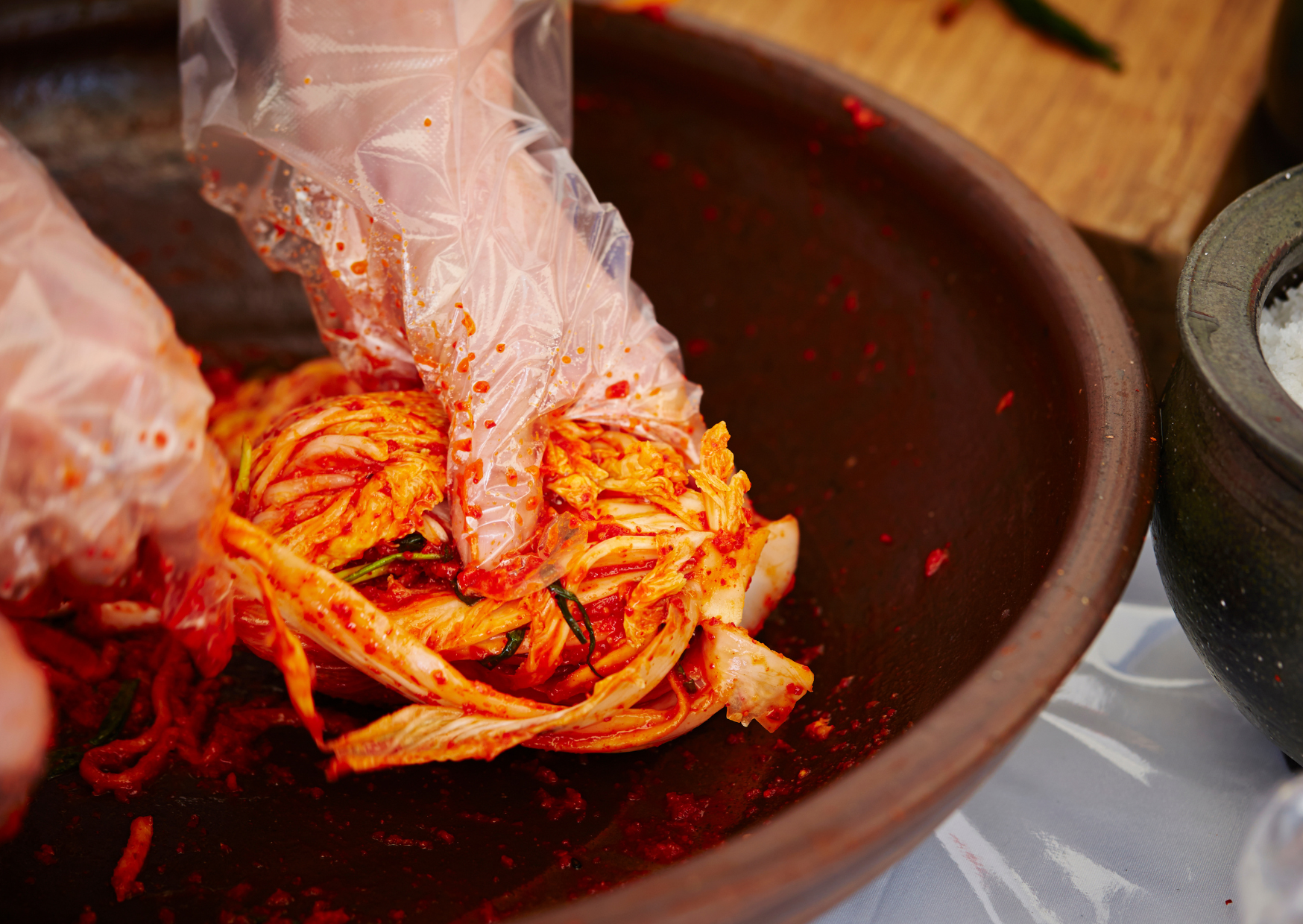
Quarter the cabbages lengthwise and cut away only the thickest core. Rinse, drain, and toss with the measured salt. Work the salt between leaves so moisture can leave evenly. Leave at room temperature for 90 to 120 minutes, tossing twice. You want flexible leaves and a puddle of brine.
Step 2. Rinse and drain
Rinse briefly to remove surface salt. Let halves drain in a colander for 20 to 30 minutes. Excess rinse water dilutes the paste and brine, so let gravity do the work.
Step 3. Make the seasoning paste
Stir the gochugaru, garlic, ginger, fish sauce, and sugar or pear into a thick paste. Fold in the daikon and scallions so the vegetables carry the paste into the leaves. You want a sticky, spreadable mixture that clings. Bold flavors, even coverage, no dry spots are the goals here.
Step 4. Pack
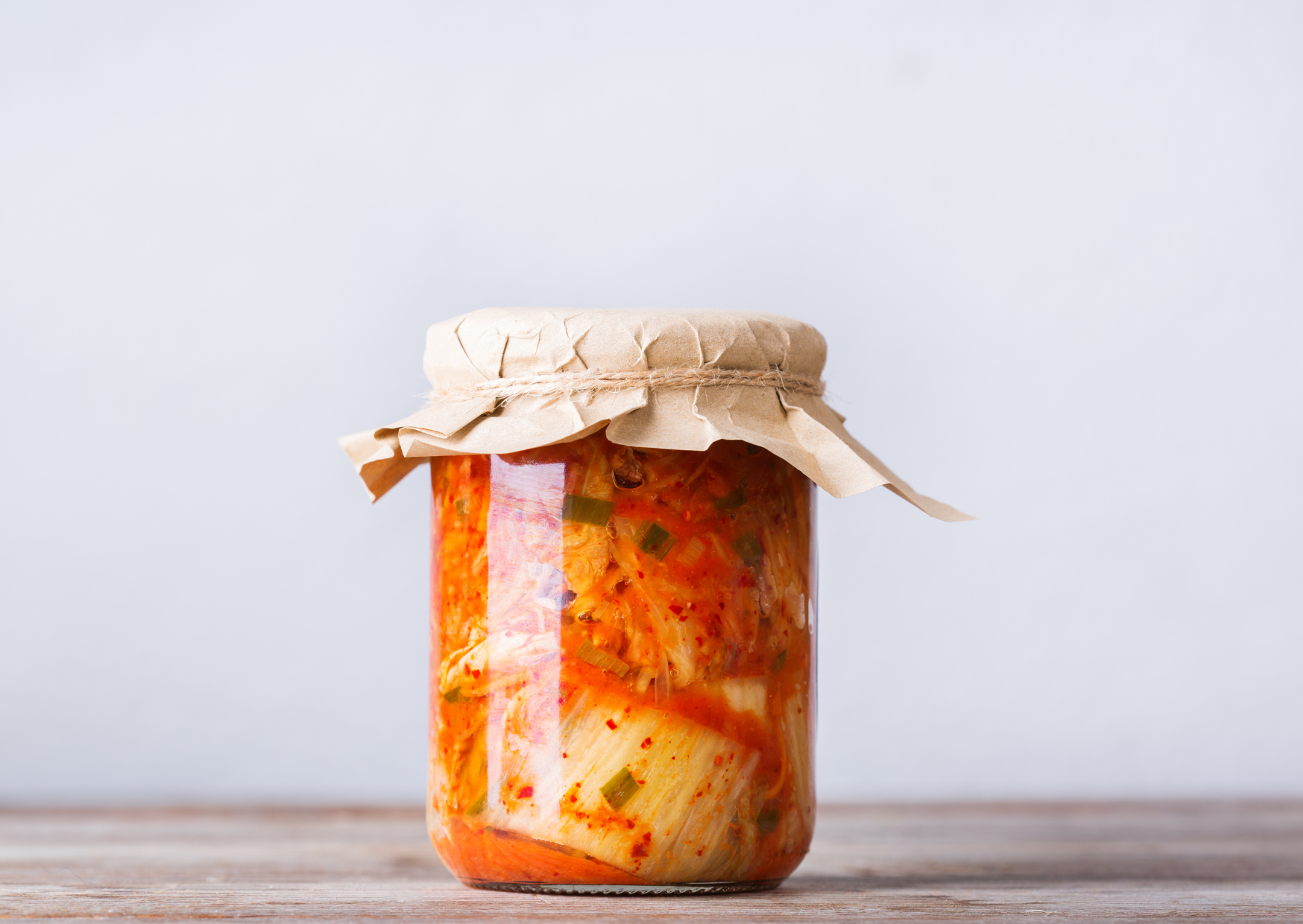
Spread paste between leaves, then roll each quarter into a bundle. Pack tightly into clean jars, pressing down so brine rises. Leave at least 3 centimeters headspace. If brine does not cover the top leaf, add a splash of lightly salted water. Seal with fermentation lids or leave the cap slightly loose to let gas escape. Tight pack, covered leaves, visible brine mean you did it right.
Step 5. Start, then chill
Kickstart at cool room temperature for 24 hours so the first bubbles appear. Then move the jars to the coldest shelf of your refrigerator, ideally close to 4 to 5 Celsius. You are now on the three-week clock that builds the flavor you want. Start warm, finish cold, wait.
Step 6. Keep it submerged
Once a day for the first week, open, press the bundles under brine, and reseal. As carbon dioxide fades, the leaves will stay under on their own. If a little white film forms on the surface, skim it. That is usually harmless yeast. Colored growth, fuzzy texture, or off smells are a discard sign.
Step 7. Know when it is ripe
Taste a leaf at day 10, day 14, and day 21. As you ripen, the brine should smell clean and sour, the leaf should stay crisp, and the flavor should turn from raw heat to rounded tang with a tiny sparkle of gas on the tongue. If you test with strips, pH should be near 4.2 to 4.5. When it hits your target, keep the jars cold. Ripe kimchi holds weeks in the fridge and keeps evolving.
Three signals to trust: steady bubbles early, clean sour aroma, pH around 4.2. That trio tells you the jar is ready for prime time.
How the jar changes across the three weeks
Kimchi does not jump from raw to ripe. It slides.
Days 1 to 3: pepper and garlic are upfront, brine tastes lightly salty, small beads of gas rise. The texture is extra crisp. Good for raw side dishes and fresh salads. Fresh, salty-sweet, perky describes this stage.
Days 7 to 14: acidity builds, brine smells fruity from mannitol, heat feels softer. This is the sweet spot for fried rice, grilled cheese with kimchi, and cold noodles. Rounded, fruity, balanced fit here.
Days 21 to 30: acidity deepens, crunch holds if you salted well, and the brine tastes complete. This is jjigae and pancake territory. Deep, savory, sturdy is what you get now.
Troubleshooting the common misses
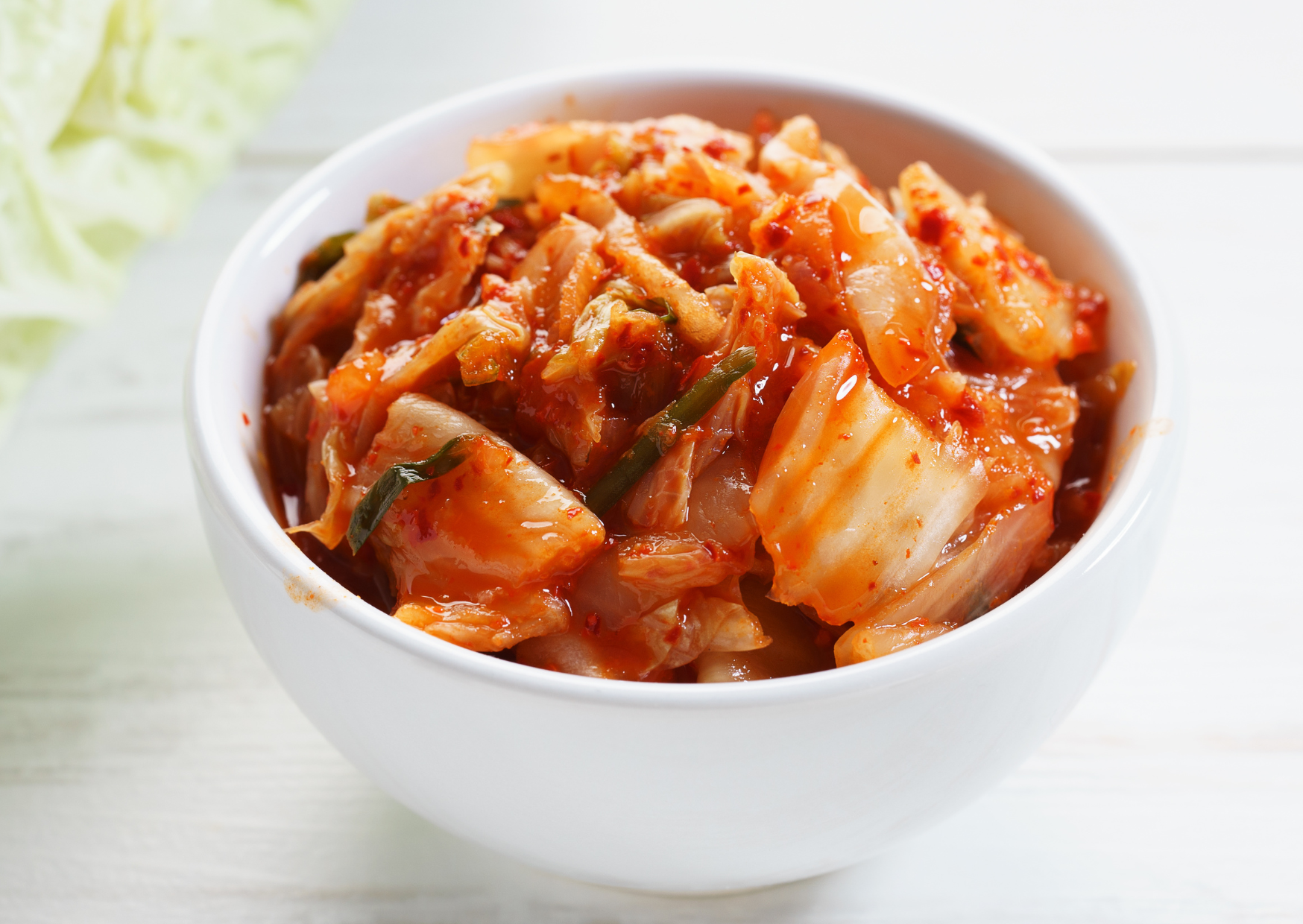
Too sour: you ran warm too long at the start or let weeks turn into months. Use the jar for stews and pancakes. Next time, shorten the room-temp start to 12 to 24 hours and move to cold sooner. Cooler start, earlier chill, gentler sour will fix it.
Mushy leaves: salt was low, temperature was high, or the cabbage was waterlogged. Hit about two percent salt by weight during salting, drain well, and hold the main ferment near 4 to 5 Celsius. Right salt, dry pack, cold shelf protects texture.
No tang after a week: the fridge is too cold or the lid too tight for gas to leave. Give the jar 6 to 12 hours at cool room temperature to restart, then return to cold. If pH does not drop under 4.6 after a reasonable time, discard. Check pH, reset temperature, do not nurse a failed batch.
Surface growth: thin white film that wipes away is usually kahm yeast and is cosmetic. Bright colors, fuzz, or rotten smells mean toss it. Skim white, bin fuzzy, trust your nose are the rules.
Why many quick recipes still taste fine for a few days
There is nothing wrong with enjoying very young kimchi. Plenty of restaurant cooks build recipes around three-day jars because the brightness works in raw uses and the turnover is quick. Just know that these jars are the first act. They are not a substitute for the balanced sour, subtle sweetness, and gentle prickle that arrive after a few weeks at low temperature. If your goal is the sour that lifts a stew without drowning it, the old timetable wins. Young for salad, ripe for heat, aged for cooking is a good way to think about it.
How to eat every stage without waste
Fresh stage: slice into thin ribbons for tofu salads, tuck into lettuce wraps, or fold through a potato salad with sesame oil. The goal is to show the crispness.
Ripe stage: stir-fry with rice and scallions, lay under melted cheese on toast, or toss with cold soba and cucumbers. You are using the acidity as a seasoning.
Aged stage: simmer in kimchi jjigae with pork belly, slip into jeon batter, or braise with mackerel and radish. The point is depth and fat-cutting sour. Match stage to dish, use brine like vinegar, cook the older jars and you will never throw any away.
Why three weeks is the sweet spot for most home fridges
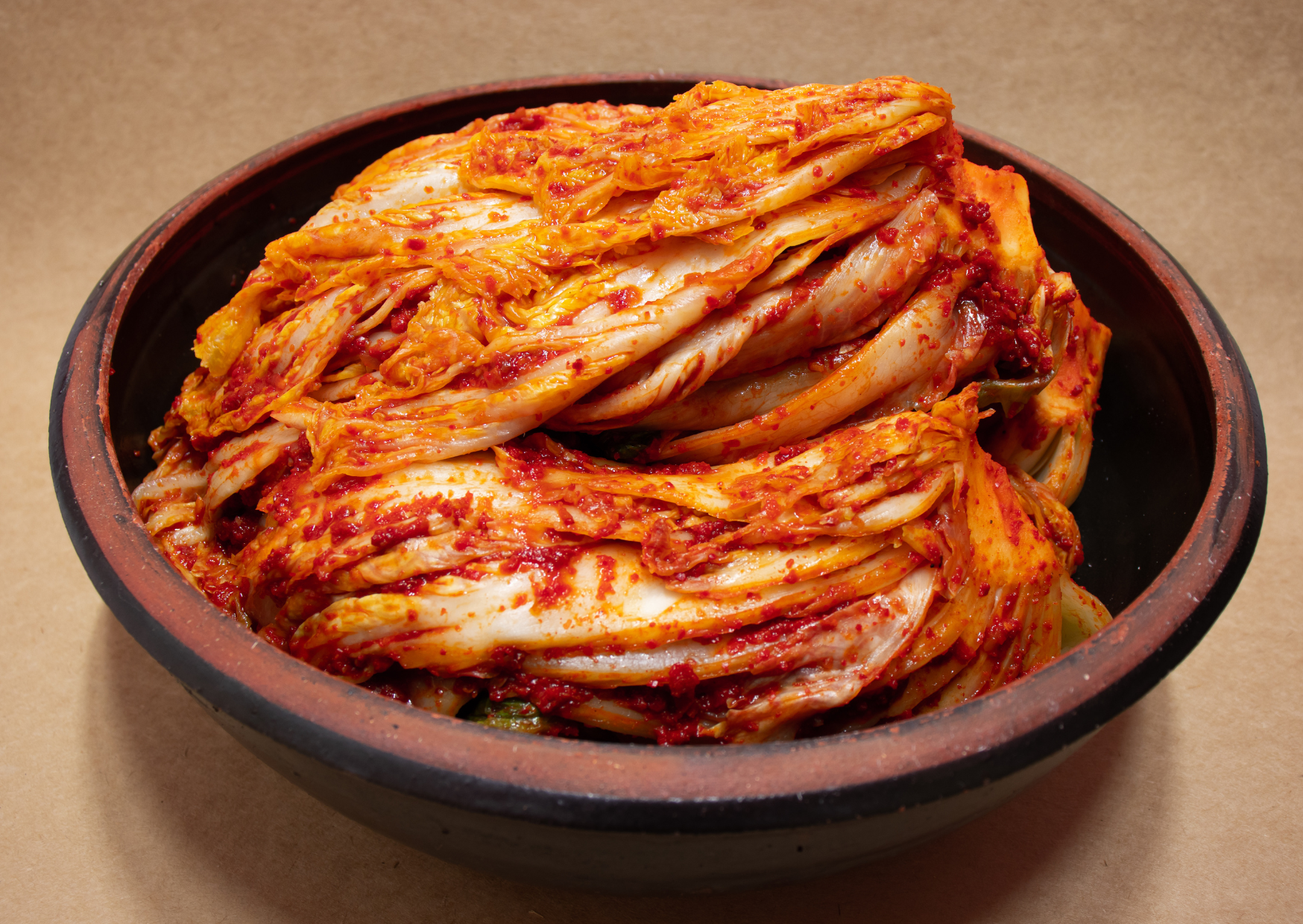
Commercial makers measure ripening with sensors. Home cooks use their senses. The place where those meet tends to be the third week. At that point, pH is living near the protective zone, lactic acid has replaced most of the sugars, and the crunch is still alive because a cold ferment slowed the enzymes that would otherwise break the walls too fast. You can continue to age jars colder and slower, but three weeks at fridge temperatures delivers what most people mean by ideal. Protective acidity, balanced flavor, intact crunch align there.
A quick checklist you can tape to the fridge
• Salt to about two percent by weight when you start.
• Pack tight so leaves stay under brine.
• Start for 12 to 24 hours at cool room temperature, then hold 4 to 5 Celsius.
• Taste at days 10, 14, and 21.
• Look for clean sour, tiny bubbles, and pH near 4.2 to 4.5.
• Keep cold once ripe and use the stage that suits your dish.
If you follow those six lines, you will make better kimchi than any three-day trend.
Origin and History
Kimchi is not a quick recipe born from convenience, but a preservation method shaped by necessity. In Korea, kimchi developed as a way to survive long winters when fresh vegetables were unavailable. Fermentation wasn’t optional; it was essential to sustain communities through months of scarcity.
For centuries, families gathered during kimjang, the seasonal tradition of making large batches of kimchi together. This was not a rushed process. The goal was to build flavor, stability, and nutrition that would last, which required time and patience rather than speed.
Fermentation knowledge was passed down generationally, not written as fixed recipes. Temperature, salt, vegetables, and timing were adjusted based on climate and season. What mattered was understanding the process, not shortening it.
Modern refrigeration changed storage, but it didn’t replace fermentation. Traditional kimchi still relies on time to develop complexity, proving that its purpose was never immediate gratification, but long-term nourishment.
In the U.S., kimchi is often treated as a spicy side dish that should be ready within days. This expectation clashes with Korean tradition, where early-stage kimchi is considered unfinished rather than complete.
Another misunderstanding is confusing seasoning with fermentation. Mixing cabbage with chili paste creates flavor, but fermentation creates transformation. The sourness, depth, and digestive benefits only emerge after microbial activity has time to work.
There’s also controversy around safety. Americans are often uncomfortable with long fermentation, assuming food must be refrigerated immediately to remain safe. Traditional kimchi challenges this fear, relying on salt, acidity, and beneficial bacteria for preservation.
What makes this topic contentious is speed culture. Modern cooking values immediacy, while kimchi demands trust in time. Shortcuts produce something edible, but not something traditional.
How Long It Takes to Prepare
Active preparation for kimchi takes surprisingly little time. Washing, salting, and seasoning vegetables usually requires a few hours spread across a day, much of it passive.
The real commitment begins after assembly. Traditional kimchi ferments slowly, often for two to three weeks, depending on temperature and preference. During this period, flavor deepens and sharpens naturally.
Early in fermentation, kimchi tastes fresh and mild. Around the second week, acidity develops, and complexity increases. By week three, the flavors integrate into the balance most Koreans recognize as “ready.”
This time investment is intentional. Kimchi is not meant to be rushed because fermentation doesn’t follow schedules it follows biology.
Serving Suggestions
Freshly fermented kimchi is rarely eaten alone. It’s served alongside rice, soups, and grilled foods, acting as contrast rather than centerpiece.
As kimchi ages, its role changes. Older kimchi is preferred for cooking, especially in stews, pancakes, and fried rice, where its acidity adds depth rather than sharpness.
Portions are modest. Kimchi is meant to stimulate appetite and aid digestion, not overwhelm the meal. A little goes a long way.
Serving kimchi at different stages of fermentation is common in Korea. Each phase has purpose, reinforcing why time matters.
Final Thoughts
Real kimchi takes three weeks because it’s not just food it’s a process. Time allows bacteria to transform vegetables into something more digestible, flavorful, and complex than seasoning alone ever could.
American versions aren’t wrong for being faster, but they are incomplete. Speed changes the outcome, not just the wait. What’s lost is depth, balance, and tradition.
Understanding kimchi’s timeline reshapes how we think about fermentation. It’s not about control, but cooperation with natural processes.
Three-week kimchi teaches a quiet lesson modern cooking often forgets: some of the best flavors can’t be rushed, and some foods are meant to mature before they’re enjoyed.

About the Author: Ruben, co-founder of Gamintraveler.com since 2014, is a seasoned traveler from Spain who has explored over 100 countries since 2009. Known for his extensive travel adventures across South America, Europe, the US, Australia, New Zealand, Asia, and Africa, Ruben combines his passion for adventurous yet sustainable living with his love for cycling, highlighted by his remarkable 5-month bicycle journey from Spain to Norway. He currently resides in Spain, where he continues sharing his travel experiences with his partner, Rachel, and their son, Han.