
The secret is not a high-speed blender or a packet. It is heat control, a sharp reduction, and patient emulsification that lets butter and egg yolk become silk. Give it 45 honest minutes, and Béarnaise tastes like the sauce you were promised.
Walk into a steakhouse in Paris and order Béarnaise, you will get a sauce that smells of warm tarragon and wine vinegar, with a fine shallot bite and a texture that rides the steak without drowning it.
Try to whip one up in ten minutes with whole butter and a food processor, and you will get something else. It will be thick, sure, but the flavor will be dull, the mouthfeel heavy, the herbs raw, and the gloss gone by the time the steak hits the plate.
Béarnaise is a timing sauce, not a gadget sauce. The 45 minutes are not busy minutes, but every phase matters. You make a reduction that tastes like the idea of tarragon, you build a stable yolk foam over a gentle bain-marie, and you drizzle in clarified butter slowly enough that the sauce decides to hold. Skip any part of that sentence and you get paste.
Below is the clear why, the clock you actually need, the errors that ruin it, and a recipe that is both classic and realistic in a home kitchen.
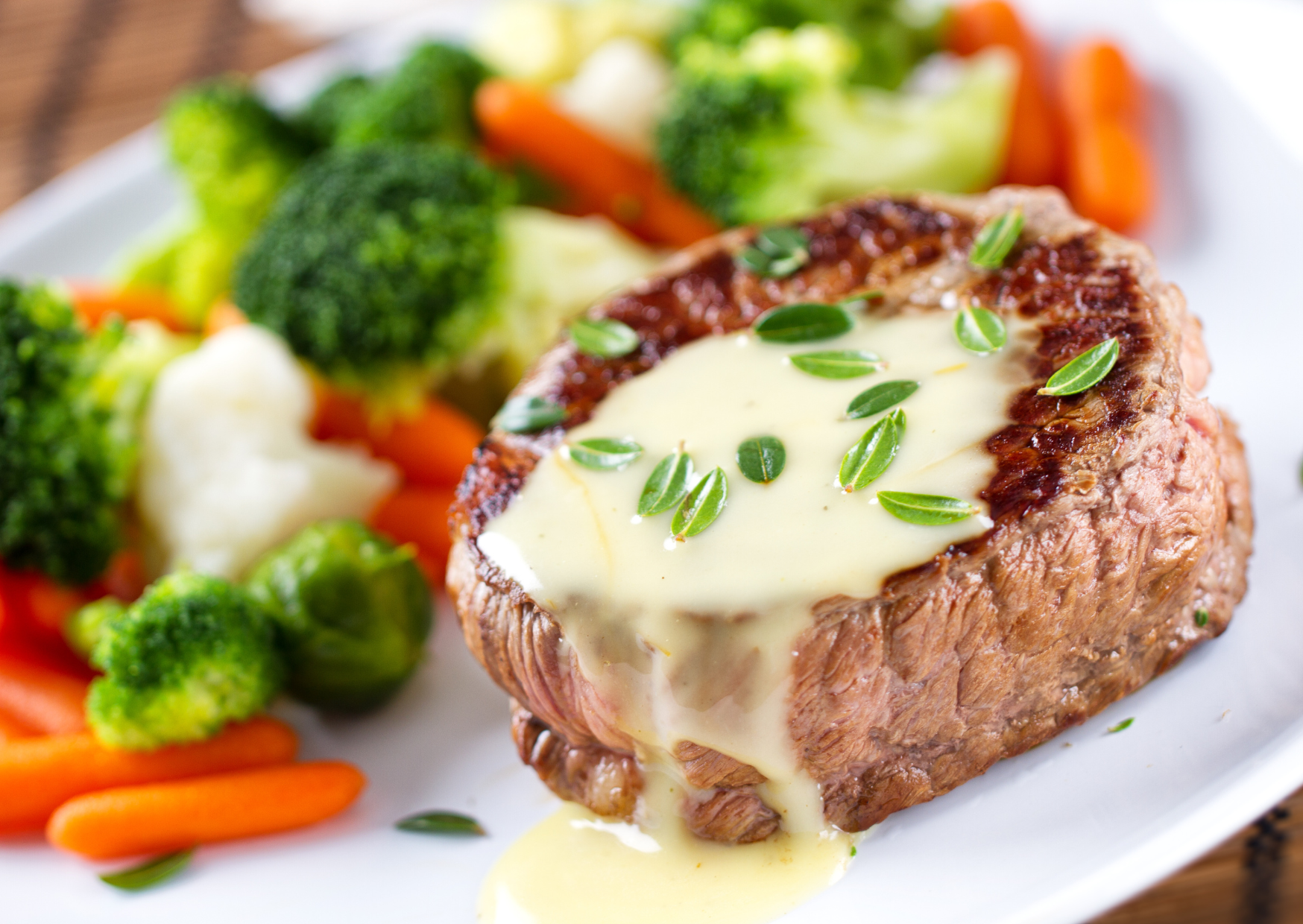
What Béarnaise Is, And Why Patience Is The Ingredient People Skip
Béarnaise is a hollandaise derivative finished with a tarragon and shallot reduction, built on clarified butter and egg yolks that are stabilized with acid and heat. The difference between real Béarnaise and a shortcut is not just taste, it is structure. A sauce that has been given time to reduce, to foam, and to emulsify will eat light and carry flavor. A rushed sauce will coat like pudding.
The reason is physics. Egg yolks are rich in lecithin, a natural emulsifier, but lecithin needs a little water and acid to work well. Vinegar and wine give that water and lower the pH so the yolk proteins unfold and trap butter fat in small droplets. That takes heat and time. The reduction concentrates flavor and sets the acid level. The sabbayon phase traps air and builds a network. The butter stream finishes the lattice. Those three moves are where your minutes go.
It is also a sauce of freshness and restraint. Tarragon and chervil do their best work when you taste their scent more than their leaf. A proper reduction and a final minute off the heat give you that perfume. Dump raw herbs into a cold blender and the result is grassy and loud. Béarnaise is classical because it is precise, not because it is fussy.
The 45-Minute Clock, Broken Into Phases You Can Actually Follow
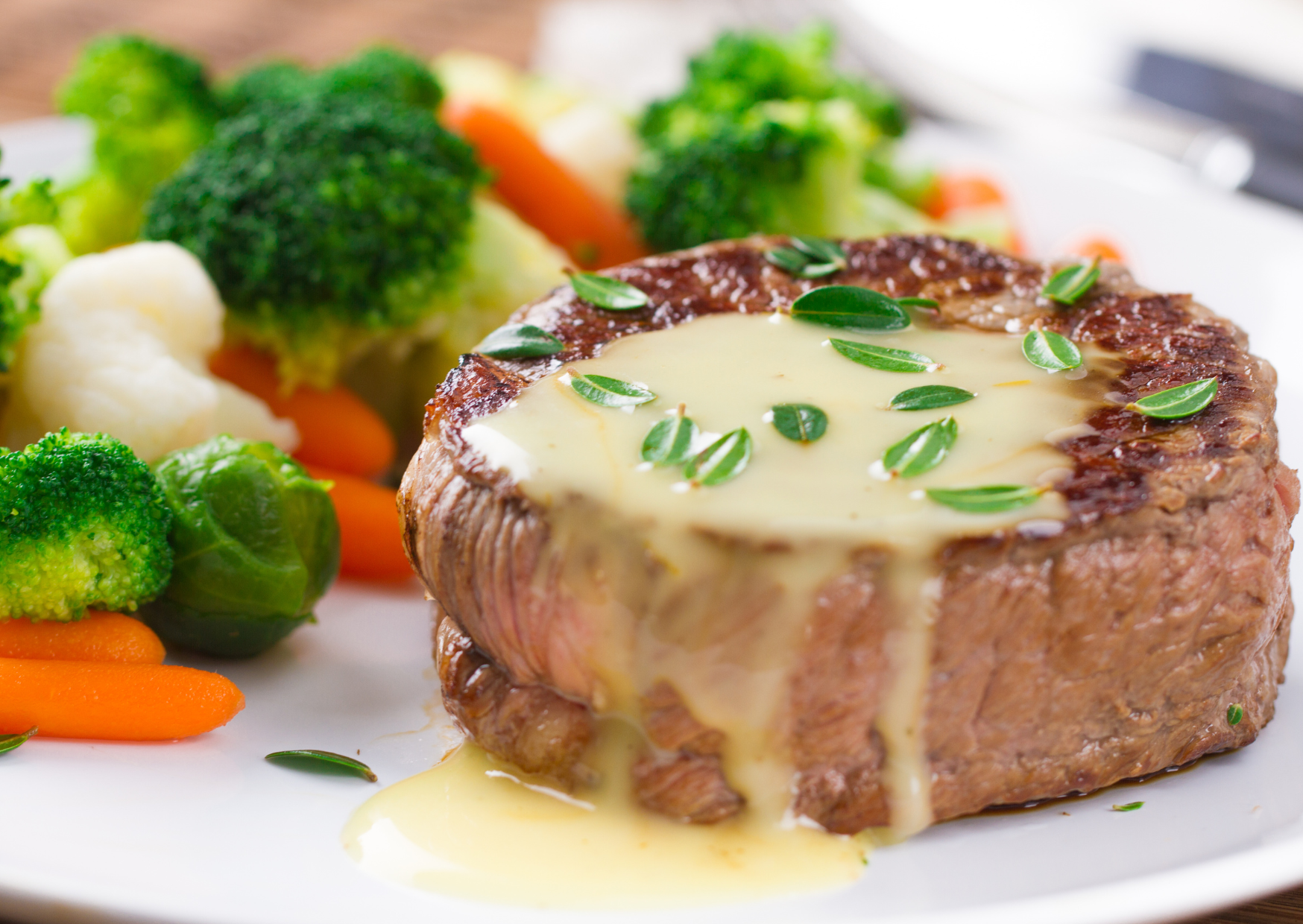
Think of the sauce in three blocks of time, reduction, yolk foam, emulsion and finishing. Build your mise while the reduction works and the minutes will not feel long.
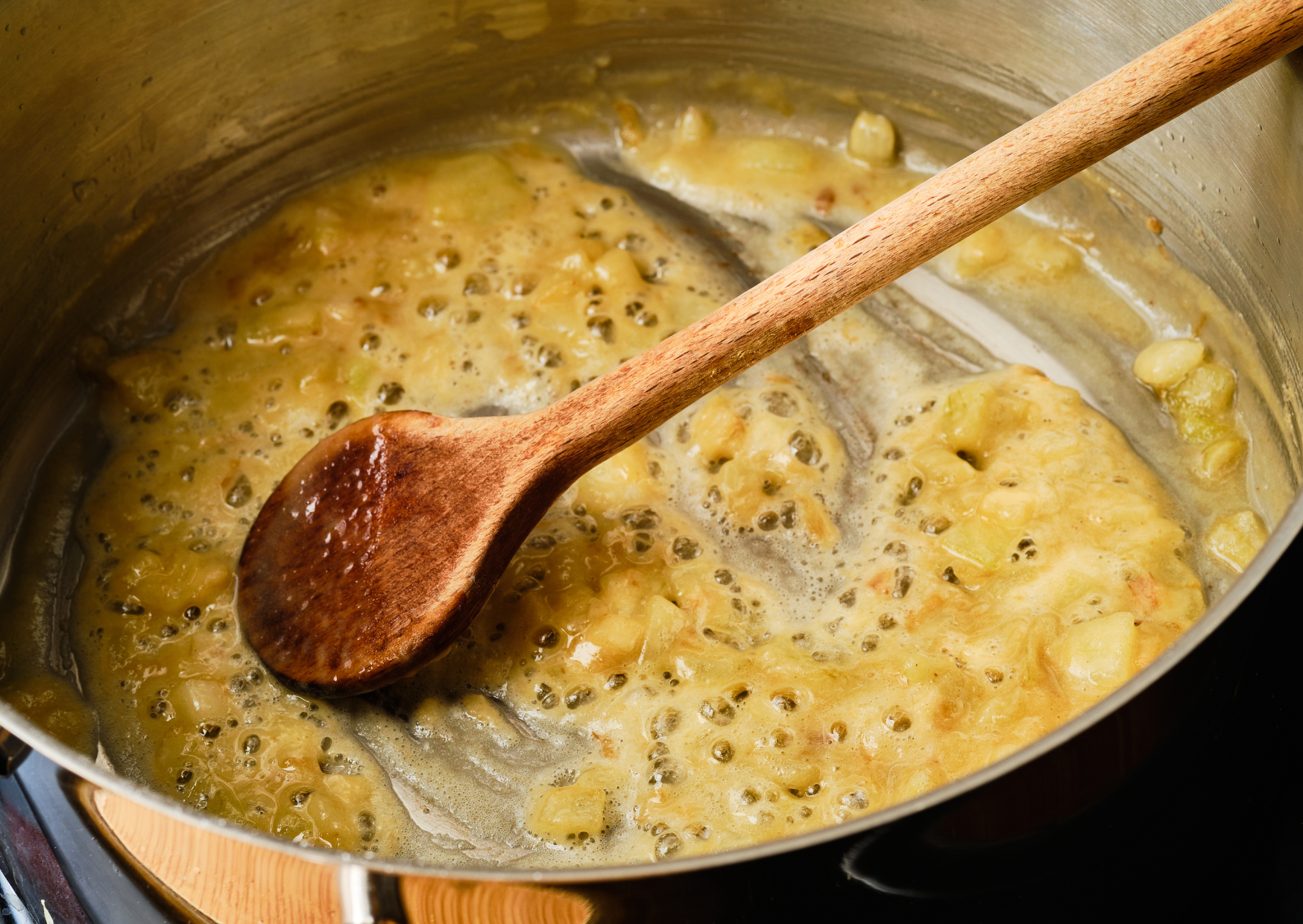
0 to 15 minutes: the reduction. Mince shallots, bruise peppercorns, strip and chop half your tarragon stems, reserve the leaves. Simmer white wine and wine vinegar with the shallots, stems, and pepper until you have a few spoonfuls of liquid left and the shallots are translucent and tender, not raw. This is where the brightness and backbone come from. If you stop early, the sauce tastes thin. If you scorch it, the sauce tastes bitter. Strain if you want silk, or leave the shallots in if you like the classic speck.
10 to 25 minutes: the butter and the bain-marie. While the reduction softens, melt butter and skim the foam or clarify fully. Clarified butter is more stable because it removes water and milk solids that can brown or separate, which makes the emulsion easier to hold. Set a bowl over a pot of barely simmering water so the bowl’s bottom does not touch the surface. This temperature control is the difference between smooth foam and scrambled yolk.
25 to 40 minutes: the sabayon and the emulsion. Whisk yolks with a splash of warm reduction until they thicken into a light sabayon, ribbons that fall back into the bowl and sit for a second before melting. Then start the butter, a thread at a time, whisking constantly. If the yolk foam cools, it will not accept fat. If it overheats, it will curdle. You want hot to the fingertip, not scalding, steady and calm. When the sauce reaches nappe, the classic spoon-coating texture, you take it off the heat.
40 to 45 minutes: finishing and holding. Stir in the remaining tarragon and a little chervil, a squeeze of lemon if you want a brighter line, and a teaspoon of warm water to relax the sauce. Hold it warm, not hot, near the stove or in a thermos for 15 to 30 minutes while you finish the steak and fries. A tablespoon of tepid water beaten in at the last second brings back gloss if it sits.
None of these minutes require panic. They require attention. The clock is a scaffold that lets you move slowly without losing heat or flavor.
Emulsification Without Tears: Temperatures, Tools, And Troubleshooting
The quiet truth of Béarnaise is that temperature and acid make it easy. The yolk-sugar trick of pastry has you whip to ribbons. Béarnaise has you whisk until thick and foamy, then add fat just slower than the sauce can drink it. Two numbers help.
Aim for the hot side of warm in your bowl, about the heat of a bath, hot to the touch but not painful. If you want a number, think 60 to 65 C inside the yolk foam while you whisk, but do not chase the number, chase the feel. If the bowl is too cold, the sauce will be thin and greasy. If it is too hot, you will see specks of cooked yolk.
Keep your acid modest but present. For most home batches, that means 50 to 70 ml of combined wine and vinegar reduced to about 2 tablespoons, then used to start the sabayon and to taste at the end. The acid is not just for flavor, it stabilizes the yolk network so the butter droplet size stays small and the sauce stays glossy.
Tools help. A balloon whisk builds foam faster than a narrow whisk. A light stainless bowl lets you feel heat through your palm and move on and off the steam as needed. A spouted cup gives you a clean butter stream. A ladle of warm water nearby gives you the power to thin without breaking.
If things go wrong, there are clean fixes. If you see a greasy sheen and the sauce thickens to paste, you added butter too quickly or the bowl cooled. Pull a clean bowl, add a spoon of warm water, whisk in a spoon of the broken sauce slowly like you are making mayonnaise, and regain the emulsion. If you actually curdle, meaning you have eggy bits and liquid fat, strain immediately, whisk a fresh yolk with a teaspoon of warm water, and whisk the curdled sauce into the new yolk slowly. Most broken sauces are a patience problem, not a death sentence.
Why Shortcuts Taste Like Paste: The Four Common Cheats And Their Consequences
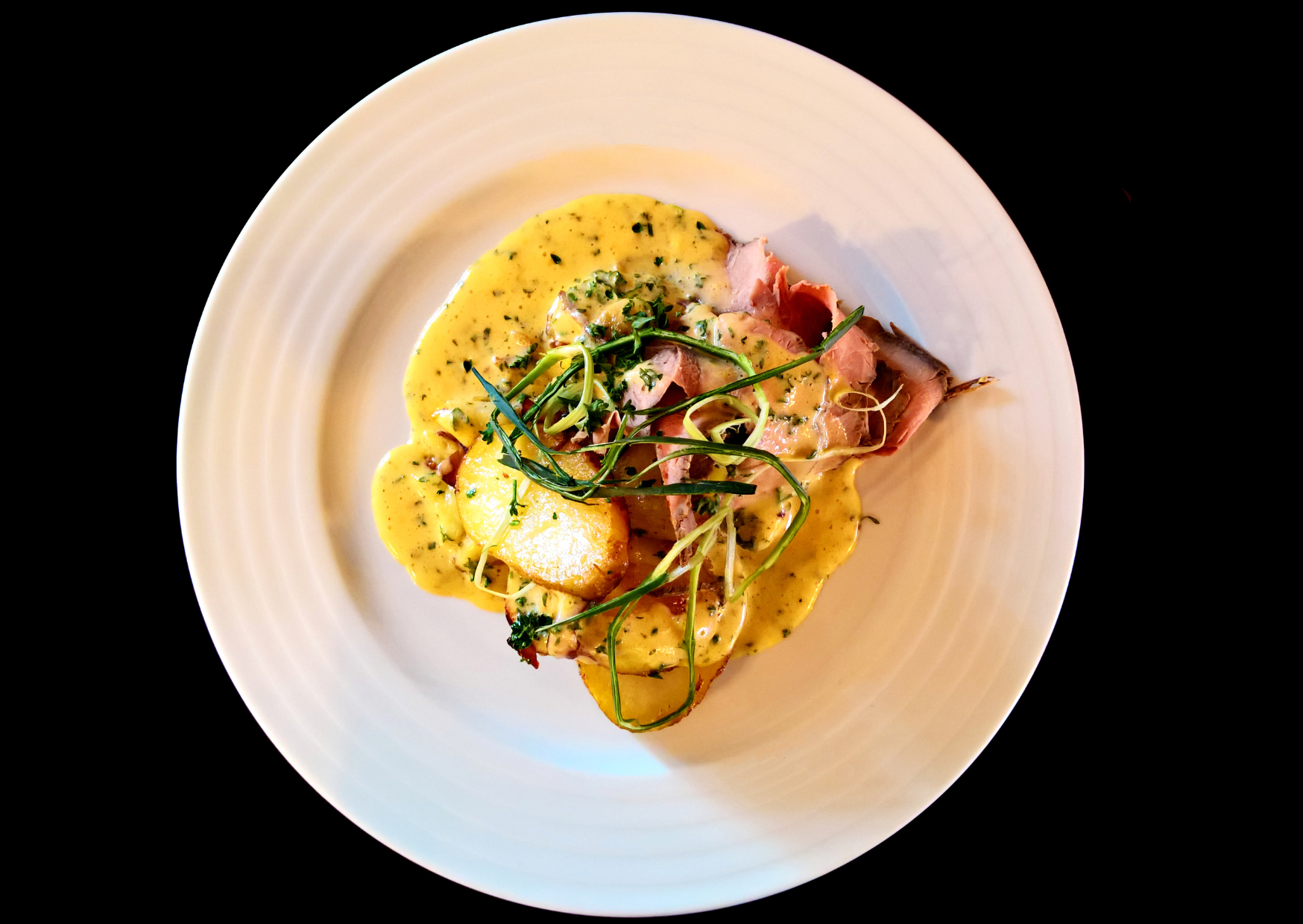
Not all shortcuts are equal. Some are simply different, some are doomed. The taste test is always the same, does it carry the volatile scent of tarragon and shallot, does it hold a clean gloss without turning pudgy, and does it taste alive ten minutes later.
Blender Béarnaise with whole butter. Hot whole butter has water and milk solids that change the emulsion, and a blender then shears the droplets very small without letting the yolks build a foam. The result often looks perfect and tastes flat and heavy. There is no sabayon, the reduction is not fully integrated, and the sauce oxidizes faster. If you insist on blender speed, at least use clarified butter and preheat the blender jar with hot water, then accept that you are making a hollandaise variant, not real Béarnaise, and stir in herbs off heat as perfume.
Mayonnaise Béarnaise. This is not Béarnaise, it is flavored mayonnaise. It can be delicious on fries, and it has its place, but yolk-thickened cold emulsions behave differently from hot foams. You will get pasty cling, not silk, and the herb flavor will be raw unless you fold in a warm reduction, which starts to look like the real method anyway.
Packet or roux-thickened “Béarnaise.” Starch is why these taste like paste. The mouthfeel is dull because heating starch granules to thicken gives you gel viscosity, not a dispersed fat emulsion. The herbs taste dried and sharp, the acid tastes synthetic, and the sauce sits like gravy on meat. If you grew up on this, no judgment, but once you taste a butter and yolk emulsion you will not go back.
Immersion blender with raw herbs. The stick blender can make fast hollandaise if your hand is steady. For Béarnaise, raw herbs thrown in at the end turn aggressively green, the texture shreds, and the perfume is lost under chlorophyll. The solution is the same as the classic method: treat herbs like perfume, add them off the heat at the last moment, gently, and let the sauce carry them.
None of these save real time once you count the fixes. The six minutes you steal from the reduction will cost you thirty minutes of regret at the table.
The Practical Playbook: Make-Ahead Pieces, Holding, And Rescue Moves
Real life matters. You want to serve steak hot and fries crisp and still put a proper sauce on the table. The trick is to stage components and to understand how to hold the finished sauce without killing it.
Make the reduction up to three days ahead. Keep it covered in the fridge. The flavor deepens, and you remove a variable on the day. Warm it gently before you start the sabayon so it does not shock the yolks.
Clarify butter the day before and keep it in a small saucepan. Warm it to liquid and hold it just above body temperature while you whisk. Warm, not hot, gives you control.
Whisk your sabbayon ten minutes before service, then emulsify. If you need to hold the finished sauce, do it like a pro. Pour into a warmed small thermos or sit the bowl in a barely hot water bath that you can touch without flinching. The sauce should be warm, not hot. Every five minutes, whisk a spoon of warm water through to keep it relaxed. If it thickens, add a teaspoon of reduction or water and whisk. If you need to hold more than 30 minutes, you are living dangerously, but a thermos buys you time.
If the sauce breaks on the table, do not apologize. Scoop the top into a small bowl, whisk in a teaspoon of warm water. If that fails, whisk a yolk with a teaspoon of water in a fresh bowl and slowly stream in the broken sauce, then return it to the table like nothing happened. Most guests will never notice.
Finally, use the right portion. You do not need a vat. Two or three tablespoons per person is plenty. The point is balance. A sauce this rich is a frame for the meat, not spackle.
The Recipe: Classic Béarnaise, Built For Home And Worth Every Minute
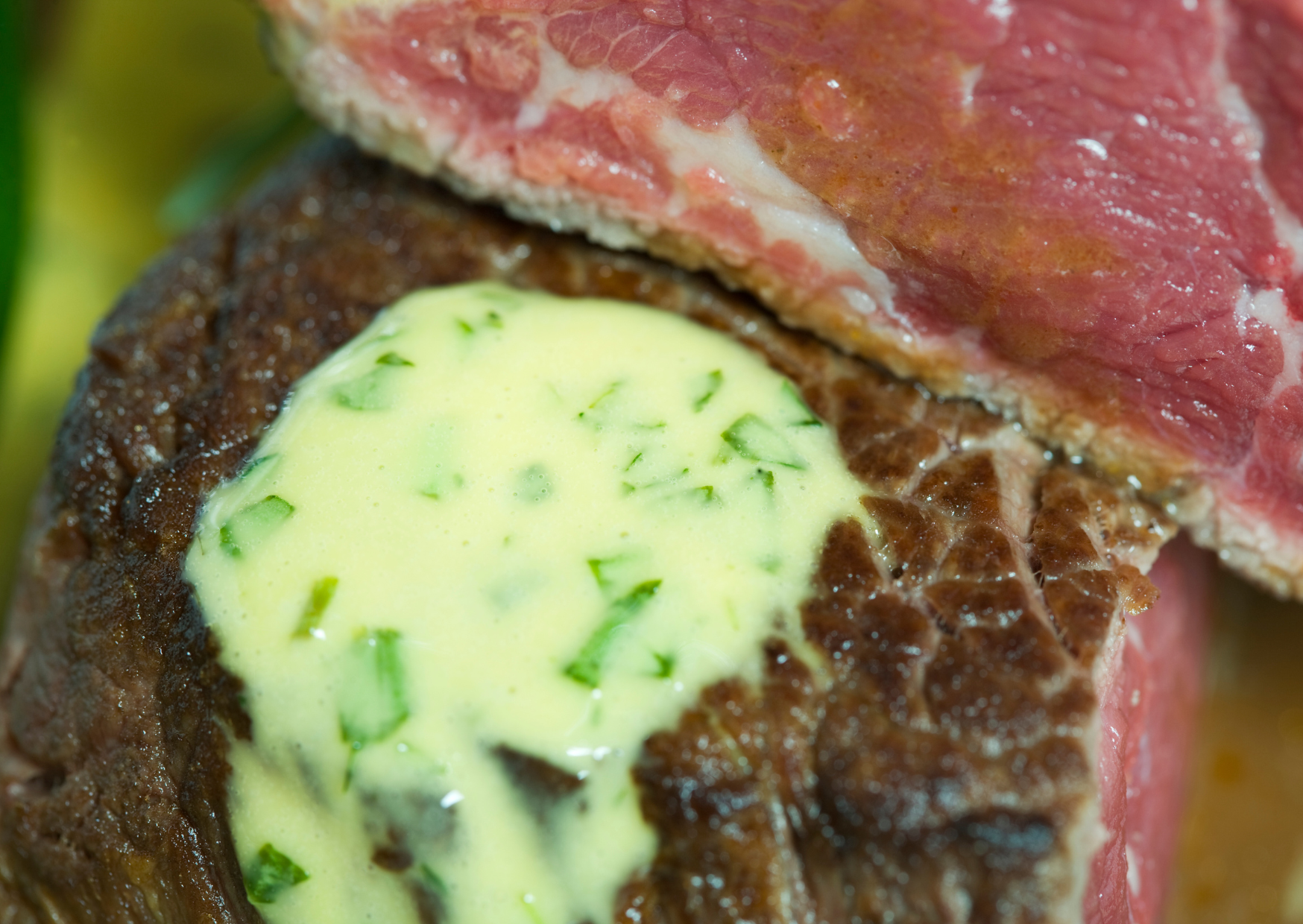
This yields about 300 to 350 ml, enough for 4 to 6 small portions.
Ingredients
Reduction
- 60 ml dry white wine
- 60 ml white wine vinegar
- 2 medium shallots, very finely minced
- 1 tablespoon tarragon stems and bruised peppercorns, about 6 peppercorns
- Pinch of salt
Emulsion
- 3 large egg yolks
- 200 to 225 g clarified butter, warm and fluid
- 1 to 2 tablespoons finely chopped fresh tarragon leaves
- 1 tablespoon finely chopped fresh chervil leaves, optional but classic
- Squeeze of lemon juice, to taste
- Salt, to taste
- Teaspoon or two of warm water for thinning as needed
Equipment
Small saucepan for the reduction, small saucepan for the butter, heatproof bowl, small pot for the bain-marie, fine sieve, balloon whisk, spouted measuring cup, thermos or small insulated flask for holding.
Method
- Make the reduction, 10 to 15 minutes. Combine wine, vinegar, shallots, tarragon stems, peppercorns, and a pinch of salt. Simmer gently until you have 2 to 3 tablespoons of liquid and the shallots are glassy and tender. Taste with a spoon, it should be bright and aromatic, not harsh. Strain and press on the shallots if you want silk, or leave them in for a classic texture. Keep warm.
- Prepare the butter. Melt and clarify if you have not already. Keep it warm and fluid in a spouted cup. You should be able to dip a finger without burning, warm, not hot.
- Build the sabayon, 5 to 7 minutes. Put the yolks in a bowl with 1 tablespoon of the warm reduction. Set the bowl over barely simmering water. Whisk constantly until the yolks thicken and triple in volume, leaving a ribbon on the surface when the whisk passes. Adjust the heat by lifting the bowl if it feels too hot on your palm.
- Emulsify with butter, 7 to 10 minutes. Begin with a slow thread of butter, whisking constantly. Go slow for the first third, building structure. As the sauce thickens, you can add butter a bit faster. If it gets very thick, beat in 1 teaspoon of warm water to relax it. Taste as you go. When the consistency reaches nappe, stop. You may not need all the butter.
- Finish and balance, 2 minutes. Off the heat, stir in the chopped tarragon and chervil. Add a small squeeze of lemon to lift. Salt to taste. If the sauce tightened while you added herbs, whisk in 1 teaspoon of warm water until it shines.
- Hold, no more than 30 minutes. Pour into a warmed thermos, or keep on the counter next to the stove with the bowl resting over a pot of warm water. Do not leave over steam. Whisk in a spoon of warm water if it thickens.
Why This Works
- The reduction fixes acidity and concentrates the aromatics so tarragon registers as perfume, not leaf.
- The sabbayon supplies a stable foam with tiny bubbles that can hold butter without collapsing.
- The slow butter stream keeps fat droplets small, which makes the sauce feel light and glossy.
- The herbs off heat keep color and scent alive instead of bruised and grassy.
Substitutions For U.S. And EU Pantries
- If chervil is unavailable, add a small amount of flat-leaf parsley for freshness, and a tiny pinch of fines herbes if you have a dried blend that is subtle.
- If you cannot find good tarragon, make sauce Foyot instead, a Béarnaise mounted with a spoon of warm reduced veal stock or demi, and garnish with parsley. Do not use dried tarragon in a pinch, it reads medicinal.
- For a lactose sensitive guest, clarified butter is already nearly milk-solid free. Verify comfort level and proceed.
- For a smoke friendly steak night, finish the sauce with a teaspoon of warm water and a squeeze of lemon, not pan juices, so it does not split when it meets a hot plate.
More Notes to Making Your Sauce Better
Sauce too thick, tastes heavy. You either used too much butter or not enough reduction. Whisk in 1 to 2 teaspoons of warm water, then a splash of reduction. Brightness should return and texture should relax.
Sauce thin and greasy. The bowl was too cold or the butter too hot. Move back over gentle steam, whisk until the sauce warms, then pause the butter for a moment. When it thickens, resume adding in a thread.
Scrambled flecks. Heat climbed. Strain through a fine sieve, then whisk 1 fresh yolk with a teaspoon of warm water in a clean bowl. Slowly drizzle the strained sauce into the yolk, whisking constantly.
Bitter reduction. You cooked it past syrup and let the shallots brown. Start over. Reductions cannot be resurrected with sugar or more butter, they carry their mistakes.
Brutal herb flavor. You pulsed raw tarragon in a blender or added a fistful to a cold sauce. Mince by hand, add off heat, and let the sauce carry the scent. Tarragon should whisper.
Holding for a crowd. Make two half batches rather than one large batch. Smaller bowls are easier to control, and a second batch can be finished while the first sits in a thermos.
Food safety common sense. This is an egg yolk sauce. Work clean, keep it warm, and serve within two hours. If you need to rewarm, do it gently over a warm water bath, not a stove flame. This is general information, not medical advice.
What This Means For You
You do not need a brigade to make real Béarnaise. You need 45 patient minutes where you let a reduction become itself, you let yolks become foam, and you let butter become droplets too small to see. The rest is seasoning and calm.
When you taste the result, you will start to understand why restaurants build service around a sauce like this. It is not old fashioned, it is engineered. The clarity of tarragon over vinegar, the shine that lasts from pan to plate, the way the sauce frames meat without smothering it, all of that comes from time, not from tricks.
If you want the speed of a blender, make hollandaise and call it a night. If you want Béarnaise, embrace the clock. The minutes pay you back the instant the steak arrives and the sauce meets heat. The bite is not paste. It is perfume carried on silk.
Origin and History
Béarnaise sauce traces its roots to 19th-century France, emerging from the classical tradition of emulsified sauces that defined French haute cuisine. Though often associated with Béarn in southwestern France by name, the sauce was refined in Paris, where chefs elevated simple ingredients into carefully controlled preparations.
The sauce was developed as a variation of hollandaise, distinguished by its use of tarragon, shallots, and vinegar reduction. These additions weren’t decorative; they created balance, cutting richness while adding aroma and depth. Béarnaise was meant to enhance grilled meats, not overwhelm them.
In classical kitchens, sauces like béarnaise were tests of discipline. Timing, temperature, and attention mattered more than speed. Apprentices learned patience through repetition, understanding that emulsions fail when rushed.
As French cooking spread internationally, béarnaise became a symbol of refinement. However, outside France, the sauce often lost its method while keeping its name, turning a precise technique into a generic condiment.
The main controversy lies in time. Modern cooking culture values shortcuts, treating long preparation as unnecessary or pretentious. Béarnaise challenges this mindset by refusing to cooperate when rushed.
Another point of tension is ingredient substitution. Bottled reductions, powdered mixes, and stabilized fats are marketed as equivalents, but they remove the volatile compounds that define the sauce’s flavor. What remains is thickness without aroma.
There’s also confusion around difficulty. Béarnaise isn’t hard because it’s complicated; it’s hard because it’s unforgiving. Temperature control, gradual incorporation, and constant attention leave little margin for error.
Calling shortcut versions “béarnaise” frustrates purists because it misrepresents what the sauce is meant to be. Texture without flavor is not a variation—it’s a failure of method.
How Long It Takes to Prepare
Authentic béarnaise takes approximately 45 minutes from start to finish. This includes preparing the reduction, clarifying butter, and slowly building the emulsion.
The reduction alone requires 15 to 20 minutes of gentle simmering to concentrate flavor without burning. This step cannot be rushed without sacrificing balance.
Emulsifying the sauce takes patience. Butter must be added slowly over controlled heat, allowing the egg yolks to thicken gradually rather than seize.
Most failures occur when cooks try to compress these steps. Béarnaise rewards steady pacing, not efficiency.
Serving Suggestions
Béarnaise is traditionally served warm, never hot. Excessive heat breaks the emulsion and dulls its herbal notes.
It pairs best with simple, well-seasoned meats such as steak, lamb, or grilled fish. The sauce is meant to complement, not rescue, the dish.
Portion control is essential. Béarnaise is rich and should be spooned sparingly rather than poured.
Serve immediately after preparation. Holding the sauce for extended periods risks separation and loss of texture.
Final Thoughts
Real béarnaise isn’t about luxury ingredients or showmanship. It’s about respect for process and understanding how flavor develops over time.
American shortcuts often fail not because they lack skill, but because they prioritize speed over structure. What they produce resembles sauce but lacks soul.
The 45-minute process isn’t arbitrary. Each step builds something the next depends on, creating a result that feels integrated rather than assembled.
Once you taste properly made béarnaise, shortcuts become impossible to ignore. The difference isn’t subtle it’s structural, aromatic, and deeply satisfying.

About the Author: Ruben, co-founder of Gamintraveler.com since 2014, is a seasoned traveler from Spain who has explored over 100 countries since 2009. Known for his extensive travel adventures across South America, Europe, the US, Australia, New Zealand, Asia, and Africa, Ruben combines his passion for adventurous yet sustainable living with his love for cycling, highlighted by his remarkable 5-month bicycle journey from Spain to Norway. He currently resides in Spain, where he continues sharing his travel experiences with his partner, Rachel, and their son, Han.