
You land in Paris, step into a café, and realize everyone looks pulled together without looking dressed up. It is not money, it is method. French style is built on restraint, fabric, and fit, which quietly rules out a handful of American go-to items in everyday city life.
Spend a few days people watching on the Left Bank or in Lyon and you start to see a pattern. The palette is calm, silhouettes are tidy, accessories are simple, and nothing screams for attention. The result reads as ease, not effort. What confuses American visitors is not what French women wear, it is what they rarely wear outside the gym, the beach, or the sofa. The items below are not banned by law, and Paris has trend chasers like any big city, but if you avoid these five categories you will blend in instantly and your suitcase will work twice as hard.
The point is not to copy a stereotype. It is to understand the operating system. French wardrobes are small, coordinated, and edited. Every piece negotiates with the rest. That is why the following outliers fall away, and why the alternatives make you look polished even when you are just running errands.
Want More Deep Dives into Other Cultures?
– Why Europeans Walk Everywhere (And Americans Should Too)
– How Europeans Actually Afford Living in Cities Without Six-Figure Salaries
– 9 ‘Luxury’ Items in America That Europeans Consider Basic Necessities
Quick and Easy Tips
Build outfits around one focal point and keep everything else simple. Too many standout pieces compete rather than complement.
Repeat outfits without hesitation. Wearing the same pieces frequently isn’t seen as a lack of creativity, but a sign of confidence.
Prioritize fit over trend. Well-tailored basics almost always look more polished than fashionable items that don’t sit properly.
The idea that French women are effortlessly stylish is partly a myth. What’s often overlooked is the discipline behind their choices. Avoiding certain items isn’t accidental it’s intentional editing, which can feel restrictive to cultures that value abundance and options.
Another uncomfortable truth is that American fashion is heavily driven by consumerism. Constantly updating wardrobes is normalized, while wearing the same items repeatedly can feel socially risky. French style quietly rejects this cycle, favoring longevity over novelty.
What makes this topic controversial is that it challenges the idea of self-expression through excess. French women express identity through refinement rather than volume. It’s not about suppressing individuality, but about letting it emerge through subtle, consistent choices instead of constant reinvention.
1) Gym leggings as daytime pants

In France, leggings belong to movement, not to the métro at noon. You will see them on runners in the parks or in a Pilates studio, then they disappear. On the street, women switch to trousers, straight jeans, or a knit dress with opaque tights. The difference is not prudishness, it is proportion. Fabric with structure, seams that hold shape, and a waistband that actually sits where it should create a cleaner line than a second skin.
If you love comfort, you are not condemned to hard pants. Pull a soft ponte pant with a front crease, or a ribbed knit skirt that hits mid calf. If you insist on leggings for a flight or a morning bakery run, treat them like tights. Add a long sweater or blazer that covers most of the seat, choose a matte pair that does not shine, keep sneakers low profile and clean. You will feel like yourself and still read as dressed.
Why this norm sticks: leggings advertise the gym even when you are not going. French daywear prefers neutral signals, so the eye reads the outfit, not the workout.
2) Logo shouting

French closets are not anti brand, they are anti billboard. You will see designer bags and shoes, you will not see logos stamped across chest, backside, or baseball cap on a normal Tuesday. The local formula favors quiet branding, good fabric, correct scale. Think a plain leather tote with discreet hardware, a trench that fits the shoulder, a cashmere cardigan with real buttons. The outfit whispers quality instead of announcing price.
The easiest way to shift your look is to remove noise. Swap a logo hoodie for a plain crew in navy or chocolate. Replace a monogrammed belt with a narrow leather belt that matches your shoes. Trade a giant branded tee for a cotton or linen button down, rolled sleeves, collar open. Your old pieces will suddenly mix and match, and you will stop fighting with your closet each morning.
This restraint is not about snobbery. A logo ties an outfit to a trend cycle and to a season. French women prefer pieces that live across several years, which means shape, fabric, and fit do the talking.
3) Flip flops in the city

Flip flops are for the beach, the pool, or a locker room. In cities, the street belongs to leather sandals, ballet flats, loafers, ankle boots, or plain white sneakers that look crisp. Bare rubber thongs read as half dressed and too casual for errands, museums, or a café terrace. If the heat is brutal, a minimal leather slide or fisherman sandal keeps feet cool without looking like shower shoes.
Sneakers are everywhere now, but pay attention to type. Running shoes with thick neon soles still read sporty. Low, leather or canvas pairs read urban. Clean them, tuck the laces, and pair with cropped trousers or a skirt. This is where French women are ruthless. Shoes decide the whole outfit, so the wrong pair drags everything down.
If you have foot issues and need cushion, there are modern sandals and trainers that balance support and looks. Choose neutral colors and smooth uppers. The city version of comfort does not distract the eye.
4) Extreme distressed denim
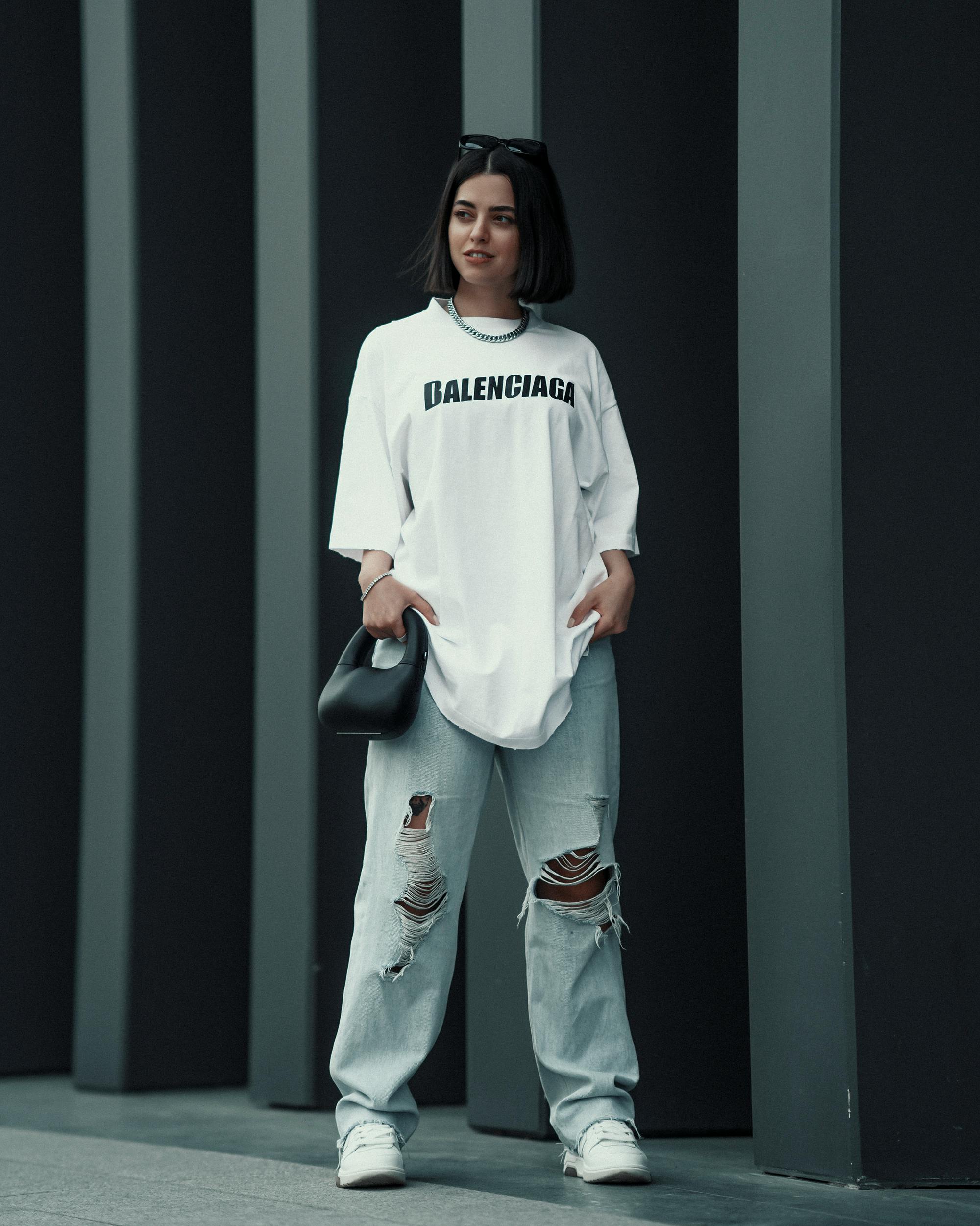
Rips, knee blowouts, shredded hems, and giant holes are weekend novelty in much of France, not weekday uniform. Denim is absolutely part of the wardrobe, it is just edited. You will see mid rise straight legs, cigarette cuts, cropped flares, dark indigo, ecru, and black. You will not see skin through fabric in a workday café line. The reason is simple. Torn denim raises the volume of every other piece. A blazer and loafers suddenly look like costume instead of clothes.
If you live in destroyed jeans, try a gradual pivot. Keep your favorite pair for concerts and casual Fridays, then add one rigid straight leg with no whiskers and a clean hem. Pair it with a white tee and trench, or a navy sweater and ballet flats. Clean denim plus simple shoes creates that quiet rhythm you are noticing on the street.
Do frayed hems exist. Yes, lightly. Are they the point of the outfit. No. The French edit aims at long wear, not impact in a photo.
5) Head to toe athleisure sets

Matching crop top and leggings, big zip hoodie over bike shorts, graphic sweatshirts for every daytime activity, these are standard in American errands culture. In France they read like pajamas outside a gym context. The relaxed pieces that pass public muster are cut like real clothes. A cotton jersey dress with a waist seam. A neat sweatshirt in a solid color with trousers and leather sneakers. A track jacket with sharp trousers and a tee that holds its shape. Same comfort, different message.
If you love sweat sets, keep them for travel and lazy mornings. For the same ease on the street, build a small uniform around one great blazer, one trench, two pairs of trousers, two knits, one simple skirt, one leather or canvas sneaker, and one flat. Rotate colors and weights by season, keep everything clean, keep silhouettes simple. You will discover you need less choice to get more outfits.
The French trick is boredom in the best sense. When every piece goes with every other piece, you leave the house faster and look more intentional.
How French women make simple clothes look special
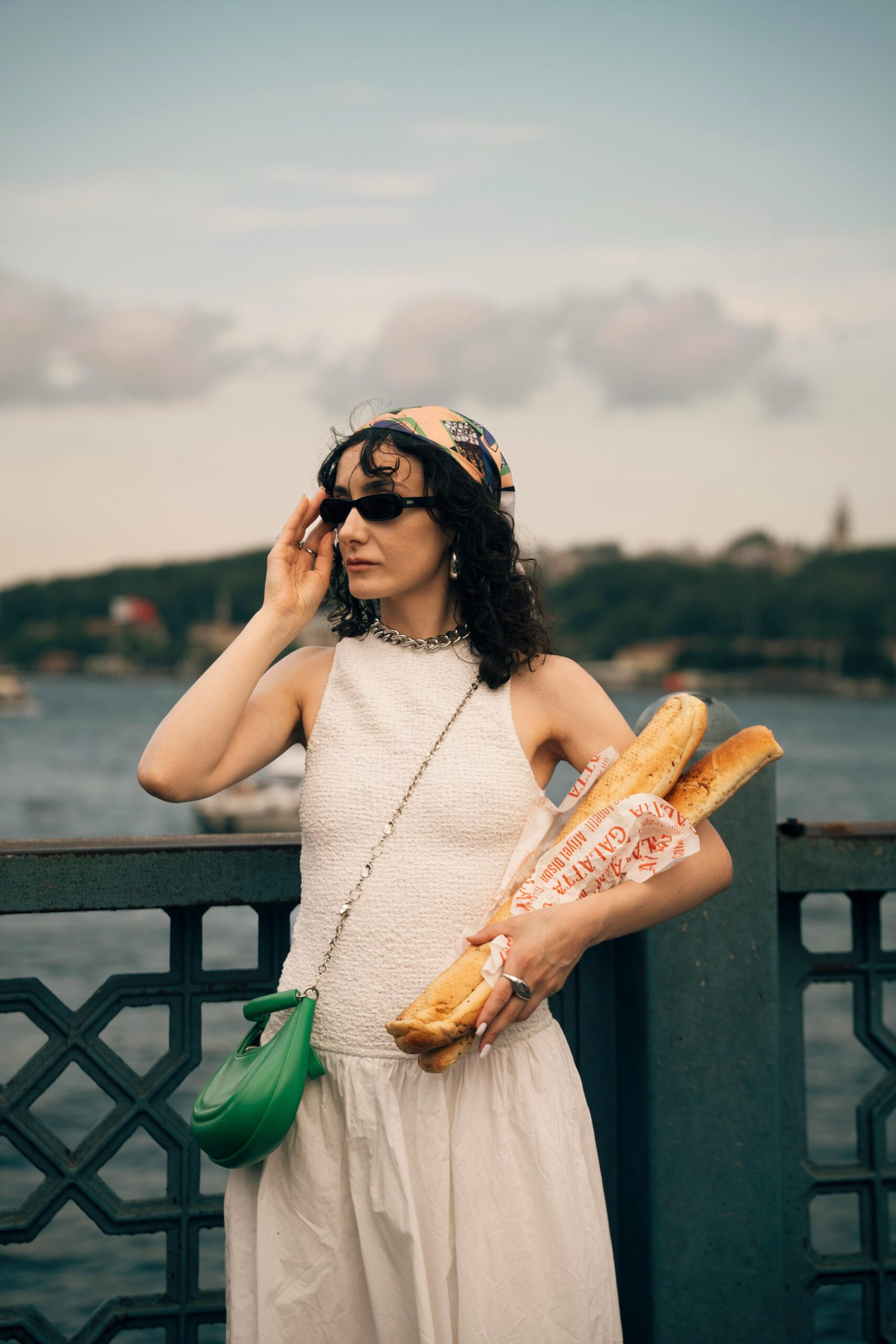
The secret is not secret. It is attention to micro details that cost little. Sleeves pushed to the forearm. A collar open, then a necklace that actually sits on skin. A belt that fits the loop. A hem that hits the ankle bone. Small polish, calm color, one focal point. That is the whole equation.
Beauty follows the same logic. Skin looks like skin. Daytime makeup is light, often with a brushed brow, a clean lash, a blurred red or rose lip, and short natural nails. Nails can be glossy, they rarely extend far beyond the finger, which keeps hands looking neat with every outfit. Hair is lived in, not sprayed into place, which makes a trench and jeans look chic instead of stiff. The total effect is ordinary life that photographs well without trying.
If you prefer glam, wear it at night. Even then, the French edit shows up. One bold element at a time. A smoky eye or a red lip, not both, a single statement ring, not a handful of sparkle. The outfit stays readable.
What to wear instead of the five off duty items
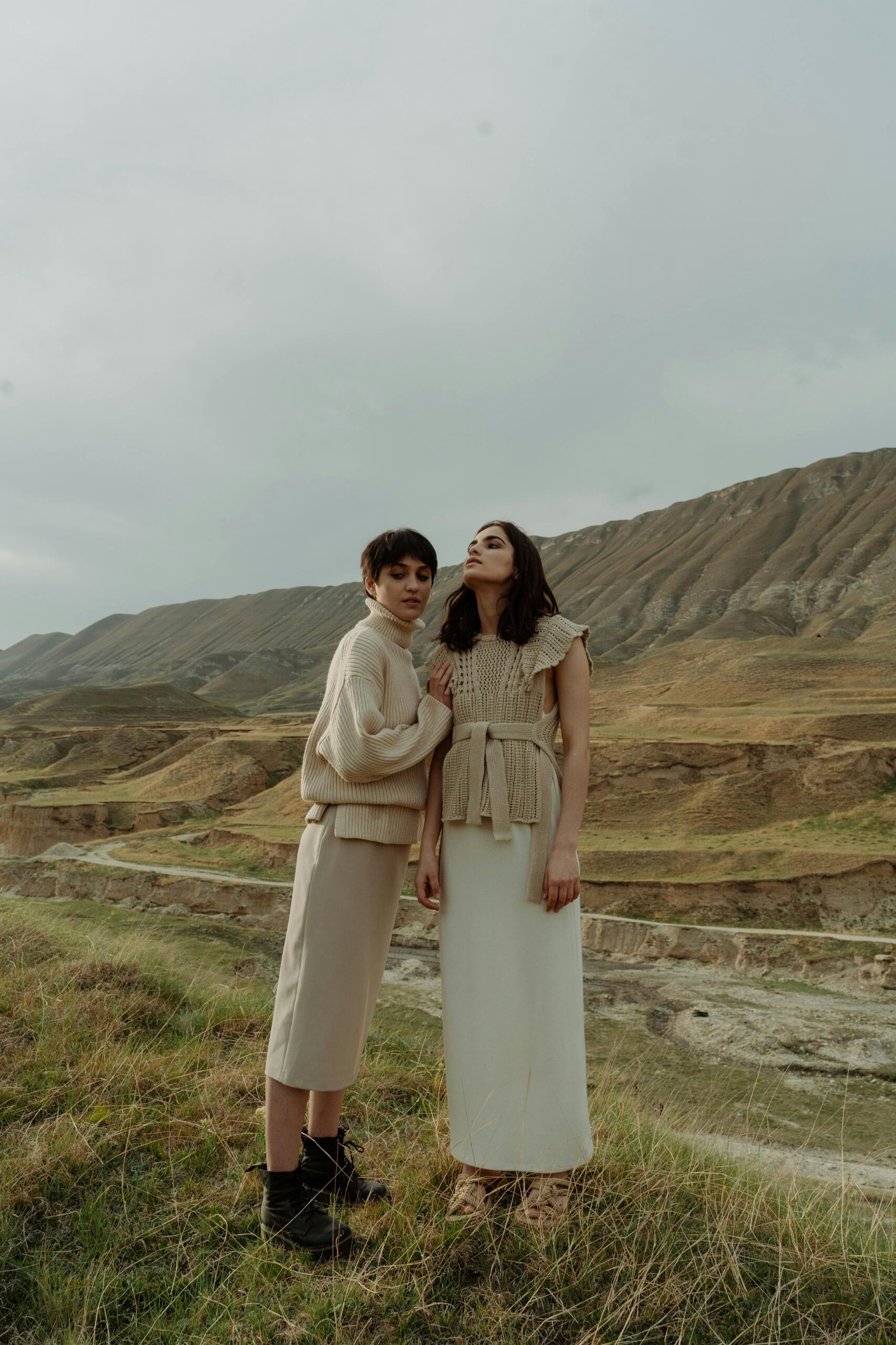
Replace leggings with trousers or a knit skirt. Replace giant logos with solid sweaters and clean shirting. Replace flip flops with leather sandals or flats. Replace shredding with straight or cropped denim in dark or ecru washes. Replace head to toe athleisure with a tidy tee, a blazer or cardigan, and real shoes. Add a trench, a crossbody bag, and two scarves that change the mood of the same base layers. You have just built a European capsule without buying a suitcase of new things.
Color is where Americans can borrow the most. Switch neon to earth, massive prints to micro stripes, stark white to cream when you want softness, black to navy when you want warmth. You will see more russet, camel, olive, chocolate, ecru, and ink than primary red or hot pink. The city is your background. Dressing with it, instead of against it, makes everything look intentional.
How to translate this to real life at home
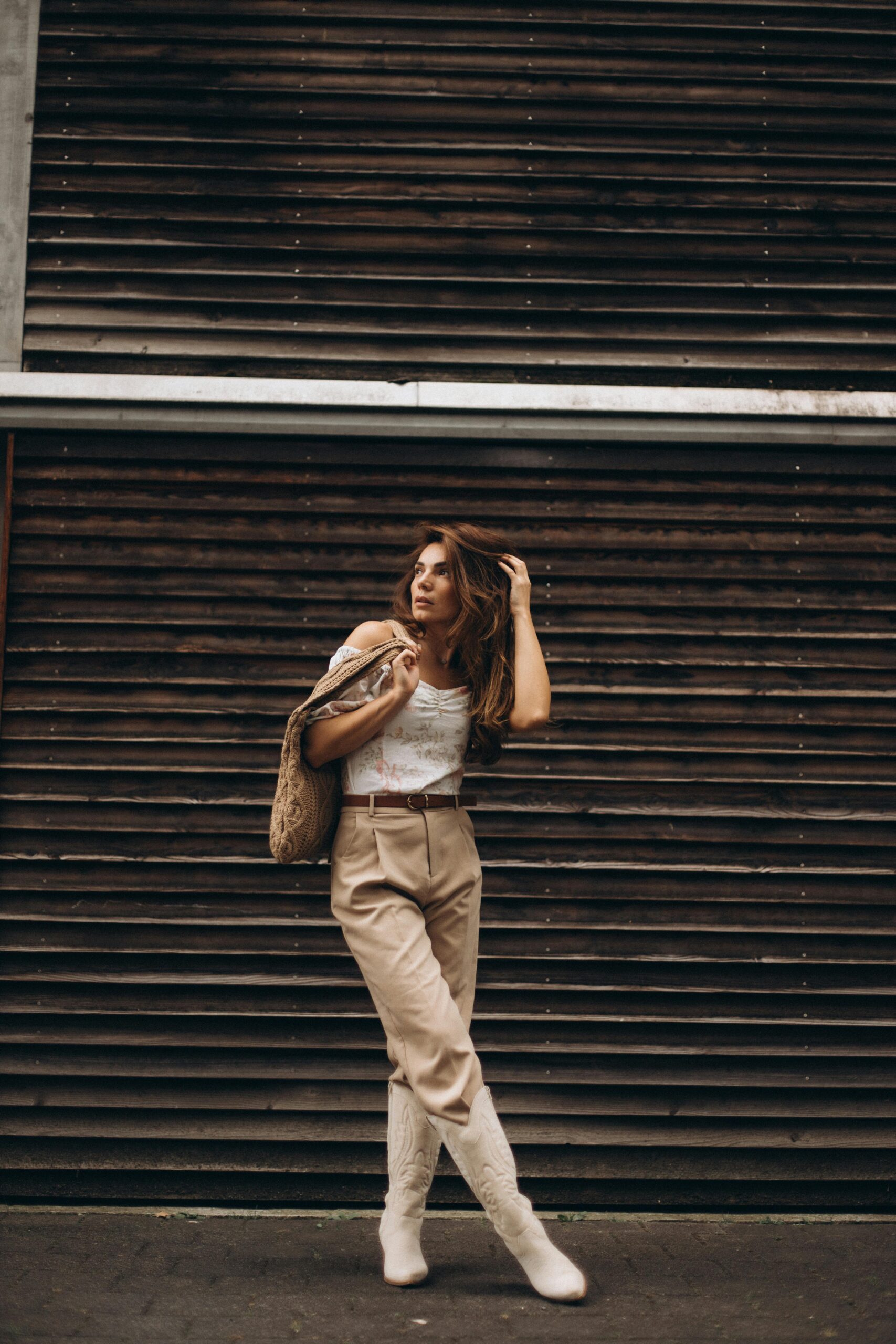
You do not have to move to Paris to use these rules. Start by editing, not spending. Pull all loud or logo heavy pieces to one side of your closet, then make two or three outfits from what remains. If you cannot make those outfits work for a week of errands, fill the gaps with the simplest possible versions. A plain navy sweater. A white button down that fits your shoulder. A straight leg jean in a dark wash. One leather belt. A pair of flats that feel like slippers after one week of break in.
Give yourself a two week experiment. No athleisure in the daytime unless you are actually coming from a class. No flip flops unless you are feet in sand. No shredded denim on weekdays. You will notice that your mornings get calmer. Choice fatigue drops. Compliments rise. The clothes stop being a project and start being tools.
If you like trends, add them as accents. A metallic ballet flat with a navy base. A cherry red bag with camel and cream. A seasonal scarf instead of a seasonal sweater. You keep the French base, you add your personality.
When the rules relax
City style is not a religion. At the beach or at a lake, flip flops and distressed shorts make sense. On a Sunday at home, athleisure rules. At a concert, shredded jeans are a mood. Paris has skaters and students, Marseille has heat, Biarritz has surfers. The five items above are about everyday city life where people ride crowded trains, sit in cafés, climb stairs, and pass a hundred strangers every hour. The uniform for that life is calm and practical.
If you are packing for a trip, remember the rhythm. Mornings are cool, afternoons can be hot, stone and tile hold heat and cold in equal measure. Layering beats bulk. A scarf and trench earn their keep for months per year. Real shoes protect your feet on cobbles. A crossbody bag is safer and makes your silhouette cleaner than a huge tote. What reads as stylish is usually what solves a problem.
The bottom line
French style is not magic. It is an edited list. Avoid five loud categories, choose fabric and fit, keep color calm, add one focus point, and step out the door. You can do this with a tiny budget and a tiny closet. You can also keep your American favorites for the right setting. What matters is context. In a European city, clothes are part of public life. Dressing with the room, not against it, buys you the one thing everyone secretly wants from their wardrobe. Ease that looks like elegance.
What stands out most about French style isn’t what women wear, but what they intentionally leave out. French women tend to dress with restraint, favoring cohesion and longevity over trends. This approach creates a look that feels effortless, even though it’s often carefully considered.
The contrast with American fashion habits isn’t about right or wrong, but about priorities. Where American style often emphasizes visibility, variety, and constant novelty, French style leans toward subtlety and repetition. Wearing fewer statement pieces allows personality to come through without shouting.
Ultimately, French women don’t follow strict rules they follow consistency. Their wardrobes are built to support daily life, not special occasions alone. That mindset is what makes their style appear timeless rather than seasonal.

About the Author: Ruben, co-founder of Gamintraveler.com since 2014, is a seasoned traveler from Spain who has explored over 100 countries since 2009. Known for his extensive travel adventures across South America, Europe, the US, Australia, New Zealand, Asia, and Africa, Ruben combines his passion for adventurous yet sustainable living with his love for cycling, highlighted by his remarkable 5-month bicycle journey from Spain to Norway. He currently resides in Spain, where he continues sharing his travel experiences with his partner, Rachel, and their son, Han.