

It’s not that Spaniards hate tap water. It’s that the way Americans ask for it instantly signals “I don’t know how bars work here,” and staff adjust accordingly.
You can spot the moment a person gets clocked in Spain.
It’s not the sandals. It’s not the backpack. It’s not even the volume.
It’s the pause at the table when the server asks, “¿Algo de beber?” and the American says, brightly, like this is the most normal thing in the world, “Just tap water, please.”
In the U.S., that’s a neutral request. In Spain, it’s often read as: I’m going to occupy a seat, make your job slightly harder, and spend as little as humanly possible while doing it.
Sometimes the server will comply. Sometimes you’ll get the tiny glass that looks like it came from a dollhouse. Sometimes you’ll get a bottle anyway. Sometimes you’ll get a polite look that says: ah, one of these.
And here’s the twist that makes Americans furious: Spain actually has rules about this now. But culture doesn’t update itself overnight, and hospitality habits are stubborn.
So yes, you can ask. No, you are not “wrong.” But if you ask the American way, you will look like you’re new here, even if you’re on day 90 with a residency card in your wallet.
Let’s break down what’s really happening, what the law says, and how to get water without announcing yourself as a confused tourist who’s about to complain about ice next.
The American way of asking is the problem, not the water
In Spain, bars and cafés are not built around the American “free refill” vibe. They’re built around a simple exchange: you order something, you get something, you keep the rhythm moving.
Americans often walk into a Spanish bar with an invisible expectation: water will appear automatically. In a lot of the U.S., it’s part of the script. You sit, water arrives, you haven’t “ordered” yet but you’re already being served.
In Spain, water is usually treated like a beverage choice, not a default. If you say “agua,” many places will assume you mean bottled, because that’s the common commercial product. If you want tap, you need to specify agua del grifo.
This is where the tourist signal flares up. Americans tend to ask for tap water like it’s a rights-based request, very direct, very confident, sometimes even slightly challenging. “Can we get tap water?” “Is tap water free?” “We don’t want bottled.”
That tone, even when polite, can read as combative because it’s not the local rhythm. Locals don’t usually interrogate the water system at the table. They either accept bottled without a fuss, or they request tap water in a low-drama way, typically alongside a normal order.
Also, Spanish service is often more transactional and less performatively warm than American service. If you lead with a request that sounds like you’re trying to minimize the bill, the staff may not be rude, but they will mentally move you into a category: low-spend table, low priority, minimal engagement.
That’s not a moral judgment. It’s bar economics. Seats are revenue.
So the same words can land very differently depending on how they’re delivered and what else you’re ordering.
What Spaniards expect when you say “agua”
If you want to understand this whole situation, start with one simple thing: in a lot of Spanish bars, “agua” is not a free accessory. It is an item on the menu.
That’s why bottled water is everywhere. It’s clean, it’s consistent, it’s easy to serve fast, and it’s a reliable small-margin product that supports a business where coffee can be cheap and people linger.
You’ll see it in pricing in the wild. A plain bottled water is commonly priced like any other basic beverage, often around €2 to €3.30 depending on the place and city. In Madrid, it’s not rare to see €2.50 for a liter bottle on a menu, and in other places you’ll see €2 for “agua mineral.” That range alone explains why staff assume bottled when you say “agua.”
There’s also a cultural layer: in many parts of Spain, people grew up with the idea that tap water is safe but not always tasty. “Safe” and “I want it with my meal” are not the same thing. Some cities have famously pleasant tap water, some have hard water, some taste chlorinated, and in some coastal areas you’ll hear complaints about flavor.
So when a tourist insists on tap water, the staff sometimes reads it as: this person is trying to game the check, or this person doesn’t understand local norms, or both.
And yes, you will occasionally see the opposite: a bar that automatically gives a small glass of water with coffee, especially in some neighborhoods and some cities. That’s real. But it’s not universal, and it’s not an entitlement. It’s a gesture, and gestures vary.
The safest mental model is this: in Spain, water is not an assumed free starter. It’s a choice. If you want tap, request it plainly, and don’t make it the main event.
The law exists, and the vibe still hasn’t caught up
Here’s where Americans feel justified, and honestly, they’re not wrong.
In April 2022, Spain passed a national law (Ley 7/2022) that includes a requirement that hospitality and restaurant businesses offer customers the possibility of consuming non-bottled water for free, as a complement to their offering. The wording is not ambiguous. It’s there.
So why do you still get side-eye sometimes?
Because law and habit are two different animals.
For decades, Spanish restaurants and bars have defaulted to bottled water as the normal product. It’s a standard part of the ticket. It’s also a predictable way to keep prices low elsewhere. When a country’s hospitality culture has been operating like that for years, a legal change doesn’t instantly rewire every waiter’s reflexes, especially in busy, high-tourism zones.
Then there’s the practical mess. Some places will comply but do it begrudgingly. Some will “comply” by bringing you a tiny glass, not a bottle or jug. Some will try to upsell “filtered water” and charge for it. Some will flat-out pretend they don’t do it. And some will proudly post a note on the menu saying they only serve bottled, which is where the law and reality collide in public.
You can push back. You can cite the law. You can argue. You might even be correct.
But if your goal is to not look like a tourist and to have an easy meal, the better move is to understand the room.
In Spain, the soft power approach works better: ask cleanly, ask early, and ask like it’s normal, not like you’re filing a complaint.
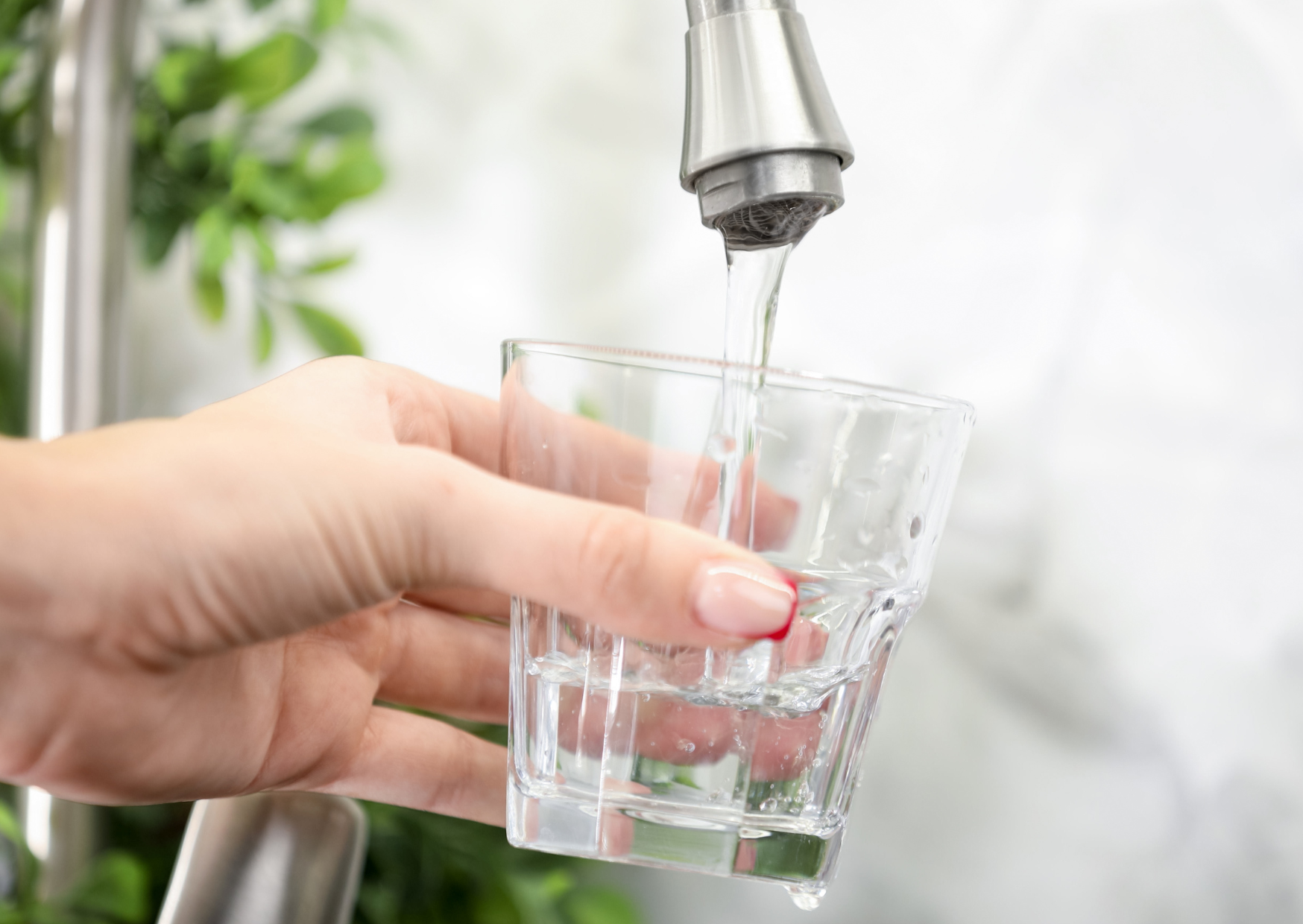
Say it like this: “Un vaso de agua del grifo, por favor.” If they respond with bottled, you decide whether it’s worth the friction in that moment.
The point isn’t to surrender. The point is to pick your battles like someone who actually lives here.
The money math that makes this weirdly emotional
Let’s talk about why this triggers Americans so hard.
In the U.S., water is part of the service ritual. In Spain, water is often part of the business model.
If you’re paying €2.50 for a bottled water a few times a week, it feels like nothing. If you’re a family or a couple eating out regularly, it quietly stacks.
Do the boring math:
- Two people, one bottle each, €2.50 each
- That’s €5 per meal just in water
- Eat out twice a week, €40 a month
- Eat out four times a week (very easy in summer), €80 a month
That’s not life-changing money. But it’s enough to irritate anyone who’s used to “water is free,” especially if you’re already watching rent and groceries.
Now add the psychological factor. Americans often feel bottled water is a scam. Spaniards often see it as a normal purchased good, like a café con leche.
So when you refuse bottled water, it can land less like “I’m being eco-friendly” and more like “I’m doing a budget protest at your table.”
Also, bottled water in Spain is not always treated as a commodity. Restaurants may stock specific brands, glass bottles, sparkling, or larger formats. In tourist areas, you may see higher prices and smaller sizes.
So yes, you can save money by asking for tap water. But if you ask in a way that makes the staff feel you’re trying to underpay for the privilege of sitting there, you’ve traded €2.50 for a social downgrade.
The local move is to treat tap water as normal, not as a statement. No speeches about water. Just a simple request, preferably paired with an actual order.
The local method for getting water without looking like a cheapskate
If you want water in Spain and you don’t want to get clocked, do what locals do. Not what the internet thinks locals do.
Step 1: Order something first
This is the simplest trick. Tap water lands better when it’s part of a normal consumption pattern. Coffee, beer, wine, even a tostada. Once you’re a paying customer, the water request feels reasonable instead of opportunistic.
Step 2: Use the exact phrase
Say agua del grifo. Not “agua.” Not “tap water” in English with a hopeful smile. In Spanish, clean and calm:
- “Un vaso de agua del grifo, por favor.”
- “¿Me puede traer agua del grifo?” (a bit more formal)
- “Agua del grifo, si puede ser.” (softens it)
Step 3: Ask for a glass, not a bottle
In many places, tap water will come as a glass. Asking for a “jarra” can feel bigger and more disruptive, especially in a busy bar. Start with un vaso.
Step 4: Accept the small glass without acting offended
Yes, it may be tiny. Yes, it may be warm. Spain is not obsessed with ice. If you react like it’s unacceptable, you’ve just confirmed every stereotype.
Step 5: If they bring bottled water anyway, decide fast
If they bring a bottle and you truly want tap, correct it immediately, politely, before it’s opened:
- “Perdón, era del grifo.”
If it’s already opened, just drink it and move on. You’re not in court. You’re in a bar.
Step 6: If you’re in a tourist zone, lower expectations
In places that are running on pure volume, the staff may default to bottled because it’s faster and more consistent. You can still ask. Just expect more resistance.
The local method is not about winning. It’s about making the interaction smooth. Smooth beats righteous almost every time in Spanish daily life.
Tap water is usually safe, but “safe” is not the same as “pleasant”
Here’s the part people argue about endlessly.
In Spain, drinking water is regulated and monitored, and there’s an official national system (SINAC) where citizens can check water quality information by municipality. There’s also a national framework (including Royal Decree 3/2023) setting technical and health criteria for drinking water quality and control.
That means the “tap water is unsafe” claim is often not true in the way tourists mean it.
But.
Spain has major variation in taste and hardness, and people’s preferences are emotional. A lot of Spaniards simply prefer bottled water with meals. It’s not because they think the tap water will kill them. It’s because it tastes better to them, or it feels cleaner, or it’s a habit.
Madrid often gets praised for good tap water taste. Other areas get less love. Coastal cities can have water that tastes more treated. Some towns have older pipes. Some buildings have their own quirks. And occasionally you will see local news stories about specific supply issues in specific areas, which then feeds the general anxiety even if it’s localized.
So if you’re thinking, I want to drink tap water for health and cost reasons, you have two sensible moves:
- Check the local water quality data through SINAC for where you actually live or are staying.
- Decide based on taste and comfort, not on travel myths.
And if you’re ordering tap water in a restaurant, remember: you are not just asking for water. You are asking the business to step out of its default routine. That’s why this gets social.
You can do it. Just don’t be shocked when someone treats it like a slightly unusual request, especially in busy spots.
The mistakes that get you judged faster than the tap water request itself
If you want the honest list of what makes staff roll their eyes, it’s not “tap water.”
It’s the full package.
Mistake 1: Sitting down and ordering only water
In Spain, tables are not public benches. If you occupy one and order nothing else, you’ll be treated like someone using the space. That’s when the “clueless tourist” label sticks.
Mistake 2: Asking in English with American politeness overload
A long, friendly explanation in English can sound like pressure. Keep it short. Use the Spanish phrase and move on.
Mistake 3: Arguing about the law at the table
Yes, the law exists. No, your server does not want a lecture during lunch rush. If you want to push the issue, do it with management later, not with the person carrying five plates.
Mistake 4: Acting disgusted about bottled water
Bottled water is normal here. Making a face about it makes you look like you came to Spain to correct people.
Mistake 5: Demanding ice like it’s a human right
If you want to look extra American, combine tap water with “and a lot of ice.” Spain can do ice. They just don’t center ice emotionally. Ice is not the culture.
Mistake 6: Turning it into a moral story
The eco angle can be valid, but moralizing at a bar is a fast way to get cold service. If you care about plastic, request tap water calmly, and carry a reusable bottle during the day.
Mistake 7: Expecting U.S.-style “checking in” service
Spanish service is often less interruptive. If you take that as rudeness and start escalating, everything gets worse.
If you want to blend in, your goal is not to win. It’s to be easy to serve. Easy customers get better service. That’s true everywhere, but Spain is especially direct about it.
Your first week in Spain: order water like a local, not a negotiator
If you want to fix this fast, run a simple seven-day practice. It’s boring. It works.
Day 1: Memorize one line
Say it out loud until it’s automatic: “Un vaso de agua del grifo, por favor.”
You want it to come out without hesitation.
Day 2: Pair water with a normal order
Coffee plus water. Beer plus water. Menu del día plus water. Don’t make water your entire identity.
Day 3: Practice the correction once
If they bring bottled and it’s unopened, practice: “Perdón, era del grifo.”
Say it calmly. No apology speech.
Day 4: Accept the small glass without commentary
Drink it. Move on. Notice how much social friction disappears when you don’t react.
Day 5: Try it in a less touristy bar
Go to a neighborhood place where locals are eating lunch. The request often lands more normally there because the staff has regulars and a slower rhythm.
Day 6: Stop expecting water before you order
This is the American reflex. In Spain, ask after you’ve greeted and ordered. Order first, then add water.
Day 7: Decide your default
Some people end up choosing bottled water with meals and tap water at home. Some go full tap. Some do sparkling as a treat. Pick a default that fits your budget and taste so you’re not renegotiating water at every table like it’s a fresh debate.
After a week, you’ll notice something: the “tap water issue” stops being an issue. Not because you stopped asking. Because you stopped asking like you were challenging the system.
The choice you’re really making at the table
This is not actually about water.
It’s about what you want more: the cheapest possible check, or the smoothest possible experience.
Spain makes you choose sometimes.
If you ask for tap water like an American who expects the world to behave like an American restaurant, you’ll get clocked. If you ask like someone who understands that Spanish bars run on rhythm, you’ll usually get what you want, and nobody has to perform discomfort about it.
So ask for agua del grifo if you want it. You’re allowed to.
Just don’t make it a scene. Spain already has enough drama. That’s what the soap operas are for.

About the Author: Ruben, co-founder of Gamintraveler.com since 2014, is a seasoned traveler from Spain who has explored over 100 countries since 2009. Known for his extensive travel adventures across South America, Europe, the US, Australia, New Zealand, Asia, and Africa, Ruben combines his passion for adventurous yet sustainable living with his love for cycling, highlighted by his remarkable 5-month bicycle journey from Spain to Norway. He currently resides in Spain, where he continues sharing his travel experiences with his partner, Rachel, and their son, Han.