
You slide into a London cafe, watch a skillet flash under a grill, and ten minutes later a plate lands with eggs, grilled tomatoes, mushrooms, beans, and a couple of lean rashers. Coffee, a few talks with the server, and you stand up full, steady, and not looking for a snack an hour later.
Most Americans meet the full English as an all day blowout, a postcard of fried everything. That version exists, and you do not need it. The everyday version that locals actually eat is built around eggs, vegetables, beans, and lean back bacon cooked under a grill. It is fast, simple, and surprisingly light when you make the right swaps. Set it beside a granola parfait or muffin that calls itself healthy, and the British plate wins on protein, fiber, and blood sugar stability.
Below is the blueprint that makes a full English work in real life, how to order it so the numbers make sense, and how it stacks up against American breakfasts that look virtuous but are mostly sugar with marketing.
Want More Deep Dives into Everyday European Culture?
– Why Europeans Walk Everywhere (And Americans Should Too)
– How Europeans Actually Afford Living in Cities Without Six-Figure Salaries
– 9 ‘Luxury’ Items in America That Europeans Consider Basic Necessities
What a proper full English looks like in 2025
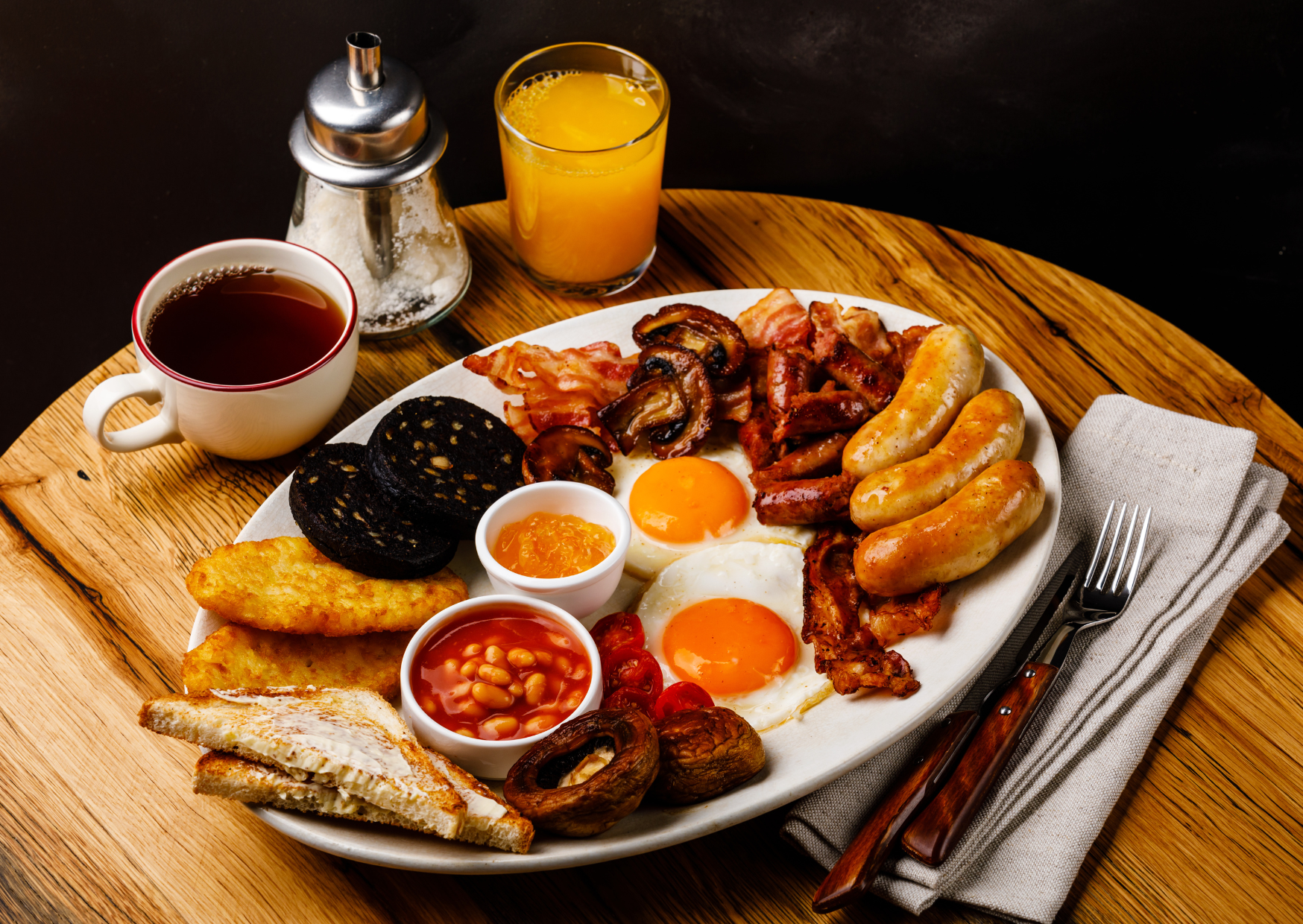
A classic plate is not a deep fryer fantasy. The modern everyday version is a handful of cooked items assembled with restraint. Eggs and beans are the anchors, grilled tomatoes and mushrooms are the color and fiber, and back bacon replaces the thick American belly strips. Toast holds the edges together and sausage is optional.
The cooking method does most of the health work. Kitchens that cook for locals do it on the grill or in the oven, not submerged in oil. Tomatoes hit heat long enough to soften and sweeten. Mushrooms steam or sear with a splash of water. Beans warm in their tomato base. Eggs are fried on a lightly oiled surface or poached. Those choices keep the plate closer to a home kitchen than a fairground. Grill not fry, lean cuts, vegetables in the mix are the real rules.
Back bacon matters because it comes from the loin, so it carries much less visible fat than American streaky cuts. If you can see mostly meat and only thin seams of white, you are holding the right piece. Trim the edge, give it a few minutes under the grill, and you get the flavor most people want without sending the plate off the rails. More meat, less rind, visible fat trimmed, crisp without soak is the target.
Why it keeps you full and even
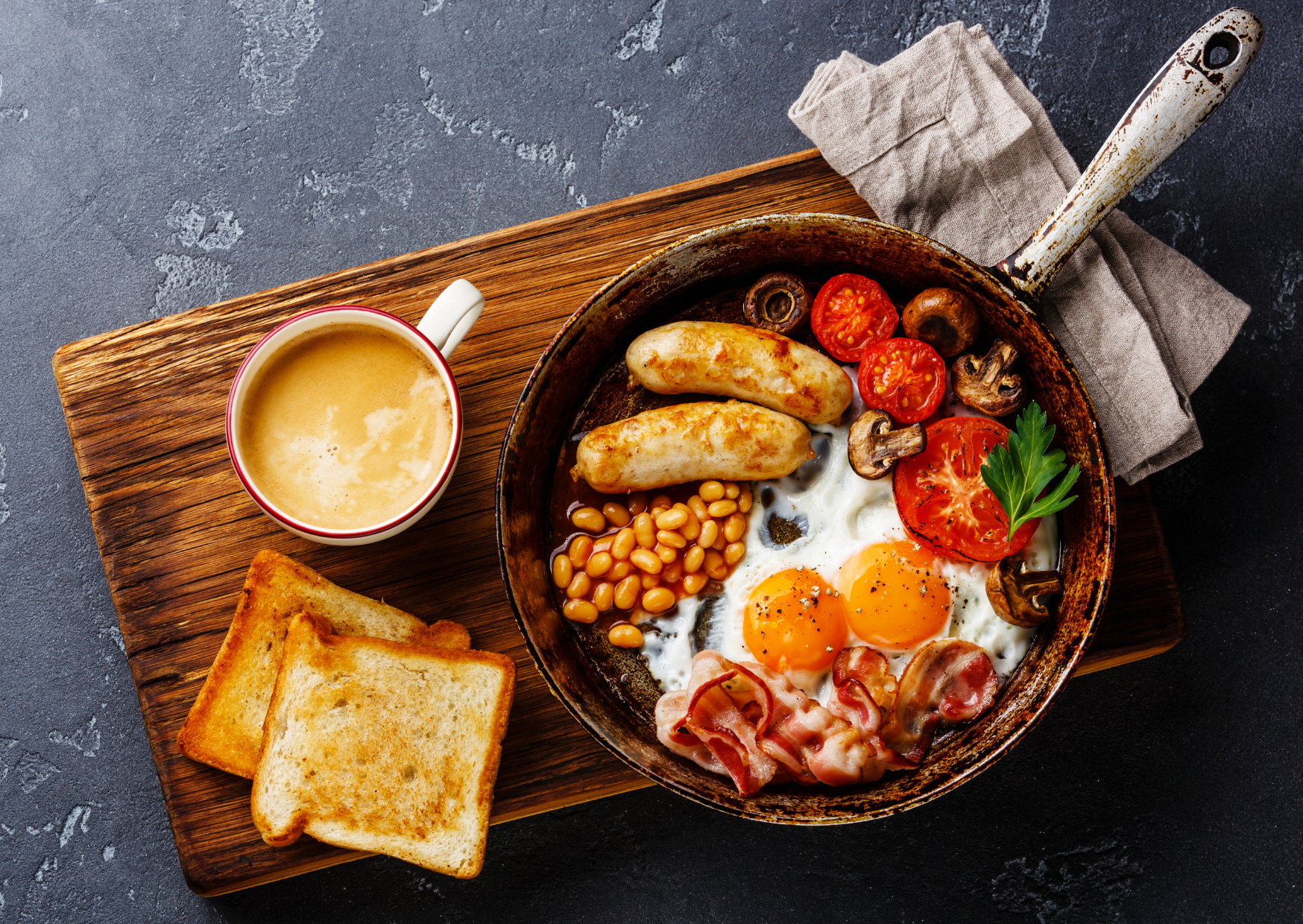
The British plate works because it is built on the two things that actually control mid morning hunger: protein and fiber. Two eggs plus a serving of beans already put you near a solid protein number for breakfast, and mushrooms with tomatoes add volume without pushing sugar. People who start the day with a higher protein meal report lower appetite and fewer cravings later in the morning, and they show steadier blood sugar after lunch. The effect is not magic, it is physiology. Protein blunts hunger, fiber slows absorption, fat from eggs carries flavor without a sugar spike.
Beans are the quiet powerhouse. A standard portion of UK baked beans brings meaningful fiber and some protein with very little fat. Tomatoes pull double duty, giving you acidity for balance and carotenoids that are more available once they are cooked. Mushrooms contribute potassium and texture for almost no calories. Stack those four items beside a bowl of sweet cereal and the difference is obvious. Protein plus fiber, cooked vegetables, slow sugars is why a good fry up holds you through the morning.
The American “healthy” traps it easily beats
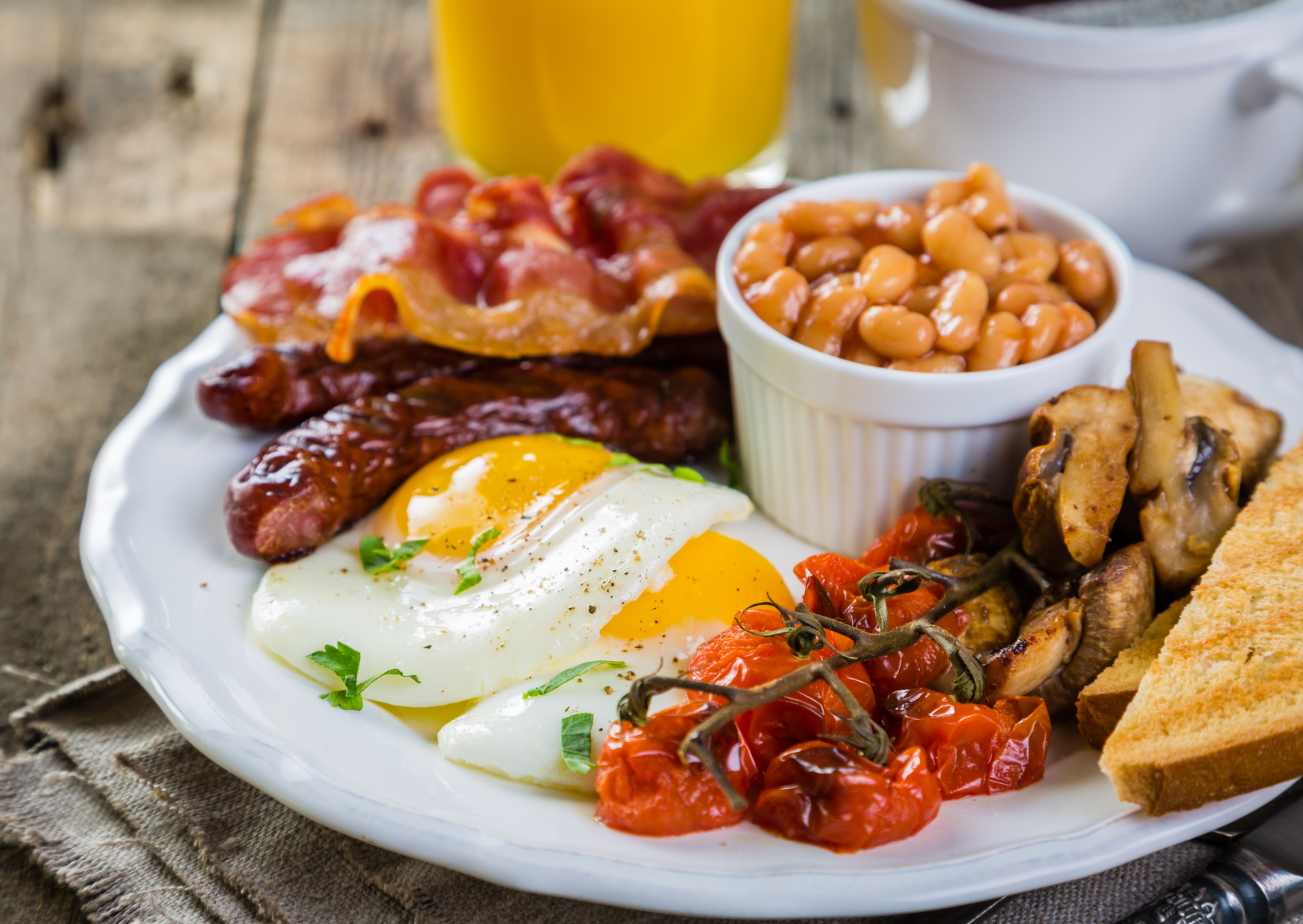
The word healthy on a menu often hides refined carbs and added sugar. Granola parfaits with honeyed clusters and fruit syrup can carry more sugar than a soda. Coffee shop muffins are dessert in disguise. Smoothie and acai bowls taste bright because they are loaded with fruit concentrates, sweetened yogurt, and toppings that push sugar over the top. The protein number is usually small, the fiber number is unimpressive, and the calorie total is higher than the plate you thought was heavy.
A lean full English plate can be built around eggs, beans, grilled vegetables, and one or two lean pieces of back bacon. That mix comes with substantial protein, real fiber, and very modest sugar unless you add juice or sweet drinks. The British plate is not a diet trick. It is just a better macronutrient balance than a pastry case wearing a health halo. Beware health halos, watch added sugars, look for actual protein when you order American breakfast staples.
Build the lighter full English at home
You do not need a cast iron griddle or an English pub kitchen. You need a baking sheet, a skillet, and ten minutes of attention. This version feeds two.
Shopping list
Two to four eggs, four rashers of back bacon, one cup baked beans in tomato sauce, two medium tomatoes halved, two cups mushrooms sliced, two slices whole grain toast, teaspoon of olive oil, salt and pepper. Optional light sausage, optional spinach, optional black pudding for a special day, not a routine day.
Step by step
Heat the oven grill or the hottest setting your oven gives you. Arrange bacon and tomato halves on a rack set over a tray. Put them high under the heat so fat renders and tomatoes take color. In a skillet, add the mushrooms with a splash of water and a pinch of salt. Let them steam away their moisture, then finish with a tiny swirl of oil so they gloss, not soak.
Warm beans gently in a small pan until they bubble. Eggs go last. Fry them in a nonstick pan with a light brush of oil or poach them in simmering water. Toast goes in while eggs cook. You should land everything within a short window. Grill for crisp, steam then gloss mushrooms, eggs at the end. Plate with the tomatoes against the eggs, mushrooms near the toast, beans in a small bowl so the sauce does not flood.
Smart swaps
If you want sausage, pick a lean link or a small portion and bake it rather than pan fry. If you want more volume, add a handful of wilted spinach. If you love hash browns, save them for the weekend and keep weekday plates clean. Lean link if used, greens for volume, starch saved for special days keeps the routine balanced.
Order like a local and keep it light
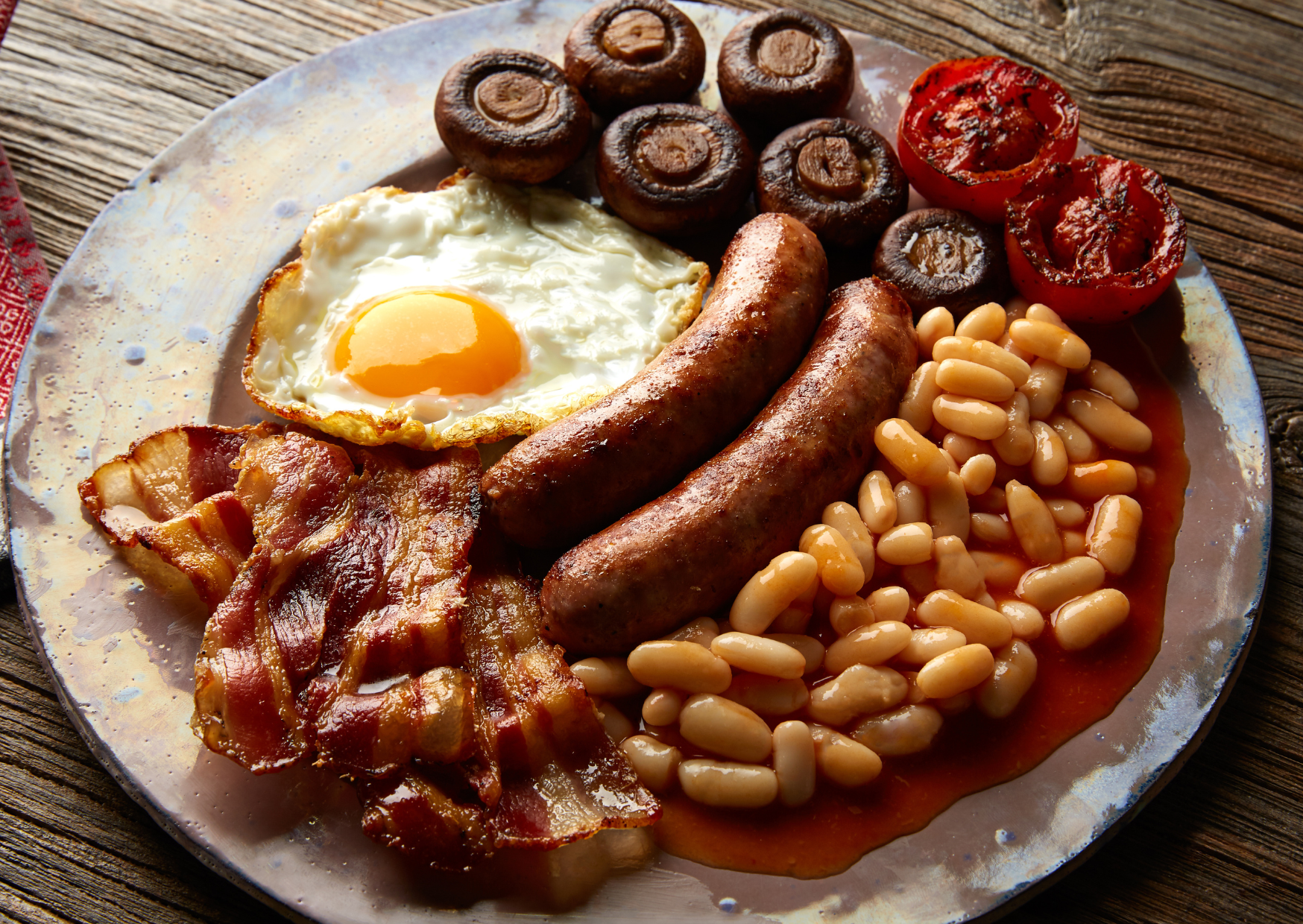
You can eat this plate in any British cafe without making a speech. Tell the server you would like a small or regular breakfast, bacon grilled not fried, eggs poached or fried easy, extra mushrooms instead of chips, and whole grain toast if they have it. Keep the sausage if you love it or swap it for another egg. Ask for beans on the side so you control how much sauce hits the plate. Drink coffee or tea, water on the table, no juice to keep sugar low.
Those sentences change the numbers more than any calorie count on a menu ever will. They replace belly bacon with back, move cooking from pan to grill, add vegetables, and keep protein high. Grilled not fried, back not streaky, vegetables and beans is the winning three line script.
A simple compare that makes the case
Every plate and portion varies, but you can ballpark the two breakfasts in a way that tells the truth.
Lighter full English, typical cafe portion
Two eggs, two grilled back bacon rashers, one cup baked beans, half a grilled tomato, a cup of mushrooms, one slice whole grain toast. Expect around seven to nine hundred calories, forty to fifty grams of protein, and ten or more grams of fiber, with low sugar beyond the bean sauce. Sodium can be notable if the kitchen salts heavily or the beans are not a reduced salt version, so water on the table helps and you can choose a low salt can at home.
American “healthy” standbys
A large blueberry muffin from a national coffee chain sits well above three hundred calories, sometimes above four hundred, mostly from refined flour and sugar, with low fiber and modest protein. A cafe parfait with granola looks better and can still hide large sugar totals with only a small protein figure. An acai bowl called healthy on a chalkboard can carry very high sugar from blended fruit bases and sweetened toppings, even if it is dairy free. The calorie totals often match or exceed the full English, but the protein and fiber are far lower. The result is hunger by mid morning and snacking all day.
The numbers do not need to be perfect to see the point. The British plate gives you protein that lasts, fiber that satisfies, and vegetables that are actually cooked, without a pile of added sugar.
What to watch, and how to tailor it
A lighter full English is not a free pass. If you add black pudding, extra sausage, fried bread, and hash browns, you have built the weekend special, not the weekday routine. If sodium is a concern, pick low salt beans, trim any visible fat on the bacon, and cook everything on the grill or in the oven rather than in a pan full of oil. If you are managing cholesterol under medical advice, keep bacon and sausage to rare appearances and lean on eggs with vegetables and beans for the standard plate.
Vegetarian and pescatarian versions are easy. Swap the bacon and sausage for a smoked fish fillet or a vegetarian sausage, keep the eggs, beans, tomatoes, mushrooms, and toast. You will still hit protein and fiber goals and keep sugar minimal. Same plate logic, different protein, identical benefits.
Why this European breakfast wins your morning
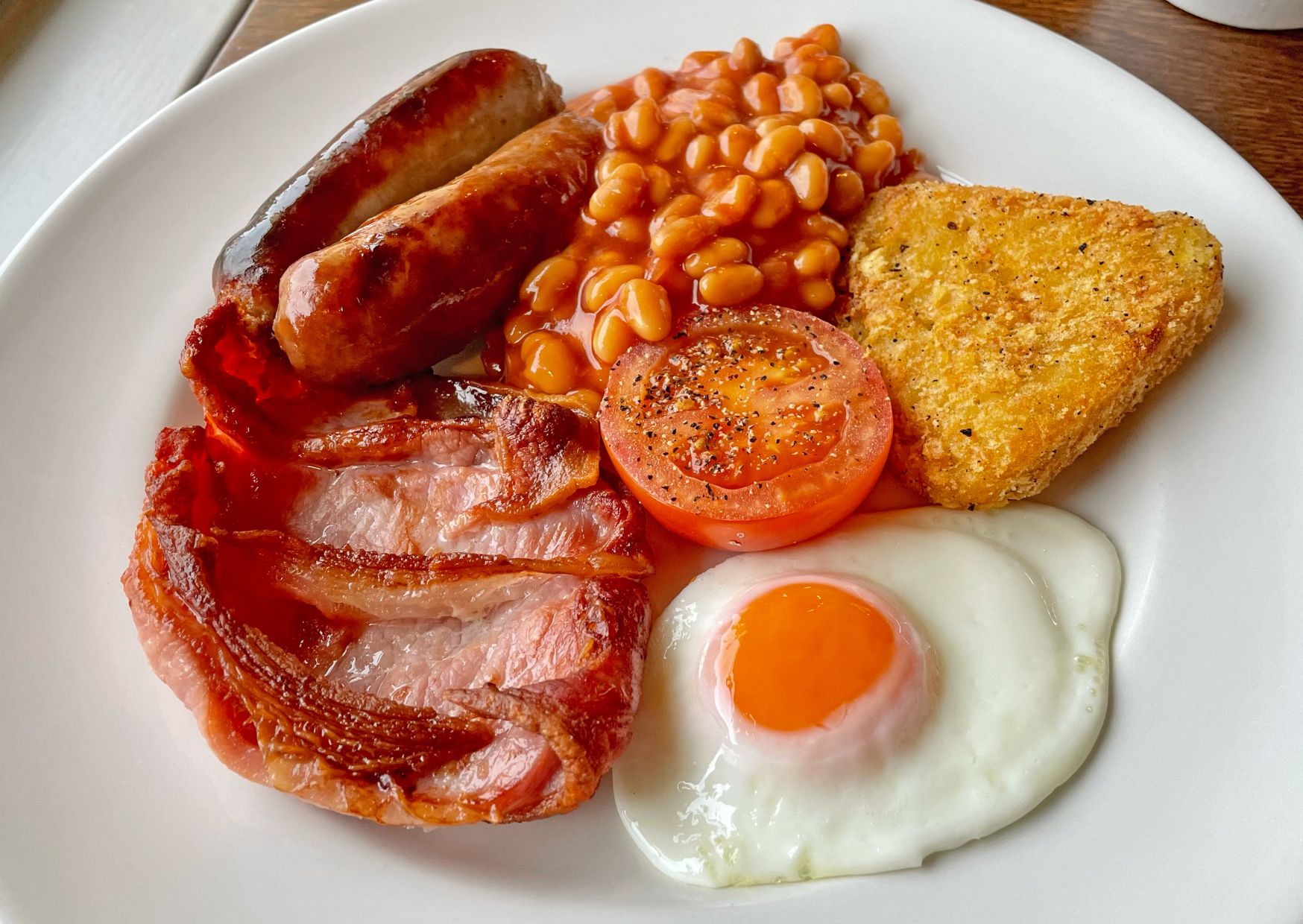
The full English that locals actually eat is not a dare. It is a plate that uses cooking method, portion control, and protein to beat the sugared breakfast trap. Eggs and beans do the heavy lifting. Grilled vegetables add nutrition and volume. Back bacon keeps the flavor most people want without inviting a grease bath to the party. When you cook or order it this way, you get the best kind of breakfast effect: steady energy, calm appetite, and no crash.
Meanwhile, the American items that call themselves healthy are often sugar forward and protein light. They look bright, they photograph well, and they leave you hungry. If you want breakfast to do real work, follow the British logic. Keep the plate savory, put protein at the center, let vegetables show up, and save dessert for later in the day.
Protein first, vegetables present, sugar minimal. That is why the full English, done right, makes more sense than the snack that pretends to be a meal.
Origin and History
The Full English Breakfast emerged in Britain as a structured morning meal designed to fuel long, physically demanding days. Its roots trace back to rural households where breakfast needed to provide sustained energy rather than quick stimulation. Eggs, meats, vegetables, and bread weren’t indulgences but practical nourishment.
By the Victorian era, the Full English became codified as a recognizable meal, especially in inns and households hosting guests. Serving a substantial breakfast was a sign of hospitality and reliability. Each component had a purpose, balancing protein, fat, and fiber long before nutrition science named those concepts.
Unlike many modern breakfasts, the Full English was never meant to be sweet. Sugar played a minimal role in traditional British cooking, especially in the morning. Savory foods were believed to ground the body and prevent energy crashes later in the day.
Over time, the meal became associated with indulgence rather than function, especially as lifestyles changed. Yet its original structure remains surprisingly aligned with what modern research recognizes as a balanced, satiating breakfast.
The biggest controversy is perception. In the U.S., the Full English is often labeled unhealthy simply because it includes bacon and sausages. This ignores the full context of the meal, which includes eggs, tomatoes, mushrooms, and beans—foods rich in protein, fiber, and micronutrients.
Another uncomfortable comparison is how American “healthy” breakfasts are defined. Many rely heavily on refined grains, added sugars, and low-fat products that spike blood sugar and leave people hungry hours later. The Full English, by contrast, slows digestion through fat and protein balance.
Portion misunderstanding fuels criticism. A traditional Full English is not meant to be eaten daily or oversized. It’s structured, moderate, and often replaces both breakfast and lunch, which changes how its nutritional impact should be evaluated.
What makes this topic controversial is that it challenges decades of low-fat, calorie-focused messaging. The Full English suggests that satiety, stability, and nutrient density matter more than calorie counts or buzzwords like “light” and “clean.”
How Long It Takes to Prepare
A Full English Breakfast appears complex, but preparation is more efficient than expected. Most components cook simultaneously, allowing the meal to come together in about 25 to 30 minutes with basic planning.
Vegetables like tomatoes and mushrooms cook quickly and require minimal attention. Eggs and meats can be prepared to preference without elaborate techniques. Beans are typically warmed, not cooked from scratch, making them one of the simplest elements.
The key is sequencing rather than speed. Starting with items that benefit from gentle cooking allows everything to finish around the same time. This rhythm is why the meal remains popular in cafes and homes alike.
Compared to modern breakfasts involving blenders, specialty ingredients, or multiple steps, the Full English is straightforward. It relies on whole foods and heat, not assembly tricks or processing.
Serving Suggestions
Traditionally, the Full English is served as a single plated meal rather than multiple courses. This allows diners to balance bites intuitively instead of overeating one component in isolation.
Quality matters more than quantity. Well-sourced eggs, properly cooked vegetables, and modest portions of meat elevate the meal without excess. The goal is satisfaction, not heaviness.
Bread is present but secondary. Toast serves as a vehicle, not the foundation. This contrasts sharply with American breakfasts built almost entirely around grains or sweetened starches.
Tea or black coffee typically accompanies the meal, avoiding the sugar-heavy beverages common in American breakfast culture. This supports steady energy rather than rapid stimulation.
Final Thoughts
The Full English Breakfast isn’t healthier because it avoids fat or calories. It’s healthier because it respects balance, satiety, and digestion. It feeds the body in a way that reduces cravings instead of creating them.
What’s labeled “healthy” in America often prioritizes marketing over physiology. Foods designed to be light, quick, or low-calorie frequently fail to nourish properly. The Full English does the opposite by delivering substance without excess sugar.
This meal reminds us that traditional food systems often solved problems modern diets created. Sustained energy, stable blood sugar, and reduced snacking were built into the structure.
Reframing the Full English as nourishment rather than indulgence reveals an uncomfortable truth: many modern “healthy” breakfasts are less about health and more about convenience. The Full English simply feeds you properly and lets your body do the rest.

About the Author: Ruben, co-founder of Gamintraveler.com since 2014, is a seasoned traveler from Spain who has explored over 100 countries since 2009. Known for his extensive travel adventures across South America, Europe, the US, Australia, New Zealand, Asia, and Africa, Ruben combines his passion for adventurous yet sustainable living with his love for cycling, highlighted by his remarkable 5-month bicycle journey from Spain to Norway. He currently resides in Spain, where he continues sharing his travel experiences with his partner, Rachel, and their son, Han.