
Imagine crushing basil in a cool marble bowl until the leaves surrender their perfume into a creamy, jade emulsion that never once touches heat.
You hear the dull thud of wood against stone. A ribbon of pale, delicate Ligurian olive oil disappears into a glossy green sauce. A slab of Parmigiano shaves into snow, a little Fiore Sardo follows, pine nuts melt to paste, and a clove of gentle garlic gives you fragrance without a fight.
That is pesto Genovese when it is made the way Genova insists: by hand, in a mortar, with young basil, light local oil, and a measured mix of cheeses. Not because it is romantic, but because crushing builds an emulsion that blades and heat destroy.
Jarred pesto, even the pricey ones, cannot play this game. The basil must survive a factory, a truck, a shelf, and your kitchen. So producers swap in neutral or seed oils for stability, cashews for economy, heat treatment for safety, and acids or potato flakes to keep the color. The result spreads fine, but it is not the sauce that clings to trofie in Liguria. The secret the jar cannot hold is fresh, cold, mortar-made emulsion.
This guide shows you the exact order and method to make real pesto Genovese at home in ten minutes, why jarred sauces fall short, how to cook pasta the Ligurian way with potatoes and green beans, and how to use a blender without scorching your basil on busy nights.
What “Real” Means In Liguria
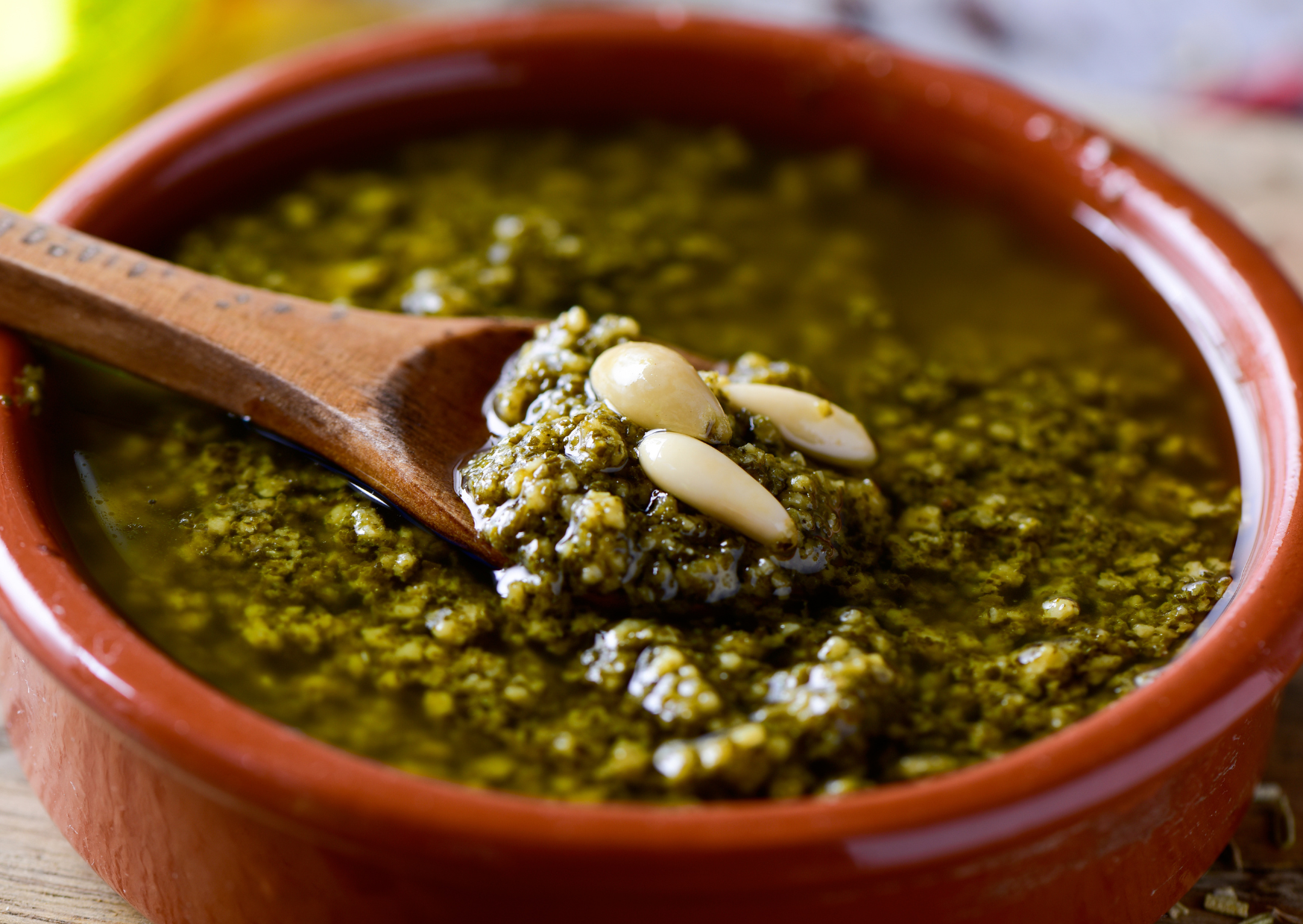
The heart of the matter is not policing taste, it is defined ingredients and a cold method. Genoa’s cooks and competitions agree on a short list and a tool.
Real pesto Genovese uses Basilico Genovese DOP, leaves that smell of basil and nothing minty, pine nuts, garlic that is present but polite, a mix of Parmigiano Reggiano and Pecorino Fiore Sardo, coarse salt, and extra virgin olive oil from Liguria. The tool is a marble mortar and a wooden pestle, because pounding makes a stable paste that cradles oil and keeps the sauce pale, creamy, and fresh. These are not just vibes. They are the competition rules, the consortium recipe, and the PDO standards behind the ingredients. No lettuce, no lemon, no butter, no cooking.
Two ingredient notes matter more than Instagram.
First, basil. The DOP spec insists on cultivar traits and aroma that scream Liguria and specifically exclude minty notes. Cooks pick small, tender leaves because large, mature leaves skew peppery and can go dull when bruised. If you cannot buy DOP basil, pick the youngest bunch you can and avoid varieties that smell of mint or clove. Young basil, gentle aroma is your anchor.
Second, oil. Riviera Ligure DOP oil, often from Taggiasca olives, tastes light, sweet-fruity, almondy, with a soft finish. That softness matters. Heavy, peppery oils bulldoze basil’s perfume and turn pesto into a generic green oil spread. If DOP oil is not around, reach for the mildest, cleanest extra virgin you own. Light Ligurian oil lets basil lead.
Why The Mortar Wins Over Blades
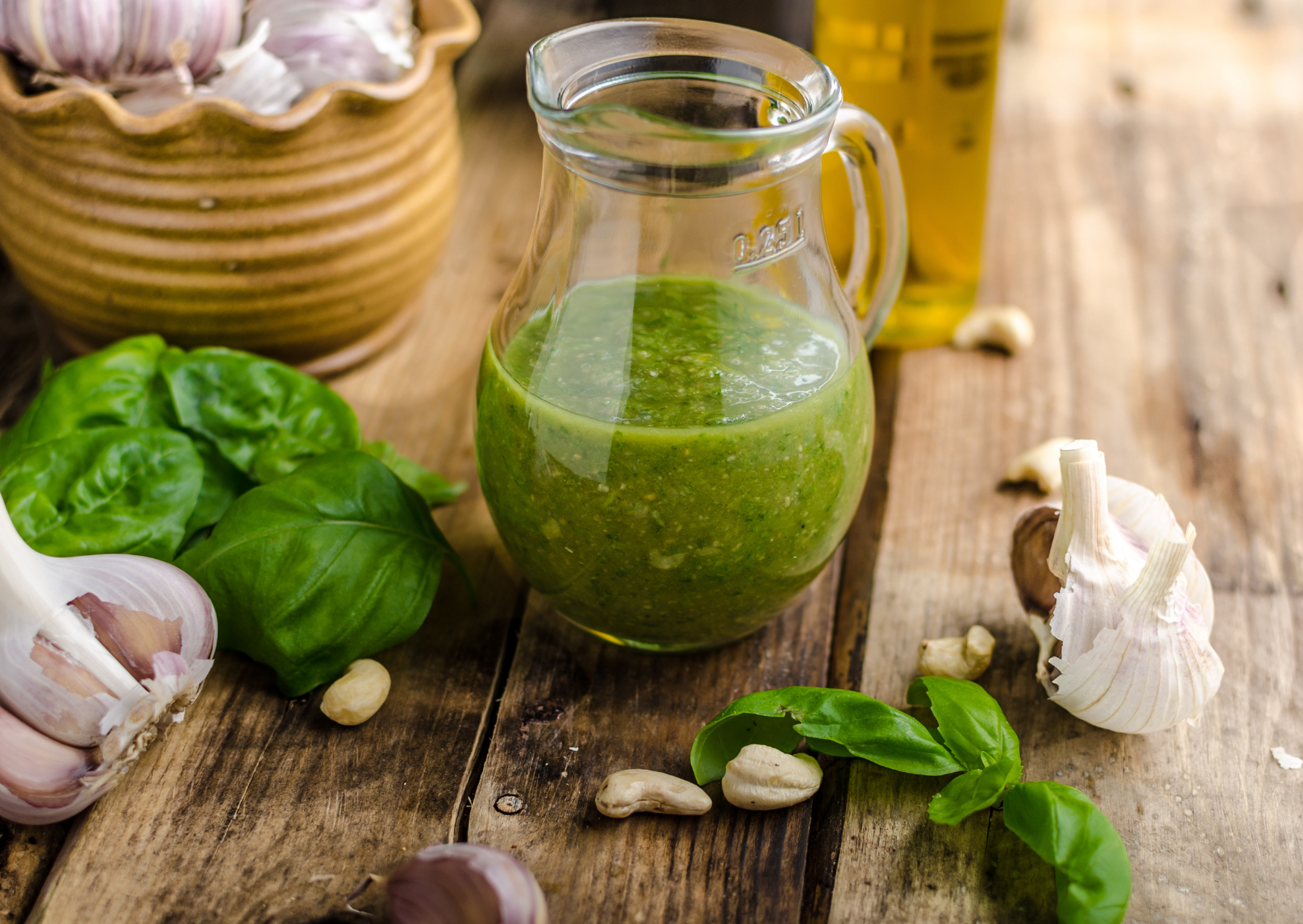
You can make pesto in many ways, but only one way builds the right texture at cold temperatures. The mortar’s slow crush breaks basil’s cell walls and emulsifies the oily and watery parts into a cream. A blender or processor chops and aerates at speed, creating friction heat, driving off delicate volatiles, and pushing chlorophyll toward drab. Your tongue feels the difference before your eyes do.
Two science points explain what your spoon already knows. Heat and oxygen mute green. Raise leaf temperature and you speed the conversion of chlorophyll to brownish pheophytins. Pound cold and you stay vivid. Whip hot and you dull the color and flatten the perfume. Mortar work is not ceremony. It is temperature control plus emulsion.
The order matters too. You turn garlic and salt into a paste first, so the salt acts like sand and the clove dissolves into the background. Then you crush pine nuts until they go creamy. Only then do you add basil, a handful at a time, pounding and twisting so leaves smear rather than shred. Oil slides in slowly to stabilize the paste, followed by the cheeses to tighten it to a spoonable cream. This sequence is the quiet engineering behind that cloudlike texture. Crush, not cut. Cold, not hot. Order, not chaos.
Why $15 Jars Miss The Target
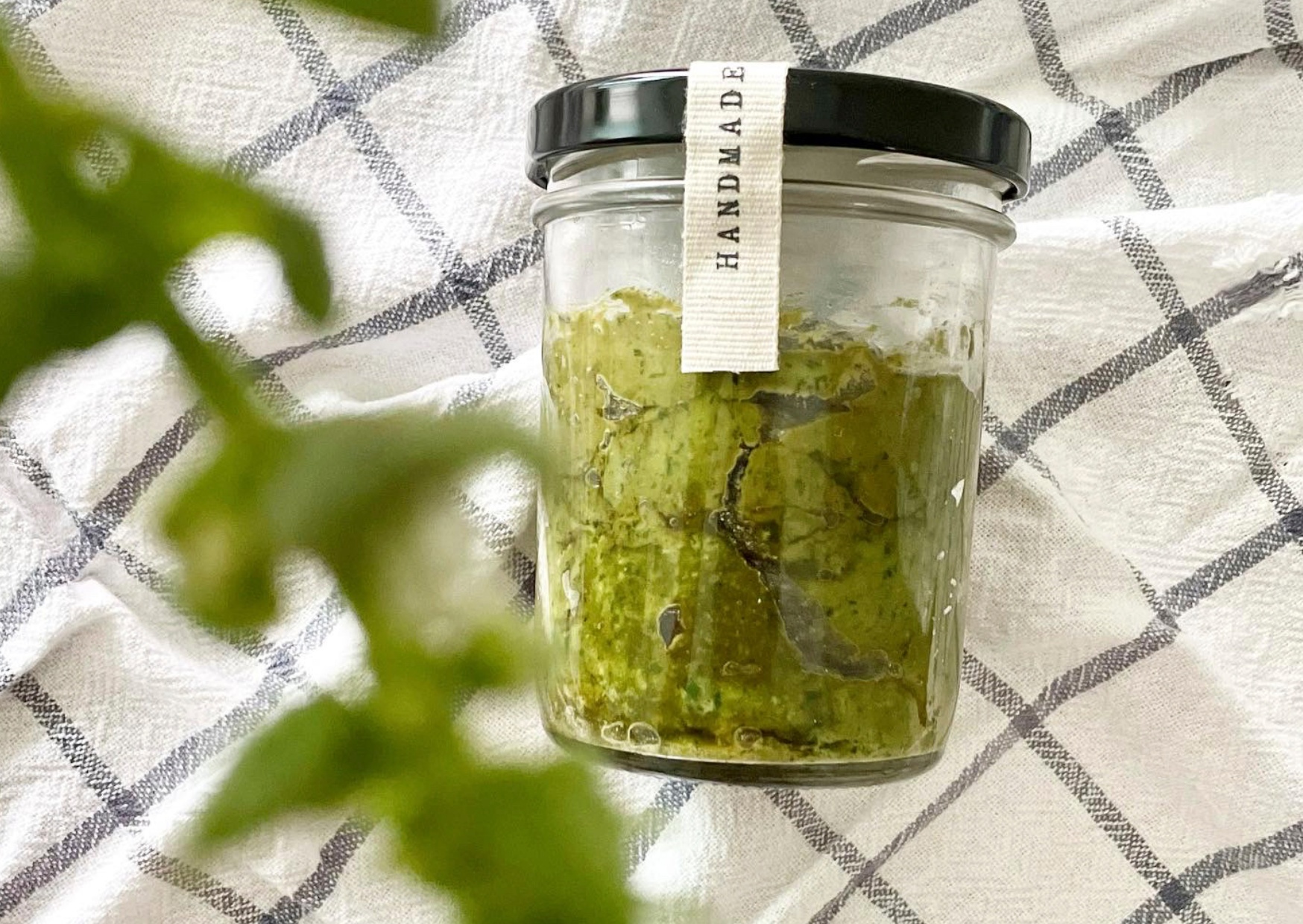
There are fine jarred pestos for what they are. They are not this sauce. The reasons are ingredient swaps, heat, and shelf life.
Read the label. Shelf-stable pestos often lead with sunflower or seed oils, add cashews to replace pricey pine nuts, and include acids, sugar, dairy powders, starches, or potato flakes to keep color, texture, and pH in line over months at room temperature. Several academic and industry papers treat pesto as a pasteurized or acidified product specifically because heat and time are hurdles for safety. That means volatile basil aromas and delicate chlorophyll are up against thermal processing, oxygen, and long storage. The jar survives. The perfume does not. Jarred pesto is stable. Mortar pesto is alive.
Even when basil content is decent, factory runs must standardize color and pH across batches. Producers do it smartly, but the very act of heat treatment, holding, and global shipping sands off the high notes you taste in a sauce that went from mortar to pasta in five minutes. If all you have is a jar, treat it like a base and wake it up with fresh basil, a spoon of Parmigiano, and a splash of good oil. If you want the Ligurian experience, make it and eat it now.
The Ten-Minute Mortar Method, Step By Step
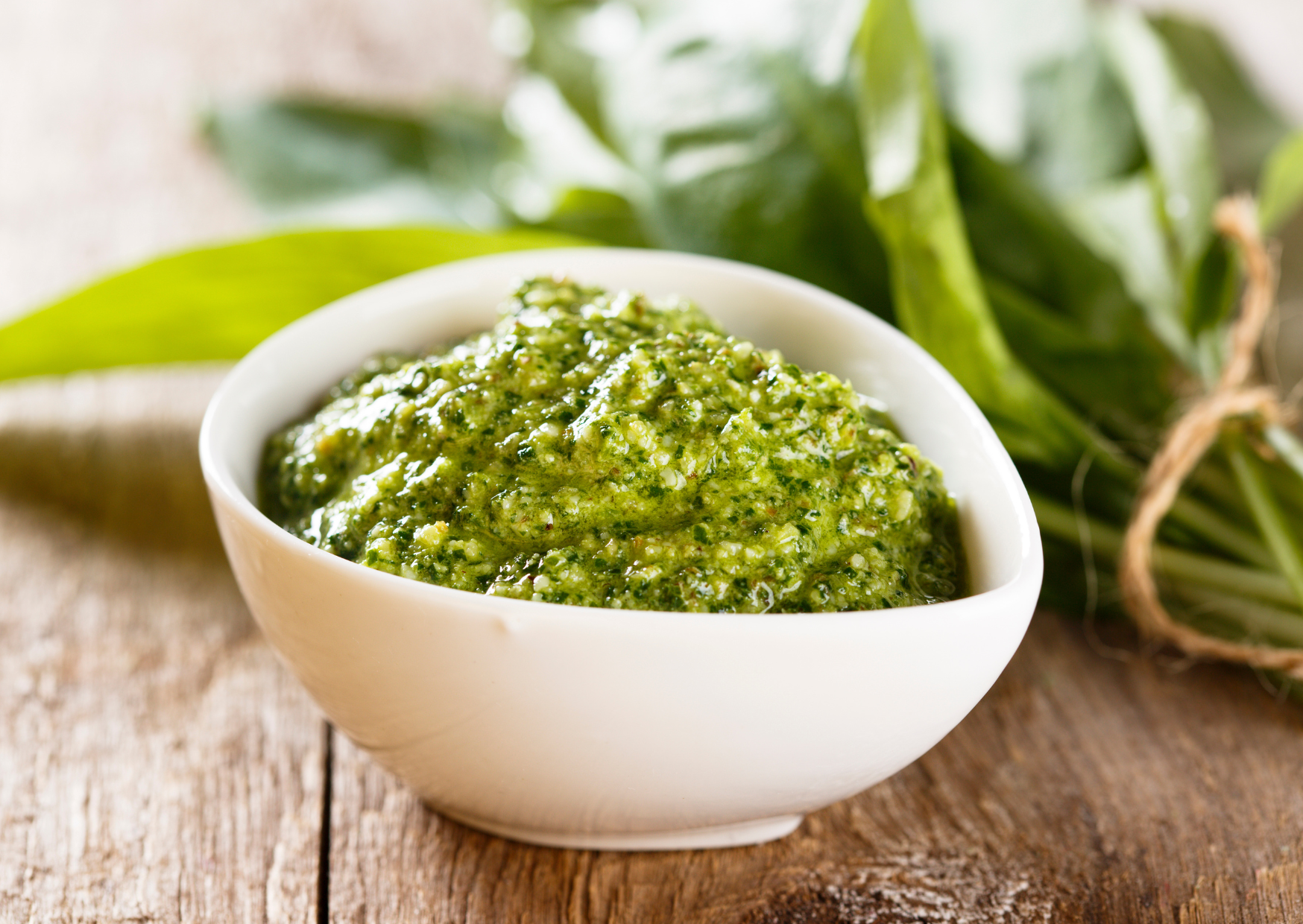
You can do this tonight. A marble mortar and wooden pestle are ideal. A granite mortar works too. The scan-hooks to remember are salt as abrasive, order matters, oil last for sheen.
Ingredients, serves 4 with pasta
- Basil: 60 to 70 g tender leaves, stems removed
- Garlic: 1 small clove, ideally a mild variety, core removed if strong
- Coarse sea salt: 1 generous pinch, plus more to taste
- Pine nuts: 30 g
- Parmigiano Reggiano: 45 to 60 g, finely grated
- Pecorino Fiore Sardo: 20 to 40 g, finely grated
- Extra virgin olive oil: 80 to 120 ml, preferably Ligurian and light in character
U.S. conversions: basil 2 to 2½ packed cups leaves; pine nuts ¼ cup; Parmigiano ½ to ⅔ cup; Fiore Sardo ¼ to ⅓ cup; oil ⅓ to ½ cup.
Method
- Garlic and salt to paste. Drop the clove and salt into the mortar and grind to a smooth paste. This knocks the edge off the garlic and readies the surface.
- Cream the pine nuts. Add pine nuts and work them until you have a buttery paste without chunks.
- Basil in handfuls. Add a handful of leaves, crush with a firm twist and press, then add the next handful. Work until the mass is a thick, bright paste with no shreds. Be patient. The color should stay vivid.
- Cheeses. Stir in the Parmigiano and Fiore Sardo until the paste tightens.
- Oil to finish. Stream in the oil while you stir, just until glossy and spoonable. Taste and adjust salt.
That is the sauce. It should be creamy, spreadable, and bright, not oily or chunky. Do not refrigerate for hours. Use it within the hour or thin with a little pasta water and freeze the rest flat in a bag for next week.
Why this works
- Salt and garlic grind into an abrasive that breaks cells gently, not violently.
- Pine nuts provide natural emulsifiers and body.
- Cheese before oil lets proteins catch the oil into a cream instead of a pool.
- Light oil supports, it does not dominate.
Blender Shortcut That Still Tastes Like Liguria
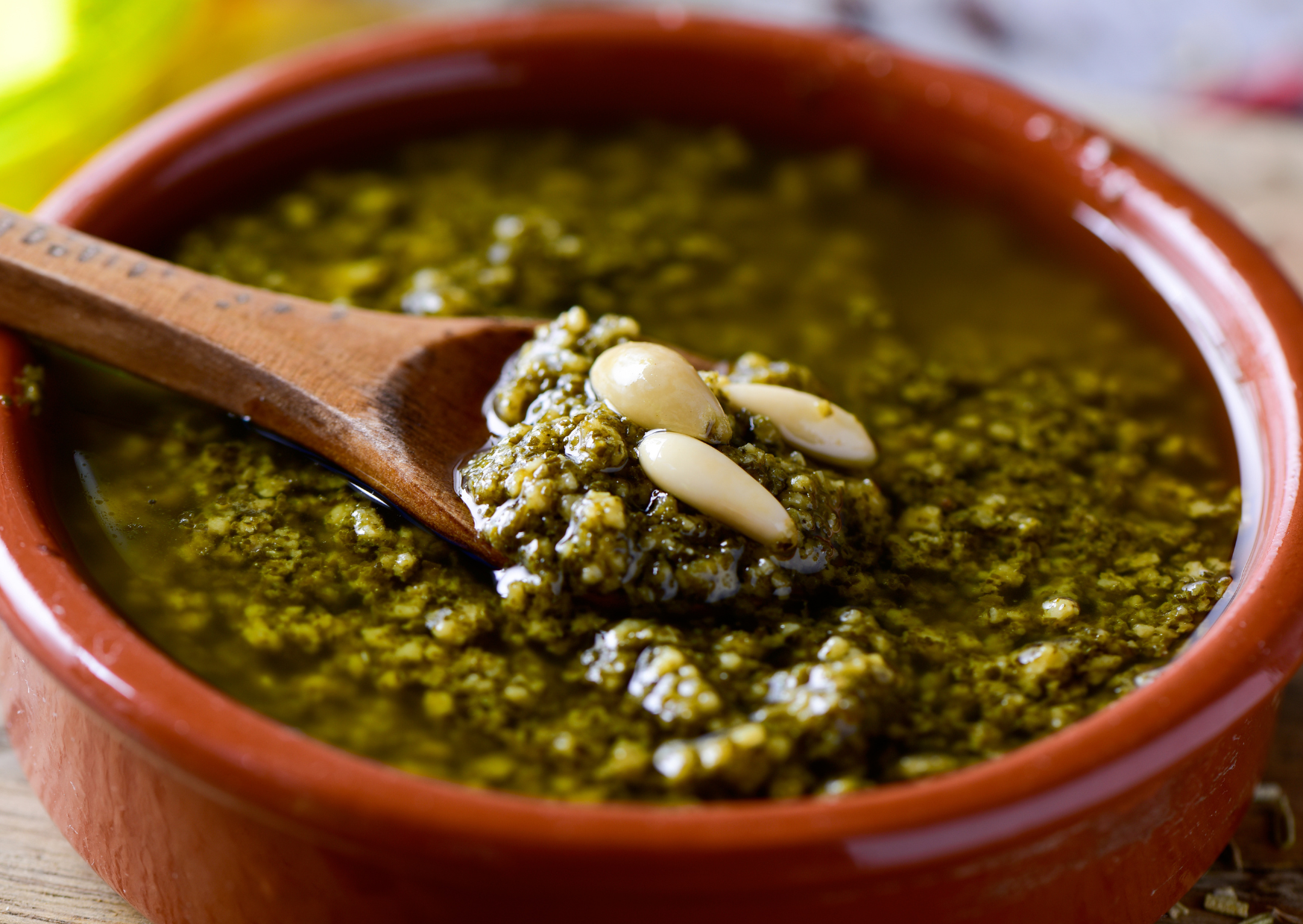
Life happens. You can use a blender or processor and still keep the spirit if you drive temperature and air down. The scan-hooks are cold, quick, pulse.
- Chill the gear. Pop the blender jar, lid, and blade in the freezer for 10 minutes.
- Ice cube trick. Add one small ice cube with the basil to blunt friction heat and guard color.
- Order is similar. Blitz garlic, salt, and pine nuts to a paste first. Add basil and pulse in bursts, scraping down.
- Cheese and oil last. Pulse in cheeses, then drizzle oil with the machine on low just to emulsify. Stop as soon as it turns glossy.
- Use immediately. Processor pesto fades fast. Toss with pasta right away.
You will not match a mortar’s texture, but you will dodge the two big problems, heat and over-aeration. Your color will hold and your basil will smell like basil, not hay.
Trofie Al Pesto, The Ligurian Way
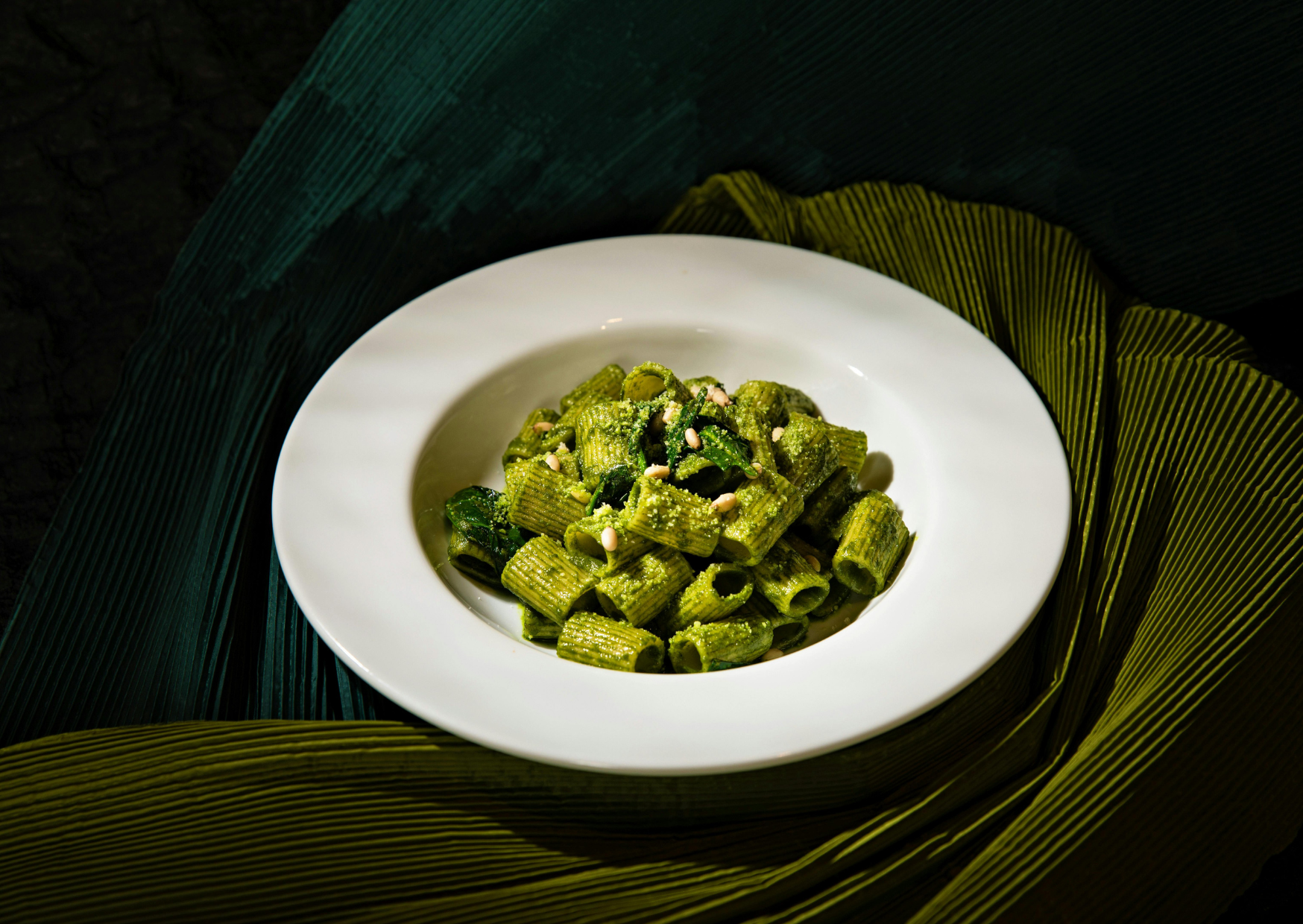
In Liguria, pesto is not just sauce. It is how you cook the pot. The classical move is to boil pasta with potato and green beans in the same water, then marry it all with the pesto off heat. The result is silky, sweet, and green.
Ingredients, serves 4
- Trofie or trenette: 350 to 400 g
- Waxy potatoes: 250 g, peeled, cut in 1 cm cubes
- Green beans: 200 g, trimmed, cut in short lengths
- Pesto Genovese: 150 to 180 g, freshly made
- Pasta water: as needed
- Extra virgin olive oil: 1 tbsp for finishing
- Salt for the water
Method
- Salt the water generously.
- Potatoes first. Drop cubes into a rolling boil for 4 minutes.
- Add pasta, cook according to time minus 4 minutes.
- Add green beans for the final 4 minutes so all three finish together.
- Reserve water, drain the rest.
- Off heat, loosen pesto with a ladle of hot water until it turns glossy and creamy.
- Fold pasta, potatoes, beans into the sauce. Add a splash more water to coat. Finish with a thread of oil.
The potato’s starch and the green bean’s snap round off basil’s pepper and garlic’s lift. You get comfort without cream. This is the plate you travel to eat.
Tiny Choices That Change Everything
You do not need a nonna hovering to get this right. You need five tiny habits.
- Pick small leaves. Basil with small, tender leaves gives you perfume, not spice. Large leaves can taste coarse and oxidize faster. Young basil only is the quiet rule baked into the DOP.
- Use mild oil. Ligurian oil is lightly fruity and almondy. A pepper bomb from elsewhere hijacks the sauce. Let the basil lead.
- Mind the garlic. One small clove is plenty. If yours is fiery, remove the green core. Ligurians often favor Vessalico for its gentleness. Garlic as accent, not headline.
- Keep it cold. If you feel warmth, you are losing color and aroma. Cold, fast, gentle is the mantra a mortar makes easy.
- Cheese balance. Parmigiano brings sweetness, Fiore Sardo brings tang. Start near 3 parts Parmigiano to 1 part Fiore Sardo, then tune to your taste. Two-cheese balance beats a single-cheese wall.
Common Mistakes And Clean Fixes
Short, skimmable, and solvable.
Overblending to neon. If your pesto looks whipped, you likely warmed and aerated it. Fix by adding a spoon of cold oil and a splash of pasta water off heat to re-emulsify.
Lemon juice or heavy acids. Acid brightens at first and dulls later, and it does basil’s color no favors over time. Fix by using good oil and salt the way Ligurians do. If you want lift, a tiny splash of pasta water does more than lemon.
Bitter streaks. This can be old basil, overworked leaves, or an aggressive oil. Fix by swapping to younger leaves and milder oil, and stop as soon as the paste is smooth.
Refrigerating for days. Fridge time flattens perfume. Fix by making what you need and freezing the rest in thin sheets for quick thawing.
Cooking pesto. Heating turns green gray and garlic harsh. Fix by tossing off heat with hot pasta water. Pesto meets warmth only in the bowl.
What To Buy, What To Substitute
You can be practical and still honor the idea.
- Basil: any tender-leaf sweet basil works. If you see Basilico Genovese DOP, grab it. Avoid varieties with obvious mint or clove notes.
- Garlic: choose small, firm cloves. If you find Vessalico garlic, use half a clove and smile at your luck.
- Pine nuts: Italian or Mediterranean are classic. If price is a barrier, walnuts can stand in, but the flavor shifts.
- Cheeses: Parmigiano Reggiano plus Fiore Sardo are traditional. If Fiore Sardo is elusive, a good aged pecorino works.
- Oil: Ligurian DOP if you can. Otherwise the mildest, cleanest extra virgin you own. Peppery Tuscan oils are better saved for steaks.
If You Must Use A Jar, How To Make It Taste Fresh
We all have weeknights. If a jar is your base, you can wake it up.
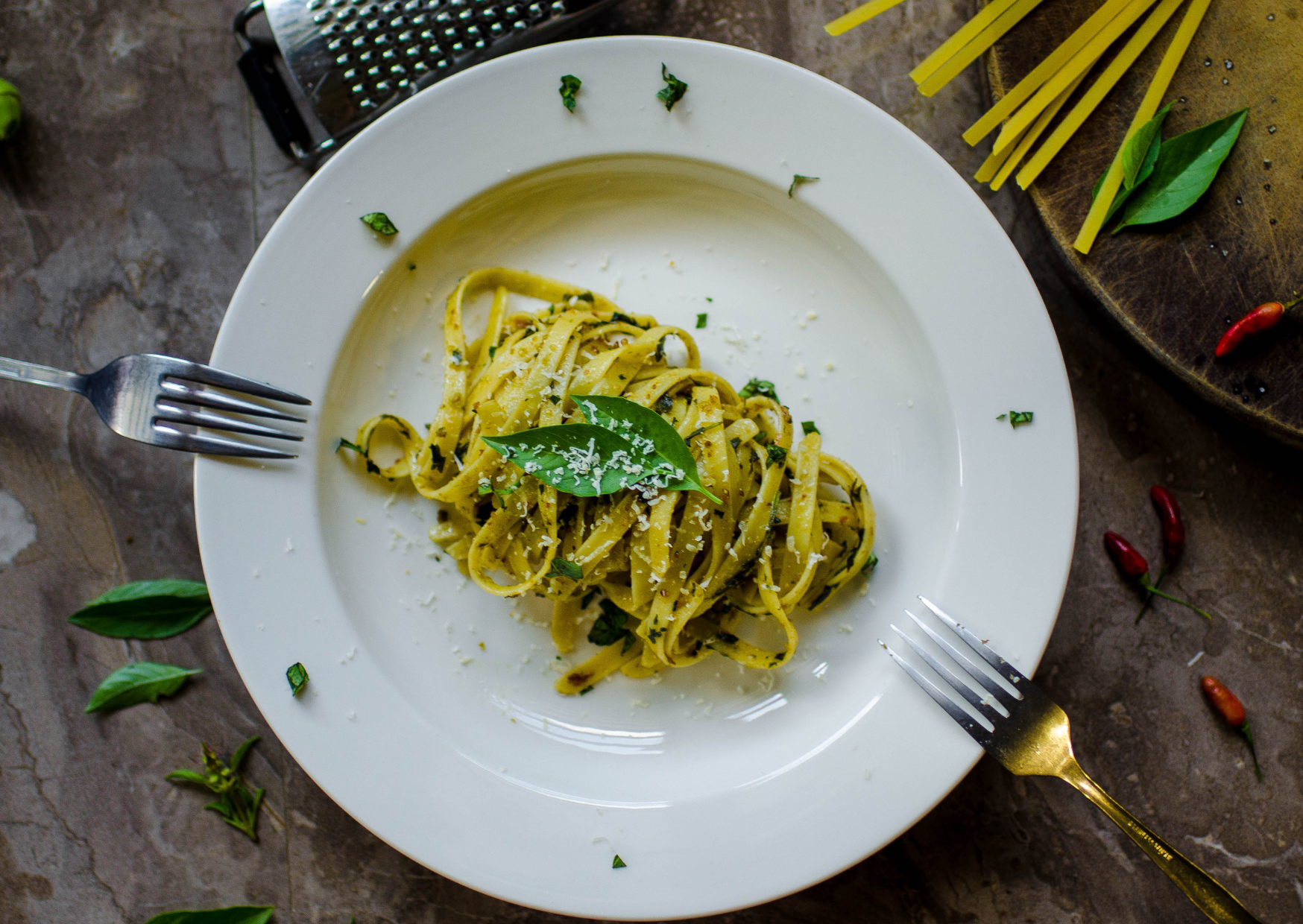
Stir in a handful of finely chopped fresh basil, a drizzle of mild extra virgin olive oil, and a spoon of freshly grated Parmigiano. If the label lists sunflower oil and cashews, expect rounder, sweeter notes. Balance with more cheese and a pinch of salt. Warm only by contact with hot pasta water, never in a pan. These tweaks do not turn a jar into Liguria, but they get you closer.
The Why Behind The Rule
End with the principle and you will never forget what to do. Pesto Genovese tastes the way it does because it is a cold emulsion of basil’s water and a mild oil, stabilized by nuts and cheese, built by pressure, not speed. The mortar’s weight gives you cream. The order protects perfume. The light oil keeps the basil on stage. Jarred versions cannot preserve that green perfume without trading away freshness to survive heat and months. Your job at home is simple. Keep it cold, keep it gentle, and eat it now.
Do that, and you will understand why people in Liguria will choose a mortar over a machine for ten minutes of their day. It is not ceremony. It is flavor.
Origin and History
Pesto Genovese comes from Liguria, a narrow coastal region in northern Italy where basil thrives in the salty sea air. The sauce developed as a raw preparation, designed to preserve the fragrance of fresh herbs rather than cook them down. Its name comes from the Italian word pestare, meaning “to pound,” referring to the traditional mortar-and-pestle method.
Historically, pesto was a peasant food, built from ingredients that were abundant and local. Basil, garlic, pine nuts, hard cheese, and olive oil formed a sauce that required no heat and minimal equipment. It was practical, fast, and intensely flavorful, making it ideal for daily meals rather than special occasions.
As pesto gained international popularity, it shifted from a regional staple to a global commodity. Jarred versions emerged to meet demand, often sacrificing freshness and balance for shelf life. What was once a fleeting, aromatic sauce became standardized and muted in mass production.
The biggest misconception about pesto is that ingredients alone guarantee authenticity. Many jars include high-quality components but still miss the defining characteristic of true pesto: how those ingredients are handled. Heat, oxidation, and mechanical blending all alter flavor in ways that no ingredient list can fix.
Another point of contention is method. Traditionalists insist on mortar and pestle, while modern cooks favor food processors. While both can work, speed and temperature control matter more than the tool itself. Over-processing generates heat, which dulls basil’s aroma and creates bitterness.
There’s also debate over substitutions. Walnuts instead of pine nuts, different oils, or added lemon are common in commercial versions. These changes aren’t inherently wrong, but they shift the sauce away from its original profile. What jars gain in stability, they lose in precision.
How Long It Takes to Prepare
Authentic pesto is remarkably quick to make. Using a mortar and pestle, the process takes about 10 to 15 minutes, depending on technique. A food processor can reduce that to under five minutes if used carefully.
The real time investment lies in preparation. Washing and thoroughly drying basil leaves, measuring ingredients, and keeping everything cool are essential steps. Skipping these details often leads to disappointing results.
Compared to cooking sauces, pesto demands attention rather than patience. There’s no simmering or reduction, just deliberate, controlled mixing. In exchange, you get a sauce that tastes alive rather than preserved.
Serving Suggestions
Pesto Genovese shines when paired with simple pasta shapes that hold sauce without overwhelming it. Traditionally, it’s served with trofie or trenette, often alongside potatoes and green beans to create balance.
Avoid heating pesto directly. Toss it with hot pasta off the heat to preserve its color and aroma. Excessive heat destroys the very qualities that make it special.
Pesto also works beautifully beyond pasta. Use it sparingly on grilled vegetables, seafood, or bread, letting it enhance rather than dominate the dish.
Final Thoughts
The secret jarred pesto can’t replicate is immediacy. Freshly made pesto delivers aroma, brightness, and texture that disappear the moment preservation becomes the priority.
This doesn’t make jarred pesto useless, but it explains why it never quite satisfies. Convenience comes at the cost of vibrancy, no matter the price tag.
Once you experience real Pesto Genovese, it becomes clear that the sauce was never meant to last. It was meant to be made, eaten, and remembered while still fresh.

About the Author: Ruben, co-founder of Gamintraveler.com since 2014, is a seasoned traveler from Spain who has explored over 100 countries since 2009. Known for his extensive travel adventures across South America, Europe, the US, Australia, New Zealand, Asia, and Africa, Ruben combines his passion for adventurous yet sustainable living with his love for cycling, highlighted by his remarkable 5-month bicycle journey from Spain to Norway. He currently resides in Spain, where he continues sharing his travel experiences with his partner, Rachel, and their son, Han.