

In Spain, you can spot the difference in five minutes.
Two people walk into the same office with the same problem, a residency question, a rent contract issue, a medical form, a banking hiccup. One pair walks out annoyed but functional. One person walks out wrecked, already paying for the stress with a taxi, a delivery order, and a “fine, I’ll just hire someone” decision.
That’s what “double the failure rate” really means in practice. Not a single official Europe-wide statistic, not one clean percentage you can tattoo on your forearm. It’s that when you’re alone, you carry 100% of the admin load, 100% of the emotional load, and 100% of the fixed costs. Couples split those things, even when they’re not particularly organized.
So singles don’t “fail” because they’re weaker. They fail because the system charges a higher toll when you don’t have a built-in teammate.
Here are the four reasons it happens, and how to stop it before your move turns into an expensive, exhausted retreat.
Reason 1: The fixed-cost trap is brutal when you’re paying it solo

Europe looks cheaper when you price it like a tourist. It looks different when you price it like a resident.
Rent deposits, agency fees, furniture basics, private health insurance during transition, transport passes, utilities, and “I need this apartment to be livable” purchases are mostly fixed costs. They don’t scale down just because you’re one person.
A couple can treat a €1,800 apartment as €900 each. A single treats it as a life sentence. That’s why the same city can feel comfortable to a couple on €4,500 net and suffocating to a single on €3,000.
This is also why singles get trapped in the worst housing tier: short-term furnished rentals. You pay a premium because you need speed and simplicity, then you keep paying it because moving again feels like punishment. Furnished convenience is expensive, and the cost is not just the rent. It’s the way it keeps you “temporary,” which makes you spend like a temporary person.
If you want a quick snapshot of how big the gap can be in popular cities, an idealista comparison in 2025 put average rents per square meter roughly around Barcelona €23.9/m², Milan €23.7/m², and Lisbon €22.2/m². That’s not your exact apartment, but it’s enough to understand why solo living can go from “manageable” to “why am I doing this” fast.
Singles also pay more for risk. Landlords and agencies often prefer couples, not because they’re nicer, but because they seem more stable. That can mean a single is asked for more guarantees, more documentation, or is simply passed over until they accept worse terms.
The fix is not to “budget better.” The fix is to plan like a single. Smaller base city, smaller apartment, faster move out of furnished, and a strict rule that your housing cannot consume your future.
Reason 2: Admin load hits harder when nobody can tag-team your life
In Europe, paperwork is rarely one big form. It’s a chain of smaller steps that must happen in the right order, during the right hours, with the right documents.
Couples accidentally solve this because one person can wait in line while the other handles work, calls, scans, and the everyday life stuff. Singles have to stop their entire life to do admin. Then they try to catch up afterward, and that’s when money leaks.
You miss a morning of work, so you compensate with convenience spending. You’re tired and irritated, so you take a taxi instead of public transport. You order delivery because your brain is fried. You pay for a fixer because you can’t face another office. Admin stress becomes spending, and it is shockingly consistent across Spain, Portugal, Italy, and France.
There’s another layer that’s under-discussed. Couples have a built-in witness. If something feels off with a landlord, an agency, a contractor, or an “advisor,” two people can sanity-check the situation in real time. Singles are easier to pressure. Not because they’re gullible, but because they’re alone in the moment.
This is where many solo moves die. The person is constantly behind. They are constantly paying to recover time. They never get to the calm resident routine where Europe becomes cheaper and easier.
The fix is boring and effective. For the first 90 days, you assume two admin mornings per week. Not a crisis mode, a schedule. When admin has a slot, it stops eating your whole week, and your spending stabilizes.
Reason 3: Loneliness isn’t just sad, it’s expensive

A lot of Americans come to Europe thinking loneliness is a personality issue. It’s not. It’s an infrastructure issue.
Couples land with a built-in social unit. Even if they have no friends, they have someone to eat with, walk with, debrief with, and build routines with. Singles land into silence. And silence is where the bad decisions breed.
Research on mobile lifestyles and expat life keeps circling the same idea: loneliness is often about the absence of an intimate anchor and the absence of a wider network. Digital nomad research has described emotional loneliness as the absence of an intimate figure, and social loneliness as the absence of a broader circle. Both matter, and singles are more exposed to both.
Here’s what that looks like in real spending:
- You eat out more because eating alone at home feels bleak.
- You travel more because you’re trying to “use Europe” instead of building a week.
- You spend more on coworking, classes, and paid communities because you’re trying to buy belonging.
- You keep your old life alive through flights, visits, and constant calls at weird hours.
None of this makes you a bad planner. It makes you a human trying to regulate stress. But loneliness has a burn rate, and it shows up by month six.
The irony is that Europe is full of social structures that can fix this cheaply, cafés, markets, neighborhood gyms, local language exchanges, volunteer groups. But those require repetition, and repetition is hard when you feel like a stranger.
Couples do repetition more naturally because it’s safer and less awkward. Singles often bounce around because they feel exposed. Then they never become known. Then the city stays cold. Repetition makes you visible, and visibility is what turns a place from expensive to livable.
Reason 4: The safety and attention tax is real, and it changes behavior
This one is sensitive, but it’s part of the reality.
Singles, especially women, often carry a background safety calculation that couples do not. That doesn’t mean Europe is unsafe. It means solo living changes your decisions: where you rent, when you go out, how you commute, what you tolerate, and how quickly you leave a situation that feels off.
That safety calculation has costs:
- You choose a more central, better-lit neighborhood, which often means higher rent.
- You take more taxis late at night.
- You avoid certain housing setups, like isolated rural rentals, that might be cheaper.
- You pay for private solutions, a car, a better building, a more secure apartment, earlier than you expected.
Even outside safety, there’s a social attention tax. Couples can blend. Singles can get treated as a novelty, for better and worse. Some people love it. Some people burn out from it. But either way, it adds cognitive load.
And cognitive load drives spending. When you’re constantly “on,” you pay to recover. It’s the same pattern as admin stress. Tired brains buy convenience.
The fix is not to toughen up. The fix is to price your reality honestly. If you know you’ll take taxis sometimes, put it in the budget. If you know you need a central neighborhood to feel safe, budget for it and cut costs elsewhere. If you know rural life would isolate you, don’t romanticize it.
Couples can absorb more discomfort because discomfort is shared. Singles need a setup that doesn’t feel like a daily endurance test.
The money math that explains why couples last longer
Let’s put numbers on it in a way you can actually use.
Using the European Central Bank reference rate from 12 December 2025, €1 was about $1.1731. Convert if it helps you feel the difference, but budget in euros.
Scenario A: A single in a hot city trying to live the dream
Barcelona, Lisbon, Milan-type pricing, not luxury, just “nice enough.”
- Rent: €1,400 to €2,100
- Utilities, internet, phone: €180 to €260
- Groceries: €280 to €420
- Eating out and coffee: €250 to €600
- Transport: €40 to €80
- Health insurance or private top-ups: €80 to €250
- Coworking or paid community: €0 to €250
- Admin and misc: €120 to €250
Total: €2,350 to €4,260
That range is why so many solo moves collapse. A single can earn well and still feel squeezed because fixed costs eat the month.
Scenario B: A couple with the same lifestyle in the same city
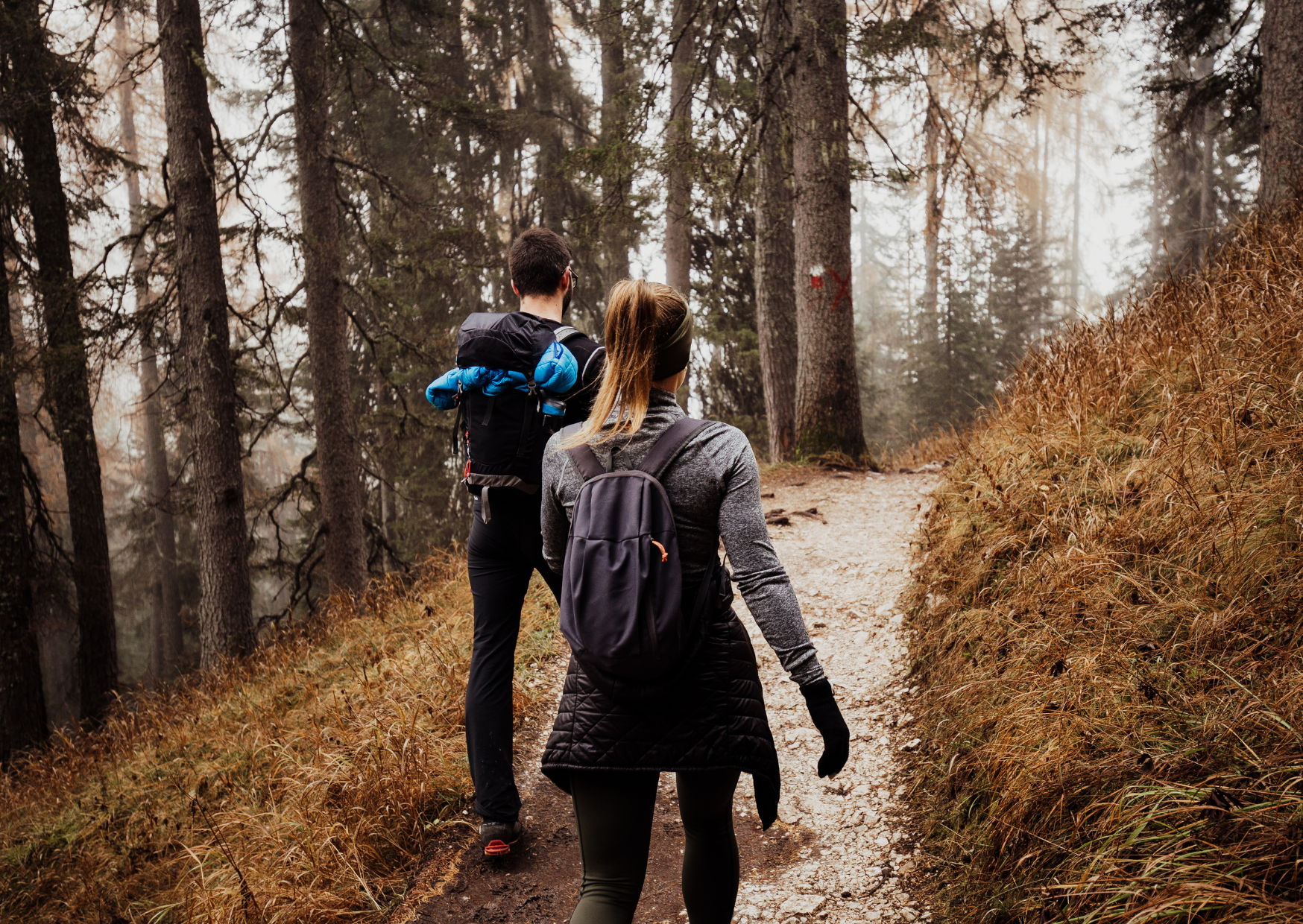
It’s not that couples spend less in total. It’s that their cost per person is lower, and their margin for error is higher.
- Rent: €1,800 to €2,600
- Utilities, internet, phone: €220 to €320
- Groceries: €450 to €650
- Eating out and coffee: €350 to €750
- Transport: €80 to €160
- Health: €160 to €450
- Admin and misc: €180 to €350
Total: €3,220 to €5,280 combined
Per person, that can be €1,610 to €2,640, which is often dramatically easier to sustain than €2,350 to €4,260 solo.
That’s the “double” feeling. Not romance, just arithmetic. Singles need either higher income, a cheaper base, or a more routine-driven life. Preferably all three.
The calendar that makes solo Europe work
Single people who thrive in Europe usually don’t have more discipline. They have a week that removes friction.
A workable solo week has three anchors:
- A predictable admin block
Two mornings a week until you’re stable, then one. Rent receipts, appointments, renewals, anything that keeps you from falling behind. Timing beats willpower here, every time. - A predictable food loop
One supermarket run, one market top-up, two default dinners you can cook tired. When food becomes a daily decision, spending spikes. - A predictable social loop
Same place, same time, weekly. Not five new events. One repetition that makes you known. Gym class, volunteer shift, language exchange, running group, whatever fits.
This is where couples have an unfair advantage. They create anchors naturally because they move as a unit. Singles have to build anchors on purpose, and that takes humility. You have to show up when you don’t feel like it. You have to be the new person for a while.
But once the anchors exist, Europe becomes what you wanted: cheaper, calmer, and less performative.
The biggest lie solo Americans tell themselves is “I’ll explore for a while, then settle.” Exploration is expensive. Settling is where the value is.
The most common solo mistakes that end in a quiet exit
These are the patterns we see again and again, especially among Americans who arrive smart and financially capable.
- Staying in a furnished short-term rental past month three
You keep paying tourist pricing while telling yourself you’re becoming a local. - Treating bureaucracy like a one-off task
It’s a process. If you don’t schedule it, it eats your life. - Building a social life out of paid experiences only
Restaurants and trips don’t create community. They create a monthly bill. - Trying to replicate a U.S. rhythm in a European city
Late workdays, late dinners, constant convenience spending. - Choosing a location for aesthetics instead of operations
Pretty town, no doctors nearby, no transit, no community, and you are stuck. - Letting loneliness drive travel decisions
Flights and weekends away feel like relief, then you realize you never built a home base.
The hard truth is that most solo exits are not caused by one major failure. They’re caused by slow financial and social drift.
Your first 7 days to make a solo move actually stick

If you’re planning a solo Europe move, or you’re already in it and wobbling, run this sequence. It’s designed to stop the four leaks above.
Day 1
Write your monthly burn in euros with ruthless honesty. Rent, bills, food, transport, health, and a buffer. One number changes your decisions fast.
Day 2
Pick your housing rule. Example: rent cannot exceed 35% of your net income, or you must choose a cheaper neighborhood or a cheaper city. No exceptions for charm.
Day 3
Create your admin schedule. Two weekday mornings. Put them on your calendar. That’s your residency, banking, contracts, and paperwork time until you’re stable.
Day 4
Lock your food loop. Choose two default dinners, one simple lunch routine, and one grocery day. This is about reducing decision fatigue, not proving you can cook.
Day 5
Pick one paid social thing and one free social thing. Paid could be a class or coworking day. Free could be a recurring language exchange or volunteer slot. Cap the paid one so it doesn’t become your new rent.
Day 6
Build your safety and comfort plan without shame. If you need a better building, a central area, or taxis sometimes, price it and adjust elsewhere. Comfort protects the budget when you’re alone.
Day 7
Choose your repetition anchor. Same place, same time, weekly. Commit for four weeks. Don’t evaluate it after one awkward night.
If you do these seven days, you’ll notice something immediate. Your spending becomes predictable, and predictability is what stops panic decisions.
The choice is not single versus couple, it’s fragile versus stable

Europe doesn’t punish single people because it’s cruel. It punishes single people because the systems run on schedules, routines, and relationships, and those are easier to build with two people.
If you’re moving solo, your goal isn’t to become fearless. It’s to become structured.
Choose a base city where your rent leaves margin. Schedule the admin. Build one social repetition. Stop buying belonging. Stop paying tourist premiums to avoid discomfort.
Do that, and you won’t “fail Europe.” You’ll just live here like a normal adult, which is the whole point.

About the Author: Ruben, co-founder of Gamintraveler.com since 2014, is a seasoned traveler from Spain who has explored over 100 countries since 2009. Known for his extensive travel adventures across South America, Europe, the US, Australia, New Zealand, Asia, and Africa, Ruben combines his passion for adventurous yet sustainable living with his love for cycling, highlighted by his remarkable 5-month bicycle journey from Spain to Norway. He currently resides in Spain, where he continues sharing his travel experiences with his partner, Rachel, and their son, Han.