
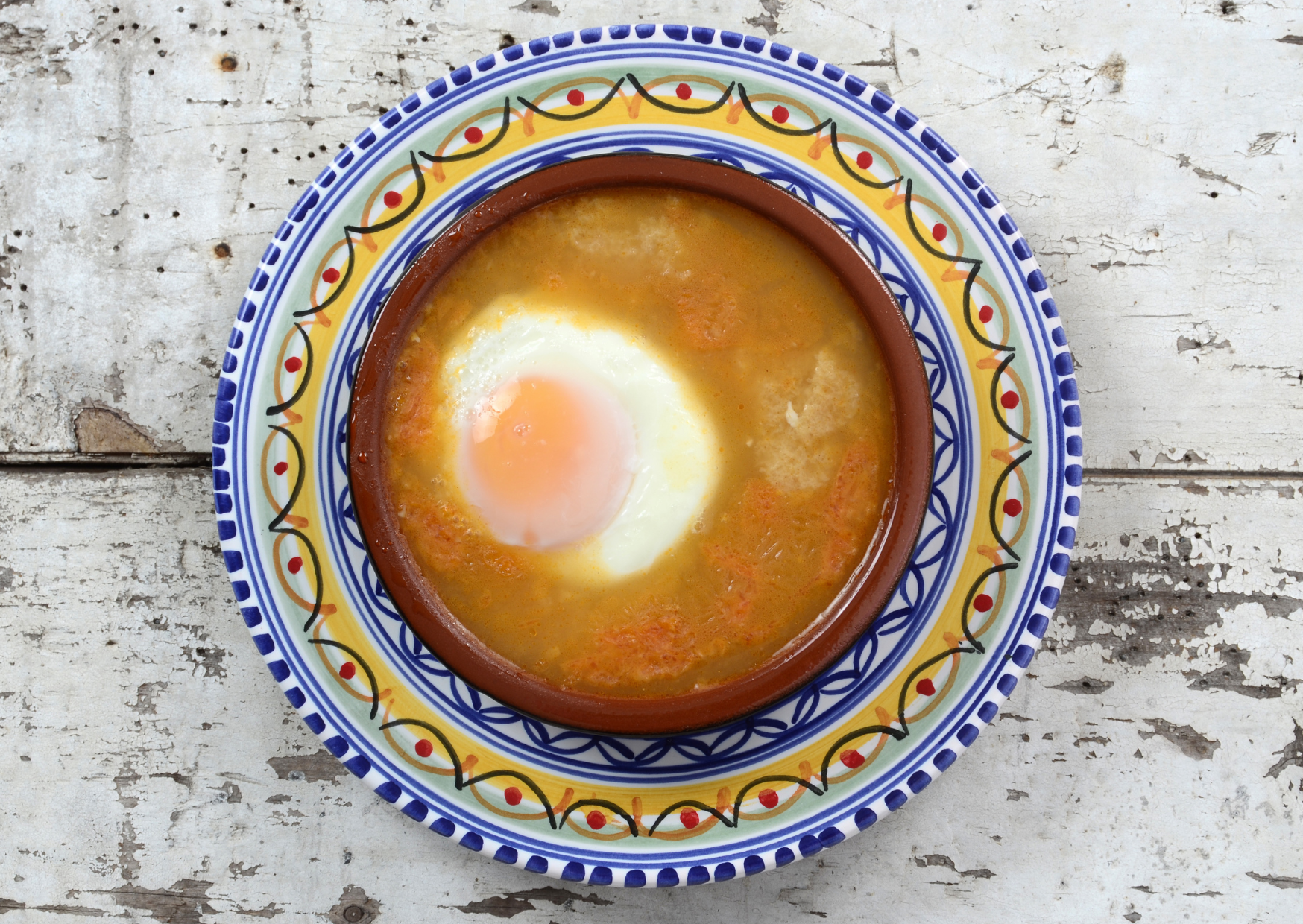
Spain doesn’t “do winter” the way Americans expect, which is exactly why this pot of garlic soup shows up in older kitchens the second someone looks tired. It’s warm, cheap, and it quietly fixes the week.
The first winter that really humbled me in Spain was not outside.
Outside was fine. A jacket, a scarf, a sunny afternoon that tricks you into thinking you’ve escaped cold forever.
Inside was the lesson. Tile floors that never warm up. Damp that crawls into closets. A bedroom that feels like a refrigerated wine cave because the building was designed for August, not January. You can be technically “not that cold” and still feel chilled in your bones all day.
That’s when you understand why Spanish grandmothers don’t romanticize winter food. They make things that are practical. Things that are warm fast, filling fast, and cheap enough that you can make them even when you’re watching every euro.
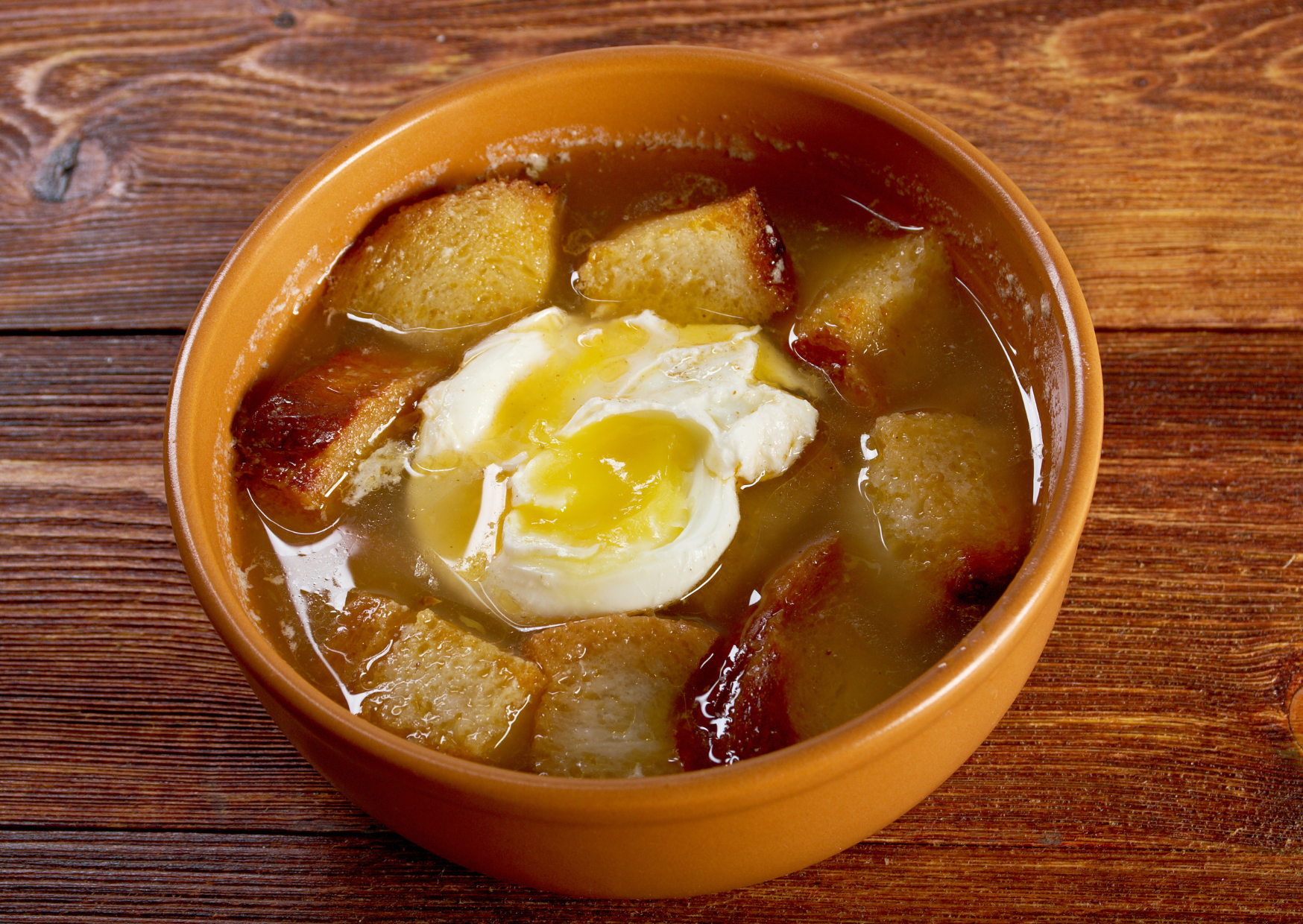
This is that recipe. Sopa de ajo, also called sopa castellana in a lot of households. It’s bread, garlic, smoked paprika, broth, and eggs. It tastes like comfort without trying to be cute about it.
And yes, the base pot can land around €4 for four bowls if you cook it the way people actually cook it here, with day-old bread and pantry staples.
Why Spanish winter food is obsessed with broth and bread
Americans tend to imagine Spain as endless terraces and small plates. Then January hits and the fantasy gets quiet.
Spanish winter cooking is built around one unglamorous truth: warmth is a household system, not a vibe. If your apartment is cold inside, you don’t solve that with a single space heater and optimism. You solve it with routines that keep your body from dropping into “why am I tired” mode.
That’s why soups and stews show up constantly. Not because Spain is poor, and not because people are trying to be virtuous. Because a pot on the stove does three things at once:
It heats the kitchen.
It creates a meal that can stretch.
It produces leftovers that stop the week from turning into a series of expensive decisions.
Sopa de ajo is the purest version of that logic. It’s not a restaurant soup. It’s a home soup. The ingredients are the kind of things that are always around, especially in older households: bread that’s gone a bit stale, garlic, paprika, and eggs.
The method is also built for the way Spanish families actually eat. You can serve it as a light dinner with a salad. You can serve it as a first course at lunch. You can hand someone a bowl when they’re sick or stressed and they can actually eat it.
And there’s one more reason this soup survives every generation. It’s flexible. You can make it dirt cheap. You can add jamón or chorizo if you have it. You can keep it vegetarian. It still tastes like itself.
The “grandmother” part isn’t sentimental. It’s the design. Simple ingredients, zero waste, real warmth.
The €4 trick is not being cheap, it’s using the right defaults
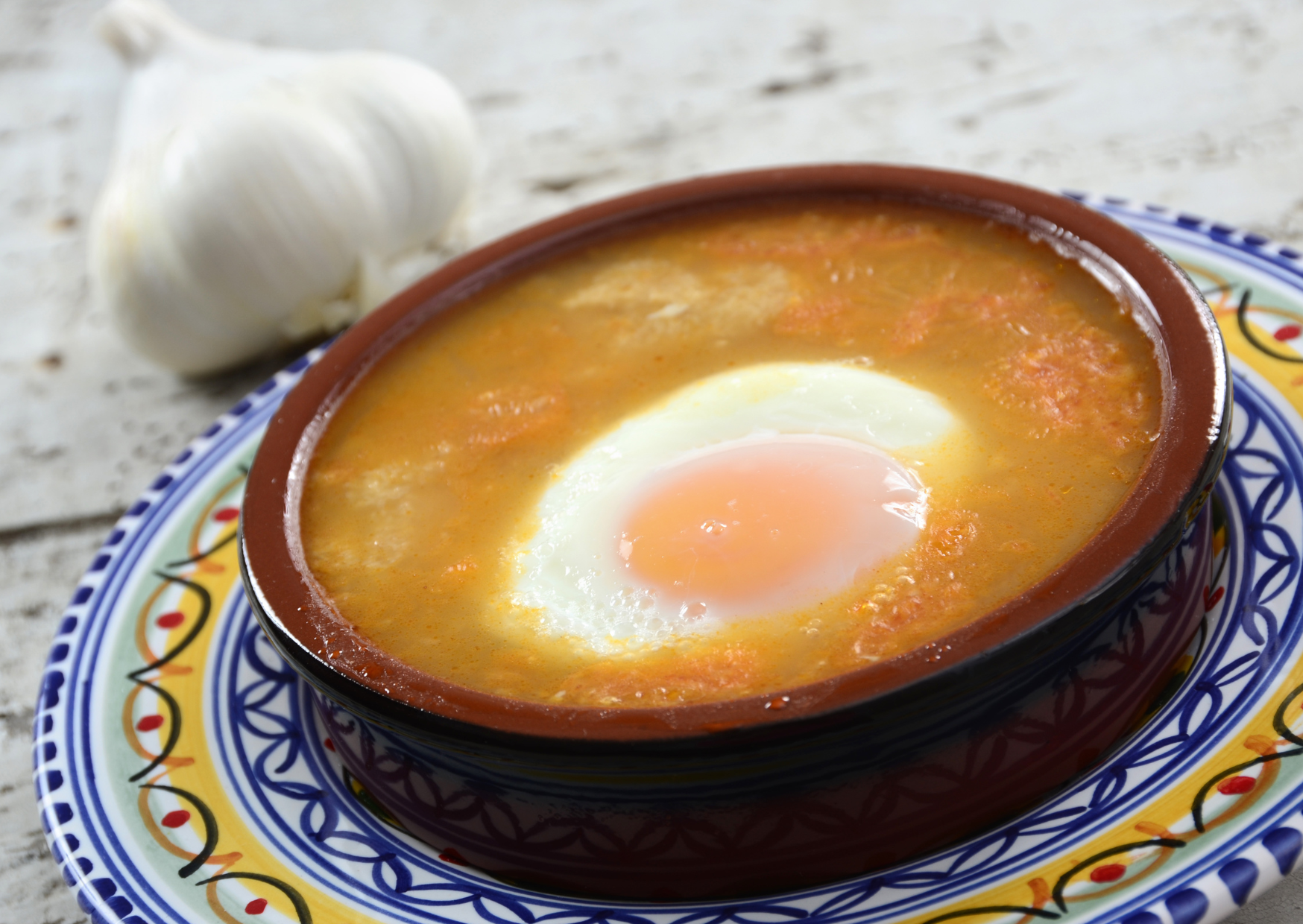
If you want this soup to stay a €4 recipe and not become a €12 “rustic artisan” situation, you need to follow the local defaults.
First default: stale bread is a feature. Fresh bread can work, but slightly dried bread thickens the broth without turning it gummy.
Second default: garlic is the main flavor, but it should never taste burnt. The difference between “cozy” and “bitter regret” is about two minutes in the pot.
Third default: smoked paprika is not decoration. It’s the core. It gives you depth without needing meat.
Fourth default: eggs turn this from “broth” into “meal.” Spanish households will poach eggs directly in the soup or beat them in gently. Both work.
Fifth default: you don’t need a perfect stock. Water plus a decent stock cube is normal. Homemade broth is a bonus, not a requirement.
If you build the soup around these defaults, it stays cheap and it stays repeatable. That’s the entire point. People don’t keep a recipe for hard weeks if it requires a specialty grocery run.
Here’s a shopping list that fits a normal Spanish pantry and doesn’t turn the soup into a project.
Shopping list you can actually carry
- Bread (day-old is best)
- Garlic
- Smoked paprika
- Eggs
- Olive oil
- Stock cube or broth
- Optional: a small piece of jamón or chorizo
Notice what’s missing. No cream. No fancy garnish. No “superfood” nonsense. Winter food is not a performance here.
Recipe guide: Spanish sopa de ajo for real life
Servings and timing
- Serves: 4
- Prep time: 10 minutes
- Active time: 15 minutes
- Simmer time: 20 minutes
- Rest time: 5 minutes
- Total time: about 45 minutes
Equipment
- Medium pot (3 to 4 liters)
- Knife and cutting board
- Wooden spoon
- Ladle
- Optional: small bowl and fork for beating eggs
Ingredients
- Olive oil: 45 ml (3 tbsp)
- Garlic: 6 cloves, thinly sliced
- Day-old bread: 200 g (about 4 thick slices), torn or cubed
- Smoked sweet paprika: 2 tsp
- Optional hot paprika: 1 pinch
- Broth or water: 1.2 liters (about 5 cups)
(water plus 1 stock cube is fine) - Salt: to taste
- Black pepper: to taste
- Eggs: 4
- Optional: diced jamón or chorizo: 40 to 60 g
- To finish: chopped parsley, or a squeeze of lemon if you like brightness
Method
- Warm the olive oil over medium heat. Add garlic and cook gently until it smells sweet and looks pale gold. Do not brown it hard.
- Add the bread and stir until it soaks up some oil and starts to toast at the edges.
- Turn the heat down slightly. Add the paprika and stir for 10 to 15 seconds, just enough to bloom it. If you burn paprika, you will taste bitterness forever.
- Pour in broth or water. Stir well, scrape the bottom, and bring to a simmer.
- Simmer 15 to 20 minutes, stirring occasionally, until the bread breaks down and the soup thickens.
- Add eggs using one of these options:
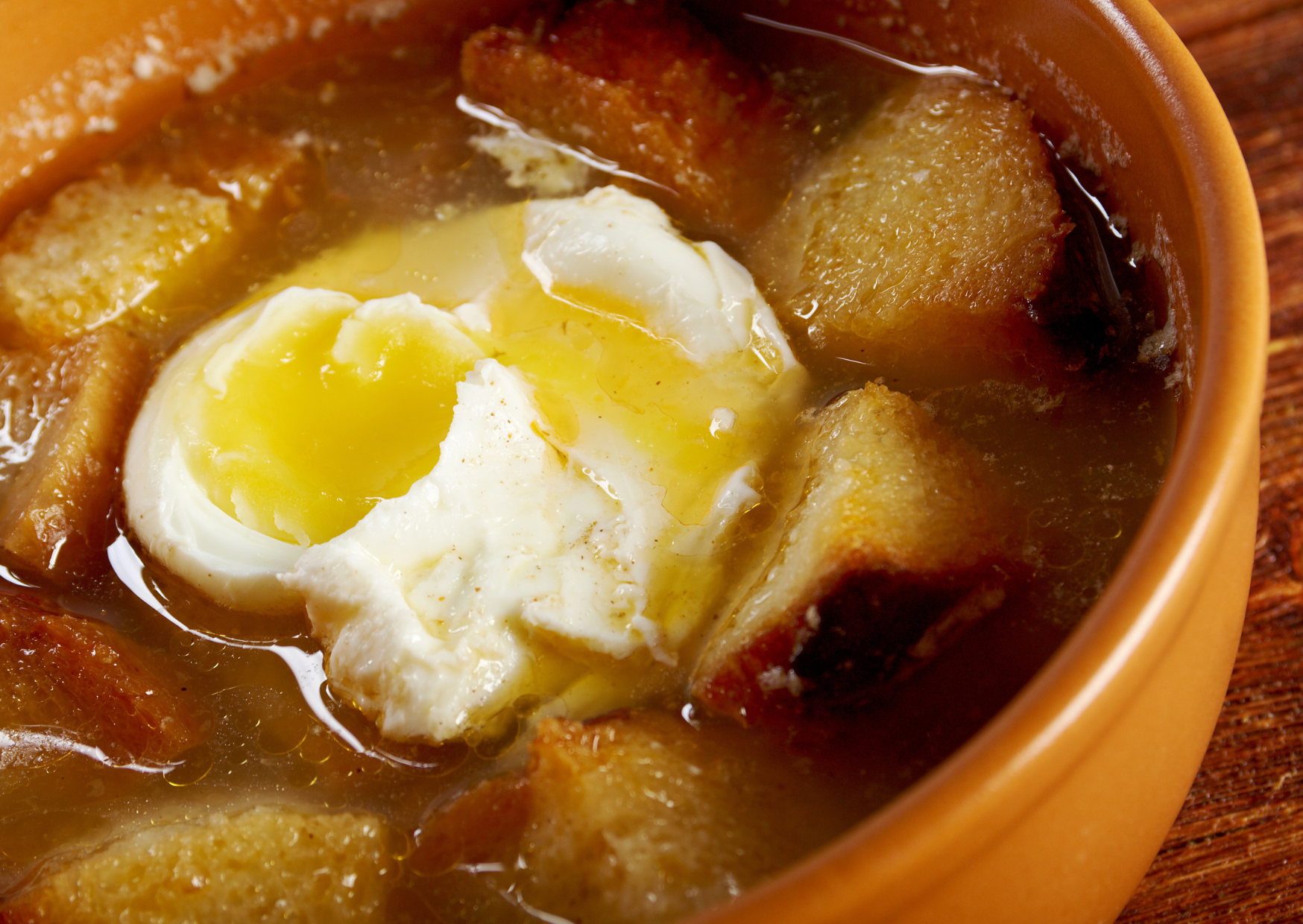
- Poached eggs: crack eggs directly into the simmering soup, cover, and cook 3 to 4 minutes until set.
- Egg ribbons: beat eggs in a bowl, then slowly pour into the simmering soup while stirring gently.
- Rest 5 minutes, taste, and adjust salt. Serve hot, with parsley if you want.
The egg choice changes the vibe. Poached eggs make it feel hearty and dramatic in the bowl. Egg ribbons make it feel lighter and more uniform. Both are weeknight-proof.
Why this works, and why it tastes like “more” than it is
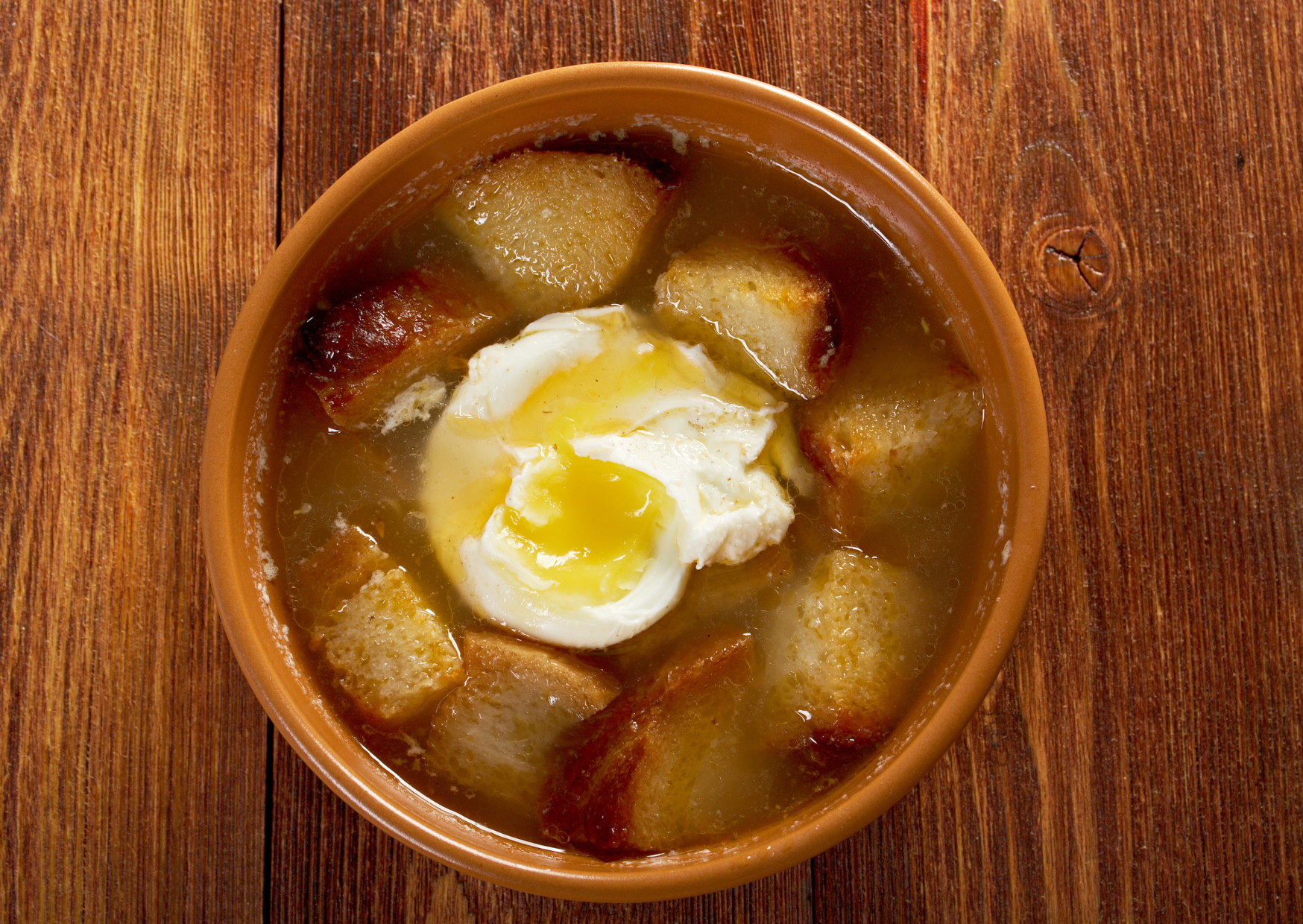
Sopa de ajo is basically a lesson in how Mediterranean kitchens make comfort without expensive ingredients.
Garlic gives sweetness when cooked gently, not aggressively. Paprika gives smoke and depth without needing meat. Bread thickens the soup and makes it satisfying, which is how you get “meal” energy out of pantry items.
Eggs are the quiet upgrade. They add protein, they make the soup feel complete, and they do it without turning the recipe into a budget problem.
The structure matters too. This soup has fat, salt, and warmth, which is what stressed and cold bodies actually respond to. It’s why it shows up when someone’s been sick, when someone’s had a bad day, or when the apartment feels colder than it should.
If you grew up with the American idea that “comfort food” has to be heavy, this soup feels like a correction. It’s not a cheese bomb. It’s not a giant bowl of cream. It’s comforting because it’s simple and hot and steady.
There’s also a practical benefit people rarely say out loud: it’s easy to eat. If you’re tired, you can still eat soup. If your appetite is weird, you can still eat soup. If someone in the family is old or unwell, you can still eat soup.
That’s not romance. That’s household logistics.
And the best part, especially in Spain, is that it pairs with the way winter actually works here. Cold apartment, warm pot, short daylight, early night. This soup is designed for that rhythm.
The money math: how this stays around €4 in Spain
Let’s be concrete, because vague “cheap” claims are useless.
Using typical supermarket pricing in Spain, the two items that actually move the cost are bread and eggs. A basic 250 g loaf or baguette-style bread can sit around €0.50, and a dozen large eggs can sit around €3.30 in late 2025 at a major chain. Everything else is pantry-level, and you use small amounts per pot.
Here’s a realistic “€4 pot” breakdown for 4 bowls:
- Bread (200 g): about €0.40
- Eggs (4): about €1.10
- Garlic (6 cloves): about €0.30 to €0.50
- Olive oil (3 tbsp): about €0.40 to €0.70
- Paprika portion: about €0.10 to €0.20
- Stock cube portion: about €0.10
- Optional jamón (40 to 60 g): about €1.00 to €1.50 depending on what you buy
If you include a small amount of jamón, you land around €4 to €5. If you skip it, you can land closer to €3. The point is that you’re feeding four people for the price of one mediocre takeout coffee and pastry.
In dollars, €4 is about $4.69 using the ECB reference rate from 12 December 2025. That’s not a flex, it’s a reminder of how strange American food pricing can feel once you’re living here.
This is also where Americans get tripped up. They try to make “Spanish soup” with expensive artisan bread, fancy broth, and specialty cured meats, and then they wonder why it isn’t cheap. Don’t upscale the poverty food. Let it be what it is.
Storage, leftovers, and a 7-day plan that makes winter easier
This soup is best the day you make it, but it also plays well with real life if you store it correctly.
Key move: store the soup base, and add eggs fresh when reheating. Eggs can get rubbery if you keep reheating them, especially poached eggs.
Storage
- Fridge: 3 to 4 days
- Freezer: you can freeze the base, but bread-thickened soups can change texture. If you freeze, freeze in small portions and whisk while reheating.
- Cooling: don’t leave it on the counter all night. Cool and refrigerate within 2 hours.
- Reheating: bring soup back to a hot simmer, and if you want the food safety gold standard, reheat to 74°C (165°F).
A realistic 7-day usage plan
Day 1: Make the pot. Eat it with poached eggs and a simple salad. Dinner is handled.
Day 2: Reheat base, add egg ribbons, and it feels like a new soup.
Day 3: Add chickpeas (canned is fine) to make it a fuller lunch.
Day 4: Use the base as a sauce for sautéed greens, spinach or kale, and then add an egg. It becomes a bowl meal.
Day 5: Make toast, pour soup over it, and you basically have a Spanish version of “gravy on bread,” in the best way.
Day 6: Freeze one portion for a future bad day. Future-you will thank you.
Day 7: Reset, cook something else, and keep this as a fallback, not a punishment.
This is why the recipe matters. It’s not just one dinner. It’s a small system that makes winter feel less chaotic.
Common mistakes that make it taste wrong, and the fixes
Most people mess up this soup in predictable ways. The fixes are simple.
Burnt garlic
Garlic should go pale gold, not brown. If it browns, it turns bitter and dominates everything. Keep the heat moderate and be patient. Sweet garlic is the goal.
Burnt paprika
Paprika burns fast. Add it and stir for only a few seconds before adding liquid. If you smell “burnt spice,” it’s too late.
Too watery
If you use very airy fresh bread, it can dissolve without thickening. Day-old bread thickens better. Simmer longer, and mash a few bread pieces against the pot to help it break down.
Too bland
This soup needs salt, and it needs enough paprika. Also, broth quality matters. If you use water, add a stock cube or a bit more seasoning. Salt is not optional in bread soup.
Eggs overcooked
Poached eggs need a gentle simmer and a lid. If you boil hard, the whites shred into the soup. If you want foolproof, use egg ribbons.
Trying to make it fancy
This is not the dish for truffle oil and microgreens. Keep it honest, and it tastes right.
Once you’ve made it twice, it becomes one of those recipes you can do half asleep. That’s exactly why it got me through winter here.

About the Author: Ruben, co-founder of Gamintraveler.com since 2014, is a seasoned traveler from Spain who has explored over 100 countries since 2009. Known for his extensive travel adventures across South America, Europe, the US, Australia, New Zealand, Asia, and Africa, Ruben combines his passion for adventurous yet sustainable living with his love for cycling, highlighted by his remarkable 5-month bicycle journey from Spain to Norway. He currently resides in Spain, where he continues sharing his travel experiences with his partner, Rachel, and their son, Han.