
The first time I saw her make it, it wasn’t a “hosting” thing. No table-setting, no performative olive oil drizzle, no speech about how food is love.
It was quieter than that.
A Portuguese neighbor of ours here in Spain got a call she didn’t like. Not gossip, not drama, just the kind of news that makes you suddenly aware of your own hands. She didn’t say much. She went to the kitchen, pulled out a wide pot, and started layering onions and potatoes like she’d done it a thousand times.
That’s what stuck with me. In a lot of American households, bad news triggers outsourcing. Delivery apps, expensive “comfort” meals, random snacking because nobody can think straight. In her world, the reflex was different. Make a pot. Feed people. Put something warm in the middle of the table so the day doesn’t fall apart.
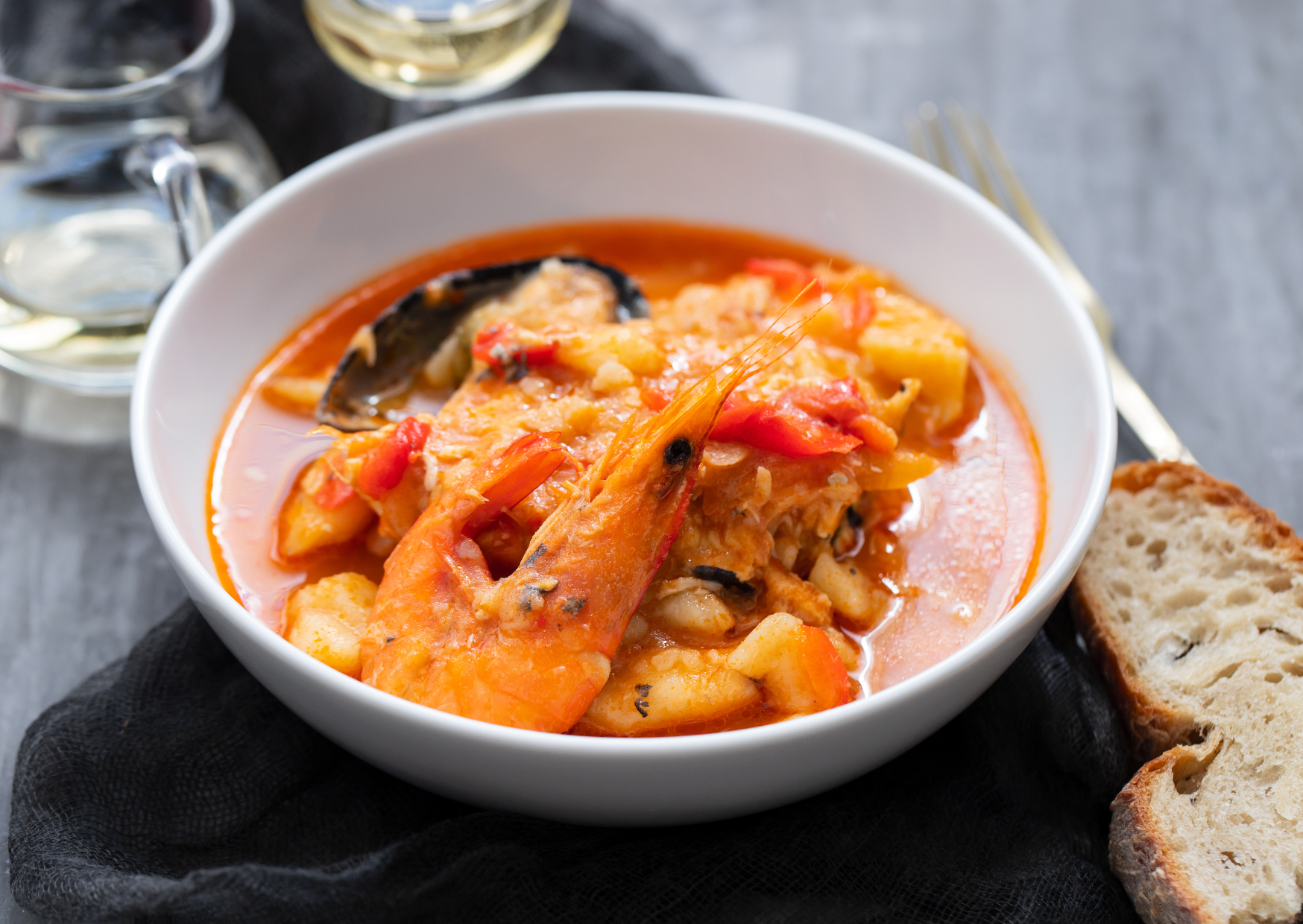
The stew is caldeirada, Portuguese fish stew, and it’s not precious. It’s built for real life, for cheap fish plus potatoes, for feeding a few people without wrecking the week’s budget, and for turning leftovers into tomorrow’s lunch without anyone complaining.
This isn’t a cure story. It’s a practical ritual. And once you cook it once, you’ll understand why it shows up exactly when people need something steady.
Why this stew shows up when people can’t think straight
The “bad diagnosis” part matters, not because the stew is medicine, but because it explains the design.
Caldeirada is a one-pot meal that does three things at once: it fills you up, it’s easy to digest compared to heavy meat dishes, and it creates leftovers that reheat well. When someone in the house is stressed, tired, or scared, those three features are basically the whole job description.
In Portugal, fish is not a special occasion protein. It’s normal week food. That normality changes everything. You don’t need to brainstorm. You don’t need a plan that relies on motivation. You just do the thing that works.
Her method also has a built-in emotional logic. You cook it slowly enough that the house smells like dinner long before anyone sits down. That smell is a signal. We’re still functioning. We still eat. We still do the next obvious thing.
Americans often underestimate how much of “feeling okay” is just having one stable routine survive the day. When life gets weird, you don’t need a new identity. You need a pot you can trust.
And caldeirada isn’t fussy. You don’t need a perfect fish mix. You don’t need fancy equipment. You need a wide pot, basic vegetables, decent olive oil, and fish that won’t fall apart if you look at it too hard.
It also holds a very Mediterranean truth people pretend is poetic, but it’s really just money: soup and stew are budget control. A stew turns a pile of ingredients into a meal that feels bigger than the sum of its parts. You’re not just eating fish, you’re eating broth, potatoes, softened onions, and the little bit of oil that makes the whole thing taste like it belongs.
That’s why it appears in hard weeks. It’s not therapy. It’s the opposite. It’s dinner that doesn’t require a personality.
What caldeirada is, and how to think about the fish
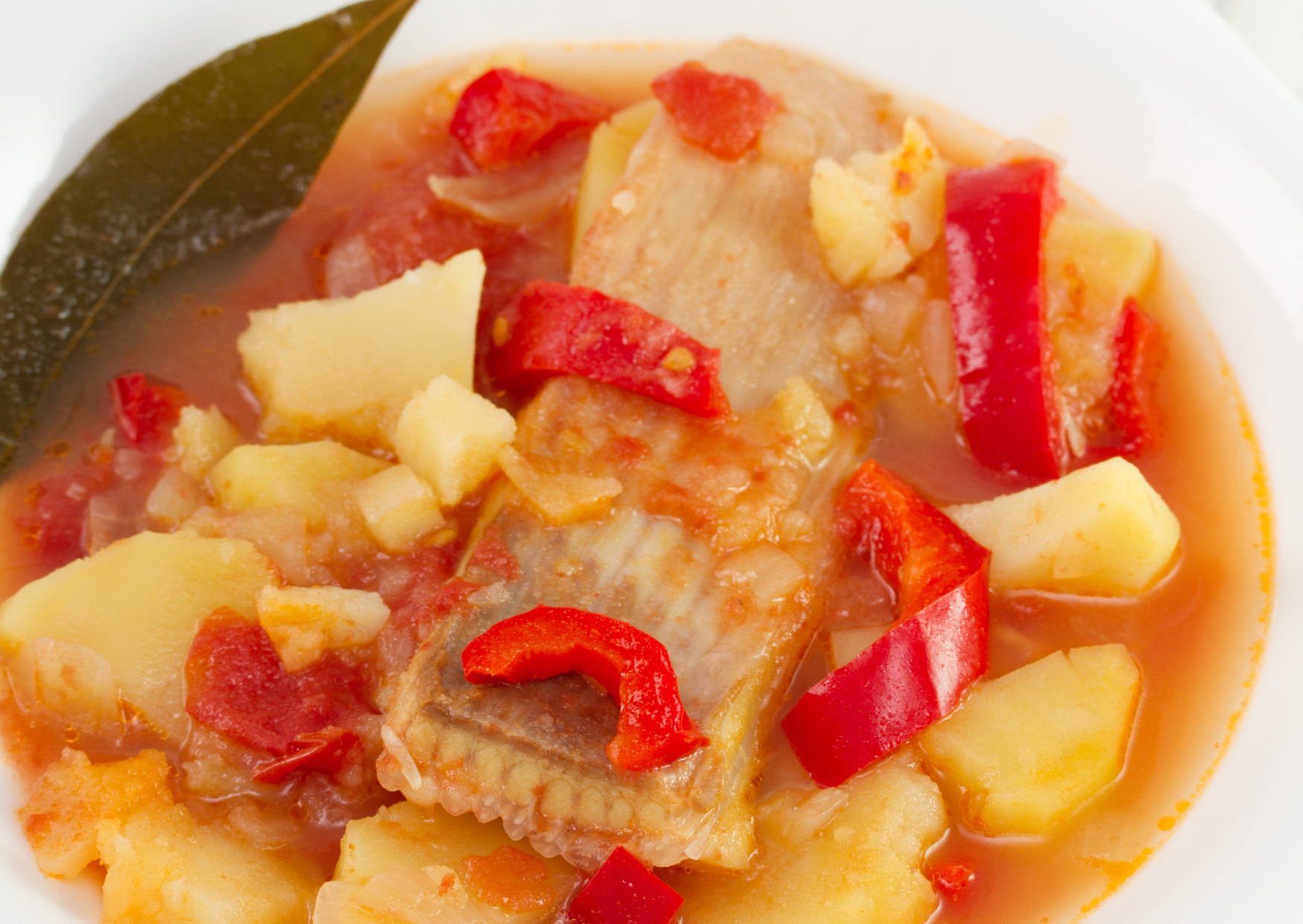
Caldeirada is often described as Portuguese fish stew, but that can mislead Americans into imagining a thick, heavy chowder situation. It’s lighter than that. It’s a layered stew where potatoes and onions do most of the thickening, tomatoes and peppers bring sweetness, and the fish cooks right at the end so it stays tender.
The non-negotiables are simple: potatoes, onions, garlic, olive oil, some tomato, and a mix of fish. Many versions also use white wine, bay leaf, and parsley or cilantro depending on the household.
The fish part is where people freeze up. They think they need some exact traditional lineup.
You don’t.
You want two categories:
- Firm fish that holds together (monkfish, hake, cod, grouper, sea bass, bream, even good frozen white fish)
- Flavor fish that brings richness (mackerel, sardine, a little shellfish if you want)
In Spain, you can do this with whatever is reasonably priced that day. Hake and monkfish are common. Cod works, fresh or frozen. Mussels can stretch the pot without making it expensive. If you’re on a budget, a good trick is to use one “nice” firm fish plus cheaper additions, and let the broth do the work.
One more thing locals do that Americans often skip: they season the fish lightly before it hits the pot. Salt, a little paprika, maybe a splash of wine. It’s not a marinade moment. It’s just flavor insurance.
Also, caldeirada is not the dish for tiny delicate fillets that fall into confetti. You want chunks, steaks, or thick cuts. The stew should feel like a meal, not like you strained something.
If you’re nervous about overcooking fish, this stew is actually forgiving because you add fish last. Potatoes and vegetables simmer until tender, then the fish goes in for a short finish. The fish gets the benefit of hot broth without being punished by an hour of boiling.
That’s the whole technique in one line: vegetables first, fish last.
Now let’s cook it the way your week actually works, not the way cooking blogs pretend your week works.
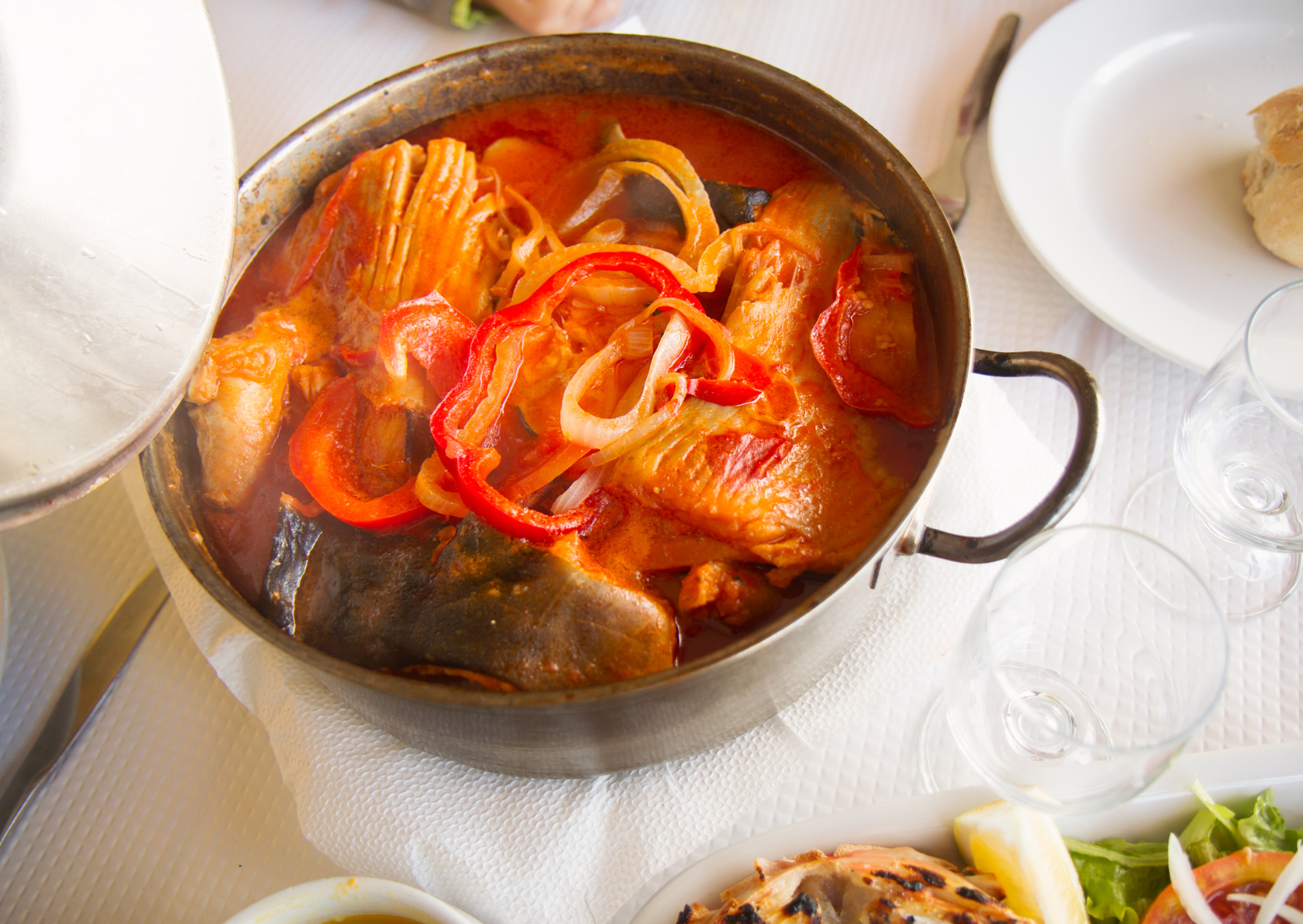
Caldeirada de peixe you can make in a Spanish kitchen
Servings and timing
- Serves: 4 to 6
- Prep time: 20 minutes
- Active time: 25 minutes
- Simmer time: 35 to 45 minutes
- Rest time: 10 minutes
- Total time: about 1 hour 20 minutes
Equipment
- Wide, heavy pot with lid (Dutch oven or any broad casserole)
- Cutting board and sharp knife
- Wooden spoon
- Ladle
- Optional: instant-read thermometer
Ingredients
Fish and seafood
- Firm white fish, cut into chunks: 900 g (about 2 lb)
(hake, cod, monkfish, sea bass, bream, grouper) - Optional shellfish: 500 g mussels (about 1 lb), scrubbed
(or 250 g shrimp if you prefer)
Vegetables
- Potatoes: 800 g (about 1.75 lb), peeled or scrubbed, sliced into 1 cm rounds
- Onions: 2 large (about 350 g), thinly sliced
- Garlic: 4 cloves, sliced
- Red bell pepper: 1 (about 180 g), sliced
- Tomatoes: 400 g (about 3 medium), chopped
(or 1 can crushed tomatoes, 400 g) - Optional: 1 small chili or pinch of chili flakes
Broth and flavor
- Olive oil: 90 ml (about 6 tbsp)
- Dry white wine: 200 ml (about 3/4 cup)
- Fish stock or water: 500 ml (about 2 cups)
(water is fine, stock is better) - Bay leaves: 2
- Sweet paprika: 2 tsp
- Salt: 2 tsp to start (adjust later)
- Black pepper: 1 tsp
- Parsley: 1 big handful, chopped
- Optional: saffron pinch or a small pinch of turmeric for color
- To finish: lemon wedges or a splash of vinegar
Short shopping list
- Firm white fish (about 1 kg)
- Potatoes, onions, garlic
- Tomatoes, red pepper
- White wine, olive oil
- Bay leaf, paprika, parsley
- Optional mussels
Method
- Season the fish
Pat the fish dry. Toss with a pinch of salt, a little pepper, and 1 tsp paprika. Set aside. If you’re using mussels, scrub and debeard them now. - Build the base in layers
In your wide pot, add 2 tbsp olive oil. Layer half the onions, half the potatoes, half the peppers, and half the tomatoes. Sprinkle a little salt, pepper, and paprika. Repeat the layers.
This looks fussy, but it’s the whole point. The layers melt into a broth that tastes like more than the ingredients.
- Add liquid and simmer
Pour in the wine and stock (or water). Add bay leaves. Drizzle remaining olive oil over the top. Bring to a gentle simmer, cover, and cook 25 to 30 minutes until potatoes are almost tender. - Add fish last
Nestle the fish chunks into the stew. Cover and cook 8 to 10 minutes at a gentle simmer, until the fish is opaque and flakes easily. If you use a thermometer, fish is typically done around 63°C (145°F). - Add mussels at the end
If using mussels, add them now, cover, and cook 4 to 6 minutes until they open. Discard any that stay shut. - Rest and finish
Turn off heat. Rest 10 minutes with the lid slightly ajar. Stir in parsley. Taste and adjust salt, and finish with lemon or a tiny splash of vinegar for brightness.
Serve with bread or rice. Bread is the classic move because the broth deserves it.
Storage and reheating
- Fridge: 2 to 3 days
- Freezer: you can freeze it, but fish texture is best fresh. If you plan to freeze, freeze the potato-broth base and add fish after thawing.
- Reheat: bring stew to a simmer and heat through. For safety, reheating leftovers to 74°C (165°F) is the conservative standard, and soups should come back to a proper hot simmer.
Why this works, without pretending it’s magic
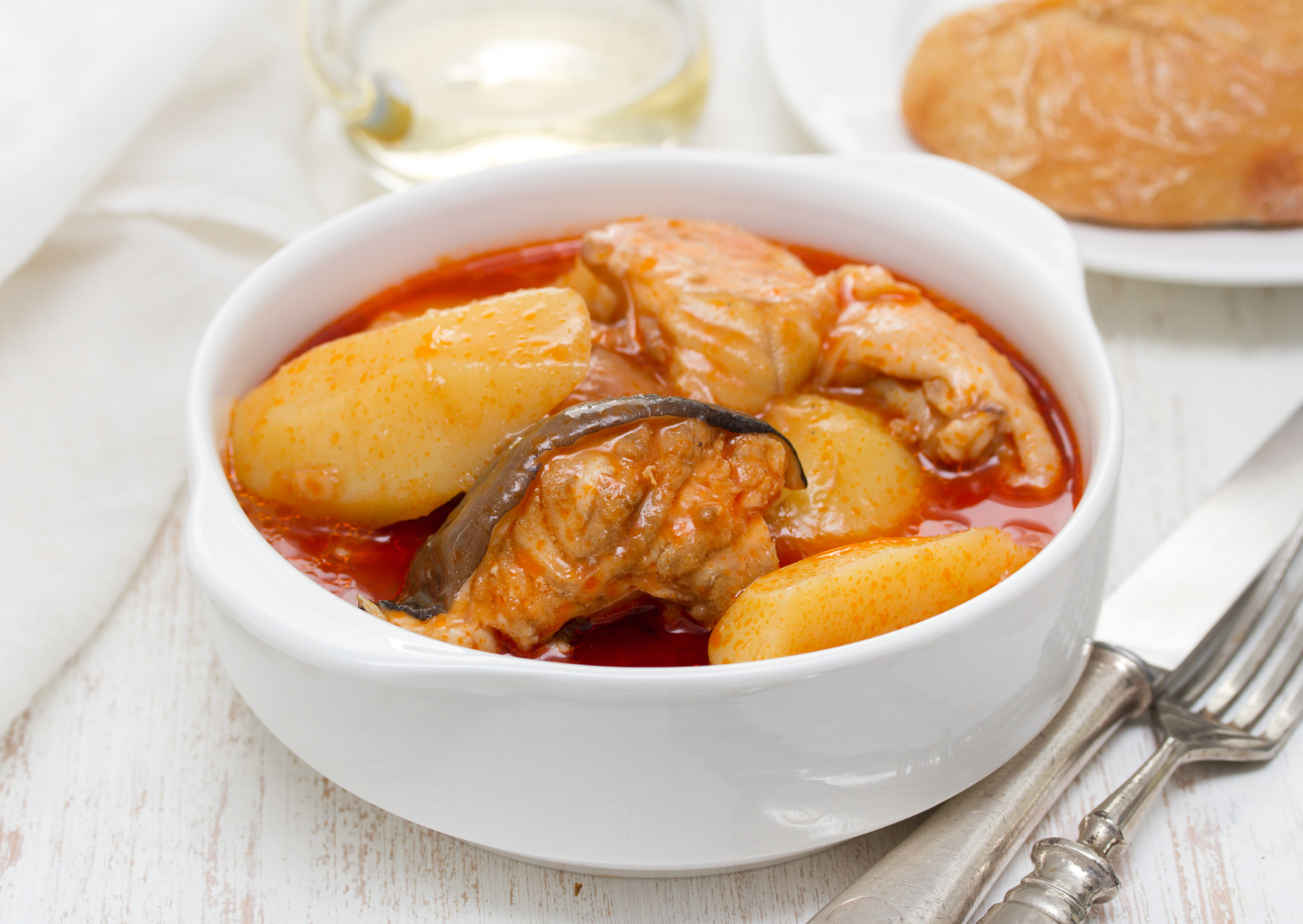
The flavor logic is simple: fat, acid, sweetness, and time.
Olive oil carries paprika and bay. Onions and peppers soften into sweetness. Tomatoes give body. Wine adds acidity and keeps the stew from tasting flat. Potatoes thicken the broth without flour. Then fish comes in late so it stays tender.
That “fish last” rule is the difference between a stew people crave and a stew people politely tolerate. Overcooked fish makes people swear off cooking fish at home. Short cooking saves the whole dish.
Nutrition-wise, it’s a sensible meal without trying to be a health performance. You get protein from fish, carbs from potatoes, and a broth that hydrates. It’s warm, which matters when people are stressed and not eating properly. It also tends to be easier on the stomach than heavy meat meals when someone’s appetite is shaky.
The more interesting part is psychological. When someone gets bad news, you lose your appetite first or you lose your judgment first. Sometimes both. This stew solves that by being easy to serve, easy to portion, and easy to reheat. One pot becomes tomorrow, which is a small form of relief.
It also fits a Mediterranean home pattern you see across Spain and Portugal: lunch can be substantial, dinner can be lighter, and leftovers are not shameful. Leftovers are how households stay stable. Caldeirada is designed to be eaten twice.
And there’s one more quiet win: it’s flexible. You can swap fish depending on price, season, and what looks good. That matters if you’re trying to live like a local and not like a tourist who only buys photogenic fillets.
If you cook it once, you stop thinking of fish as “special.” You start thinking of fish as weekday food with a plan.
That’s the real shift.
What it costs in Spain, and how to keep fish from becoming a luxury hobby
Fish can be cheap in Spain or it can be a financial prank. It depends on species, city, and whether you shop like a person who cooks regularly or like someone trying to impress dinner guests.
A realistic range for this pot, in Spain, if you shop calmly:
- Firm white fish 900 g: €10 to €20 (hake tends to be friendlier, monkfish can jump)
- Mussels 500 g optional: €2.50 to €5
- Potatoes 800 g: €1.20 to €2
- Onions, garlic, pepper, tomatoes: €3 to €6
- Wine portion: €1 to €2 (you don’t need an expensive bottle)
- Olive oil portion: €1 to €2 depending on what you buy
- Pantry spices: cents per pot
Total: roughly €16 to €35 for 4 to 6 servings.
That’s a wide range, but the lower end is absolutely achievable if you choose your fish intelligently.
Here are the moves that keep this from turning into a “healthy food is expensive” rant:
- Build the pot around one affordable fish and let the broth carry flavor.
- Use mussels to add richness without expensive fillets.
- Use frozen white fish on weeks when fresh prices are rude.
- Keep the vegetable base generous. Potatoes are not filler, they are structure.
- Don’t chase the perfect “traditional” lineup. Caldeirada is a method, not a museum piece.
If you want a U.S. comparison that actually helps, it’s not “Spain groceries vs U.S. groceries.” It’s “one pot that feeds six vs three nights of tired takeout.” In most households, the budget leak is not the fish counter. It’s the panic dinner.
This stew is an antidote to that because it creates leftovers you actually want.
And if you’re feeding a family, the math that matters is cost per serving. Even at €30, you’re often at €5 per serving for a full meal with bread. That’s still cheaper than most “we’re too tired” solutions.
Leftovers that don’t feel like leftovers, and a 7-day usage plan
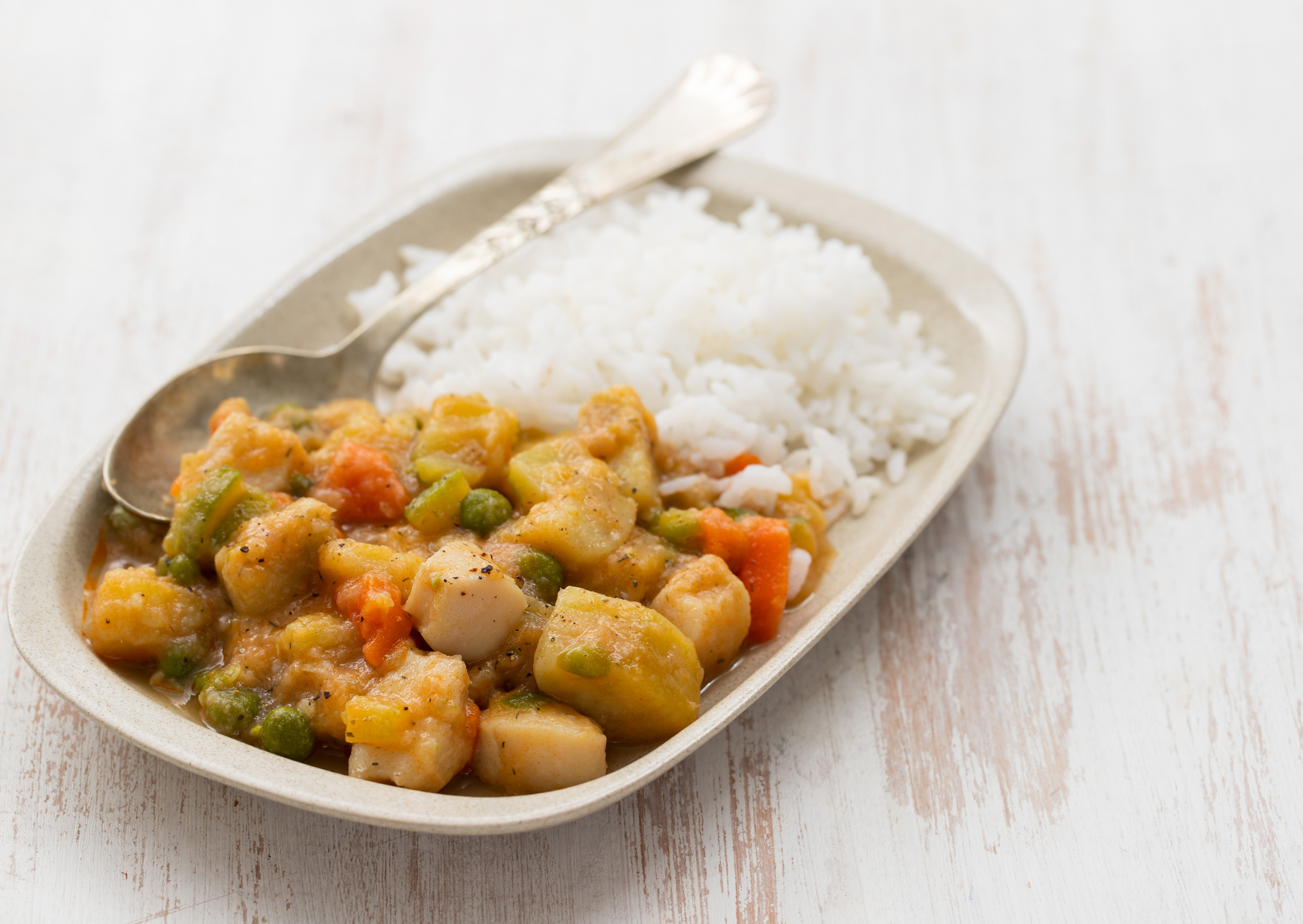
This stew is better the next day, but only if you treat it right.
The main rule: don’t repeatedly reheat the whole pot. Reheat what you’ll eat, keep the rest cold. Fish holds better that way.
Here’s a simple seven-day rhythm that keeps it enjoyable:
Day 1: Dinner
Big bowls, bread, lemon. Keep it simple. Don’t complicate the first night.
Day 2: Lunch
Reheat a portion gently. Add fresh parsley and a squeeze of lemon. It tastes new.
Day 3: Broth upgrade
Use leftover broth as a base for rice. Stir in flaked fish at the end. Now it’s a different meal, not “more stew.”
Day 4: Potato and fish salad
Drain a portion, flake fish, toss with olive oil, vinegar, parsley, and sliced onion. Eat at room temp. It becomes a very Iberian lunch.
Day 5: Freeze the base
If you still have a lot left, freeze the potato-broth base and eat the fish portions now. Freeze smart, not sad.
Day 6: Quick soup night
Use the frozen base, add fresh fish chunks, and you have caldeirada again without starting from zero.
Day 7: Reset
Make something totally different. Beans, eggs, chicken. This keeps caldeirada from turning into punishment.
Storage basics:
- Refrigerate within 2 hours of cooking.
- Keep in the coldest part of the fridge.
- Reheat until piping hot, and bring soups back to a hot simmer.
This is the part that makes it a “hard week” dish. It doesn’t just feed you once. It feeds you while your brain is busy doing other things.
The mistakes that ruin caldeirada, and the fixes
Overcooking the fish
This is the big one. Fish goes in late. If you simmer it for 25 minutes, you’ll get dry chunks and regret. Fish last, always.
Not enough salt
People under-salt fish stews because they’re nervous. Then they wonder why it tastes flat. Salt is what makes the potatoes and broth taste like dinner.
Watery broth
If your tomatoes are weak or your pot is too narrow, you can end up with thin soup. Use a wide pot and layer properly. Let it simmer uncovered for 5 minutes at the end if you need concentration.
Potatoes still hard, fish already done
This happens if your potato slices are too thick or your simmer is too weak. Slice potatoes around 1 cm and cook them to “almost tender” before adding fish.
Mussels not opening
Don’t force it. Discard any mussels that don’t open. It’s not worth gambling.
Using delicate fillets
Thin fillets fall apart and turn the stew cloudy. Use chunks, steaks, or thick cuts.
Trying to make it “clean”
Caldeirada is not a minimalist dish. It’s a layered stew. It should taste like onions and olive oil and tomato and fish all arguing politely. If you try to make it bland, it will punish you.
Once you learn the rhythm, you can make this on autopilot. That’s the point. It’s low drama cooking for high drama weeks.
Your first 7 days with a caldeirada routine
If you want this to become a habit, don’t start with perfection. Start with a system that works on a normal week.
Day 1
Pick one affordable fish you can reliably buy in your area. Hake is often the easiest. Make that your default.
Day 2
Buy the vegetables and pantry pieces that make caldeirada work: potatoes, onions, tomatoes, peppers, paprika, bay, olive oil. Pantry overlap saves money.
Day 3
Cook the stew once, exactly as written, and don’t “improve” it on the first go. Learn the baseline first.
Day 4
Eat leftovers for lunch, not dinner. This is how the week feels lighter without extra effort.
Day 5
Freeze the base next time you make it. Build the habit of separating “base” and “fish” so you can revive it later.
Day 6
Try a cheaper variation: frozen white fish plus mussels. It’s still good, and it trains you out of salmon-only thinking.
Day 7
Write down your personal friction points. Was it fish shopping? Smell? Timing? Cost? Then adjust one thing, not ten.
If you do this, caldeirada stops being a recipe you “try.” It becomes a tool. A pot you can make when someone’s sad, stressed, sick, or just burnt out from life.
And yes, that’s exactly why my neighbor makes it when bad news hits. It’s not about fixing the news. It’s about keeping the household fed while the news settles into reality.
Sometimes that’s the best you can do.

About the Author: Ruben, co-founder of Gamintraveler.com since 2014, is a seasoned traveler from Spain who has explored over 100 countries since 2009. Known for his extensive travel adventures across South America, Europe, the US, Australia, New Zealand, Asia, and Africa, Ruben combines his passion for adventurous yet sustainable living with his love for cycling, highlighted by his remarkable 5-month bicycle journey from Spain to Norway. He currently resides in Spain, where he continues sharing his travel experiences with his partner, Rachel, and their son, Han.