
So here is the part most Americans miss when they fly home on December 27. Spain’s holiday calendar keeps the main sugar moment for the first week of January, not the twenty-fifth. Gifts arrive with the Three Kings, parades fill the streets on the evening of January 5, and the crown of the table on January 6 is a glossy ring of brioche scented with orange blossom. Christmas is family and caldo. Epiphany is spectacle and roscón.
Where were we. Right. The quiet logic behind Spain’s long holiday arc, why the dessert waits, the practical rhythm families follow, what roscón actually is, how prices and traditions work in real homes, how to shop and time it so you do not panic at 10 p.m., and a clean, repeatable recipe. If you want the short version: Epiphany is the finish line, and the bread is a crown you earn by waiting.
The Spanish holiday arc that confuses Americans
Spain starts warming up on December 22 with El Gordo, the national lottery that turns the morning into a radio musical. Christmas Eve is Nochebuena, a long dinner that ends late. December 25 is quiet. Children play, grandparents nap, streets go soft. The engine restarts on Nochevieja with grapes at midnight. Then comes the real finale: Cabalgata de Reyes on January 5, the Three Kings parade with marching bands, lights, and flying sweets. The morning after, January 6, everyone opens presents and cuts roscón.
The question Americans ask is always the same. Why not put the dessert and gifts on December 25 like everyone else. The answer is not a rule. It is a rhythm. Spain builds anticipation. The Kings belong to children, the parades belong to cities, and the bread belongs to the table when the noise fades.
Remember: Epiphany is the story through a child’s eyes. That is why the dessert waits.
Why the dessert lands on January 6
Three simple reasons, none of them preachy.
- The Kings deliver gifts in the night after the parade. Morning needs a crown and hot chocolate, not another ham course.
- Families are still together after New Year’s. You have cousins, godparents, and neighbors drifting in. A shareable ring beats a plated cake.
- Bakeries need a star after turrón and polvorones carry December. Roscón is the January anchor, and everyone participates, from supermarkets to tiny obradores. Scarcity for one week makes it special.
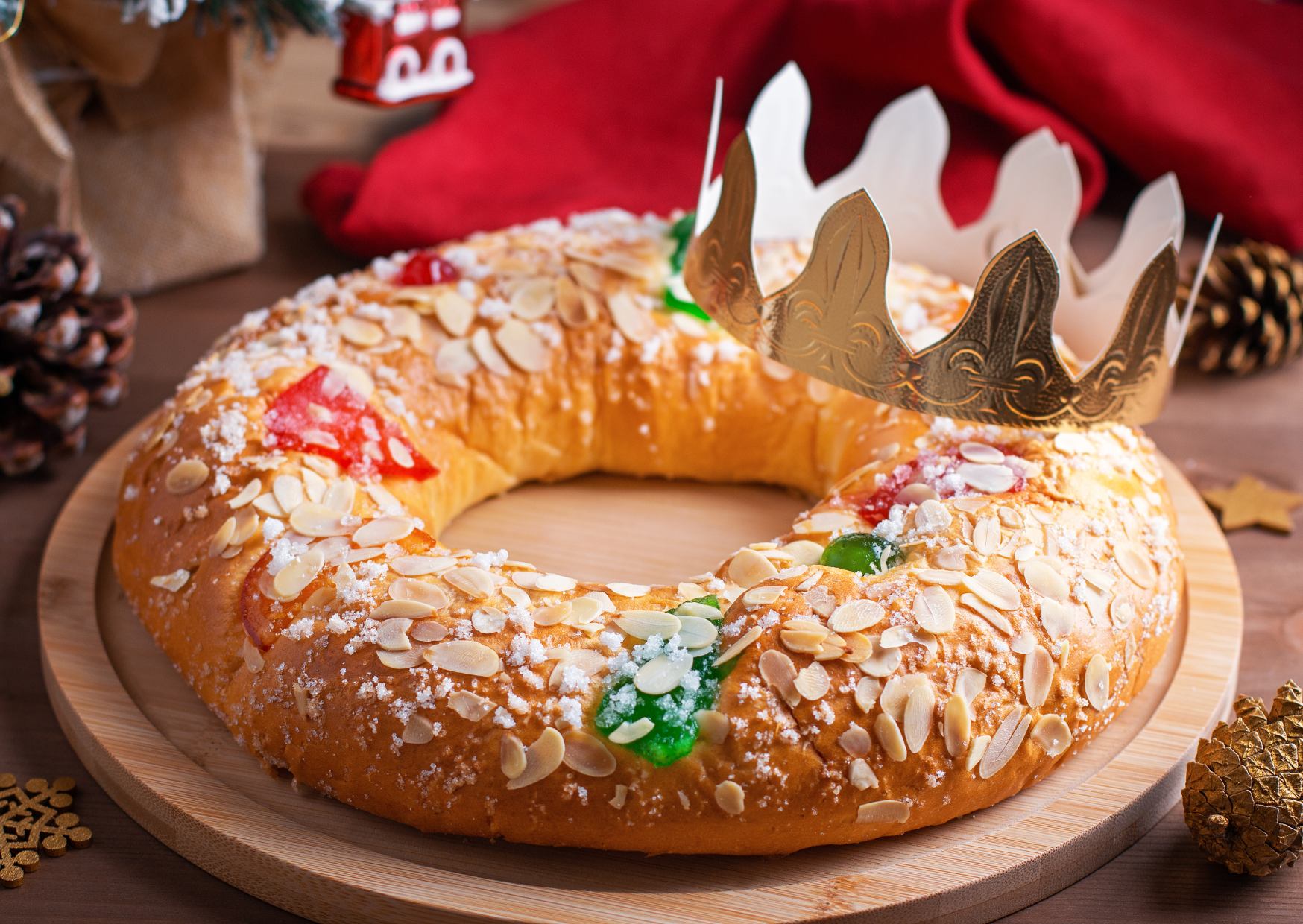
There is a cultural reason too. The ring hides two surprises, a figurita and a bean. Find the figure and you wear the paper crown. Find the bean and you buy next year’s roscón. Playfulness turns dessert into a ritual. Children remember the laughter more than the taste, which is precisely the point.
Key line: January 6 is dessert with a plot.
What roscón actually is (and is not)
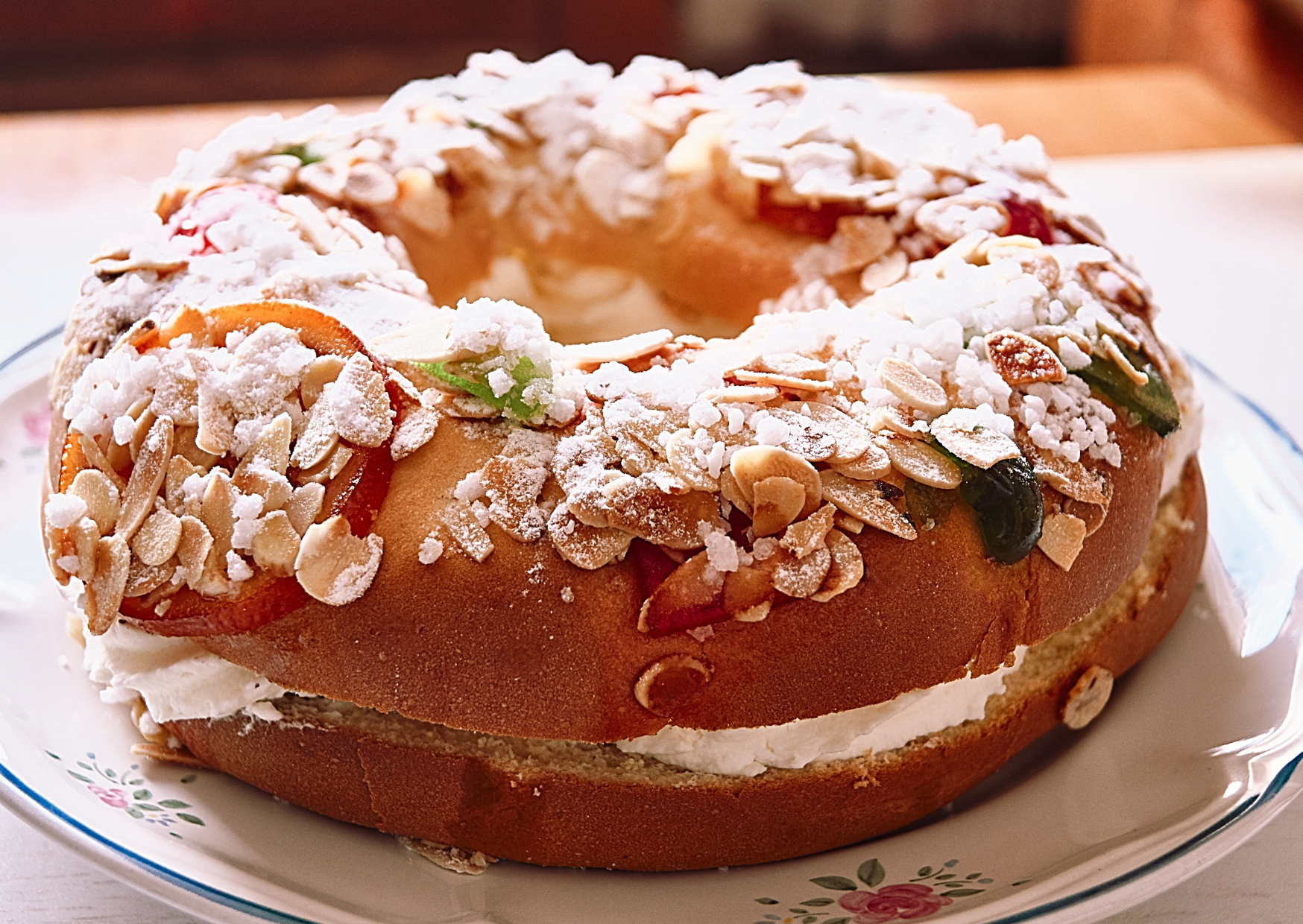
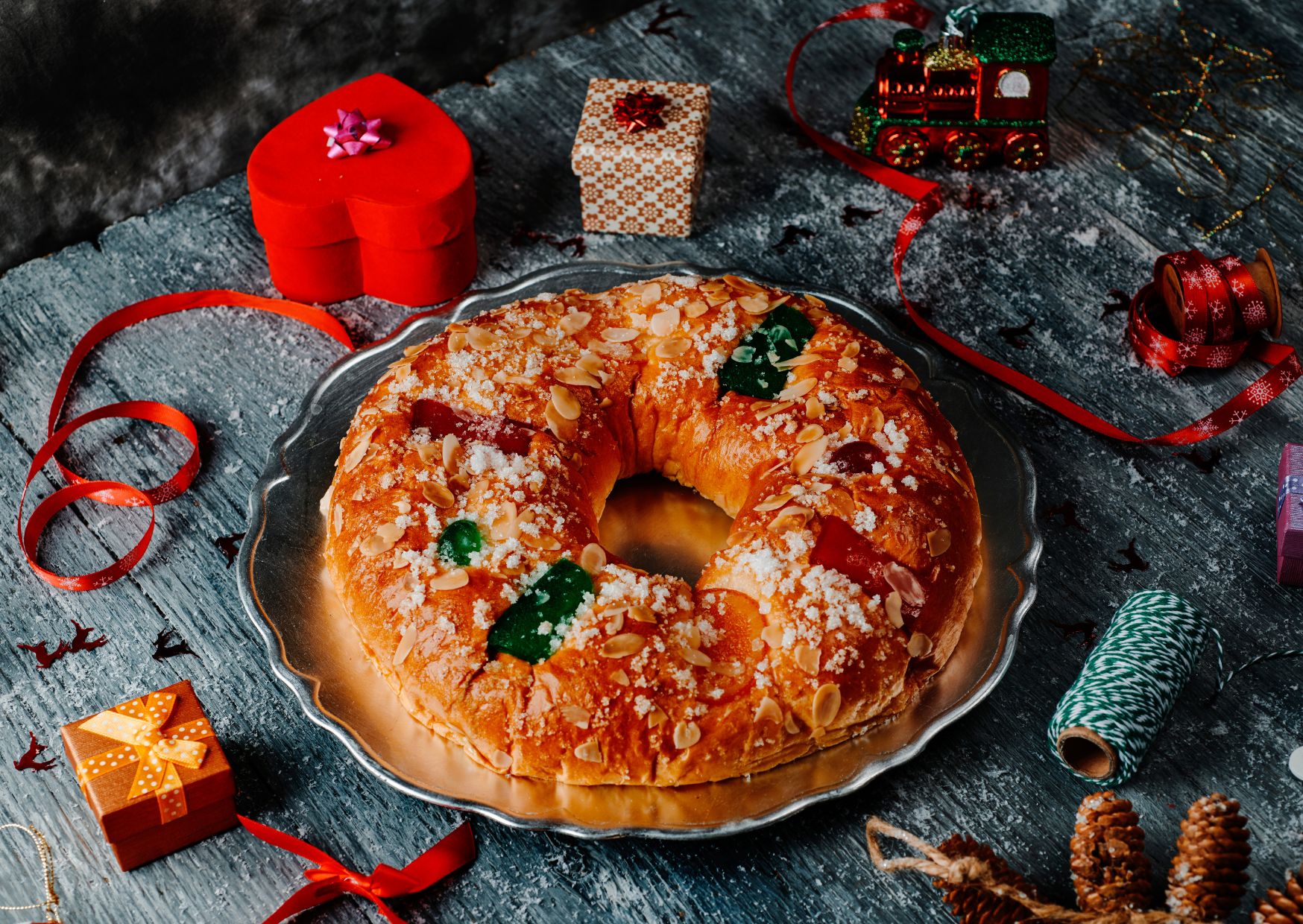
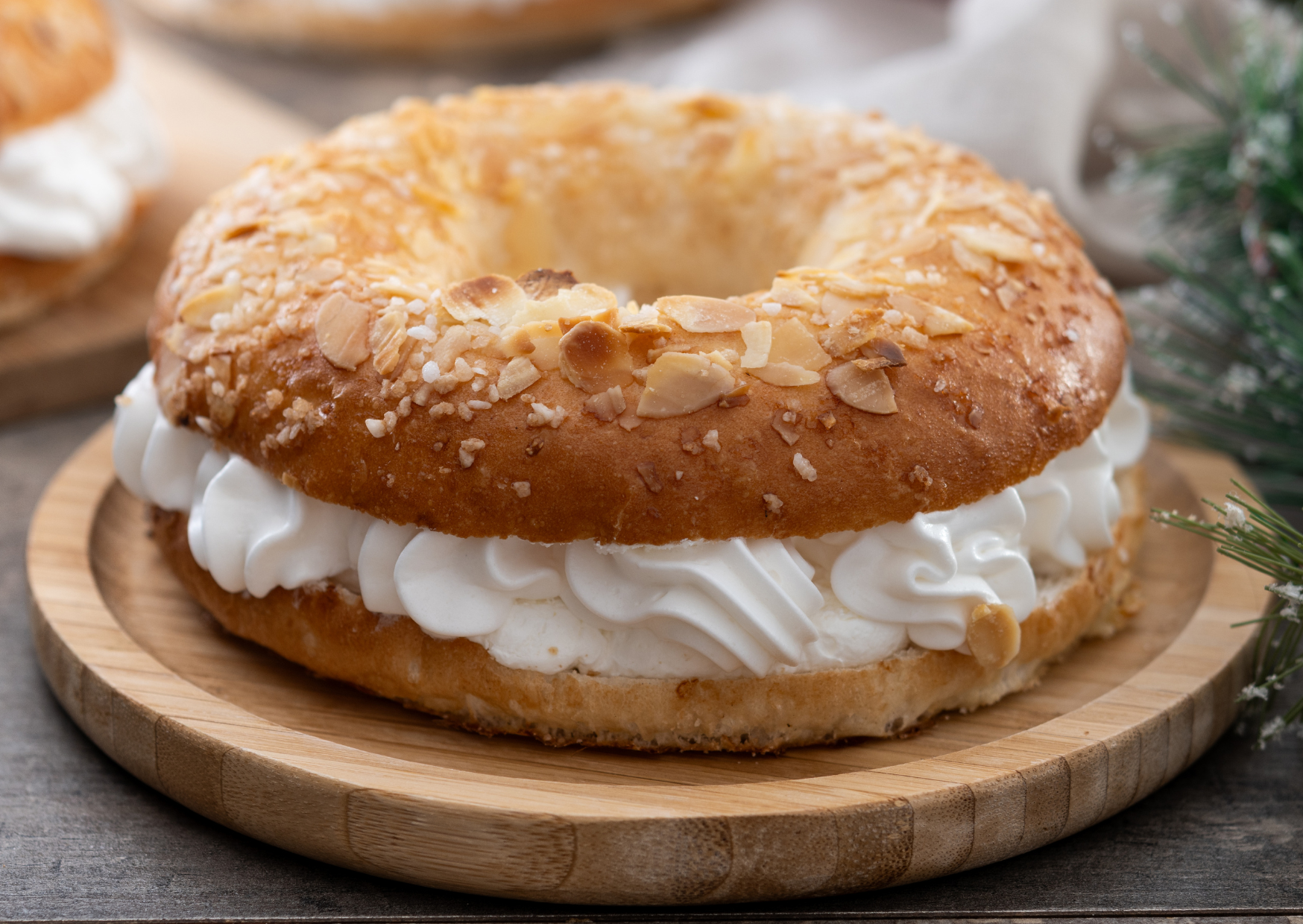
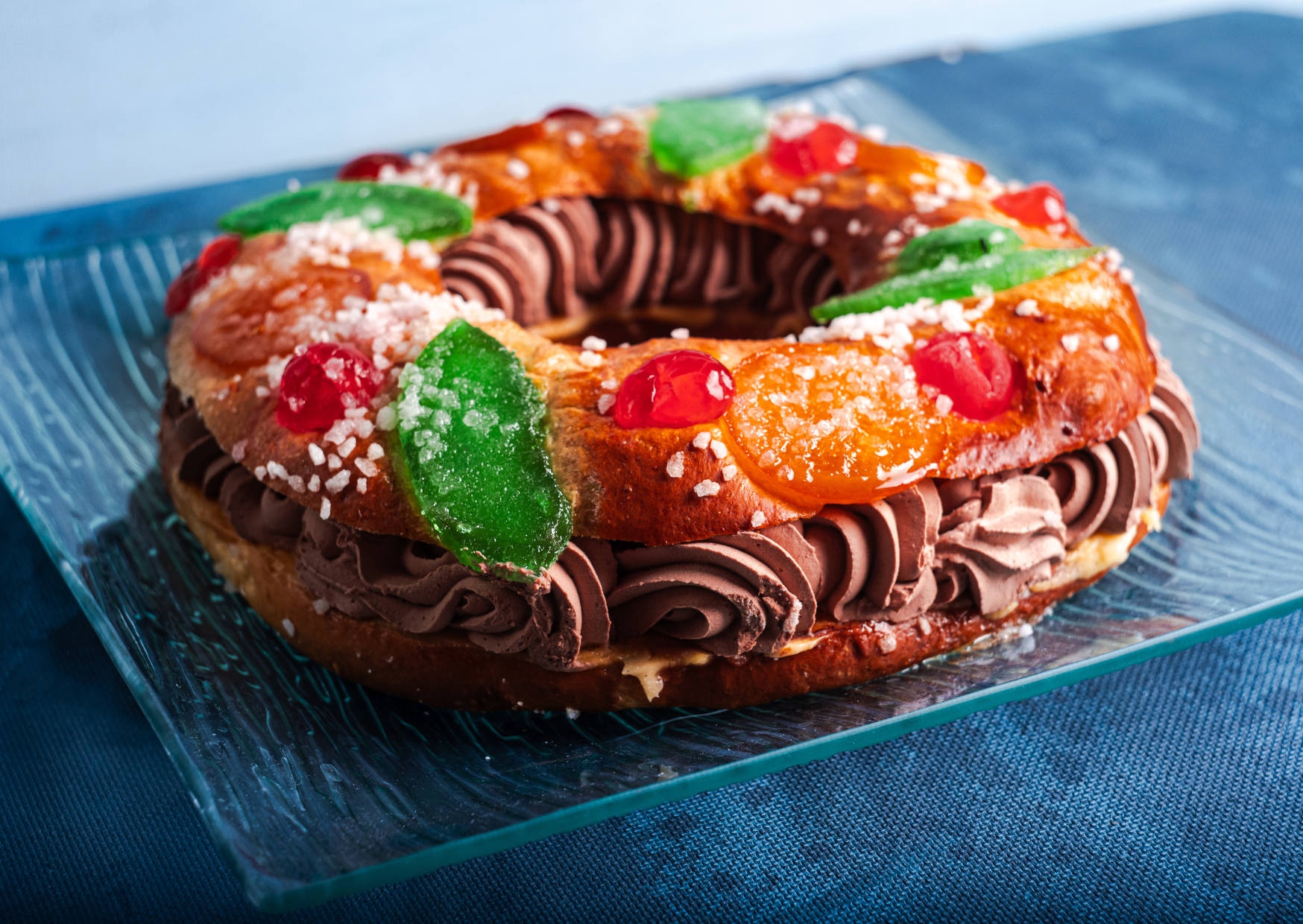
Roscón is not a cream cake pretending to be bread. It is an enriched, orange blossom scented brioche shaped into a ring, glazed, and decorated with candied fruit, pearl sugar, and almonds. Fillings vary by region and mood. Unfilled with hot chocolate at breakfast feels pure and light. Filled with whipped cream, pastry cream, or chocolate cream turns afternoon coffee into a party.
- Texture: soft, feathery, slightly elastic crumb
- Perfume: orange blossom, orange zest, a little lemon
- Sweetness: present but restrained
- Look: glossy crown with jewels of candied citrus
If you can make cinnamon rolls, you can make roscón. The secret is boring. Develop gluten before adding butter, proof fully, and bake with patience. That is it.
Remember: soft dough now means soft slice later.
What it costs in real life
You can taste roscón at every price point. Here is what registers on a normal city street.
- Supermarket roscón unfilled, 750 g: €8 to €12
- Supermarket filled with nata or trufa, 1 kg: €12 to €18
- Neighborhood bakery, unfilled, 1 kg: €16 to €24
- Artisanal obrador with good butter and fruit, 1 kg: €24 to €36
- Add hot chocolate for four: €4 to €10 at home, €10 to €16 in a café
Homemade roscón for a crowd lands around €7 to €12 in ingredients, depending on your butter and candied fruit. Time is the main cost, and you buy flavor with the clock.
Bottom line: the good one is never the cheapest. Buy once, slice slowly, and skip the second tier entirely.
How Spanish households actually do the day
You will see a pattern house to house that looks like this.
January 5, late afternoon
People pick up preordered roscón from their favorite obrador. Paper crown in the box, small bag with figurita and bean taped to the side.
January 5, evening
Cabalgata. Kids collect wrapped candies, parents hold the line. Home by nine or ten. Roscón stays wrapped at room temperature, not in the fridge.
January 6, morning
Presents first, coffee second, roscón third. Breakfast is slices with hot chocolate. The unfilled version shines here.
January 6, late afternoon
If another roscón appears, it is often filled. Friends drift in. The person who finds the figurita wears the crown in every photo. The bean becomes a joke that lives until next January.
Remember: buy one unfilled for breakfast, one filled for the afternoon, or bake in the morning and fill later if you can handle the schedule.
What to look for when you buy instead of bake
- Weight that matches size. A light crown is nice, a suspiciously featherweight crown is dry.
- Glossy surface with even color. Pale suggests underbaked. Burnished dark is fine.
- Ingredient list on supermarket labels. You want butter, not margarine.
- Smell of orange blossom when you open the box. If you smell only sugar, skip that bakery next year.
- Candied fruit that looks like citrus, not fluorescent glass. Even two slices of real orange make a difference.
Key cue: if the crumb tears in long strands, you found a good one.
If you are baking, the timeline that works
You can absolutely bake at home without losing your holiday to stress. Two plans, both tested.
Overnight plan for calm breakfast
- Day before, 18:00: mix sponge
- 19:30: mix dough, develop gluten, add butter
- 20:30: short rise, then chill overnight
- Next day, 08:00: shape ring, proof
- 10:00: bake
- 10:45: slice warm and unfilled for breakfast
- Afternoon: split and fill if you want a second round
Same day plan for afternoon roscón
- 09:00: start sponge
- 10:30: mix dough
- 11:15: first rise
- 13:15: shape and proof
- 15:30: bake and cool
- 16:30: fill and serve
Remember: cold dough shapes beautifully and tastes deeper. If you have a busy Cabalgata, pick the overnight plan.
Recipe, clean and printable
Roscón de Reyes, serves 10 to 12
Sponge
- Bread flour 120 g
- Warm milk 120 g
- Instant yeast 4 g
- Sugar 10 g
Dough
- Bread flour 380 g
- Sugar 80 g
- Salt 6 g
- Eggs 2 large + 1 yolk
- Warm milk 60 g
- Orange blossom water 10 to 15 g
- Zest of 1 orange and 1 lemon
- Unsalted butter 90 g, soft
- Rum or brandy 10 g, optional
Topping
- 1 egg, beaten
- Candied orange slices or mixed fruit
- Pearl sugar and sliced almonds
- 2 tbsp granulated sugar mixed with a few drops of water to make clumps
Optional fillings
- Whipped cream (nata): 500 ml cream, 60 g sugar, 1 tsp vanilla
- Pastry cream: 600 g batch
- Chocolate cream: whipped cream plus 100 g melted cooled dark chocolate
Method
- Sponge: whisk milk, yeast, sugar. Stir in flour. Rest 60 to 90 minutes until bubbly.
- Mix: in mixer bowl combine flour, sugar, salt. Add sponge, eggs, yolk, milk, blossom water, zests, rum. Knead 5 to 7 minutes until smooth.
- Enrich: add butter piece by piece, knead 5 to 8 minutes until elastic and slightly tacky.
- First rise: cover and rise to double, 1.5 to 2 hours. Or cover and refrigerate overnight after 45 minutes.
- Shape: pat into a disc, poke a center hole, stretch to a 25 to 28 cm ring with a 10 to 12 cm hole. Place on parchment. Set a greased ramekin in the hole.
- Proof: cover and proof 1.5 to 2.5 hours until puffy and airy.
- Decorate: heat oven to 180°C. Brush thin egg wash. Arrange fruit, sprinkle pearl sugar, almonds, and wet sugar clumps.
- Bake: 22 to 28 minutes until deep golden and 94 to 96°C internal. Tent if coloring too fast.
- Cool and fill: cool on a rack. Split and fill if desired. Tuck a figurita and a bean wrapped in parchment from below before baking, or slide them in after baking if you prefer zero risk with children.
- Serve: crown the figurita winner, make the bean finder promise to buy next year’s roscón.
What to remember: develop before butter, proof fully, brush lightly, bake patiently.
Hot chocolate that belongs with roscón
Spain drinks thick chocolate with roscón, closer to a sauce than a drink.
- Whole milk 500 ml
- Cornstarch 10 g
- Sugar 40 to 60 g, to taste
- Dark chocolate 150 g, chopped
- Pinch of salt
Whisk cornstarch into cold milk with sugar and salt. Bring to a bare simmer, whisking. Turn off heat, add chocolate, sit one minute, whisk smooth, return to low heat until thick enough to coat a spoon. Serve small cups. One ring and four cups equals a perfect morning.
Troubleshooting without panic
- Dry slice
Too much flour or overbake. Trust a tacky dough and pull at 94 to 96°C. - Split crust
Underproofed. Proof until a poke springs back slowly. - No flower scent
Your orange blossom water was shy. Use 15 g next time and zest generously. - Cream collapse
Filling a warm crown or overwhipped cream. Cool fully and stop at soft to medium peaks.
If you want to make your own candied orange
This is the one extra step that changes your crown from okay to memorable.
- Slice two oranges into 4 mm rounds, remove seeds.
- Simmer 300 g sugar and 300 g water until clear.
- Add slices in a single layer, simmer very gently 35 to 45 minutes until translucent.
- Cool in syrup. Store covered in the fridge for a week.
- Pat dry before decorating the roscón, then spoon a little syrup over after baking for shine.
The small etiquette that makes you look local
- Slice at the table, not in the kitchen. The surprises want an audience.
- Offer the crown to the figurita finder even if it is a grandparent.
- Pour chocolate into small cups and refill. Big mugs are for rainy Tuesdays, not Epiphany.
- Send a slice to a neighbor. Half the joy is knocking on a door with a plate and a smile.
Remember: Roscón is hospitality in a circle.
A short place where I changed my mind
I used to think the candied cherries were the villain. Then an aunt who still bakes like it is 1978 put exactly three on the crown for color and laughed when the children fought over them. Restraint makes even the kitsch charming. I still prefer orange slices, but I stopped policing other people’s rings. The bread is the soul. The jewels are just jewels.
Copy this shopping list and you are done
- Bread flour 500 g
- Instant yeast
- Sugar
- Salt
- Butter 250 g
- Whole milk 1 liter
- Eggs 1 half dozen
- Orange blossom water
- 1 orange, 1 lemon
- Candied orange or mixed fruit
- Pearl sugar, sliced almonds
- Dark chocolate bar for drinking
- Small figurine and a dried bean
- Paper crown
To Conclude
- January 6 is Spain’s real dessert day because the Kings arrive then, not before.
- Roscón is a floral brioche ring, not a cream cake pretending to be bread.
- Unfilled for breakfast, filled for afternoon keeps the day balanced.
- Develop gluten first, add butter after, then proof fully and bake until just done.
- Make the ritual obvious. Crown, bean, small chocolate, big smiles.
That is the whole thing. Wait for the parade, sleep with shoes by the door, brew thick chocolate, and cut the crown when the house is sleepy and happy. The waiting is part of the flavor, which is why Spaniards save the sweetest morning for January.

About the Author: Ruben, co-founder of Gamintraveler.com since 2014, is a seasoned traveler from Spain who has explored over 100 countries since 2009. Known for his extensive travel adventures across South America, Europe, the US, Australia, New Zealand, Asia, and Africa, Ruben combines his passion for adventurous yet sustainable living with his love for cycling, highlighted by his remarkable 5-month bicycle journey from Spain to Norway. He currently resides in Spain, where he continues sharing his travel experiences with his partner, Rachel, and their son, Han.