
And what it reveals about pleasure, rhythm, and the cultural difference between control and trust
Spend a few days eating in Italy, and you’ll probably eat more pasta, more cheese, more bread, and more olive oil than you usually allow yourself. Yet the people around you don’t seem worried. They’re not ordering dressing on the side. They’re not talking about macros or cheat days. They’re just eating slowly, socially, and with an ease that feels almost suspicious.
And here’s what really surprises visitors: Italians, statistically, are thinner than Americans.
Not by a little. By a lot.
Despite the long lunches, the late dinners, the creamy risottos and indulgent desserts, Italy has significantly lower obesity rates than the United States and yet calorie counting, food tracking apps, protein shakes, and diet fads remain almost entirely absent from daily life.
How is that possible?
Here’s why Italians don’t count calories and still manage to stay thinner than Americans. The answer has less to do with biology and more to do with culture: how food is eaten, talked about, and lived with.
Want More Deep Dives into Everyday European Culture?
– Why Europeans Walk Everywhere (And Americans Should Too)
– How Europeans Actually Afford Living in Cities Without Six-Figure Salaries
– 9 ‘Luxury’ Items in America That Europeans Consider Basic Necessities
Quick Easy Tips
Eat slowly and savor your meals—it helps you recognize fullness before overeating.
Prioritize fresh, seasonal ingredients whenever possible instead of relying on packaged convenience foods.
Think in terms of balance rather than restriction; allow for pasta, bread, or dessert, but keep portions reasonable.
One controversy lies in the American obsession with dieting culture versus Italy’s more relaxed approach to food. In the U.S., calorie-counting apps, fad diets, and low-carb trends dominate the conversation around health. Italians, however, focus on fresh ingredients, balance, and portion control. Critics argue that calorie counting creates unnecessary anxiety, while others say it’s essential for accountability in a culture of abundance.
Another debate centers on portion sizes. Italians often enjoy multiple small courses in a meal, while Americans gravitate toward oversized servings and “all-you-can-eat” deals. Some claim that Italy’s tradition of moderation leads to healthier habits, while skeptics argue that the U.S. lifestyle leaves little room for this kind of leisurely dining.
Finally, food quality is at the heart of the argument. Italians tend to prioritize local, seasonal, and less processed foods, while Americans rely heavily on convenience and packaged options. While some see Italy’s approach as superior, others contend it’s a matter of accessibility and affordability, not just cultural difference.
1. Food Is a Pleasure — Not a Math Problem
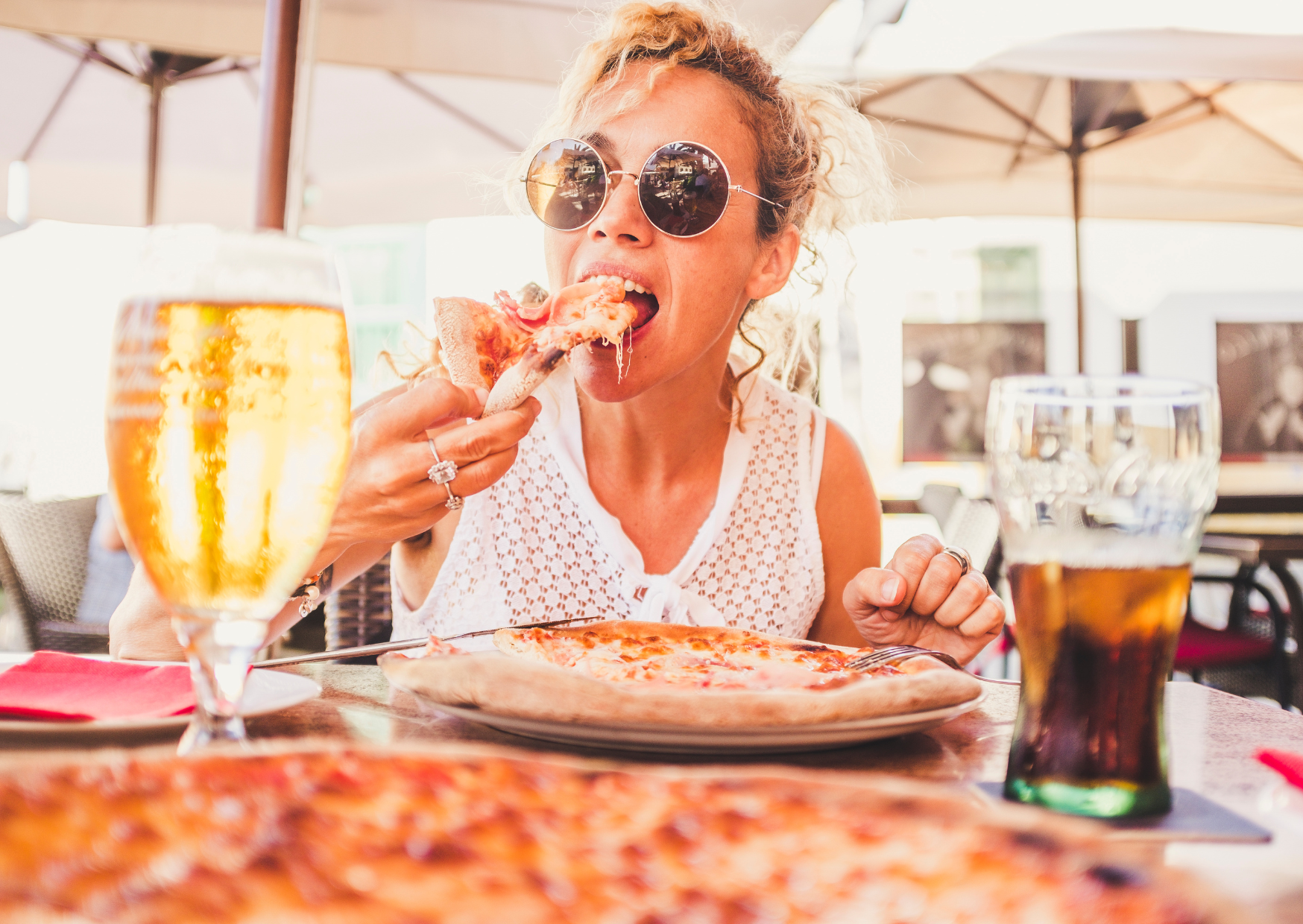
In the U.S., meals are often framed as caloric transactions. You earn dessert with exercise. You burn off pizza with cardio. Apps track everything. Food becomes a moral ledger — good or bad, clean or dirty, allowed or punished.
In Italy, food is joy. It’s texture, season, memory. You eat because it’s time to eat. Because your body is hungry. Because the tomatoes are in season. Because Nonna made lasagna.
No one says, “I shouldn’t.”
They say, “Mamma mia, it’s delicious.”
And when food is joyfully eaten — not fearfully consumed — it tends to satisfy sooner, digest better, and lead to fewer extremes.
2. Portion Sizes Are Smaller — But More Satisfying
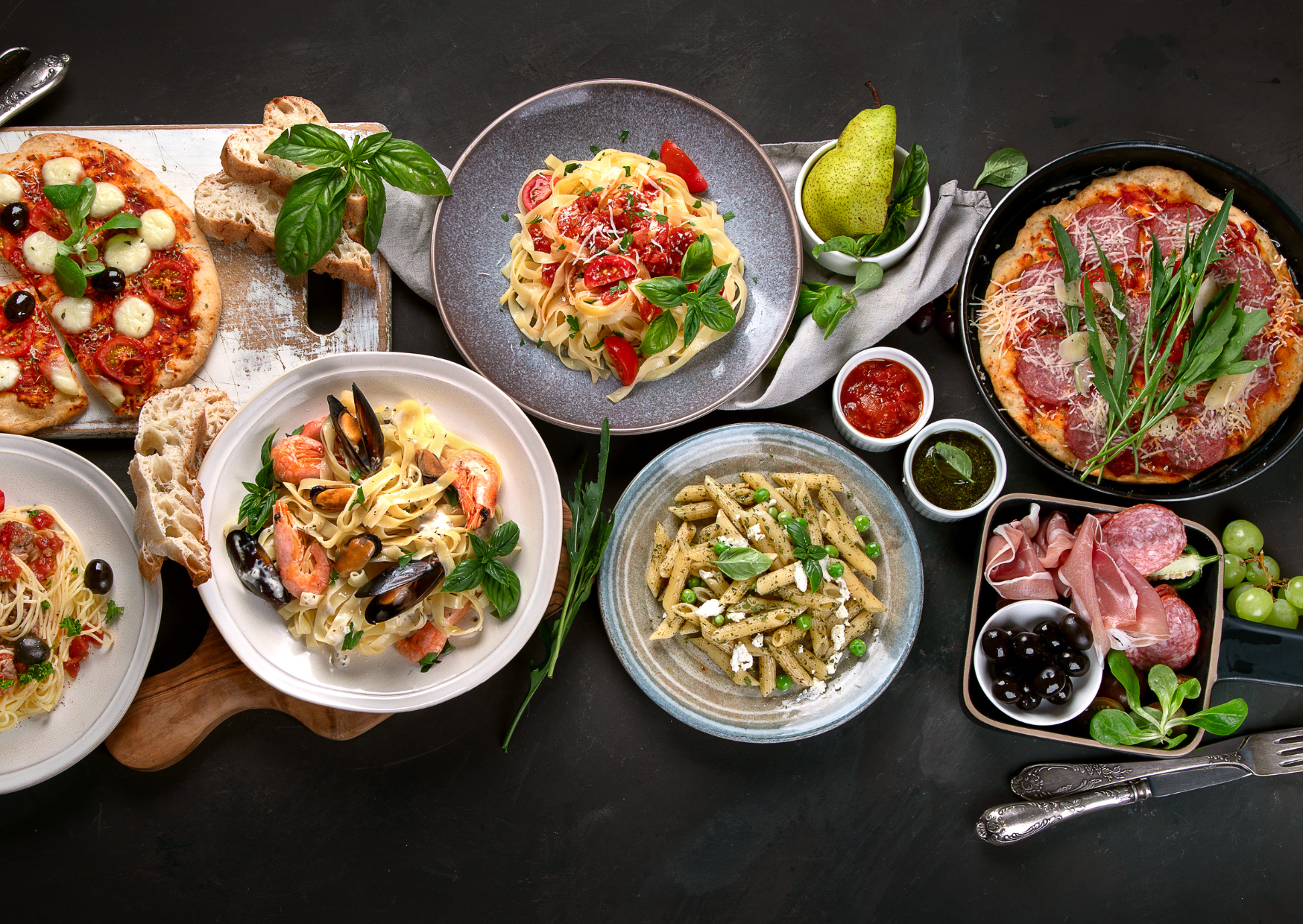
An Italian portion of pasta isn’t a heaping bowl. It’s a first course — usually about 80 to 100 grams of dry pasta per person. That’s around 350–400 calories, dressed simply with sauce or olive oil, and often followed by vegetables, a small protein, or fruit.
In the U.S., pasta is often served in oversized dishes, drowned in heavy sauce, and eaten as the entire meal.
The Italian plate may look smaller — but it’s more balanced. More thoughtfully prepared. More connected to hunger.
People finish their plate — and feel satisfied. No leftovers. No binge. No guilt.
3. Meals Happen at the Table — Not in Transit
In the U.S., meals happen in cars, at desks, on couches. Eating is multitasked. Fork in one hand, phone in the other. You eat until the container is empty, not until you’re full.
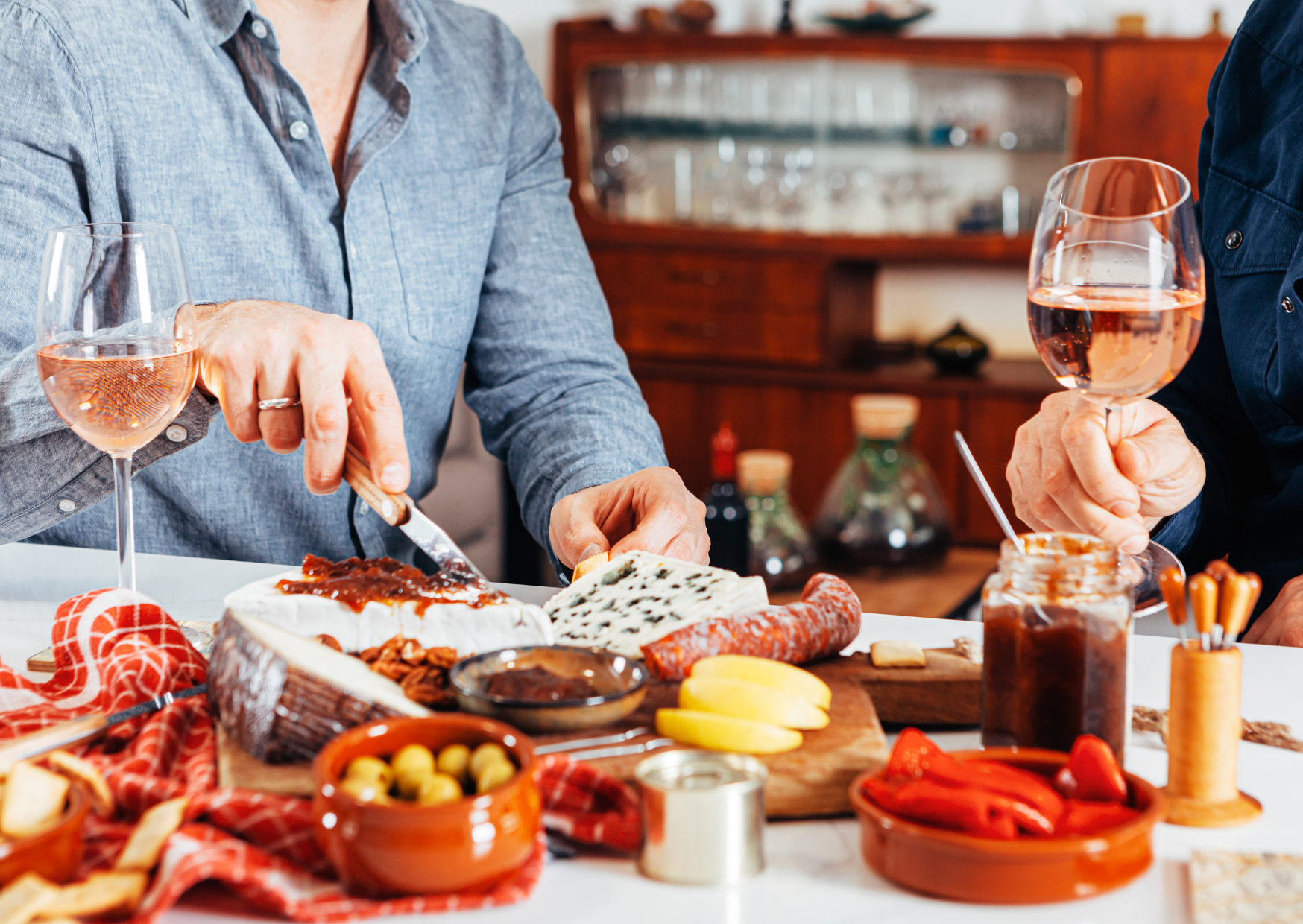
In Italy, meals happen at the table, even if it’s a quick one. You sit. You eat. You chat. You chew.
Even a sandwich becomes a pause — not a task.
And this habit, repeated daily, encourages slower eating, better digestion, and more awareness of when the body is actually full.
4. Snacking Is Rare — Because Meals Actually Work
The American food day is often made of several small meals, constant snacking, and reactive eating — breakfast bars, coffee runs, vending machine breaks, late-night bites.
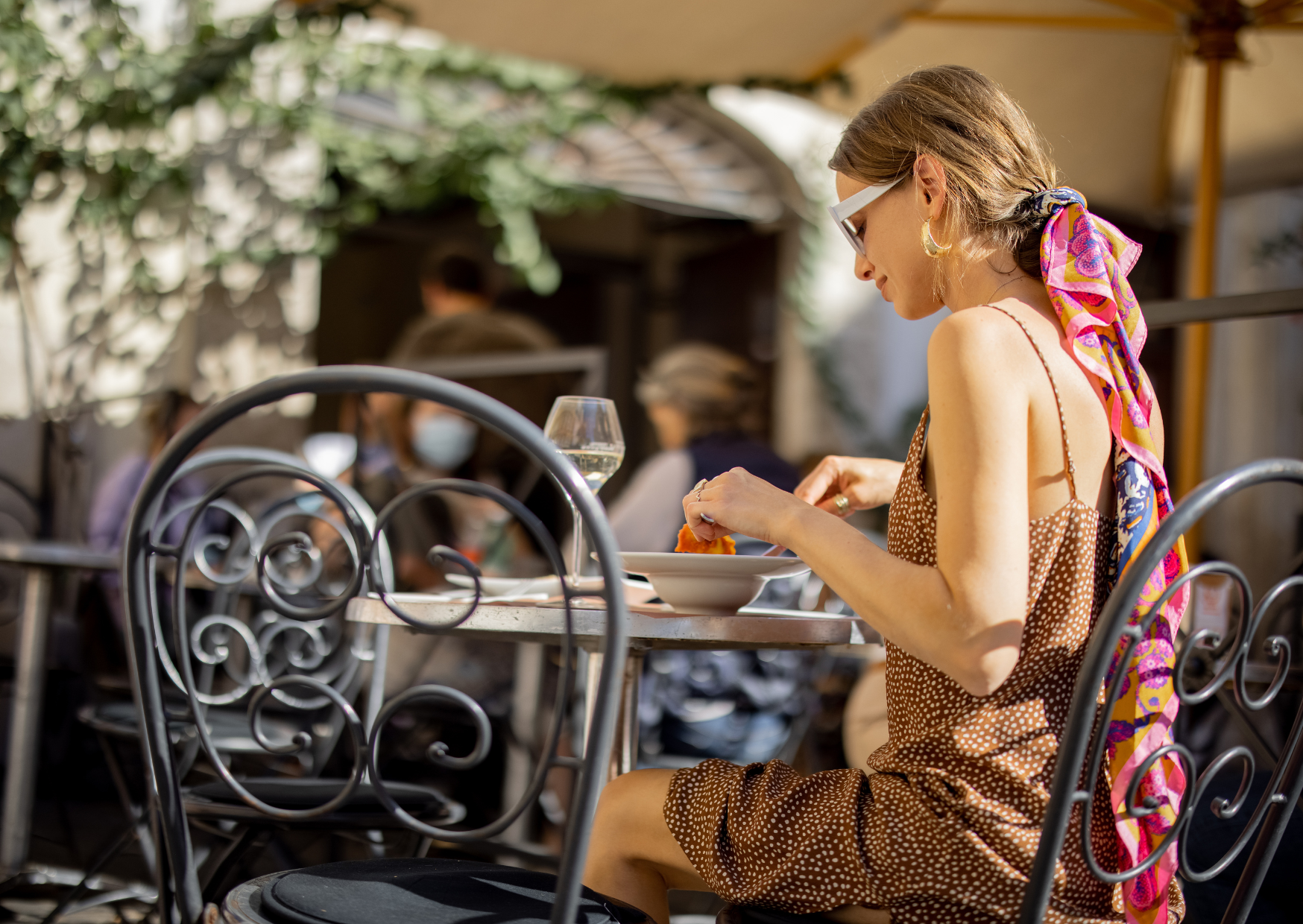
In Italy, people eat three meals. Maybe a coffee or fruit in between. But generally, meals are filling, and the spaces between them are respected.
The idea of needing a snack at 10:45 a.m. doesn’t exist — because breakfast was real. So was lunch.
By not constantly grazing, the body has time to digest, reset, and build real hunger — which leads to more intuitive eating at the next meal.
5. There Are No “Diet Foods” — Just Real Food in Season
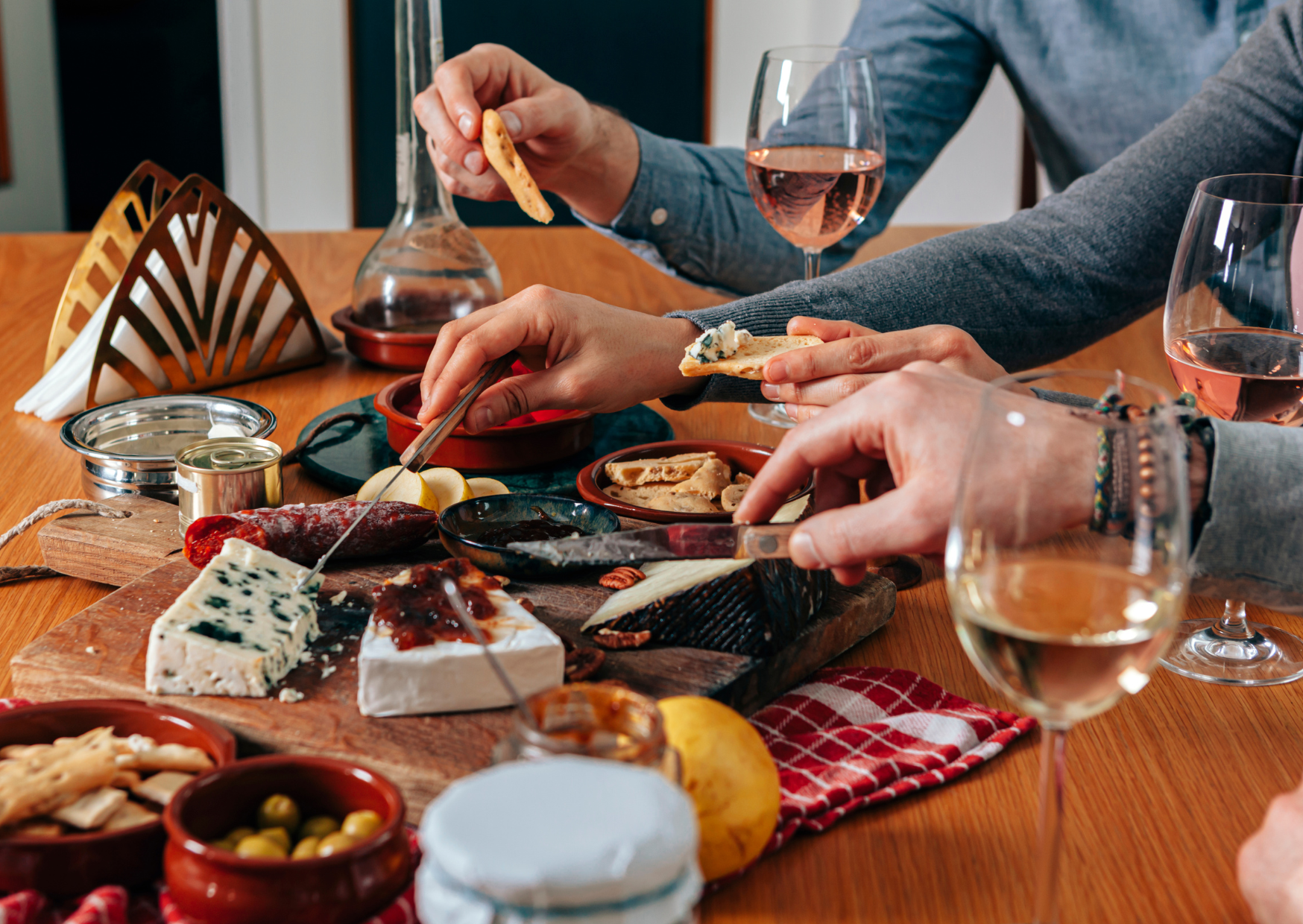
In the U.S., supermarket aisles are filled with “low-fat,” “zero-calorie,” “sugar-free,” “guiltless” versions of food. These products are often ultra-processed, full of additives, and taste like compromise.
In Italy, diet food is rare. Not because people don’t care about health — but because they prefer real food, eaten thoughtfully.
You eat cheese — just not too much. You eat bread — preferably from a bakery. You eat sweets — at the right time, and not every day.
There’s no need to manipulate food when the rhythm of life already balances it.
6. Walking Is Built into the Day — Not Tacked On

In American culture, “working out” often means driving to a gym, using machines for 45 minutes, then returning home to sit again.
In Italy, movement is embedded into life. People walk to the store. They climb stairs. They stroll in the evening (the passeggiata). Elderly people walk slowly but daily. Teenagers walk in groups to school.
You don’t have to “schedule exercise.” You live it.
This consistent, moderate movement helps regulate appetite, blood sugar, and digestion — without ever feeling like a chore.
7. Food Isn’t Used to Manage Emotion
In the U.S., food is often a response to stress, loneliness, boredom, or celebration. It’s comfort, distraction, reward. And when emotions run high, so do calories.
In Italy, emotional eating is less common — not because people don’t feel, but because food isn’t the default response.
If someone is upset, they talk. They walk. They go out for a coffee. They call their mother.
Food is for hunger. Not for self-soothing.
And when eating is tied to real hunger, not emotional need, it becomes easier to stop when full.
8. Mealtime Is Social — and Social Pressure Prevents Overeating
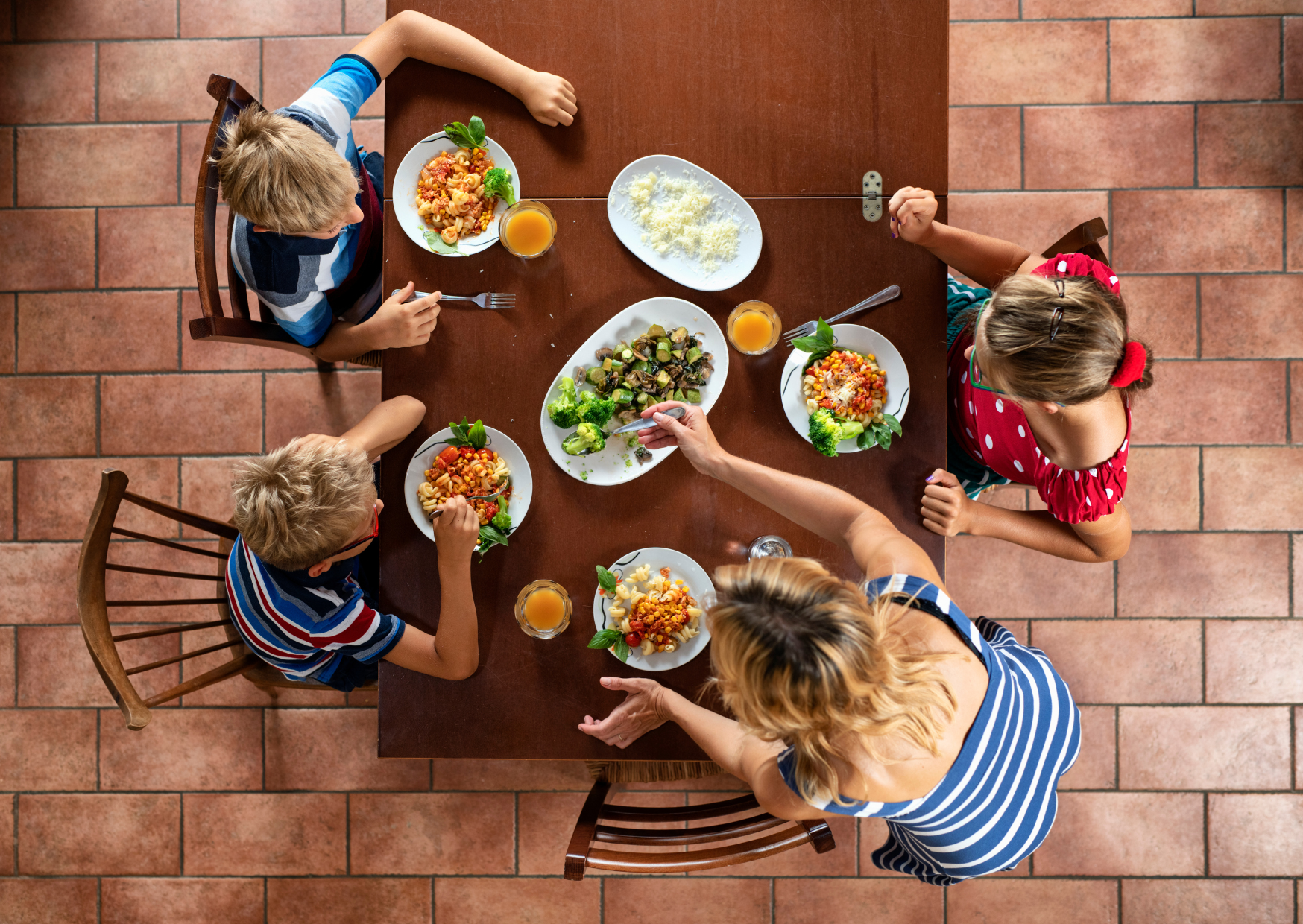
In the U.S., eating alone is common. Which means no one watches how much you eat — or how fast. That freedom often leads to extremes: bingeing, secret snacking, shame cycles.
In Italy, meals are social events. Even a quick lunch includes conversation, pacing, shared dishes. You eat more slowly because you’re talking. You eat less because the portions are fixed. You stop when everyone else does.
Being around people creates natural limits — and helps prevent overeating not through rules, but through rhythm.
9. There’s No Panic After a Big Meal
In the U.S., a heavy dinner leads to guilt. Gym talk. Juice cleanses. “I need to be good tomorrow.”
In Italy, a heavy meal is followed by a walk. A slower morning. A lighter lunch.
There’s no punishment. No restriction. Just balance.
You don’t “burn it off.” You live through it — and trust that your body knows what to do.
And that lack of panic stops the cycle that leads so many Americans to extremes.
One Fork, Two Cultures
To Americans, staying thin means tracking, resisting, restricting. It means earning your food and calculating your meals.
To Italians, staying balanced means eating well, moving often, and trusting your body to guide the rest.
In the U.S., food is fuel — or the enemy.
In Italy, food is family. Culture. Comfort. And nourishment in every sense of the word.
So the next time someone asks how Italians can eat pasta and stay slim, don’t look at the ingredients.
Look at the life wrapped around the plate — the rituals, the pacing, the joy, the tradition.
Because it’s not about what’s on the fork.
It’s about what the fork is part of.
Italians prove that a healthy lifestyle doesn’t have to mean strict calorie counting or rigid dieting. Their focus on quality ingredients, moderation, and mindful eating creates a natural balance that supports long-term health without the stress of numbers.
The controversies highlight the tension between cultures obsessed with dieting and those that embrace food as pleasure. While Americans often equate health with control, Italians demonstrate that joy and balance can be just as effective.
Ultimately, the Italian way of eating is a reminder that food is meant to be enjoyed, not feared. By focusing on balance, quality, and connection, Americans could find healthier, happier relationships with food and perhaps even slimmer waistlines without ever counting a calorie.

About the Author: Ruben, co-founder of Gamintraveler.com since 2014, is a seasoned traveler from Spain who has explored over 100 countries since 2009. Known for his extensive travel adventures across South America, Europe, the US, Australia, New Zealand, Asia, and Africa, Ruben combines his passion for adventurous yet sustainable living with his love for cycling, highlighted by his remarkable 5-month bicycle journey from Spain to Norway. He currently resides in Spain, where he continues sharing his travel experiences with his partner, Rachel, and their son, Han.