
And What It Reveals About Respect, Rhythm, and the Social Warmth Spain Refuses to Abandon
To Americans, greetings are often seen as polite formalities — short, efficient, and cheerful.
“Hey.” “How are you?” “Good morning.” “Have a nice day.”
They’re phrases used at the grocery store, in the office, on the street, and over the phone.
But in Spain, greetings aren’t just etiquette — they’re a ritual of presence.
They’re a social opening, a small exchange of humanity that signals warmth, familiarity, and mutual respect.
So when Americans bring their own style of greeting into Spanish spaces, it often lands wrong — not because it’s impolite, but because it feels too casual, too abrupt, or too emotionally distant.
Here are the common American greetings that many Spanish people find quietly offensive — and what those reactions reveal about how two cultures define politeness, connection, and being seen.
Looking for More Travel & Culture Reads?
– They Don’t Work 24/7: 5 Vacation Customs in Europe That Drive Americans Crazy
– 7 Dress Code Shocks Americans Face in Italy
– 9 European Beach Habits That Shock First-Time Tourists
Quick & Easy Tips for Greeting People in Spain
Use a Simple “Hola” or “Buenos Días” — Stick to friendly but formal greetings unless you know the person well.
Wait for Formal Introductions Before Using First Names — Address new acquaintances with “Señor” or “Señora” until invited otherwise.
Reserve Personal Questions for Later Conversations — Jumping into “How are you?” with strangers can seem overly familiar.
Be Mindful of the Double Kiss Greeting — In casual or family settings, cheek kisses are common — but wait for cues from locals.
Avoid Overusing “Hi” and “Hey” with Service Workers — A polite “Buenos días” shows respect in stores or restaurants.
One common misconception is that friendly American-style greetings are universally appreciated. In Spain, friendliness is valued, but it’s expected to follow traditional forms — using proper titles and greetings according to the level of familiarity. Overly casual greetings can come off as disrespectful or dismissive.
Another debated belief is that greetings are purely about politeness and don’t need to reflect cultural norms. In reality, greetings in Spain serve as an important part of social etiquette, often tied to respect, community belonging, and traditional customs. Ignoring these norms isn’t seen as harmless but as lacking cultural sensitivity.
Perhaps most surprising is the assumption that being friendly means acting the same everywhere. True cultural awareness means adjusting your behavior to fit local customs, not assuming your way is automatically correct. Greetings may seem minor, but they often leave lasting impressions — both good and bad — on the people you meet.
1. Saying “Hi” Without a Time-Specific Greeting
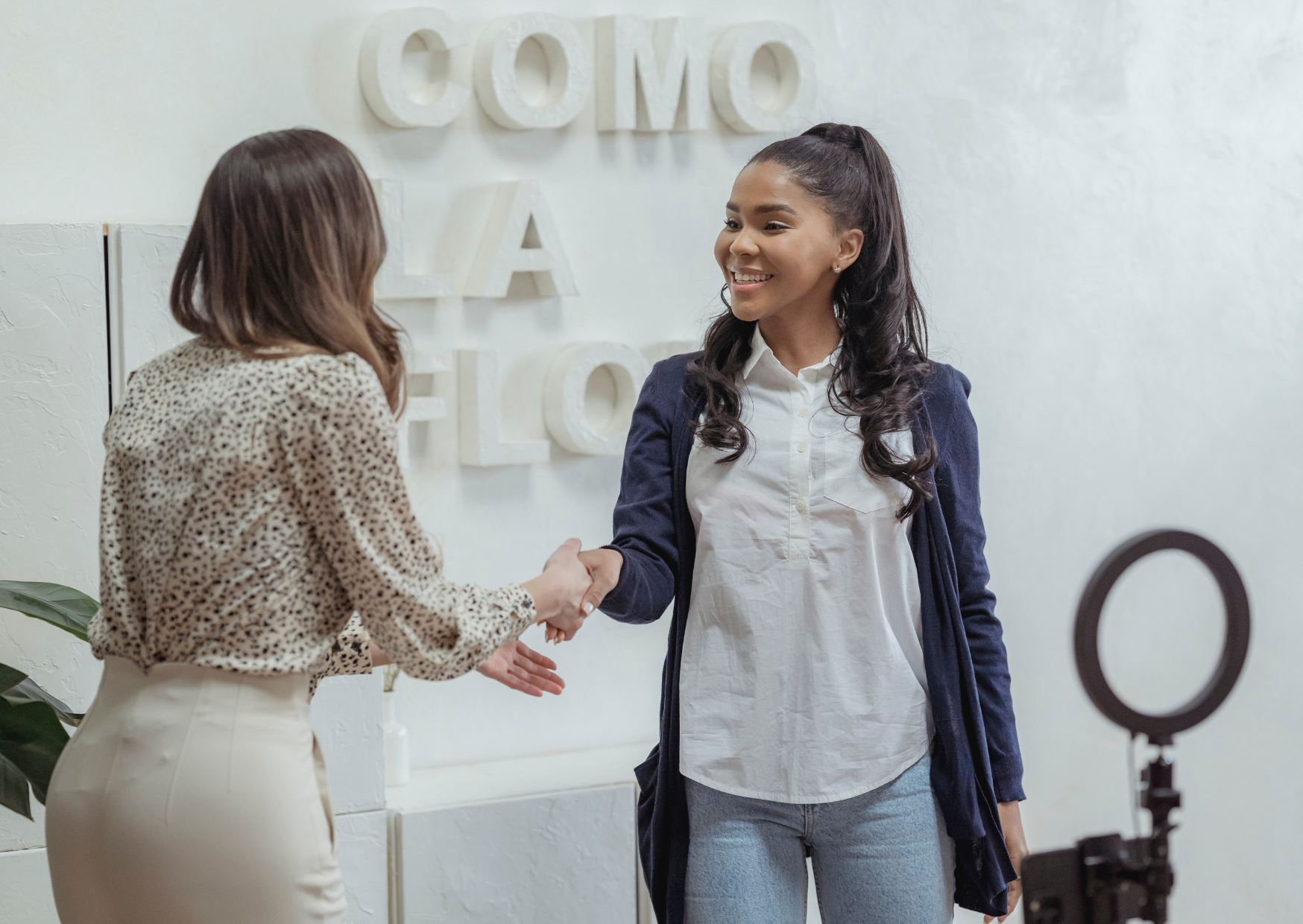
In the U.S., “Hi” is universal.
Friendly. Safe. It works any time of day.
But in Spain, a generic “hola” from a stranger or customer — especially without eye contact or tone — can sound cold or even dismissive.
The expected greeting is:
- “Buenos días” (Good morning)
- “Buenas tardes” (Good afternoon)
- “Buenas noches” (Good evening)
It’s time-specific, warm, and deliberate.
And skipping it feels like skipping the person entirely.
Saying “hi” instead of “buenos días” is often read as:
- Too abrupt
- Too American
- Lacking interest in local norms
In Spain, even a quick exchange deserves a moment of context.
2. Using “How Are You?” as a Greeting — Without Waiting for the Answer
In the U.S., “How are you?” is often just another way to say hello — no answer expected.
In Spain, if you ask “¿Cómo estás?” (How are you?), you’d better mean it.
It implies:
- You know the person
- You care about how they are
- You’re ready to hear something real
Asking without waiting for a reply — or worse, walking away mid-response — feels jarring, even disrespectful.
Many Spaniards experience the American “how are you?” as empty, rushed, or artificial.
In casual encounters, a simple “hola” or “buenas” works fine.
But if you ask how someone is, you’re opening a conversation — not skipping one.
3. Saying “Excuse Me” or “Sorry” Instead of Greeting

In American culture, politeness often starts with:
- “Excuse me…”
- “Sorry, can I…?”
- “Sorry to bother you…”
In Spain, that over-apologizing style reads as awkward and overly formal, especially if you skip the actual greeting.
Walking into a bakery and saying:
“Sorry, can I get a coffee?”
…without saying “buenos días” first?
That’s rude, even if you think you’re being polite.
In Spain, acknowledging the person before the transaction is essential.
It says: I see you. I know we’re about to interact. I respect your presence.
“Sorry” won’t make up for skipping that.
4. Not Greeting Everyone in the Room
In American settings, you often greet just the people you’re speaking to — or skip greetings entirely in large groups.
In Spain, entering a room without acknowledging everyone — even just with a collective “buenas” — is a social misstep.
Whether it’s:
- A waiting room
- A shared office
- A doctor’s lobby
- A small shop or elevator
…you’re expected to greet the space, not just the individual.
Failing to do so feels:
- Cold
- Self-important
- Disconnected
You don’t have to greet everyone by name — but you do need to say something.
5. Going Straight to Business
In the U.S., especially in professional contexts, it’s normal to dive right in:
“Hey, quick question…”
“Hi, I just wanted to check…”
“Can you help me with…”
In Spain, that directness is often seen as too abrupt, especially if there’s no greeting or small buffer beforehand.
Even over email or text, starting with:
- “Hola”
- “Espero que estés bien” (I hope you’re well)
- “Buenos días”
…softens the message. It sets the tone. It shows you understand the rhythm of Spanish communication.
Skipping straight to business, especially with older generations or government employees, can be interpreted as impatience — or arrogance.
6. Overusing “Nice to Meet You”
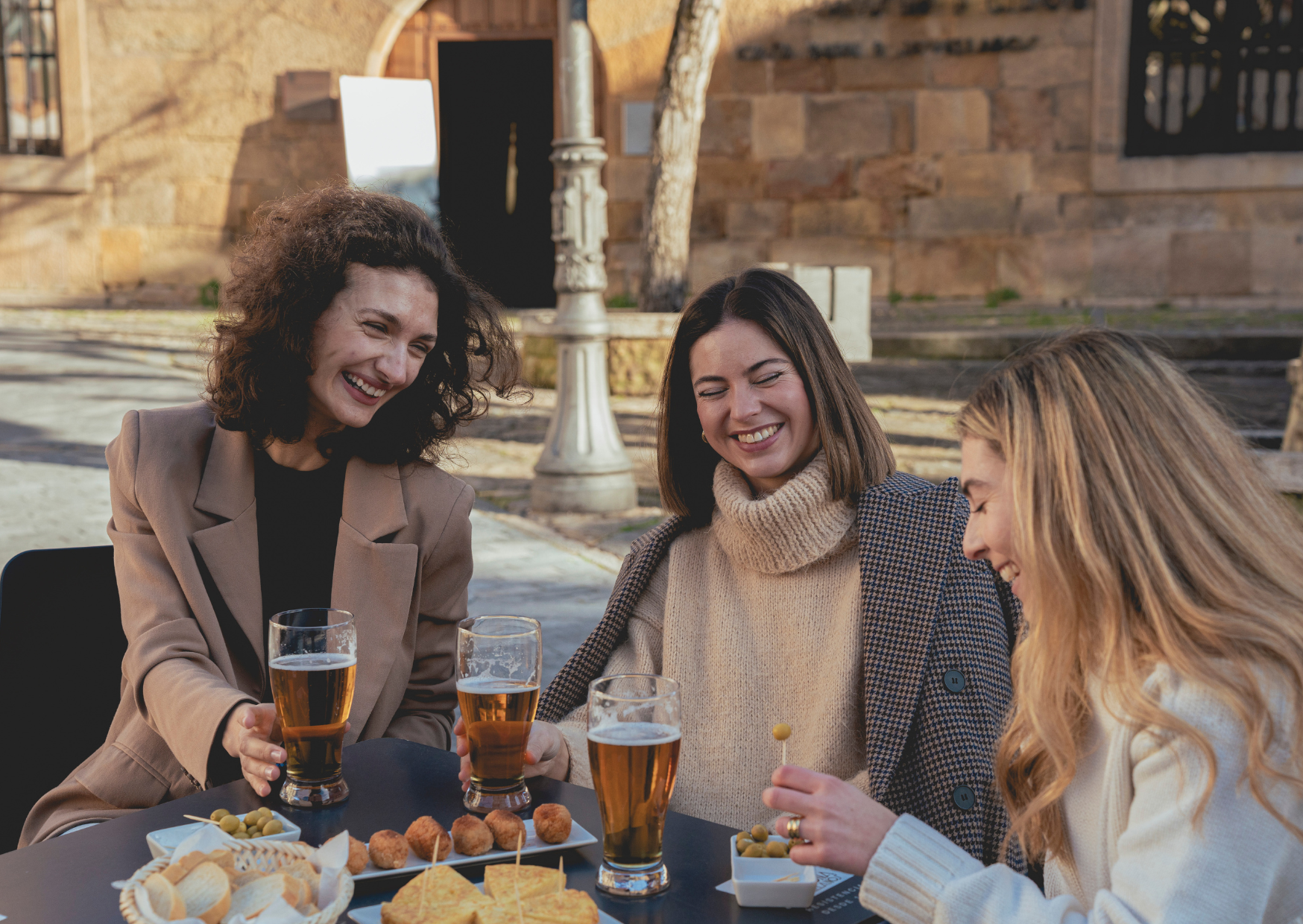
In English, “Nice to meet you” is a standard closer to first encounters. Polite, easy, expected.
In Spain, people might say:
- “Encantado/a” (Delighted)
- “Un placer” (A pleasure)
- “Mucho gusto” (Nice to meet you)
But these are often said once and not repeated unnecessarily. Using them again and again, or saying them too formally in casual contexts, can sound affected or unnatural.
Spanish greetings are warm, but not theatrical.
They’re rooted in tone, body language, and context — not in polite phrases repeated out of habit.
7. Smiling Excessively When Greeting Strangers
In American culture, smiling is part of the greeting — friendly, approachable, non-threatening.
In Spain, constant smiling — especially in formal or brief interactions — can feel:
- Inauthentic
- Overly eager
- Emotionally performative
That doesn’t mean people are unfriendly. Far from it.
But the Spanish style of warmth is more relaxed, more grounded — and less forced.
Smiling is often saved for real connection.
A pleasant expression? Sure.
A fixed grin every time you say hello? That reads more like customer service than sincerity.
8. Skipping the “Dos Besos” Without Acknowledgement
This one confuses many Americans.
The traditional Spanish greeting involves two cheek kisses — one on each side — between friends, family, and even acquaintances.
Skipping the dos besos without explanation (especially if everyone else is doing it) can feel:
- Cold
- Dismissive
- Defensive
You’re not required to participate if it makes you uncomfortable — especially post-pandemic.
But if you avoid it, you should still:
- Make eye contact
- Offer a warm verbal greeting
- Smile in a way that shows presence and respect
The gesture isn’t about romance. It’s about human closeness.
To ignore it altogether can be unintentionally alienating.
9. Greeting Service Workers Without Looking at Them
In the U.S., it’s common to multitask while greeting — glancing at your phone, chatting with someone else, ordering without eye contact.
In Spain, this kind of distracted behavior is deeply rude.
Even in a quick exchange, you’re expected to:
- Make eye contact
- Pause
- Offer a greeting before making a request
Failing to do this can offend more than an actual mistake.
Because in Spain, being present with another person — even briefly — is a core value.
A rushed “hola” without looking up feels worse than saying nothing at all.
One Greeting, Two Realities
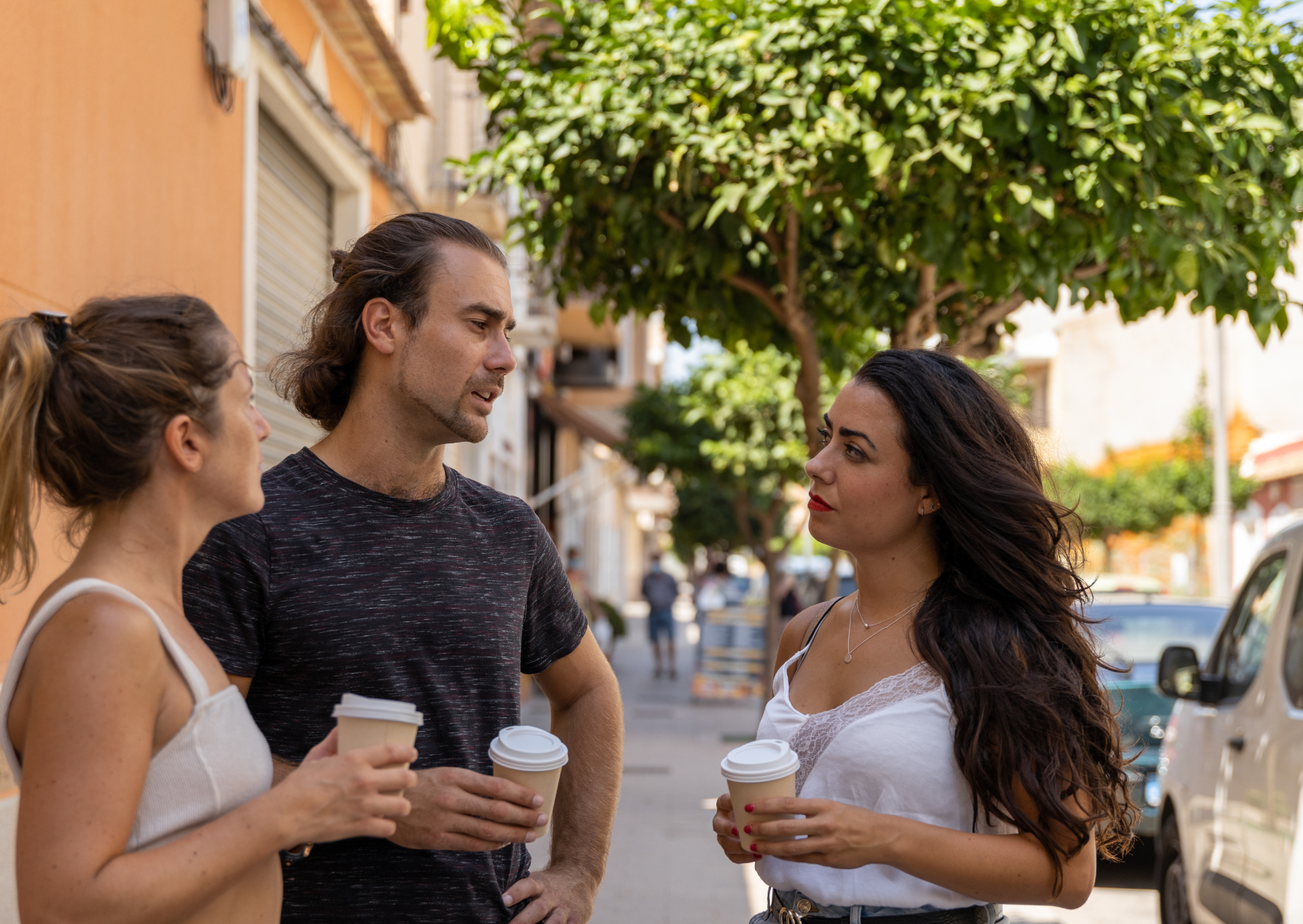
To Americans, a greeting is efficient.
To Spaniards, a greeting is human.
One culture says: Be polite and get to the point.
The other says: Acknowledge me fully, then we can begin.
And in that difference lies the root of many quiet misunderstandings between Americans and Spaniards — not just in language, but in expectation, rhythm, and the value placed on social warmth.
Because in Spain, the way you say hello doesn’t just open a conversation.
It defines the kind of person you are.

About the Author: Ruben, co-founder of Gamintraveler.com since 2014, is a seasoned traveler from Spain who has explored over 100 countries since 2009. Known for his extensive travel adventures across South America, Europe, the US, Australia, New Zealand, Asia, and Africa, Ruben combines his passion for adventurous yet sustainable living with his love for cycling, highlighted by his remarkable 5-month bicycle journey from Spain to Norway. He currently resides in Spain, where he continues sharing his travel experiences with his partner, Rachel, and their son, Han.
Jeff
Saturday 19th of July 2025
Or how about this, all uppity grammar nazis get over themselves.