
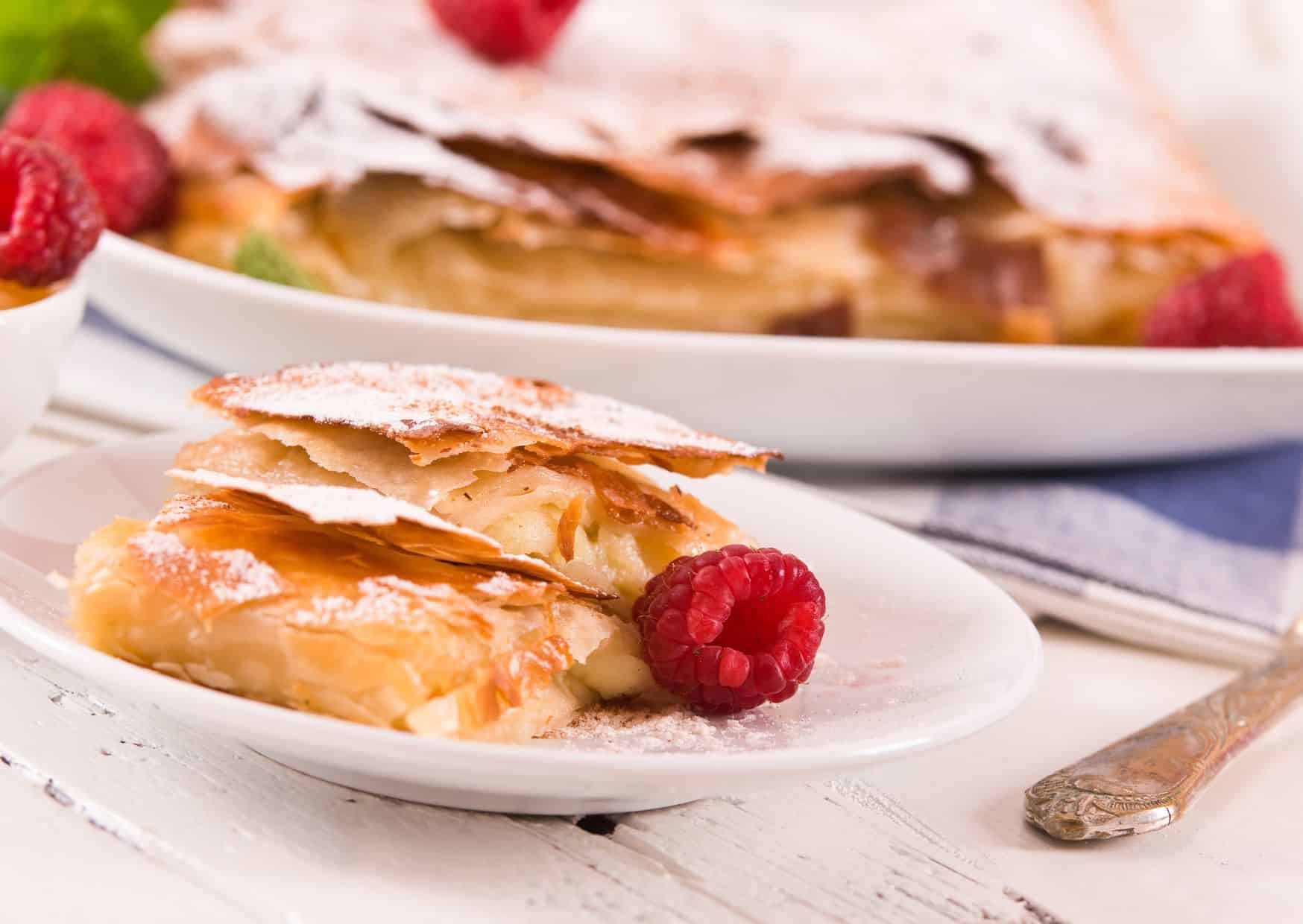
Greek cuisine is best known for its savory dishes like moussaka and souvlaki, but the country’s rich tradition of breakfast pastries is often overlooked. Bougatsa is a shining example—a warm, crispy, custard-filled pastry wrapped in delicate layers of phyllo dough and topped with powdered sugar and cinnamon. With roots in the Byzantine Empire and popularity across Northern Greece, this treat offers a sweet glimpse into Greece’s culinary diversity.
Unlike overly sweet or artificial pastries found elsewhere, Bougatsa is balanced—delicately sweet and indulgently creamy without being overwhelming. Street vendors across Thessaloniki serve it by the slice, hot out of the oven, drawing crowds that know it’s worth the wait. Whether you’re exploring Greek food for the first time or looking to expand your baking skills, Bougatsa is surprisingly easy to make at home with just a few ingredients and some patience.
This recipe guide walks you through how to recreate this Greek classic in your own kitchen. With simple steps, helpful tips, and a touch of historical flavor, you’ll be pulling trays of golden Bougatsa from your oven in no time. You don’t need to fly to Athens to taste the magic—just follow along.
Read here best breakfast in Greece, Greek food and drinks in Greece
Read here best Greece sim card for tourist, our Greece travel tips and Budget Travel in Greece
BOOK YOUR TRAVEL INSURANCE
Two of our favorite travel insurance: Heymondo Vs Safetwing cheapest travel Insurance. You can get for $135 USD your Heymondo Travel Insurance with Heymondo discount code valid for 90 days. Read our full comparison of Genki vs Safetywing Travel Insurance Review and the comparison Heymondo vs Genki
Best Time to Eat and How to Partner
Bougatsa is traditionally eaten in the morning, making it an ideal breakfast or mid-morning snack with a cup of strong Greek coffee. However, it also works beautifully as a dessert or afternoon treat. It’s best served warm when the phyllo is crisp and the filling is luxuriously soft.
Pair it with Greek mountain tea for a lighter option, or serve it after dinner with a glass of Mavrodaphne sweet wine if you’re offering it as a dessert. For a more savory experience, there are regional variations of Bougatsa made with cheese or minced meat—perfect for brunch boards or savory pastry spreads.
If you’re hosting a Mediterranean-themed brunch, pair sweet Bougatsa with other Greek dishes like spanakopita, olives, and yogurt with honey. It adds a sweet counterpoint to a table of rich, earthy flavors.
While Bougatsa is adored in Greece, it often gets dismissed by food critics outside the country as just another “phyllo dessert.” This completely underestimates the pastry’s cultural importance and culinary complexity. In fact, Greeks often debate fiercely about where the best Bougatsa comes from—Thessaloniki claims to be the origin, while Serres proudly touts its version as superior.
There’s also a quiet culinary divide over how it should be served. Some swear by the traditional custard filling and insist on powdered sugar and cinnamon, while others argue that savory versions are the “real” Bougatsa. In Northern Greece, skipping the sugar topping altogether is seen as the more authentic approach. The debate touches on broader themes in Greek food culture: tradition versus evolution.
Perhaps most controversially, many Greek pastry chefs bristle at the global trend of “modernizing” Bougatsa—adding Nutella, fruit, or unconventional fillings. While these twists may appeal to international palates, some argue they dilute the pastry’s soul. For many Greeks, Bougatsa is more than a sweet treat—it’s a ritual, a memory, and a symbol of regional pride.
How to Make Bougatsa
Bougatsa Recipe Ingredients
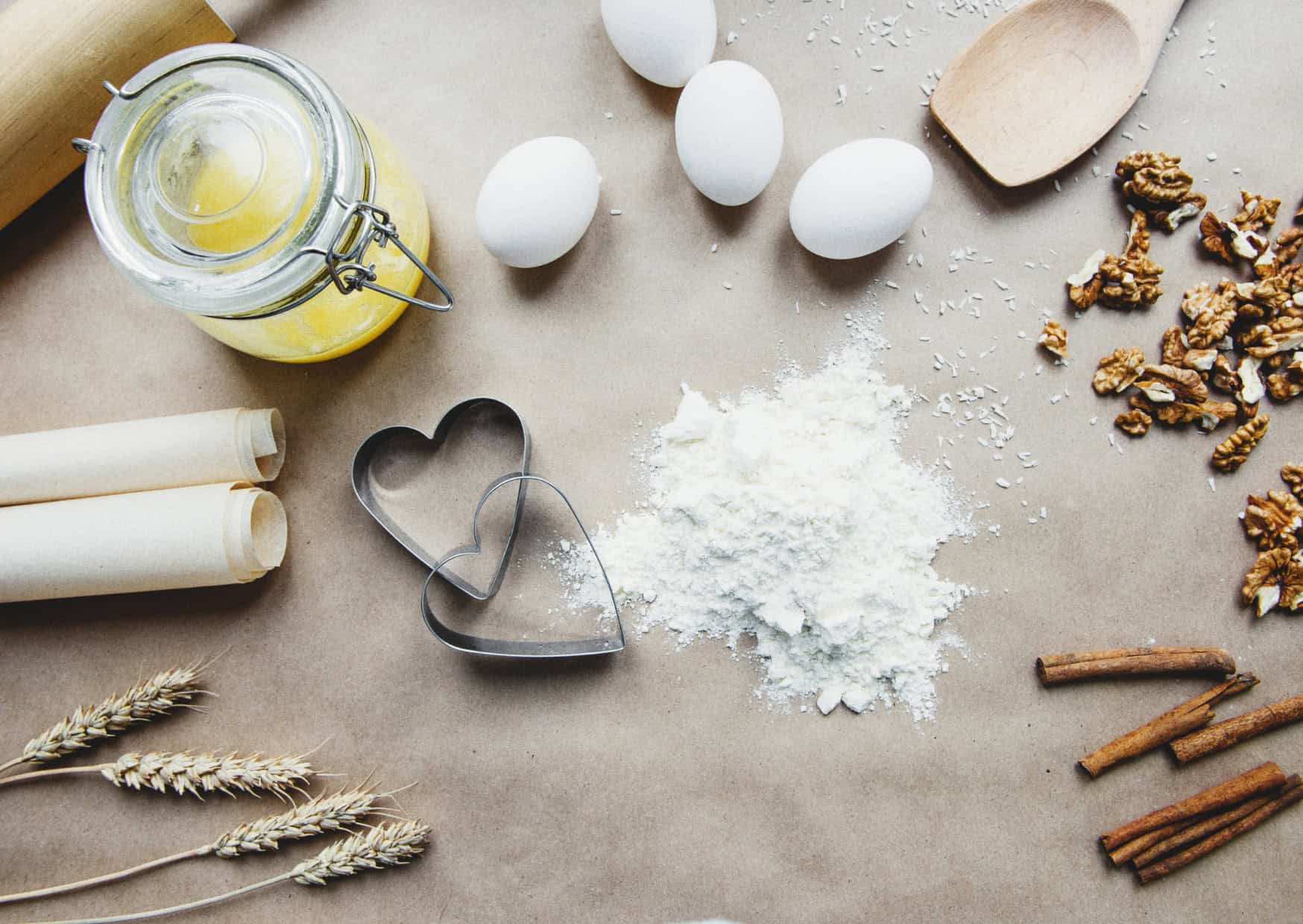
For the Custard Filling:
4 cups (1 liter) whole milk
3/4 cup (150 grams) granulated sugar
1/2 cup (70 grams) fine semolina
3 large eggs
1 tablespoon unsalted butter
1 teaspoon vanilla extract
Zest of 1 lemon (optional, for extra flavor)
For the Phyllo Dough:
1 package of phyllo dough (about 12 sheets), thawed if frozen
1/2 cup (115 grams) unsalted butter, melted
Powdered sugar and ground cinnamon for dusting
Get the best deals for your home and kitchen needs
Step By Step How to Make Bougatsa
Prepare the Custard Filling
In a large saucepan, heat the milk over medium heat until it starts to steam, but do not let it boil. In a separate bowl, whisk together the sugar and semolina.
Gradually add the semolina and sugar mixture to the hot milk, whisking constantly to prevent lumps. Continue to cook over medium heat, stirring frequently, until the mixture thickens to a custard-like consistency, about 5-7 minutes.
In a separate bowl, beat the eggs. Slowly add a small amount of the hot custard to the eggs, whisking constantly, to temper them. This prevents the eggs from curdling when added to the hot mixture.
Pour the tempered eggs back into the saucepan with the custard. Cook for another 2-3 minutes, stirring constantly, until fully incorporated and thickened. Remove from heat and stir in the butter, vanilla extract, and lemon zest (if using). Allow the custard to cool to room temperature.
Assemble the Bougatsa
Preheat your oven to 350°F (175°C). Carefully lay out the phyllo dough sheets on a clean, dry surface. Cover them with a damp cloth to prevent them from drying out while you work.
Brush a 9×13-inch baking dish or a similar-sized pan with melted butter. Place one sheet of phyllo in the pan, letting the edges hang over the sides. Brush the sheet with more melted butter. Repeat with 5 more sheets, buttering each layer. Pour the cooled custard filling onto the phyllo layers in the pan, spreading it evenly.
Fold the overhanging edges of the phyllo over the custard. Layer 6 more sheets of phyllo on top, buttering each layer as before. Tuck in the edges neatly.
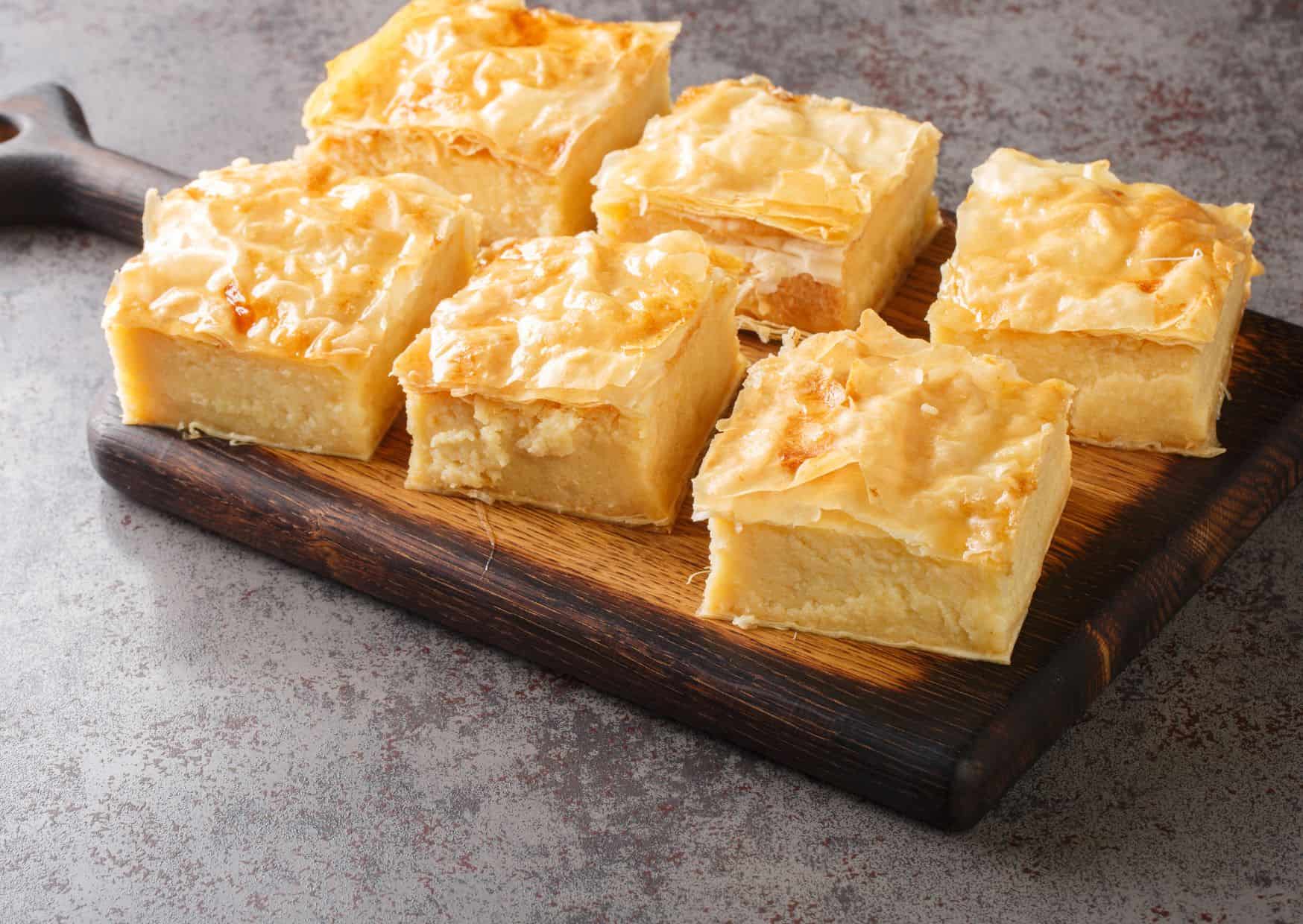
Score the top layer of phyllo into squares or diamonds, being careful not to cut all the way through to the filling. This makes it easier to cut and serve later. Bake in the preheated oven for 30-40 minutes, or until the phyllo is golden brown and crisp.
Serve the Bougatsa
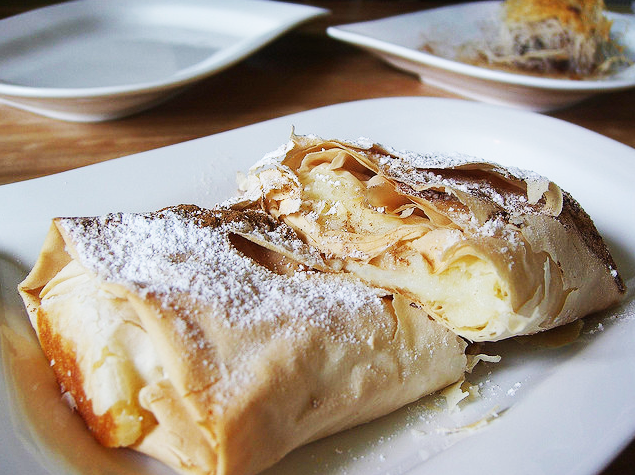
Allow the bougatsa to cool slightly in the pan. Once it’s cooled but still warm, dust generously with powdered sugar and a sprinkle of ground cinnamon.
Cut the bougatsa along the scored lines and serve warm. It’s best enjoyed fresh but can also be reheated.
Tips To Make Bougatsa
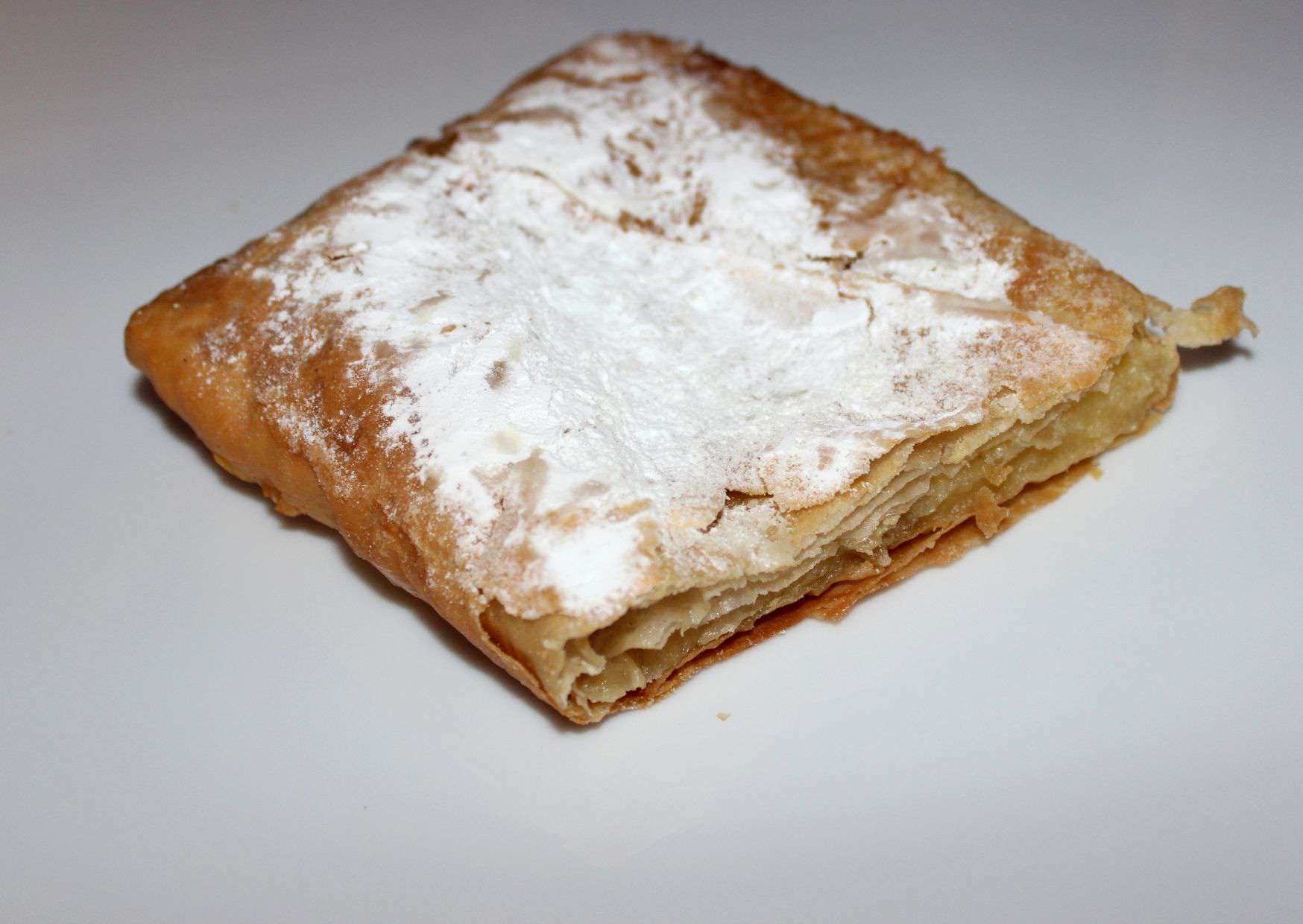
Work quickly with the phyllo dough and keep unused sheets covered to prevent drying out. Brush each layer with melted butter for a flaky, golden finish. Make sure to stir the custard constantly while cooking to avoid lumps and ensure a smooth texture.
Bougatsa is best enjoyed fresh and warm, so if possible, serve it shortly after baking.
How Many Calories Have Bougatsa
A piece of bougatsa (depending on the size of the pieces and the amount of butter used) can range from 300 to 400 calories. The calories are mainly from the phyllo dough, butter, and sugar in the custard.
Origin and History
Bougatsa has origins that reach back to the Byzantine era, when layered dough pastries filled with sweet or savory ingredients were common in palace kitchens. As the empire’s influence spread across regions that now form modern Greece, these pastries evolved through local adaptation. Wheat cultivation, dairy traditions, and the availability of regional honey shaped the early versions of bougatsa into a dish that blended luxurious texture with the modest ingredients of everyday cooking. Its preparation reflected the skill of bakers who learned to stretch dough into thin sheets by hand.
In northern Greece, especially in cities such as Thessaloniki and Serres, bougatsa became a defining part of breakfast culture. After the population exchanges in the early twentieth century, bakers who arrived from Asia Minor introduced new techniques for folding and stretching the dough. These influences created the flaky, layered texture that distinguishes bougatsa from other pastries in the region. The filling, whether sweet semolina custard or savory cheese, became a matter of regional identity. By the mid-century, bougatsa shops were serving locals before dawn, creating a ritual tied to daily life.
As tourism expanded, bougatsa found a new audience beyond Greece. Travelers discovered it as a breakfast staple and carried stories of its texture and flavor home. While it gained recognition internationally, the dish remained deeply rooted in Greek tradition, with many families keeping their own techniques for dough and filling. Unlike croissants, which became global bakery icons, bougatsa stayed connected to its origins through small pastry shops rather than large commercial bakeries. Its history reflects a continuity between ancient techniques and modern tastes.
One of the main debates surrounding bougatsa concerns the dough. Traditionalists insist that the pastry must be made by hand-stretching phyllo into paper-thin sheets, a process requiring practice and skill. Many home bakers, especially outside Greece, prefer store-bought phyllo to reduce preparation time. Critics argue that the dough’s handmade nature is part of the dish’s identity, while others contend that accessibility matters more than adherence to method. This discussion reflects differing views on how culinary traditions should evolve.
Another point of disagreement is the filling. Some regions emphasize sweet bougatsa using semolina custard and powdered sugar, while others treat the savory cheese version as the authentic staple. Those who favor the savory version claim it represents the food culture of northern Greece, built around dairy and simple ingredients. Supporters of the sweet variation argue that custard bougatsa has a deeper historical lineage to Byzantine pastries. This debate highlights how both versions carry legitimacy through different parts of Greek heritage.
The way bougatsa is served also creates division. In some cities, the pastry is cut into small cubes and eaten warm with a sprinkle of sugar and cinnamon. In others, larger wedges are preferred, especially for the savory versions. Travelers often encounter one style and assume it represents the entire country, leading to misunderstandings. Locals point out that variation is part of the dish’s identity, not a sign of inconsistency. The controversy reflects how regional cooking practices become points of pride.
How Long It Takes to Prepare
Preparing bougatsa at home takes between one and two hours, depending on the dough method. If making phyllo by hand, the process can take close to two hours, including kneading, resting, stretching, and layering. The dough must be elastic enough to stretch without tearing, a technique developed through repetition. Many home cooks find this to be the most time-consuming part of the recipe, though it is also the stage that delivers the most authentic texture.
Using ready-made phyllo reduces preparation time significantly. In this approach, the filling becomes the main focus. A sweet custard filling requires around twenty minutes of cooking to reach the right thickness, followed by assembly and baking. Savory fillings, using soft white cheese or a blend of cheeses, can be assembled in minutes and baked until the phyllo becomes crisp. Total cooking time in an oven is usually around forty minutes, which makes the dish approachable for home kitchens.
Planning ahead makes the recipe more manageable. The custard can be prepared the day before and chilled, while the phyllo dough can be stretched and layered in advance if stored properly. The baking step brings everything together, creating layers of crisp pastry around a warm filling. For weekday meals, simplifying the process by using prepared dough allows bougatsa to become a practical breakfast or dessert rather than a rare project.
Serving Suggestions
In Greece, bougatsa is traditionally served hot, often just minutes out of the oven. For the sweet version, powdered sugar and cinnamon create contrast and warmth, while a drizzle of honey adds depth without overwhelming the custard. A cup of strong Greek coffee or a glass of cold milk balances the sweetness. The pastry is usually cut into smaller pieces, encouraging sharing and conversation, especially during morning gatherings.
For the savory version, bougatsa can be served with fresh tomatoes, olives, or a light salad. The simplicity of these sides highlights the cheese filling without adding heaviness. Because savory bougatsa is rich yet gentle in flavor, it pairs well with herbal teas or lightly sparkling water. Families often serve it with few accompaniments, letting the pastry remain the centerpiece of the meal.
When preparing bougatsa for a larger group, offering both variations allows guests to experience the range of flavors. Serving the pastries on a large platter and letting people choose their portions creates a social atmosphere reminiscent of Greek breakfast traditions. The dish works equally well as a brunch offering, dessert, or afternoon snack, showing its flexibility within different dining styles.
Final Thoughts
Bougatsa stands out because it delivers rich texture and deep tradition through modest ingredients. Its history ties modern Greek breakfast culture to ancient culinary practices, showing how pastry making survived through generations of bakers. The debates surrounding technique and filling demonstrate a dish valued not only for its taste but for the stories attached to it. Learning to make bougatsa connects cooks to a living tradition rather than a commercial recipe.
The controversies also reveal how authenticity is shaped by perspective. One person’s definition of the proper bougatsa reflects their city, family practice, or personal memory. Exploring both sweet and savory versions provides insight into the diversity of Greek cuisine. Instead of choosing one as superior, tasting each helps understand why the dish inspires loyalty in different regions.
Ultimately, bougatsa offers a lesson in how food can be both delicate and comforting. Whether made with handmade phyllo or assembled with ready-made sheets, it showcases the value of simplicity done with care. For those familiar only with croissants as the benchmark for flaky pastry, bougatsa presents an entirely different experience rooted in history and home-grown skill. It encourages cooks to rethink familiar breakfast habits and appreciate the depth behind a pastry that has quietly endured for centuries.

About the Author: Ruben, co-founder of Gamintraveler.com since 2014, is a seasoned traveler from Spain who has explored over 100 countries since 2009. Known for his extensive travel adventures across South America, Europe, the US, Australia, New Zealand, Asia, and Africa, Ruben combines his passion for adventurous yet sustainable living with his love for cycling, highlighted by his remarkable 5-month bicycle journey from Spain to Norway. He currently resides in Spain, where he continues sharing his travel experiences with his partner, Rachel, and their son, Han.