
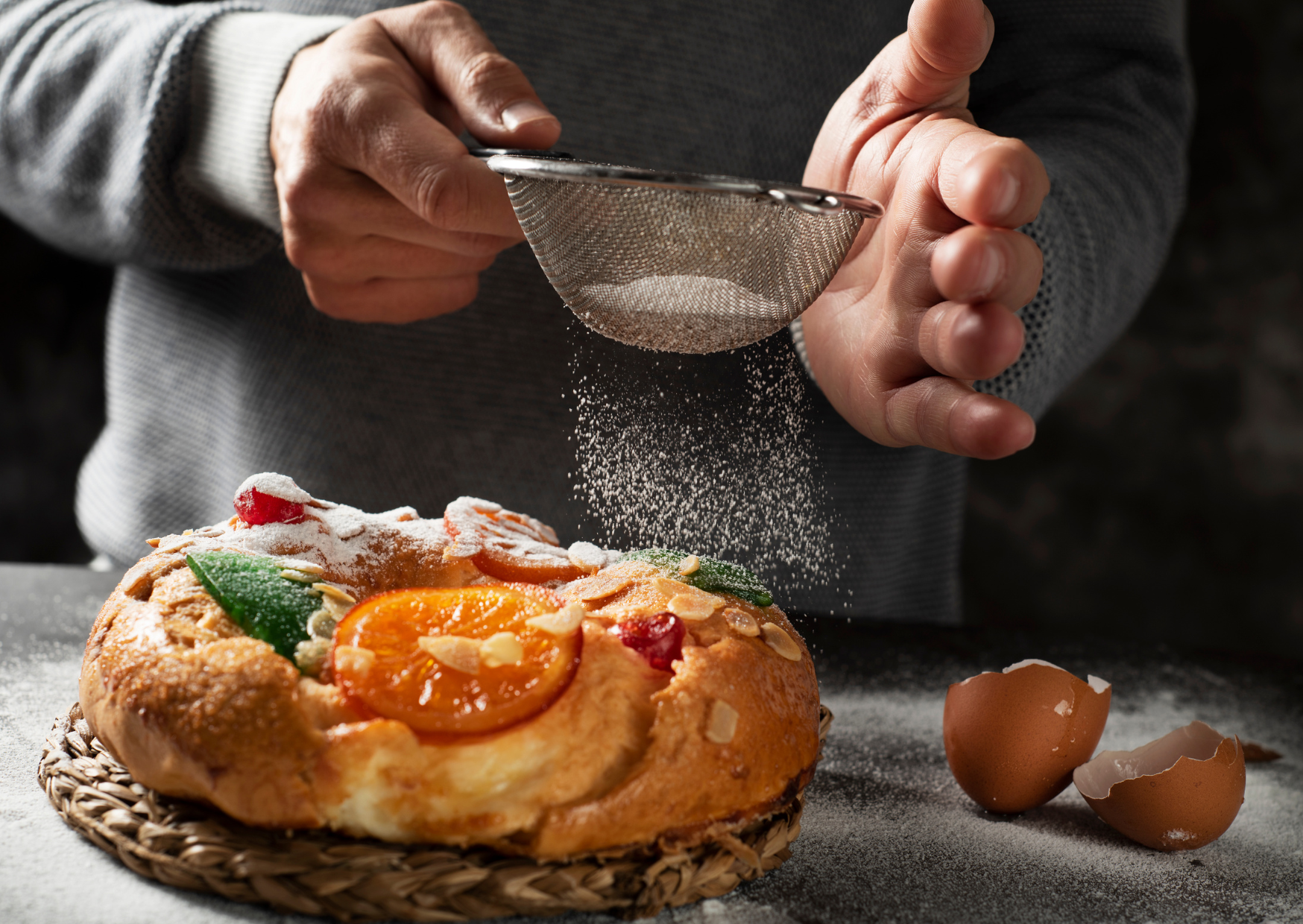
So here is the scene you do not get on December 25. The real action in Spain happens on the night of January 5 and the morning of January 6. Kids put out milk for the camels, shoes line the hallway, and a ring of glossy, flower-scented bread lands on the table with candied fruit like jewels. That is roscón de Reyes, the crown for Three Kings Day. It looks like a cake. It is a brioche-style bread. If you can make cinnamon rolls, you can make this, and yes, we are going to do it at home without begging a bakery.
Where were we. Right. What roscón is and what it is not, the exact timeline so you do not panic at 10 p.m., the ingredient list in grams, the technique that makes soft crumb instead of dry rings, the toppings and fillings people actually use, the hidden traditions inside, the make-ahead tricks for a calm morning, troubleshooting that saves your crown, and a clean recipe card at the end. I will over explain one small thing and under explain another. It is a holiday bread, not an exam.
What you are making
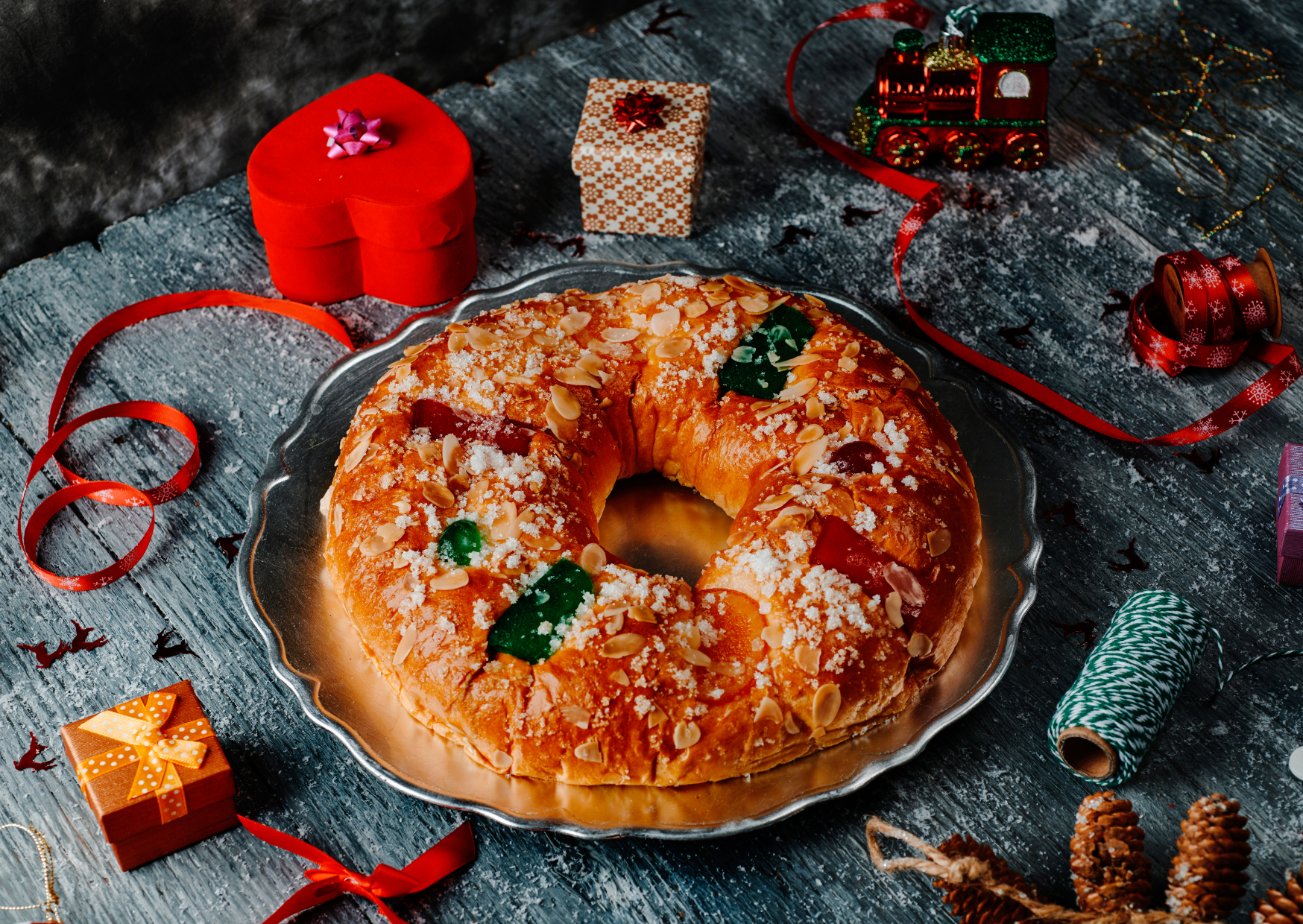
Roscón is a rich, orange-blossom scented, slightly sweet bread shaped into a ring, glazed with beaten egg, and decorated with candied citrus, pearl sugar, and sliced almonds. Inside, some families tuck two surprises: a small figure and a dry bean. Find the figure and you wear the paper crown. Find the bean and you buy next year’s roscón. The texture is tender and feathery, not cake.
Bottom line: treat roscón like enriched brioche with Spanish perfume and you will nail it.
The timeline that keeps your sanity
There are two good ways to schedule this. Choose the one that fits your day. Timing is half the recipe.
Same-day schedule
- 09:00 Make preferment (sponge)
- 10:30 Mix final dough
- 11:15 First rise, 1.5 to 2 hours
- 13:15 Shape ring
- 13:30 Proof 1.5 to 2.5 hours
- 15:30 Decorate and bake
- 16:15 Cool, fill if you want, serve
Overnight schedule
- 18:00 Make preferment
- 19:30 Mix final dough
- 20:15 First rise 45 minutes
- 21:00 Chill dough overnight
- 08:00 Shape ring and proof
- 10:00 Decorate and bake
- 10:45 Cool, fill, serve for late breakfast
Remember: cold dough is easier to shape and the flavor gets better. If you have time, use the overnight path.
Ingredients with real weights
This makes one large roscón that serves 10 to 12 or two small roscónes that serve 5 to 6 each. I will give both metric and cup approximations, but the scale wins.
Preferment (sponge)
- Bread flour 120 g (1 cup leveled)
- Warm milk 120 g (½ cup) at 30 to 32°C
- Instant or active dry yeast 4 g (1¼ tsp)
- Sugar 10 g (2 tsp)
Final dough
- Bread flour 380 g (3 cups)
- Sugar 80 g (⅓ cup plus 1 tbsp)
- Salt 6 g (1 tsp)
- Eggs 2 large, room temp
- Egg yolk 1
- Warm milk 60 g (¼ cup) at 30 to 32°C
- Unsalted butter 90 g (6 tbsp), soft but cool
- Orange blossom water 10 to 15 g (2 to 3 tsp), to taste
- Orange zest 1 large orange
- Lemon zest 1 small lemon
- Rum or brandy 10 g (2 tsp), optional but lovely
Topping
- 1 egg for glaze
- Candied orange slices or mixed candied fruit, as you like
- Pearl sugar 2 to 3 tbsp
- Sliced almonds 2 to 3 tbsp
- Granulated sugar 2 tbsp mixed with a few drops of water to make “wet sugar” clumps
Optional fillings
- Nata montada: 500 ml cold heavy cream, 60 g sugar, 1 tsp vanilla
- Crema pastelera: classic pastry cream, about 600 g
- Trufa: chocolate whipped cream, same as nata plus 100 g melted cooled dark chocolate
Key reminder: orange blossom water is the signature. Smell the bottle. If yours is strong, use 2 tsp. If it is shy, go to 3 tsp.
Equipment that helps
- Kitchen scale
- Stand mixer with dough hook, or strong arms
- Two large bowls
- Baking sheet and parchment
- Small ramekin or ring to hold the hole open
- Pastry brush
- Probe thermometer if you like numbers
You can do this by hand. The dough is enriched and sticky at first. A mixer saves time, not skill.
The small science you actually need
Enriched doughs carry butter, milk, and sugar. They ferment more slowly than lean doughs. Gluten must form before butter goes in, or you get a short, cakey crumb. The sponge wakes the yeast and adds flavor. Orange blossom water is volatile, so you add it during mixing and protect it with fat in the dough. Soft dough equals soft bread. If your dough feels a little tacky, you are probably on the right track.
Remember: develop first, enrich second. That is the move.
Step by step without panic
1) Make the sponge
Whisk warm milk, yeast, and sugar in a bowl. Stir in flour to a thick batter. Cover and rest 60 to 90 minutes until puffy and bubbling. If your kitchen is cold, put the bowl in the oven with the light on. The sponge should smell sweet and alive.
Why it matters: a lively sponge means faster, cleaner fermentation later.
2) Mix and develop the dough
In the mixer bowl, combine flour, sugar, and salt. Add the sponge, eggs, yolk, warm milk, orange blossom water, zests, and rum if using. Mix on low until a shaggy dough forms, about 2 minutes. Increase to medium and knead 5 to 7 minutes until the dough starts to smooth and pull from the sides. It will still be a bit sticky.
With mixer on low, add butter one tablespoon at a time, letting each piece disappear before adding the next. Once all butter is in, raise speed to medium and knead 5 to 8 minutes more. The dough should be supple, elastic, and slightly tacky, not dry. It should pass a rough windowpane.
Hand method: mix with a sturdy spoon, then knead 10 minutes before butter, then add butter in smears on the counter, folding and slapping until smooth. Messy, satisfying, totally doable.
Key cue: stop adding flour once you can lift the dough with a bench scraper without leaving a lake behind. Slight stickiness bakes into tenderness.
3) First rise
Shape the dough into a ball, place in a lightly oiled bowl, cover, and rise until doubled. At 24 to 26°C that is 1.5 to 2 hours. Colder rooms take longer. Do not rush this. Slow fermentation equals flavor and softness.
Overnight option: after 45 minutes at room temp, gently deflate, cover, and refrigerate overnight. Next morning it will be firm and fragrant.
4) Shape the crown
Lightly flour your counter. Turn the dough out and pat into a thick disc. With floured fingers, poke a hole in the center and gently stretch into a ring about 25 to 28 cm across, with a 10 to 12 cm hole. Keep the ring even. Place on parchment. Set a greased ramekin or ring in the center to keep the hole open as it proofs.
If making two small roscónes, divide the dough and shape two smaller rings. Smaller rings proof faster.
Remember: gentle hands preserve the gas you just built.
5) Proof
Cover loosely and proof until puffy and noticeably larger, 1.5 to 2.5 hours depending on room temp. The dough should spring slowly back when poked and feel airy. If it is dense, give it more time. Underproofing gives splits and dry crumb.
6) Decorate
Heat oven to 180°C top and bottom heat. Beat one egg with a teaspoon of milk and a pinch of salt. Brush the ring gently. Arrange candied fruit. Sprinkle pearl sugar and sliced almonds. Dot the “wet sugar” clumps here and there. Decorate the outside rim so slices still show the tender crumb.
If you are hiding a figure and a bean, tuck them from below after proofing and before egg wash. Wrap each in a tiny square of parchment. Push them in at opposite sides so someone does not get both surprises. Tell your guests to chew with care.
Key line: go light on fruit in the middle so the crown looks like a crown, not a traffic jam.
7) Bake
Bake on the middle rack 22 to 28 minutes for one large ring or 18 to 22 minutes for two small. Rotate once if your oven has hot spots. The roscón should be deep golden, sound hollow when tapped, and read 94 to 96°C inside if you use a thermometer.
If it is browning fast, tent loosely with foil in the last 5 minutes. Color is flavor but burnt sugar is not festive.
8) Cool and fill
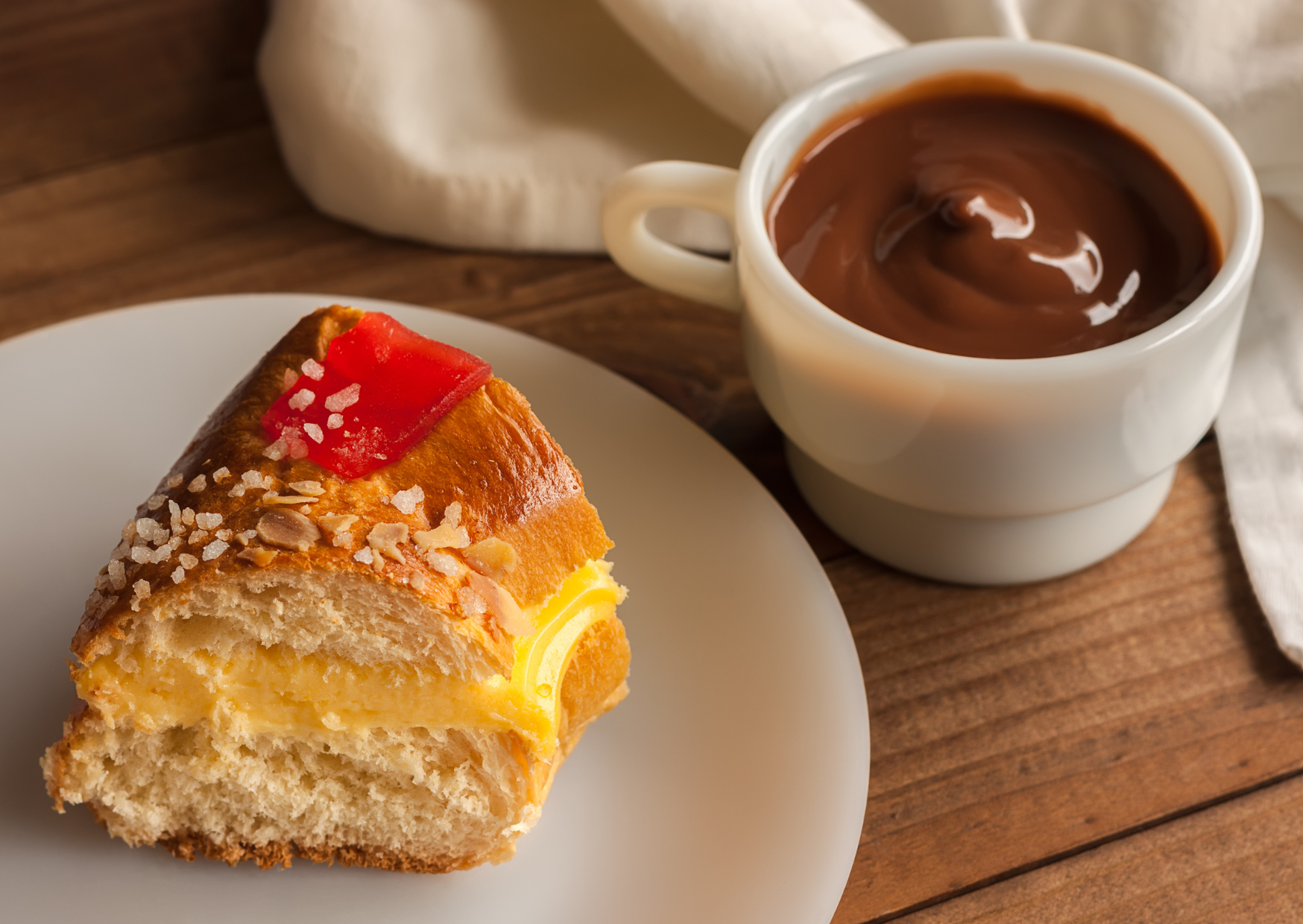
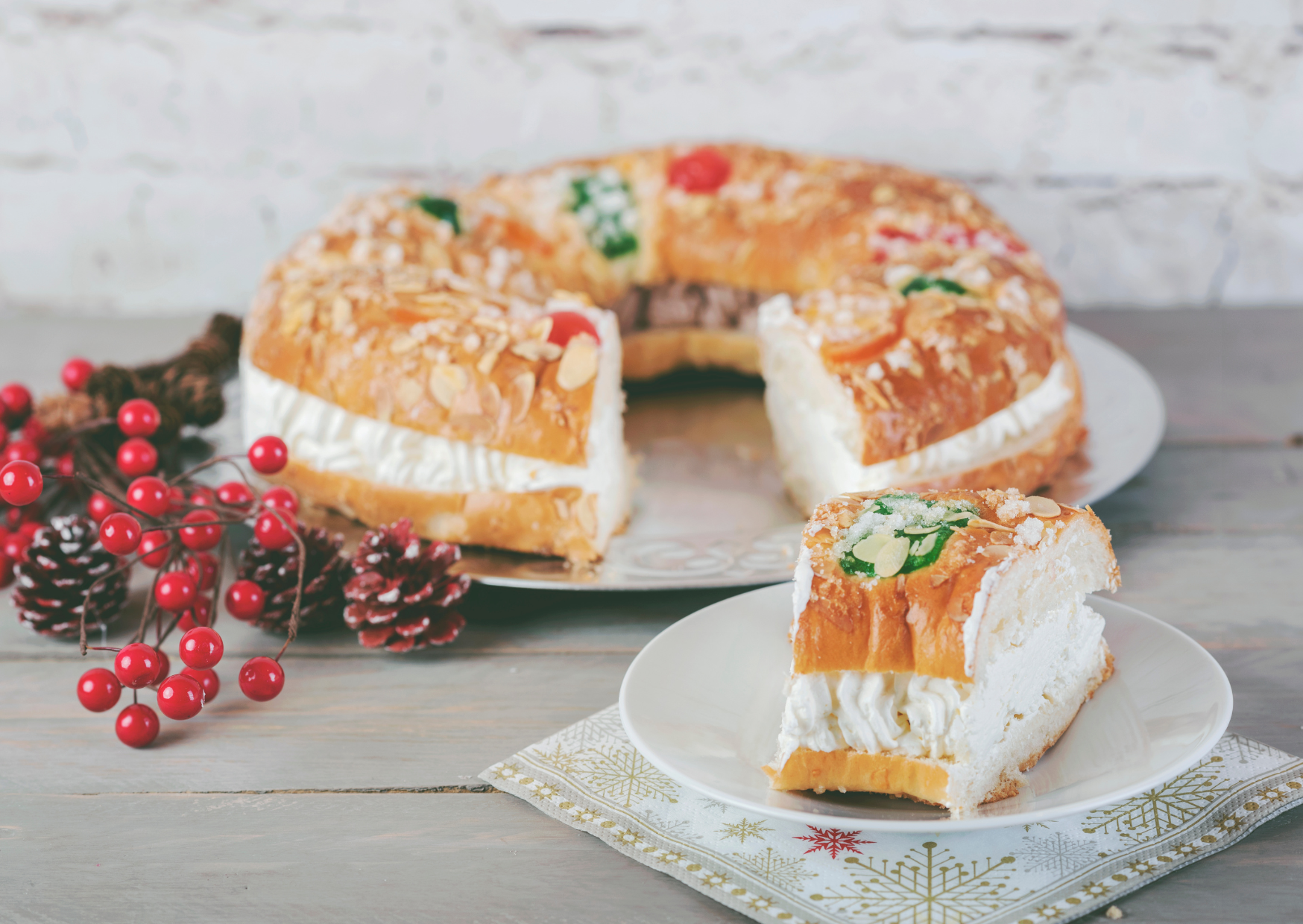
Cool on a rack until just warm. If filling, cool completely, split horizontally with a serrated knife, and pipe nata montada or pastry cream generously. Close the crown, dust with icing sugar if you like. If serving unfilled, it is beautiful as-is with hot chocolate or coffee.
Filling basics
- Nata montada: whip cold cream with sugar and vanilla to soft peaks. Do not over whip or it turns grainy.
- Crema pastelera: make the day before, chill, whisk smooth before piping.
- Trufa: fold cooled melted chocolate into softly whipped cream and finish to medium peaks.
Remember: unfilled is traditional for breakfast, filled is party afternoon.
What to expect in your mouth
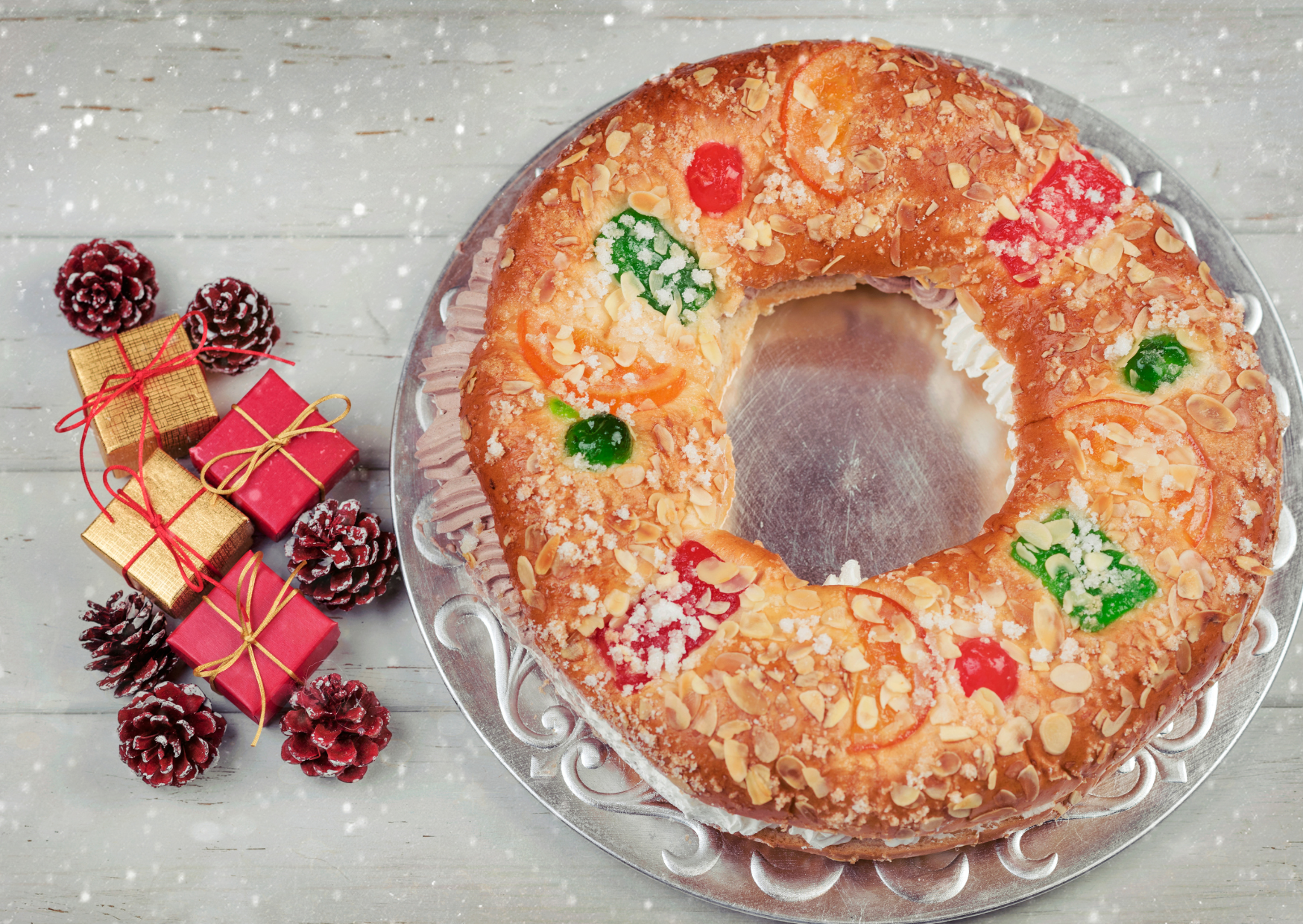
The first bite is citrus and flowers, then butter, then the soft tear of enriched crumb. Candied orange gives small sweet spikes against the bread. If you filled with cream, it eats like a holiday sandwich. It is lighter than it looks which is why slices disappear while you are pouring coffee.
Quiet note: do not turn it into a sugar bomb. The perfume and crumb are the point.
Common problems and the quick fixes
Dense crumb
Likely underkneading before butter or underproofing. Next time, develop gluten until the dough is elastic before adding butter, and proof until airy. Soft dough rises slowly. Give it time.
Dry roscón
Too much flour or overbaking. Trust tackiness in the dough and pull at 94 to 96°C internal. Soft in the bowl, soft on the plate.
Split crust
Underproofing or oven too hot. Proof until a gentle poke springs back slowly. Bake at 180°C, not hotter. Patience saves the crust.
No orange blossom flavor
Your water was weak. Use 3 tsp next time and keep zest fresh. You can brush the hot crust with a spoon of warm syrup made from sugar, water, and a splash of orange blossom water. Fragrance sits on the surface.
Cream leaking
Filling while warm or overfilling. Cool completely, pipe a generous but controlled layer, then refrigerate 20 minutes to set before slicing.
Bean or figure exposed
They migrate. Tuck them deep from below and rotate the ring on the tray if you see a bump.
Make-ahead, storage, and serving
- Overnight dough makes the best flavor and easiest shaping.
- Bake the night before and leave unfilled, well wrapped at room temp. Refresh 5 minutes at 150°C if you want warmth. Fill right before serving.
- Filled roscón keeps covered in the fridge 24 hours. After that the crumb stales.
- Freeze unfilled slices well wrapped for a month. Thaw at room temp and warm slightly.
- Leftover breakfast: slice and toast lightly, butter, and eat with coffee. Some families prefer it the day after.
Remember: the crown is at its best within six hours of baking if unfilled and within four hours if filled.
Traditions so you do not miss the fun
- Shoes by the door on January 5 so the Kings know where to leave gifts.
- Milk and water for the camels. A plate of roscón for the Kings if you like storytelling.
- Paper crown in the box or made by the kids. Figure gets the crown. Bean buys next year.
- Thick hot chocolate on the side, Spanish style. It turns breakfast into ceremony.
Key point: this is a day about slowness and surprise. The bread mirrors the day.
Ingredient notes for different kitchens
- Flour: Bread flour gives more chew and structure. All-purpose works if it is on the stronger side. If your AP is soft, hold back 1 to 2 tbsp milk to avoid stickiness you cannot manage.
- Yeast: Instant or active dry are fine. If using fresh yeast, triple the grams in the sponge.
- Orange blossom water: Look in Middle Eastern or Spanish shops. If you cannot find it, combine a little orange extract with extra zest. It will not be the same, but it will still taste like a holiday.
- Milk: Whole milk tastes better. Lactose-free works if needed.
- Butter: Use real butter. Margarine gives sadness.
Remember: better perfume beats more sugar. Buy the good blossom water once and you will use it all winter.
Two quick variations that stay true
Roscón de Nata
Split and fill with sweet whipped cream only. Simple, elegant, very Madrid.
Roscón de Trufa
Chocolate whipped cream filling. Kids will follow you around the house for a week.
If you want almonds inside, fold 50 g chopped toasted almonds into the dough right after butter. The crumb stays tender and the flavor leans nutty.
The one skill to over-practice
Egg wash. It sounds trivial. It is not. A thin, patient egg wash makes the gloss. Use a soft brush. Do not pool in crevices. Brush in one direction. If you want extra shine, brush once, wait two minutes, brush a second time. Then decorate quickly and bake.
Bottom line: shine sells the illusion that you knew exactly what you were doing.
Troubleshooting by look and feel
- If the dough tears as you stretch the ring, rest it five minutes and try again. Gluten relaxes with time.
- If the proof stalls, warm a cup of water in the microwave, then place the tray in the turned-off microwave with the hot water. It is a tiny proof box.
- If your oven runs hot, lower to 170°C and extend 2 to 3 minutes. Better pale than bitter.
Remember: breads forgive as long as you watch them.
A small moment where I changed my mind
I used to skip candied fruit because I thought it was fake sweetness. Then I learned to candy real orange slices at home the day before and slice them thin. The bitter peel and the syrupy center on top of the floral crumb make sense now. Also, I stopped stuffing the ring with cream for breakfast. At 11 a.m. with hot chocolate, yes. At 8:30 with coffee, unfilled wins.
Clean recipe card you can print
Roscón de Reyes
Serves 10 to 12
Sponge
120 g bread flour
120 g warm milk
4 g instant yeast
10 g sugar
Dough
380 g bread flour
80 g sugar
6 g salt
2 large eggs + 1 yolk
60 g warm milk
90 g unsalted butter, soft
10–15 g orange blossom water
Zest of 1 orange and 1 lemon
10 g rum, optional
Topping
1 egg, beaten
Candied fruit, pearl sugar, sliced almonds, wet sugar clumps
Method
- Make sponge. Rest 60–90 minutes until bubbly.
- Mix flour, sugar, salt. Add sponge, eggs, yolk, milk, blossom water, zests, rum. Knead 5–7 minutes to smooth.
- Add butter gradually. Knead 5–8 minutes until elastic and slightly tacky.
- First rise to double, 1.5–2 hours, or 45 minutes then chill overnight.
- Shape ring, place on parchment with a greased ramekin in the center.
- Proof 1.5–2.5 hours until puffy and airy.
- Heat oven to 180°C. Egg wash, decorate with fruit, sugar, almonds.
- Bake 22–28 minutes until deep golden and 94–96°C inside. Cool.
- Split and fill if desired with whipped cream or pastry cream. Serve.
What to remember: elastic dough, full proof, thin glaze, gentle bake.
Serve it like you live here
Put the roscón in the center of the table. Give someone the paper crown. Pour thick hot chocolate for the kids and coffee for the adults. Cut generous slices. Laugh when the bean appears. Pretend you are annoyed if it is you. Promise to buy next year’s roscón. Festivals survive on little rituals done well.
If this is your first time, breathe. Your house already smells like a Spanish bakery. The crumb will be softer than you expect, the perfume will get you on the second bite, and the leftovers will make Monday feel less like Monday. Bake the crown once and you will not wait until next January to make it again.

About the Author: Ruben, co-founder of Gamintraveler.com since 2014, is a seasoned traveler from Spain who has explored over 100 countries since 2009. Known for his extensive travel adventures across South America, Europe, the US, Australia, New Zealand, Asia, and Africa, Ruben combines his passion for adventurous yet sustainable living with his love for cycling, highlighted by his remarkable 5-month bicycle journey from Spain to Norway. He currently resides in Spain, where he continues sharing his travel experiences with his partner, Rachel, and their son, Han.