
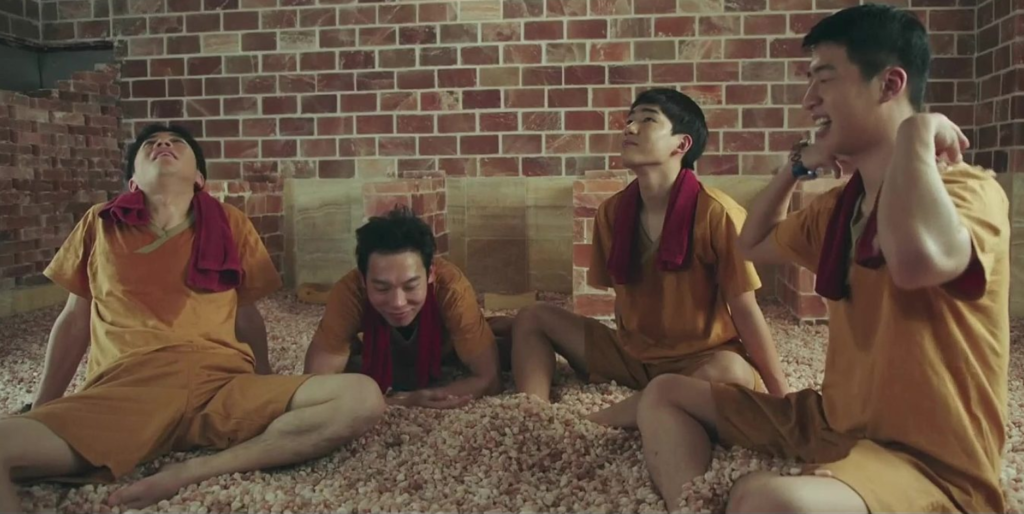
(And Why None of It Is Actually Weird in Korea)
If you’ve never been to a Korean jjimjilbang (찜질방), prepare to leave your cultural expectations at the door—along with your clothes.
These public bathhouses are not a quirky side attraction. In South Korea, they are a vital part of daily wellness and relaxation culture. Entire families spend weekends there. Elderly regulars treat them like community centers. Couples go on spa dates. And yes, everyone gets completely naked.
To American visitors, especially those unfamiliar with communal bathing or Korean customs, the jjimjilbang can be intimidating, confusing, and even a little shocking. But once you understand what is happening, it all starts to make sense.
Here are nine things Koreans do in public bathhouses that might terrify or confuse an American visitor—and why each one is completely normal in Korean culture.
Want More Deep Dives into Everyday European Culture?
– Why Europeans Walk Everywhere (And Americans Should Too)
– How Europeans Actually Afford Living in Cities Without Six-Figure Salaries
– 9 ‘Luxury’ Items in America That Europeans Consider Basic Necessities
Quick Easy Tips
Bring an open mind. Expect cultural differences and focus on learning rather than comparing.
Follow the locals. Watching what others do is the fastest way to understand unspoken rules.
Start small. If the full sauna experience feels overwhelming, stick to common areas like rest lounges or food courts first.
The biggest controversy stems from nudity. In Korean saunas, communal bathing without clothing is standard, while in the U.S., public nudity is often stigmatized. For Koreans, it symbolizes cleanliness and equality; for many Americans, it triggers discomfort and even fear of judgment.
Another point of tension is physical treatments. Body scrubs in jjimjilbangs can be intense, involving vigorous exfoliation that might feel extreme or even invasive to foreigners. While locals see it as deeply cleansing, outsiders may find it overwhelming.
Finally, the concept of family-friendly saunas can confuse visitors. In the U.S., spas are often considered private, adult-only spaces, while in Korea, entire families—including children—spend hours together in saunas. This difference underscores broader cultural contrasts in how relaxation and family bonding are understood.
1. Everyone Is Completely Naked in the Bath Area
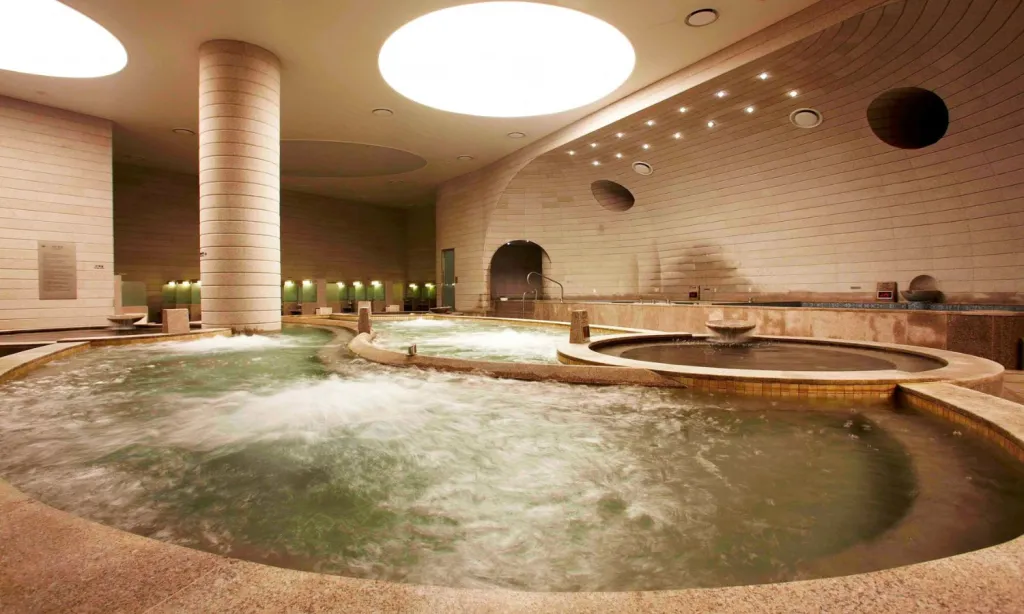
This is the most immediate cultural shock. In the wet bath area, clothing is not allowed.
- No swimsuits
- No towels wrapped around you
- Just your bare body, among dozens of strangers
This isn’t about exhibitionism. It is about cleanliness and comfort. Clothes are considered dirty in a bathing area. Nudity is normalized—not sexualized. Once you’re inside, you quickly notice that no one is looking at anyone else. It is as unremarkable as being barefoot in your own home.
To many Americans, raised in a culture that ties nudity to privacy or sexuality, this can be a major hurdle. But in Korea, it is just hygiene and practicality.
2. People Sit on Tiny Plastic Stools and Scrub Themselves for Ages
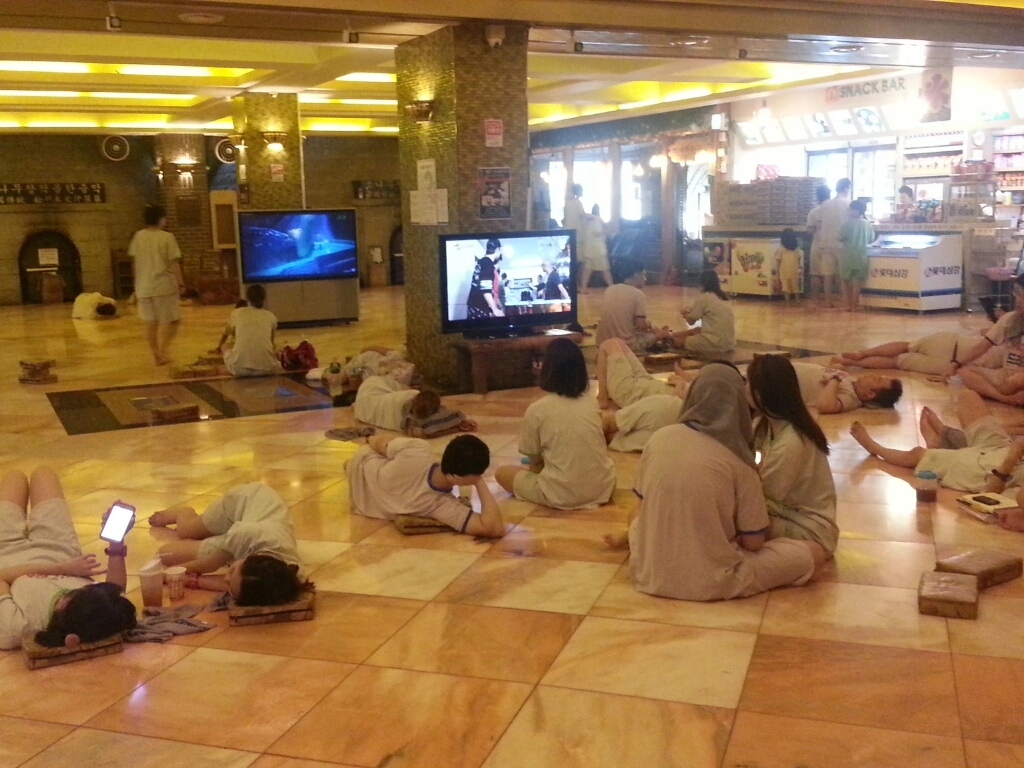
One of the most important parts of a jjimjilbang is cleansing—intensely and thoroughly.
- Koreans sit on small stools in front of handheld shower heads
- They scrub every inch of their body with exfoliating cloths
- It is not unusual to see someone spend 30 minutes or more doing this
Cleanliness is taken seriously. You are expected to be squeaky clean before entering the hot pools, and many people use this time to deeply exfoliate or wash their hair multiple times.
Americans might do a 5-minute shower at home and consider it enough. In a jjimjilbang, you’re only just getting started.
3. Professionals Scrub Layers of Dead Skin Off Your Body—Vigorously
If you want to take it to the next level, you can pay for a full-body scrub from a jjimjilbang ajumma or ajusshi (older women or men who specialize in this).
- You lie naked on a plastic-covered table
- They use rough mitts to exfoliate your entire body
- Skin rolls off in gray clumps
- They might splash water, flip you over, and scrub places you didn’t expect
To an American guest, this might feel aggressive or invasive. But in Korea, it is one of the ultimate self-care treatments. People leave feeling polished, light, and glowing. It is not painful, just intense—and oddly satisfying.
4. You Can Nap or Spend the Night—On the Floor
After the baths, people often head into the dry areas to relax. These are co-ed zones where clothing is worn (you’re usually given matching pajamas). And this is where Koreans do something very un-American: sleep on the floor.
- Large communal rooms with heated floors
- People lie down with a wooden block for a pillow
- Some jjimjilbangs are open 24 hours, and it’s normal to sleep there overnight
There are no beds. Just mats, thin blankets, and hard pillows. Yet families, couples, and solo bathers doze off without complaint.
To an American, it may feel like camping in a train station. But to many Koreans, it’s cozy, familiar, and a small escape from everyday stress.
5. They Eat Full Meals and Drink After Bathing
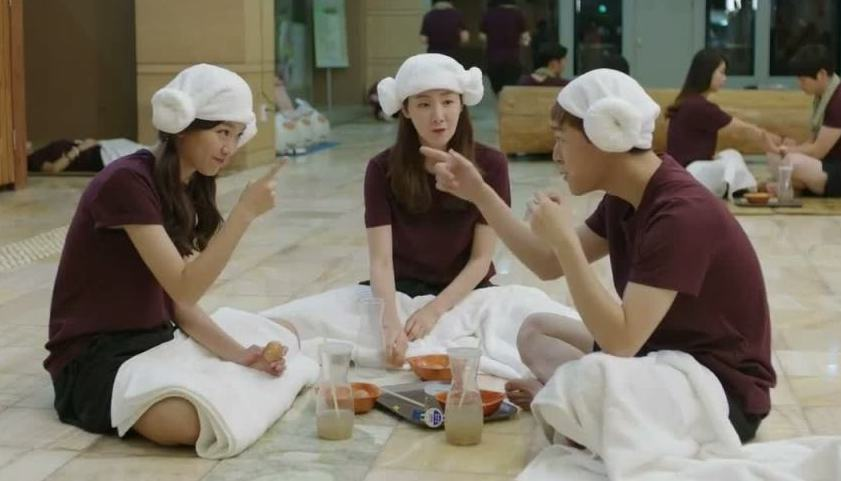
Most jjimjilbangs include a cafeteria or snack bar, where people eat in their spa uniforms, with damp hair and flushed cheeks.
- Popular foods include boiled eggs, sikhye (sweet rice drink), ramen, and kimchi stew
- It is normal to eat a full meal and relax for hours afterward
- People will sit cross-legged on the floor, share food, and chat
To an outsider, it might feel strange to eat while looking like you just got out of the shower. But jjimjilbangs are not just for cleansing—they are for community, comfort, and resetting your energy.
6. Couples and Families Hang Out in the Same Pajamas
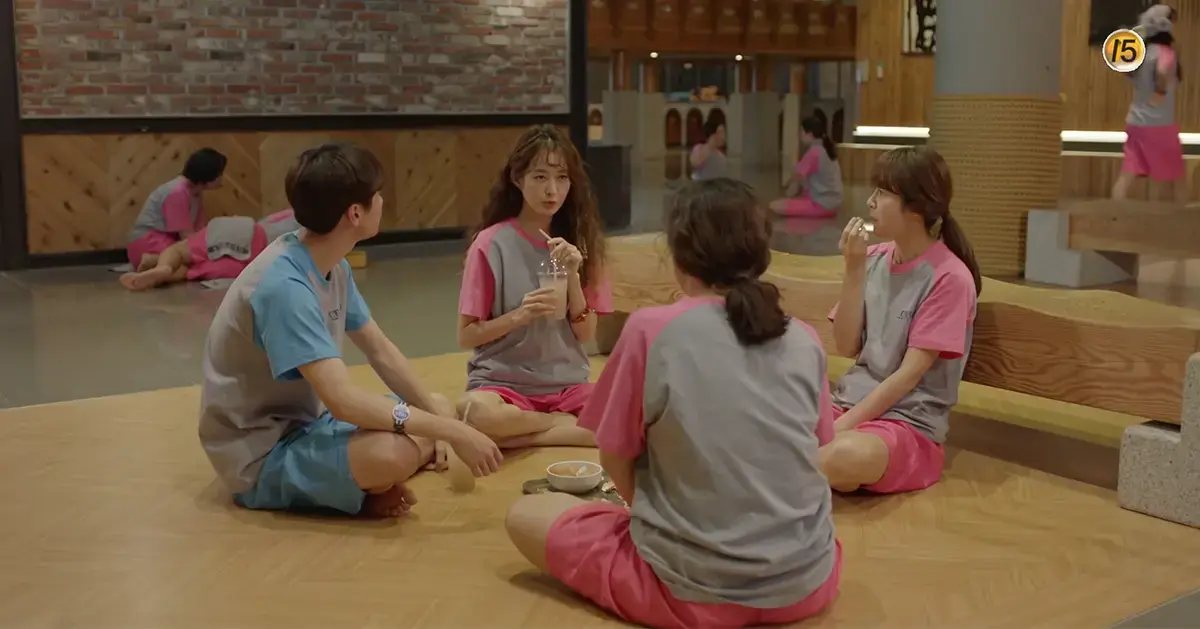
There is something distinctly wholesome—and slightly surreal—about seeing entire families lounging together in matching spa outfits.
- Kids playing on mats
- Teens watching K-dramas on communal TVs
- Couples sharing a snack and leaning on each other
In the U.S., spas are often individual or romantic. But jjimjilbangs are social, multi-generational experiences. Think of it as a clean, sleepy theme park where everyone wears beige or pink and no one is in a rush.
7. Some Bathhouses Include Unusual Rooms—Like Ice Caves and Charcoal Saunas
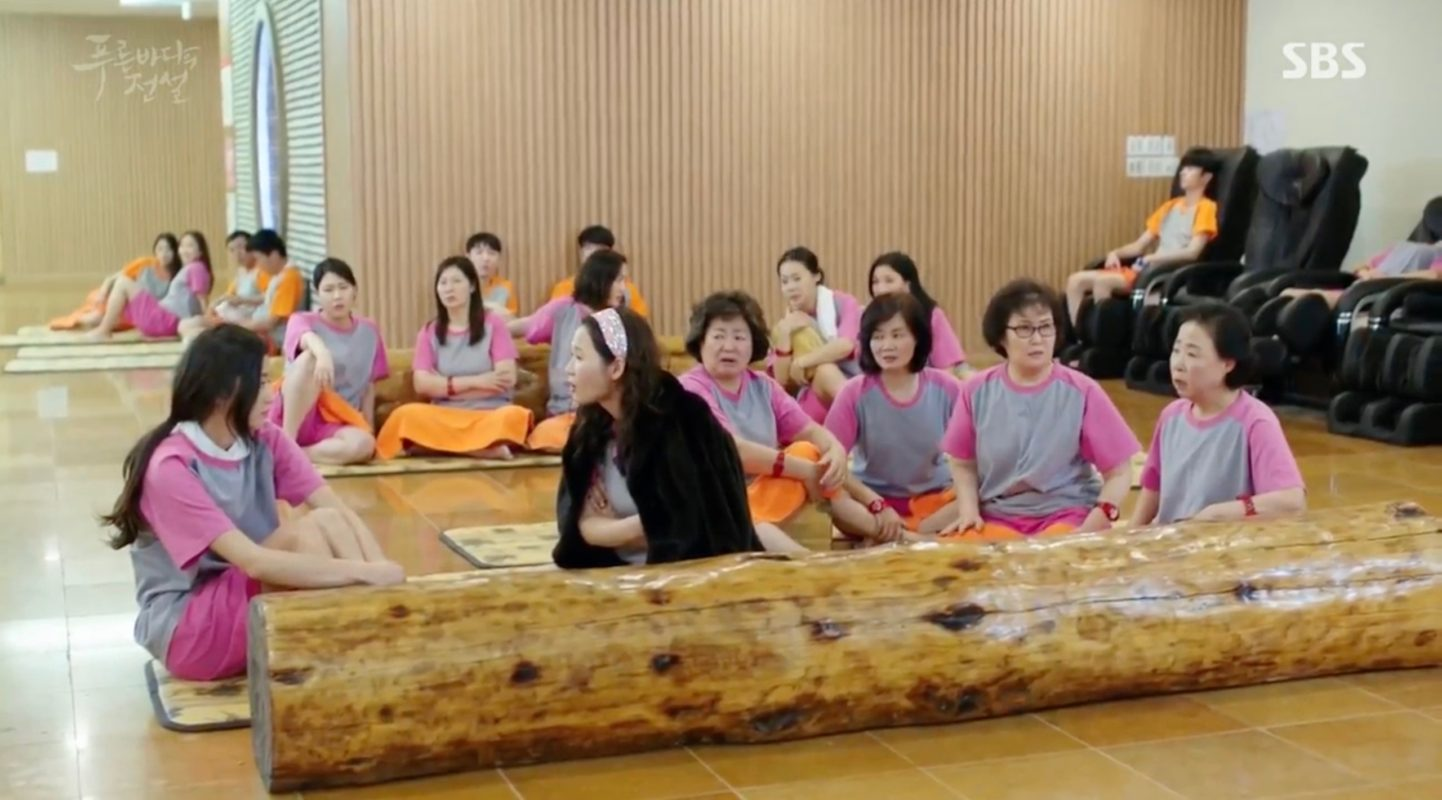
Beyond the basic hot pools and saunas, many jjimjilbangs include themed rooms with specific benefits.
- Salt rooms
- Charcoal detox rooms
- Ice caves (literally freezing rooms you enter after a hot sauna)
- Jade or clay-lined domes
People move from room to room in a slow circuit of hot and cold, sweating and cooling, stimulating the circulation and calming the mind.
For someone expecting just a hot tub, the variety can feel overwhelming or bizarre. But in Korea, it’s simply part of the bathhouse adventure.
8. Nobody Is in a Hurry
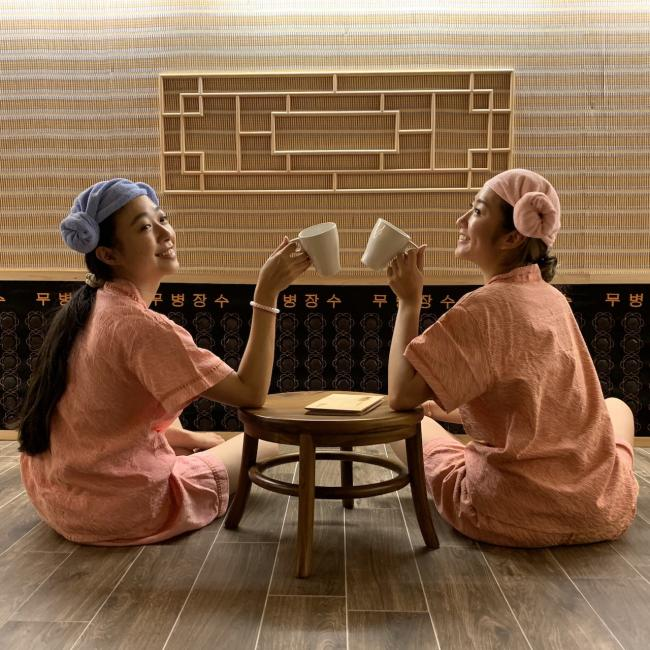
Jjimjilbang culture encourages lingering.
- People might stay for four to eight hours
- Some make it an overnight retreat
- There is no pressure to move on, finish up, or vacate a space quickly
This leisurely pace might baffle Americans used to spa appointments, locker room turnover, and time-based services. But in Korea, a jjimjilbang is not a pit stop. It is a destination. You are meant to lose track of time.
9. People Accept Your Nakedness Without a Second Thought
Perhaps the most surprising part for American visitors is how utterly unremarkable your nudity is to everyone else.
- No one is staring
- No one is comparing bodies
- No one is embarrassed
You could be 22 or 72, thin or round, tattooed or pale—it makes no difference. The bathhouse creates a level playing field where the body is just a body.
In American culture, where bodies are constantly judged or covered, this kind of neutral nakedness can feel revolutionary. What first feels terrifying might eventually feel freeing.
Final Thought: What Feels Shocking May Be Healing
Yes, the jjimjilbang experience can be confronting. It strips away modesty, control, and speed. It puts you face to face with cultural difference—and your own discomfort.
But if you lean into the ritual, the heat, the scrubbing, the sweat, and the stillness, something shifts.
You begin to understand why Koreans return to these spaces again and again. It is not about vanity. It is about resetting the body, calming the mind, and returning to yourself—clean, soft, and unbothered.
Public saunas in Korea, known as jjimjilbangs, are more than just places to sweat—they’re cultural institutions built on traditions of health, community, and relaxation. What might feel shocking or intimidating to an outsider is simply everyday life for locals, reflecting values of openness and shared experience.
For American visitors, the key is not to judge but to observe and, if comfortable, take part. By embracing the unfamiliar, travelers can gain a deeper appreciation for practices that prioritize wellness and connection in ways that differ from Western norms.
At the end of the day, stepping into a jjimjilbang is not only about bathing but also about expanding cultural horizons. Even if not every aspect feels comfortable, the experience offers a valuable reminder that what seems unusual abroad is often perfectly normal elsewhere.

About the Author: Ruben, co-founder of Gamintraveler.com since 2014, is a seasoned traveler from Spain who has explored over 100 countries since 2009. Known for his extensive travel adventures across South America, Europe, the US, Australia, New Zealand, Asia, and Africa, Ruben combines his passion for adventurous yet sustainable living with his love for cycling, highlighted by his remarkable 5-month bicycle journey from Spain to Norway. He currently resides in Spain, where he continues sharing his travel experiences with his partner, Rachel, and their son, Han.