
So here is the thing that sounds wrong until you see a year of bank statements. A middle class household in Germany with a single salary around €45,000 ends up with a bigger savings cushion and a better net worth trajectory than a comfortable American household sitting on $120,000. Not because Germany sprinkles magic on paychecks. Because the German system crushes volatility while the American system sells you income and then shreds it with fees, premiums, and emergencies that arrive like weather.
If you have lived inside both systems you have seen this with your own eyes. German families do not brag about salaries. They brag quietly about paid-off appliances, an emergency fund that actually exists, and a mortgage rate that does not climb when someone on Wall Street has a mood. High income in the United States is often a costume covering instability. Average income in Germany is a conveyor belt toward solvency.
Where were we. Right. The six structural reasons the math flips, the month-by-month budget comparison that exposes the trick, how housing policy and transit make the difference, the tax and benefit stack nobody explains to Americans, the cultural habits that reinforce the safety net, and a simple twelve week plan that copies the German outcome wherever you live.
The first reason: volatility vs predictability

Americans earn more on paper, then watch the floor move. Health premiums adjust. Rent jumps. Car insurance spikes after a fender bender. A cracked tooth becomes a credit event. Germans start with lower gross, then face a world that behaves. Health coverage is compulsory and universal. Dental basics are predictable. Child benefits land the same day each month. Rent control and longer leases tame housing jumps. Trains and trams cut car dependency, which cuts car drama.
Bottom line: wealth is what remains after life stops surprising you. The German system spends its energy removing surprises.
The second reason: mandatory savings disguised as contributions
Germans pay into things Americans try to DIY and then never do. Statutory pension. Health insurance. Long-term care. Unemployment insurance. Accident coverage. These are not optional when you are employed. They feel heavy on your first payslip. Then you notice something strange. You do not need to hoard cash for five different disasters, because the disasters are already funded. American households must build their own lifeboats, then raid them every year because the sea will not calm down.
Key idea: forced discipline beats fragile willpower. The contributions are savings by another name.
The third reason: housing is a utility, not a casino
German policy is not allergic to people renting for life. Leases are long. Tenant protections are strong. Mortgage lending is boring. Property speculation is less of a sport than in the U.S. The American dream bakes appreciation into the story. The German dream bakes affordability and permanence in place of roulette. Families build wealth because housing costs do not explode every 24 months. If they buy, they buy to live, not to flip. If they rent, they still plan careers and school zones with confidence.
Remember: stable housing turns every other decision into math, not emotion.
The fourth reason: transport is not a debt machine
Two cars in a U.S. suburb are not a lifestyle. They are a tax. Payments, insurance, maintenance, parking, tickets, fuel, and the 12 percent of your brain spent driving to buy bread. Germany pushes families toward one car or none through transit that runs, bike lanes that exist, and neighborhoods that keep groceries within ten minutes. Even when a car is necessary, mileage and insurance sit lower because the network around the car carries half the load.
Short line: wealth grows in the 90 minutes you do not spend commuting.
The fifth reason: healthcare is a bill you can forecast

American households with $120,000 often hand $15,000 to $30,000 to health insurance and out-of-pocket costs every year. Deductibles reset, networks change, dental sits outside, orthodontics demands a side hustle. German households pay a fixed percentage of income for health insurance with family coverage. Co-pays exist but do not threaten rent. Pharmacies are predictable. Surgeries do not become GoFundMe campaigns. Predictable medicine makes money compound because you do not cash out your investments to fix a knee.
Key point: fear taxes compounding more brutally than any government does.
The sixth reason: child benefits and school cost less than panic
Germany pays Kindergeld, a monthly child allowance. Nurseries and kindergartens are subsidized. Public schools are the default and do not bankrupt you with “optional” fees. University tuition is low. The American family uses $120,000 to fund an education treadmill where each rung buys access to the next rung. The German family uses €45,000 plus child benefits to stabilize the month and save for real goals. When children do not extract $1,500 a month just to exist, the household can breathe.
Remember: benefits are income you do not have to earn twice.
Two monthly budgets that explain everything

Let’s run two families with simple, boring lives. Numbers are realistic, not optimized. Both are urban or close-in suburban.
Family A: Germany
- Household gross: €45,000 a year
- Net after taxes and statutory contributions: ~€2,650 per month
- Kindergeld for two children: €500 per month
- Total monthly cash to use: €3,150
Spending per month
- Rent 70 m² apartment near transit: €1,050 warm
- Health co-pays and pharmacy: €40 average
- Groceries and household: €550
- Regional transport pass for two adults, reduced for kids: €98 with a Deutschlandticket combo and local family discounts
- One modest car, insurance, fuel, maintenance amortized: €220
- Childcare co-pay after subsidy: €160
- Utilities beyond warm rent: €80
- Internet and mobile for four: €55
- Kids’ activities and school extras: €60
- Clothes and incidentals: €100
- Eating out and fun: €180
- Sinking funds for dental, travel, appliances: €200
Total: €2,793
Leftover to save or invest: €357 per month
Now the American household.
Family B: United States
- Household gross: $120,000 a year
- Net after federal, state, FICA, and typical health premiums: ~$6,300 per month
Spending per month
- Rent or mortgage in a decent school zone: $2,500
- Health insurance premium employee share: $750
- Out-of-pocket medical average, dental, prescriptions: $250
- Two cars payments and insurance: $1,050
- Fuel and maintenance: $320
- Groceries and household: $900
- Childcare or after-school for two kids: $900
- Internet and mobile for four: $180
- Utilities: $260
- Kids’ activities and school extras: $180
- Eating out and fun: $350
- Sinking funds that never get fully funded: $150
Total: $7,790
Shortfall before savings: -$1,490
They cover the gap with credit cards during expensive months, then spend tax refunds or bonuses to catch up. There is no compounding because every surplus becomes a repair.
The numbers are not cruel. They are ordinary. The German family saves on average every month on average income. The American family earns high income and still loses ground. That is the core of this entire conversation.
Taxes do not tell the whole story

Americans hear “high taxes in Europe” and close the page. The relevant question is post-tax, post-necessities surplus. Germans pay higher contributions but then do not buy private alternatives. Americans pay lower taxes and then buy private everything. Premium health plan. Private preschool. Test prep. Second car to reach the private preschool and test prep. The sum of private purchases is a stealth tax that behaves worse than a tax because it is unstable and nontransferable.
Key thought: if the private solution can be canceled by a policy change or an illness, it is not a safety net.
Housing policy that keeps budgets sane
Long leases and strong tenant protections reduce churn. Kappungsgrenzen and Mietspiegel keep rent increases tethered to local indices and comparables. Social housing exists and is not a mark of shame. Zoning that allows mid-rise, multi-family buildings near transit keeps supply from collapsing. Americans try to solve housing with individual genius. Germany solves it with boring rules that prevent chaos.
This matters because moving is expensive. Each involuntary move in the U.S. resets deposits, pushes commutes, and disrupts childcare. In Germany, families often stay put for a decade. Stability compounds.
Remember: the cheapest square meter is the one you do not have to replace next year.
Transit policy that frees a paycheck

A single Deutschlandticket at €49 changes math. The second adult adds another pass, kids under a certain age ride free or discounted. Many households decide a second car is silly, some decide a first car is optional. Insurance premiums fall when mileage falls. Parking tickets disappear when you are not gambling for spaces. The U.S. household spends a mortgage worth of cash on rubber and asphalt. The German household spends a dinner’s worth on rail and keeps the rest.
Short rule: the train is a savings account that arrives every ten minutes.
The cultural habits that multiply the system
None of the structure works if families fight it. Germans tend to make small, repeatable decisions that financial writers overcomplicate.
- Buy less house than the bank offers.
- Cook the big meal at home most nights.
- Use holidays for real breaks, not shopping events.
- Fix before replacing.
- Cash flow annual expenses with sinking funds.
These habits pile up quietly. Boredom builds wealth. Each month looks like the last. That is the point.
What Americans can copy without moving
You cannot import laws overnight. You can import the sequence Germans use.
- Force the nonnegotiables first. Automate transfers on payday to health, housing, transit, food, and sinking funds. What is left is what you can spend.
- Sinking funds for boring disasters. Car repairs, dental, appliances. Name the buckets and hit them monthly. The bill then arrives as a scheduling issue, not a crisis.
- One car, then test zero. If you cannot abandon a vehicle, halve its miles. Pick up groceries on foot twice a week. The fuel bill will tell you what to do next.
- Buy a seat at the boring table. Choose a rental with a long lease and predictable increases over the pretty one that jumps each year.
- Replace private purchases with public goods. Use libraries, parks, municipal pools, and public transport like they are yours. They are.
- Annual rhythm. Set a calendar for dental, preventive health, insurance renewals, energy contract checks. Germany runs on calendars. Make one and wealth will follow it.
Key idea: pretend your city is a system. Spend as if it will support you. Look for the parts that already do.
Objections and the clean replies

“Taxes are too high there.”
You already pay taxes. You call them premiums, unsubsidized childcare, car payments, debt interest, and panic. You just pay them privately and expensively.
“Transit does not work where I live.”
Fair. Solve what you can. Reduce miles. Reroute errands. Carpool. Every mile not driven is a dollar that compounds.
“German wages are higher for some jobs.”
For some, yes. For others, no. The point is that net surplus at median incomes exists because basics are tamed.
“American houses appreciate more.”
They also collapse more. And you must service them with cars, taxes, insurance, and unstable school zones. A house is an asset if the rest of your life is calm.
The math behind calm households
Wealth building is savings rate multiplied by time multiplied by the absence of emergencies. Germans push the emergency rate down. Americans push income up and emergencies up even faster. If your savings survive five years without interruption, you win. The country that lets you keep a streak wins.
Remember: streaks beat spurts. Germany is a country of streaks.
What this looks like in real life, not on a spreadsheet
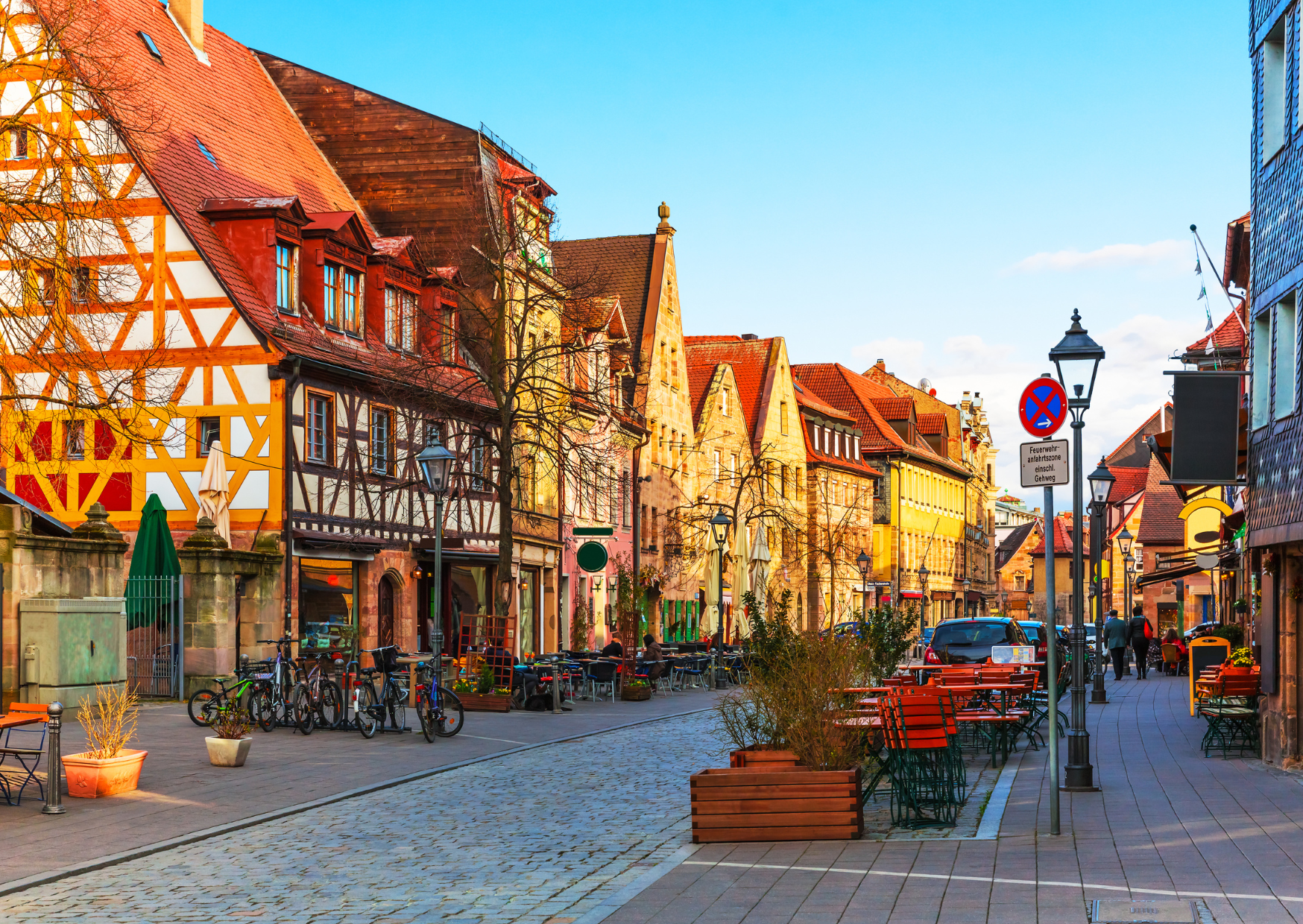
A German family with one income buys a used wagon in cash and drives it for ten years. They live near a tram and one parent cycles to work. The kids take music at the municipal school and football at the club. Groceries come on foot twice a week. Holidays are booked a year out and paid monthly into a subaccount. The boiler dies and it is annoying, not ruinous. After five calm years a down payment appears, not because they chased yield, but because nothing catastrophic stole it.
An American family with two incomes and a big number on paper replaces a twelve year old SUV with two new leases. Preschool burns a mortgage. Health premiums jump. Rent resets. A water heater fails the same week as the orthodontist consult. Travel goes on a card. There is no villain. There is noise. Noise eats compounding.
If you want the short version
- Stabilize housing.
- Shrink transport.
- Automate contributions.
- Fund boring disasters.
- Use public goods.
- Let five quiet years pass.
You will look down at a bank balance that feels like an error. It is not an error. It is what happens when the month stops attacking you.
Final Thoughts
Pick one German move and make it permanent. Automate a small transfer into a car repair fund. Replace a weekly drive with a tram. Ask your landlord for a written renewal with a known increase. Book all preventive appointments for the year in one sitting. Then do nothing dramatic. Let boredom do what Americans keep trying to buy with hustle.

About the Author: Ruben, co-founder of Gamintraveler.com since 2014, is a seasoned traveler from Spain who has explored over 100 countries since 2009. Known for his extensive travel adventures across South America, Europe, the US, Australia, New Zealand, Asia, and Africa, Ruben combines his passion for adventurous yet sustainable living with his love for cycling, highlighted by his remarkable 5-month bicycle journey from Spain to Norway. He currently resides in Spain, where he continues sharing his travel experiences with his partner, Rachel, and their son, Han.