
And what it reveals about timing, structure, and why eating pasta every day in Italy doesn’t lead to obesity
One of the great paradoxes that baffles American travelers in Italy is this: Italians eat pasta all the time — and yet, they aren’t fat.
You’ll find spaghetti, tagliatelle, rigatoni, and tortellini served in homes, restaurants, school cafeterias, and even gas stations. It’s eaten with oil, cheese, pancetta, tomato sauce, anchovies, sausage, or nothing at all. Italians love pasta — unapologetically and without substitutes.
Meanwhile, in the U.S., pasta has been vilified. It’s labeled as a “cheat day” food. A guilty pleasure. Something to earn through workouts or fearfully measure in calorie apps.
But the irony is this: Italians eat pasta more frequently than Americans — and yet, as of 2025, Italy continues to have one of the lowest obesity rates in the developed world.
Why? The answer isn’t in the ingredients — it’s in the schedule.
Here’s how Italians eat pasta in a way that supports slimness, satiety, and long-term health — and why the American rhythm of eating the same food leads to weight gain, bloating, and a lifelong battle with guilt.
Want More Deep Dives into Everyday European Culture?
– Why Europeans Walk Everywhere (And Americans Should Too)
– How Europeans Actually Afford Living in Cities Without Six-Figure Salaries
– 9 ‘Luxury’ Items in America That Europeans Consider Basic Necessities
Quick Easy Tips
Try eating pasta at lunch rather than dinner to give your body more time to burn off the calories throughout the day.
Serve pasta in smaller portions and pair it with vegetables, salads, or lean proteins to create balance without overindulging.
Incorporate a short walk after meals. Even a 15-minute stroll can aid digestion and mimic the Italian approach to maintaining balance.
One of the biggest controversies around pasta is timing. Italians often eat pasta earlier in the day, typically at lunch, allowing their bodies more time to digest. Americans, however, are more likely to eat pasta-heavy dinners late at night, which some nutritionists argue contributes to weight gain. This cultural difference fuels debates over whether the issue is pasta itself or when it’s eaten.
Another layer of controversy is portion size. In Italy, pasta servings are usually smaller, treated as a first course rather than the entire meal. Americans often serve massive bowls of pasta as a main dish, leading critics to argue that “carbs” are demonized in the U.S. not because of the food itself but because of excess.
Finally, there’s disagreement about lifestyle. Italians combine their pasta schedule with daily activity—walking after meals, smaller snacks, and balanced eating throughout the day. Americans, by contrast, often live more sedentary lifestyles. This contrast sparks debate about whether pasta makes people fat or whether it’s the broader cultural habits surrounding it.
1. Italians Eat Pasta at Lunch — Not Dinner

This is the first and most important rule. In most Italian households, pasta is a lunchtime food, not a dinner dish.
Primo piatto — the first course — is traditionally pasta. It’s eaten between 1:00 and 2:30 p.m., when digestion is at its strongest and the body has time to burn the energy that follows.
Dinner is lighter: a soup, grilled vegetables, a salad, or some lean protein with fruit. The body isn’t overloaded right before rest.
In contrast, Americans often eat their largest, starchiest meal at night, around 7:00 or 8:00 p.m., sometimes later. Then they sit. Then they sleep. The cycle repeats. Weight gain follows.
Italians aren’t avoiding carbs — they’re timing them intelligently.
2. Pasta Is a Meal Component — Not a Meal by Itself
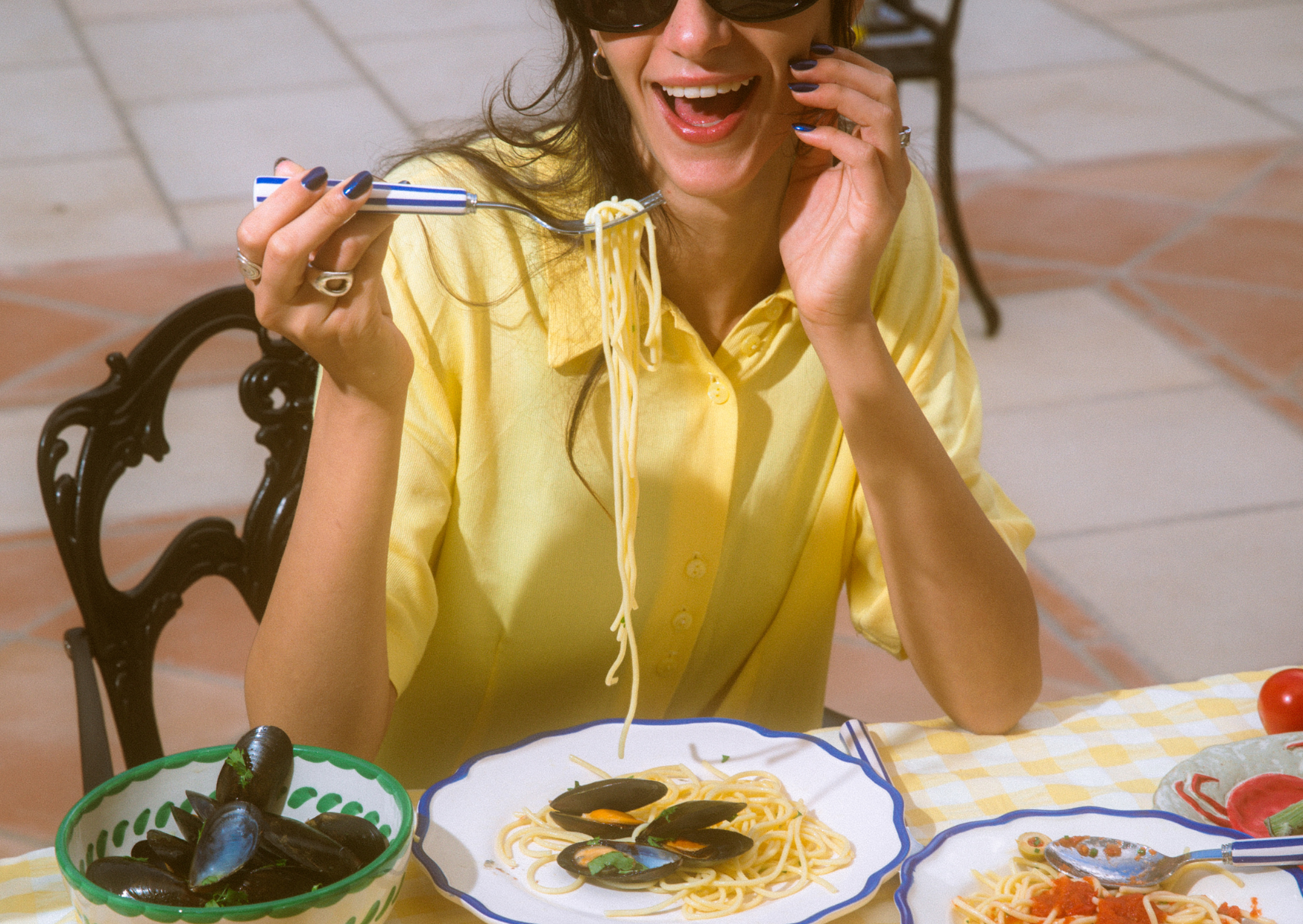
In the U.S., pasta is often served as a main dish. A giant bowl. Often with bread on the side. Sometimes with soda or wine. No clear start or end.
In Italy, pasta is the first course, not the only course. It’s portioned properly — about 80 to 100 grams of dry pasta per person — and followed by something lighter.
You’ll have pasta, then a secondo of grilled fish, sautéed greens, or a few slices of roasted meat. Then fruit. Then coffee. Sometimes a small sweet — but usually not.
The pasta isn’t eaten in isolation. It’s part of a meal structure that prevents overindulgence.
3. There Are No Snacks Between Meals
In American culture, eating is constant. A breakfast of carbs, a snack of carbs, a lunch with carbs, another snack, then dinner. Then dessert. Then maybe something before bed.
In Italy, food happens at mealtime.
A cappuccino with a small pastry in the morning. A real lunch, with pasta. Then nothing until dinner. Maybe a light aperitivo if you’re out.
This rhythm allows the body to digest, recover, and regulate blood sugar — instead of constantly reacting to new fuel.
That’s why eating pasta at 1:00 p.m. doesn’t cause weight gain in Italy — because nothing else follows until 8:30 p.m. when dinner arrives in a very different, much lighter form.
4. Pasta Is Cooked with Restraint — Not Richness
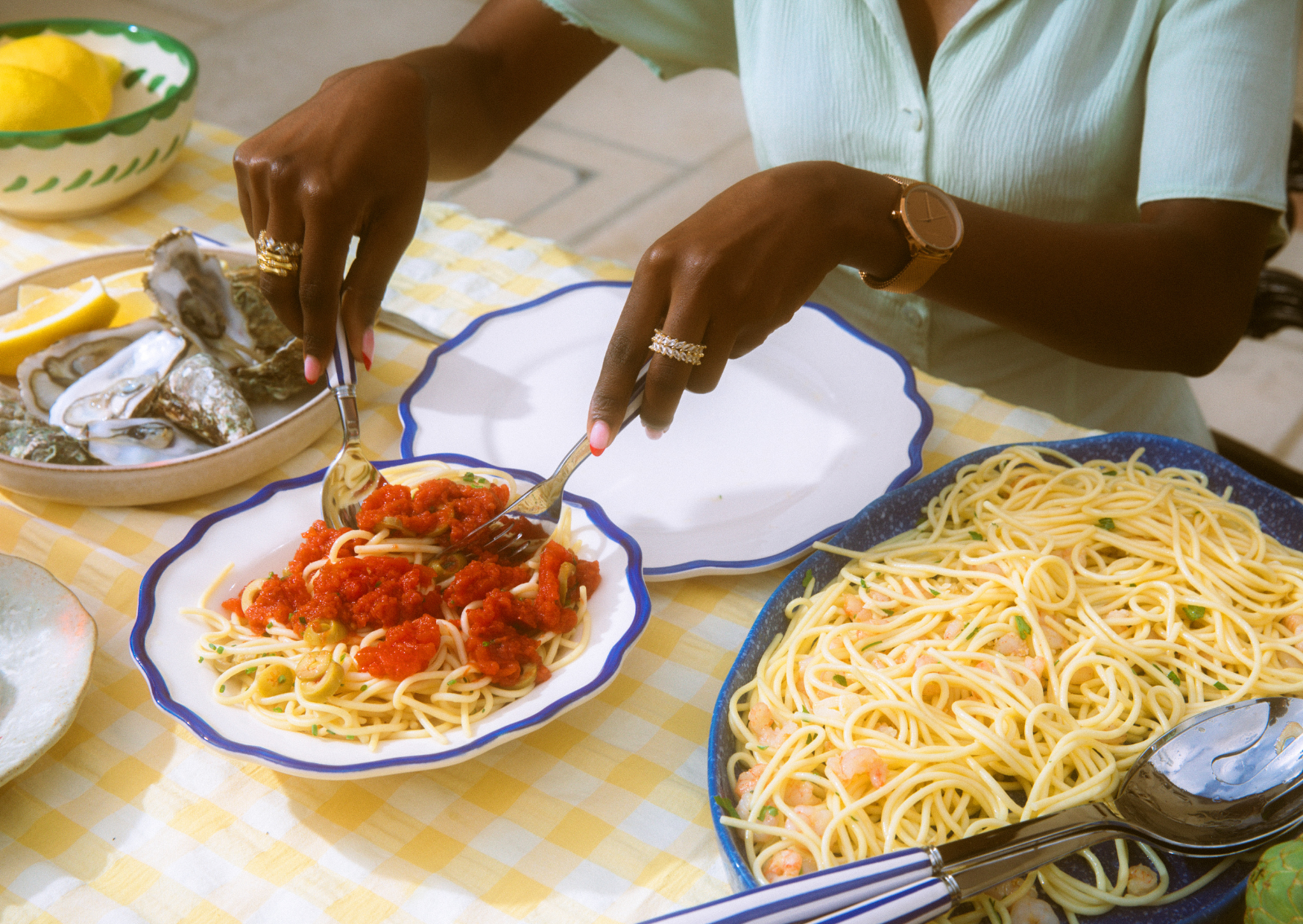
Italian pasta dishes often look rich — but they aren’t heavy. A plate of spaghetti aglio e olio (with garlic and olive oil) is made with a tablespoon of oil, some garlic, and herbs. A plate of cacio e pepe uses grated cheese and pepper — no cream, no butter.
Portions are small. Sauces are not drowning the pasta. Everything is balanced. The flavor is strong, but the calorie load is controlled.
In contrast, American pasta often comes in cream sauces, topped with cheese, surrounded by breadsticks, accompanied by heavy wine pours or soda. The dish isn’t about pasta — it’s about indulgence.
In Italy, pasta is about flavor, not excess.
5. Pasta Is Eaten at the Table — Not in the Car or on a Couch
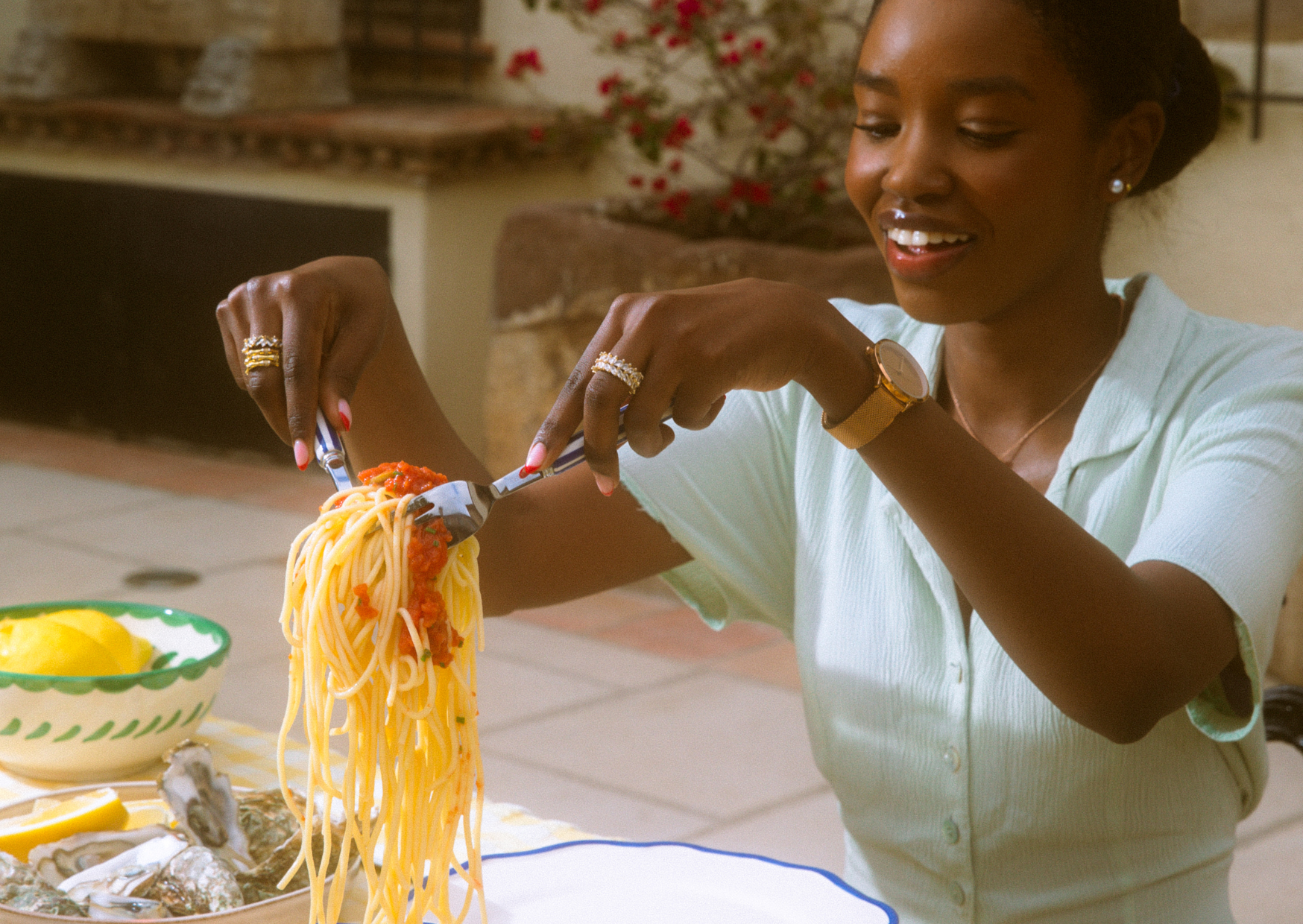
In Italy, even a quick weekday lunch with pasta happens at a table, with a fork, and a plate. At home. At a restaurant. At a work canteen.
The meal is slow. Seated. Often social.
In the U.S., pasta might be eaten from a takeout box while scrolling on a phone. Or microwaved at midnight. Or eaten while driving.
The Italian way promotes fullness, digestion, and awareness. You eat less — and feel satisfied.
The American way leads to more food, less satiety, and more guilt. It’s not the pasta — it’s the context.
6. Children Eat Pasta — But With Rules

Italian children eat pasta as early as 9 or 10 months old. But from the beginning, they learn that meals are structured, portions are small, and repetition is okay.
A child might eat plain pasta with olive oil or tomato sauce five times a week — but never as an all-day free-for-all. Pasta is given at lunch. Followed by vegetables. Then fruit. Then done.
There are no “kid meals” made of noodles and cheese and nothing else.
This consistency builds habits. Children learn to enjoy carbs within boundaries — and without attaching pasta to reward, rebellion, or boredom.
7. Leftovers Are Rare — and Emotional Eating Is Low
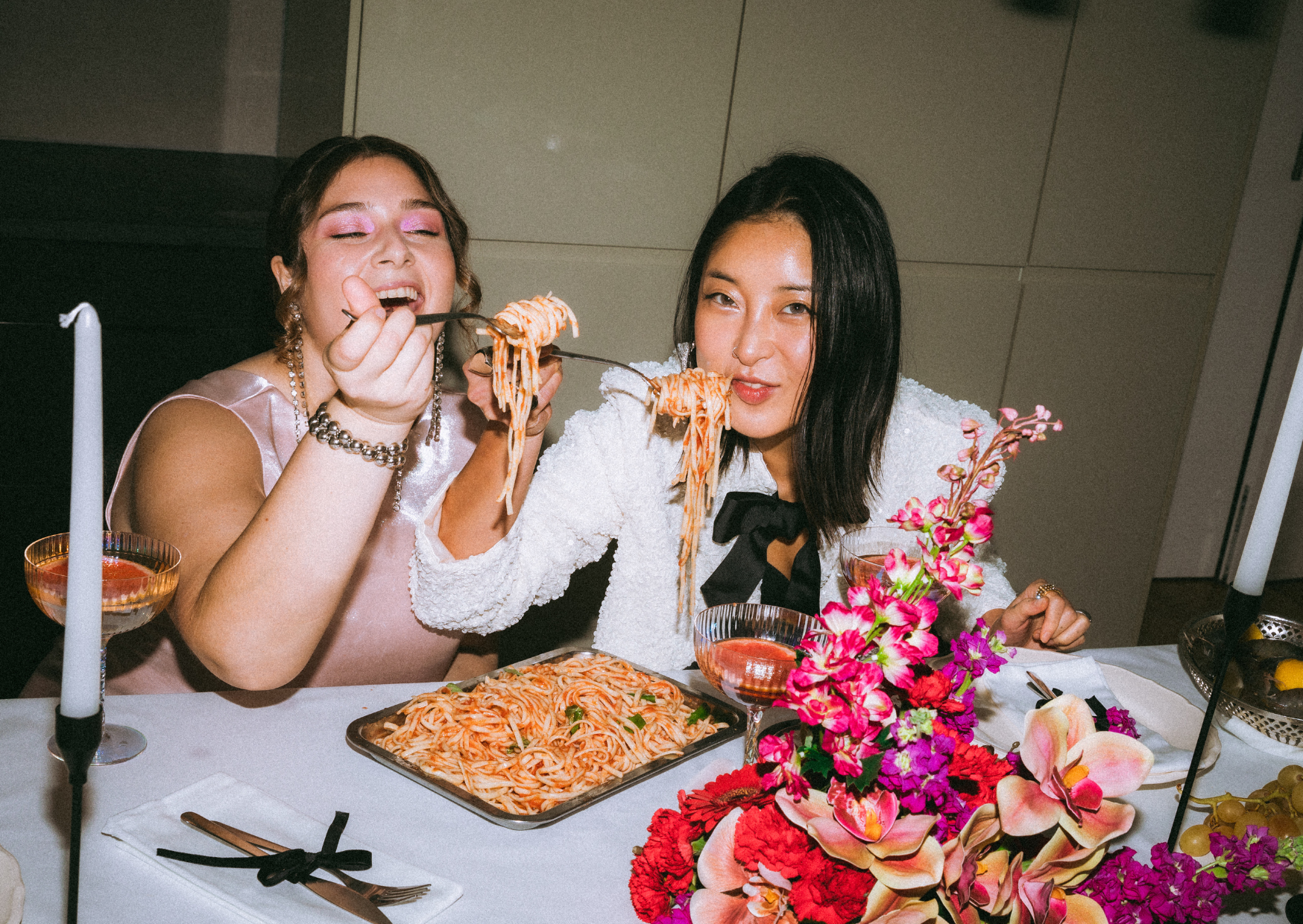
In the U.S., large batches of pasta are made for the week. You eat some now, more later, and possibly again at midnight. The meal expands. The craving grows.
In Italy, pasta is cooked fresh and for that day only. You eat what’s there. Then the meal is over.
This keeps pasta from becoming an all-day temptation. It’s an event, not an ongoing option.
And because meals are social, structured, and rhythmic, people aren’t using food to soothe. Pasta isn’t a crutch for stress. It’s just food — not a solution to an emotional need.
8. Pasta Is Served Without Guilt — So You Don’t Overeat
In America, eating pasta often comes with guilt. “I shouldn’t.” “I was doing so well.” “This is my cheat meal.”
That guilt leads to restriction, which leads to binging. You deny, then overdo it, then crash.
In Italy, pasta is part of life. Nothing forbidden. Nothing feared.
That neutrality allows people to eat moderately. No sneaking. No shame. Just regular enjoyment — followed by a return to balance.
9. The Whole Day Is Built Around Food — Not Just the Plate
In Italy, meals aren’t isolated. The body knows when to expect fuel. It’s trained by routine.
You wake up. You walk. You drink coffee. You eat a light breakfast. You shop for lunch. You cook. You eat with others. You walk again. You relax. You eat again.
This rhythm matches the body’s rhythm. It doesn’t spike, crash, and panic.
In the U.S., meals are squeezed between tasks. Pasta is eaten when you’re already starving or already stressed. There’s no rhythm. Just reaction.
That difference is what causes weight gain — not the pasta itself.
One Plate, Two Outcomes
To Americans, daily pasta means indulgence, carbs, and regret.
To Italians, daily pasta means lunch.
To Americans, pasta requires balancing acts — gym sessions, diet apps, cheat days.
To Italians, pasta requires a fork, a chair, and a sense of timing.
The same ingredients — flour, egg, water — lead to different results not because of what’s on the plate, but when and how it’s eaten.
So if you want to enjoy pasta like an Italian — and stay slim like one — don’t skip the spaghetti. Skip the late-night binge. The oversized portions. The fear. The guilt.
And eat your pasta at one o’clock, at a table, surrounded by people — just like they’ve done for generations.
The Italian pasta schedule reveals that it’s not just what we eat, but how and when we eat it, that shapes health outcomes. Pasta itself isn’t the enemy—it’s the habits built around it that make the difference.
The controversies over timing, portions, and lifestyle show how cultural context changes the meaning of food. In Italy, pasta is part of a balanced rhythm, while in the U.S., it’s often tied to convenience, indulgence, and oversized servings.
Ultimately, adopting a few Italian-inspired habits could change the way Americans enjoy pasta. By rethinking timing, portions, and balance, pasta can shift from a “fattening food” to a satisfying, healthy staple that fits into everyday life.

About the Author: Ruben, co-founder of Gamintraveler.com since 2014, is a seasoned traveler from Spain who has explored over 100 countries since 2009. Known for his extensive travel adventures across South America, Europe, the US, Australia, New Zealand, Asia, and Africa, Ruben combines his passion for adventurous yet sustainable living with his love for cycling, highlighted by his remarkable 5-month bicycle journey from Spain to Norway. He currently resides in Spain, where he continues sharing his travel experiences with his partner, Rachel, and their son, Han.
Frank Chestnut
Thursday 18th of September 2025
Thank you for writing this article. It's refreshing to see an article that's not just about a destination but a lifestyle.