
If your pot smells promising but the first spoonful is thin, harsh, or purple, the problem isn’t France—it’s technique. Fix a handful of habits and the dish snaps into place: deep, glossy, and quietly rich.
There’s a reason the classic never dies. Done right, coq au vin tastes like a Sunday you didn’t rush—chicken that yields without falling apart, bacon that perfumes instead of flopping, mushrooms that stay bouncy, onions that turn sweet, and a sauce that coats the spoon in a soft, winy sheen.
When it flops, the autopsy is predictable. Wrong wine or uncooked wine. Crowded pan. Mushrooms boiled with the stew. Skinny stock. A fast boil that rips the meat and clouds the sauce. The cure isn’t fancy. It’s a series of deliberate choices you can repeat every time.
Below is a blunt checklist of what’s going wrong—and a step-by-step recipe that locks the “French countryside” version into your kitchen.
Your wine is the right wine used wrong
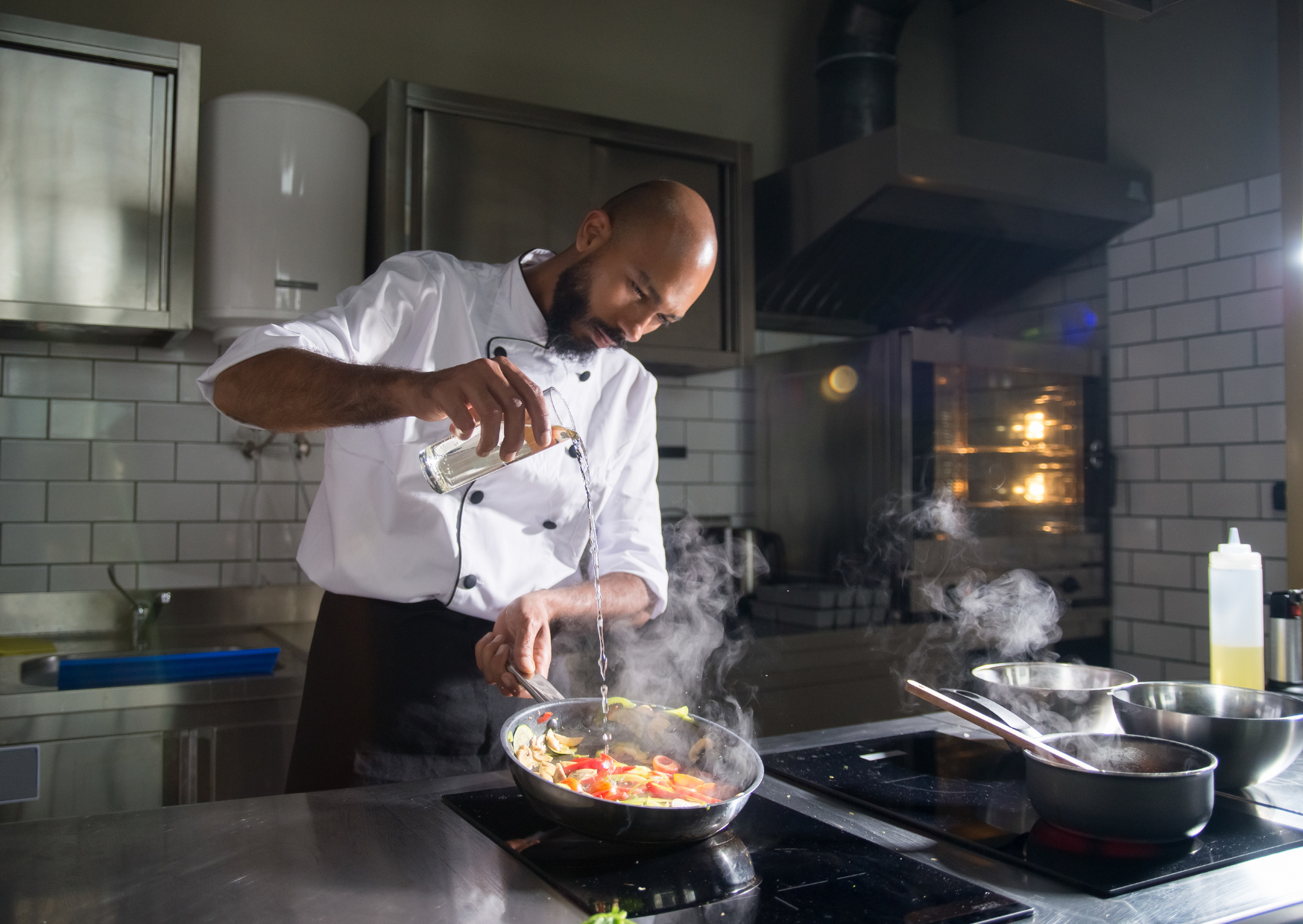
If your stew tastes bitter or thin, the wine didn’t get the respect it needs.
- Choose dry, unoaked reds with moderate tannin: Burgundy/Pinot Noir, Beaujolais, Côtes du Rhône, Loire Cab Franc, or a humble Languedoc blend. Big, oaky bottles make harsh sauces.
- Reduce the wine before you braise. A fast boil for 5–10 minutes knocks out raw alcohol and concentrates fruit. If you pour a full bottle into the pot and slap on a lid, you trap hard vapors that never quite mellow.
- Balance with stock. Wine is structure; good stock is body. Two parts wine to one part stock makes a vivid stew; half and half is gentler. Either way, cook the wine first.
Key moves: unoaked, pre-reduced, balanced with stock.
You skipped the bacon-and-gelatin engine
Flat stew? You probably missed the elements that give depth and gloss.
- Render lardons (thick-cut bacon or salt pork) slowly until golden. Fat from those cubes is your flavor base. Scoop the lardons; sear chicken in their fat.
- Add gelatin by using bone-in chicken thighs/drumsticks (or backs/necks in the pot during the braise, then discard). Collagen melts into silk—that’s the restaurant texture you’re chasing.
- If your stock is thin, bloom a teaspoon of powdered gelatin in cold water and whisk it into the finished sauce. It’s not cheating; it’s insurance.
Key moves: lardons first, bone-in pieces, gelatin backup.
You steamed the chicken instead of browning it
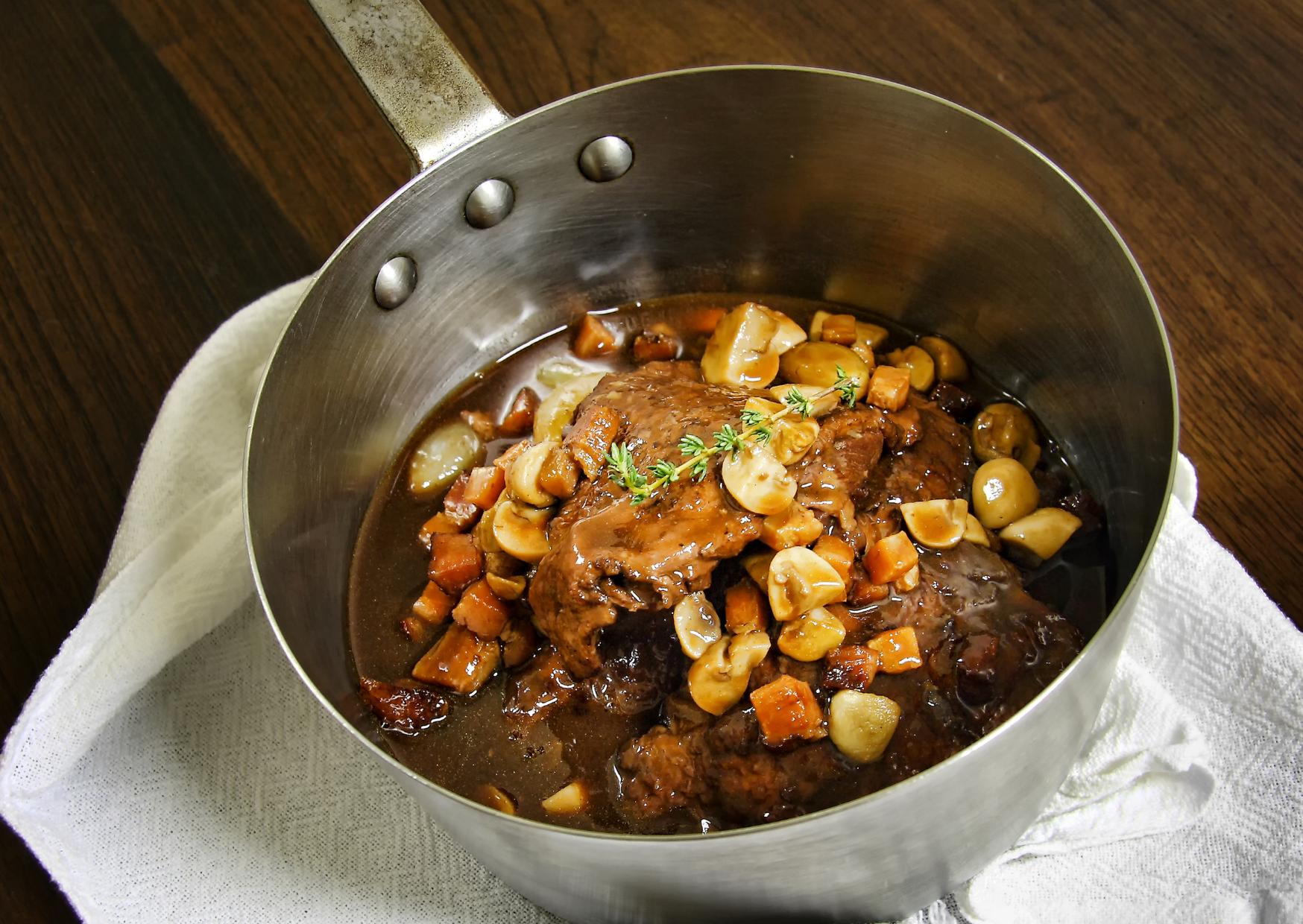
Great coq au vin starts with deep browning—not color for Instagram, but for flavor.
- Pat pieces dry, season well, and sear in batches over medium-high. Crowding drops the heat and you’ll steam, not brown.
- Sear to a real mahogany edge, then pull the pieces. The fond on the pot is your best ingredient.
- Deglaze the pan with a splash of brandy or wine and scrape every browned bit before the braise begins.
Key moves: dry chicken, batch sear, deglaze the fond.
You boiled the mushrooms and onions with the stew
This is how you get soggy mushrooms and bland pearl onions.
- Cook mushrooms separately in butter/oil until well browned and just tender. Salt at the end to keep them from weeping early. Add them back only at the finish.
- Glaze pearl onions on the side: butter, pinch of sugar, splash of stock, tight lid—shake and simmer until they’re tender and shiny. They’ll taste like little sweets when they meet the sauce.
- Keep these components out of the long braise. That’s how you preserve texture and contrast.
Key moves: separate sauté, onion glaze, add at the end.
Your pot and heat sabotaged the sauce
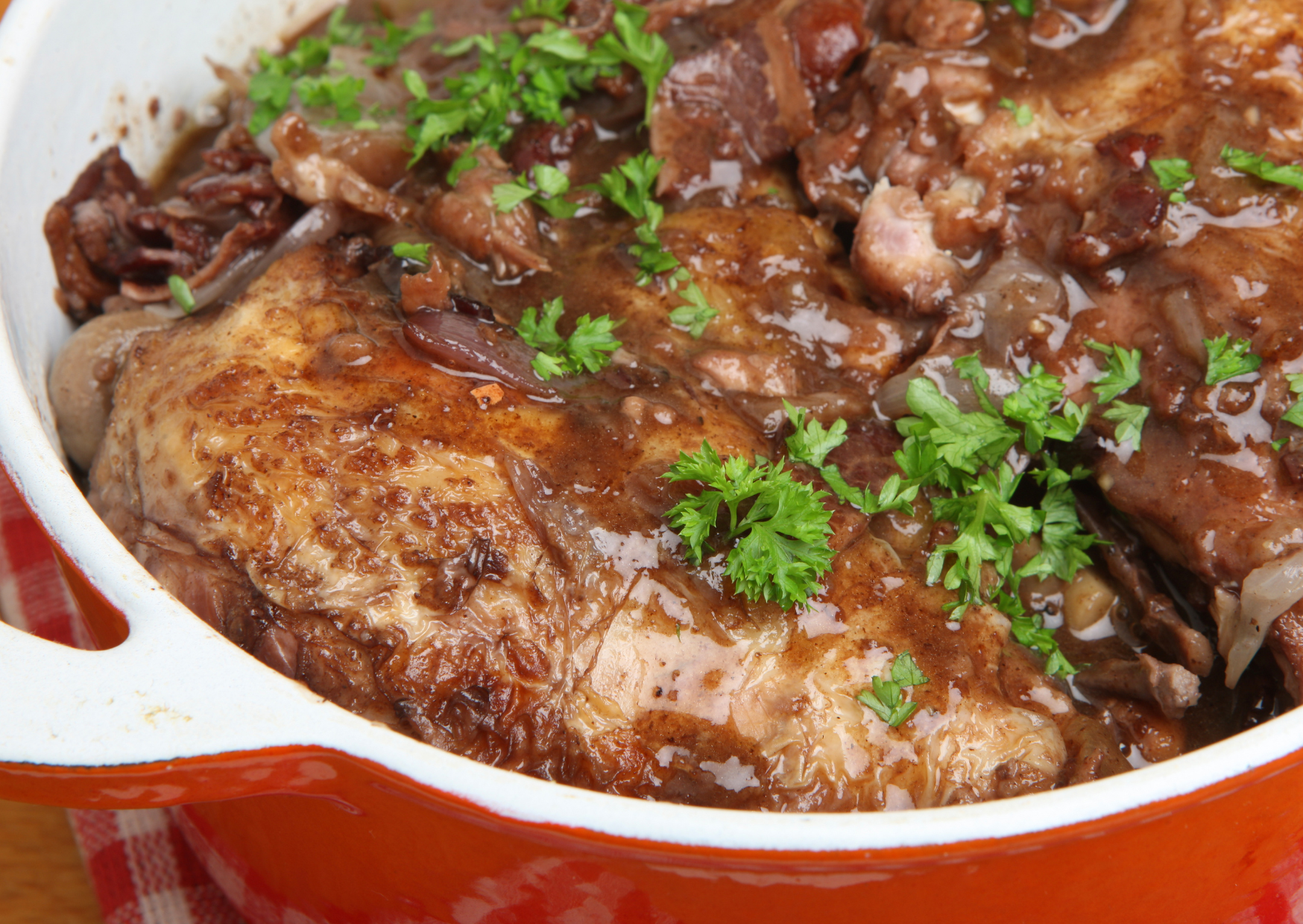
The wrong vessel and heat turn luxury into stringy meat and cloudy sauce.
- Use a wide Dutch oven—not a stockpot. You want surface area to reduce the liquid gently and to brown properly.
- Braise at a bare simmer or in a low oven (160–165°C / 325°F). Boiling shreds fibers and spits fat into the sauce.
- Give the liquid room. Pieces should be mostly submerged, not drowning.
Key moves: wide, heavy pot, low and slow, controlled liquid.
You rushed the finish
The difference between “fine” and “French countryside” lives in the last twenty minutes.
- Lift out the chicken when tender. Strain the braising liquid, discard spent aromatics, and de-fat.
- Reduce the sauce to a nappe thickness, then whisk in a tiny beurre manié (equal parts soft butter and flour) or a knob of butter to gloss.
- Season like a pro: a pinch of salt, a few grinds of pepper, and one teaspoon red wine vinegar or a squeeze of lemon to wake everything up. Rest five minutes.
- Reunite chicken, mushrooms, and onions; warm gently. If you can wait, cool and reheat tomorrow—it’s better on day two.
Key moves: strain and reduce, butter to gloss, acid to lift.
Coq au Vin That Tastes Like a Village Sunday
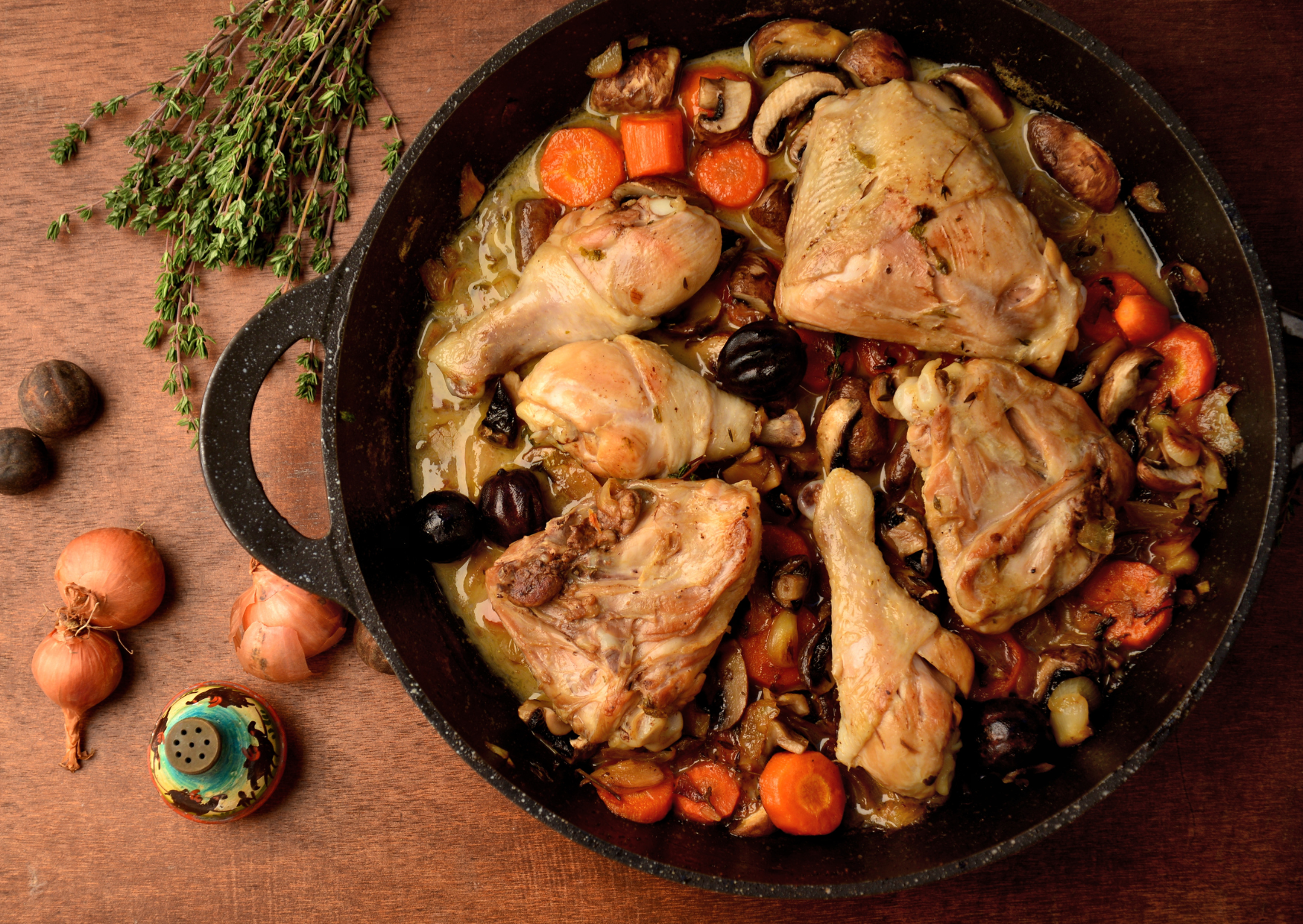
Serves 4–6 generously; even better the next day
Time: 35 minutes active; 1½–2 hours total
Ingredients
- 150 g / 5 oz lardons (thick bacon), cut in batons
- 8 bone-in chicken pieces (thighs/drumsticks; ~1.6–1.8 kg / 3½–4 lb)
- 500 g / 1 lb mushrooms, quartered
- 250 g / 9 oz pearl onions, peeled (or thawed from frozen)
- 1 onion, chopped
- 2 carrots, chunked
- 2 garlic cloves, smashed
- 2 tbsp tomato paste (optional, for color)
- 2 tbsp flour (for beurre manié; optional)
- 2 tbsp butter, plus more for vegetables
- 750 ml / 3 cups dry red wine (unoaked)
- 500 ml / 2 cups good chicken stock (gelatin-rich if possible)
- 60 ml / ¼ cup brandy (optional)
- 1 bouquet garni (thyme, bay, parsley tied)
- Olive oil, salt, black pepper
- Red wine vinegar or lemon, to finish
- Powdered gelatin (optional safety net)
Method
- Render the lardons. In a wide Dutch oven over medium heat, cook lardons in a slick of oil until bronzed and crisp. Scoop to a plate; leave fat in the pot.
- Brown the chicken. Pat dry, season with salt and pepper, and sear in batches, skin side down first, until deep brown on both sides. Do not rush. Transfer to the lardons plate.
- Build the base. In the fat, sauté chopped onion and carrots with a pinch of salt until sweet and lightly colored. Clear a spot, add tomato paste (if using), and cook 1 minute. Add garlic for 30 seconds.
- Deglaze. Add brandy (if using) and scrape up the fond. Pour in the wine and boil 5–10 minutes to drive off harshness and reduce by roughly one-third.
- Braise. Return chicken and lardons to the pot. Add stock and bouquet garni; liquid should come just shy of covering. Bring to a bare simmer, cover loosely, and cook gently on the stovetop or in a 325°F / 165°C oven until the meat yields to a fork at the joint—about 45–60 minutes.
- Meanwhile, cook the garnishes.
- Mushrooms: In a wide pan, heat butter and a little oil; sauté mushrooms over high heat until browned and only just tender. Salt at the end.
- Pearl onions: In a small skillet, combine onions, a knob of butter, a pinch of sugar, a pinch of salt, and enough water or stock to come one-third up the sides. Cover and simmer until tender; remove the lid to glaze and reduce the liquid until shiny.
- Make the sauce. Lift chicken to a platter. Strain the braising liquid into a clean saucepan; discard spent veg and herbs. Skim fat. Simmer to reduce to a sauce that lightly coats a spoon. For extra body, whisk in beurre manié (2 tbsp soft butter mashed with 2 tbsp flour) a hazelnut at a time. If using gelatin, bloom 1 tsp in cold water and melt it into the hot sauce.
- Finish. Return chicken to the pot, add mushrooms and pearl onions, and pour over the sauce. Simmer gently 3–5 minutes to warm through. Taste—add salt, pepper, and 1 tsp red wine vinegar or a squeeze of lemon for lift. Rest 5 minutes.
- Serve. Shower with chopped parsley. Plate with buttered noodles, pommes purée, or a chunk of country bread and a simple green salad.
Make-Ahead: Cool quickly, refrigerate overnight, and reheat gently. Day two is deeper and silkier.
The small choices that make it taste French
- Salt early, not just at the end. Season chicken before searing and the aromatics as they sauté; final salt is only a nudge.
- Keep the sauce clear. Straining and de-fattening turn “brown liquid” into sauce. Skip that and you’ll taste muddle.
- Use real stock. Box stock is fine in a pinch, but gelled homemade stock delivers that quiet restaurant luxury.
- Finish with acid. A teaspoon of vinegar or lemon snaps the wine into focus. It shouldn’t taste acidic—just alive.
Variations that still behave
- Coq au Vin Blanc: Swap in dry white (Alsace or Bourgogne Aligoté), add a splash of cream at the end, and keep mushrooms/onions the same.
- Forestier: Add a handful of dried porcini (soaked and chopped) to the braise for woodland depth; fold in a spoon of the strained soaking liquid with the sauce.
- Country shortcuts: If time is tight, skip tomato paste, use only thighs, and lean on gelatin to finish the sauce. You’ll still get depth, gloss, and balance.
Troubleshooting in one minute
- Purple, raw-tasting sauce? You didn’t reduce the wine first—boil it 5–10 minutes next time. Finish with a touch of butter and a splash of vinegar now.
- Soggy mushrooms? You braised them. Always sauté separately and add at the end.
- Stringy chicken? Heat was too high. Aim for a bare simmer.
- Greasy finish? Skim, strain, and emulsify with butter/gelatin; don’t boil hard after mounting.
- Flat flavor? Add salt in small pinches and finish with acid. If it’s still dull, your wine was too oaky or sweet.
How to serve it so the room quiets
Warm plates. Ladle just enough sauce to coat, not drown. Keep sides plain and soft—purée, noodles, or rice—so the sauce is the star. Pour the same style of wine you cooked with, slightly cooler than room temperature. Then let the dish do what it’s meant to do: feel unhurried.
Make these choices once and your coq au vin stops tasting like disappointment. Make them twice and you won’t have to think. The result will be what you imagined the first time you tried to cook it—a gentle, winy stew that eats like a Sunday in the countryside.
Origin and History
Coq au Vin traces its roots deep into rural France, long before it became a restaurant staple. The dish was born out of necessity, crafted by farmers who needed a way to tenderize tough, older roosters. Slow braising in wine was the perfect method, transforming inexpensive poultry into a hearty, aromatic stew that sustained families through harsh seasons.
While Burgundy is most often credited as its birthplace, variations of Coq au Vin appeared across the French countryside. Each region adapted the dish according to what they had: in Alsace, cooks used Riesling; in the Loire Valley, they turned to local red wines. This flexibility made Coq au Vin both universal and deeply local at the same time.
The dish rose to fame in the 20th century when French cuisine was introduced to American home cooks. As French chefs published books and appeared on television, Coq au Vin became a symbol of rustic sophistication, celebrated for its depth of flavor and the way it honored humble ingredients.
Many American versions of Coq au Vin stray far from tradition and unintentionally strip the dish of its soul. Thick glugs of supermarket wine, rushed cooking times, and boneless chicken breasts transform what should be tender, robust, and layered into a flat, soupy imitation. The controversy isn’t about strict rules it’s about losing the technique that defines the dish.
Another divisive topic is the use of shortcuts. Pressure cookers, pre-cooked bacon, or bottled “cooking wine” may be convenient, but they alter the flavor profile dramatically. Traditionalists argue that real Coq au Vin is built slowly, step by step, creating complexity that cannot be recreated through speed or substitutions.
Even the choice of chicken sparks debate. Classic recipes call for older, firmer birds, not the soft, young chickens common in modern supermarkets. While these older birds are harder to find today, the principle still stands: the dish was meant for long cooking, and choosing the right poultry determines whether the stew becomes richly aromatic or disappointingly bland.
How Long It Takes to Prepare
Authentic Coq au Vin is not a 30-minute dinner, and that is part of its charm. The preparation alone marinating the chicken, browning the pieces, rendering the bacon, sautéing the vegetables requires patience. Each stage builds flavor that cannot be rushed or skipped.
The braising process is where the magic happens. In a traditional recipe, the chicken simmers for at least 1.5 to 2 hours, allowing the wine to mellow and the meat to become tender. Some cooks even refrigerate the stew overnight and reheat it the next day, since the flavors deepen significantly with time.
All told, making Coq au Vin properly can take anywhere from 3 to 24 hours depending on whether you marinate and rest the dish. Though lengthy, it’s the slow rhythm that turns simple ingredients into something worthy of France’s culinary heritage.
Serving Suggestions
Coq au Vin is traditionally served with simple sides that absorb the rich sauce. Buttery mashed potatoes, crusty French bread, or wide egg noodles are classic pairings that balance the savory wine-based braise. Each one adds a comforting backdrop without competing with the stew’s complexity.
If you want to mirror how it’s enjoyed in French homes, consider serving it with steamed or roasted vegetables. Carrots, green beans, and braised leeks complement the deep flavors while keeping the meal grounded and rustic. A lightly dressed green salad adds freshness and contrast.
For a more indulgent meal, serve Coq au Vin alongside roasted potatoes or creamy polenta. These heartier companions make the dish feel even more luxurious, ideal for dinner parties or special occasions. Just remember: the focus should always remain on the stew itself.
Final Thoughts
Coq au Vin is more than a recipe; it is an exercise in slowing down and cooking with intention. When made properly, it rewards the cook with unmatched depth and warmth, a dish that feels both elegant and deeply comforting. Its long history speaks to its enduring appeal, proving that simple ingredients can produce extraordinary results.
The biggest mistake many cooks make is trying to rush it. This is a dish that thrives on patience, and when you give it time, the transformation is remarkable. Every step from browning the chicken to simmering the wine adds layers that cannot be replicated through shortcuts.
Whether you are cooking it for a cozy night in or a gathering of friends, authentic Coq au Vin has the power to transport you straight to the French countryside. Mastering it is not just about technique but about honoring a tradition that has stood the test of time.

About the Author: Ruben, co-founder of Gamintraveler.com since 2014, is a seasoned traveler from Spain who has explored over 100 countries since 2009. Known for his extensive travel adventures across South America, Europe, the US, Australia, New Zealand, Asia, and Africa, Ruben combines his passion for adventurous yet sustainable living with his love for cycling, highlighted by his remarkable 5-month bicycle journey from Spain to Norway. He currently resides in Spain, where he continues sharing his travel experiences with his partner, Rachel, and their son, Han.