
Madrid’s cold-weather masterpiece isn’t a one-night stew—it’s a strategy: one pot on day one, three courses at the table, and leftovers that spin into new meals all week.
Step into a Madrid dining room on a winter Sunday and you’ll smell it before you see it: chickpeas steaming, cabbage sizzling with garlic and paprika, broth bright and clear in a tureen. Bowls clink, a ladle makes the rounds, and the feast arrives in tres vuelcos—three “turns” that stretch one pot into a slow, generous ritual. By the time the table is cleared, you’ve fed a crowd and stocked the fridge for days.
You don’t need a Spanish grandmother to pull this off. You need dry chickpeas, a few bones and sausages, patient simmering, and a plan for the leftovers. Follow the classic service, borrow Madrid’s side dishes, then roll what remains into soups, croquettes, and skillet suppers until Thursday. That’s the promise of cocido madrileño: comfort now, economy later, zero waste.
What Cocido Madrileño Is (And Why It’s So Filling)
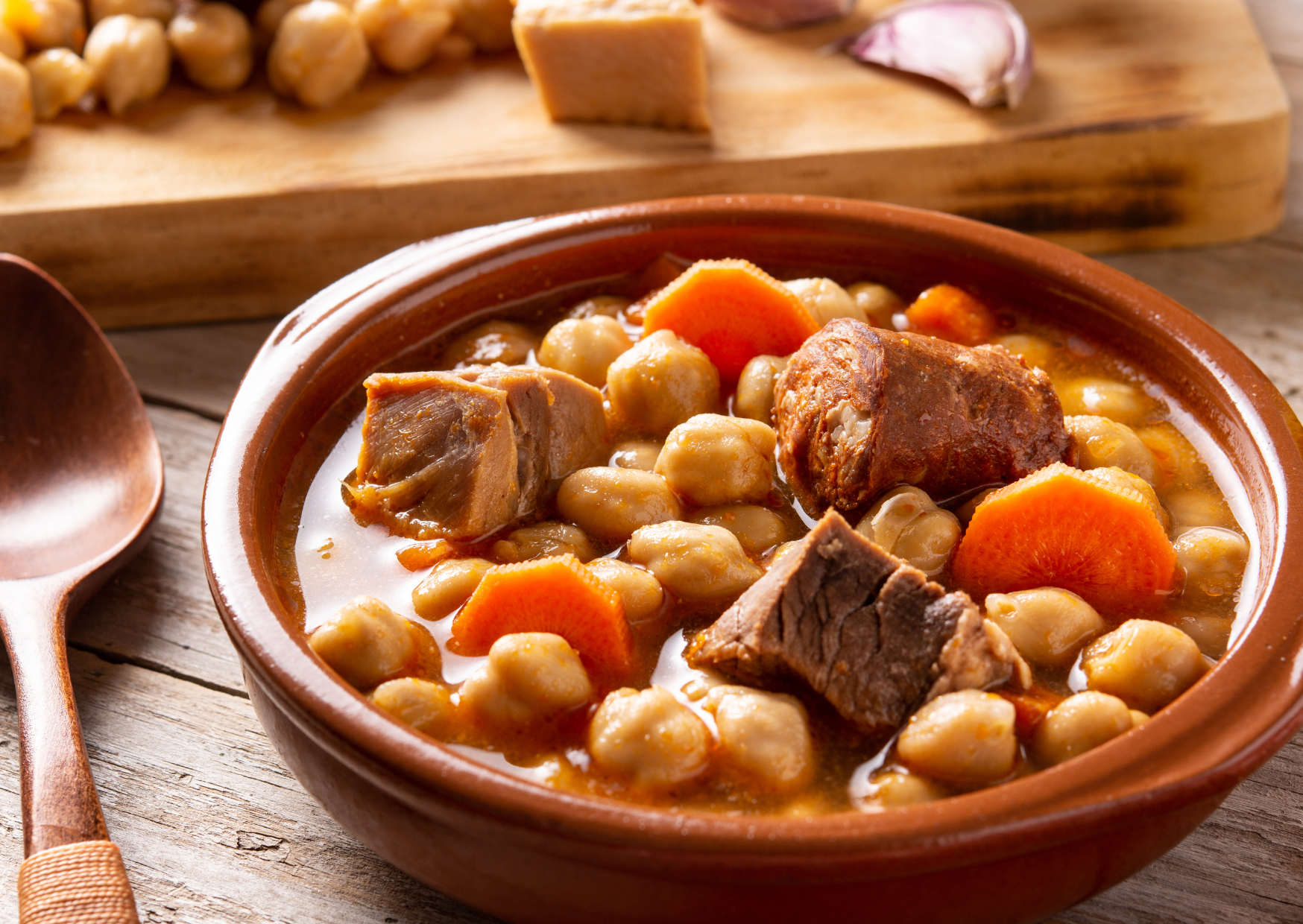
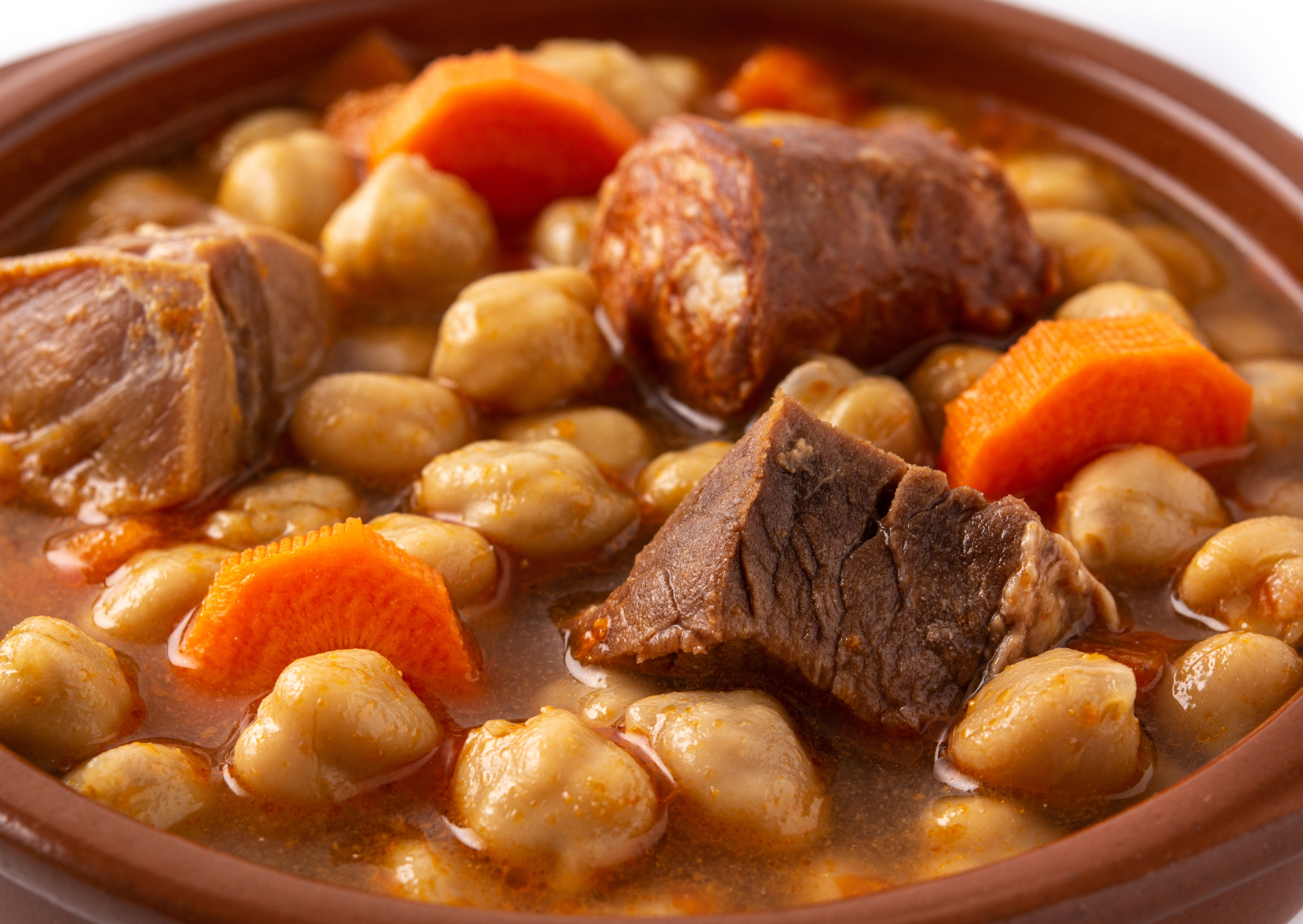
At heart, cocido madrileño is a chickpea-based stew layered with meats (beef shank, jamón bone, marrow bones, chicken, pork belly or tocino, chorizo, and—in many homes—morcilla), plus vegetables like cabbage, carrot, leek, potato, and sometimes turnip. Everything simmers in one pot until the broth turns golden and savory.
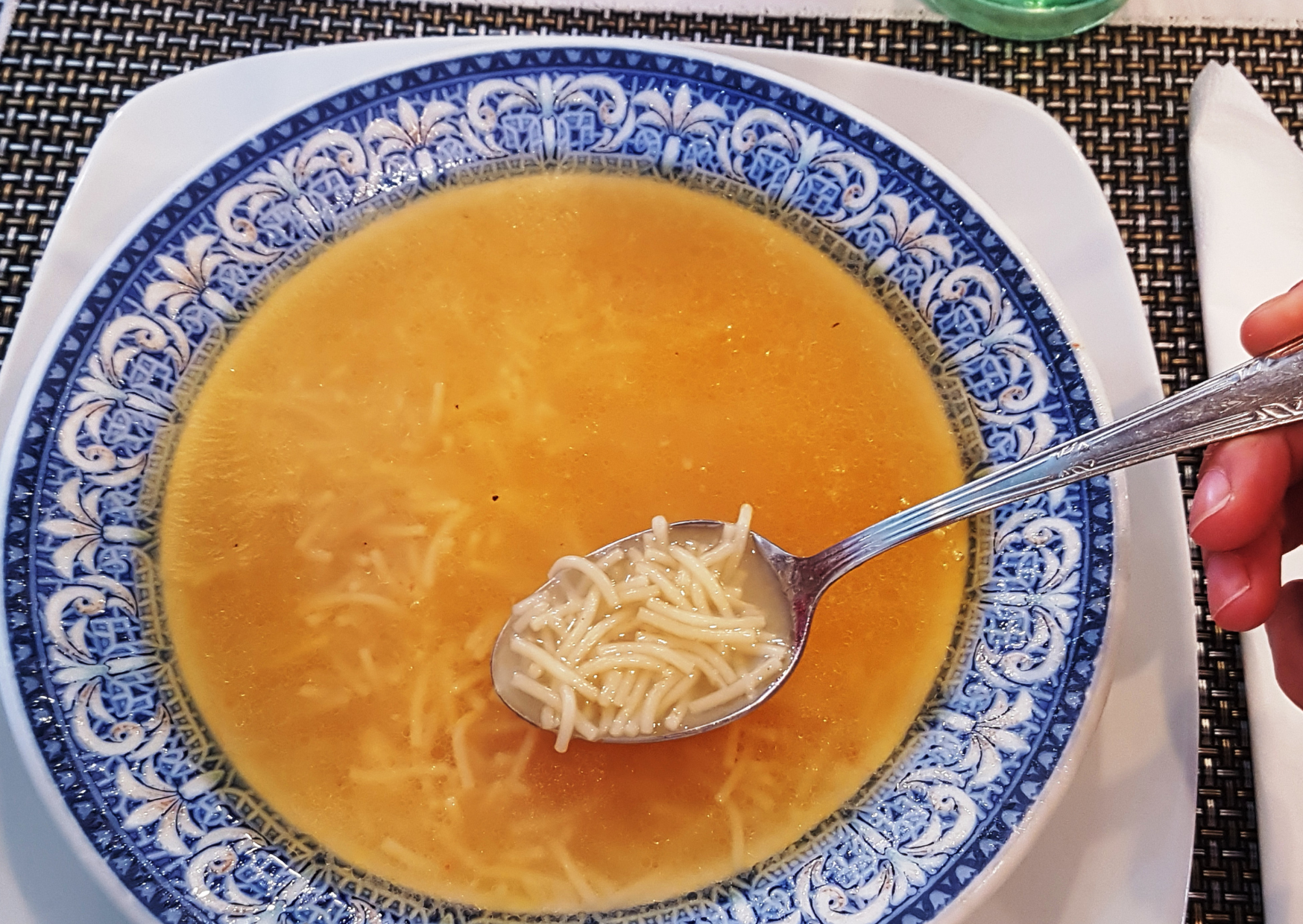
Tradition serves it as three courses from the same pot: first the broth with fine noodles, second the garbanzos and vegetables, third the meats. That structure does two clever things. It slows you down—so you feel satisfied sooner—and it lets you portion and save strategically. You’ll eat well on day one and even better on day three.
The flavor profile is simple: paprika-leaning warmth, clean broth, sweet vegetables, and chickpeas that are tender but still intact. It’s big food, yet it digests surprisingly light because you’re not chasing spice or cream—just depth from bones, aromatics, and time.
Shopping Notes and Smart Substitutions
You can make cocido with a luxe butcher run or a practical supermarket haul. Here’s how to prioritize without overbuying.
- Start with dry chickpeas (garbanzos). Spanish varieties like Pedrosillano keep their shape beautifully, but any quality dry chickpea works. Soak overnight for even cooking.
- For bones, aim for one jamón or pork bone and one or two marrow/knuckle bones. They give the broth body. If you can’t find jamón bones, use a smoked ham hock or a pork neck bone.
- Pick one beef cut (shank or short rib) and one poultry piece (a leg quarter or a large wing). That mix gives gelatin and gentle sweetness.
- Choose chorizo that’s meant for stewing (fresh or semi-cured, not a hard slicing chorizo). Morcilla (blood sausage) is traditional but optional; it can break if boiled too hard, so it goes in late.
- Vegetables: cabbage, carrots, leek, potatoes, onion, plus garlic and bay leaves. A piece of celery is nice but not mandatory.
- Pantry: sweet paprika, olive oil, fine noodles (fideos), coarse salt, black pepper.
Budget focus: If you need to trim costs, favor bones, a small piece of beef shank, one chicken leg, and a single chorizo. You’ll still get a rich broth and plenty of protein, then stretch the meat with chickpeas and cabbage in the second and third “turns.”
The Tres Vuelcos Service (How You’ll Plate It)
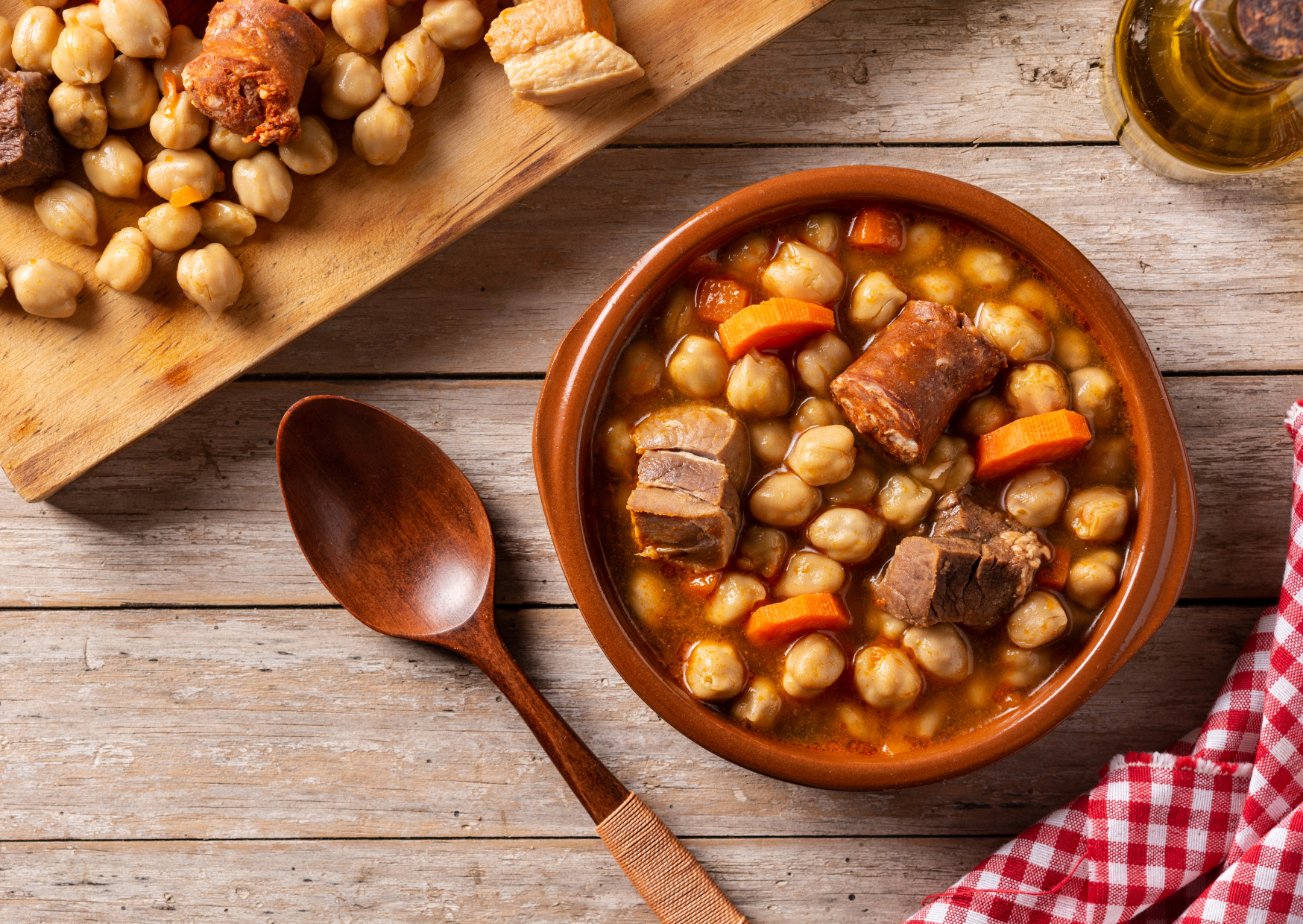
Cocido isn’t just a stew—it’s an order of operations. Serving it in three turns elevates a humble pot into an occasion and makes portions self-regulating.
First vuelco: Strain off clear broth into a pot, bring to a simmer, and drop in fideos (thin noodles). Ladle into bowls with a slice of baguette if you like. It’s a light, aromatic soup that opens the appetite but takes the edge off hunger.
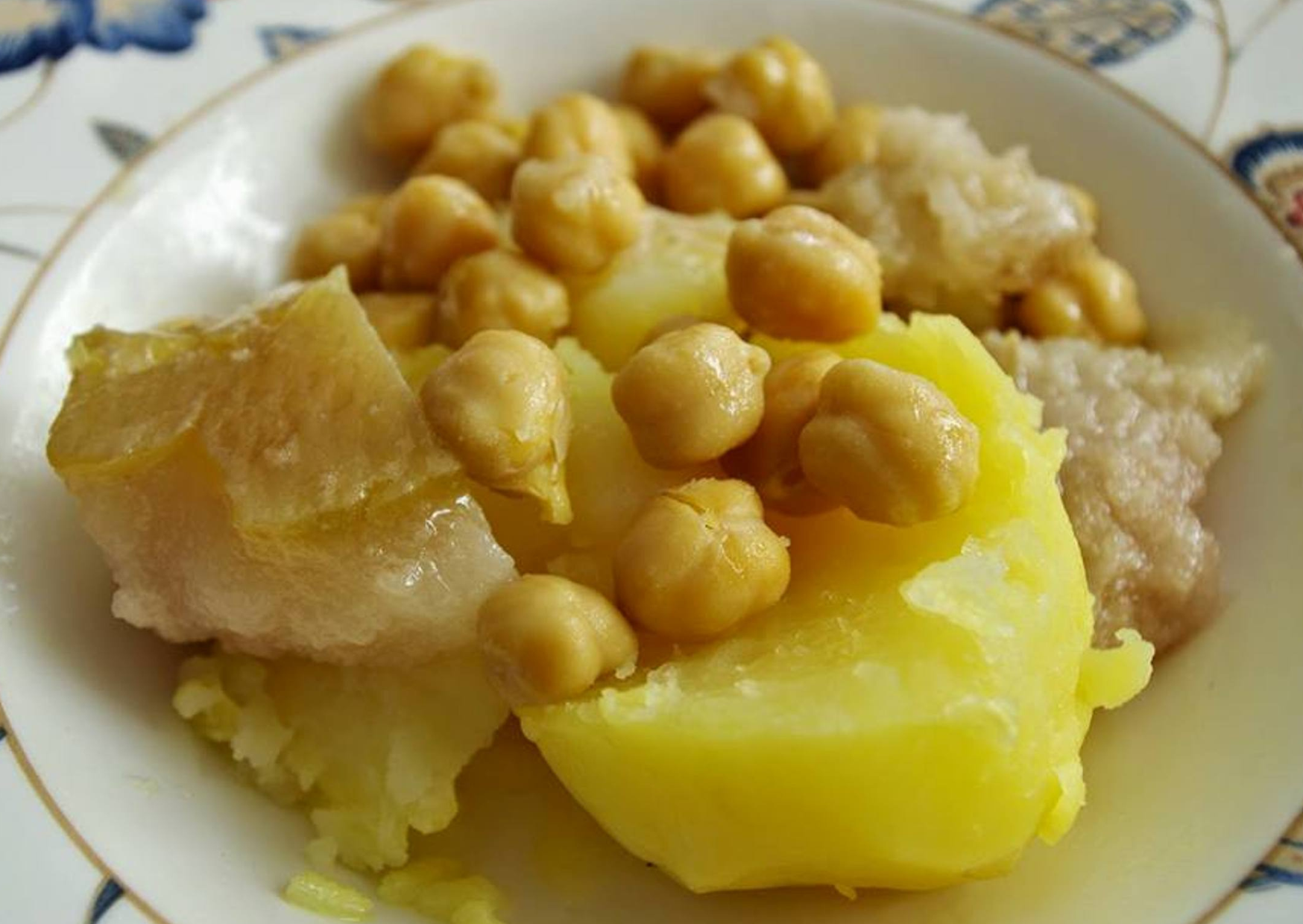
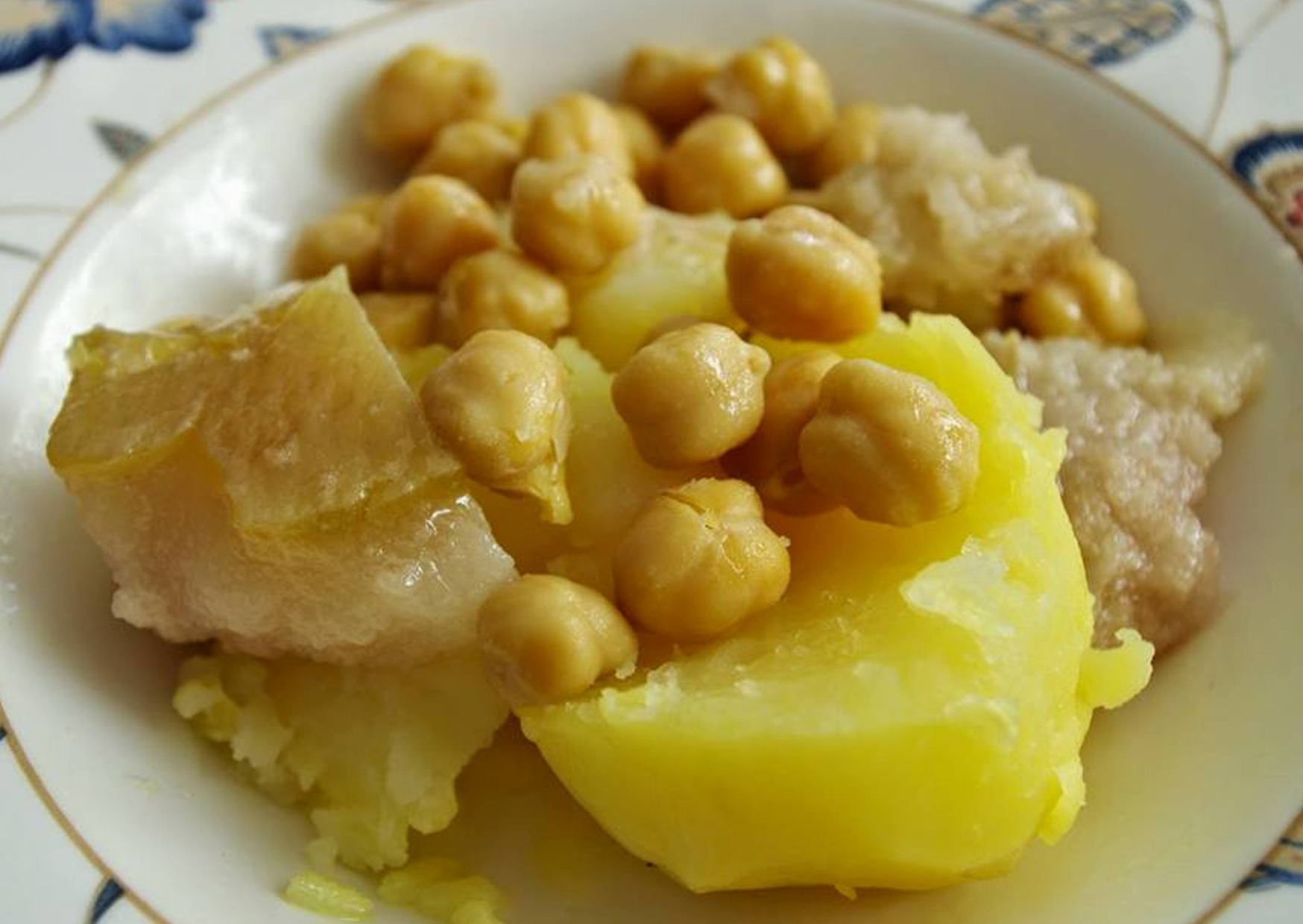
Second vuelco: Spoon chickpeas and vegetables (cabbage, carrots, potatoes, leeks) onto a platter. Drizzle with good olive oil, dust with sweet paprika, and pass coarse salt at the table. Many Madrileños add a splash of the broth to moisten the plate.
Third vuelco: Slice the meats—beef, chicken, chorizo, and morcilla if using. Arrange with a little of the tocino (pork belly) and the marrow from the bones. A side of encurtidos—pickled gherkins or piparras—cuts the richness.
That’s it: soup, veg and garbanzos, meats. Serve each turn in small helpings. You’ll be full without feeling heavy—and you’ll have leftovers by design.
Recipe: Cocido Madrileño (Serves 6–8 with Leftovers)
Time: 30 minutes active; 3½–4½ hours total (or 90 minutes under pressure)
Yield: One Sunday feast plus multiple weekday meals
Ingredients
For the pot
- 500 g / 2½ cups dry chickpeas, soaked overnight in salted water (10 g salt per liter), then rinsed
- 1 beef shank (about 500–700 g) or 2 meaty beef short ribs
- 1 chicken leg quarter (bone-in) or 2 large wings
- 1 jamón or smoked ham bone (about 300–400 g)
- 1–2 marrow/knuckle bones (beef)
- 150–200 g tocino (pork belly) or a small piece of fresh pancetta
- 2 chorizos for stewing, halved
- 1 morcilla (optional), added later
- 1 large onion, halved
- 1 leek, white and light green parts, halved lengthwise and rinsed
- 2 carrots, peeled and chunked
- ½ small green cabbage, cut into 4 wedges (core intact)
- 2–3 potatoes, peeled and halved
- 4 garlic cloves, lightly crushed
- 2 bay leaves
- Sweet paprika (pimentón dulce), to finish
- Olive oil, salt, black pepper
- 150 g fideos (very thin pasta) for the soup
Method (Stovetop, Traditional)
- Blanch & rinse bones (optional but helpful). Cover the jamón/pork and marrow bones with cold water, bring to a brief boil, simmer 2 minutes, drain, and rinse. This helps make a clearer broth.
- Build the pot. In a large stockpot (8 liters), add soaked chickpeas, beef shank, chicken, blanched bones, tocino, onion, leek, carrots, garlic, bay, and enough cold water to cover by 5–7 cm (about 4–5 liters). Bring slowly to a simmer.
- Skim and season. As foam rises, skim gently. Add 1 tbsp salt to start. Keep heat low—bare simmer.
- Long, quiet cooking. Simmer 1½ hours. Add potatoes and cabbage wedges. Add chorizo now. Simmer another 45–60 minutes, until chickpeas are tender and meats yield easily.
- Finish with morcilla (if using). Nestle the morcilla in for the final 15–20 minutes; avoid a rolling boil so it doesn’t burst.
- Separate for the three turns. Lift out meats and vegetables to a warm tray. Strain broth through a fine sieve into a clean pot. Taste and adjust salt.
- First vuelco—sopa de fideos. Bring broth to a simmer, add fideos, cook 2–4 minutes until tender. Ladle into bowls.
- Second vuelco—garbanzos & veg. Toss chickpeas and vegetables with a little olive oil, paprika, and a spoonful of broth.
- Third vuelco—carnes. Slice beef, chorizo, morcilla; pull chicken from the bone. Offer tocino and marrow to those who want it. Grind black pepper over the meat. Serve with pickled peppers or gherkins if you like.
Pressure Cooker / Instant Pot Option
- Follow steps 1–3 in the cooker. Lock and cook 35 minutes at high pressure. Quick-release most of the pressure, add potatoes, cabbage, and chorizo; cook 10 minutes more at high pressure. Quick-release, add morcilla on sauté for 10–12 minutes at a bare simmer. Proceed with the three turns as above.
Cook’s cue: Cabbage is often served sautéed. After removing it from the pot, slice it, then sauté in olive oil with a garlic clove and a pinch of sweet paprika until glossy. That little pan turns good into memorable.
The Make-Ahead Plan: Feed Yourself for 3–4 Days
Cocido really shines after Sunday. Here’s a simple rotation that keeps meals fresh.
Day 1 (Sunday): Serve tres vuelcos. Pack leftovers into containers: broth (noodles separate), chickpeas, veg, and meats. Chill.
Day 2 (Monday):
- Lunch: Sopa de fideos reheated with fresh noodles in the saved broth.
- Dinner: Ropa vieja madrileña—shred leftover beef and chicken; sauté onion and garlic in olive oil, add paprika, a spoon of tomato (optional), chickpeas, and the shredded meats. Splash of broth, simmer to glaze. Serve with a green salad.
Day 3 (Tuesday):
- Lunch: Garbanzos aliñados—cold chickpea salad with chopped onion, parsley, olive oil, vinegar, and a pinch of cumin.
- Dinner: Cabbage skillet—reheat the sautéed cabbage with diced potato and bits of chorizo; crack an egg on top if you like.
Day 4 (Wednesday):
- Snack or dinner: Croquetas de cocido. Make a quick béchamel, fold in minced leftover meats and chickpeas, chill, shape, bread, and fry. Serve with pickles and a squeeze of lemon.
Freezer wins: Freeze plain broth in 2-cup bags and a small container of shredded meat. These become ten-minute soups later with pasta or rice.
Variations You Can Trust (Without Losing Madrid)
- No-pork version: Skip tocino, jamón bone, chorizo, and morcilla. Boost beef bones and chicken, add extra paprika and a bit more olive oil for roundness.
- Poultry-forward: Double chicken and add a turkey wing; keep one beef bone for backbone. Lighter, still rich.
- Vegetable-heavy: Keep chickpeas, bones for broth, and chorizo for perfume, but double cabbage, leek, and carrots.
- Regional cousins: Catalonia’s escudella i carn d’olla adds a large meatball (pilota). Andalusia’s puchero leans similar but often lighter. Cocido madrileño stays centered on garbanzos, cabbage, and the three-turn service.
Five Small Tips That Make a Big Difference
- Salt the soak. A lightly salted soak (about 1% salt) helps chickpeas cook creamy, not mealy.
- Heat control is everything. A gentle simmer yields a clear broth and intact morcilla; a boil clouds and breaks.
- Stage the add-ins. Potatoes and cabbage go in late so they don’t disintegrate; morcilla goes in last.
- Skim early, not obsessively. The first 20 minutes of simmering are the time to skim, then relax.
- Finish the cabbage in a pan. A 5-minute garlic-paprika sauté takes it from boiled to craveable.
Storage, Reheating, and Safety
- Cool fast. Spread hot solids on a tray for 10 minutes, then refrigerate in shallow containers; chill broth separately.
- Three days cold, three months frozen. Broth and meats freeze beautifully; chickpeas do too.
- Reheat gently. Bring broth to a simmer, not a boil; reheat meats covered with a splash of broth to keep them tender.
- Mind the morcilla. If included, store separately and reheat very gently or slice and warm in a pan.
Troubleshooting (Because Big Pots Are Forgiving)
- Broth too salty? Add a few cups of unsalted water and a raw peeled potato; simmer 10 minutes, remove potato, retaste.
- Too fatty? Chill the broth and lift the solid fat; save a tablespoon for the cabbage pan.
- Chickpeas still firm? Keep simmering; old chickpeas can take longer. Next time, try a pinch of baking soda in the soak (not the pot).
- Morcilla burst? No harm done—flavor is there. Next time, pierce once with a toothpick and keep the simmer subtle.
Why This Dish Feeds Days, Not Hours
Cocido front-loads protein and fiber with chickpeas and mixed meats, which deliver long, even energy. The broth becomes a base for quick soups; the meats shred into skillet dinners; the chickpeas pivot from hot to cold without becoming dull. You’re not reheating the same stew four times—you’re repurposing components into distinct meals.
On cost, it’s the definition of high yield. Bones are inexpensive, chickpeas are cheap, and even with a few sausages and a small piece of beef you’ll serve a feast on day one and four more plates midweek. The trick isn’t spending more—it’s organizing the pot so it keeps paying you back.
How to Serve Like Madrid (Little Touches That Matter)
Put coarse salt on the table so people can season the chickpeas and vegetables to taste. Offer olive oil and sweet paprika for the second turn. Set out a small dish of pickled peppers or gherkins to cut richness with bright acid. Warm a crusty loaf. If you like heat, pass a tiny bowl of hot paprika or a chopped guindilla pepper in oil.
If you want ceremony, carry the tureen and say “primero la sopa” as you ladle. You’ll see faces relax—the right first course has that effect.
A Compact Recipe Card (Print-Friendly)
Cocido Madrileño (6–8 servings + leftovers)
- Soak 500 g chickpeas overnight in salted water; drain.
- Simmer chickpeas with beef shank, chicken leg, jamón/pork bone, marrow bones, tocino, onion, leek, carrots, garlic, bay in 4–5 L water. Skim. Salt lightly.
- After 90 minutes, add potatoes, cabbage, and chorizo; cook 45–60 minutes until tender.
- Add morcilla for final 15–20 minutes at a gentle simmer.
- Strain broth; cook fideos in it (first turn).
- Dress chickpeas and vegetables with olive oil and paprika (second turn).
- Slice meats and serve with pickles (third turn).
- Sauté cabbage in olive oil with garlic and paprika for a bonus flourish.
What You’ll Notice After Your First Cocido Week
Monday will feel easy—soup in five minutes and a chickpea salad you actually want. Tuesday’s skillet will taste like a new dish, not leftovers. By Wednesday, croquettes will make the house smell like a bar at dusk. And when you look at the grocery bill, you’ll see why Madrileños keep this ritual alive: one big pot, many meals, no waste.
Make it once and you’ll understand why cocido madrileño isn’t just food. It’s a winter plan disguised as Sunday lunch.
Origin and History
Cocido Madrileño is one of Spain’s most deeply rooted dishes, born from centuries of culinary tradition in the heart of Madrid. Its earliest forms trace back to the medieval “olla podrida,” a slow-cooked stew enjoyed across Castile. Over time, the recipe evolved as ingredients became more accessible and regional preferences shaped the flavors, turning it into the hearty, layered meal it is today.
By the 17th and 18th centuries, cocido had become a staple of Madrid’s working families. It was the ideal dish for people who needed filling, nutritious meals made from affordable cuts of meat, grains, and vegetables. Every household had its own version, and families often cooked it once and ate it in different forms over several days. It wasn’t just food; it was sustenance through long winters and hard labor.
Today, Cocido Madrileño is considered a proud symbol of Madrid’s culinary identity. Restaurants still serve it as a multi-course feast, and Sundays across the city are marked by the aroma of simmering broth. Even with modern cooking conveniences, the dish maintains its reputation as a slow, patient recipe meant to bring families together around the table.
One of the biggest debates surrounding cocido is what counts as the “authentic” version. Some insist that true Cocido Madrileño must follow strict ingredient lists featuring chickpeas, specific sausages, and a defined cooking order. Others argue that its very history shows the opposite: it was always a flexible, economical stew meant to use whatever the family had on hand. This tension between strict tradition and lived tradition fuels ongoing arguments among cooks.
Another point of contention is whether the dish should be eaten in the famous three vuelcos, or “three turns.” Traditionalists insist this is the only proper way: first serve the broth, then the chickpeas and vegetables, and finally the meats. But many modern home cooks skip the ritual and serve everything together, prioritizing convenience over ceremony. This shift has sparked criticism from purists who believe the vuelcos are essential to the dish’s identity.
Finally, some locals feel that today’s restaurant versions have drifted too far from the humble origins of cocido. Upscale ingredients, refined techniques, and glossy presentations can feel disconnected from the hearty, homemade stew that once fed entire families for days. This debate highlights a broader tension in Spanish cuisine: preserving tradition while adapting to modern tastes.
How Long It Takes to Prepare
Cocido Madrileño is not a dish that can be rushed. Traditional preparation takes anywhere from three to five hours, depending on the ingredients and cooking method. The long simmering time is essential for tenderizing the meats, infusing the broth, and allowing all the flavors to meld into something richer than the sum of its parts.
While the active cooking time is short, the waiting period is where the magic happens. Many cooks start the stew early in the morning to ensure the chickpeas soften properly and the broth deepens in flavor. Slow cooking is key, whether on a stovetop or in a slow cooker, because the low heat prevents the ingredients from breaking apart.
For those with less time, shortcuts exist, such as pressure cooking. However, many Spaniards argue that speeding up the process sacrifices flavor and texture. The heart of cocido is patience, and it’s the unhurried preparation that transforms simple ingredients into a dish that feels like home.
Serving Suggestions
Traditionally, Cocido Madrileño is served in three vuelcos. The first course is the clear golden broth, often paired with fideos, a fine Spanish noodle. This light beginning sets the stage for the heartier elements to follow and prepares the palate for the richness of the stew.
The second vuelco features chickpeas, potatoes, cabbage, and vegetables that absorbed hours of flavor. This portion is earthy, satisfying, and nourishing. A drizzle of olive oil and a sprinkle of smoked paprika can elevate the dish without overpowering its simplicity.
The final vuelco is the feast of meats: chorizo, morcilla, pork belly, chicken, and sometimes beef shank or ham bone. This final course is meant to be shared, enjoyed slowly, and savored. Many families accompany it with crusty bread, pickled peppers, or a simple green salad to balance the richness.
Final Thoughts
Cocido Madrileño is much more than a stew; it is a representation of Spanish home cooking at its finest. Its slow preparation and layered serving remind us of the value of meals that take time, care, and intention. It is a dish that brings families together, invites conversation, and turns simple ingredients into something memorable.
For cooks outside Spain, learning to make cocido is a doorway into the rhythm of traditional Spanish life. It offers an opportunity to step away from fast recipes and convenience foods, replacing them with the pleasure of a slow, soulful dish that rewards patience. Even those unfamiliar with this cuisine will appreciate its warmth and depth of flavor.
Whether served on a cold winter day or as a weekend family ritual, Cocido Madrileño remains one of the world’s great comfort foods. Mastering it at home connects you to centuries of tradition while giving you a delicious meal that truly lasts for days. It is a reminder that sometimes the simplest dishes, when treated with respect, are the ones that stay with us the longest.

About the Author: Ruben, co-founder of Gamintraveler.com since 2014, is a seasoned traveler from Spain who has explored over 100 countries since 2009. Known for his extensive travel adventures across South America, Europe, the US, Australia, New Zealand, Asia, and Africa, Ruben combines his passion for adventurous yet sustainable living with his love for cycling, highlighted by his remarkable 5-month bicycle journey from Spain to Norway. He currently resides in Spain, where he continues sharing his travel experiences with his partner, Rachel, and their son, Han.