
If you’ve ever watched an Italian family eat, you’ll notice something subtle—but powerful—happening on every plate. Portions are small by default, foods arrive in a set order, and what looks like “indulgent” (pasta, olive oil, bread) is balanced by routine guardrails that start in childhood.
By the time most kids hit scuola dell’infanzia (ages 3–5) and primary school, they’ve been exposed to a predictable rhythm of tiny mains, vegetables every day, fruit as dessert, and water as the drink. None of this is a fad; it’s quietly institutionalized through school canteens, regional guidelines, and the way families build meals at home.
Want More Deep Dives into Everyday European Culture?
– Why Europeans Walk Everywhere (And Americans Should Too)
– How Europeans Actually Afford Living in Cities Without Six-Figure Salaries
– 9 ‘Luxury’ Items in America That Europeans Consider Basic Necessities
Quick Easy Tips
Serve meals on slightly smaller plates to reset your visual sense of a normal portion.
Eat slowly enough that you can notice whether you are satisfied before finishing.
Focus on one flavorful, high-quality dish rather than several competing foods.
Stop eating at the first sign of comfort, not when you can no longer take another bite.
Add a short walk after meals to reinforce the Italian rhythm of digestion and balance.
Many Americans assume that portion control is a matter of willpower, diet programs, or packaged rules, but in Italy it begins long before adulthood. Italian families teach children from early childhood to recognize satisfaction rather than fullness, a mindset that clashes with the American habit of cleaning the plate no matter the serving size. This difference in upbringing creates two entirely different relationships with food, and critics often mistake the Italian approach for strict discipline when it is more about intuition.
Another point of controversy is how Italians prioritize quality over quantity. Many visitors interpret small portions as deprivation, yet Italians view them as a celebration of flavor. This philosophy stands in sharp contrast to the American expectation that value equals volume, leading to misunderstanding about what constitutes a “normal” serving. Some argue that Americans would consider Italian portions snacks rather than meals, fueling debate about cultural norms around satiety.
A final source of friction lies in the perception that Italy’s natural lifestyle makes healthy habits effortless. In reality, portion control works because it is deeply integrated into daily rituals, not because Italians have exceptional self-control. The controversy arises when American diet culture focuses on rigid rules or calorie avoidance, while the Italian method emphasizes pleasure, routine, and trust in the body. These philosophical differences can make the Italian model seem almost radical to outsiders.
The Italian Plate Starts With Structure—Not Willpower
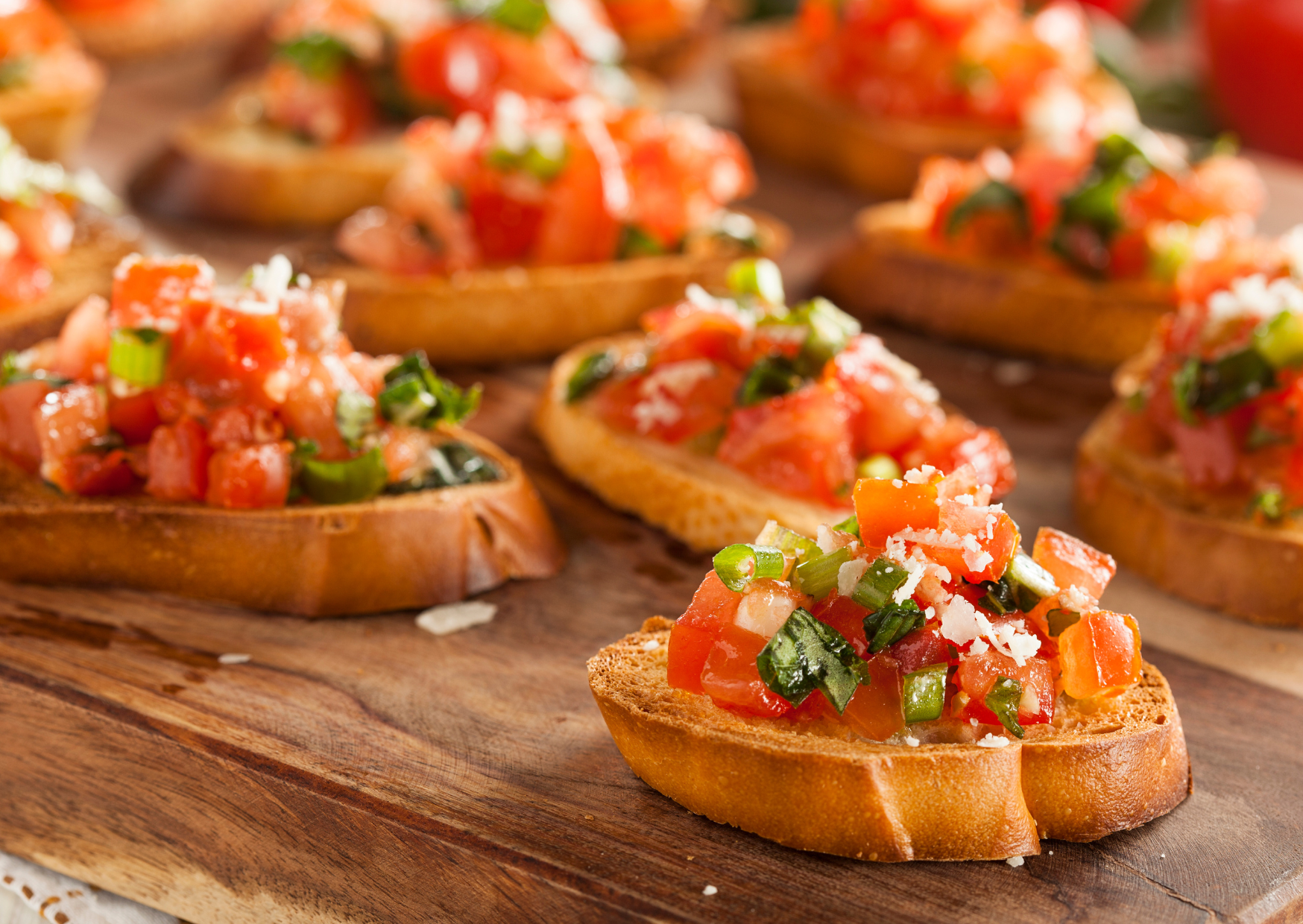
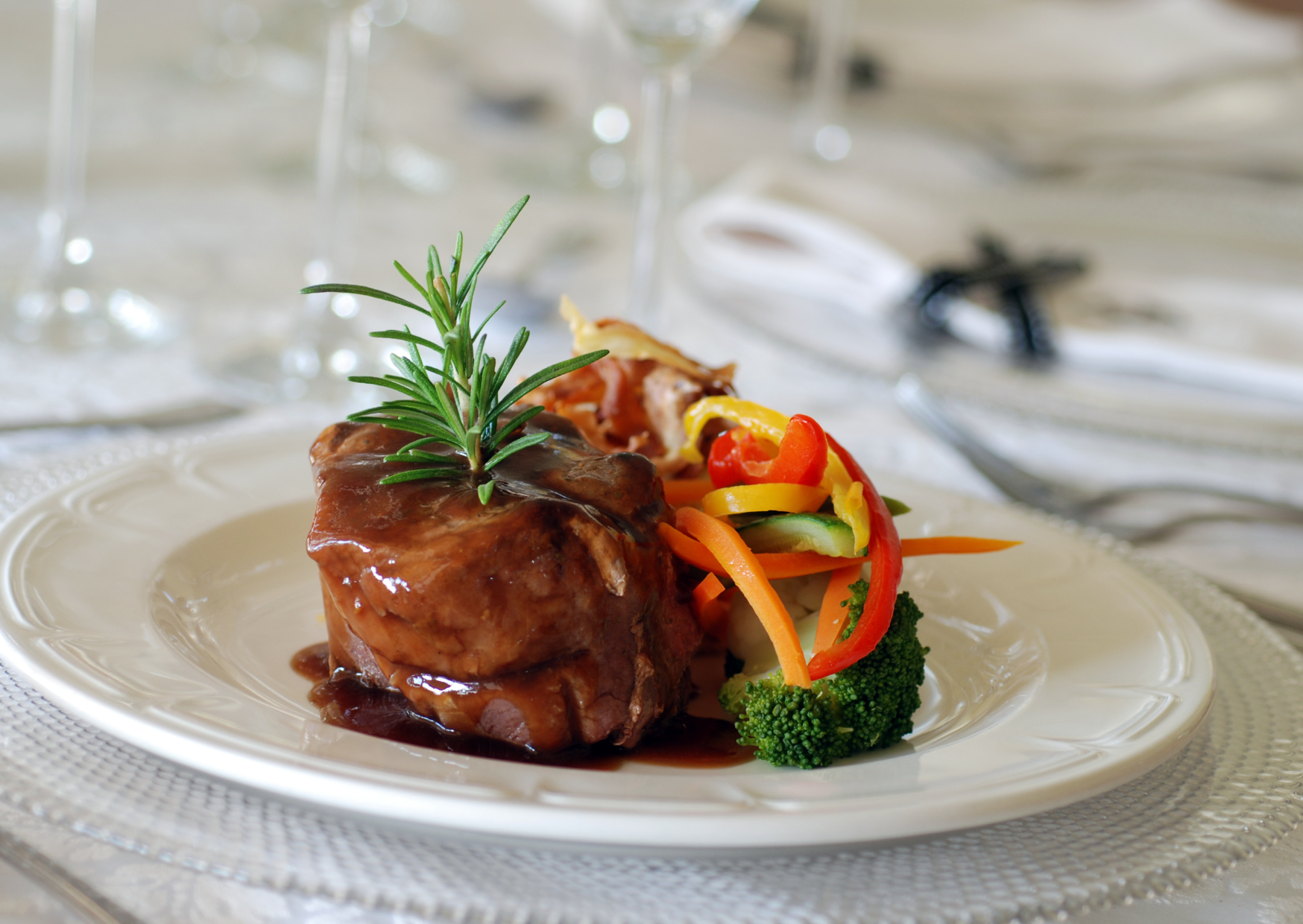
Before anyone talks grams, Italy teaches sequence. Lunch in particular follows a script: primo (a small starch-based dish like pasta or soup), secondo (a small protein), contorno (vegetables), pane (bread), frutta (fruit). Because dishes arrive in a fixed order, you naturally eat slower, see more variety, and stop earlier. The system builds satiation by design—not by counting points.
What looks like “portion control” is really architecture: small components, compulsory vegetables, fruit replaces dessert. School guidelines formalize the pattern—vegetables everyday, fruit several times a week, and water as the default beverage—so kids experience the same structure at home and at school. The effect is simple and profound: what’s normal stays small.
At School, Portions Are Taught—Right Down to the Gram
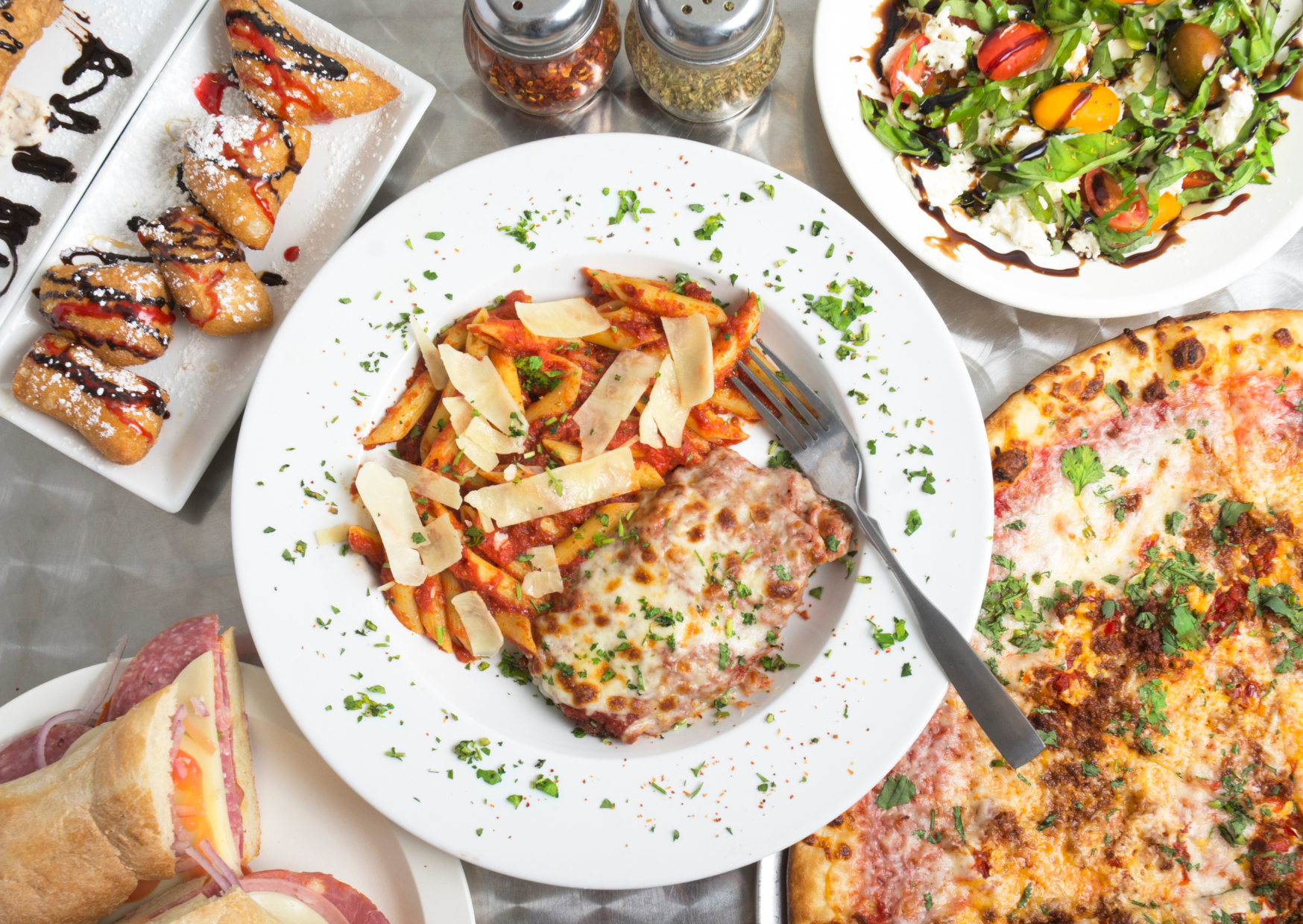
Italy doesn’t leave portions to chance. National and regional school-meal standards specify age-appropriate gram weights for the main foods on a child’s tray, and the lunch itself is designed to cover about 35% of a child’s daily energy needs—not half, not two-thirds. That means a primary-school pasta portion is typically 70–80 g dry weight; meat or fish lands around 60–100 g depending on cut; cooked vegetables are 60–100 g; and fruit is 100–120 g for the 6–10 range. Staff are trained to plate those amounts—standardized scoops and codified serving procedures—so “just one more ladle” doesn’t happen by accident. Set gram weights, plate training, energy targets—that’s portion control without anyone saying “portion control.”
Two more details matter for little kids (ages 3–5). The same tables include smaller pasta and protein targets for preschoolers and spell out how to halve soup/stew starch when it’s served in broth—again, the point is age-fit portions baked into service, not parental heroics. Scaled servings, soup adjustments, preschool norms—habits formed before primary school.
Merenda Is Training Wheels for Appetite—Not a Candy Break
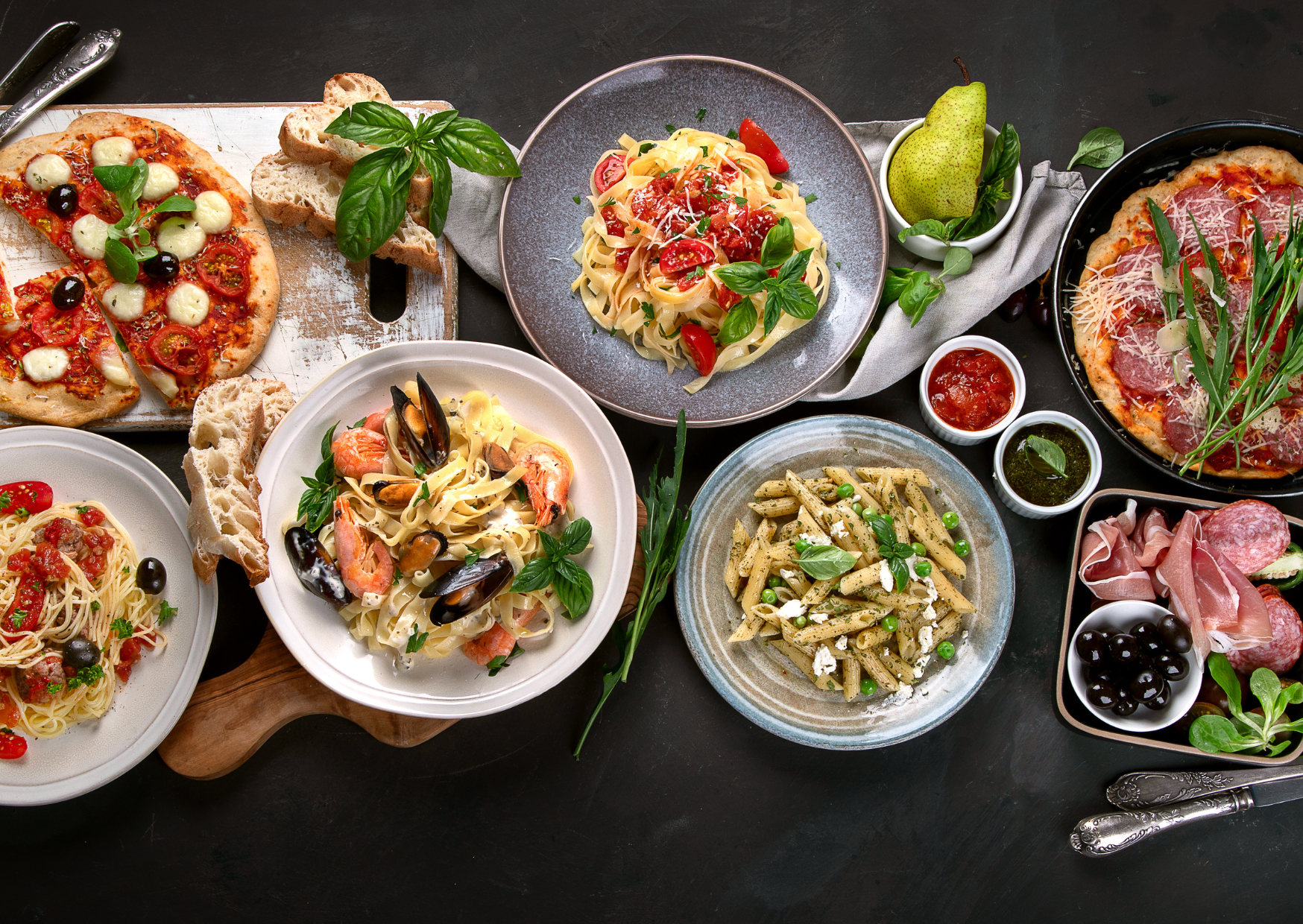
The mid-morning and afternoon merenda (snack) exists to bridge hunger and stabilize energy—not to replace a meal. Public-health guidance that families and schools see routinely suggests light, simple options—a piece of fruit, yogurt, or a small bread roll with olive oil and tomato—and explicitly frames sweet snacks as occasional (a couple of times a week). When kids learn that merenda = small + simple, they don’t show up to lunch starving, and they don’t need a supersized primo to feel okay. Light snack rules, fruit first, sweets as exceptions—that’s appetite training by age five.
The School Lunch Is a Micro-Mediterranean Diet—Every Day
Canteen menus are built from the same playbook adults hear from national nutrition authorities: vegetables at each meal, legumes weekly, fish weekly, extra-virgin olive oil as the fat, whole foods first. Many regions encourage piatto unico—a “complete plate” like pasta e ceci (pasta with chickpeas)—so one moderate dish delivers carbs + protein and keeps portions reasonable across the board. In practice, that means a child gets a modest starch, a modest protein, a real vegetable, and fruit—and leaves satisfied because variety and sequence did the heavy lifting. Vegetables daily, legumes weekly, piatto unico as a tool—the culture teaches smallness through completeness.
Home Reinforces It: Water on the Table, Fruit Ends the Meal
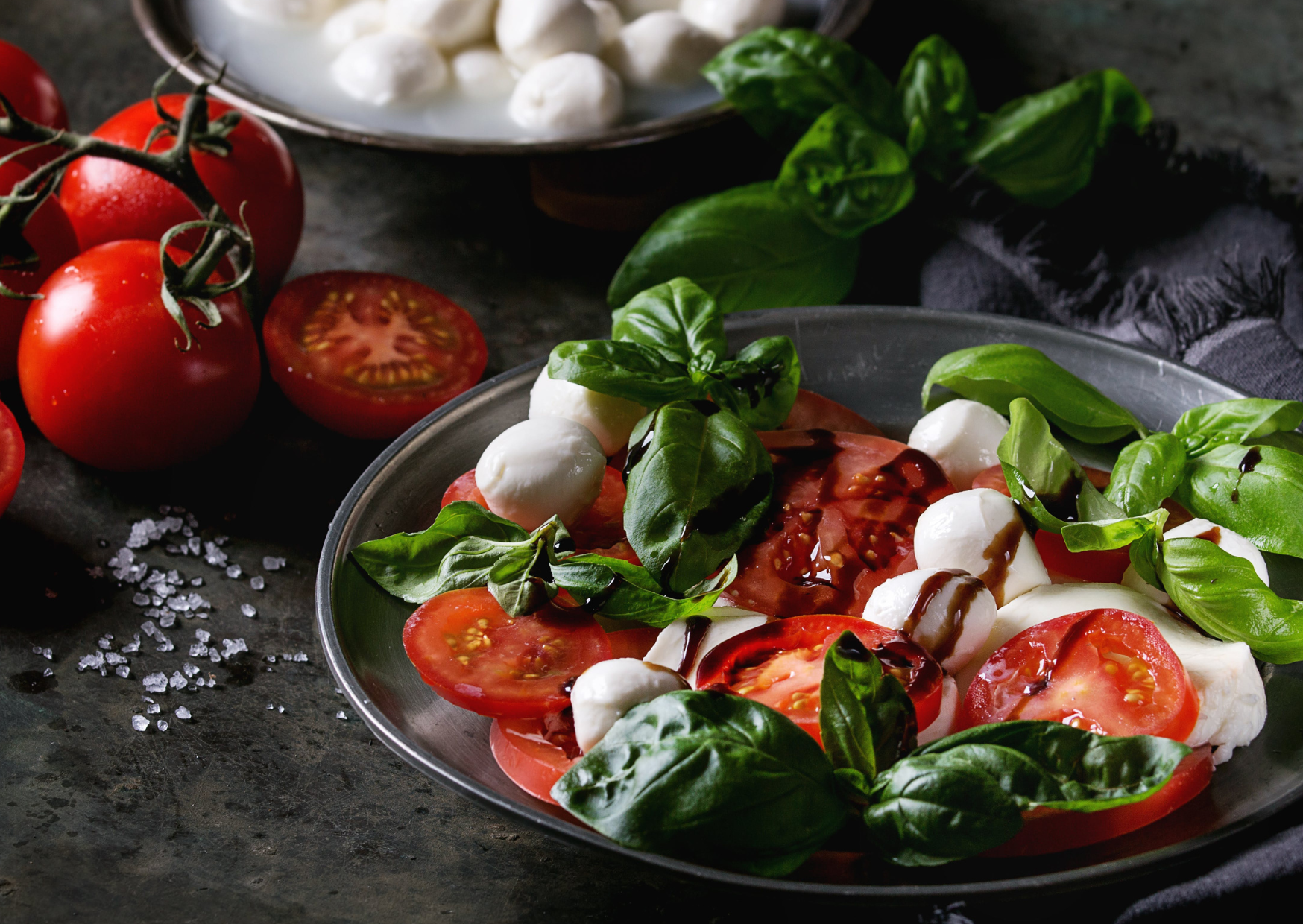
Families don’t need charts to keep the pattern alive. The default drink is water; soda is occasional. The “dessert” most kids expect on ordinary days is a seasonal fruit. And because the primo/secondo/contorno sequence is familiar, home cooks naturally keep each part modest. Even shopping habits lean this way: Italians buy day-by-day in many households, which nudges fresh produce rotation and smaller portions at dinner. The result is an environment where portion control is invisible—you simply mirror what you see. Water over soda, fruit as dessert, small daily shopping—three quiet habits that shrink serving sizes without a lecture.
Reality Check: Italy Has Its Own Weight Problems—But the System Still Teaches “Small”
Let’s be honest: modern Italy battles childhood overweight and obesity, especially in some southern regions. Post-pandemic trends across Europe haven’t helped. But that’s exactly why the school canteen standards and merenda guidance exist—so the default keeps steering kids toward vegetables, fruit, and age-appropriate portions even when snacks and screens tempt otherwise. In other words, the cultural operating system still points to small, structured, daily—the same direction you can point your own kitchen, no matter your postcode. Acknowledge the trend, keep the guardrails, copy the defaults—that’s the adult way to borrow what works.
How to Copy It at Home—No Charts, No Points, No Apps
You don’t need an Italian nonna. You need three rules and a plate order.
- Rule 1 — Start with vegetables. Put a contorno down first (raw fennel and carrots, cherry tomatoes, dressed greens). When vegetables lead, everything else gets smaller.
- Rule 2 — Make fruit the default dessert. Keep apples, pears, citrus ready to eat. Sweet treats are weekend or celebration.
- Rule 3 — Serve water. Pitcher on the table, glasses full. No calories in the drink means you can keep food portions moderate without anyone feeling shorted.
Then plate in the Italian order: small primo, small secondo, vegetables, bread on the side, fruit to finish. Use the school canteen targets for scale: kids 6–10 → 70–80 g dry pasta; protein → 60–100 g; cooked veg → 60–100 g; fruit → 100–120 g. That right there is your portion map—quiet, consistent, repeatable. Vegetables first, fruit as dessert, water always—three levers that shrink portions for free.
The Viral “5–7–70” Pasta Bowl—A Portion-Smart Recipe Kids Actually Eat
This recipe sneaks the Italian defaults into a single bowl: vegetables first, legume protein, and a small, satisfying pasta serving. It’s tuned to Italian school-age portions, scales to adults, and tastes like something you’d get in a Trastevere canteen on a good day.
Pasta e Ceci (Kid Bowl & Family Pan)
Why it works: piatto unico (carbs + protein in one), olive oil + tomato acid for flavor with small pasta, and vegetables up front so the starch doesn’t need to be huge.
Portion guide (dry pasta):
- Age 5–7: 50–60 g per child (on the low end of school targets for younger kids)
- Age 8–11: 70–80 g per child (primary-school standard)
- Adults: 80–100 g per person (many Italian homes use ~80 g)
Ingredients (serves 4: 2 kids + 2 adults; scale as needed)
- Dry small pasta (ditalini, tubetti): 260 g total (60 g × 2 kids + 70 g × 2 adults)
- Cooked chickpeas: 350 g (about 2½ cups cooked, rinsed if canned)
- Tomato passata: 300 g (1¼ cups)
- Extra-virgin olive oil: 2 Tbsp + 1 tsp to finish
- Garlic: 1 clove, smashed
- Vegetable stock or water: 600–800 ml, hot
- Rosemary: small sprig (optional)
- Fine sea salt and black pepper
- Grated Parmigiano-Reggiano (optional): 10–15 g per bowl
- Side salad (contorno): cucumber, fennel, carrots—enough for everyone to eat first
- Seasonal fruit to finish (apples, oranges, pears)
Method (30 minutes, one pot):
- Lead with vegetables. Put the side salad on the table now with water. Dress lightly (olive oil, salt, lemon). Let everyone nibble while the pasta cooks. Vegetables first—that’s the trick.
- Warm olive oil in a wide pot, add garlic and rosemary; soften for 1 minute. Stir in passata and half the chickpeas; simmer 3–4 minutes.
- Add hot stock, bring to a lively simmer, then add pasta. Cook until a minute shy of al dente, stirring so it doesn’t stick.
- Off heat, mash the remaining chickpeas with a fork and stir in—this thickens the sauce so a smaller pasta portion still feels rich. Season to taste.
- Portion by person: kids get 50–60 g pasta’s worth of the pot each; older kids 70–80 g; adults 80–100 g. Ladle sauce to match, drizzle 1 tsp olive oil across the table, add Parmigiano if you like.
- Fruit for dessert. Clear bowls and pass sliced oranges or apples. That’s the “sweet.”
Built-in controls: vegetables first, legumes as protein, pasta portioned to age. Small pasta + thickened sauce = satisfaction without excess.
How Restaurants in Italy Keep You Comfortable Without Super-Sizing
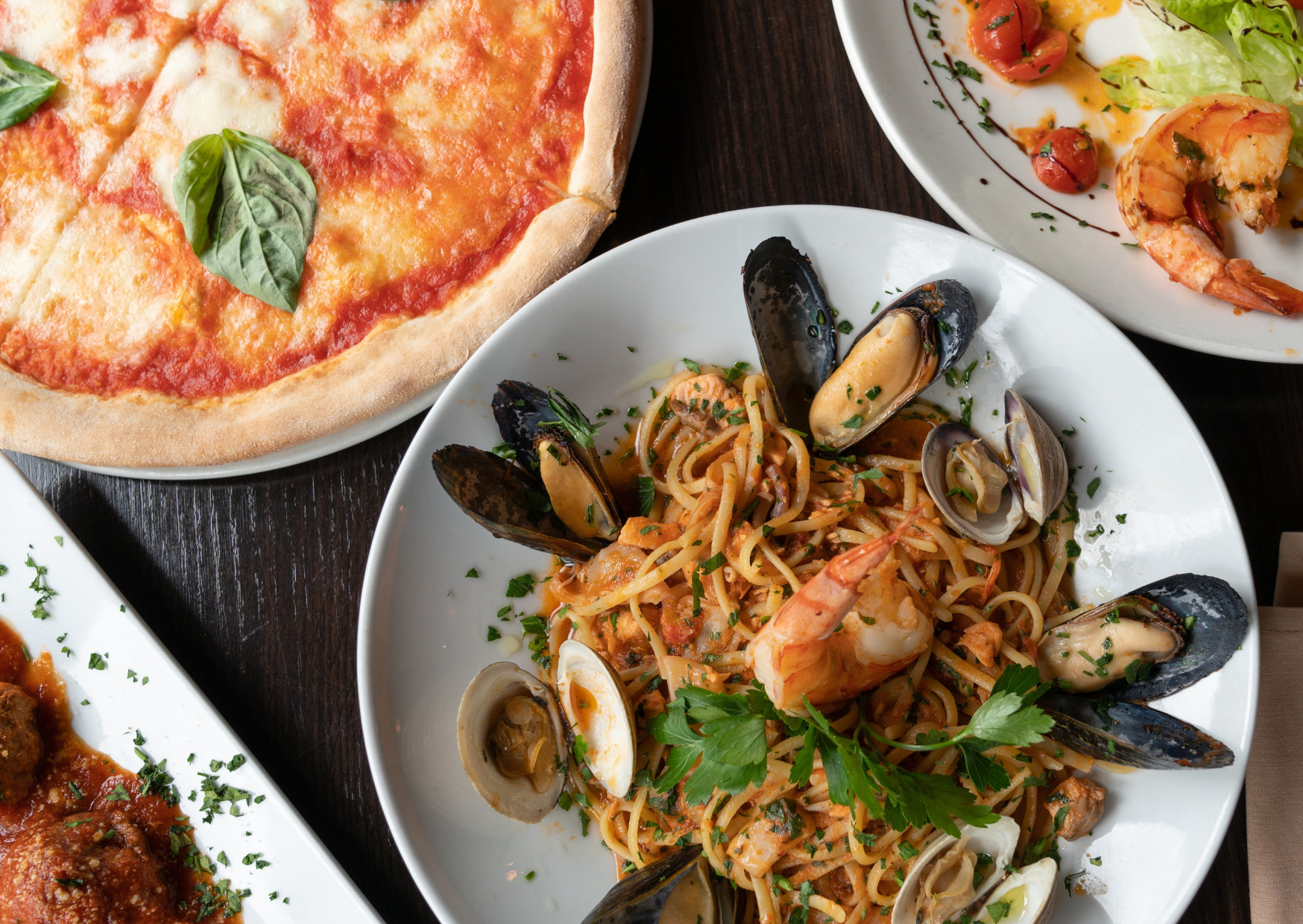
Even outside school and home, the culture helps you. Many trattorie serve two sizes implicitly—a real primo that’s smaller than an American entrée, and a secondo that rarely arrives with a mountain of sides. Bread is plain and modest (often without butter), and fruit or a tiny sweet ends the meal instead of a shareable slab. It’s not that temptation disappears; it’s that the menu architecture keeps you from accidentally eating two meals’ worth at once. Smaller primi, separate contorni, fruit finishes—portion discipline hidden in plain sight.
Practical copy-paste for home cooks: plate one starch, one protein, one vegetable—never two of each; serve bread last (with the main), and hold fruit for the end. The moment you copy the sequencing, your portion math shrinks by itself.
Why This Works Better Than “Just Eat Less”
Telling yourself to “eat less” is like telling your phone to use less battery. Italians skip the pep talk and wire the system: small defaults, fixed order, everyday repetition. Children internalize how much looks normal by five, because schools and homes keep serving the same proportions. Adults rely on the same cues, so portion sizes stay stable across decades—not because anyone is hyper-disciplined, but because the environment is.
If you want an American translation you’ll actually follow, build three constraints into your kitchen: set pasta weights (use a scale once; memorize by eye), standard bowls (smaller than your dinner plates), and a vegetable “first course” that starts every sit-down meal. Fixed weights, smaller vessels, vegetables first—the trifecta that works when motivation doesn’t.
What About Kids Who Are Always Hungry?
Two clarifications keep this approach kid-friendly and sane. First, those school gram targets cover lunch; your child’s day includes breakfast, merenda, and dinner. Hunger between meals often means merenda wasn’t a proper snack (see: fruit/yogurt/mini-panino) or that vegetables were missing (fiber matters). Second, growth spurts are real; rather than ballooning the primo, offer more vegetables and a bit more protein before you add starch. The goal isn’t restriction—it’s right-sized variety, every day. Snack quality first, veg fiber for fullness, adjust protein before starch—three dials that keep kids satisfied without overshooting.
A Better Finish Than “Good Intentions”
If you strip the romance away, the “Italian secret” is boring in the best way: repeatable routines that make small the default. Start with a contorno, portion pasta by age (or by appetite for adults, using an 80–100 g anchor), keep protein palm-sized, finish with fruit, drink water, and use the piatto unico trick on busy nights. Do that for a week and watch how fast the appetite drama fades. Do it for a month and notice how your idea of “enough” resets to something saner—and easier to maintain than any point system.
Small defaults, fixed order, fruit to close—teach those three to your plate and you’ll never need a portion chart again.
Mastering portion control the Italian way is less about dieting and more about changing how you relate to food. It is a cultural habit rooted in pleasure, moderation, and shared meals rather than self-denial. When you shift your focus toward savoring food rather than conquering it, everything about eating feels different and more enjoyable.
Bringing this approach into your daily life does not require a plane ticket or a complete overhaul of your routine. It only requires adopting a slower pace at the table, paying attention to authentic hunger, and learning to appreciate food for its quality rather than its quantity. These small adjustments accumulate into long-lasting habits that feel natural instead of forced.
Ultimately, the Italian method works because it honors the balance between nourishment and enjoyment. When eating becomes an experience rather than an obligation, your body and mind naturally align with healthier patterns. By borrowing a few simple habits from Italian households, you can transform your relationship with food without counting calories or purchasing expensive programs.

About the Author: Ruben, co-founder of Gamintraveler.com since 2014, is a seasoned traveler from Spain who has explored over 100 countries since 2009. Known for his extensive travel adventures across South America, Europe, the US, Australia, New Zealand, Asia, and Africa, Ruben combines his passion for adventurous yet sustainable living with his love for cycling, highlighted by his remarkable 5-month bicycle journey from Spain to Norway. He currently resides in Spain, where he continues sharing his travel experiences with his partner, Rachel, and their son, Han.