
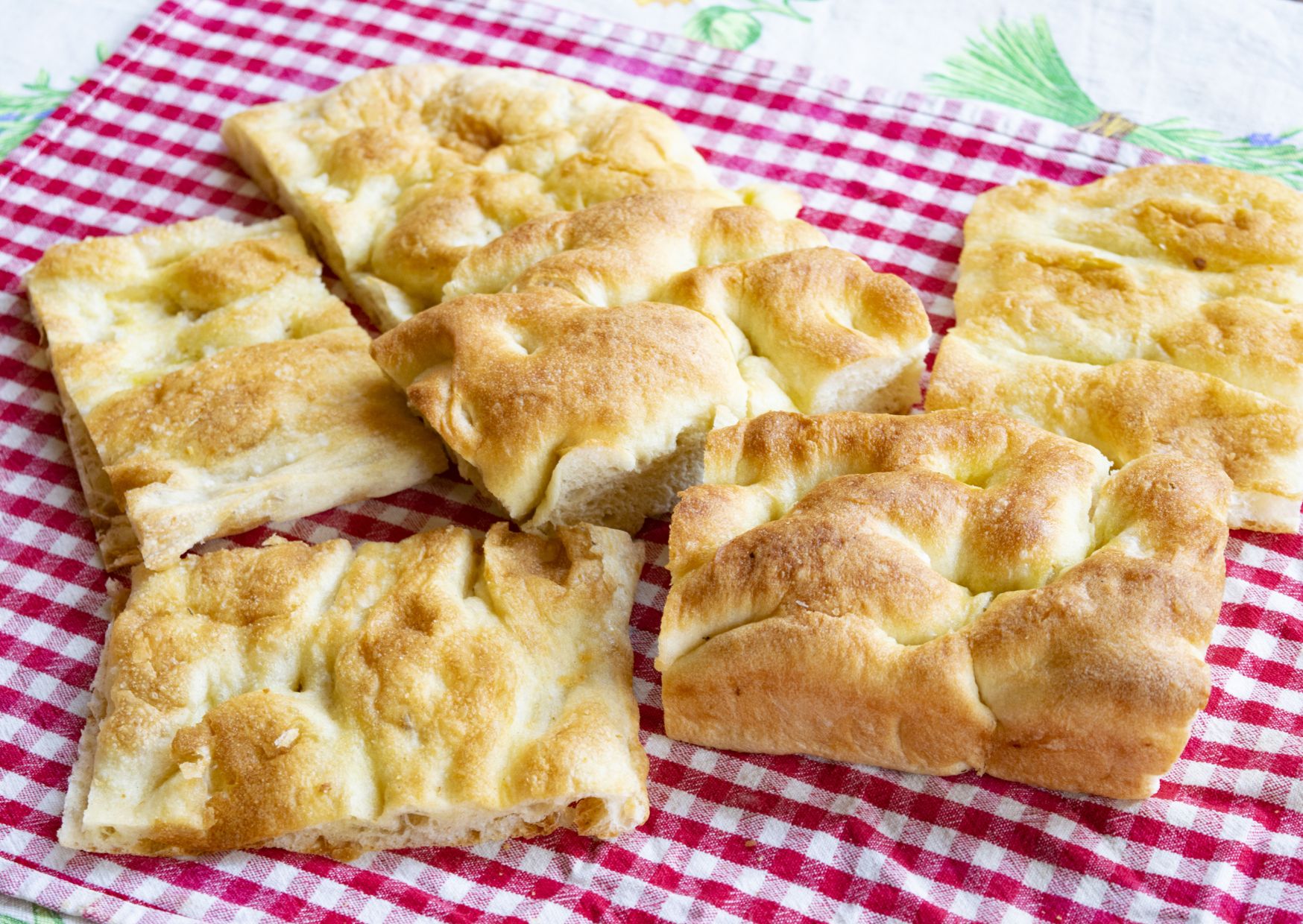
If there is one bread that truly embodies the Italian coastal lifestyle, it’s Focaccia Genovese. Originating from Liguria, this iconic flatbread is known for its fluffy interior, golden crispy crust, and signature dimples filled with glistening olive oil and flaky salt. Simple yet deeply satisfying, focaccia is not just bread in Liguria—it’s a daily ritual, eaten warm from the bakery in the morning, used for sandwiches at lunch, or served as an appetizer with aperitivo in the evening.
What makes Focaccia Genovese special is its light, airy crumb and generous olive oil coating that keeps it moist and flavorful. Unlike drier focaccia versions found elsewhere, authentic Ligurian focaccia is almost cake-like in softness, with each bite tasting of fruity extra virgin olive oil and sea salt harvested along Italy’s northwestern coast. It’s an edible reflection of Ligurian simplicity and love for high-quality ingredients.
In this recipe guide, you’ll learn how to make authentic Focaccia Genovese at home, achieving its fluffy yet crisp texture and deeply savory olive oil flavor. Whether you’re hosting an Italian dinner, making a weekend brunch bread, or just craving bakery-quality focaccia, this guide will help you master a recipe beloved for generations in Liguria.
Read here best Italian food, vegetarian food in Italy, best drinks in Italy and best breakfast in Italy
What Is Focaccia Genovese?
Focaccia Genovese is the original style of Italian focaccia, known for its signature “dimples”, generous olive oil, crispy bottom, and pillowy interior. It’s traditionally served plain, salted, or lightly topped with rosemary or onions.
Best Time to Eat and How to Partner
Focaccia Genovese is traditionally eaten any time of day in Liguria. Locals enjoy it fresh and warm for breakfast with cappuccino, as a mid-morning snack, or sliced horizontally and filled with cured meats and cheese for lunch. It also shines as an aperitivo snack alongside olives, anchovies, and crisp white wine in the early evening.
To partner focaccia authentically, serve it with a spread of Ligurian specialties like pesto, Taggiasca olives, and fresh cheeses. For drinks, pair it with a glass of Vermentino white wine or an Italian spritz for an aperitivo that feels straight out of a seaside bar in Genoa.
One controversial truth about focaccia is that what many people eat outside Italy under the name “focaccia” bears little resemblance to Focaccia Genovese. Versions found in bakeries abroad are often too thick, dry, or bread-like, lacking the oily, tender texture that makes Ligurian focaccia unique. True Focaccia Genovese should be almost melt-in-your-mouth soft inside with crisp edges and a salty, oily crust.
Another often misunderstood aspect is the amount of olive oil used. Some home bakers reduce it out of health concerns, but in Liguria, focaccia without plenty of olive oil is simply not focaccia. The oil is what keeps it moist, infuses it with rich flavor, and creates the iconic golden crust. Skimping on oil sacrifices authenticity and texture for misguided guilt.
Finally, while focaccia is now a global Italian food icon, its humble origins as a cheap, everyday bakery staple are often overlooked. In Liguria, focaccia is eaten standing at the bar with coffee or folded into paper for lunch on the go, not treated as a gourmet artisan product. Romanticizing it into a “luxury bread” misses its role as an accessible, communal food enjoyed by everyone from fishermen to office workers.
Focaccia Genovese Ingredients (For One Standard Baking Tray – Serves 6–8)
For the Dough:
500g (3 ⅓ cups) all-purpose flour or bread flour
350ml (1 ½ cups) lukewarm water
10g (2 tsp) salt
5g (1 tsp) sugar
7g (2 ¼ tsp) instant dry yeast (or 15g fresh yeast)
40ml (3 tbsp) extra virgin olive oil, plus more for drizzling
For the Brine (Salmoriglio):
60ml (¼ cup) water
2 tbsp olive oil
½ tsp salt
Focaccia Genovese Step-by-Step Instructions
Make the Dough
In a large bowl, mix flour, salt, sugar, and yeast (keep salt and yeast separate until mixed).
Add lukewarm water and olive oil. Mix until a shaggy dough forms.
Knead for 8–10 minutes until smooth and elastic (by hand or stand mixer).
Tip: Dough will be slightly sticky—don’t over-flour. It’s key for softness.
First Rise
Transfer to a lightly oiled bowl, cover with plastic wrap or a towel.
Let rise at room temperature for 1.5 to 2 hours, or until doubled in size.
Shape the Dough
Oil a large rectangular baking pan (about 9×13″ or 30x40cm).
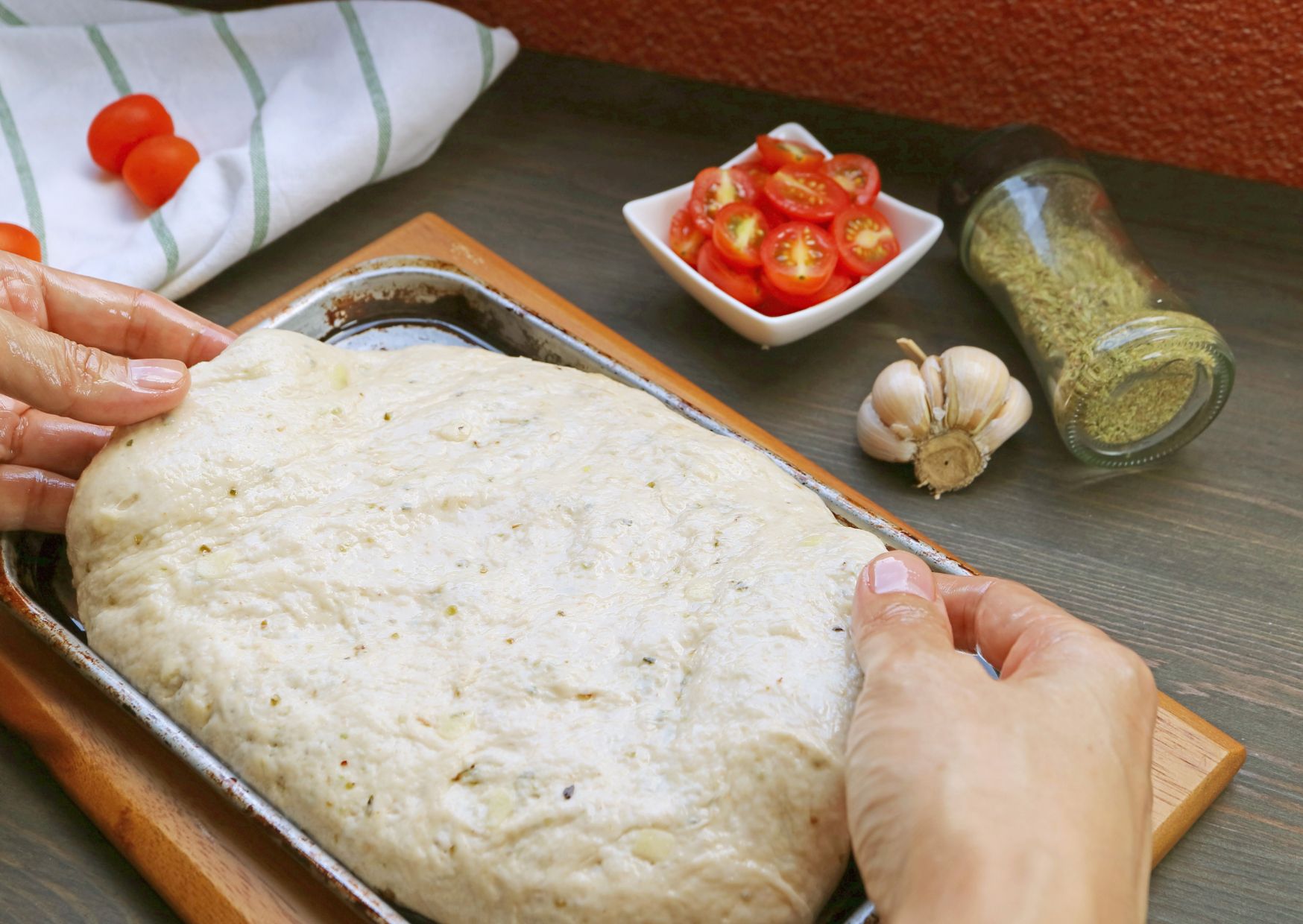
Gently stretch the dough to fit the pan, being careful not to deflate it too much.
Let rest 15–20 minutes, then stretch again to fit corners if needed.
Second Rise
Cover and let rise another 30–45 minutes at room temp until puffy.
Make the Brine & Create Dimples
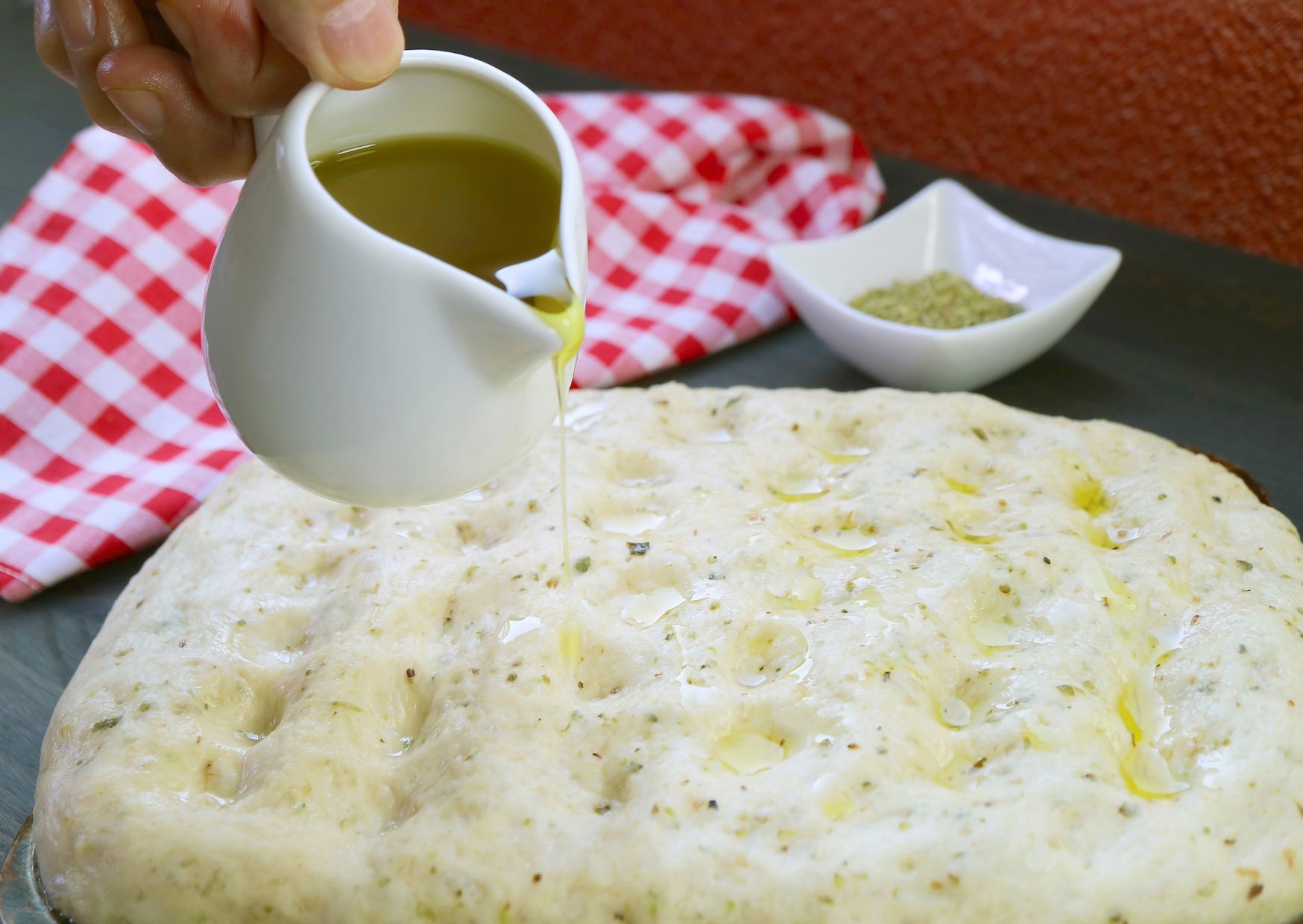
Mix water, olive oil, and salt to make the brine.
Pour over the dough.
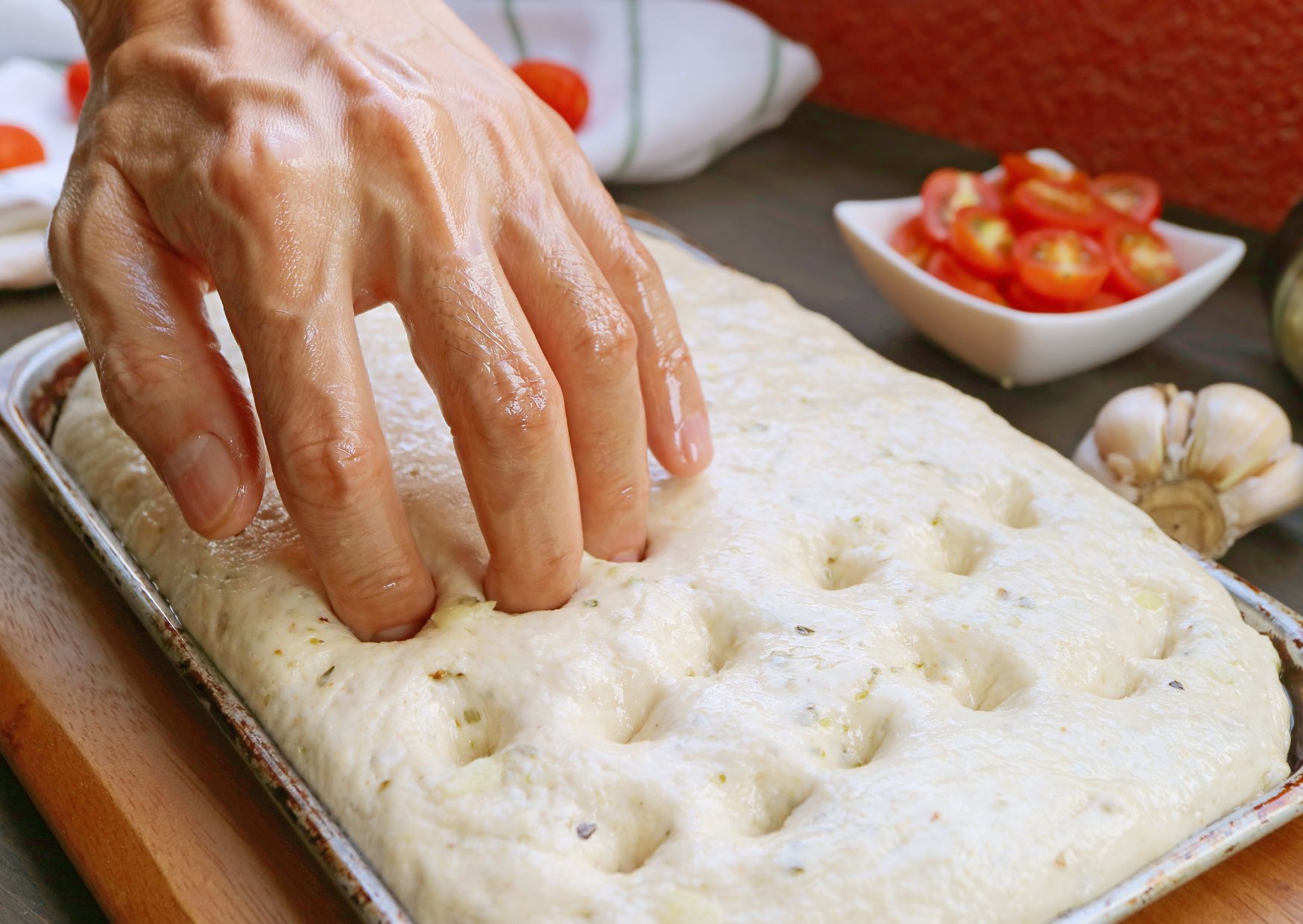
Use your fingers to poke deep dimples all over the surface — press all the way to the bottom without tearing the dough.
Tip: Wet your fingers to prevent sticking and create generous dimples for that iconic look.
Bake
Preheat oven to 230°C / 450°F.
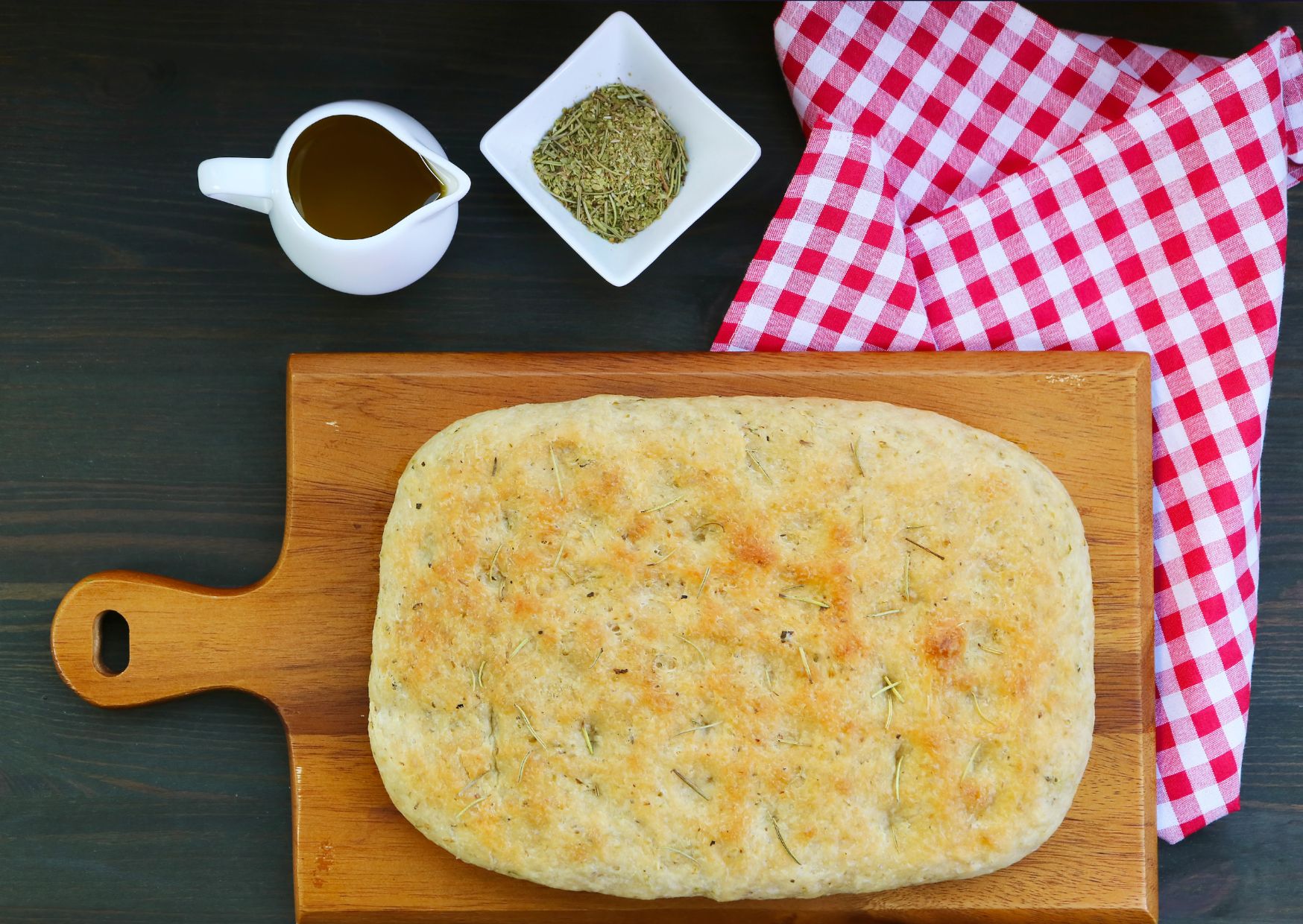
Bake for 20–25 minutes, or until golden brown on top and crisp on the bottom.
Optional: Broil for the last 1–2 minutes for extra crunch.
Cool Slightly & Serve
Cool on a rack for 5–10 minutes, then slice and serve warm or at room temperature.
Tips for Authentic Focaccia Genovese
Use high-quality olive oil — this is the star of the show.
Don’t skip the brine step — it gives the focaccia its signature salty, oily crust.
For extra fluffiness, refrigerate the dough overnight (cold ferment) and let it rise the next day.
Add thinly sliced onions, rosemary, or olives just before baking if you want toppings.
Popular Variations
Focaccia alle Cipolle: With sweet caramelized or raw red onions on top.
Focaccia con Rosmarino: A scattering of rosemary and coarse sea salt.
Stuffed Focaccia (Recco-style): Two thin layers filled with cheese — different but also Ligurian.
Focaccia Genovese Nutrition Info (Per Slice – Based on 12 servings)
Calories: ~220
Fat: 9g
Carbohydrates: 30g
Protein: 4g
Fiber: 1g
Sodium: ~300mg
Pairing Suggestions
Eat on its own as a snack or starter
Serve alongside cured meats, cheeses, olives, or anchovies
Pairs well with Vermentino, white wine, or an Aperol Spritz
Origin and History
Focaccia Genovese has its roots deep in Liguria, Italy—a coastal region famous for its olive oil, sea breezes, and simple, honest food. The bread dates back to ancient Roman times, when flatbreads were cooked over hot stones and seasoned with oil and salt. Over centuries, Ligurian bakers refined the method, developing a soft, airy dough with its signature golden crust and salt-studded dimples.
By the Middle Ages, focaccia had become a staple of the Genovese diet, eaten throughout the day—at breakfast with coffee, alongside soups for lunch, or as a quick snack at the bakery. Its simplicity made it accessible to all, from fishermen heading to the harbor to noble families seeking something rustic yet flavorful.
Today, focaccia is a beloved icon of Italian baking. While different regions have their own variations, the Ligurian version is considered the classic. Its light, fluffy texture and generous olive oil soak make it distinct from other breads, earning it fans around the world.
As focaccia spread globally, its identity began to shift. In many countries, focaccia is treated like a fancy bread topped with elaborate ingredients—roasted vegetables, cheese, herbs, or even meats. Traditionalists in Liguria argue that these toppings, while delicious, stray from the essence of Focaccia Genovese, which celebrates simplicity: flour, yeast, water, salt, and olive oil.
Another point of contention is texture. Authentic focaccia is not dry or dense; it’s soft and pillowy inside, with a crisp, oily crust. Many commercial bakeries outside Italy bake it too quickly or with insufficient hydration, producing bread that lacks the signature airy crumb. For Ligurians, that’s missing the entire point.
Finally, there’s the debate over the “oil bath.” Traditional recipes use a generous amount of extra virgin olive oil—some say almost scandalously so. Health-conscious adaptations often cut this down, but purists insist this step is non-negotiable. The oil isn’t just for flavor—it creates the golden crust and distinctive texture that make focaccia special.
How Long You Take to Prepare
Making authentic Focaccia Genovese requires patience but not complicated skills. The dough is made from basic ingredients and kneaded until soft and elastic. After mixing, it needs to rest for its first rise, typically around 1 to 2 hours depending on room temperature.
Once risen, the dough is gently stretched onto a baking tray, dimpled with fingertips, and then allowed to rise again for another 30 to 60 minutes. This second proofing ensures the airy structure that gives focaccia its lightness. During this stage, the surface is bathed in a salty brine—a hallmark of Ligurian technique.
The entire process, including rising and baking, usually takes around 3 to 4 hours. Most of that time is inactive, making this a great weekend baking project. The result is worth every minute: bread that’s crisp on the outside, soft inside, and rich with olive oil flavor.
Serving Suggestions
In Liguria, focaccia isn’t just a side dish—it’s a way of life. It’s commonly eaten plain, fresh from the oven, with nothing more than the briny, oily crust and tender crumb. Many locals enjoy it at breakfast, dipped in cappuccino or espresso, a tradition that surprises many visitors but delights those who try it.
For a light meal, focaccia pairs beautifully with fresh cheeses, cured meats, or simple salads. Its neutral yet rich flavor also makes it the perfect accompaniment to soups or stews. When sliced horizontally, it can even be used as sandwich bread for an elevated panino.
If you’re hosting a gathering, cut the focaccia into squares and serve it as an appetizer with a drizzle of extra olive oil and a sprinkle of sea salt. It’s a crowd-pleaser that requires little embellishment.
Final Thoughts
Focaccia Genovese represents everything great about Italian baking: simplicity, patience, and respect for good ingredients. It’s proof that with just flour, water, salt, yeast, and olive oil, you can create something extraordinary. The key is not rushing the process and letting the dough do its work.
While creative variations can be fun, understanding the traditional method gives you a foundation to build upon. Mastering the dimple, respecting the oil, and allowing proper fermentation will bring you closer to the authentic Ligurian experience.
Whether you enjoy it as a humble breakfast, a side dish, or a centerpiece at the table, focaccia connects you to centuries of Italian culinary heritage. Once you make it at home, you may never settle for store-bought bread again.

About the Author: Ruben, co-founder of Gamintraveler.com since 2014, is a seasoned traveler from Spain who has explored over 100 countries since 2009. Known for his extensive travel adventures across South America, Europe, the US, Australia, New Zealand, Asia, and Africa, Ruben combines his passion for adventurous yet sustainable living with his love for cycling, highlighted by his remarkable 5-month bicycle journey from Spain to Norway. He currently resides in Spain, where he continues sharing his travel experiences with his partner, Rachel, and their son, Han.