
You arrive with the energy of a subway at rush hour. Paris blinks twice, shrugs, and hands you a dossier checklist that could stun a lawyer. By month eight your savings feel thin, your landlord wants a guarantor you’ve never heard of, your French is good for bread but not for bureaucracy, and the city that looked like a film set has turned into a paperwork maze with perfect lighting. New Yorkers don’t fail here because they’re soft. They fail because they try to run Paris on New York settings.
This is the map, not a scold. The common ways NYC transplants burn out by month twelve, the invisible social rules that decide whether you belong, and the fixes that actually work if you want to last. I’ll keep it specific. Consider this a street-level survival brief, not a romance essay.
Housing: the dossier eats your confidence

New Yorkers know competition, but the Paris rental market is a different sport. The apartment goes to the best file, not the most charming person. Agents and landlords want a dossier with payslips, tax notices, employer letters, French bank details, ID copies, and sometimes a guarantor with a steady French income. No, your American credit score does not impress anyone.
The mistake is treating tours like open houses. You show up, you vibe, you offer to pay more. Paris nods politely and gives the keys to the applicant with perfect paper and a calm employer contract. If you cannot show stable, local-looking income, you are not a tenant, you are a story. Short of that, landlords ask for months of rent up front, which you’re not legally supposed to do, so you end up negotiating in circles until you’re paying for a hotel and a storage unit.
What works: build the dossier first. Get a French bank account, obtain household insurance quotes, prepare three months of bank statements in euros, and line up a guarantor service that is recognized. A registered lease matters more than a perfect view. If you “fall in love” with a Haussmann dream and your file is messy, the dream will cost you six weeks and a nervous rash.
Remember: Paris selects for order, not hustle.
The salary shock that shows up at the bakery

New Yorkers assume the European promise means lower costs everywhere. Rent can be tamed if you accept smaller square meters, but food, transport subscriptions, insurance, and taxes add up quietly. You can easily spend less than Manhattan while still feeling squeezed because the city herds you into a rhythm you did not plan for: good bread, weekday wines, museum memberships, trains on weekends, new shoes that are actually for walking.
The real shock is take-home pay if you came with a local contract. Gross salary looks generous until social charges and taxes explain themselves. People last in Paris by designing a small, durable life near their routines, not by trying to maintain a New York volume of everything. The city rewards the person who chooses a bakery and a bench and uses both. Choose a neighborhood, not a trophy restaurant list.
Key line to carry: move one step back from the tourist radius and your budget relaxes.
Language: conversational is not administrative
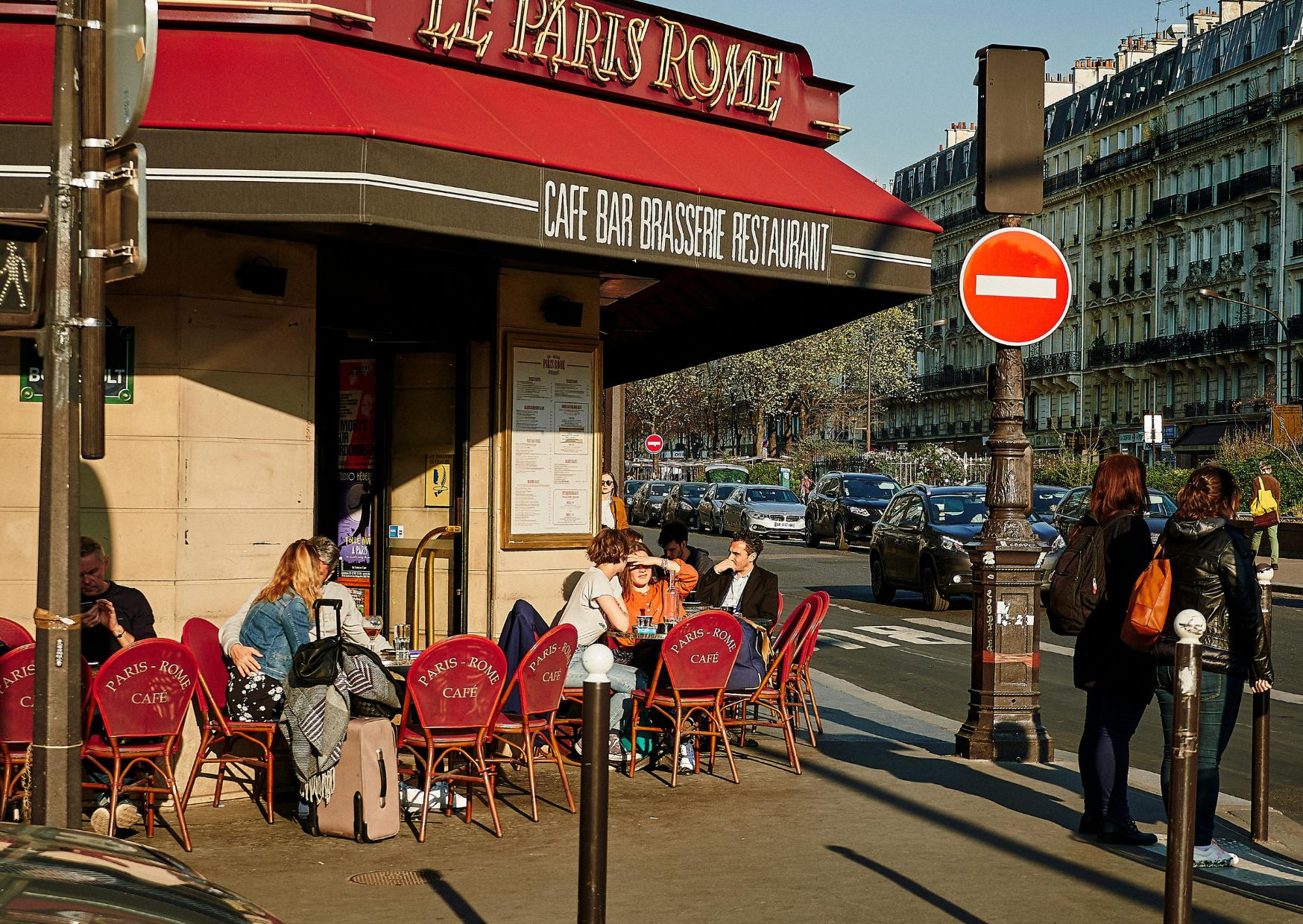
You can order a croissant by week two. You cannot explain a billing error, defend yourself to a syndic, or negotiate a lease clause with “deux cafés s’il vous plaît.” New Yorkers overestimate how far charisma will travel. In Paris, charisma is nice; complete sentences win.
The burnout moment is always the same. A letter arrives with a deadline and a reference number. You mean to translate it later. Later becomes a fee. The fee becomes a shutoff. Administrative French is a dialect and you need it the way you need a Metro card.
What works: schedule language like a gym. One hour daily of reading letters aloud and answering fake admin prompts. Carry phrases that move files: “Je souhaite contester cette facture,” “Pouvez-vous préciser le délai,” “Merci de me confirmer par écrit.” Polite firmness is a currency here.
The point is simple: learn the words that make paper behave.
Work visas, CDI fantasies, and the timeline nobody told you
NYC optimism says “we’ll sort it once we’re there.” Paris says “bring the right visa at the border.” You cannot convert vibes into residency. If you arrive on a tourist stamp and start interviewing, you will collect coffee dates and no contracts. Employers prefer candidates with the right to work already, and sponsorship moves at civil-service speed.
The job fantasy often hinges on a CDI, the permanent contract that signals adult stability. Those exist, but probation periods, HR cycles, and quota quirks stretch months, and the apartment you love needs proof today. Remote work helps, but you must match your visa to your reality and your bank statements to your story. If your paper says “no work,” don’t invoice. Paris is patient until renewals, then the trail of emails and transfers ruins the mood.
What works: pick the legal lane that matches the life you will actually live, bring documentation that would satisfy a skeptical aunt, and accept that income must be boring to be believed.
Short reminder: you don’t move to Paris and then become legal. You become legal and then Paris lets you move.
Style: you wore the city wrong

This part hurts New York pride. Paris is allergic to effort that shows. The uniform is restraint. Good fabric, quiet lines, shoes for sidewalks, one strong piece worn like you forgot it was strong. Your new friends will not say anything about your logo hoodie or the gym-perfect silhouette. They will simply classify you as a visitor who might leave.
Clothes in Paris are less about trend and more about belonging to rooms. At a dinner you remove your coat without performance, speak in lowercase, and sit like the chair was designed for you. Flash reads insecure here. That doesn’t mean looking drab; it means looking finished without shouting.
What works: cut the volume in half and the palette to three colors you can wear until laundry day. Acquire one coat that carries a room and boots that do not announce themselves. You blend to join, then you edit to be seen.
Line to keep: elegance here is competence, not spectacle.
Friendship: proximity beats charisma

New Yorkers collect business cards and commitments. Parisians collect rhythms. The friend who lasts is the one who shows up on the same night to the same wine bar, who messages to say “I found your book,” who remembers your mother’s appointment and asks without ceremony. The social economy values repetition over intensity.
Americans often sprint in month one, host loudly, then disappear into fatigue by month three. It confuses locals. You must become obvious to be included. Share an orbit with people. Let the cafe staff learn your order. Hold a standing dinner with three dishes you can cook without looking. The circle widens slowly and permanently.
What works: choose two habits and keep them. A Tuesday night place and a Saturday market. Familiarity is the application form for friendship here.
Bold truth tucked in the middle: belonging is maintenance, not magic.
Food and mealtimes: your dinner hour is the enemy
New Yorkers eat late because days never end. Paris eats later than Madrid but earlier than your calendar wants, and the main meal floats depending on your work. The real issue is sequence, not hour. Soup or salad first, a main that fits on a human plate, fruit at the end. These details sound precious until you notice your sleep.
People fail because they keep the New York graze: coffee plus pastry, something standing up, a bar snack, a late blowout. Paris wants meals that begin and end. Your body will quit fighting you when you give it ceremony. You will also spend less without feeling like a monk.
What works: anchor lunch in daylight three times a week and make dinner gentle. Your nervous system cannot do Paris if you starve it in the afternoon and punish it at night.
Remember: sequence quietly rules appetite.
Sundays and closure culture: boredom is the test
The city shuts like a book. You will rant once, then you will learn. Sunday is designed to end the week, not to rescue your errands. New Yorkers treat closings like an insult. Parisians treat them like protection. This rhythm is not negotiable, and it is not a trap. It is a guardrail for sanity.
The fail pattern looks like this: you pack Saturday with shopping, eat late, sleep badly, wake to a closed city, and announce Paris is inconvenient. What actually happened is you refused the tempo that keeps locals from collapsing.
What works: build small rituals that make Sunday feel like a plan. A long walk by the canal, bread bought Saturday afternoon, a pot of something that tastes better on day two, a call to your people when time zones line up. If you cannot enjoy a slow day, Paris will feel cruel.
Master Sunday and you master the city.
Parenting and schools: prestige is not the point
If you arrive with children and an American playbook, you will chase the wrong signals. Parisian schools value steadiness before performance, and they do not respond well to parental micromanagement. Extra tutoring is fine; negotiating grading is not. The fastest way to get labeled as difficult is to treat administrators like hotel managers.
The families who leave by month twelve often tried to bend the school to their rhythm instead of stepping into the existing one. You are joining a system that protects the group. If you train your kid to be fragile about being corrected or bored, the classroom will chew them up.
What works: sleep, routines, real food at lunch, minimal late screens, and a grown-up respect for teachers. Make the home calm and the school will carry your child.
Quiet point: belong first, excel second.
Health care and pharmacies: competence without theater
New Yorkers arrive expecting either miracles or inefficiency. Paris offers competent, boring care with pharmacists who behave like frontline clinicians. You will get used to walking in, explaining a problem in plain words, and walking out with what you need for under twenty euros. You will also need patience for referrals and paperwork, and you must learn to bring the correct documents without drama.
People fail by not changing their expectations. They want a concierge, not a system. They assume every delay is proof of failure rather than proof that the city isn’t a premium service. If you need deluxe speed for every problem, you will hate this. If you can adapt to good enough quickly, you will wonder why you ever paid so much for anxiety back home.
What works: pick a general practitioner early, keep a folder for health paper, and befriend your pharmacist. Polite directness solves most of your body’s problems here.
Remember: medicine in Paris sells calm first.
Paperwork tempo: the eight-day rule of survival
You register, you file, you wait, you return with the missing page, you wait again. The rhythm is the rule. New Yorkers break because they keep trying to accelerate every line. You cannot speed a queue by vibrating near it.
If immigration is part of your life here, the most important skill is displaying order under mild pressure. Arrive with copies, carry a pen, tape passport photos inside a folder, and write your reference numbers on paper you can find. When a functionary asks for the one page you thought didn’t matter, you smile and produce it. Paris respects neatness as a moral quality.
What works: treat every appointment like a job you plan to keep. You are not being tested for charm. You are being tested for readiness.
Bring more paper than you think, say fewer words than you want.
Dating and social codes: subtlety wins
This will be quick because you’ll learn it the hard way otherwise. Directness reads as clumsy here, not confident. Eye contact does more work than monologues. Conversation is a slow braid, not a pitch. Bragging ruins the room. So does complaining loudly about the city you chose.
New Yorkers often mistake Parisian reserve for disinterest. The reality is interest here looks like steadiness. Messages at a human tempo, small gestures that are actually thoughtful, invitations that do not require a spreadsheet. If you flood someone with energy, they will assume you cannot keep it up and withdraw to protect themselves.
What works: lower the volume, raise the quality, and let the city handle half the romance by being beautiful while you stay normal.
Quiet flirtation travels farther than grand performances.
The pace problem: you never stopped sprinting

This is the root of it. New Yorkers try to survive Paris by staying fast. Fast here looks like rudeness and feels like stress. The city is efficient exactly where it wants to be efficient and glacial where it doesn’t care about your clock. If you cannot accept that, every day is an insult.
You will last if you let certain parts of your life drag on purpose. Laundry earlier, groceries on foot, smaller fridges so you shop twice a week and meet a human, dinner that ends before sleep, and a phone that sits in a drawer after nine. Paris rewards people who move at a human scale.
What works: schedule your ambition for mornings, protect your lunch, and put your evenings on low heat. You will get more done by aiming at fewer things in a better mood.
One sentence to keep: slow is not laziness here; it is competence.
A month-by-month map that actually works
People always ask for a plan. Try this one and adjust as you learn. It is designed for survival, not for Instagram.
Month 1: File and anchor
- Get legal status in order and secure a registered lease you can afford.
- Choose your bakery, pharmacy, produce shop, and a bench.
- Start language training that includes administrative phrases, not just menus.
If you skip this month’s work, the city will collect the debt later.
Month 2: Shrink the orbit
- Reduce your world to a fifteen-minute radius and build routine.
- Two standing social slots weekly. One market, one drink.
- Cook simple lunches that make dinner small.
Proximity is peace.
Month 3: Become predictable
- Be the person who shows up on time or early, every time.
- Fetch one favor for a neighbor and accept one without fuss.
- Keep receipts, label folders, memorize your health number.
Predictability is how strangers become allies.
Month 4: Edit your life
- Remove one expensive habit you imported from New York.
- Add one Paris habit that lowers your pulse: a museum hour, a riverside walk, a class that happens even when you’re busy.
You cannot keep every version of yourself. Pick.
Months 5 and 6: Check the math and the mood
- If you are still paying tourist prices for daily life, move one metro stop outward.
- If your week still feels frantic, reduce goals and double routines.
- If your French hasn’t improved, swap to a teacher who makes you role-play phone calls.
Stability beats novelty by summer.
If you are already sinking
No drama. Six moves in fourteen days will change your trajectory.
- Downshift your rent at renewal or switch districts. Square meters and savings have a direct relationship.
- Put your visa in alignment with your real income and stop improvising.
- Cut food chaos by moving the main meal to lunch three days a week and eating dinner like you have somewhere to be early.
- Automate the boring: transit pass, bill autopay, calendar reminders for renewals.
- Shrink social life to routine: one cafe, one bar, same days. People remember steady faces.
- Do a paper purge: one folder for immigration and housing, one for health, one for work. Label both in French.
Two weeks later you’ll feel less like a tourist and more like a resident in training. That feeling keeps people here.

About the Author: Ruben, co-founder of Gamintraveler.com since 2014, is a seasoned traveler from Spain who has explored over 100 countries since 2009. Known for his extensive travel adventures across South America, Europe, the US, Australia, New Zealand, Asia, and Africa, Ruben combines his passion for adventurous yet sustainable living with his love for cycling, highlighted by his remarkable 5-month bicycle journey from Spain to Norway. He currently resides in Spain, where he continues sharing his travel experiences with his partner, Rachel, and their son, Han.