
On paper it looks perfect. Sell the house, pocket two hundred thousand, move somewhere with tiled streets and grilled sardines, and live softly by the sea. Then the spreadsheet hits the real world. €200K is a cushion, not a pension. In Portugal it buys time, not permanence. The gap between the fantasy and the bills is not a mystery. It is arithmetic that most people never lay out in one place.
Below is the unromantic version. What residency rules actually reward, how first-year set-up torches cash, why taxes eat more than you planned, and the boring monthly costs that never make it into Instagram reels. I will use round numbers and conservative assumptions so you can change a line and re-run it for your life. If you understand the cash flow, you stop daydreaming and start deciding.
The rule that breaks the fantasy: savings do not replace income
Portuguese residency paths for non-EU citizens primarily care about stable, ongoing income, not just a pile of cash. Savings help, but the gate opens for proof of recurring funds that can keep you from becoming a burden. This is the first blind spot. A lump of €200K does not guarantee approval, and it definitely does not guarantee durability. If your plan is to withdraw from that lump to live, immigration and year-to-year life treat you like a self-funded retiree without a pension. The clock starts the moment you land.
Key idea: you retire on cash flow, not on headlines.
The year-one burn you were not warned about
People budget like they are already settled. You are not. Year one is the most expensive year you will have in Portugal for three reasons: front-loaded housing costs, private insurance on day one, and bureaucracy that demands duplicates of everything.
- Housing entry: typical landlord requests are first month, last month, and a 2 to 3 month deposit, sometimes with a guarantor or 6 to 12 months paid up front if you lack local pay stubs. In Lisbon or Cascais that can mean €6,000 to €12,000 tied up before your boxes arrive.
- Temporary housing: two to six weeks of Airbnb while you search adds €1,200 to €3,000 if you want something with a kitchen.
- Private health insurance: priced by age, not by dreams. For many late-50s and 60s applicants, assume €150 to €300 per person per month for a policy that satisfies residency while you wait to access the public system.
- Translations, notarizations, apostilles, courier mail, multiple police certificates: budget €500 to €1,000 just to move paper.
- House set-up: appliances, small furniture gaps, bedding, cookware, blackout curtains, routers, deposits for utilities. €1,500 to €4,000 disappears fast even if you buy modestly.
- Phones, transport cards, contingency: another €500 to €1,000 to make the first month survivable.
By month three you can easily be €12,000 to €20,000 down without one luxurious decision. The first year is a test of patience and liquidity.
Lisbon is not “cheap,” and the suburbs learned your tricks
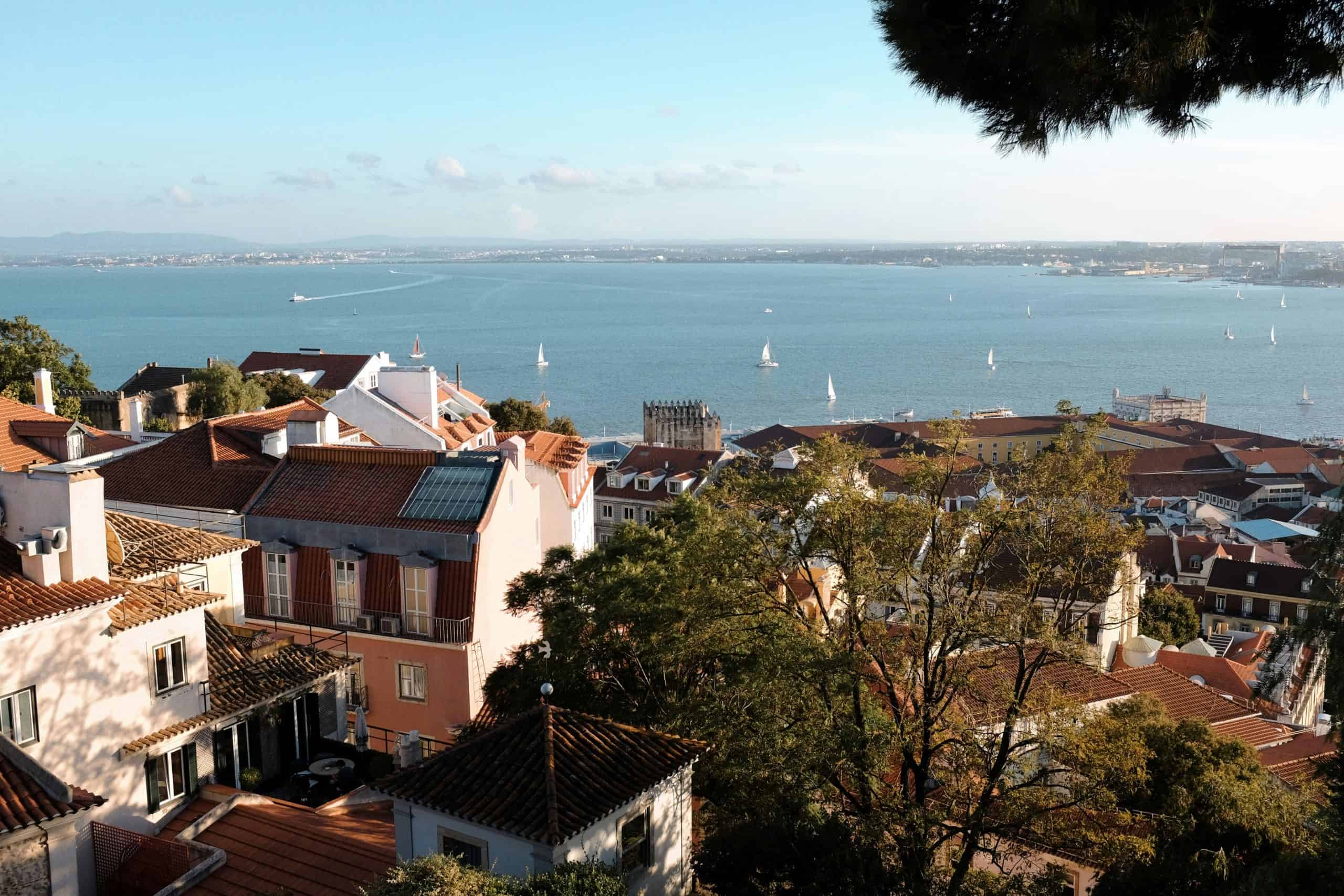
Rents in coastal magnets rose because the rest of the world discovered them. You can still live well in Portugal, but you cannot import a metropolitan American life and pay village prices. The spread today looks more like this for a modest but decent one-bed or compact two-bed:
- Lisbon proper: €1,400 to €2,200
- Cascais / Oeiras: €1,500 to €2,300
- Porto center: €1,100 to €1,800
- Braga / Aveiro / Leiria tiers: €800 to €1,300
- Interior towns: €500 to €900
Add condo fees and utilities to the rent. Electricity for heat pumps and summer A/C, water, trash, internet, and mobile easily average €180 to €260 per month for a couple in an efficient flat. If you need a car, parking can add €50 to €100, and insurance, tolls, and maintenance push annual costs well into €1,200 to €2,000. The sea view doubles your costs and halves your excuses.
Remember inside this section: location is a budget, not an aesthetic.
The quiet monthly that drains you slowly
People list rent and forget the rest. Here is a realistic monthly for a couple living decently, not extravagantly, in a coastal city. Adjust down if you are truly inland and car-free.
- Rent: €1,600
- Utilities and internet: €220
- Mobile plans for two: €30 to €40
- Groceries and household items: €450 to €650 if you cook like locals and skip constant imports
- Eating out modestly: €200 to €350
- Health insurance private while settling: €300 to €500 for two, age dependent
- Transport: metro and trains €60 to €100 for two, or car costs spread monthly €200 to €300
- Medications, pharmacy, co-pays: €30 to €80
- Gym or club or classes: €40 to €80
- Incidentals, clothing, gifts, small travel, coffee: €150 to €300
Your baseline without luxuries sits at €3,100 to €4,000 per month in the coastal belt. Inland and truly modest, you can compress to €2,200 to €2,700 with discipline. Two hundred thousand evaporates quickly if it is pretending to be income.
If you draw €3,200 per month from savings, you burn €38,400 per year before tax considerations. At that pace, €200K lasts about 5.2 years if markets are flat and nothing big breaks. If you end up closer to €3,800 per month, you bought four years and change. Retirement is not supposed to feel like a countdown.
The tax trap: “I’ll just withdraw what I need” is rarely tax-efficient

Your U.S. retirement accounts and social security interact with Portuguese tax rules in ways that produce surprises. Without diving into legal citations, here is the practical shape:
- Worldwide income is reportable in Portugal once you are tax resident. That includes retirement distributions, dividends, rents, and capital gains.
- Double taxation agreements avoid being taxed twice on the same income, but they do not always reduce your Portugal bill to zero. Credit mechanisms require timing and paperwork.
- Withdrawals from traditional IRAs or 401(k)s count as income. The rate you pay in Portugal depends on your total taxable income there, not the marginal rate you had in the U.S.
- Selling assets to fund living costs is not neutral. Capital gains timing matters, and FX swings change the euro value of a U.S. sale.
- Social security benefits can be taxable in Portugal depending on treaty interpretation and your full income picture.
Key point: if your plan is to “live off the €200K and top up from accounts as needed,” hire a cross-border tax professional before you step on the plane. Small errors cost five figures over five years.
Healthcare is good, yet your first two years can feel private
Portugal’s public system is a relief after U.S. pricing, but access is not instant. You need residency cards, a family doctor, and local registration before the system behaves like a habit. In the meantime you are leaning on private insurance and private clinics. The care is competent, the bills are sane, but age pricing is real and pre-existing conditions can limit choices.
The pattern most newcomers end up with is simple. Pay for private to guarantee speed and specialists while you integrate into the public track, then use both depending on the need. You still pay something in either lane. For anyone over 55, budget €2,500 to €5,000 per year for two until you know your real usage. Healthcare is cheaper than in the States, not free.
Family travel, estate ties, and the boomerang effect
You will fly back. Weddings, parents, grandkids, health scares, paperwork that refuses to die. Two round trips to North America for two people can erase €1,600 to €3,000 per year depending on season and origin. Add pet care, hotels, and taxis. Distance has a price even when your heart feels brave. If you ignore this line, you will overspend in year one and spend year two playing catch-up.
The guarantor problem that becomes a bank problem
Landlords want comfort. A foreigner with a big lump of savings and no local income looks risky. You may face requests for prepaying six months or providing a Portuguese guarantor you do not have. Workarounds include larger deposits, using vetted relocation brokers, or proving income more convincingly. Banks have their own flavor of this. Opening accounts is easier than securing credit products, and transferring large sums invites compliance questions. The system rewards patience and documentation, not charm.
Reminder inside this section: expect to prove the obvious three times.
A simple “can we retire” test that does not lie

Run this like a small business. If you pass, keep going. If you fail, adjust the plan before you move.
- Monthly burn rate in your target city with real rent listings and your actual age-priced insurance: ___
- Guaranteed monthly income from pensions, annuities, social security, rental cash flow net of costs: ___
- Gap: burn rate minus guaranteed income: ___
If the gap is more than €1,500, your €200K is a four to seven year bridge depending on your lifestyle. If the gap is €500 to €1,000, your €200K becomes a ten to twenty year safety net with conservative market returns. If the gap is zero or negative, congratulations, your savings become insulation instead of oxygen.
The only number that matters is the gap.
What actually works for people with €200K
You can still do this. You just have to do it like an adult who likes numbers. The people who stay in Portugal with roughly €200K in savings tend to do five things that look boring and save their entire project.
1) They move where the rent makes sense.
Not where the sunsets went viral. Coimbra, Leiria, Viana do Castelo, Évora, parts of the Algarve back from the water. Half the battle is the lease.
2) They bring a modest recurring income they can prove.
Pension, social security, annuity, dividend stream, remote contract. That money is what immigration respects and what landlords prefer.
3) They accept smaller quarters and design them beautifully.
A 55 to 70 square meter flat near daily life beats a 100 square meter view that eats your cash and your freedom. Small space makes budgets honest.
4) They plan taxes before they pack.
Which accounts to draw first, how to time capital gains, how to document credits, which country taxes which stream. Tax sequence is free money if you respect it.
5) They treat the savings as a buffer, not a paycheck.
The lump pays for setup, emergencies, and rare treats. The month runs on predictable income. That is what makes retirement feel like arrival rather than survival.
A plain-language sample budget that tells the truth
Couple in a second-tier coastal city, car-free, one-bed with a balcony, cooking often, modest private insurance.
- Rent: €1,050
- Utilities, internet, mobile: €240
- Groceries and household: €560
- Eating out, cafés, two modest date nights: €240
- Private insurance for two, mid-60s: €380
- Transport cards and regional trains: €90
- Pharmacy and small medical: €60
- Gym and classes: €60
- Clothing, gifts, incidentals: €150
Total: €2,830 per month or €33,960 per year
If guaranteed income is €2,000 per month, the gap is €830 and the annual draw from savings is €9,960. €200K, invested conservatively, can cover that gap for a very long time, especially if you add two small part-time income streams or trim rent by €100. If guaranteed income is €1,200 per month and the rent is a Lisbon €1,600, your gap jumps above €2,000, and the €200K turns into a short runway. Same country, different outcome.
The four traps that wreck otherwise good plans
Trap 1: importing an American life.
Big home, constant Amazon, car by reflex, eating out like entertainment, imported brands, endless subscriptions. Portugal lets you do this until it quietly empties your account.
Trap 2: ignoring age pricing in insurance.
Quotes at 57 are not quotes at 67. Ask for ten-year projections. Bored questions save future money.
Trap 3: underestimating travel to family.
One urgent trip can erase a month’s budget. Your calendar and your heart will beat you if you do not budget this like a tax.
Trap 4: assuming today’s exchange rate.
A weaker dollar makes your U.S. income smaller in euros. Build a buffer for currency swings. FX is not a theory, it is your groceries.
What to do before you decide
- Price five real apartments in two target cities and write down entry costs each landlord wants. Do not average away the pain.
- Ask two private insurers for age-based quotes with the coverage level residency requires. Save the PDFs.
- Meet a cross-border tax professional who handles U.S.–Portugal cases. Bring actual account statements and ask about sequence of withdrawals.
- Build a first-year ledger with the front-loaded costs listed earlier. If the number scares you a little, good. Fear is cheaper than regret.
- Decide your non-negotiables. Some people need sun and cafés. Others need space and silence. Any plan that ignores your temperament will implode in month seven.
Do these five and the decision will make itself.
If you are already here with €200K and sweating

It is recoverable. You need twelve calm weeks and a pencil.
Weeks 1 to 4
- Renegotiate or relocate your lease at renewal to a smaller unit or a cheaper district.
- Kill every subscription you do not use weekly.
- Move your main meal to lunch and cook four days to cut food spending without pain.
- Replace car costs with trains for three months and measure the savings.
Weeks 5 to 8
- Book a tax session to fix the next twelve months of withdrawals.
- Price a lower-tier private policy that still satisfies residency.
- Add one small income stream you can tolerate. Tutoring, editing, two mornings at a local business.
Weeks 9 to 12
- Build a €5,000 local emergency fund in euros to stop raiding U.S. accounts on bad FX days.
- Schedule travel to family like adults and shop dates, not feelings.
- Re-forecast your gap. If it sits under €1,000, the stress will leave your shoulders by dinner.
You do not need heroics. You need a smaller rent and a cleaner ledger.
The uncomfortable truth that saves marriages
Many couples arrive with one partner in love with a postcard and the other in love with a budget. The fight is not about Portugal. It is about math versus mood. Make the mood obey the math for one year. Live inside the numbers and take weekends to buy beauty that is cheap in this country: walkable streets, coffee with a view, trains to small towns, lunch menus that cost less than your former appetizers. If you can stay inside a sustainable burn rate and still feel human, you have found your place. If not, adjust the city or adjust the plan before the resentment grows roots.
The last calculation most people skip
Ask yourself one question. If all markets went sideways for five years, could you still sleep. If the answer is no, you are not retiring. You are taking a sabbatical with a countdown timer. Call it what it is and either add income or change location until you can sleep again. Pride does not buy groceries. Numbers do.
Portugal rewards adults who respect arithmetic. €200K is a blessing when it is a buffer. It is a liability when it is pretending to be a salary.

About the Author: Ruben, co-founder of Gamintraveler.com since 2014, is a seasoned traveler from Spain who has explored over 100 countries since 2009. Known for his extensive travel adventures across South America, Europe, the US, Australia, New Zealand, Asia, and Africa, Ruben combines his passion for adventurous yet sustainable living with his love for cycling, highlighted by his remarkable 5-month bicycle journey from Spain to Norway. He currently resides in Spain, where he continues sharing his travel experiences with his partner, Rachel, and their son, Han.