

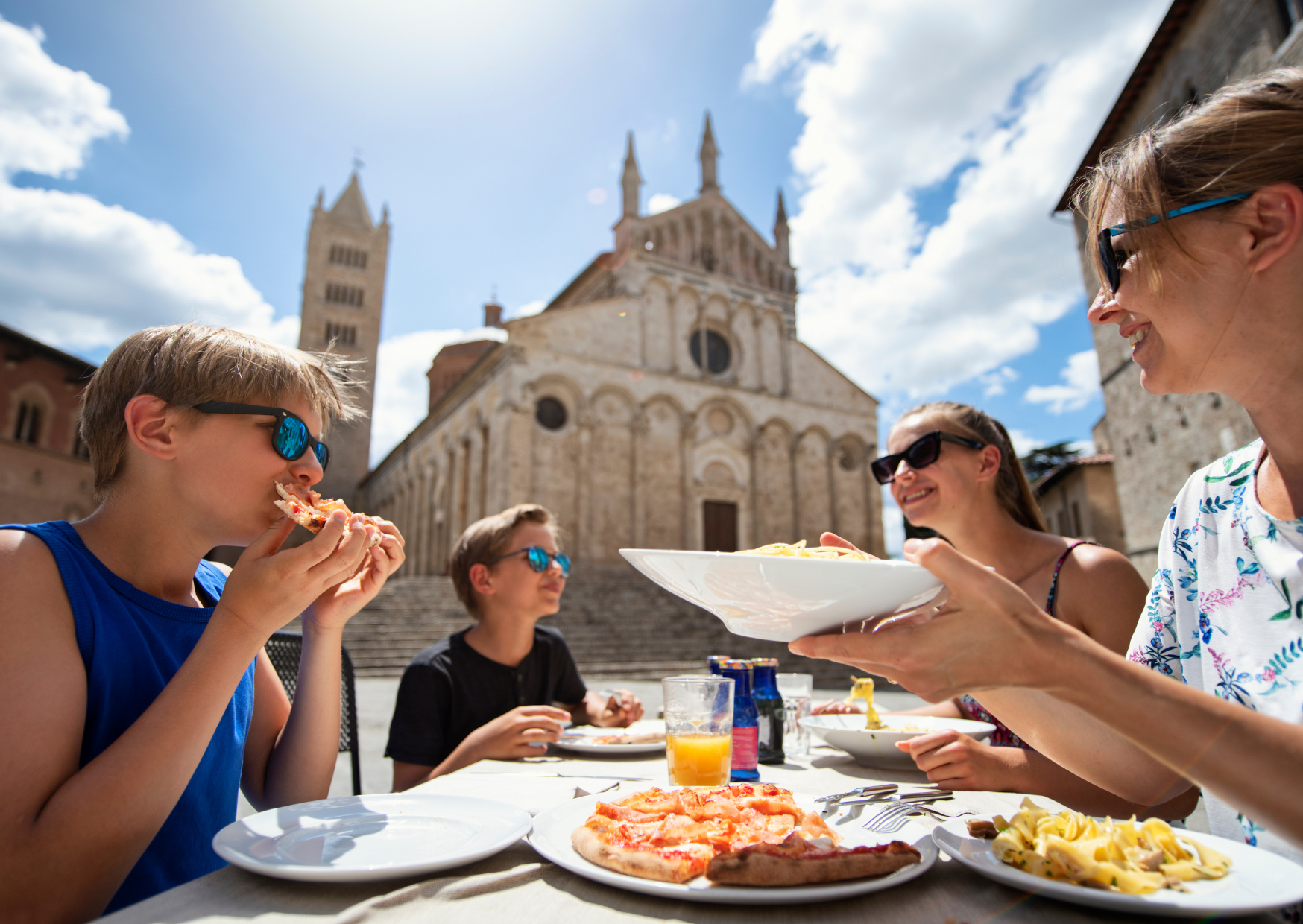
The first time I sat through a three hour Sunday lunch in Emilia Romagna, I kept bracing for the question. You know the one. “How much have you lost.” “Are you being good.” “What diet are you on.” It never arrived. People argued about balsamic vinegar, someone insisted the tomatoes were wrong for November, a grandmother worried you had not taken enough tortellini, and nobody once assessed anyone’s body like a stock report. Food was a relationship, not a report card. That detail is what Americans notice last and then cannot unsee.
You can call it culture or manners or a better relationship with pasta. The engine is simpler. Italian family life organizes attention around appetite, ritual, and care, not around performance and self-surveillance. The body becomes a quiet consequence of the week rather than the main stage. When you remove the spotlight, a lot of noise disappears, including the conversational tic that turns meals into weigh-ins.
This is not a love letter to perfection. Italian families are loud, contradictory, and occasionally nosy about everything else. Some relatives will comment on your haircut with Olympic precision. But the weight thing is different. Shame is not an appetizer, and people who grow up in that air move through the table without scanning their plate like a compliance officer. If you have ever felt reduced to your calorie count at a family table, you already know why this matters.
What follows is not a travel romance. It is a blunt comparison and a set of small moves you can steal for the next family gathering so the food is food again and not a morality play. I will get specific. I will give you lines that work without sounding performative. And I will be honest about where Italy slips, because no country is a therapist.
What Italian mothers are actually measuring

Italian women evaluate a thousand things, just not your bathroom scale number. They watch whether you reached for the salad, whether you ate slowly, whether you tasted the thing they simmered for hours. They notice if you looked tired and whether you took a second spoon of broth because you needed warmth, not approval. Care points at energy and mood before it points at shape. That is why a plate feels generous rather than strategic.
There is also the clock. Lunch is king, dinner is smaller, the day has a slope. Timing controls appetite more than self talk does. You see it everywhere. Big meal at two, a walk, lighter evening, normal sleep. When a household respects that curve, bodies change quietly and talk about bodies gets boring. Families do not need to ask if you are being good, they can see if you are living like a human.
Try this at your own table. Move the main meal earlier, serve something warm at the start, place fruit at the end, then suggest a ten minute walk. Structure kills the need for commentary, because everyone feels better and the room relaxes.
Why Americans keep turning meals into reviews
Part of it is the health economy. Everything is a program, a challenge, a scoreboard. You are asked for a number because numbers are the only language that crosses all the diet tribes. Part of it is the way holidays are built. Scarcity all week, a performance on Thursday, then judgment on Friday, as if shame were the after dinner mint. People mean well. They are trying to connect. They have not been given another script.
There is also the advertising layer. American food culture sells virtue and dessert in the same sentence. Your milk is righteous, your cookie is sinful, and you must declare allegiance with each bite. When morality gets attached to ingredients, conversation rots. Families pick it up like a cold and repeat it. By the time a holiday arrives, the chorus sounds normal and exhausting at the same time.
You can stop this without a speech. Ban the words good, bad, cheat, and guilty from the table for one day. Replace them with delicious, salty, bright, tender. Adjectives that describe reality are kinder than judgments that inventory people.
The Italian trick you can copy in one grocery run
It is not truffles. It is broth. A pot on the stove that smells like somebody thought of you. A warm first course slows appetite and mood in the best way, and it reframes the meal in the language Italians actually use: comfort, texture, steam, bread that crackles. When you start that way, the second course becomes about flavor and company, not about proving you are disciplined.
Put a soup or a simple pasta in the first slot and watch conversation change. People talk about the sauce, the stock, the shape of the noodles. They stop interviewing each other’s bodies. Attention moves from bodies to craft, and that is how you end the weigh-in without announcing policy.
If you want a fast start: brothy beans with rosemary, a small bowl of tortellini in capon stock, or a ladle of tomato and rice with olive oil. Salt it properly. Sit down. Leave the scales in the bathroom where they belong.
What never happens at an Italian table, and why it matters

No one narrates their macros mid-bite. No one announces the workout to justify dessert. No one requires you to audition for bread. Silence on that front is not denial, it is respect. The assumption is that an adult can read their own body without a chorus.
When the comments do show up, they are lateral. “Did you try the fennel, it is sweet today.” “Taste the oil, it is from Zia’s friend.” “The chickpeas are from Puglia, they hold their shape.” Curiosity replaces surveillance, and the conversation stays useful instead of performative. It is hard to judge a cousin’s waistline when you are busy arguing about whether the tomatoes were worth buying in November.
If you are hosting in the States, stack the table so curiosity has material. Two good oils and decent bread. A bowl of olives with pits. Seasonal fruit that tastes like itself. The plate becomes a small landscape. When the plate is interesting, people become less interesting as targets.
Where Italy is not a fairy tale

You knew this was coming. There are relatives who comment, usually on appearance in general, and the sting can be real. Some remarks get pasted into memory for years. The difference is frequency and frame. The comments that land hardest tend to be blunt aesthetics, not moral audits. You hear “you look tired” more than “you were bad.” It still hurts, but the center of gravity is not a courtroom where food is evidence.
There is also the regional reality. Some families treat dessert like a contest and children like ornaments. Some kitchens are protein light or vegetable blind. Human nature lives in every postal code. The point is not to pretend Italy solved appetite. The point is that the table is designed to protect appetite from drama, and most of the time it works.
If someone does slip into judgment at your table, change the subject to the food with a concrete question. “Is the artichoke too lemony.” “Do you want more broth.” It is not avoidance. It is triage that protects everyone.
What Italian mothers ask instead
They ask where you are working and whether your boss is a fool. They ask if your shoes are warm enough and whether you called your aunt. They push a bowl toward you because you looked cold, not because they measured your waist with their eyes. Care is practical first, aesthetic second. The body is implied, not policed.
You will also hear questions about appetite that are not traps. “Are you still hungry.” “Do you want a little more, or should I pack the rest.” Those lines do not demand a performance. They leave room for a quiet no. Permission is the opposite of pressure, and permission is everywhere in houses where food is a friend and not a test.
Steal those lines. Use them the next time you cook for family. You will feel the room loosen immediately.
The small design choices that remove weight from conversation
Design beats speeches. Five moves change the tone without announcing a revolution.
Serve the warm thing first. Soup or pasta. People arrive regulated, not feral. A regulated guest does not need to narrate discipline.
Put fruit on the table with dessert. A bowl of pears or oranges with nuts slows the sugar spiral and gives people a graceful out. Options dissolve pressure.
Cut portions at the counter. Bring platters with sane slices. The urge to justify a mountain goes down when the mountain is not present. Choice stays, dares disappear.
Eat earlier. Lunch if you can, early dinner if you cannot. People sleep, not spiral. Sleep kills the morning after confession ritual.
Walk before coffee. Ten minutes outside rearranges blood sugar and moods. The person who wanted to ask about your diet will tell a story instead.
None of that needs a manifesto. It needs a clock and a pot and a slightly bossy host.
What to say when someone asks the question anyway
You cannot redesign every house. Sometimes a person will ask “How much did you lose” because they believe that is how love sounds. Give them a line that closes the door softly.
- “I feel good today, let’s eat while it is hot.”
- “I am focusing on cooking and sleep, not numbers.”
- “Thanks for asking, I would rather talk about the sauce we made.”
- “If you are worried about me, we can talk after dinner.”
These are not scripts, they are exits. You protect the table, not your pride, and you keep the evening from becoming a panel discussion on your body.
If you are the person who wants to ask, try this instead. “What should I try first.” “How did you get the beans that tender.” “Where did you find this olive oil.” Your curiosity will feel like affection, which is what you meant in the first place.
The unglamorous psychology behind the Italian calm
Rituals are memory devices. Do enough lunches at two with a walk after and your body stops screaming at six. Do enough dinners with broth first and your appetite becomes polite without requiring a contract. Bodies respond to patterns faster than to speeches. Once the pattern is in place, the conversation does not need to pretend it is a health app.
Italian homes lean on patterns that make food satisfying and sleep normal. That combination, over months and years, is what keeps weight from occupying every corner of the room. People stabilize. They have better energy, and better energy kills the need to narrate morality over potatoes.
If you want the least glamorous, most powerful lever, move the main meal earlier for one month. Keep the rest of your life. Timing alone will calm your house, and calm houses do not interrogate cousins about calories.
How this looks at a holiday table without turning it into Italy cosplay
You do not need a Roman Nonna or a marble counter. You need a plan that carries its own weight.
Start with a pot of soup that tastes like time. A bean and greens broth or a light chicken stock with something small floating. Warm is the universal parent. Put bread and good oil on the table. Salt the oil, do not be shy. Bring one generous salad that can sit, citrus and bitter greens and olives, or fennel with oranges and mint. The main can be simple. Roast chicken with lemon, fish with herbs, or the traditional thing you love without the performance energy. Potatoes that caught drippings. One green vegetable with garlic and almonds. Fruit. Coffee. One small cake for people who want it.
Then enforce the walk. It is not a suggestion. Shoes on, door open, ten minutes. The walk is what keeps dessert from turning into a dare. When you return, you will discover there is nothing urgent left to say about anyone’s weight. People forgot the courtroom existed.
What changed for me, and where I still mess it up
I stopped trying to earn dessert with monologues about discipline. I stopped scanning other people’s plates like a security guard. I started asking better questions about the food, which made me a better guest and a calmer host. That is the honest part.
I still slip. I still flinch when someone piles sugar on sugar, and I still want to protect them with a sermon that nobody asked for. The fix has been to protect the structure instead. Move the meal earlier, keep soup in the rotation, make fruit beautiful, and people drift toward feeling better without me narrating it. I changed the room, then the room changed the conversation. That is the only kind of influence that survives dessert.
If you only borrow three things from Italian mothers
Feed the person in front of you, not the plan in your head. Appetite changes with weather and sleep. Care notices energy, not numbers.
Praise flavor and craft, not restraint. “This oil is peppery” does more for a family than “I was good this week.” Words train futures.
End with fruit and a walk. A pear and ten minutes outside will rescue more relationships than any diet tip on earth. Movement and sweetness can be gentle.
Do that for a season and you will realize something simple and embarrassing. The table never needed your commentary. It needed your presence, your patience, and your willingness to let food be food again.
You asked for specifics, so here is a simple, non fussy sequence that makes American tables less anxious without chasing a flag.
One week before
Pick one soup and one main you can cook while talking. Write the ingredient list on a single page. Short lists lower temperature.
Two days before
Make stock or the bean base. Buy fruit that will be perfect on the day. Get bread that cracks when you slice it.
Morning of
Set the table early. Slice citrus. Toast nuts. Taste the oil. Put phones in a bowl before people arrive. Houses feel different when the table is already beautiful.
Meal
Soup first, bread and oil always reachable, salad large and bright, main in portions, vegetables seasoned like you care. Fruit and coffee. Small cake if you must.
After
Walk. Kitchen closes at a stated time. Any pots still dirty can wait for morning. A closed kitchen is how affection survives holidays.
No speeches about weight. No check ins about discipline. If somebody tries, smile, change the subject to the food, and hand them more salad. People follow the host’s attention. Point it at flavor and presence, and the obsession deflates.
The ending that is not a bow
Italian mothers are not saints and American families are not villains. The difference is where the attention goes. One culture uses the table to keep people human. The other accidentally uses the table to measure compliance. If you change nothing else this winter, change that. Stop auditing bodies, start feeding people, and let the meal be a place where nobody feels like a quarterly report.
You will not convert anyone with a quote. You will convert them with a bowl of soup, a slice of something real, and a walk. If someone still wants to talk about weight, tell them you forgot your calculator and pass the olive oil.

About the Author: Ruben, co-founder of Gamintraveler.com since 2014, is a seasoned traveler from Spain who has explored over 100 countries since 2009. Known for his extensive travel adventures across South America, Europe, the US, Australia, New Zealand, Asia, and Africa, Ruben combines his passion for adventurous yet sustainable living with his love for cycling, highlighted by his remarkable 5-month bicycle journey from Spain to Norway. He currently resides in Spain, where he continues sharing his travel experiences with his partner, Rachel, and their son, Han.