
Why Bother Knowing This?
If you’ve ever cracked open a tourist phrasebook or watched an old Hollywood film, you’ve probably seen a handful of “French” phrases repeated ad nauseam, supposedly capturing the essence of Parisian life. But here’s the plot twist: if you use half of these lines infren France, you might get a puzzled look or a suppressed giggle. Why? Because many of these “French” expressions are either outdated, overblown stereotypes, or simply invented by the English-speaking world. Learning which phrases French people actually use—and which ones they don’t—can save you from awkward moments and help you blend in more smoothly when traveling or living in France.
Below, we’ll highlight 8 popular “French” expressions that tourists adore but real-life French speakers rarely, if ever, say. We’ll explore why they’re misrepresentative, and we’ll offer tips on more natural alternatives. Bon voyage through the land of linguistic illusions!
Looking for More Travel & Culture Reads?
– They Don’t Work 24/7: 5 Vacation Customs in Europe That Drive Americans Crazy
– 7 Dress Code Shocks Americans Face in Italy
– 9 European Beach Habits That Shock First-Time Tourists
Quick Easy Tips
Stick to the basics. A simple “Bonjour” during the day or “Bonsoir” in the evening is always better than forced, outdated phrases.
Listen before speaking. Pay attention to how locals greet each other—you’ll pick up on tone and rhythm quickly.
Keep it polite. Adding “s’il vous plaît” (please) or “merci” (thank you) is often more effective than trying to sound overly sophisticated.
One controversy comes from the phrasebook industry itself. Critics argue that publishers perpetuate outdated or rarely used expressions because they sound more “romantic” or “French” to foreigners. Locals, meanwhile, find these phrases puzzling or artificial.
Another debate lies in the idea of authenticity versus effort. Some French people argue that using “wrong” phrases is better than not trying at all, while others believe it reinforces stereotypes and discourages real cultural exchange.
Finally, there’s a cultural tension around how foreigners perceive French politeness. Tourists may expect dramatic, flowery greetings from movies or books, but everyday French communication is often more direct and understated. This mismatch can lead to disappointment—or, worse, the assumption that locals are rude, when in fact they’re just being themselves.
1. “Sacre Bleu!”
The Myth
“Sacre bleu!” is arguably the most clichéd “French” exclamation in English-speaking pop culture. You’ll find it in cartoons, old movies, or comedic sketches any time a French character expresses shock. Many tourists show up in Paris expecting to hear “Sacre bleu!” in every heated conversation or moment of surprise.
Why the French Don’t Actually Say It
- Old-Fashioned: “Sacre bleu!” is a very outdated exclamation, dating back to times when using religious terms (sacré, meaning “sacred”) was taboo. Today, it comes across like “Egad!” or “Gadzooks!” might in English—quaint, archaic, and comedic.
- Mild to the Point of Silliness: Modern French slang has moved on to expressions like “Oh là là !,” “Merde !,” or simply “Oh putain !” (though this last one is a swear word).
- English Media Creation: Some linguists suspect “Sacre bleu!” was popularized more by English literature and old-timey references than by actual French usage.
What to Say Instead
- “Oh là là !” (pronounced “oh la la”) is genuine, though it covers a range of emotions—surprise, annoyance, admiration—depending on tone.
- “Mince !” (literally “thin!”) is a polite, slightly old-fashioned but still-heard exclamation akin to “Darn!”
- “Oh purée !” (literally “Oh puree!”) is a playful way to avoid stronger curses.
2. “Ooh La La!” (Sung, Drawn-Out, and Over-the-Top)

The Myth
Pop culture has taught us that “Ooh la la!” is the ultimate French expression of delight, seduction, or amazement. Americans might trot it out with a sultry voice whenever referencing something “French and fancy.”
Why the French Don’t Use It That Way
- Less is More: Actual French usage is spelled the same—“Oh là là!”—but typically said once, quickly, and with a different intonation. It can convey mild surprise (“Oh là là, j’ai oublié mes clés !” / “Oops, I forgot my keys!”) or exasperation, not the sultry “Ooooh la laaa” you see in movies.
- Context Matters: It can show annoyance or a mild scolding: “Oh là là, tu exagères !” (roughly “Oh dear, you’re overdoing it!”). It’s not usually about romance or seduction.
- Overblown in English: The elongated, sexy “Ooooh la la!” is largely an English-speaking invention, used to evoke a sense of French flirtiness.
What to Say Instead
- If you want to express genuine admiration, try “Magnifique !” or “Génial !”
- For surprise or mild frustration, use “Oh là là !” (one quick “là” repeated two or three times) in a casual tone. But don’t drag it out theatrically—unless you want to amuse your French friends.
3. “Voulez-Vous Coucher Avec Moi Ce Soir?”

The Myth
Countless songs, jokes, and references have hammered this phrase into non-French pop culture. It translates literally to “Do you want to sleep with me tonight?” and is often portrayed as a suave pickup line.
Why the French Don’t Really Say This
- Blunt to the Point of Hilarity: If you bust this out at a bar in Paris, people might burst out laughing or recoil in shock. It’s extremely direct, like walking up to someone in English and bluntly saying “Wanna have sex tonight?”
- Outdated Construction: Even the grammar sounds a bit formal. A modern approach might be more along the lines of “On va chez moi ?” (“Shall we go to my place?”) or something even more subtle.
- Pop Culture Myth: This phrase is more associated with the famous song lyric from “Lady Marmalade” and tourist fantasies than any real conversation.
What to Say Instead
- Real French flirting is often more indirect. If you want to suggest going home together, you might start with “Tu veux venir chez moi ?” or “On continue la soirée chez moi ?” But proceed with caution—French people value nuance and rapport over cheesy lines.
4. “Mon Ami” to Greet Someone

The Myth
Students of French 101 might assume you can call anyone you meet “mon ami” (my friend) as a casual greeting—like “Hello, my friend!” in English.
Why the French Don’t Use It Casually
- Literal Ownership: “Mon ami” in French literally implies a strong personal bond—someone who is your close friend. You wouldn’t toss it out for just anyone.
- Context-Specific: If you greet a stranger or casual acquaintance with “Mon ami,” it can sound overly familiar or even patronizing.
- Rare in Day-to-Day Conversation: Real-life French usage would skip a direct address or opt for the person’s name if you’re on friendly terms.
What to Say Instead
- A simple “Salut !” or “Bonjour !” is more natural.
- Use someone’s first name if you know it: “Salut, Pierre !” is more personal without implying best-friend status.
- If you want to express closeness, you might say “mon pote” (my pal/buddy) if you’re definitely on casual, friendly terms—and only if you know them well.
5. “Zut Alors!” as a Serious Expletive
The Myth
American movies and cartoons might have French characters exclaim “Zut alors!” when something goes wrong, the same way an English speaker might say “Damn it!” or “Shoot!”
Why You’ll Rarely Hear It
- Old-Fashioned: “Zut alors!” is a classic expression, but nowadays it sounds quaint or comedic—like “Gosh darn it!” in English.
- Weaker Than English Equivalents: In modern French, stronger expletives like “Merde !” or “Putain !” are more common if you’re genuinely upset.
- Still Used, But Rare: You might find “Zut !” alone in children’s comics or lightly comedic situations, but “Zut alors!” is borderline archaic.
What to Say Instead
- “Mince !” or “Mince alors !” is a polite, somewhat old-school but still occasionally used exclamation akin to “Darn!”
- “Oh la vache !” (“Oh, the cow!”) is a playful, colloquial way to express surprise or mild frustration.
6. “Je Ne Sais Quoi” in Ordinary Speech

The Myth
English has borrowed “je ne sais quoi” to describe someone or something with an indefinable, appealing quality—“She has that certain je ne sais quoi.” Tourists often think this is a standard French compliment.
Why It’s Not Common in French Conversations
- Overly Literary: “Je ne sais quoi” literally means “I don’t know what,” but in everyday French, you’d rarely say “Elle a un je ne sais quoi.” It’s more of an old-fashioned or poetic turn of phrase.
- Clichéd in English: It’s become a buzzword among English speakers to add a faux-continental flavor. In France, it can sound stilted or ironically self-conscious.
- Simpler Alternatives: French speakers might just say “Elle a quelque chose” (“She has something [special].”) or “Elle a du charme” (“She’s got charm”).
What to Say Instead
- “Quelque chose de spécial”: If you’re describing someone’s vibe.
- “Elle a beaucoup de charme” or “Il a un petit truc en plus” (He has a little extra something). That’s far more authentic.
7. “C’est La Vie” as a Daily Catchphrase
The Myth
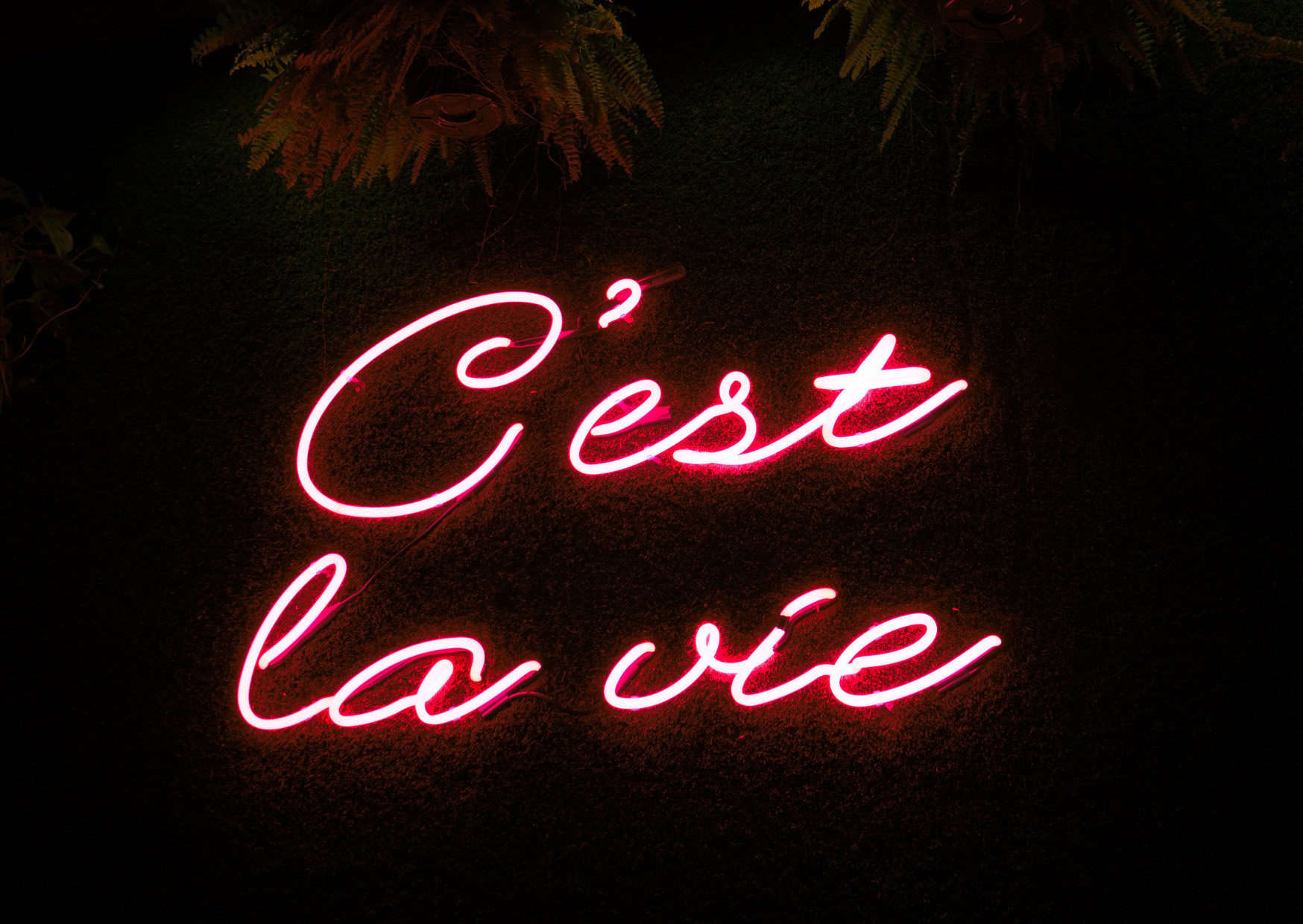
Many non-French speakers love to toss out “C’est la vie!” (That’s life!) whenever something goes wrong but you have to accept it. It’s become an all-purpose philosophical shrug in English media, often with a theatrical French accent.
Why French People Don’t Overuse It
- A Bit of a Stereotype: “C’est la vie” conjures an image of a carefree Parisian throwing up their hands at fate. In real life, French folks might say it occasionally, but certainly not as frequently as tourists might think.
- Other Expressions Are More Nuanced: French language is rich with phrases for resignation or acceptance, like “Ça arrive” (“It happens.”) or “C’est comme ça” (“That’s how it is.”).
- Overly Dramatic: If used too often, “C’est la vie” can sound like a corny cliché—akin to an English speaker constantly saying “Que sera, sera!” with a sigh.
What to Say Instead
- “C’est comme ça”: A very common, neutral way to say, “That’s just how things are.”
- “Tant pis”: Literally “So much the worse,” but used more like “Oh well,” indicating mild acceptance of a bummer situation.
8. “Magnifique!” to Praise Everything
The Myth
To English speakers, “magnifique” sounds like the ultimate French compliment. Americans might imagine French folks exclaiming “Magnifique!” for a delicious meal, a stylish outfit, or a brilliant idea—often with grand hand gestures.
Why It’s Not Constantly Used
- Highly Positive: “Magnifique” means “magnificent,” which is a strong word, not used for everyday praise. Overusing it can come across as insincere or inflated.
- Different Shades of Praise: French has a range of adjectives—“Super !”, “Génial !”, “Formidable !”, “Trop beau !” or “Trop bon !” for casual compliments, and “magnifique” might be reserved for truly special occasions.
- Tone Matters: If you exclaim “C’est magnifique !” for every dish at dinner, your hosts might think you’re either mocking or being over-the-top polite.
What to Say Instead
- For everyday compliments, try “C’est super !”, “J’adore !”, or “C’est trop bon !” if it’s food.
- Save “C’est magnifique !” for something genuinely extraordinary—like a breathtaking view of the Eiffel Tower lit up at night, or an unforgettable gourmet feast.
Conclusion: Staying Authentic in the French Language
From “Sacre bleu!” to “Magnifique!”, these so-called “French” expressions are often more at home in tourist fantasies or vintage pop culture than in modern-day France. While you might still encounter them (especially in older literature, films, or ironically used among French friends to mimic stereotypes), they’re rarely part of an everyday speaker’s vocabulary. Leaning on these clichés can lead to raised eyebrows, polite chuckles, or confusion among locals—who might wonder where you got your “French.”
That doesn’t mean you shouldn’t learn or try out French phrases. On the contrary, exploring the language is part of the fun! Just be aware that:
- Context and Tone matter a lot.
- Real-life modern French often uses different slang, mild curses, or short exclamations.
- Some expressions are quite regional—what’s commonplace in Paris might not be in Marseille or Quebec.
By ditching the Hollywood-ized lines and opting for natural-sounding alternatives, you’ll show genuine respect for French culture—and you’ll avoid coming off like a walking caricature. So next time you’re tempted to yell “Sacre bleu!” in a Parisian café, remember that a simple “Mince !” or “Zut !” (if you must) might keep you from inadvertently stepping into comedic territory.
Pro Tip: When in doubt, listen first to how locals express surprise, admiration, or frustration. Real-life French is fluid, sometimes peppered with English loanwords or teenage slang. Observe and adapt—and don’t worry if you slip up. A friendly smile and a dash of humility go a long way in bridging cultural gaps. Bonne chance!

About the Author: Ruben, co-founder of Gamintraveler.com since 2014, is a seasoned traveler from Spain who has explored over 100 countries since 2009. Known for his extensive travel adventures across South America, Europe, the US, Australia, New Zealand, Asia, and Africa, Ruben combines his passion for adventurous yet sustainable living with his love for cycling, highlighted by his remarkable 5-month bicycle journey from Spain to Norway. He currently resides in Spain, where he continues sharing his travel experiences with his partner, Rachel, and their son, Han.