
And What It Reveals About Body Attitudes, Privacy, and the Comfort of Being Unbothered
Visit any Mediterranean beach — from the Amalfi Coast to the shores of Andalucía or a Greek island cove — and you’ll see something that would stop many American families in their tracks.
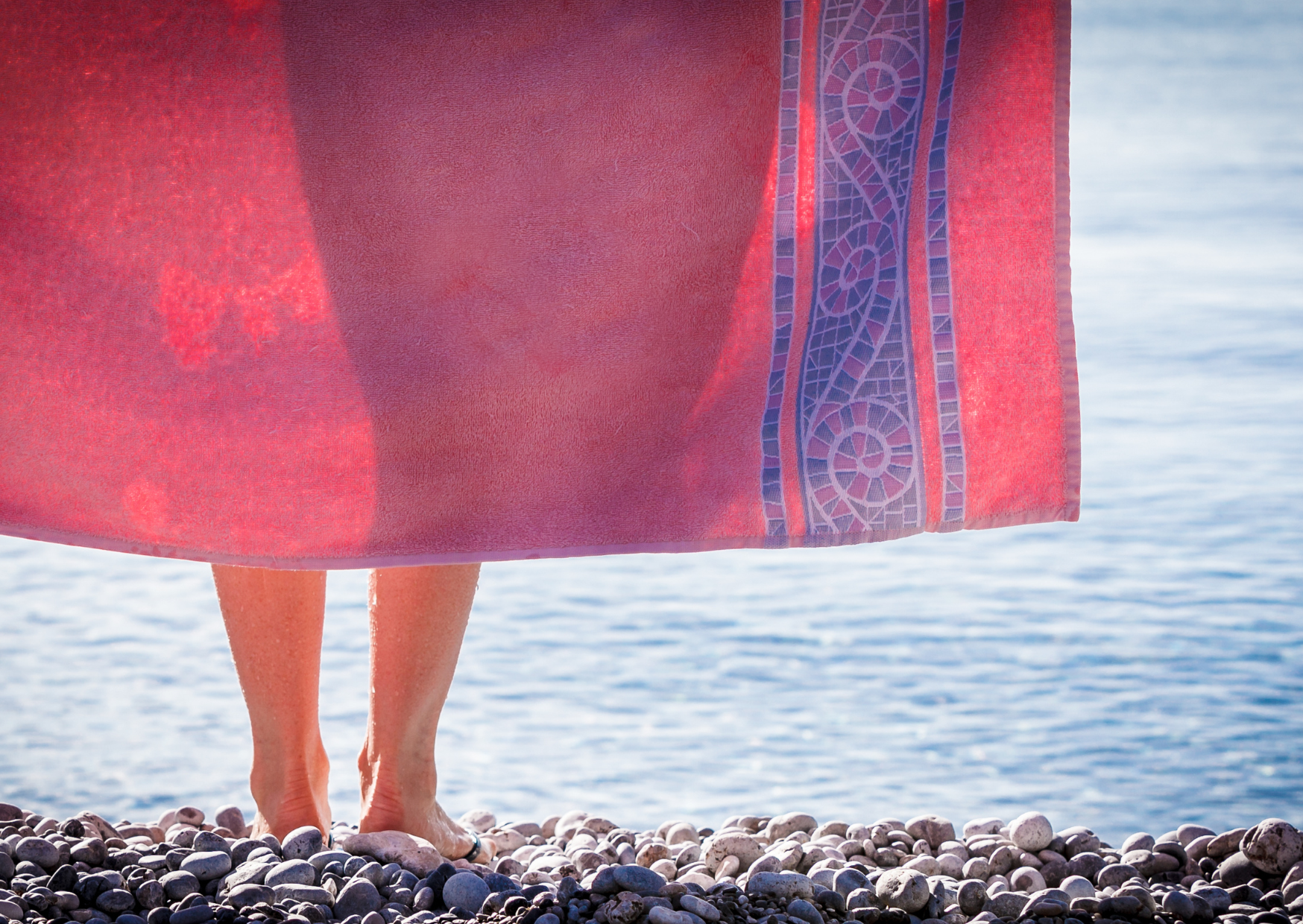
A woman in her 50s removing her bikini top under a towel.
A father helping his daughter change out of a wet swimsuit beside the car.
Teenagers slipping off sandy shorts and into dry ones while still chatting with friends.
It’s not performance. It’s not scandal.
It’s normal.
Mediterranean people routinely change clothes in public — not fully exposed, but openly, efficiently, and without embarrassment.
Americans, by contrast, are often horrified.
Raised in a culture of privacy and modesty, they treat public changing as something indecent — or at the very least, something that should happen behind a door and a lock.
But in much of the Mediterranean, the unspoken rule is different: if you can do it with grace and no fuss, it’s fine.
Here’s why Med iterranean people change clothes in public without shame — and why the American reaction says more about cultural discomfort than about nudity itself.
Want More Deep Dives into Other Cultures?
– Why Europeans Walk Everywhere (And Americans Should Too)
– How Europeans Actually Afford Living in Cities Without Six-Figure Salaries
– 9 ‘Luxury’ Items in America That Europeans Consider Basic Necessities
Quick & Easy Context Tips
It’s not about nudity—it’s about practicality.
Beach culture in Mediterranean countries is relaxed and body-positive.
Most locals don’t bat an eye at changing on the beach—in full view or under a towel.
Public facilities are often minimal or nonexistent, making on-the-spot changing more common.
Bring a lightweight towel or poncho if you’re not comfortable but still want to blend in.
The idea of changing clothes in public—at the beach, by the car, or behind a towel—seems scandalous to many Americans, but in Mediterranean countries like Italy, Spain, and Greece, it’s considered completely normal. It’s not an act of rebellion or rudeness—it’s rooted in a cultural approach to the body that’s more relaxed, less sexualized, and far more practical.
What many Americans view as “indecent exposure,” Mediterranean locals see as no big deal—just a quick change before heading home from a swim. The cultural divide stems largely from differing attitudes about modesty and privacy. In many parts of Southern Europe, bodies aren’t inherently seen as taboo or shameful, and showing some skin isn’t automatically sexualized.
The real controversy lies in the American tendency to project morality onto non-sexual nudity or bodily exposure, especially in public spaces. This often leads to discomfort, judgment, or even legal issues when tourists misunderstand local norms. But to Mediterranean locals, the American obsession with “covering up” can seem overly prudish, even impractical—especially when changing on a sun-soaked beach is just part of daily life.
1. Changing Discreetly in Public Is a Learned Skill — Not a Sign of Exhibitionism

Mediterranean locals don’t flash anyone.
They don’t strut or pose.
They’re not trying to make a statement.
They’ve simply mastered the quick-change ritual:
- Towel wrapped strategically
- Top switched in a fluid motion
- Wet bottoms replaced behind a sarong or car door
- No delay, no hesitation
It’s often so smooth that by the time a tourist realizes what’s happening, it’s already over.
To locals, this is just a practical part of beach life.
To Americans, it can feel like witnessing something illicit — even though nothing explicit has happened.
2. Beaches Don’t Always Have Changing Rooms — So People Adapt
In many U.S. beach towns, you’ll find:
- Public bathrooms
- Private changing cabanas
- Designated locker areas
In contrast, Mediterranean beaches — especially smaller coves or local stretches — often have:
- No facilities
- One shared stall
- A bathroom that charges a fee or isn’t within walking distance
So people adapt. They:
- Change behind towels
- Use parked cars
- Slip into dry clothes on the spot
There’s no sense of crisis.
The beach is part of daily life — and changing clothes in public is part of that rhythm.
3. Modesty Means Not Making a Scene — Not Hiding Everything
In the Mediterranean, modesty is measured differently.
It’s not about:
- Covering every inch
- Avoiding eye contact
- Waiting until you’re home to dry off
It’s about:
- Being discreet
- Not drawing attention
- Acting like it’s no big deal
The moment you act like changing is taboo, it becomes awkward.
But if you’re calm, efficient, and respectful of others’ space? No one blinks.
Americans often associate modesty with complete visual privacy.
Mediterranean people associate it with grace under normal, physical conditions.
4. Children Are Taught to Be Comfortable — Not Shameful

From a young age, Mediterranean children:
- Change on the beach
- Run around in swimsuits
- Learn to dry off and switch clothes in public
Parents help them without panic or secrecy.
No one acts like the body is something to hide in shame.
This isn’t about encouraging nudity — it’s about normalizing the body’s presence in daily life.
American parents, taught to fear judgment or legal consequences, often treat public changing like a crisis.
But Mediterranean children grow up with body comfort and casual competence, not anxiety.
5. Older People Change Too — Because It’s Not About Age or Vanity

One of the most surprising things to American tourists is seeing older Mediterranean men and women:
- Changing in public
- Wearing swimsuits confidently
- Drying off and getting dressed with zero hesitation
There’s no age at which you “age out” of the beach — or the quick-change routine.
In fact, older generations are often even more at ease, having spent decades perfecting the practice.
In the U.S., public body exposure often feels reserved for the young, thin, and confident.
In the Mediterranean? Everyone gets a towel, and everyone changes.
6. This Isn’t “Nudity Culture” — It’s Practical Culture
What Americans often misunderstand is that this public changing habit isn’t about:
- Pushing boundaries
- Ignoring others
- Celebrating exposure
It’s about:
- Drying off
- Getting into clean clothes
- Moving on with your day
There’s no audience.
No confrontation.
No big deal.
To Mediterranean people, changing discreetly in public is like tying your shoe.
To Americans, it often looks like a rule being broken — because the rule in their mind is based on fear of being seen.
7. Trying Too Hard to Hide Can Actually Draw More Attention

Here’s the paradox:
The more awkwardly you try to change without being seen — holding up towels, crouching behind doors, over-layering your clothes — the more people notice.
Mediterranean locals understand this intuitively. That’s why their public changes are:
- Calm
- Unapologetic
- Unrushed
It’s not about exhibition. It’s about normalizing function.
Americans often overcompensate for discomfort, turning a simple act into a spectacle.
But in Mediterranean culture, the least dramatic action is often the most respectful.
8. Men and Women Both Do It — Without Gendered Judgment
Unlike in some cultures where men changing in public is tolerated while women are policed, the Mediterranean attitude is surprisingly egalitarian.
You’ll see:
- Women adjusting bikini tops in full view
- Men dropping wet trunks behind towels
- Both moving with equal calm and frequency
It’s understood that everyone wants to be dry and comfortable.
There’s no moral panic over who’s showing what.
This balanced casualness is often shocking to Americans, who grow up with hyper-gendered modesty standards, especially for women.
9. The Body Isn’t a Scandal — It’s Just a Body
Ultimately, the Mediterranean approach to public changing comes down to one thing:
The body isn’t controversial.
It doesn’t need to be hidden to be respected.
It doesn’t need to be flaunted to be accepted.
It just is.
Public changing isn’t a performance — it’s a small, physical transition between swimming and the rest of the day.
Americans, conditioned to see the body as either a threat or a statement, often miss this quiet neutrality.
But in the Mediterranean, it’s just part of life.
One Habit, Two Mindsets
To Americans, public changing is:
- Embarrassing
- Risky
- Potentially inappropriate
To Mediterranean people, it’s:
- Normal
- Functional
- Non-eventful
One culture says: Hide yourself until you’re in a private room.
The other says: Handle it calmly, respectfully, and move on.
And in that difference lies a deeper truth:
The real indecency isn’t the body. It’s the shame we attach to it.

About the Author: Ruben, co-founder of Gamintraveler.com since 2014, is a seasoned traveler from Spain who has explored over 100 countries since 2009. Known for his extensive travel adventures across South America, Europe, the US, Australia, New Zealand, Asia, and Africa, Ruben combines his passion for adventurous yet sustainable living with his love for cycling, highlighted by his remarkable 5-month bicycle journey from Spain to Norway. He currently resides in Spain, where he continues sharing his travel experiences with his partner, Rachel, and their son, Han.