
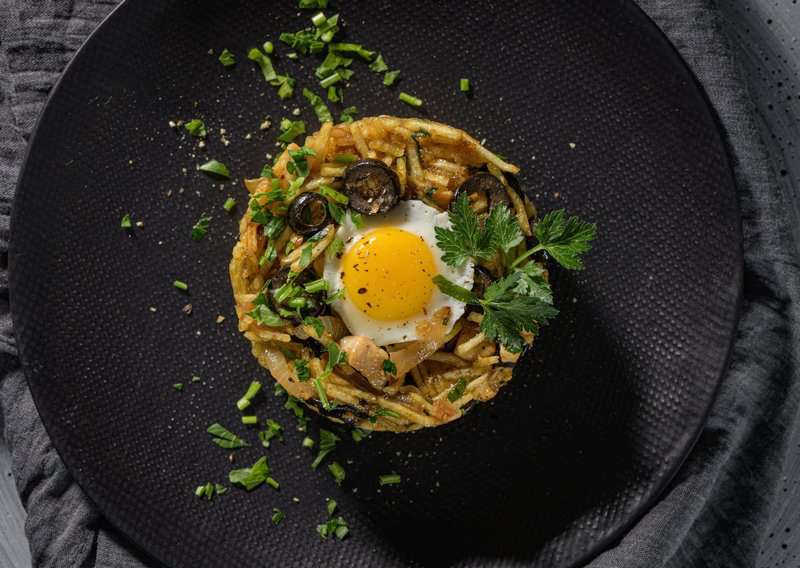
Our full guide on the Most Popular Dinners in Portugal for you to try on your next trip or cooking at home.
Portugal is known for its rich culinary traditions and flavorful dishes. Here are three popular Portuguese dinners, along with recipe guides, tips, and calorie information.
Read Here Best Traditional Portuguese Dishes and Best breakfast in Portugal
WHERE TO STAY IN PORTUGAL
There are cheap hotels available for you at a starting price of €30. Luxurious hotels in another option for your accommodation in Portugal, the price can range from €90-up.
CLICK HERE TO BOOK YOUR ACCOMMODATION
BOOK YOUR TRAVEL INSURANCE
Two of our favorite travel insurance: Heymondo Vs Safetwing cheapest travel Insurance. You can get for $135 USD your Heymondo Travel Insurance with Heymondo discount code valid for 90 days. Read our full comparison of Genki vs Safetywing Travel Insurance Review and the comparison Heymondo vs Genki
Popular Dinners in Portugal
1. Bacalhau à Brás
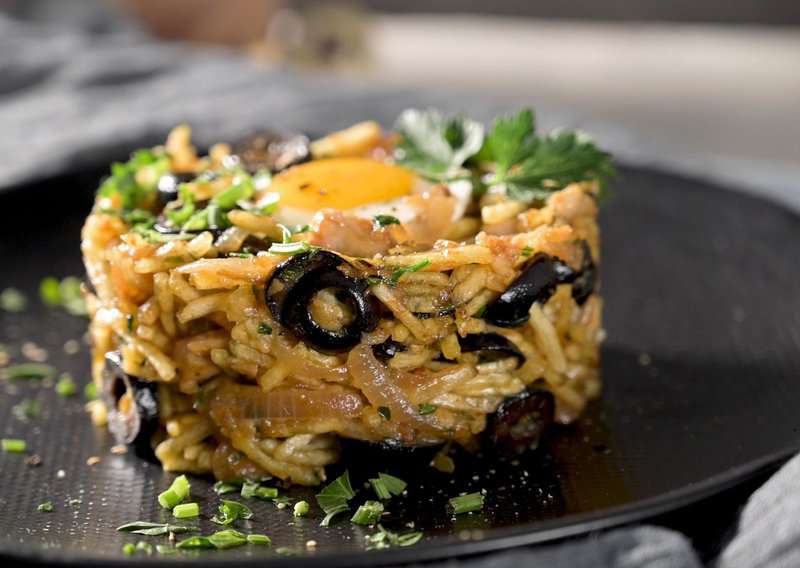
Bacalhau à Brás is a traditional Portuguese dish made with shredded salt cod, onions, and thinly fried potatoes, all bound together with scrambled eggs.
Ingredients:
1 lb (450g) salt cod (bacalhau), soaked overnight and shredded
4 medium potatoes, peeled and cut into thin matchsticks
1 large onion, thinly sliced
4 cloves garlic, minced
6 large eggs, beaten
1/4 cup olive oil
Fresh parsley, chopped (for garnish)
Black olives (for garnish)
Salt and pepper to taste
Instructions:
Prepare the Salt Cod
Soak the salt cod in water overnight, changing the water several times to remove excess salt. Drain and shred the fish.
Fry the Potatoes
Heat olive oil in a large skillet over medium-high heat. Add the potato matchsticks and fry until golden and crispy. Remove and drain on paper towels.
Cook the Onions and Garlic
In the same skillet, add the sliced onions and minced garlic. Cook until the onions are soft and translucent.
Add the Cod
Add the shredded salt cod to the skillet and cook for a few minutes, stirring to combine with the onions and garlic.
Combine with Eggs and Potatoes
Reduce heat to medium. Add the beaten eggs and fried potatoes to the skillet. Stir gently until the eggs are cooked and everything is well combined.
Serve
Garnish with chopped parsley and black olives. Serve hot.
Ensure you rinse the salt cod thoroughly to remove excess salt. For extra flavor, add a splash of white wine while cooking the onions.
Calories: Approximately 400-450 calories per serving (assuming 4 servings).
Read here how to make Bacalhau A Bras
2. Caldo Verde
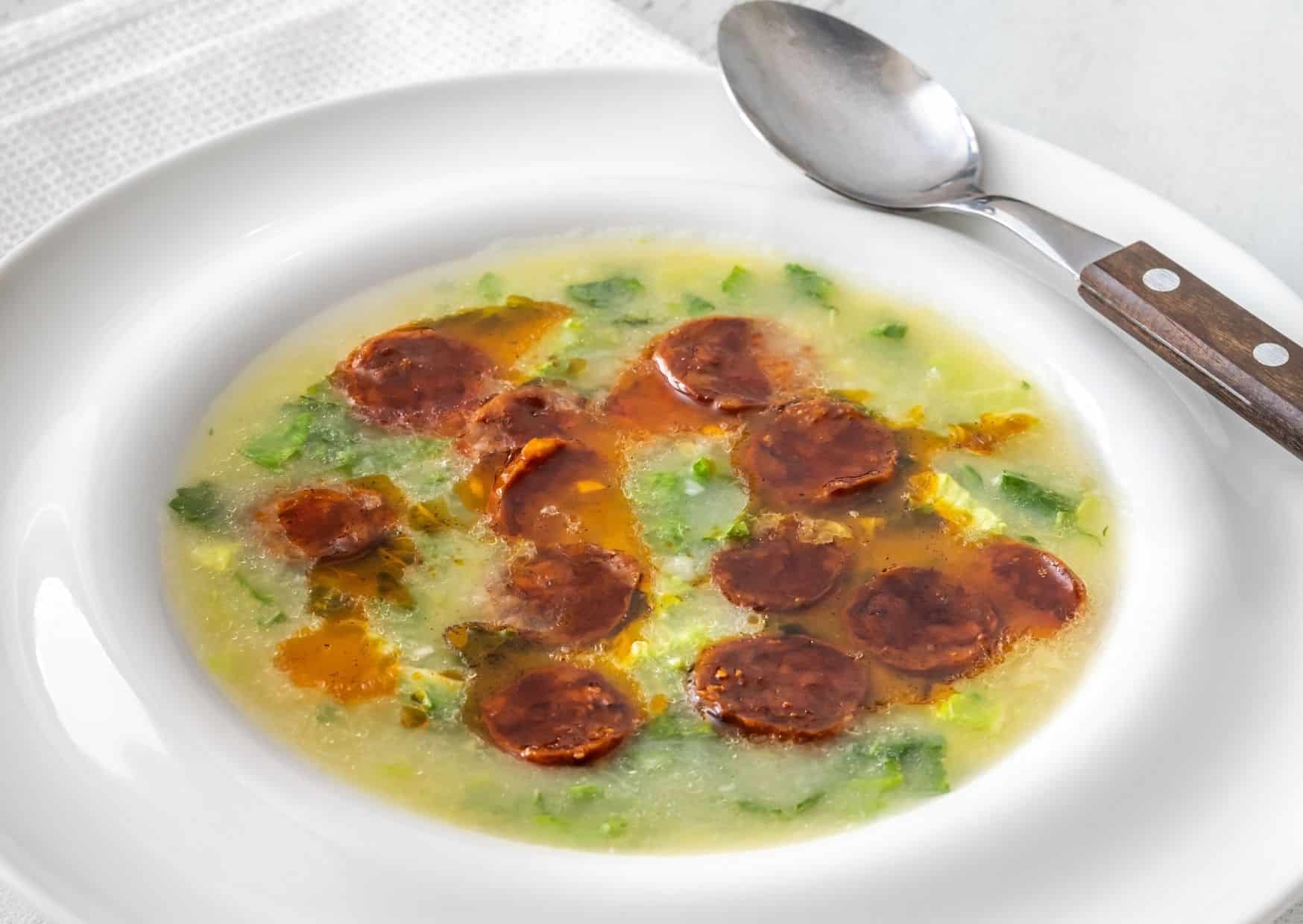
Caldo Verde is a traditional Portuguese soup made with kale, potatoes, and chorizo. It’s simple yet comforting.
Ingredients:
1/4 cup olive oil
1 large onion, chopped
3 cloves garlic, minced
6 medium potatoes, peeled and diced
6 cups chicken or vegetable broth
1/2 pound kale or collard greens, thinly sliced
1/2 pound chorizo, sliced
Salt and pepper to taste
Instructions:
Cook the Onions and Garlic
In a large pot, heat the olive oil over medium heat. Add the chopped onion and minced garlic and cook until soft and fragrant.
Add the Potatoes
Add the diced potatoes to the pot and cook for a few minutes, stirring to coat with the oil.
Add Broth and Simmer
Pour in the chicken or vegetable broth. Bring to a boil, then reduce heat and simmer until the potatoes are tender, about 15-20 minutes.
Blend the Soup
Use an immersion blender to blend the soup until smooth. Alternatively, you can transfer the soup in batches to a blender and blend until smooth, then return to the pot.
Add Kale and Chorizo
Add the sliced kale and chorizo to the pot. Simmer for another 10-15 minutes until the kale is tender and the chorizo is heated through.
Serve
Season with salt and pepper to taste. Serve hot.
Traditional Caldo Verde uses Portuguese chorizo, but you can substitute with Spanish chorizo if necessary. The key is to slice the kale or collard greens very thinly.
Calories: Approximately 300-350 calories per serving (assuming 6 servings).
Read here how to make Caldo Verde
3. Bifanas
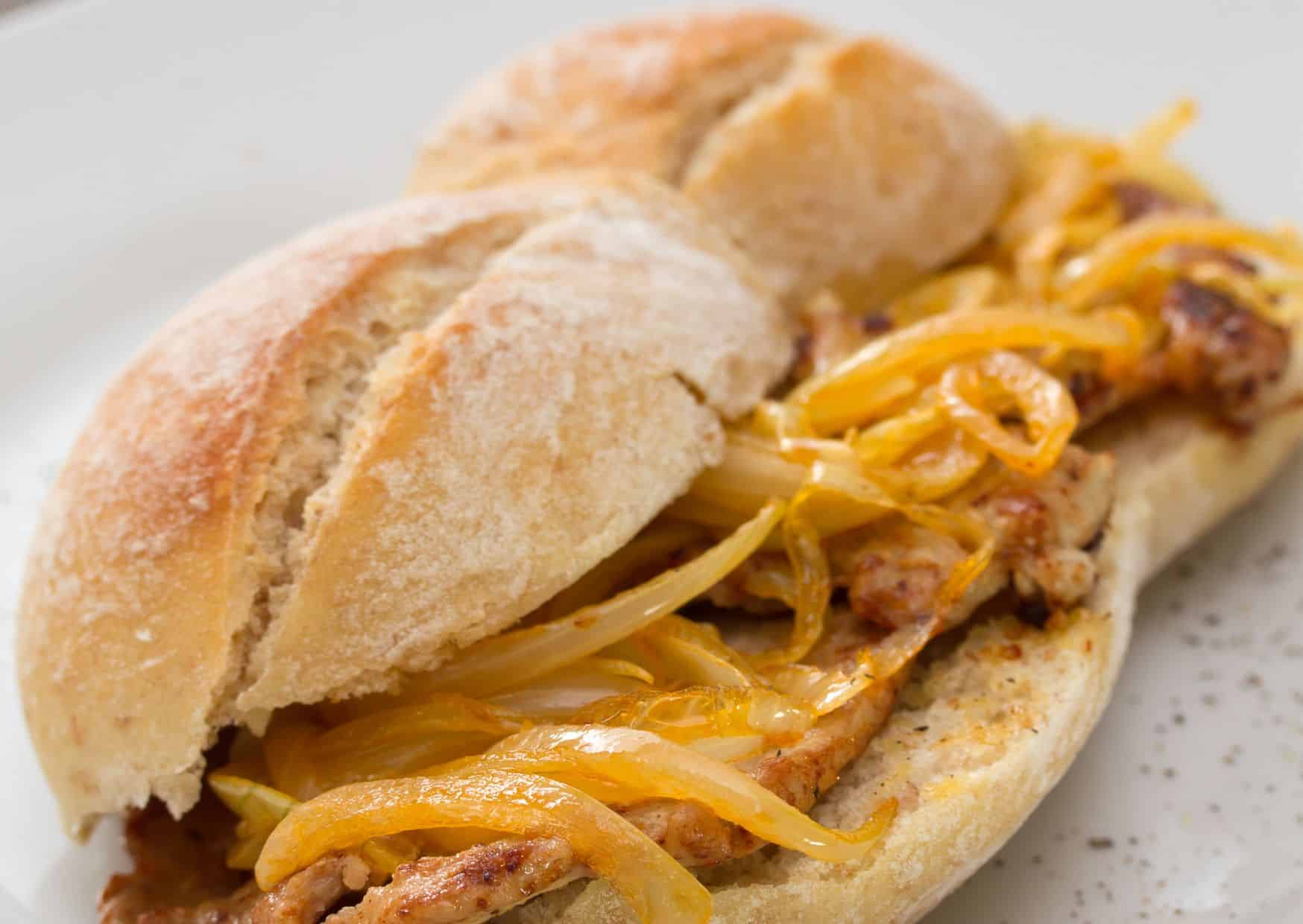
Bifanas are traditional Portuguese sandwiches made with marinated pork cutlets served in a crusty roll.
Ingredients:
1 lb (450g) pork loin or pork shoulder, thinly sliced
4 Portuguese rolls or crusty rolls
1/4 cup white wine
1/4 cup white vinegar
4 cloves garlic, minced
2 bay leaves
1 tablespoon paprika
1 teaspoon salt
1/2 teaspoon black pepper
1/4 cup olive oil
Instructions:
Marinate the Pork
In a large bowl, combine the white wine, white vinegar, minced garlic, bay leaves, paprika, salt, and pepper. Add the pork slices and marinate for at least 1 hour (preferably overnight).
Cook the Pork
Heat olive oil in a large skillet over medium-high heat. Remove the pork from the marinade, shaking off excess liquid, and cook in batches until browned and cooked through. Set aside.
Prepare the Rolls
Slice the rolls in half and lightly toast them if desired.
Assemble the Bifanas
Place the cooked pork slices on the bottom half of each roll. Top with the other half of the roll.
Serve
Serve hot, with optional condiments like mustard or piri-piri sauce.
Marinating the pork overnight enhances the flavor. Use crusty rolls for the best texture contrast with the tender pork.
Calories: Approximately 500-550 calories per serving (assuming 4 servings).
Read here how to make Bifanas
Origin and History
Portuguese cuisine is rooted in centuries of exploration, trade, and regional tradition, and its most iconic dinners reflect this rich history. Dishes like Bacalhau à Brás emerged from Portugal’s deep relationship with salted cod, a staple that traveled well during maritime voyages and fed sailors for generations. Over time, salted cod became a national symbol, inspiring hundreds of recipes across the country.
Caldo Verde, another classic, began as a humble peasant soup from the northern Minho region. Made with simple ingredients like potatoes, kale, and sausage, it became a dish tied to comfort, family gatherings, and rural life. What started as a countryside staple eventually grew into a beloved dish served during celebrations and casual meals alike.
Bifanas, Portugal’s famous marinated pork sandwiches, developed from the country’s tradition of preparing tender, flavorful cuts using wine, garlic, and spices. Originally a quick bite sold in small taverns, bifanas have become a cornerstone of Portuguese street food culture. These three dishes—one seafood-based, one hearty and rustic, and one casual and quick—perfectly illustrate the diversity of Portuguese cooking.
One common debate among Portuguese cooks is which region makes the “truest” version of each dish. Every town claims its own spin: Lisbon’s Bacalhau à Brás differs from Porto’s version, and even Caldo Verde can spark arguments over how thinly the kale should be sliced. These disagreements highlight how strongly Portuguese people feel about culinary identity.
Another source of controversy is whether modern variations should be embraced. Some cooks innovate with new ingredients—adding different sausages to Caldo Verde or using brioche buns for bifanas. Purists argue that these innovations stray too far from tradition, while others believe Portuguese cuisine can evolve without losing its heritage.
There’s also debate over whether Portuguese recipes require precise measurements or intuitive cooking. Many older generations insist on cooking “by feel,” using experience rather than strict quantities. Younger cooks, however, lean toward measured recipes, wanting consistency and clear instructions. This generational divide reflects the changing nature of home cooking in Portugal.
How Long You Take to Prepare
Bacalhau à Brás typically takes around 45 minutes to prepare, though soaking salted cod can add extra time. Once the fish is ready, the dish comes together quickly, combining sautéed onions, thin potatoes, and eggs for a comforting, richly layered meal. Most of the process involves gentle cooking rather than complex steps.
Caldo Verde is one of the faster Portuguese dinners, usually taking 30 to 40 minutes from start to finish. The soup relies on slow-simmered potatoes blended to a smooth consistency before adding finely shredded kale and sausage. The simplicity of the ingredients helps keep the prep time low without sacrificing flavor.
Bifanas are the easiest of the three, taking about 20 to 30 minutes. Thinly sliced pork is quickly marinated and simmered in a flavorful mixture of garlic, wine, and spices. Once cooked, the pork is piled into fresh rolls for an easy, satisfying dinner. All three dishes are ideal for home cooks looking for approachable recipes with big flavor.
Serving Suggestions
Bacalhau à Brás pairs beautifully with a crisp green salad or sautéed greens, balancing the richness of the eggs and cod. A side of olives or pickled vegetables adds a refreshing contrast. Serve it warm with a drizzle of olive oil or a sprinkle of parsley for extra brightness.
Caldo Verde is traditionally served with slices of Portuguese chouriço, but you can also add a side of crusty bread for dipping. For a fuller meal, serve it alongside grilled sardines or a simple tomato salad. The soup’s warmth and simplicity make it perfect for cool evenings or casual family dinners.
Bifanas are often enjoyed with a cold beer, but they also pair well with simple sides like fries, rice, or a cabbage slaw. For a lighter option, serve them with grilled vegetables or roasted potatoes. Their versatility makes them suitable for lunch, dinner, or even late-night snacks.
Final Thoughts
These three iconic Portuguese dinners showcase the heart of Portugal’s culinary tradition: simple ingredients, bold flavors, and recipes passed down through generations. Each dish tells a story about the people who created it—fishermen, farmers, families, and street vendors who shaped Portuguese food culture.
What makes these recipes truly special is their accessibility. You don’t need advanced techniques or rare ingredients to cook them well. Whether you’re preparing Bacalhau à Brás for a cozy dinner, simmering Caldo Verde for comfort, or assembling quick bifanas, the dishes offer both warmth and authenticity.
In the end, exploring Portuguese cuisine through these beloved dinners invites you to experience the country’s flavors in your own home. They’re satisfying, rich with history, and easy enough to become part of your regular cooking routine. Once you try them, you’ll understand why they remain staples in Portugal’s kitchens—and why they continue to win hearts everywhere.

About the Author: Ruben, co-founder of Gamintraveler.com since 2014, is a seasoned traveler from Spain who has explored over 100 countries since 2009. Known for his extensive travel adventures across South America, Europe, the US, Australia, New Zealand, Asia, and Africa, Ruben combines his passion for adventurous yet sustainable living with his love for cycling, highlighted by his remarkable 5-month bicycle journey from Spain to Norway. He currently resides in Spain, where he continues sharing his travel experiences with his partner, Rachel, and their son, Han.