
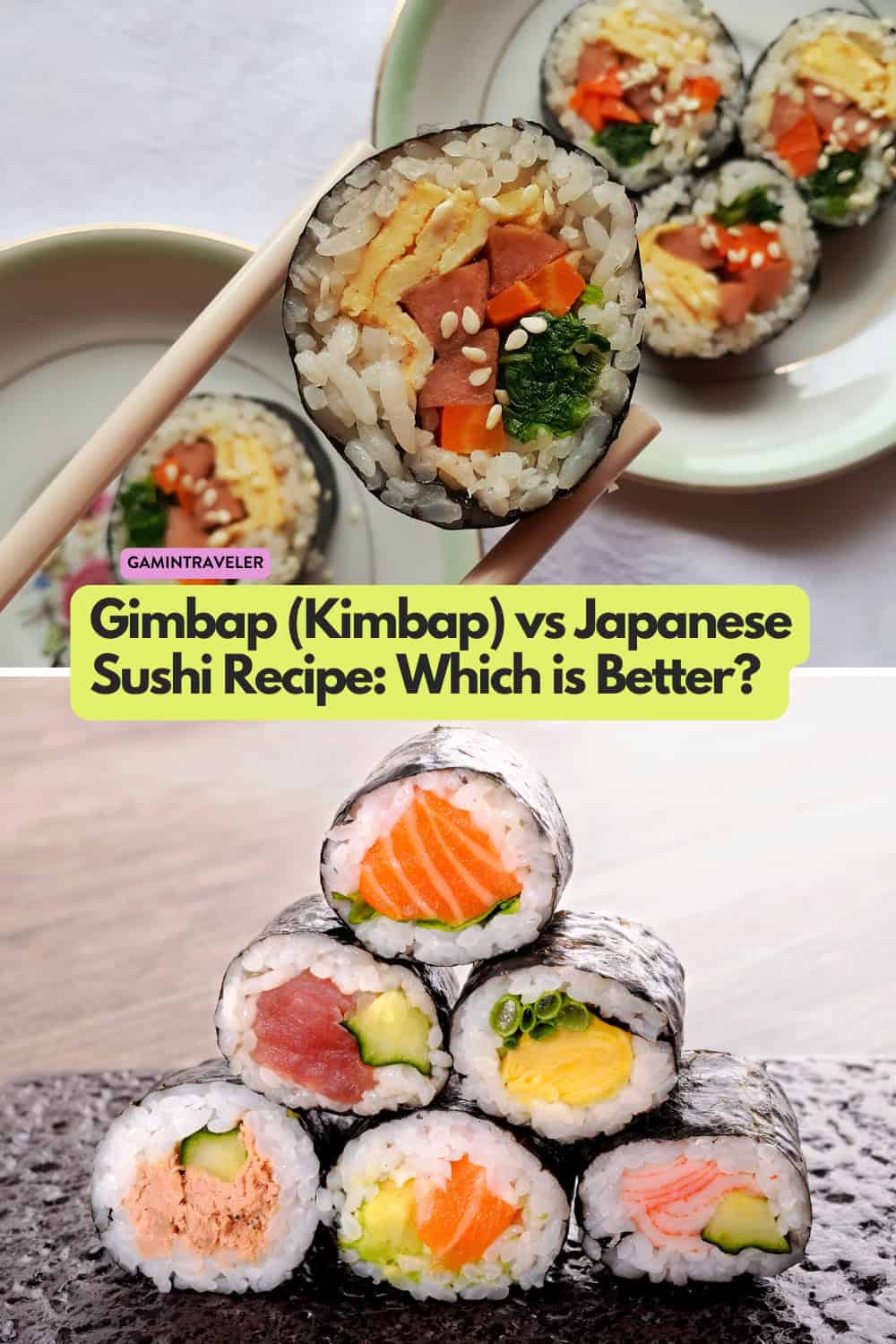
Gimbap and sushi may look like culinary twins at first glance—both are rolled in seaweed, sliced into bite-sized rounds, and often eaten with chopsticks. But don’t let appearances fool you. These two beloved dishes represent entirely different cultural, historical, and flavor philosophies from Korea and Japan, and fans on each side are passionately loyal.
Gimbap, the Korean counterpart, is often filled with an assortment of colorful, hearty ingredients like spinach, pickled radish, carrots, bulgogi, or even kimchi—always seasoned rice, never vinegared. It’s a go-to snack, picnic meal, or lunchbox staple across Korea. Japanese sushi, by contrast, is all about delicate, raw (or lightly cooked) seafood with subtly vinegared rice, often emphasizing simplicity and umami over variety and volume.
This blog post compares both styles not only by taste but by ease of preparation at home. You’ll find a quick recipe guide to both, tips on mastering the roll, and the cultural nuances that might surprise you. Whether you’re team Gimbap or team Sushi, there’s a lot to learn—and even more to enjoy—by exploring both.
Best Time to Eat & How to Partner
Both gimbap and sushi are ideal as light lunches, portable meals, or refreshing dinners, especially during warm weather. Gimbap is perfect for on-the-go snacks, road trips, or picnics, while sushi often shines as a sit-down meal with miso soup and a small salad. Gimbap pairs wonderfully with cold barley tea or Korean kimchi stew on the side. Sushi, on the other hand, matches beautifully with sake or green tea and can follow a course of edamame and tempura.
If you’re entertaining, serving both on the same table is a fun cultural twist that sparks conversation. Add a side-by-side tasting board with sauces (gochujang for gimbap, soy and wasabi for sushi), and let guests decide their favorite. For a vegetarian crowd, both rolls adapt easily to meat-free ingredients while keeping their character intact.
One of the most hotly debated topics among food enthusiasts is the claim that gimbap is just “Korean sushi”—a description that irritates many Koreans who see gimbap as a unique culinary expression with its own heritage. While sushi is rooted in Japan’s seafood traditions, gimbap is grounded in Korean flavor profiles, street food culture, and convenience, not raw fish or minimalist artistry.
The bigger debate? Purists argue that sushi’s elegance lies in its restraint—less is more. Meanwhile, gimbap fans celebrate its versatility and boldness. You can pack it with anything from tuna mayo to spicy pork, making it more adaptable for casual home cooks and diverse palates. In essence, sushi is often a performance; gimbap is a celebration.
So, which is better? That depends entirely on what you’re hungry for. But one thing’s for sure: calling them the same is like saying pizza and flatbread are interchangeable. Culturally and culinarily, they’re distant cousins, not twins—and each deserves its own spotlight.
The Korean Gimbap (aka as kimbap)
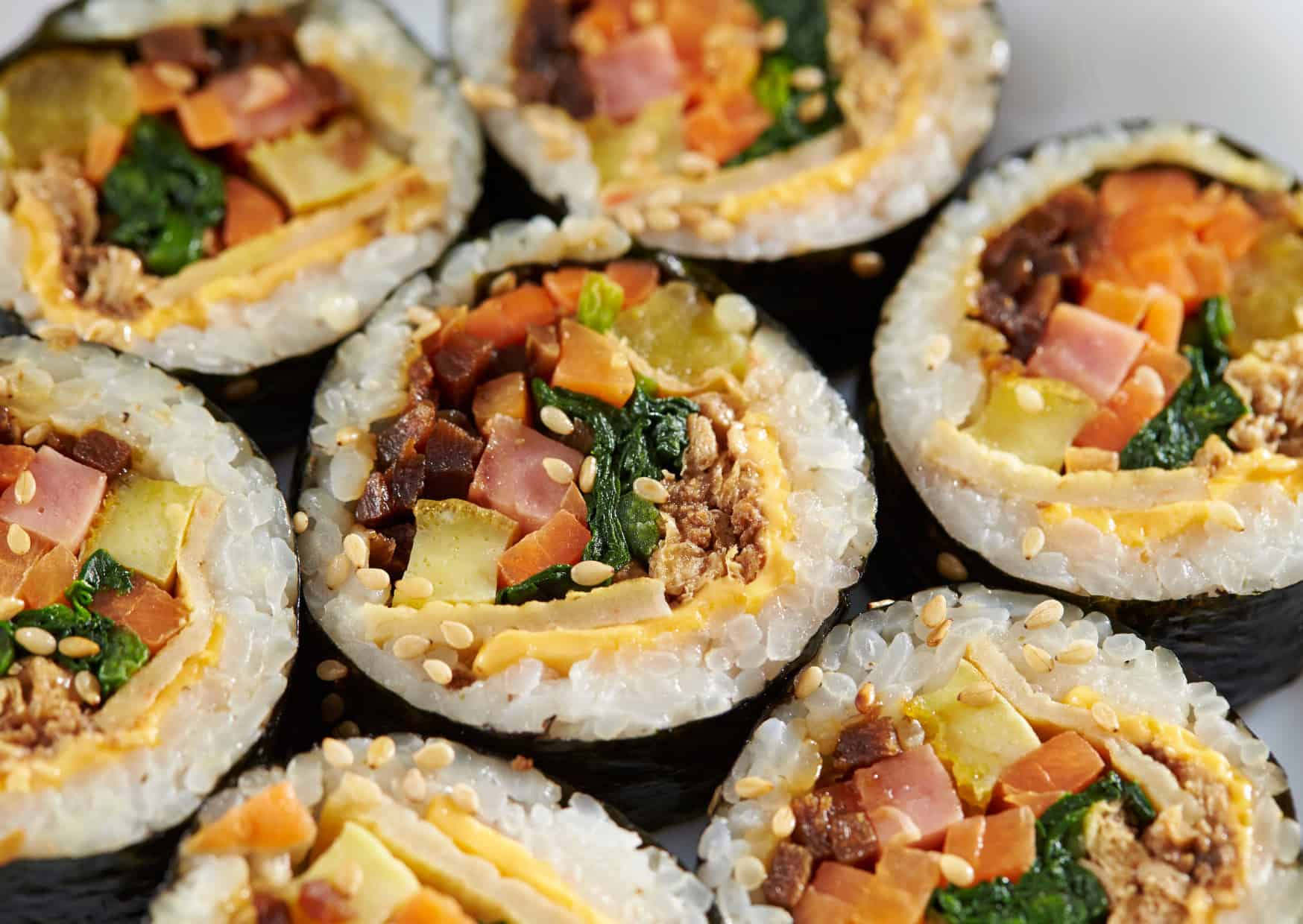
Gimbap, also known as kimbap, is a beloved Korean dish that embodies the harmony and balance of flavors and textures. At its core, gimbap is a seaweed rice roll filled with a variety of ingredients such as cooked and pickled vegetables, eggs, and meats. This dish’s name, “gimbap,” derives from “gim” meaning seaweed, and “bap” meaning rice. Each roll is a vibrant display of meticulousness and craft, where every ingredient is seasoned and cooked to perfection before being beautifully assembled. Often seen at picnics and gatherings, gimbap is celebrated for its portability and its role in bringing people together. It’s not just food; it’s a staple of Korean festive occasions and family outings, reflecting a sense of community and cultural identity.
Get your complete sushi kit to try this at home
The Popular Sushi Rolls (Japanese)
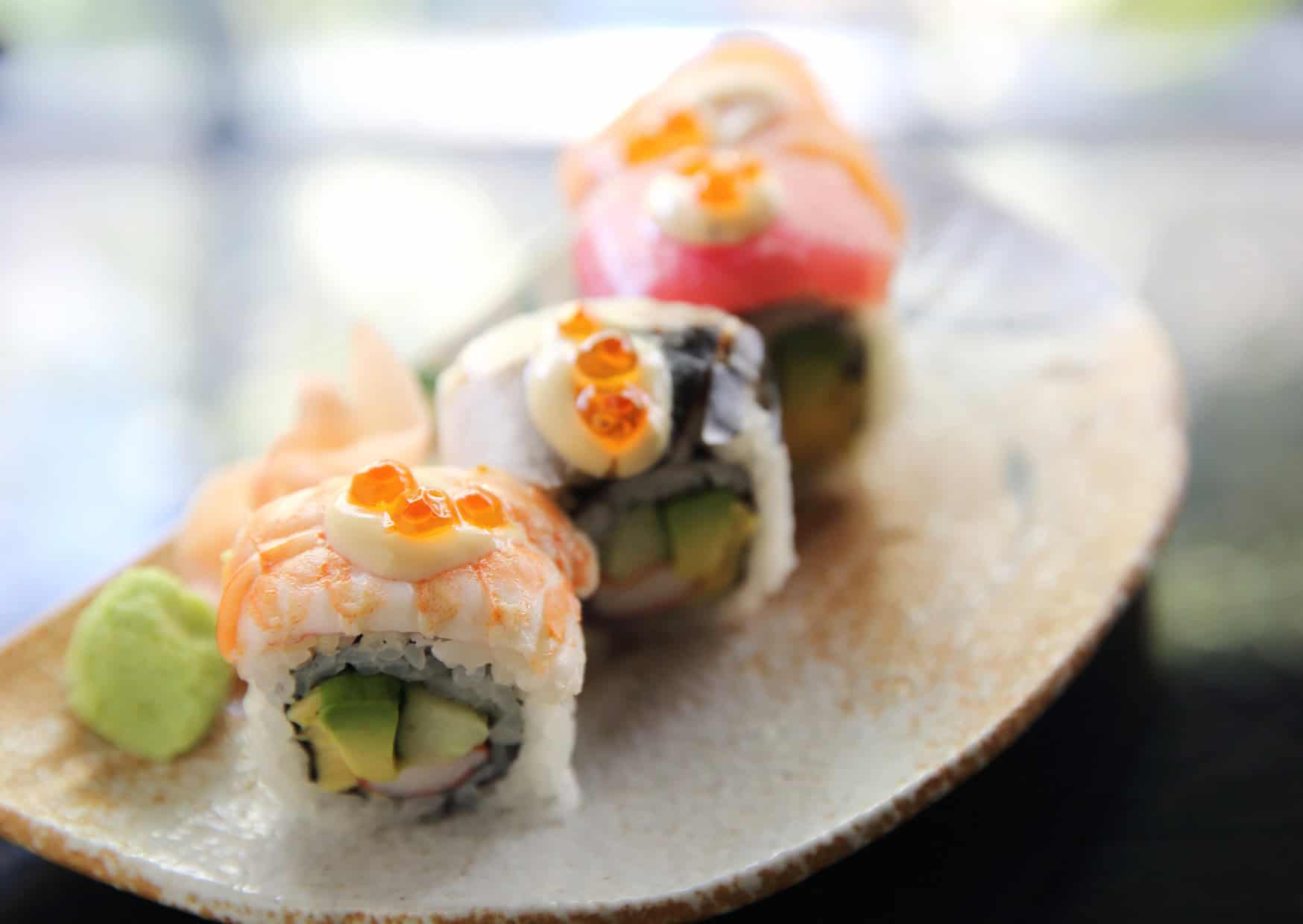
Japanese sushi rolls, known as maki, are an integral part of Japan’s culinary tradition, showcasing the artful balance between simplicity and flavor. Sushi is more than just food—it is a craft perfected by sushi chefs over centuries. Central to sushi is the sushi rice, or “shari,” seasoned with a blend of vinegar, sugar, and salt, complemented by various fillings including fresh fish, vegetables, and sometimes tropical fruits. The art of sushi making highlights the pristine quality and freshness of ingredients, from the delicacy of raw fish to the crisp texture of seaweed, all rolled into a harmonious cylinder. Served in sushi bars and restaurants worldwide, these rolls are a testament to the elegance and precision of Japanese gastronomy, often enjoyed as a form of culinary art as much as a meal.
Why Gimbap and Sushi Rolls Are Often Confused
Gimbap and sushi rolls share a visual similarity that often leads to confusion, especially among those less familiar with the subtleties of Korean and Japanese cuisines. Both dishes involve a combination of rice and other ingredients rolled in seaweed, creating a similar appearance once sliced into bite-sized pieces. Here are some reasons why these two dishes are frequently mistaken for one another:
- Visual Appearance: At first glance, both gimbap and sushi rolls appear as tightly rolled seaweed encasing rice and various fillings. This basic structural similarity is the primary reason they are easily confused.
- Seaweed and Rice: Both dishes use seaweed and rice as fundamental components. The use of these ingredients in a roll form is not widely common in other cuisines, making gimbap and sushi stand out in a similar fashion on international dining tables.
- Preparation Style: The method of rolling rice and fillings in seaweed and then slicing the roll into circular pieces is shared between gimbap and sushi. This preparation style contributes to their similar visual presentation, which can be misleading without a closer look or taste.
- Popularity and Spread: As Japanese sushi is internationally more recognized, any dish resembling sushi tends to be labeled as such by those unfamiliar with Asian cuisines. Gimbap, while popular in Korea and among those familiar with Korean food, does not enjoy the same level of global recognition.
- Cultural Exchange and Fusion: In many Western countries, the lines between different Asian cuisines can be blurred in “Asian fusion” contexts, leading to further confusion. Dishes are sometimes adapted to suit local tastes or available ingredients, which can obscure traditional distinctions.
Despite their similarities, the distinct flavors and ingredients of gimbap and sushi reflect their respective culinary traditions—gimbap with its use of cooked and seasoned ingredients and sushi with its focus on the freshness of raw fish and subtly seasoned rice. Understanding these differences not only enriches one’s dining experience but also deepens appreciation for the diversity within Asian cuisines.
Get your complete sushi kit to try this at home
Differentiating the Difference: Gimbap vs Sushi
Gimbap (sometimes spelled “kimbap”) is a popular Korean dish that is often compared to or mistaken for Japanese sushi, particularly sushi rolls. Although they may look similar at first glance, there are several key differences in ingredients, preparation, and flavor profiles:
Gimbap
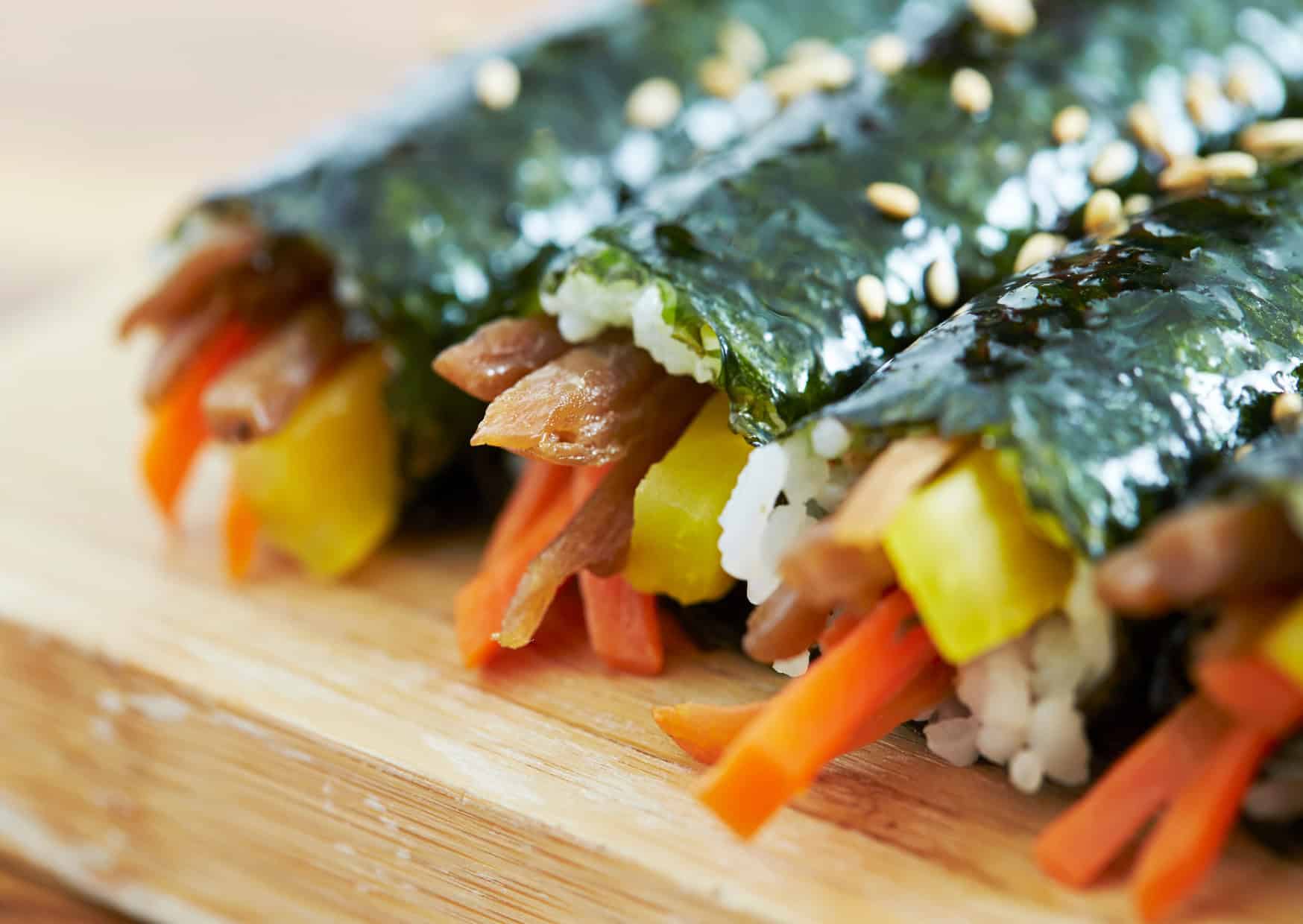
- Ingredients: Gimbap typically includes cooked or pickled ingredients. Common fillings are cooked spinach, pickled radish, cucumber, carrots, fried egg, and either cooked beef or imitation crab. It’s quite common for all ingredients to be seasoned or cooked before assembly.
- Rice: The rice in gimbap is seasoned with sesame oil and sometimes a bit of salt. It lacks the sweetness and vinegar flavor of sushi rice.
- Seaweed: In gimbap, the seaweed wraps around the outside of the rice and fillings, and it’s usually brushed with sesame oil for extra flavor.
- Flavor Profile: Gimbap flavors are typically savory and can be a bit sweet depending on the fillings. It’s often eaten with no additional condiments, or just a simple swipe of wasabi or a sprinkle of salt.
Sushi (Japanese Sushi Rolls)
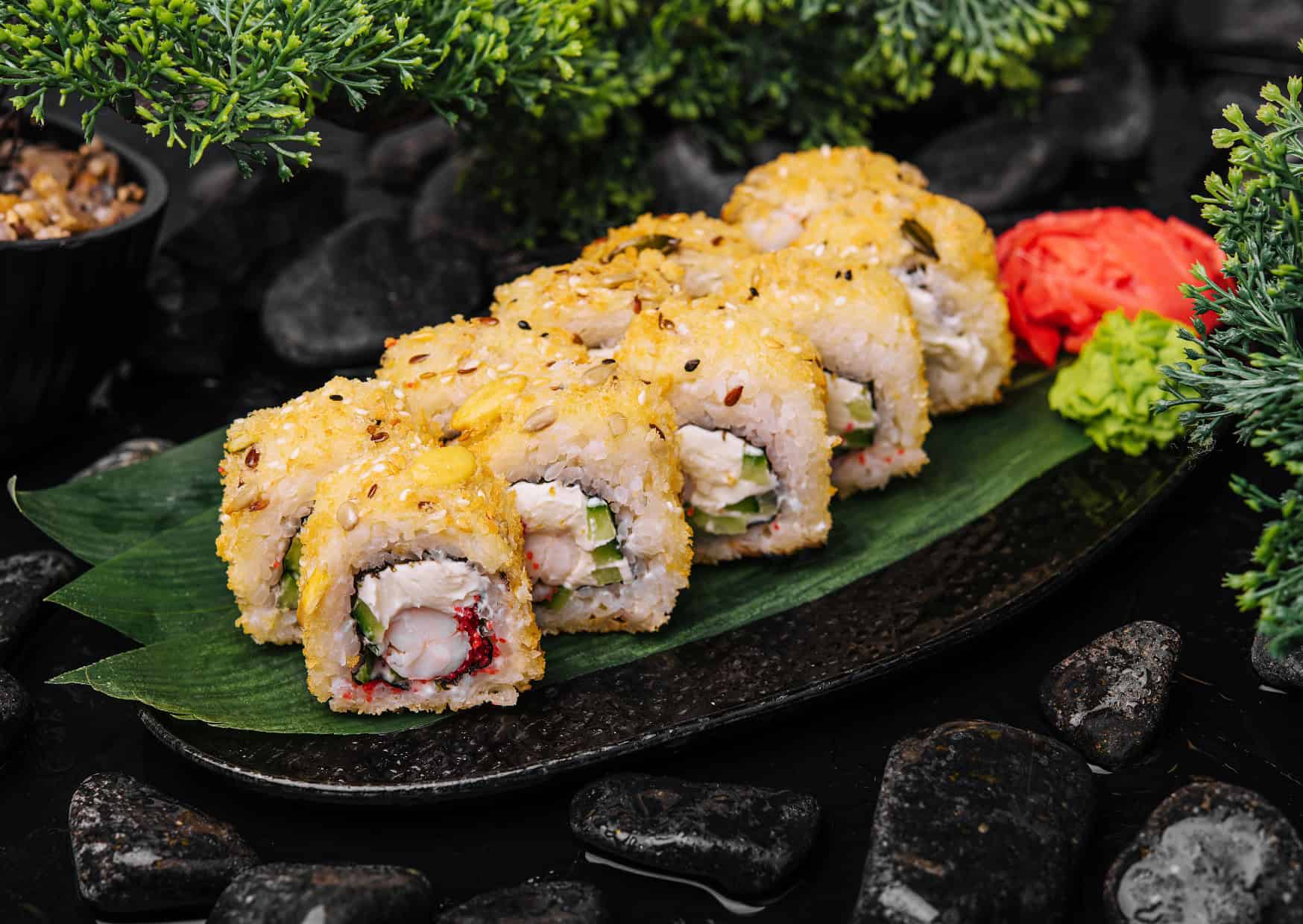
- Ingredients: Sushi often uses raw fish as its main ingredient, along with vegetables like avocado or cucumber. It might also include fresh ingredients like raw tuna, salmon, or vegetables without additional cooking or seasoning prior to rolling.
- Rice: Sushi rice is seasoned with a mix of vinegar, sugar, and salt, giving it a distinct tangy and slightly sweet flavor.
- Seaweed: In sushi rolls (maki), the seaweed can be on the outside or inside, depending on the type of roll. For inside-out rolls (uramaki), the rice is on the outside.
- Flavor Profile: Sushi flavors are generally more focused on the freshness and quality of the raw fish, complemented by the tangy taste of the vinegar in the rice. It’s commonly served with soy sauce, wasabi, and pickled ginger.
Cultural and Serving Differences
- Gimbap is a staple in Korean picnics and casual meals and is viewed as a complete, portable meal. It’s often cut into bite-sized pieces and can be enjoyed on the go without any dipping sauce.
- Sushi is often associated with fine dining or specialized sushi bars in many parts of the world, where it is enjoyed as part of a broader experience involving multiple types of sushi and sashimi.
These distinctions help underline the unique aspects of each dish, despite their superficial similarities. Gimbap offers a distinctly Korean take on the rice roll concept, focusing on seasoned and diverse ingredients, while sushi emphasizes the natural flavors of its predominantly raw fillings, seasoned subtly with vinegared rice.
How to Make Gimbap
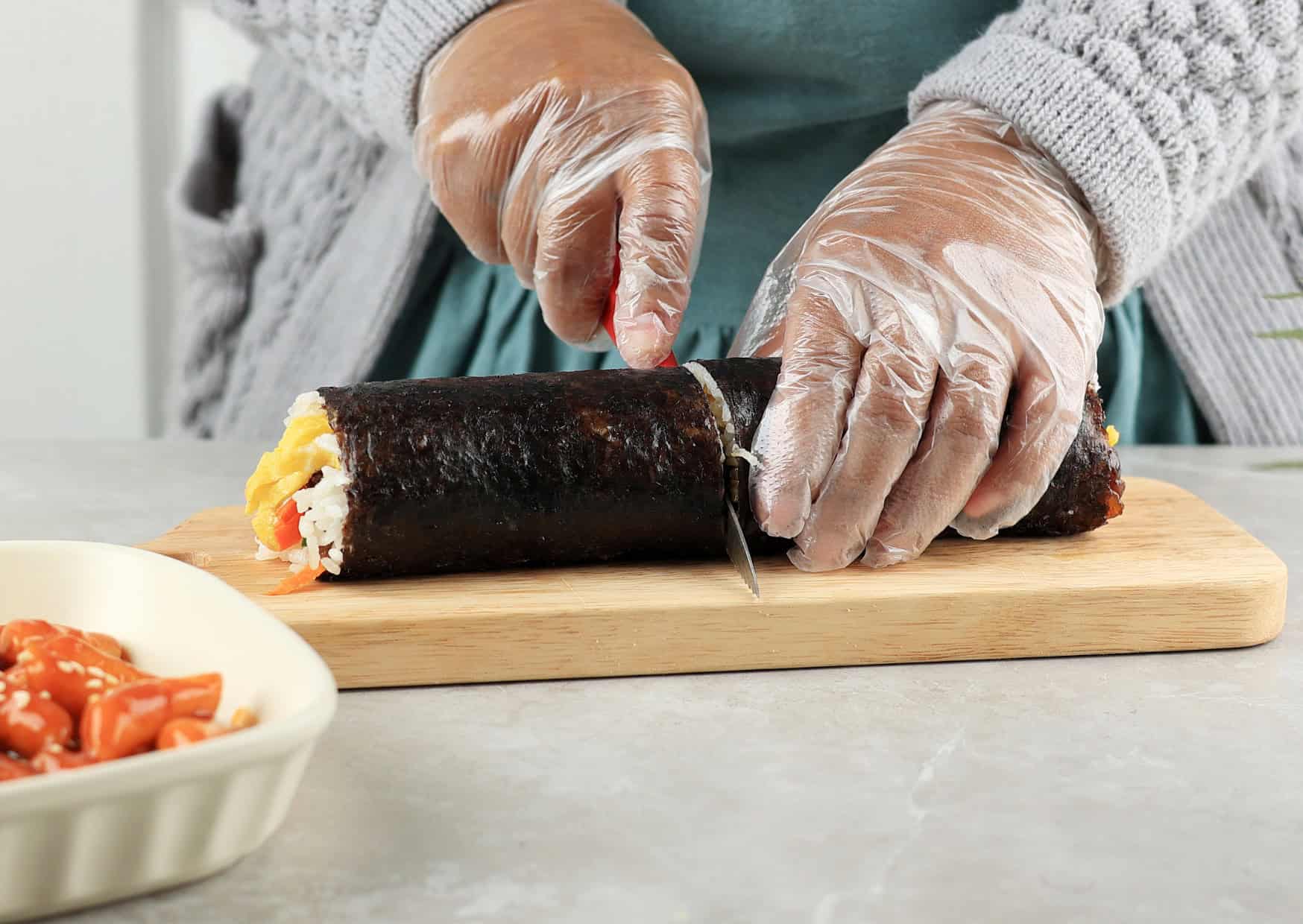
Ingredients:
- Seaweed sheets (gim)
- Cooked white rice (cooled and seasoned with sesame oil and a pinch of salt)
- Fillings: Carrot (julienned and sautéed), spinach (blanched and seasoned), cucumber (sliced), pickled radish, egg (fried into a thin omelette and sliced), and pre-cooked beef or imitation crab
Steps:
- Prepare the Rice: Cook and season the rice with sesame oil and a sprinkle of salt. Let it cool to room temperature.
- Prepare the Fillings: Blanch and season spinach, sauté carrots, and prepare other fillings like cucumber, pickled radish, and omelette strips.
- Assemble the Gimbap:
- Place a sheet of seaweed on a bamboo mat (sushi mat).
- Spread a thin layer of rice over about two-thirds of the seaweed, leaving the top third empty.
- Arrange the fillings in horizontal rows across the rice near the bottom.
- Begin rolling the seaweed gently but tightly from the bottom, using the mat to create a compact roll.
- Use a little water to seal the edge of the seaweed.
- Slice and Serve: With a sharp knife, slice the roll into bite-sized pieces. Serve with soy sauce or wasabi if desired.
How to Make Japanese Sushi Rolls (Maki)
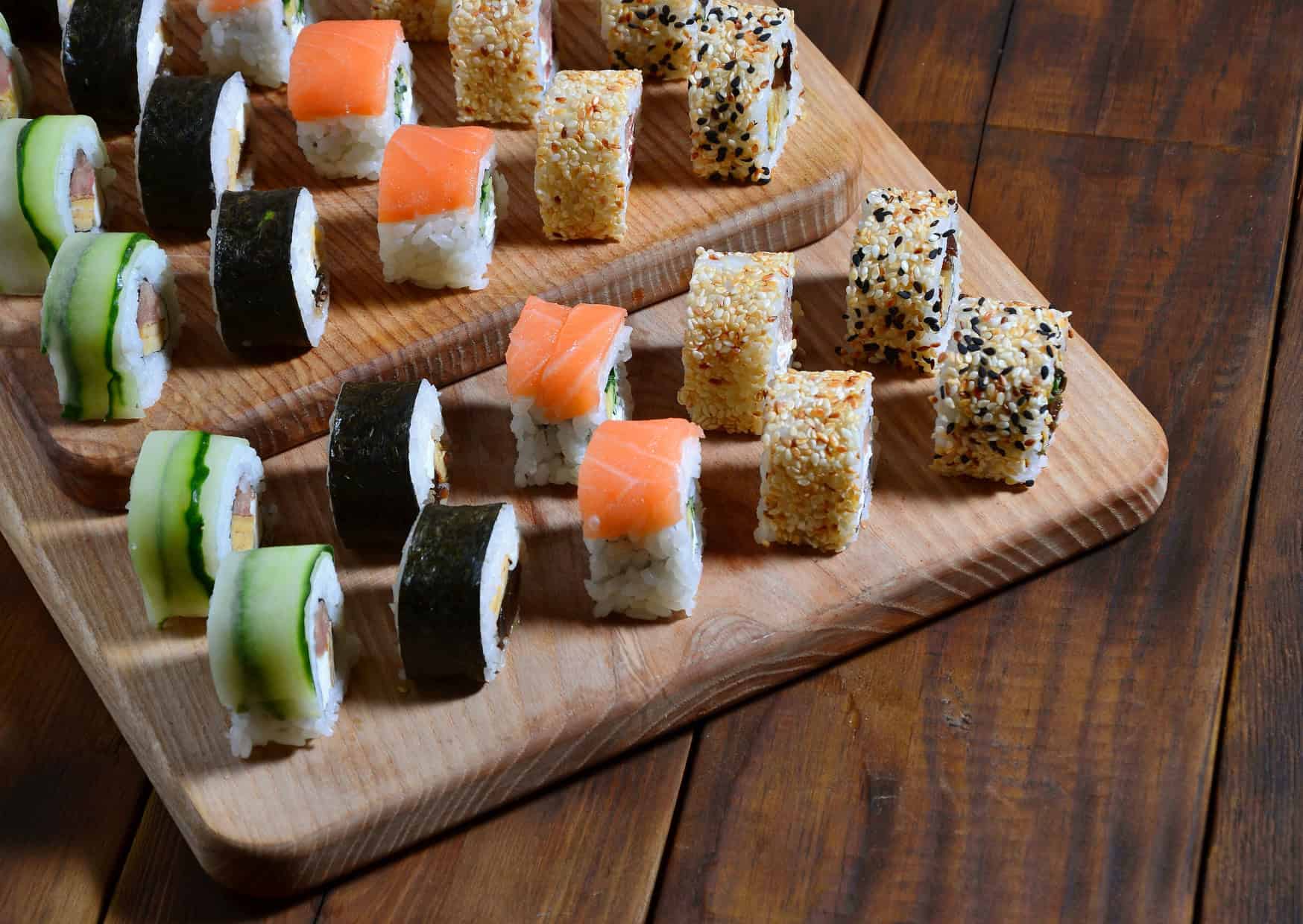
Ingredients:
- Seaweed sheets (nori)
- Sushi rice (cooked rice mixed with sushi vinegar)
- Fillings: Fresh fish like tuna or salmon, cucumber, avocado, and optionally cream cheese or tobiko
Steps:
- Prepare the Sushi Rice: Cook the rice and while hot, mix in sushi vinegar (a blend of rice vinegar, sugar, and salt). Let it cool to room temperature.
- Prepare the Fillings: Slice fish and vegetables into long strips. Prepare any additional components like cream cheese or fish roe.
- Assemble the Sushi:
- Place a sheet of nori on a bamboo sushi mat.
- Spread a thin layer of sushi rice over the nori, covering it completely.
- Arrange the fillings in a line along the center of the rice.
- Lift the edge of the mat closest to you and roll it over the fillings to enclose them in nori, squeezing gently but firmly with the mat to shape the roll.
- Continue rolling until the edge of the nori is underneath the roll.
- Use a little water to seal the edge if necessary.
- Slice and Serve: With a sharp, wet knife, slice the roll into six to eight pieces. Serve with soy sauce, wasabi, and pickled ginger.
Now that you know the difference, which do you like better
Gimbap and Japanese sushi rolls epitomize the rich culinary traditions of Korea and Japan, respectively. While they may appear similar at a glance, each offers a unique taste experience deeply rooted in its cultural heritage. Gimbap, with its variety of cooked and seasoned ingredients, reflects the Korean ethos of harmony and balance in every meal. Conversely, Japanese sushi celebrates the art of simplicity, emphasizing the quality of raw ingredients and the precision of its preparation.
Both dishes are more than just food; they are a celebration of meticulous preparation and cultural storytelling. Making Gimbap or sushi rolls at home allows you to engage directly with these cultures. It offers a moment to savor the intricate flavors and textures that define Korean and Japanese cuisines. Whether you’re spreading rice on a sheet of nori or rolling up a Gimbap, each step is an opportunity to refine your culinary skills and expand your palate.
We invite you to try making both Gimbap and sushi rolls, to not only taste their distinct flavors but also appreciate the cultural nuances that make each so special. As you roll, slice, and serve, remember that each bite carries with it a story—a blend of history, tradition, and a celebration of culinary arts.
Embrace the joy of cooking and exploring these dishes, and perhaps introduce them into your regular cooking repertoire or share them with friends and family. Enjoy the journey through the flavors of Korea and Japan, and let every meal be an opportunity to travel through taste.
Origin and History
Gimbap and sushi may look like culinary cousins, but their origins trace back to very different cultural histories. Sushi began in Japan centuries ago as a method of preserving fish through fermentation. Over time, it evolved into the vinegar-seasoned rice and artfully arranged seafood we know today. What started as street food in the Edo period eventually transformed into a refined national icon, celebrated for its minimalism and strict technique.
Gimbap, meanwhile, comes from Korea’s evolution of rice and seaweed rolls, heavily influenced by local ingredients and the country’s agricultural lifestyle. While some believe its earliest inspiration came from Japanese norimaki during the early 20th century, gimbap grew into something uniquely Korean almost immediately. Seasoned rice, pickled vegetables, sesame oil, and cooked fillings became the defining features, shaped by Korean flavors and everyday practicality.
For Koreans, gimbap is tied deeply to family outings, school lunches, and picnics. For the Japanese, sushi spans everything from inexpensive takeout to elite dining experiences. Though both dishes involve rolled rice and seaweed, their histories, meanings, and cultural roles couldn’t be more different. Each proudly represents the spirit and palate of its home country.
One major point of debate is whether gimbap should be considered the “Korean version” of sushi. Many Koreans reject that idea completely, arguing that while the format appears similar, the flavor profile and intention behind the dishes differ fundamentally. Sushi is about highlighting the quality of raw fish, while gimbap focuses on harmony between various cooked and pickled ingredients. Treating one as a derivative of the other oversimplifies their cultural depth.
Another controversy centers around authenticity. In Japan, sushi purity is taken seriously—traditionalists critique everything from the thickness of the roll to the temperature of the rice. Meanwhile, gimbap embraces creativity: cheese gimbap, tuna mayo gimbap, bulgogi gimbap, even kimchi gimbap all fit under the same umbrella. Some chefs argue that this freedom makes gimbap more adaptable, while others claim it dilutes the identity of the dish.
Then there’s the question of “which one is healthier?” Sushi fans argue that its simplicity and reliance on fresh fish make it lighter and more nutrient-dense. Gimbap lovers counter that sushi’s white rice, sugar, and occasional fried rolls make it no healthier than a hearty Korean roll with vegetables and lean protein. The truth is that each dish can be indulgent or balanced depending on how you prepare it, but the debate keeps food lovers passionately divided.
How Long It Takes to Prepare
Making sushi at home tends to take longer because of the precision involved. Preparing sushi rice alone requires rinsing, cooking, seasoning, and cooling it to the right temperature. If raw fish is involved, you also need to source sashimi-grade cuts and slice them properly. Even the simplest rolls often take around an hour from start to finish, especially for beginners still learning the technique.
Gimbap, in contrast, is more forgiving. The rice is simply seasoned with sesame oil and salt, and the fillings are straightforward—usually cooked vegetables, eggs, and proteins you likely already have at home. You can prepare everything in 30 to 40 minutes, and assembly tends to be quicker since the cuts and presentation don’t need to meet strict aesthetic standards.
If you’re cooking for a group, sushi preparation can stretch even longer due to the delicate slicing and rolling. Gimbap, on the other hand, is designed for volume: many Korean families make multiple rolls in one session with minimal stress. Overall, gimbap wins the convenience battle by a landslide, making it the better choice for casual meals or busy nights.
Serving Suggestions
Sushi is traditionally served with soy sauce, wasabi, and pickled ginger. The accompaniments help cleanse the palate and balance the richness of the fish. A side of miso soup is common, especially in home settings. If you want something more filling, pair your sushi with a light seaweed salad or a bowl of chilled soba noodles to round out the meal without overpowering the delicate flavors.
Gimbap is usually enjoyed on its own, sliced into bite-sized pieces and eaten like a portable snack. For a traditional Korean meal, serve it with kimchi, pickled radish, or a simple anchovy broth. Some households add tteokbokki, fishcakes, or a warm bowl of kimchi stew on the side. Because gimbap is more savory and seasoned than sushi, it pairs well with heartier dishes without losing its flavor identity.
If you’re entertaining, sushi makes an elegant, restaurant-style spread, while gimbap is the perfect crowd-friendly platter that invites people to dig in without formality. Both can shine at gatherings, but each offers a different vibe depending on the mood you’re trying to set.
Final Thoughts
Gimbap and sushi may share a familiar shape, but they’re born from different culinary philosophies. Sushi is about technique, restraint, and celebrating raw ingredients. Gimbap is about comfort, versatility, and bold flavors wrapped into one convenient roll. Neither is better in a universal sense—they’re simply built to satisfy different cravings and occasions.
At home, though, gimbap tends to win for practicality. It’s faster, cheaper, and easier to customize with whatever ingredients you have on hand. Sushi requires more precision, more preparation, and often more specialized ingredients. But when executed well, homemade sushi feels like a small luxury—a project that rewards patience.
Ultimately, whether you reach for gimbap or sushi depends on what kind of kitchen adventure you’re after. Quick and hearty? Gimbap. Clean and refined? Sushi. Either way, both rolls bring their own charm to the table, and mastering each gives you a delicious window into two incredibly rich food cultures. Enjoy the showdown—and the leftovers.

About the Author: Ruben, co-founder of Gamintraveler.com since 2014, is a seasoned traveler from Spain who has explored over 100 countries since 2009. Known for his extensive travel adventures across South America, Europe, the US, Australia, New Zealand, Asia, and Africa, Ruben combines his passion for adventurous yet sustainable living with his love for cycling, highlighted by his remarkable 5-month bicycle journey from Spain to Norway. He currently resides in Spain, where he continues sharing his travel experiences with his partner, Rachel, and their son, Han.