
Our guide on the most Popular Dinners in Costa Rica to try on your next try or to cook at home.
Costa Rican cuisine is known for its fresh ingredients, vibrant flavors, and emphasis on simplicity. Here are some of the most popular dinner dishes in Costa Rica, complete with recipe guides, tips, and calorie information.
Costa Rican cuisine is full of flavor and freshness, with an emphasis on simple, wholesome ingredients. Dishes like Gallo Pinto, Casado, Sopa Negra, and Arroz con Pollo are not only delicious but also reflective of the country’s rich culinary heritage.
By following these recipe guides, you can bring a taste of Costa Rica to your kitchen. Enjoy these popular Costa Rican dinners and savor the vibrant flavors!
BOOK YOUR TRAVEL INSURANCE
Two of our favorite travel insurance: Heymondo Vs Safetwing cheapest travel Insurance. You can get for $135 USD your Heymondo Travel Insurance with Heymondo discount code valid for 90 days. Read our full comparison of Genki vs Safetywing Travel Insurance Review and the comparison Heymondo vs Genki
Popular Dinners in Costa Rica
1. Gallo Pinto
Description:
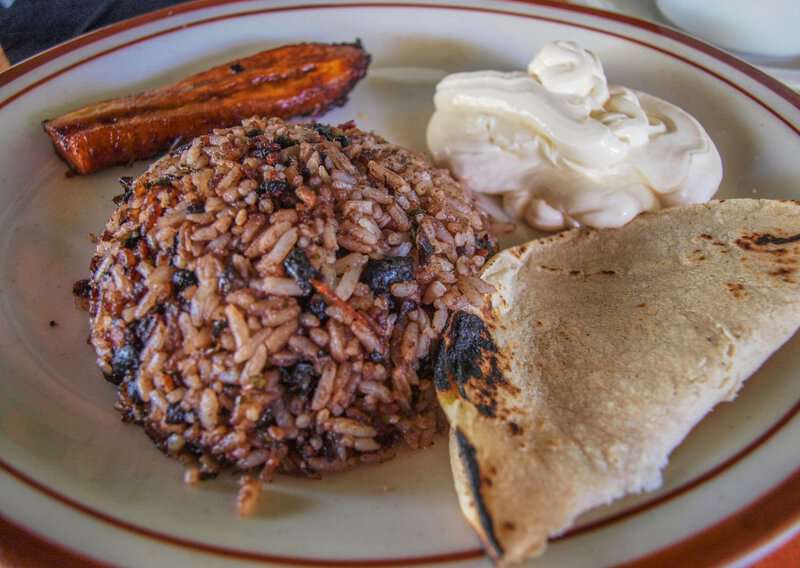
Gallo Pinto is a traditional Costa Rican dish made with rice and beans, often served with eggs, cheese, and fried plantains. It’s commonly eaten for breakfast but also makes a hearty dinner.
Ingredients:
1 cup cooked white rice
1 cup cooked black beans (with some of their liquid)
1 small onion, finely chopped
1 small red bell pepper, finely chopped
2 cloves garlic, minced
2 tablespoons vegetable oil
2 tablespoons Salsa Lizano (a Costa Rican condiment)
Fresh cilantro, chopped (for garnish)
Salt and pepper to taste
Instructions:
Sauté Vegetables:
In a large skillet, heat the vegetable oil over medium heat.
Add the onion, bell pepper, and garlic, and sauté until the vegetables are soft and fragrant, about 5 minutes.
Add Rice and Beans:
Add the cooked rice and black beans (with some liquid) to the skillet.
Stir to combine and cook until heated through, about 5-7 minutes.
Season:
Stir in Salsa Lizano, salt, and pepper.
Cook for another 2-3 minutes to allow the flavors to meld together.
Serve:
Garnish with fresh cilantro and serve with fried eggs, cheese, and fried plantains.
Calories:
Approximately 250-300 calories per serving.
Read here how to make Gallo Pinto
2. Casado
Description:
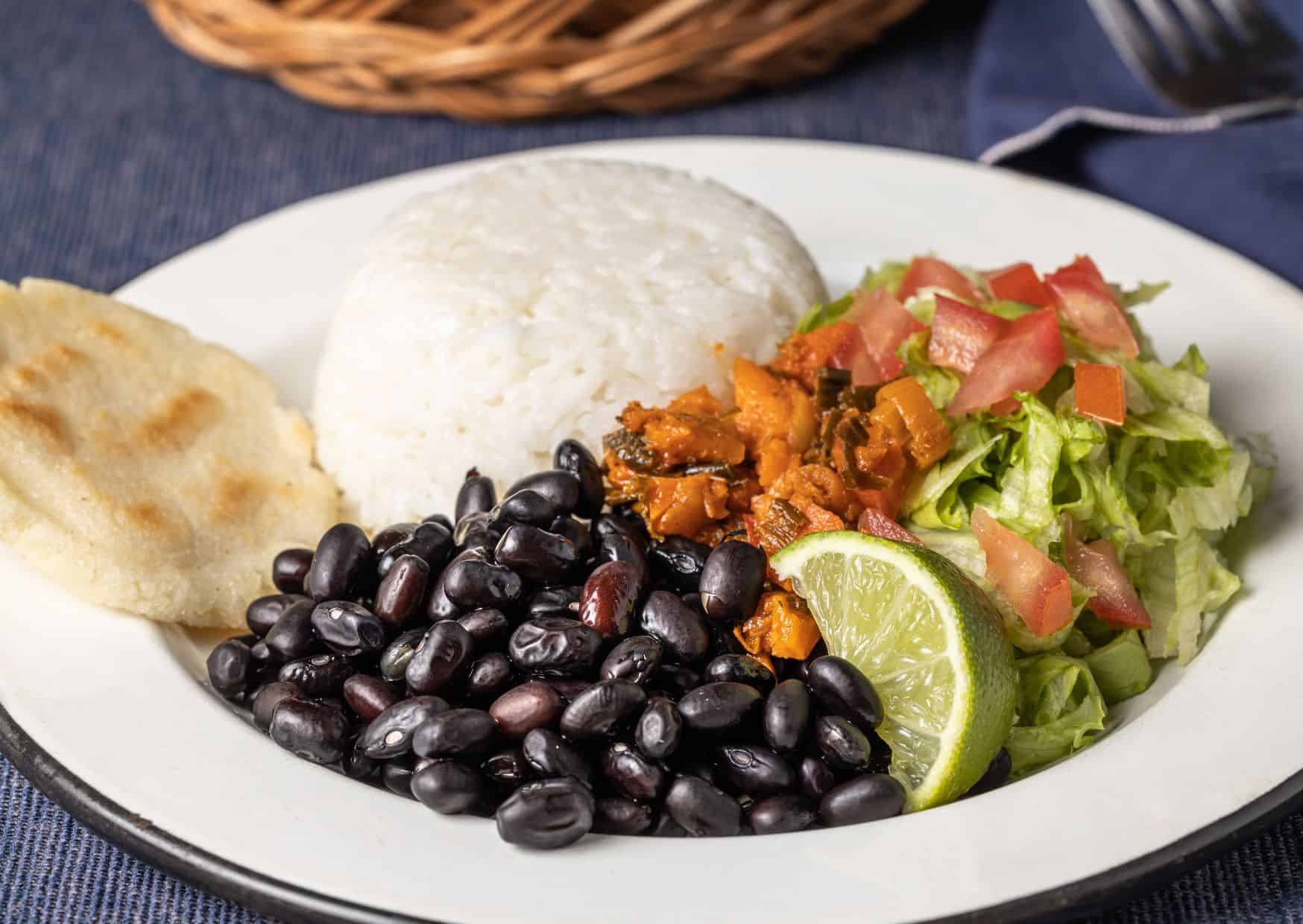
Casado is a traditional Costa Rican meal that includes rice, black beans, plantains, salad, a tortilla, and a protein such as chicken, beef, pork, or fish.
Ingredients:
1 cup cooked white rice
1 cup cooked black beans
1 ripe plantain, sliced and fried
1 small salad (lettuce, tomato, cucumber, avocado)
1 tortilla
Protein of choice (grilled chicken breast, beef steak, pork chop, or grilled fish)
1 tablespoon vegetable oil
Salsa Lizano (for serving)
Salt and pepper to taste
Instructions:
Cook the Protein:
Season the protein with salt and pepper.
In a skillet, heat the vegetable oil over medium-high heat and cook the protein until done. Set aside.
Prepare the Sides:
Cook the rice and black beans separately.
Fry the plantain slices until golden and caramelized.
Assemble the Casado:
On a plate, arrange the rice, black beans, fried plantains, salad, and tortilla.
Add the cooked protein to the plate.
Serve with Salsa Lizano on the side.
Calories:
Approximately 500-700 calories per serving, depending on the protein choice.
Read here how to make Casado
3. Sopa Negra (Black Bean Soup)
Description:
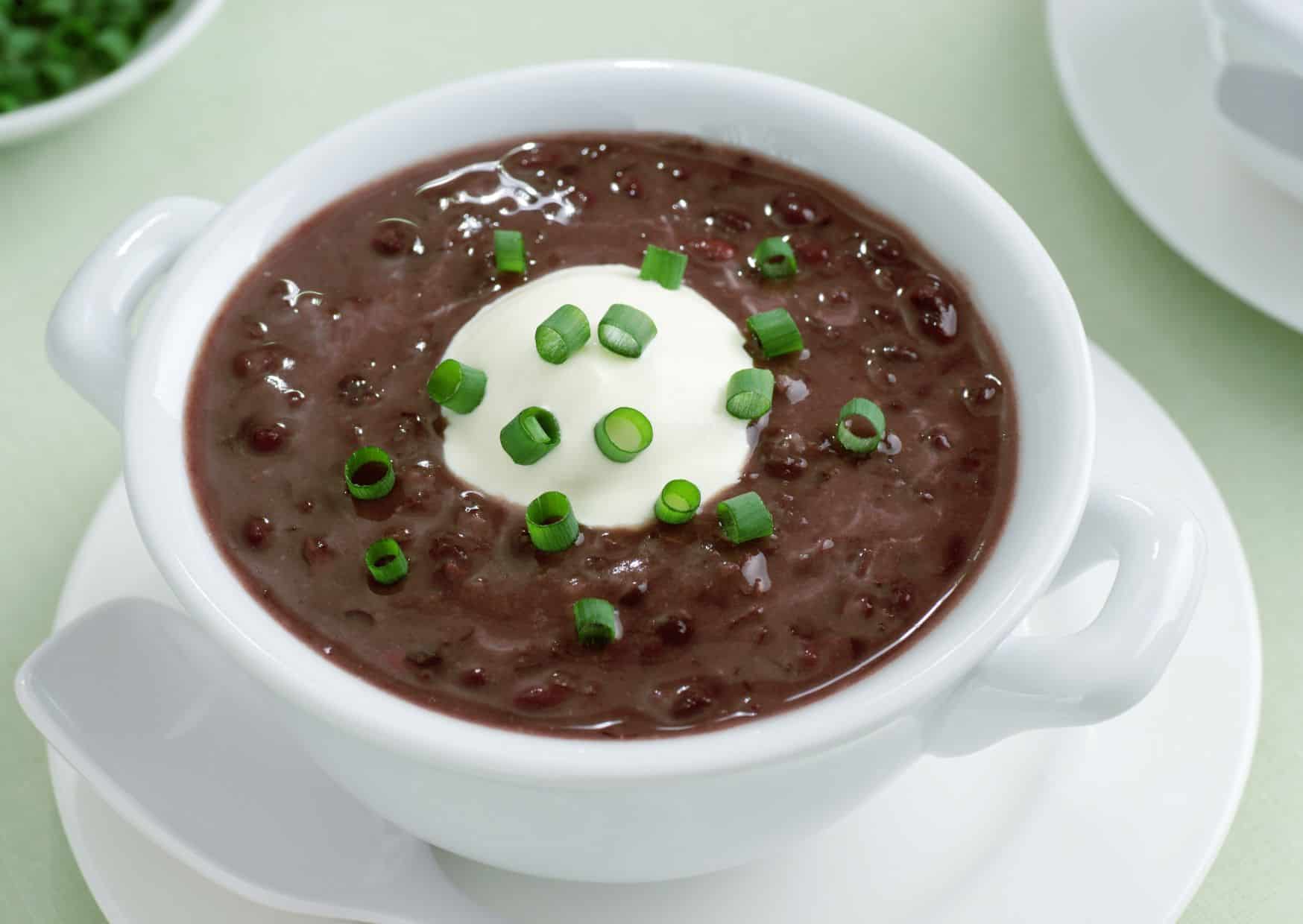
Sopa Negra is a flavorful black bean soup often served with a poached egg and cilantro.
Ingredients:
2 cups cooked black beans (with their liquid)
1 small onion, chopped
1 small red bell pepper, chopped
2 cloves garlic, minced
1 celery stalk, chopped
1 carrot, chopped
4 cups chicken or vegetable broth
1 tablespoon vegetable oil
Fresh cilantro, chopped (for garnish)
4 eggs (one per serving)
Salt and pepper to taste
Instructions:
Sauté Vegetables:
In a large pot, heat the vegetable oil over medium heat.
Add the onion, bell pepper, garlic, celery, and carrot. Sauté until the vegetables are soft, about 5-7 minutes.
Add Beans and Broth:
Add the cooked black beans (with their liquid) and broth to the pot.
Bring to a boil, then reduce the heat and simmer for 20-30 minutes.
Blend the Soup:
Use an immersion blender to partially blend the soup, leaving some beans whole for texture.
Season with salt and pepper.
Poach the Eggs:
Poach the eggs in simmering water until the whites are set but the yolks are still runny, about 3-4 minutes.
Serve:
Ladle the soup into bowls, top each with a poached egg, and garnish with fresh cilantro.
Calories:
Approximately 200-250 calories per serving.
Read here how to make Sopa Negra
4. Arroz con Pollo (Chicken with Rice)
Description:
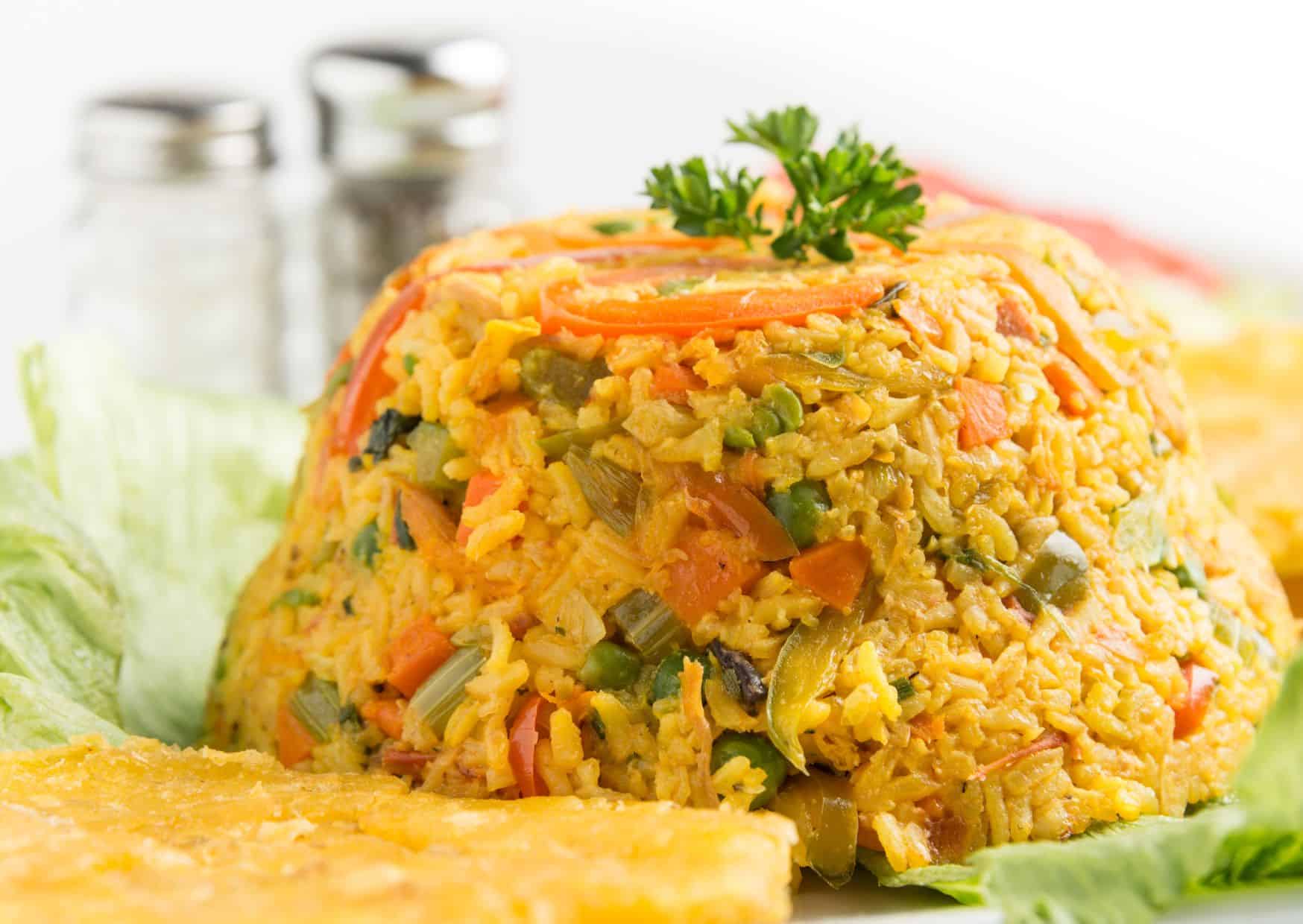
Arroz con Pollo is a popular and comforting dish in Costa Rica, made with rice, chicken, vegetables, and spices.
Ingredients:
2 cups cooked white rice
1 pound chicken thighs or breasts, cut into bite-sized pieces
1 small onion, chopped
1 small red bell pepper, chopped
1 small green bell pepper, chopped
1 carrot, peeled and diced
1 cup peas
2 cloves garlic, minced
2 tablespoons vegetable oil
1 cup chicken broth
1 teaspoon ground cumin
1 teaspoon paprika
Fresh cilantro, chopped (for garnish)
Salt and pepper to taste
Instructions:
Cook the Chicken:
In a large skillet, heat the vegetable oil over medium-high heat.
Add the chicken pieces, season with salt and pepper, and cook until browned and cooked through. Remove and set aside.
Sauté Vegetables:
In the same skillet, add the onion, bell peppers, carrot, and garlic. Sauté until the vegetables are soft, about 5-7 minutes.
Combine Ingredients:
Return the chicken to the skillet. Add the cooked rice, peas, chicken broth, cumin, and paprika. Stir to combine.
Simmer:
Reduce the heat to low and simmer for 10-15 minutes, allowing the flavors to meld together and the liquid to absorb.
Serve:
Garnish with fresh cilantro and serve hot.
Calories:
Approximately 400-500 calories per serving.
Origin and History
Costa Rican cuisine grew from a blend of Indigenous, Spanish, and Afro-Caribbean influences, creating a food culture that’s humble, nourishing, and focused on fresh local ingredients. For generations, families relied on simple staples like rice, beans, plantains, and seasonal vegetables—a reflection of Costa Rica’s agricultural roots and its emphasis on wholesome, balanced meals.
As the country developed, these traditional dishes evolved into the dinners most Costa Ricans still enjoy. Meals were built around what was available: fresh fish along the coasts, hearty stews in cooler highland regions, and meat paired with rice-based sides in the central valleys. Costa Ricans consistently favored mild, comforting flavors rather than heavy spices, making their food both accessible and deeply satisfying.
Over time, these recipes became cultural foundations, shared at family gatherings, roadside sodas, and community celebrations. Today, the most popular Costa Rican dinners carry both tradition and nostalgia. They reflect a way of eating that values simplicity, freshness, and the idea that a good meal doesn’t need to be complicated to be memorable.
There’s ongoing debate about whether Costa Rican cuisine is too simple compared to other Latin American food traditions. Some critics argue that it lacks bold seasonings, while locals counter that the beauty of Costa Rican dinners lies in clean flavors and high-quality ingredients. This debate often comes down to perspective: subtle doesn’t mean boring when dishes are prepared with care.
Another controversy involves cultural ownership and regional variation. Recipes like casado or olla de carne can differ dramatically from one household to another, leading to disagreements about what’s “authentic.” Many Costa Ricans insist that authenticity lies in the ingredients and technique—not in rigid rules. Others feel strongly that certain preparations should never be altered.
Finally, food tourism has introduced new dynamics. Some popular dishes have been adapted to please foreign tastes, especially in beach towns and tourist-heavy areas. While some welcome these changes as creative evolution, others worry that traditional recipes are becoming diluted. The tension reflects a larger question about how culinary traditions should grow without losing their identity.
How Long You Take to Prepare
One of the reasons Costa Rican dinners are so beloved is their practicality. Many classic dishes take around thirty to forty-five minutes to prepare, making them ideal for busy families. Casado, for example, comes together quickly once the rice, beans, and plantains are ready—leaving just the protein and salad to assemble.
More elaborate dishes, like olla de carne, require a longer simmering time. These stews can take two hours or more for the vegetables and beef to reach perfect tenderness. However, most of the process is hands-off, with the pot doing the work while you handle other tasks. These slower recipes often become weekend meals or comfort foods shared with loved ones.
Other dishes, such as arroz con pollo, strike a balance between quick and slow. They typically require about an hour, especially when layering flavors through sautéing and simmering. Overall, Costa Rican dinners are designed to be approachable, relying on technique and timing rather than complicated steps.
Serving Suggestions
Costa Rican dinners shine brightest when served with traditional accompaniments. A classic casado is almost always plated with rice, black beans, sweet plantains, and a simple cabbage salad. Adding fresh lime juice and cilantro creates the refreshing finish locals love. A small slice of fresh cheese or avocado rounds out the plate perfectly.
For hearty stews like olla de carne, serve them steaming hot with white rice, corn tortillas, and a squeeze of lime. The rice absorbs the broth, creating a comforting, filling combination. Pickled vegetables or a small side of chilero add brightness without overpowering the dish.
If you’re serving arroz con pollo, consider including Costa Rica’s beloved salsa Lizano on the table. A side of green salad or fried sweet plantains elevates the meal without adding complexity. The secret is balance: Costa Rican dinners work best when the plate includes a mix of textures, colors, and fresh elements.
Final Thoughts
Costa Rican dinners are a reflection of the country’s spirit—warm, welcoming, and grounded in simplicity. These dishes aren’t built on flashy ingredients or heavy techniques. Instead, they rely on balance, freshness, and a deep respect for everyday cooking. That’s what makes them both comforting and timeless.
When you cook these meals at home, you’re not just preparing food; you’re connecting with a culture that values togetherness and generosity. Whether you’re simmering a stew or assembling a casado, the process invites you to slow down and appreciate the ingredients in front of you.
In the end, the most popular Costa Rican dinners endure because they bring people together. They’re easy to share, impossible to rush, and deeply satisfying in their simplicity. Once you make them, you begin to understand why these recipes have remained staples for generations—and why they continue to win hearts far beyond Costa Rica’s borders.

About the Author: Ruben, co-founder of Gamintraveler.com since 2014, is a seasoned traveler from Spain who has explored over 100 countries since 2009. Known for his extensive travel adventures across South America, Europe, the US, Australia, New Zealand, Asia, and Africa, Ruben combines his passion for adventurous yet sustainable living with his love for cycling, highlighted by his remarkable 5-month bicycle journey from Spain to Norway. He currently resides in Spain, where he continues sharing his travel experiences with his partner, Rachel, and their son, Han.