
And what it reveals about masculinity, maintenance, and radically different definitions of grooming
Spend a few weeks traveling through Spain, Italy, France, or Greece, and you’ll start noticing something that never makes it into travel brochures but quietly defines local culture: European men are hairier — and not remotely sorry about it.
At the beach, at the gym, even walking shirtless down a side street in August, you’ll see grown men of every age and body type with full chest hair, thick leg hair, visible armpit hair, and sometimes even carefully maintained (not removed) necklines and backlines.
In short — it’s all there.
And it’s not hidden, minimized, or managed into oblivion.
For many American women — especially those used to the clean-shaven chest or perfectly manscaped beard culture of the U.S. — this can be jarring. Even considered a dating “dealbreaker.” Entire Reddit threads and podcast debates have been devoted to the question of how much is too much.
But in much of Europe, it’s not even a conversation. Body hair on men isn’t an issue to fix — it’s a feature of adulthood.
Here’s why European men maintain body hair in ways that would lose them matches on American dating apps — and what this reveals about masculinity, confidence, and the meaning of grooming when the standard isn’t perfection.
Want More Deep Dives into Everyday European Culture?
– Why Europeans Walk Everywhere (And Americans Should Too)
– How Europeans Actually Afford Living in Cities Without Six-Figure Salaries
– 9 ‘Luxury’ Items in America That Europeans Consider Basic Necessities
Quick Easy Tips
If body hair is a concern, communicate openly about preferences rather than making assumptions—it’s often easier to compromise than people expect.
Experiment with different grooming styles. Trimming, rather than full removal, can be a middle ground that balances natural appearance with neatness.
Keep context in mind. What seems unusual in one country may be completely normal in another, so approach grooming differences with curiosity rather than judgment.
One controversy around European grooming habits is cultural perception. In much of Europe, body hair is viewed as natural and masculine, while in the U.S., smooth, hair-free bodies are often seen as the standard of attractiveness. This clash sparks debates about whether beauty ideals are universal or culturally constructed.
Another point of contention lies in media influence. European media tends to normalize a wider variety of male appearances, while American advertising frequently emphasizes polished, clean-shaven looks. Critics argue that this creates unrealistic expectations in the U.S., while supporters claim grooming is simply a sign of effort and self-care.
Finally, there’s the issue of preference versus prejudice. Some argue that rejecting someone based on body hair length reflects personal taste, while others see it as a narrow standard that overlooks cultural diversity. This raises bigger questions about whether grooming choices should really define compatibility.
1. Chest Hair Isn’t Trimmed — It’s Celebrated
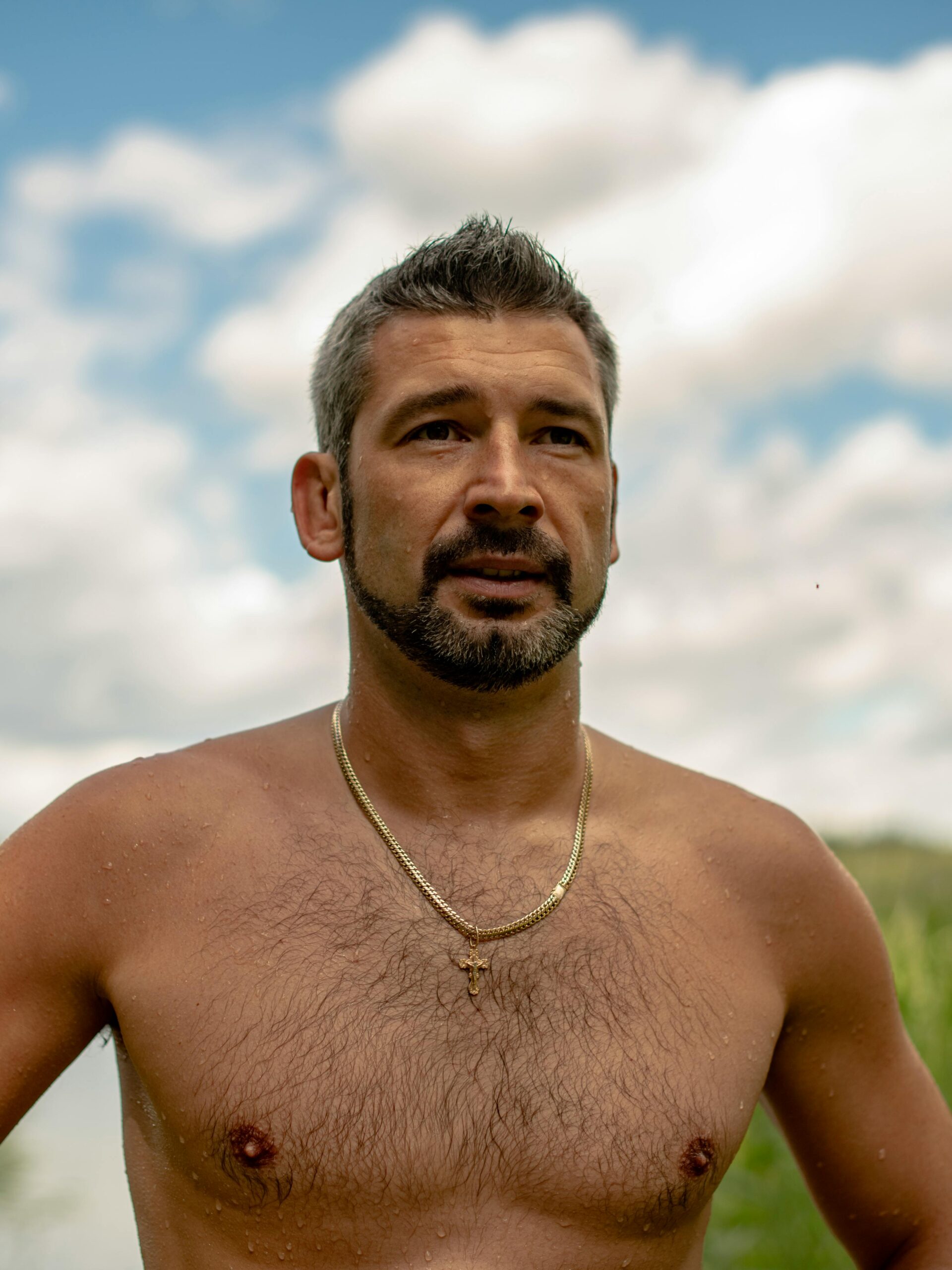
In the U.S., chest hair is often either shaved entirely or trimmed to a low, manageable length. Even men who keep some hair are expected to make it look deliberate — “clean,” “low,” and never stray too far from a gym-model aesthetic.
In Europe? Chest hair is left natural, even full.
Men don’t apologize for it. They don’t hide it under compression shirts. Open buttons in summer let it show. At the beach, it’s as common as a glass of tinto de verano.
And no one acts like it’s a flaw.
2. Back Hair Exists — And Doesn’t Automatically Get Removed

In American culture, back hair is often viewed as a grooming emergency. It’s waxed, lasered, or kept under wraps. Entire jokes and movie scenes are built around the horror of discovering back hair on a date.
In Europe, back hair just is.
It might be trimmed. It might not. But it doesn’t signal a loss of care — or attractiveness.
Some men choose to remove it. Many do not. Partners may comment. No one panics.
The result? Men don’t build shame around something they can’t control without a maintenance team.
3. Beards Are Full — Not Finessed

American beards tend to be sculpted, shaped, edged, and maintained with product. Beards that grow naturally but aren’t styled are often considered sloppy or unkempt.
In Europe, natural beards are common, often paired with equally untrimmed hair. Edges may be cleaned up — or not. Necklines may fade into chest hair. The emphasis is on wearability, not polish.
This looser standard creates space for beards that feel lived in, not engineered.
It’s not that European men don’t care — it’s that they don’t believe every part of their body needs a line-up.
4. Armpit Hair Isn’t Tamed — It’s Normal

In the U.S., armpit hair is often trimmed or shaved entirely — even for men — especially in gym culture or among younger guys trying to match a certain aesthetic.
In Europe, it’s left alone.
Armpit hair on men isn’t seen as a hygiene concern. It’s not considered unkempt or dated. It’s just what men have.
Yes, deodorant is used. No, the hair isn’t the problem.
And in public spaces like saunas or beaches, no one is adjusting their posture to hide it.
5. Leg Hair Is Left Wild — Even in Fashion Contexts
In American pop culture, leg hair is left natural — until fashion enters the room. Then, for models or influencers, it’s often trimmed, shaved, or styled. Some athletes remove it entirely.
In Europe? Even fashion-conscious men wear fully untrimmed leg hair — with loafers, with swimwear, even with designer clothes.
There’s no conflict between style and natural hair.
You can be polished and still have calves that look like they belong in a 1970s bicycle race. No contradiction.
6. Hairlines and Necklines Aren’t Always Controlled
In the U.S., getting a haircut includes removing every stray neck hair, tapering the nape, and sometimes even shaving the upper back line.
In Europe, many barbers do the same — but many don’t. And clients don’t ask.
It’s common to see a clean haircut fade into a neck that wasn’t shaved. Not because someone forgot — but because no one cares.
This detail alone can shock American women used to razor-sharp lines and product-polished fades.
In Europe, edges are softer — not just stylistically, but socially.
7. Nose and Ear Hair Is Handled — But Quietly

One area where grooming exists but is done with less intensity is nose and ear hair. In the U.S., tools are sold specifically for these “problem” areas, with ads promising perfect control.
In Europe, these hairs are trimmed when they’re long — but not obsessively.
No one’s inspecting your nostrils at a café.
The rule is simple: don’t be gross, but don’t pretend you’re made of porcelain either.
8. Hairiness Isn’t Connected to Confidence

In American dating culture, there’s a strange paradox. Men are told to be confident, but also that hair is a liability — unless it’s on their head, perfectly styled.
In Europe, hairiness and confidence are completely disconnected.
A man with a thick chest rug can stroll through the beach in short swim trunks, chatting with friends and stopping for vermouth, without ever thinking about whether his body hair is a problem.
Because it’s not.
This normalized acceptance makes confidence more available — not something earned by conforming.
9. Women Don’t Expect Polished Hair Removal — They Expect Realism
In the U.S., many women expect male partners to trim, manage, or remove body hair — and discuss it openly.
In Europe, this expectation is far more flexible.
Yes, some women prefer smoother bodies. Others don’t care. But very few treat body hair as a dealbreaker — because they grew up surrounded by it, without shame.
Spanish, Italian, and French girls saw their uncles, fathers, and brothers walking around naturally hairy — and no one called it gross.
The result? Fewer “ick” reactions. More room for variety.
One Body, Two Ideals
To American women, European male body hair can feel outdated. Messy. Undisciplined.
To European men, American grooming standards can feel excessive. Insecure. Unnatural.
In the U.S., the trend is toward control — every line trimmed, every patch tamed.
In Europe, the trend is toward existence — be clean, but be human.
It’s not about neglect. It’s about proportion.
So if you’re visiting Europe and surprised by the amount of visible male body hair, don’t assume it’s laziness.
Assume it’s a different way of understanding beauty, presence, and how much effort a man should spend fixing something that isn’t broken.
The debate over body hair highlights how deeply culture shapes attraction and expectations. What Americans may call a “dealbreaker,” many Europeans see as a perfectly normal part of masculinity. Neither side is wrong—it’s simply a reflection of differing values.
At the same time, the controversy reveals how much influence media and trends hold over our personal choices. Beauty standards are not fixed; they evolve, and they often say more about society than about individual worth.
Ultimately, relationships thrive on communication and respect. Whether body hair is embraced or groomed away, what matters most is finding comfort in one’s own skin and with one’s partner. When cultural differences are approached with openness, they become opportunities for understanding rather than barriers.

About the Author: Ruben, co-founder of Gamintraveler.com since 2014, is a seasoned traveler from Spain who has explored over 100 countries since 2009. Known for his extensive travel adventures across South America, Europe, the US, Australia, New Zealand, Asia, and Africa, Ruben combines his passion for adventurous yet sustainable living with his love for cycling, highlighted by his remarkable 5-month bicycle journey from Spain to Norway. He currently resides in Spain, where he continues sharing his travel experiences with his partner, Rachel, and their son, Han.